The prefix meaning 'bird' that you're most likely looking for is either <strong>ornitho-</strong> (from Greek) or <strong>avi-</strong> (from Latin). If you're solving a crossword, ornitho- and avi are the two answers that come up most often. If you're digging into the etymology of a scientific bird name or a word like 'ornithology' or 'aviary,' those same two roots are doing all the heavy lifting. This guide walks you through both, shows you where they appear in real bird names, and gives you a quick method for verifying any bird-related prefix you run into.
Prefix Meaning Bird: What It Means and How to Identify It

James Ridgley
9 Apr 2026
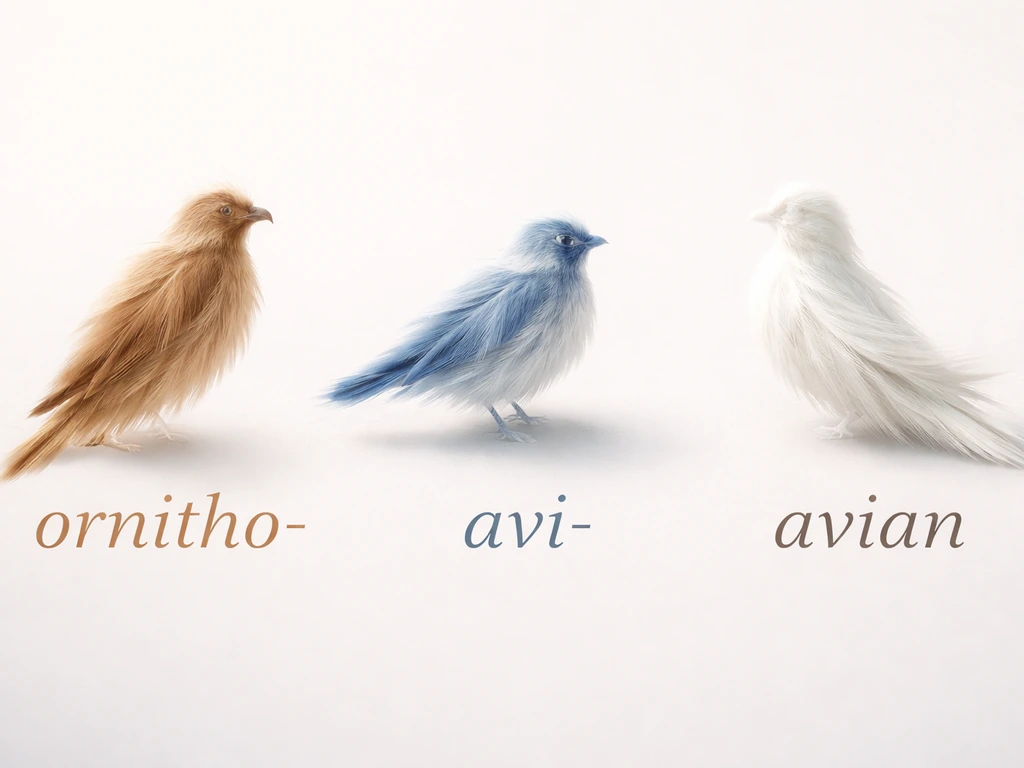
What people usually mean when they search 'prefix meaning bird'
Most people searching this phrase fall into one of three camps. First, there's the puzzle solver who has a crossword clue and needs a short answer fast. If that's you, the answer is almost always AVI (3 letters) or ORNITHO (7 letters), depending on the grid. Second, there's the language-curious person who spotted a word like 'ornithoid' or 'avifauna' and wants to understand the building blocks. Third, there's the bird namer, maybe someone choosing a pet name or researching a species, who wants to understand how the 'bird' element works in formal and informal naming. All three paths lead to the same two roots, so learning them properly solves all three problems at once.
It's also worth noting that this question shows up in word puzzle contexts fairly often. If you've landed here from a prefix meaning bird crossword clue, you're in the right place. The puzzle world and the etymology world overlap more than you'd think.
The main 'bird' word parts, in English and classical roots
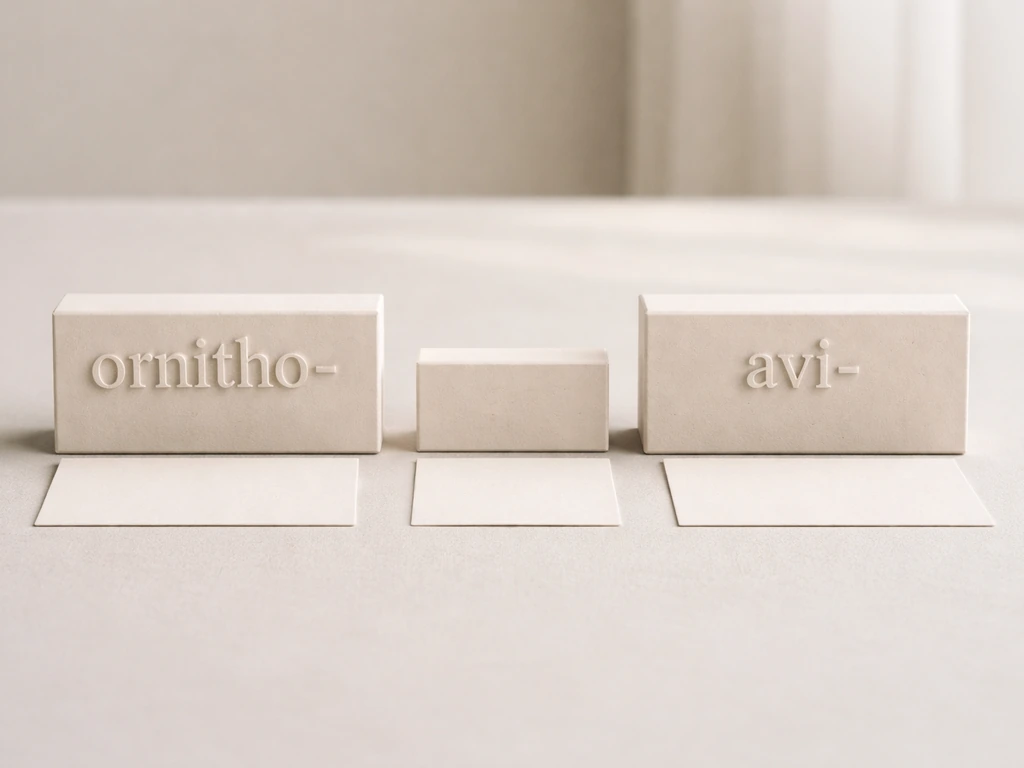
There are two primary classical roots that mean 'bird,' and they come from different languages. Knowing which one you're dealing with tells you a lot about where the word came from and how formal it is.
Ornitho- (Greek origin)
Ornitho- comes from the ancient Greek word órnīs, meaning 'bird.' It's a combining form, which means it gets attached to other word elements to build compound words. Before a vowel, it shortens to ornith- (the -o- drops off), which is why you get 'ornithoid' rather than 'ornithoid' and 'ornithology' built from ornith- + -logia. This is a standard vowel-dropping rule in Greek-derived compounds, and once you know it, you'll start spotting it everywhere. Ornithology itself comes through New Latin ornithologia, and Merriam-Webster traces it directly to ornith- + -logia (bird + study). This root is the dominant one in scientific and academic vocabulary.
Avi- (Latin origin)
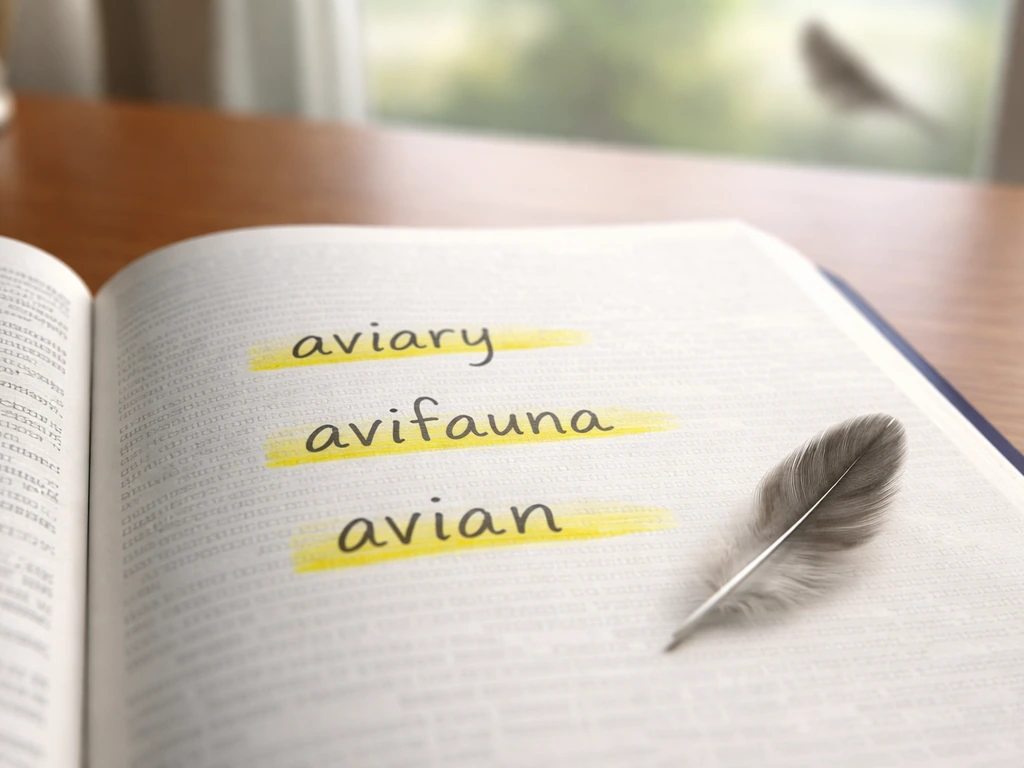
blank" rel="noopener noreferrer">Avi- comes from the Latin avis, also meaning 'bird.' You see it in words like aviary (a place for birds), avifauna (the birds of a particular region), avian (relating to birds), and aviation (which originally referenced the bird-like act of flying). Merriam-Webster defines “avian” as “of, relating to, or derived from birds,” tracing it to Latin avis blank" rel="noopener noreferrer">avian (relating to birds). In crossword puzzles, AVI is often the preferred answer because it's short and clean. The Latin root tends to show up more in everyday English vocabulary and in ecological terms, while the Greek ornitho- dominates the scientific literature.
| Root | Origin | Meaning | Example words | Common in |
|---|---|---|---|---|
| ornitho- / ornith- | Greek (órnīs) | Bird | ornithology, ornithoid, ornithopter | Scientific, academic, formal |
| avi- | Latin (avis) | Bird | aviary, avifauna, avian, aviation | Everyday English, ecology, crosswords |
Spotting the prefix in bird names (common names vs scientific names)
Common English bird names almost never use ornitho- or avi- as a visible prefix. You won't find a bird called the 'Avi-something' in your field guide. Instead, common names use plain English descriptors: color, habitat, behavior, or the person who discovered the bird. The 'bird' prefix roots are hiding in the background vocabulary, in words that describe or classify birds rather than name individual species.
Scientific names are a different story. In the binomial system (Genus species), species-group names are often built from Latin or Greek roots, and ornitho- or its derivatives can show up in genus names. For example, Ornithorhynchus (the platypus, which was once thought bird-like because of its bill) comes directly from ornitho- + rhynchus (beak). The genus Ornithoptera (birdwing butterflies) combines ornitho- with ptera (wing). Even outside birds themselves, the 'bird' root travels into names for things that resemble birds.
When you're reading a scientific name and you see 'ornith' or 'ornitho' at the start of a genus, your first instinct should be: this organism has something bird-like about it, or it was named in relation to birds. The avi- root appears less frequently in genus names but shows up in species epithets and in broader ecological terms like avifauna used in species accounts.
One practical scenario where this matters: if you're learning about crop meaning in birds, you're already in the world of bird anatomy vocabulary, which is built on the same Latin and Greek foundations. Recognizing the roots helps you decode new terms faster as you go deeper into ornithological language.
Why ornithology uses these prefixes: naming conventions explained
The International Code of Zoological Nomenclature (ICZN) governs how animal names, including bird names, are formally established. The Code's Appendix B actually recommends that authors who create new genus- or species-group names state the derivation and etymology of the name. That recommendation exists precisely because classical roots like ornitho- and avi- are the building material of scientific names, and knowing the etymology helps researchers understand, remember, and correctly use a name.
The underlying logic is practical: Latin and Greek are stable, internationally shared languages that don't belong to any living language community. A name built from ornitho- means 'bird-related' to a researcher in Brazil, Japan, or Norway without translation. Species-group names under the ICZN must also meet formal availability requirements, including rules about how Latin and latinized words are treated (adjectives used in the nominative singular, correct grammatical case for genitives, and so on). This is why you can't just slap 'ornitho-' onto anything; the full form has to follow Latin/Greek grammar.
For everyday bird watchers, this matters less. But if you're trying to understand why a bird is named what it is, the etymology is often the most direct explanation. Knowing that ornitho- means 'bird' and -logy means 'study' immediately tells you what ornithology is, without needing a dictionary. The same decoding skill applies to hundreds of other terms in the field.
How to say and spell these terms correctly
Ornitho- is pronounced OR-ni-thoh (IPA: /ˈɔːr.nɪ.θoʊ/). The stress falls on the first syllable, the 'th' is the soft English 'th' as in 'think' (not as in 'this'), and the final -o is a clear long 'oh' sound. When it shortens to ornith- before a vowel, you get OR-nith (IPA: /ˈɔːr.nɪθ/). So ornithology is or-nih-THOL-uh-jee, with the stress shifting to the third syllable once the full word is assembled.
Avi- is simpler: AY-vee (IPA: /ˈeɪ.vɪ/). Avian is AY-vee-un, avifauna is AY-vee-faw-nuh, and aviary is AY-vee-air-ee. The stress is consistently on the first syllable for the root, though it can shift in longer compounds. A common mispronunciation is to say AH-vee (rhyming with 'Bobby') rather than AY-vee; the correct vowel is the long 'a' sound.
For spelling, the most common mistake with ornitho- is dropping the 'h': people write 'ornitology' or 'ornitologist.' The 'h' is always there in the standard English spelling because it's part of the Greek root. Another common error is writing 'ornithe-' or 'ornitha-' instead of 'ornith-' when the root appears before a vowel. Just remember: the -o drops, but the root stays ornith-, not ornitha- or ornithe-.
If you're working through bird-related terminology and want to go deeper on anatomy terms that share these linguistic roots, understanding what bill means in bird terminology is a good next step, since 'bill' (and its Latin equivalent rostrum) follows similar naming logic in ornithological vocabulary.
Prefixes that look like 'bird' but aren't
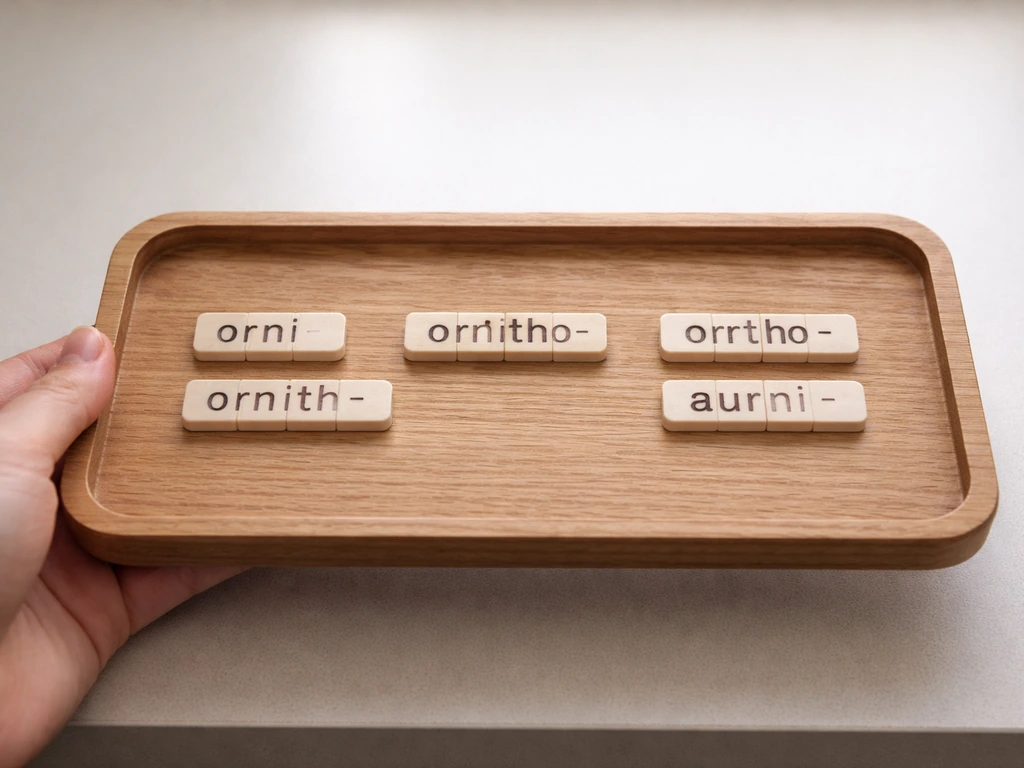
A few look-alike situations trip people up regularly. Here are the most common ones worth knowing about.
- Orni- vs. ornitho-: Some people see 'orni-' and assume it's an abbreviated bird prefix. It is, sort of, but 'orni-' alone isn't a standard standalone prefix in English. Always look for the full 'ornith-' or 'ornitho-' to confirm the bird meaning.
- Avi- vs. avid / aviator: The prefix avi- means 'bird,' but the English word 'avid' (meaning eager or enthusiastic) comes from Latin avidus, which means 'greedy' or 'eager' and has nothing to do with birds. Aviation borrows avi- from 'bird,' but an aviator is named for the bird-like act of flying, not because the word is about birds directly.
- Pteri- / ptero-: This Greek root means 'wing' or 'feather,' not 'bird.' Pterodactyl means 'wing finger.' Pterosaurs were winged reptiles, not birds. The presence of pteri- does not mean something is a bird, even though birds have wings.
- Raptor: This Latin word means 'one who seizes' (from rapere, to seize), not 'bird.' It's applied to birds of prey because of their hunting behavior, not because 'raptor' means bird in any etymological sense.
- Passerine: From Latin passer (sparrow), so technically a specific bird type, but 'pass-' or 'passer-' as a prefix doesn't mean 'bird' generically. It refers to sparrow-like birds specifically.
The confusion between flight-related and bird-related prefixes is especially common in word puzzles. If you're working through a clue for a prefix meaning bird or flight in 3 letters, knowing the distinction between avi- (bird) and ptero- (wing/flight) helps you pick the right answer for the specific grid. The NYT crossword version of this clue has its own quirks, too, and if you've run into it there, the prefix meaning bird or flight NYT clue has targeted guidance for that specific puzzle context.
A quick checklist for verifying any 'bird' prefix
Whether you're solving a puzzle, researching a species name, or just curious about a word you've encountered, this process will get you to a reliable answer in a few minutes.
- Isolate the prefix: Find where the root ends and the rest of the word begins. In 'ornithology,' the split is ornith- + -ology. In 'avifauna,' it's avi- + fauna. If you're unsure, try removing familiar suffixes (-logy, -ology, -fauna, -culture) and see what's left.
- Check the vowel-drop rule: If the root you're looking at is 'ornith-' followed by a vowel, that's just the shortened form of 'ornitho-.' They're the same root. Don't mistake it for a different word.
- Confirm with a dictionary or etymological source: Merriam-Webster and Dictionary.com both have dedicated entries for ornitho- and avi- as combining forms. Search the prefix directly, not just the full word.
- Cross-check against a bird nomenclature source: The ICZN's online resources and major ornithological checklists (like the IOC World Bird List) can confirm whether a name element has a formal bird-related etymology.
- For puzzle contexts, count your letters: AVI is 3 letters, ORNITHO is 7. If neither fits your grid, double-check the clue wording. A clue that says 'bird or flight' often signals AVI specifically, since aviation bridges both meanings.
- For pet naming or creative use: Once you've confirmed the root, you can build new compound names freely. Ornitho- + anything Greek works. Avi- + anything Latin or English works. Just keep the vowel-drop rule in mind if your second element starts with a vowel.
Puzzle fans who run into related challenges around bird-themed clues will find that word puzzles about birds often go beyond prefixes. If you've seen a common origami bird crossword clue (the answer is usually CRANE), that's a case where cultural knowledge about birds crosses into puzzle territory, similar to how knowing your bird prefixes helps with etymology-based clues.
Other bird-related puzzle vocabulary can catch people off guard. For example, a clue about limbless prey for a bird in 4 letters (WORM) has nothing to do with prefixes but comes up in the same puzzle contexts where bird etymology clues appear. And if you've seen a LinkedIn or trivia version of that clue, the limbless prey for a bird 4 letters LinkedIn clue is worth a look if you want the specific answer confirmed.
Putting it all together
The two prefixes meaning 'bird' that matter most are ornitho- (Greek, academic, scientific) and avi- (Latin, everyday English, often the crossword answer). Ornitho- shortens to ornith- before vowels, which is normal and not an error. Avi- stays stable and produces familiar words like avian, aviary, and avifauna. Neither root appears directly in most common English bird names (like robin or hawk), but both are foundational to the vocabulary used to describe, study, and classify birds. Knowing them lets you decode new terms on the fly, build etymologically correct compound names, and solve puzzle clues without second-guessing yourself.
FAQ
If I see “ornith-” or “avi-” in a word, does it always mean the word is literally about birds?
Not always. ornith- and avi- typically point to bird-related concepts (birds, bird study, bird-like features), but in classification or etymology they can also refer to resemblance (bird-like shape or behavior), or a naming decision made relative to birds rather than the organism being an actual bird.
How can I tell quickly whether a clue wants AVI or ORNITHO?
Use length first (AVI is usually 3 letters, ORNITHO is usually 7). Then check crossing letters for the presence of an H and the spelling pattern ornitho- (not ornith-) in puzzle grids, since ornith- is the vowel-drop form used inside compounds.
What’s the difference between ornithology and ornitho- words that show up in genus names?
Ornithology is the general study term, while ornitho- in a scientific name is usually a derivational element indicating the namer linked the organism to birds (bird-like or bird-associated). In genus names, you often see a full Latinized form built from ornitho- plus another element, not just the bare prefix.
Is “ornithoid” built using the shortened form ornith- or the longer ornitho-?
For vowel-starting additions, the root typically shortens to ornith- before the next element. That is why the connecting piece in many compounds behaves like ornith- rather than ornitho-, and the “-o- drop” is part of the standard Greek combining-form behavior described in the article.
When reading or writing ornithology-related terms, what spelling mistakes should I watch for besides dropping the H?
Also watch for incorrect vowel insertion, people sometimes write ornithe- or ornitha- when a vowel follows, but the standard pattern keeps the root as ornith- (the -o drops in the connecting position, not the h).
Are there any common look-alikes that cause “bird prefix” confusion in puzzles?
Yes. Clues that mention flight or wings often steer solvers toward ptero- (wing/flight-related) instead of avi- (bird). If the clue centers on flying or wings rather than birds, ptero- is often the better match.
Does the pronunciation of ornitho- affect spelling in English-only contexts?
Not directly, but it can cause people to mishear the root as missing letters. The key practical cue is spelling-based: keep the h in ornitho- forms and use ornith- when you see the vowel-dropping connection in compounds.
Can I use these prefixes to guess the meaning of a scientific name I’ve never seen before?
Yes, as a first-pass decoding method. If a genus begins with ornitho- you can infer “bird-related or bird-like” and look at the rest of the name for the specific detail (for example, beak, wing, or another feature). For exact meaning, also consider historical naming notes in the species description.
Why does the zoological naming system care so much about etymology details?
Under formal naming rules, authors are expected to provide derivation and etymology so the name is traceable and grammatically formed correctly. This matters because the same “bird root” can appear in different grammatical roles depending on how it is combined and Latinized.
What should I do if a bird-related term doesn’t contain ornith- or avi- but still seems bird-focused?
That’s normal for everyday bird names and many descriptive terms. Many bird-related words use plain English descriptors (color, habitat, behavior) or different roots altogether. In that case, you may need to identify the other morphemes (for example, color or body-part terms) rather than searching only for bird-prefix roots.
Next Article
How to Pronounce Mynah Bird (MY-nah vs my-NAY)
Learn how to pronounce mynah birds word mynah or myna, with syllables, stress, and quick self-check tips.