The answer is TUMBLERPIGEON (13 letters). That's the answer crossword databases consistently list for the clue "bird that does somersaults in flight," and it was most recently confirmed in the USA Today Crossword from June 5, 2025. If your grid has 13 squares and the letters fit, you're done. If you want to understand why, verify it, or rule out other birds before committing, keep reading.
Bird That Does Somersaults in Flight Crossword Answer

James Ridgley
12 Apr 2026
What the clue is really asking
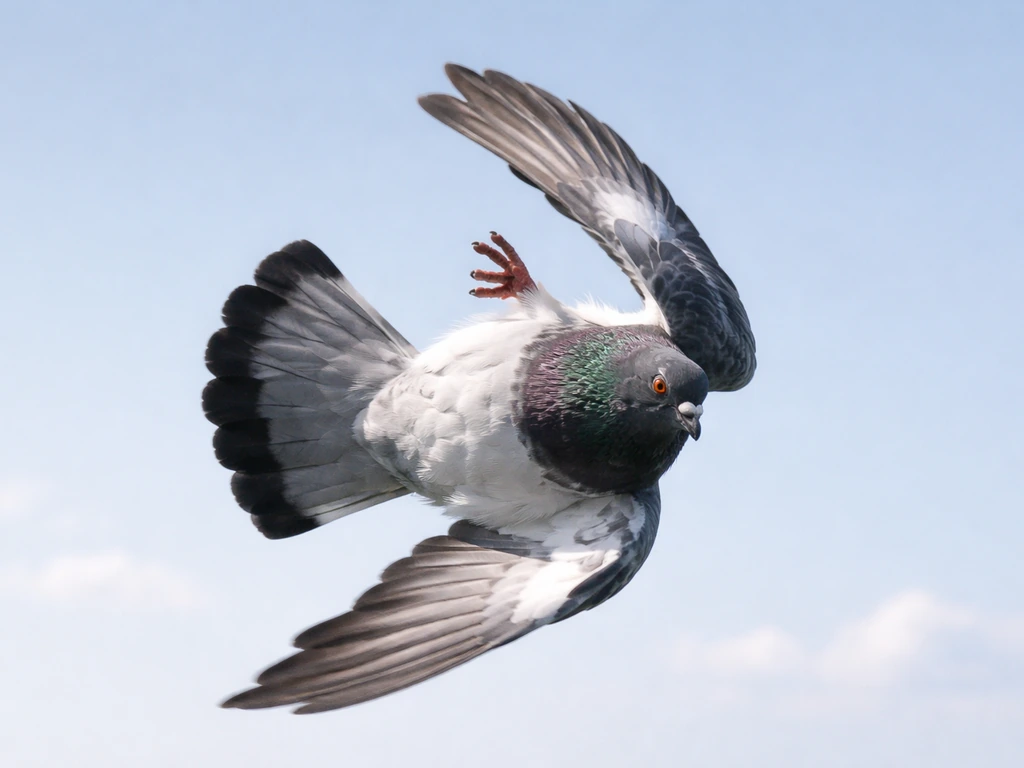
Crossword clues that describe a bird's behavior are almost always pointing to a common name that encodes that behavior. "Does somersaults in flight" is not inviting you to think about every acrobatic bird in the sky. It's a tightly worded definition that maps to one specific common name used in standard English dictionaries and crossword word lists. The word "tumble" is the key. Pigeon breeds that flip or roll backwards repeatedly during flight are classified as tumbler pigeons, and the compound common name TUMBLERPIGEON is the crossword-ready, one-word form of that.
In a cryptic crossword, clues work on two levels: a straight definition and a wordplay component. In a standard (American-style) crossword like USA Today, the clue is purely definitional, meaning the whole phrase is describing the answer. There's no hidden wordplay to decode. "Bird that does somersaults in flight" is simply a paraphrase of the bird's name and known behavior. The solver's job is to recognize that definition and retrieve the correct common name, then confirm it against the grid.
Birds known for mid-air somersaults
Several birds are genuinely associated with aerial acrobatics, so it's worth knowing why tumbler pigeons specifically win the crossword. Here's a quick look at the main candidates and what disqualifies or supports each.
| Bird | Acrobatic behavior | Crossword viability |
|---|---|---|
| Tumbler pigeon | Backwards somersaults and rolls during flight, up to 8-10 per second in some breeds | Strong: the behavior is named in the bird's common name |
| Birmingham Roller | Rapid, repeated backward rolls in flight (a type of roller/tumbler pigeon) | Possible but longer and less standard as a single crossword entry |
| Lapwing | Tumbling, diving display flights during breeding season | Unlikely for this clue: "tumble" is not encoded in its name |
| Swallow | Fast aerial maneuvers and dives | No: not associated with somersaults specifically |
| Swift | Extreme aerial agility, rarely lands | No: speed, not flipping, is the defining trait |
blank" rel="noopener noreferrer">Tumbler pigeons are domesticated pigeon varieties selectively bred for their signature behavior: tumbling or rolling over backwards in flight. Scientific research has confirmed that the tumbling occurs during flight, with some individuals executing the motion at remarkable rates. That's not something you can say about a lapwing or a swallow, and more importantly, no other bird has the word for that behavior literally baked into its common name the way "tumbler" pigeon does. Birmingham Rollers are a closely related type, but "roller" and "tumbler" are used interchangeably in the pigeon-fancying world, with the official combined form being TUMBLERPIGEON for crossword purposes.
Crossword-specific solving tactics
Letter count first
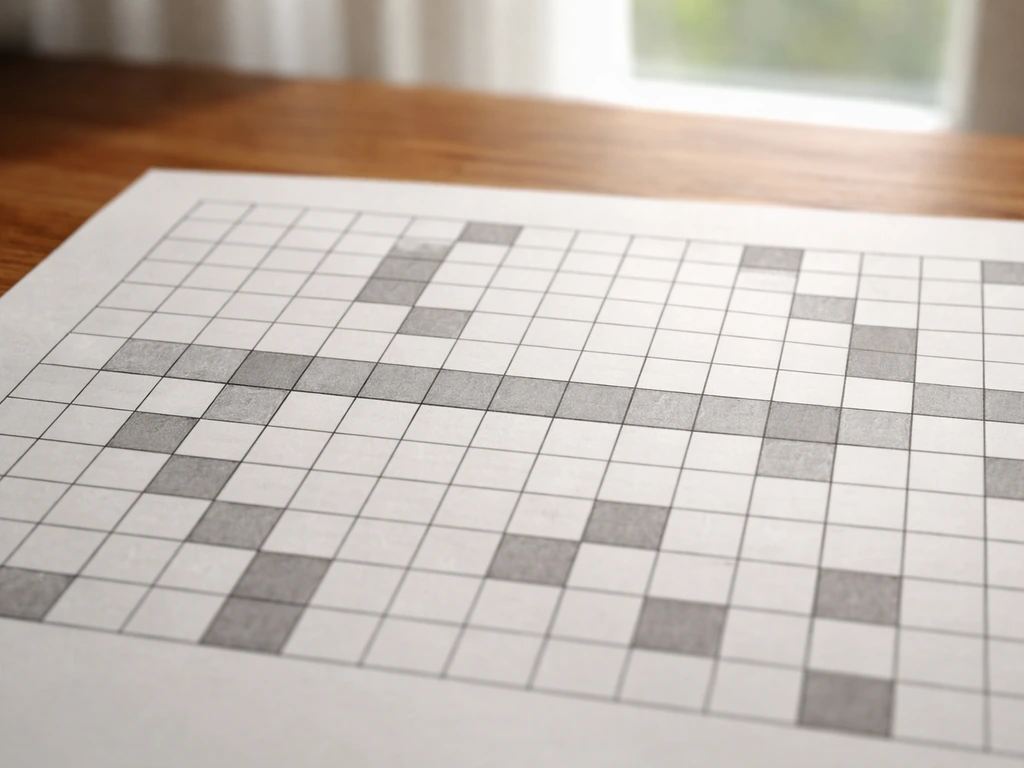
Count your squares before anything else. TUMBLERPIGEON is 13 letters: T-U-M-B-L-E-R-P-I-G-E-O-N. If your grid shows 13 empty squares for this clue, that's a strong match. If the count is different (say, 6 or 7), you're either in the wrong puzzle type or there's a shorter form being used, like TUMBLER (7 letters) or ROLLER (6 letters). These shorter forms can appear when the clue is phrased slightly differently, such as "acrobatic pigeon" or "flip-prone pigeon breed."
Pattern matching with crossing letters
Once you have a length, use your crossing letters (the answers to intersecting clues) to confirm. The distinctive letters in TUMBLERPIGEON are worth knowing. The double-vowel sequence at the end (E-O-N) is a reliable check, as is the uncommon MB combination near the front. If you have a confirmed B in position 4 and an R in position 7, you're almost certainly looking at TUMBLERPIGEON. The P in position 8 (start of PIGEON) is another strong confirmation anchor, since few 13-letter bird names have a P that far in.
Alternate clue phrasings to recognize
Crossword setters rotate their clue wording. The same answer, TUMBLERPIGEON, might appear under clues like "pigeon that does backward somersaults," "acrobatic dove variety," or simply "tumbler." If you're working through a puzzle and spot any clue mentioning somersaults, rolls, or tumbling alongside "bird" or "pigeon," that's your signal. This is also why bird-behavior crossword clues like "bird that can make tools" follow the same logic: the behavior is naming the bird, not describing a random fact about it.
Name variations, spelling, and regional differences
This is where solvers most often go wrong. The common name "tumbler pigeon" is two words in everyday use, but crosswords typically write answers as a single unspaced string. So TUMBLERPIGEON (no space, no hyphen) is the form you'll enter. American crossword conventions tend to drop spaces and hyphens for compound common names, which is consistent with how other multi-word bird names are handled in grids.
Regional naming is less of a problem here than with some other birds (there's no major UK-vs-US split for "tumbler pigeon"), but there are a few variant terms worth knowing. "Roller pigeon" and "tumbler pigeon" are sometimes used interchangeably in pigeon-fancying contexts, and specific breed names like Birmingham Roller or Persian Tumbler refer to sub-varieties. For crossword purposes, TUMBLERPIGEON is the standardized dictionary entry. ROLLER (6 letters) is a legitimate crossword answer in its own right but would be clued differently. This kind of naming nuance matters just as much in other bird-language puzzles: if you've ever tried to solve a clue about the bird that has the longest migration, you'll know that ARCTICTERN vs ARCTIC TERN (spaced vs. unspaced) can trip you up in the same way.
Pluralization is unlikely to be an issue here since crossword clues for specific bird types rarely call for a plural entry, but if yours does, TUMBLERPIGEONSSS is obviously wrong and TUMBLERPIGEON is the base form to work from. Also watch for hyphenation in older puzzle databases: TUMBLER-PIGEON (with a hyphen) appears occasionally in British reference works but is not the standard American crossword form.
Common traps and how to confirm before you commit
Don't overthink "somersaults"
The biggest trap is treating "somersaults in flight" as a cryptic instruction to anagram or manipulate the letters in the clue. This is a standard (non-cryptic) crossword clue, so the phrase is a plain description. "Somersaults in flight" = tumbling behavior during flight = tumbler pigeon. There's no wordplay hidden in the phrasing. If you find yourself trying to anagram SOMERSAULTS or looking for a hidden word inside INFLIGHT, stop. That's a cryptic-solving instinct being applied to the wrong puzzle type.
Ruling out generic "acrobatic bird" answers
Some solvers initially guess SWALLOW or SWIFT because those feel like "acrobatic birds." A quick letter-count check rules them out immediately (both are far shorter than 13 letters), but it's worth knowing why they don't fit the clue conceptually either. Swallows and swifts are agile and fast, but neither is described as doing somersaults, and neither has a name that encodes that behavior. The clue is specifically pointing to a named variety of bird, not a vague category. In the same way that solving a crossword clue about the top of a wave or a bird requires you to land on CREST (a word that works for both meanings), this clue requires a name where the behavior is literally part of the word.
Double-check with crossing answers
The most reliable way to confirm TUMBLERPIGEON is to solve the intersecting clues and verify the letters match. Pay particular attention to positions 1 (T), 7 (R), and 8 (P), since those three positions together make a near-unique fingerprint for this answer in a 13-letter slot. If any crossing answer gives you a letter that contradicts TUMBLERPIGEON, go back and recheck that crossing clue rather than abandoning TUMBLERPIGEON automatically. Crossword errors are more often in the crossing answers than in a well-documented clue like this one.
Verifying against known crossword records
If you want external confirmation before filling in your grid, TUMBLERPIGEON has a documented appearance in the USA Today Crossword from June 5, 2025. Both Try Hard Guides and Crossword Heaven list it as the only answer for this specific clue wording. CrosswordTracker also indexes "tumbler pigeon" as a recognized clue form. These three sources agreeing on the same answer is about as confident as crossword verification gets. This level of cross-referencing is especially useful when you're working with an unusual compound name, and it's the same approach that helps solvers decode niche clues like the full bird military rank crossword clue, where the answer depends on knowing an exact institutional term rather than a general description.
Your solving checklist

- Count the squares: TUMBLERPIGEON needs exactly 13.
- Confirm the form: no space, no hyphen, all caps in the grid.
- Check crossing letters at positions 1 (T), 4 (B), 7 (R), 8 (P), and 13 (N).
- If your letter count is 7, consider TUMBLER as a shorter variant clued differently.
- If your letter count is 6, consider ROLLER (same behavior, alternate naming tradition).
- Cross-reference with a crossword database (Try Hard Guides, Crossword Heaven, CrosswordTracker) to confirm the June 2025 USA Today occurrence if you want a second opinion.
- Don't try to decode wordplay: this is a straight definitional clue, not a cryptic.
One last thing worth knowing: tumbler and roller pigeons are genuinely fascinating birds from a naming perspective. Merriam-Webster’s entry for “Oriental roller” describes it as a type of blank" rel="noopener noreferrer">tumbler pigeon, which can be useful when mapping related pigeon-fancying terms. The word "tumbler" has been attached to this pigeon variety for centuries precisely because the behavior is so distinctive and observable. That's exactly how bird common names tend to work: the most memorable, visible, or unusual trait becomes the name. It's the same logic behind names covered elsewhere on this site, like how the Brittany is known as a bird hunting dog, where the name encodes a role or behavior that defines the animal. For crossword purposes, that naming logic is your best friend. When a clue describes what a bird does, look for the bird whose name literally says it.
FAQ
Do I enter “tumbler pigeon” with a space or hyphen, or as one word?
Most mainstream American-style crosswords treat this clue as a straight definition, so you should enter TUMBLERPIGEON with no space and no hyphen. If your grid uses 13 letters but your software suggests spacing, override it and follow the enumeration plus the crossing letters.
What if my clue’s answer length is not 13 squares?
If the clue is “bird that does somersaults in flight” but your slot is not 13, check for shorter, related crossword entries like TUMBLER (7) or ROLLER (6). However, those shorter answers typically appear with different clue wording that points to the pigeon variety rather than the full compound name.
Could “somersaults in flight” be a cryptic instruction like an anagram or hidden word?
Yes. In cryptic crosswords, solvers sometimes try anagram or hidden-word tricks. For this specific clue wording, the body’s guidance applies: “somersaults in flight” is descriptive, so you should not rearrange SOMERSAULTS or search inside INFLIGHT. If the puzzle is truly cryptic, you may be looking at a different clue format.
Are “roller pigeon” and “tumbler pigeon” interchangeable for crossword answers?
Crosswords often require an exact dictionary form. The safest rule is to use the standardized one-word form, TUMBLERPIGEON. If you see ROLLER pigeon as a separate answer elsewhere, that is usually because the clue was shortened or worded differently.
My crossing letters disagree. Should I abandon TUMBLERPIGEON right away?
If a crossing letter contradicts TUMBLERPIGEON, the first thing to do is re-solve the intersecting clue rather than immediately abandoning the main answer. Crossing letters are more often wrong because of a misread clue or a wrong length assumption in the neighboring entry.
What are the most reliable letter “checks” beyond just the total length?
If you have multiple valid fills that keep the length but vary by one or two letters, your best tiebreaker is the set of letters tied to the internal structure of TUMBLERPIGEON, especially the early MB sequence, the P that starts the second half (PIGEON), and the E-O-N at the end. Use these as a checksum against crossings.
Could the answer ever need to be plural?
Pluralization is very unlikely because the clue names a specific pigeon variety rather than requesting a plural. If you see any plural-looking slot request in the grid, confirm the enumeration, but in nearly all standard cases the correct base form is singular: TUMBLERPIGEON.
How do I confirm I’m counting the right number of squares for the entry?
Yes, but only if the puzzle uses a variant enumeration rule. For example, if a grid includes black squares that change how many cells are part of the answer, you might think it’s 13 when it’s actually fewer. Recount the exact cells for the entry you are filling.
Next Article
How to Pronounce Mynah Bird (MY-nah vs my-NAY)
Learn how to pronounce mynah birds word mynah or myna, with syllables, stress, and quick self-check tips.