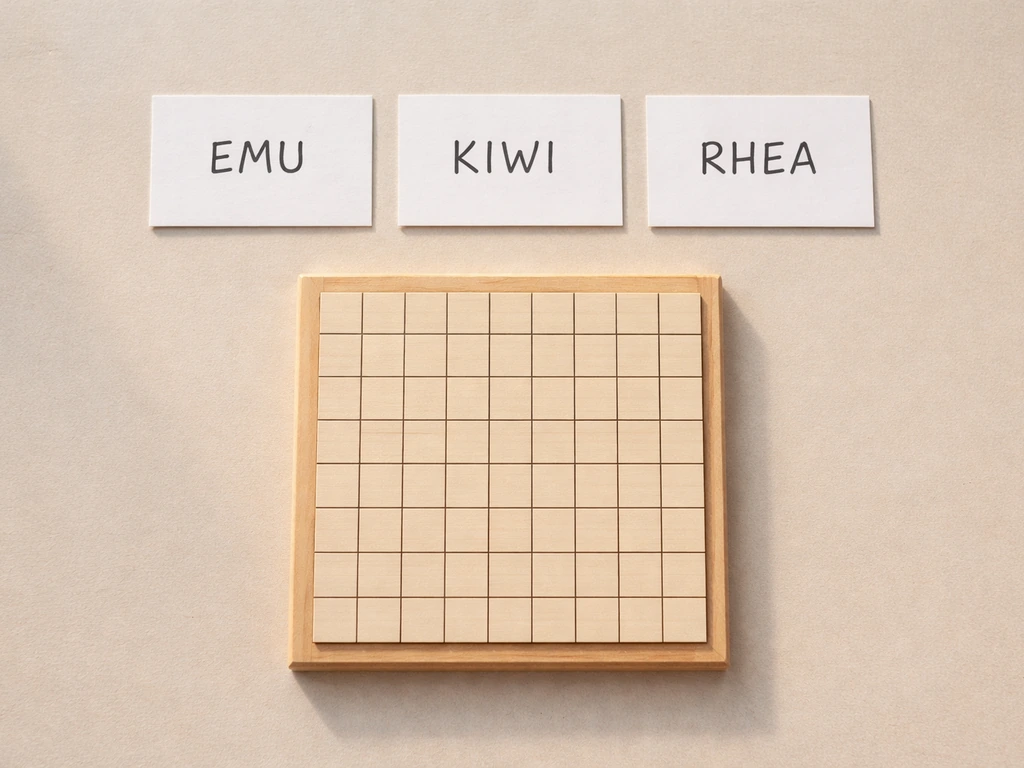
If you're staring at a crossword clue that reads 'bird whose male incubates the eggs' (or a close variant), the answer you're almost certainly looking for is EMU. That's the answer the New York Times Crossword used as recently as September 10, 2025. But here's the catch: the clue wording matters. Switch from 'incubates' to 'hatches,' and the NYT has historically pointed to KIWI or RHEA instead. This guide breaks down exactly which answer fits which version of the clue, how to confirm the right spelling and entry format, and why a few other birds could theoretically qualify but won't show up in your grid.
Bird Whose Male Incubates the Eggs Crossword Answer

James Ridgley
20 Apr 2026
The Bird the Clue Is Pointing To
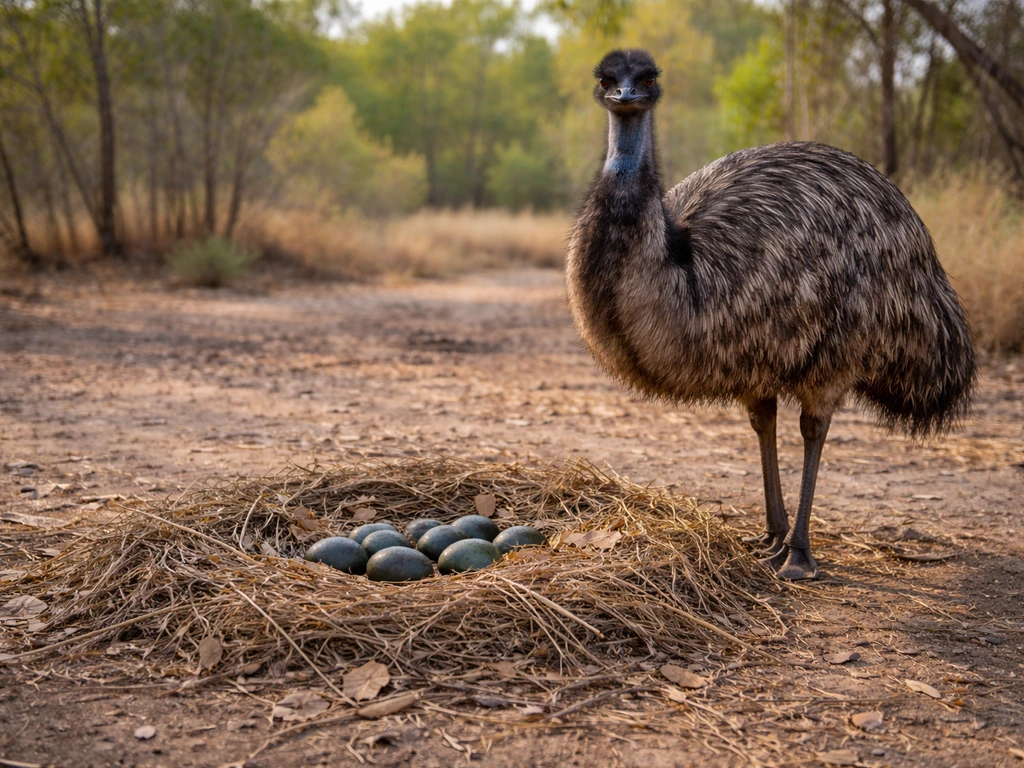
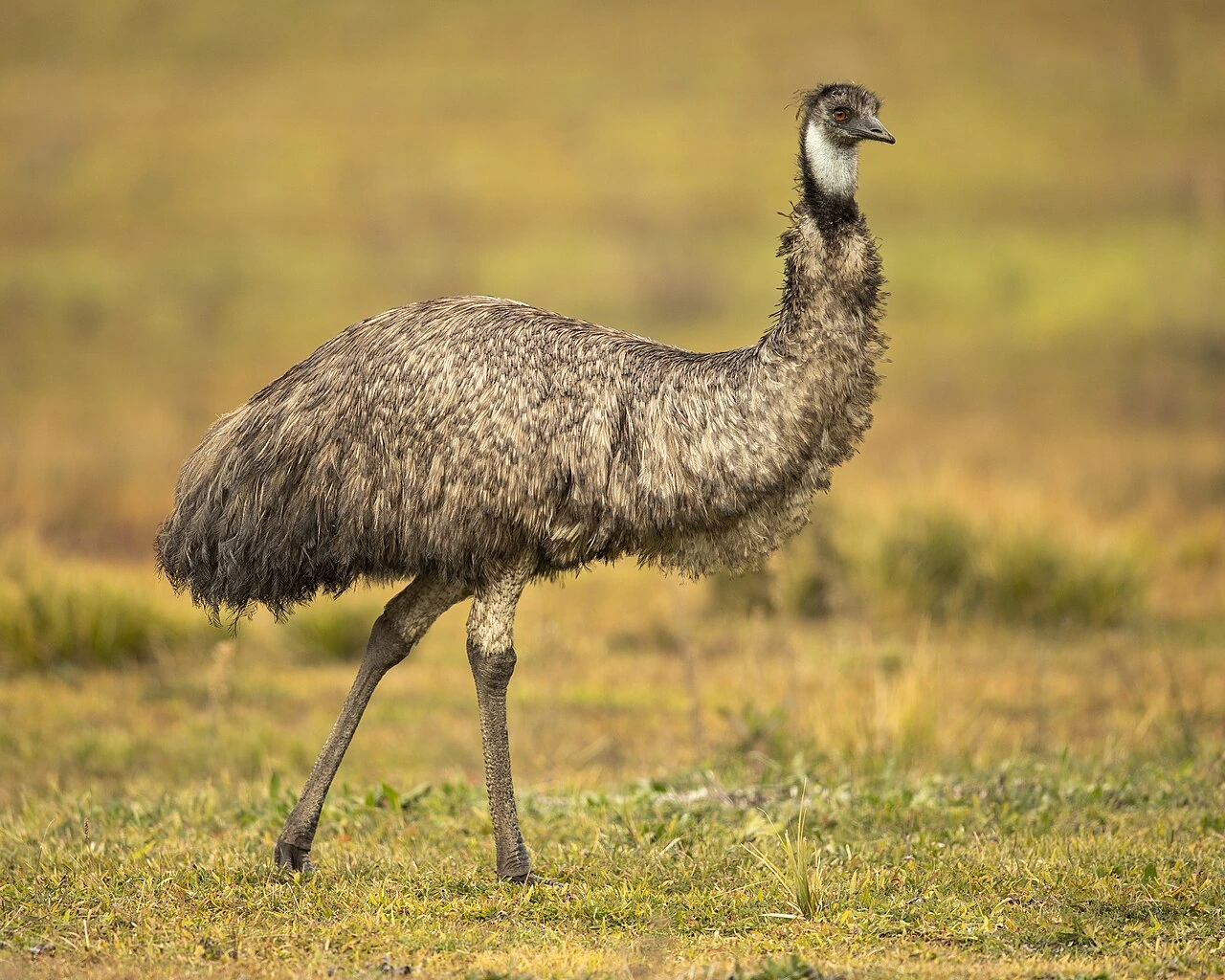
The emu is the go-to answer for the 'incubates' version of this clue. Male emus take sole responsibility for sitting on the eggs, and they're famously committed about it: during an incubation period of roughly eight weeks, the male barely eats, drinks, or moves. If your crossword clue mentions that the bird has one drink, it is still pointing you toward the same incubation-behavior ratites discussed here drinks. The NYT used exactly this biology in a November 2021 clue worded as 'Creature whose male incubates the eggs, during which it won't eat, drink or defecate for 50+ days,' with EMU as the answer. When the clue is shortened to 'Bird whose males incubate the eggs,' EMU remains the standard NYT answer, as confirmed by the September 2025 puzzle.
For the 'hatches the eggs' variant, the NYT has used both KIWI (July 13, 1997) and RHEA (February 13, 2004). All three birds, emus, kiwis, and rheas, are ratites: large, flightless birds whose males do most or all of the incubation work. The specific word the clue uses ('incubates' vs. 'hatches') and the number of squares available are your best guides to which answer the puzzle wants.
Getting the Entry Format Right
Crossword entries for these birds are short and unambiguous. Check your grid's letter count first:
| Answer | Letters | Typical Clue Wording | NYT Example |
|---|---|---|---|
| EMU | 3 | Bird whose males incubate the eggs | 9/10/2025 (53-Across) |
| KIWI | 4 | Bird whose male hatches the eggs | 7/13/1997 |
| RHEA | 4 | Bird whose male hatches the eggs | 2/13/2004 |
All three answers are entered in their standard singular form: EMU, not EMUS; KIWI, not KIWIS; RHEA, not RHEAS. Crossword constructors almost always use the singular common name when the clue refers to the species as a whole ('bird whose male...'). If your clue reads 'birds whose males...' (plural), the answer could be EMUS, but that's relatively rare. Stick with the singular unless the clue grammar clearly demands otherwise.
How the Clue Wording Maps to Each Answer
The difference between 'incubates' and 'hatches' is subtle in everyday language but significant in crossword databases. Here's how to read the signals:
- 'Bird whose males incubate the eggs' or 'Bird whose male incubates the eggs': Almost always EMU in modern NYT puzzles. This phrasing emphasizes the long, dedicated sitting behavior that the emu is famous for.
- 'Bird whose male hatches the eggs': Historically mapped to KIWI or RHEA in the NYT. 'Hatches' leans toward the act of the egg opening rather than the sitting period, but constructors use it interchangeably with 'incubates' in older puzzles.
- 'Creature whose male incubates the eggs': Still EMU. The swap from 'bird' to 'creature' is just a constructor's trick to vary the clue, not a signal to change your answer.
- NYT Spelling Bee or Mini variants: These puzzles don't use the same clue format, so if you're solving the Mini or Wordle, this clue pattern won't apply.
If you're using a crossword solver or database, searching for the exact clue phrasing you see in your puzzle will get you the fastest match. Crosswordtracker and Crossword Heaven both list KIWI and RHEA under the 'hatches' variant, while xwordinfo explicitly records EMU under the 'incubates' variant.
The Biology Behind the Answer
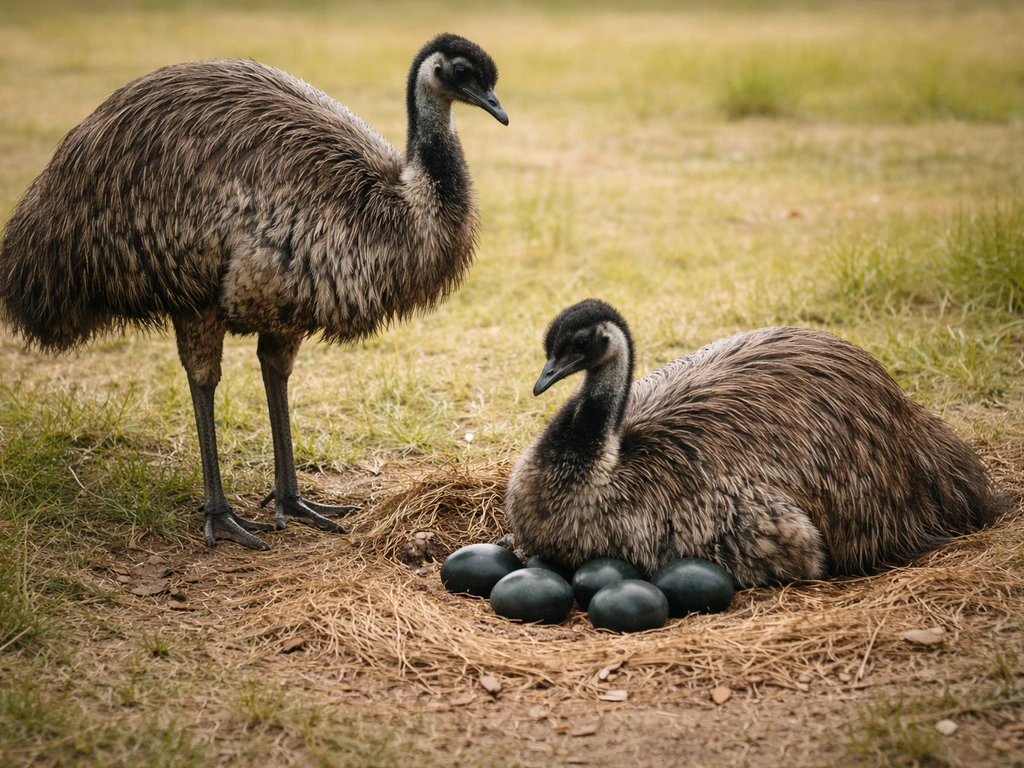
The male emu's incubation behavior is genuinely extreme and is one of those facts that crossword constructors love precisely because it's surprising. After the female lays the eggs, she may leave entirely, and the male settles in for roughly 56 days (about eight weeks). Harvard Museum of Natural History notes that emu eggs take about eight weeks, or roughly 56 days, to incubate and hatch blank" rel="noopener noreferrer">about eight weeks (~56 days). During that stretch, he stands up only occasionally to turn the eggs and barely feeds himself. During natural incubation, male emus typically do not eat or drink, with incubation timing around 56 days blank" rel="noopener noreferrer">he stands up only occasionally to turn the eggs and barely feeds himself. This is not shared parenting: the male does essentially everything.
The kiwi's situation is similarly dramatic. The male Brown Kiwi incubates the egg (kiwis typically lay just one enormous egg relative to body size) for 70 to 80 days in the wild, with the male handling turning and temperature regulation throughout. The great spotted kiwi is a partial exception where both parents share duties, but for crossword purposes, the kiwi is firmly in the 'male incubates' category.
The rhea follows the same pattern. Male rheas build nests and incubate eggs from multiple females, sometimes sitting on 20 or more eggs at once. This polygynous system, where females lay in a communal nest and the male does all the incubating, is exactly the kind of memorable biology that drives a crossword clue.
Other Birds That Could Technically Qualify
A few other species have male-dominant or male-only incubation, and if you're second-guessing your answer, it helps to know why they don't fit most crossword clues in this family.
- Jacanas (wattled jacana, bronze-winged jacana): Males incubate eggs and handle all chick care in these polyandrous shorebirds. But JACANA is 6 letters, rarely appears in standard crosswords for this specific clue, and the phrasing 'bird whose male incubates the eggs' hasn't been linked to jacana in major puzzle databases.
- Wilson's phalarope: Another species with male-only incubation, but PHALAROPE is 9 letters and would never fit a short-answer clue of this type.
- Emperor penguin: Males famously balance eggs on their feet through Antarctic winters, but the emperor penguin clue wording is usually different ('Antarctic incubator,' for example) and the answer PENGUIN or EMPEROR PENGUIN doesn't match the typical letter count for this clue family.
- Ostrich: Both male and female ostriches incubate, so the 'whose male' phrasing doesn't single out the ostrich accurately. Crossword constructors tend to be precise about this distinction.
The reason EMU, KIWI, and RHEA dominate this clue family in crosswords is partly biological accuracy and partly the fact that their names are short, vowel-rich, and crossword-friendly. A constructor looking for a clean 3- or 4-letter entry with strong crossing potential will reach for these three over JACANA or PHALAROPE every time. If you're working on a similar clue that touches on what a bird eats or what its plumage looks like, that's a different clue family entirely, and the answers shift accordingly.
Spelling, Pronunciation, and Name Variants
EMU
Spelled E-M-U, always. No variant spellings are accepted in standard English or crossword grids. Pronounced 'EE-myoo' (IPA: /ˈiːmjuː/). The name comes from an Arabic or Portuguese word meaning 'large bird,' and it passed into English through early colonial contact in Australia. You will occasionally see the plural 'emus' in clues, but for this specific behavior clue, the singular EMU is standard.
KIWI
Spelled K-I-W-I. Pronounced 'KEE-wee' (IPA: /ˈkiːwiː/). The name comes directly from the Maori language and is an imitation of the bird's call. 'Kiwi' is used for several species (North Island brown kiwi, little spotted kiwi, etc.), but in crosswords it appears as a generic common name for the group. 'Kiwi' is also a New Zealand cultural term for people from New Zealand and the name of the fruit, but those meanings don't intersect with this clue.
RHEA
Spelled R-H-E-A. Pronounced 'REE-uh' (IPA: /ˈriːə/). The name comes from Greek mythology: Rhea was a Titan goddess, though the connection to the bird is indirect and largely a matter of 18th-century naturalists naming South American species after classical figures. There are two main species, the greater rhea and the lesser rhea (also called Darwin's rhea), but in crossword grids RHEA refers to the genus as a whole. Don't confuse it with the name Rhea as a personal name, which has the same spelling but is unrelated to the bird for puzzle purposes.
Your Fastest Path to the Right Answer
Count the squares first. Three squares means EMU, full stop. Four squares and the clue says 'incubates': check your crossing letters, but EMU doesn't fit so look at KIWI or RHEA. Four squares and the clue says 'hatches': KIWI or RHEA, with crossing letters deciding between them. If the clue is from a recent NYT puzzle (2020 onward) and uses 'incubates,' go with EMU. Older puzzles and the 'hatches' variant open the door to KIWI and RHEA. All three answers are spelled exactly as you'd expect, no doubled letters or silent consonants to trip you up.
One last tip: if you hit a crossword clue that describes a bird's behavior in an unusual way, like referencing its diet, its plumage color, or a cultural association, that's a different category of clue from the incubation behavior clues covered here. If your crossword clue focuses on what the bird eats, you may be looking for a different answer altogether, like the bird whose diet crossword clue. Some crossword clues about a colorful bird named for its diet are a different category from incubation clues, so the answer you need will not be EMU, KIWI, or RHEA colorful bird named for its diet nyt crossword clue. A bird who might admire a large vibrantly colored tail is a very different clue style than the incubation behavior described here A bird who might admire a large vibrantly colored tail crossword. Those use a different set of bird names and require a different approach, but the same strategy of counting squares and reading the clue's precise wording applies just as well.
FAQ
If my clue says “broods” or “sat on the eggs” instead of “incubates” or “hatches,” what should I do?
Look at the exact verb form and the tense. If the clue is past tense (for example “incubated”) it can still point to the same three birds, but many setters keep the present-tense wording for the intended ratite answers. If your clue uses a different verb like “broods” or “sits on,” treat it as an incubation clue and then rely on letter count and crossings to choose among EMU, KIWI, and RHEA.
My clue includes extra detail like “multiple eggs” or a long time, does that change the answer?
Check whether the clue specifies a place or a number of eggs, then use that as a tie-breaker. RHEA clues often include hints like “multiple eggs” or “communal nest,” while KIWI clues sometimes mention extremely long incubation. EMU clues are more likely to emphasize a long stretch of near fasting by the male. When the clue has none of those extra hints, rely on squares and crossings.
The clue mentions “ratite.” Does that mean I should look beyond EMU, KIWI, and RHEA?
A “ratite” label can mislead solvers into thinking there is a longer, more specific taxonomic answer. In this clue family, setters almost always use the common English names EMU, KIWI, or RHEA in their standard singular spellings. So even if “ratite” appears, still prioritize the verb (“incubates” vs “hatches”) and the grid length.
What if my clue says “birds whose males incubate the eggs” (plural)?
Watch for plural agreement in the clue. “Bird whose male…” almost always expects the singular name, EMU, KIWI, or RHEA. If it explicitly says “birds whose males…,” you might consider EMUS, KIWIS, or RHEAS, but plural forms are relatively uncommon in this exact style and can be rejected by the grid letter count or crossing letters.
Crossword clue databases disagree on the answer. How can I decide quickly from the crossings?
If you are getting conflicting answers from different sources, trust your grid. Put the candidate that matches the square count first (3 letters usually EMU, 4 letters usually KIWI or RHEA), then check that the crossing letters fit the positions of the vowels and the rare letter patterns (EMU has a single vowel pair, KIWI repeats I and W in a specific order, RHEA has E-A at the end). If crossings rule out both KIWI and RHEA for “hatches,” you likely have a different bird clue category.
What should I do if the verb suggests one bird but the number of squares suggests another?
Use letter count plus the clue’s exact wording, but do a final grammar sanity check. If your clue says “male incubates,” EMU is the most likely fit when the grid length matches. If your grid is the wrong length for EMU, switch to the “hatches” candidates. If the clue’s verb is “hatches” but your crossings uniquely match EMU, then the clue may have been reworded or have an intended alternate phrasing, and you should verify the full entry length.
How do I know whether “KIWI” in my clue means the bird, not the country, fruit, or people?
Don’t assume “kiwi” always means the bird if the crossword is older or themed. In general-audience crosswords, KIWI for the incubation clue is standard, but some puzzles use “Kiwi” for the fruit or for New Zealand people. If your crossings fit the bird spelling KIWI and the clue includes egg-incubation language, that strongly favors the bird interpretation.
My clue mixes egg incubation with something else (diet, color, tail). How can I tell if I’m still in the right answer family?
If the clue includes a clear diet, color, or cultural association, it may be using a different bird clue category even if the clue also mentions nesting. In that situation, treat the incubation phrase as either a red herring or a secondary modifier and solve the primary attribute described by the clue (for example, diet-themed birds will not typically be EMU, KIWI, or RHEA unless the clue is clearly about incubating behavior).
Can I use alternative spellings like EMUS or KIWIS if the clue looks plural?
Assume standard English spelling in the grid. EMU uses all caps letters with a single E and then MU, KIWI uses the repeated I pattern, RHEA uses R-H-E-A. Avoid plural, alternate forms, or hyphenated variants, because grids usually reject them unless the clue explicitly calls for plural or an alternate accepted spelling.
Next Article
How to Pronounce Mynah Bird (MY-nah vs my-NAY)
Learn how to pronounce mynah birds word mynah or myna, with syllables, stress, and quick self-check tips.