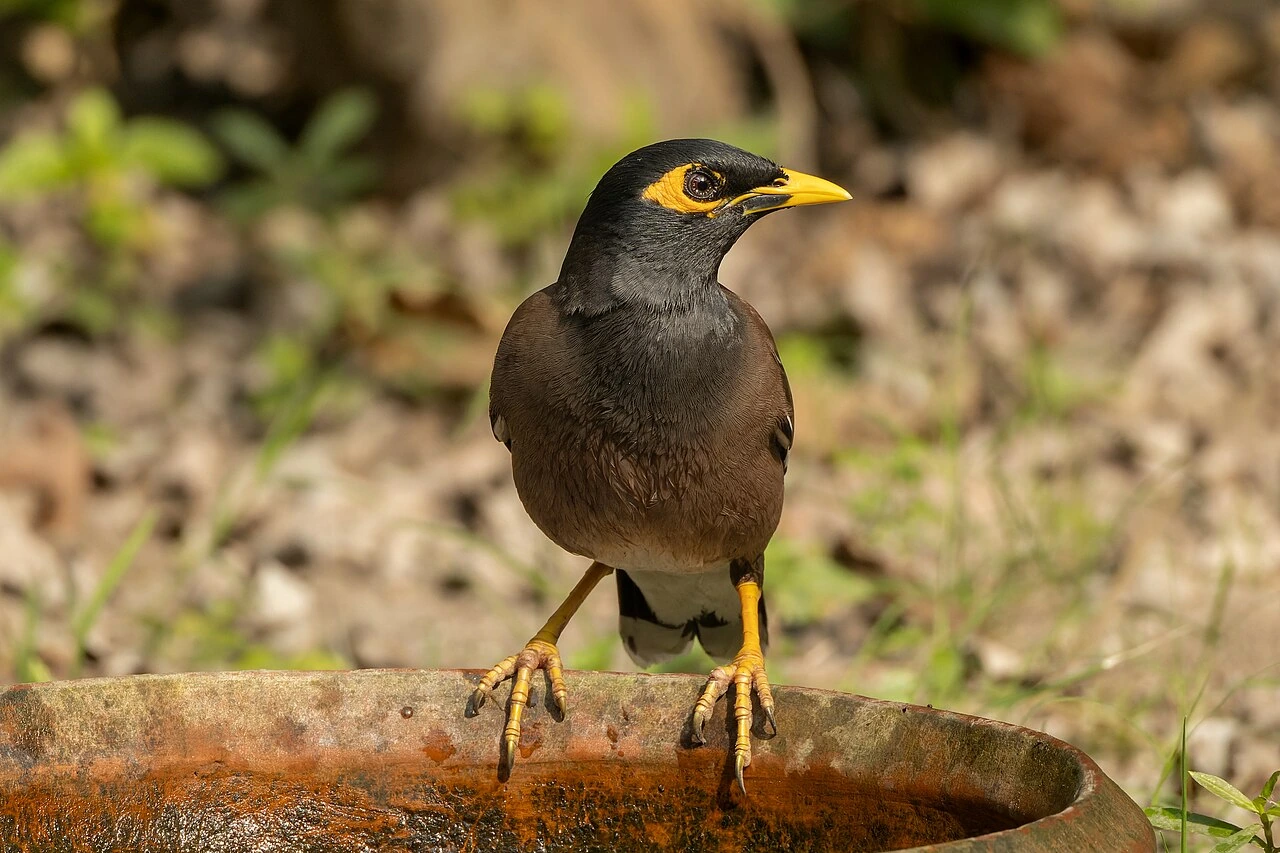
The Japanese word for "bird" is 鳥, pronounced <strong>tori</strong> (とり). That's the short answer. It's the everyday, go-to word you'll use whether you're pointing at a sparrow in the park, talking about your pet parakeet, or working through a Japanese bird guide. Everything else in this article builds on that foundation: how to say it correctly, how to write it, when to use a different word, and how to avoid the most common mix-ups.
How Do You Say Bird in Japanese: Pronunciation and Writing

James Ridgley
12 Apr 2026
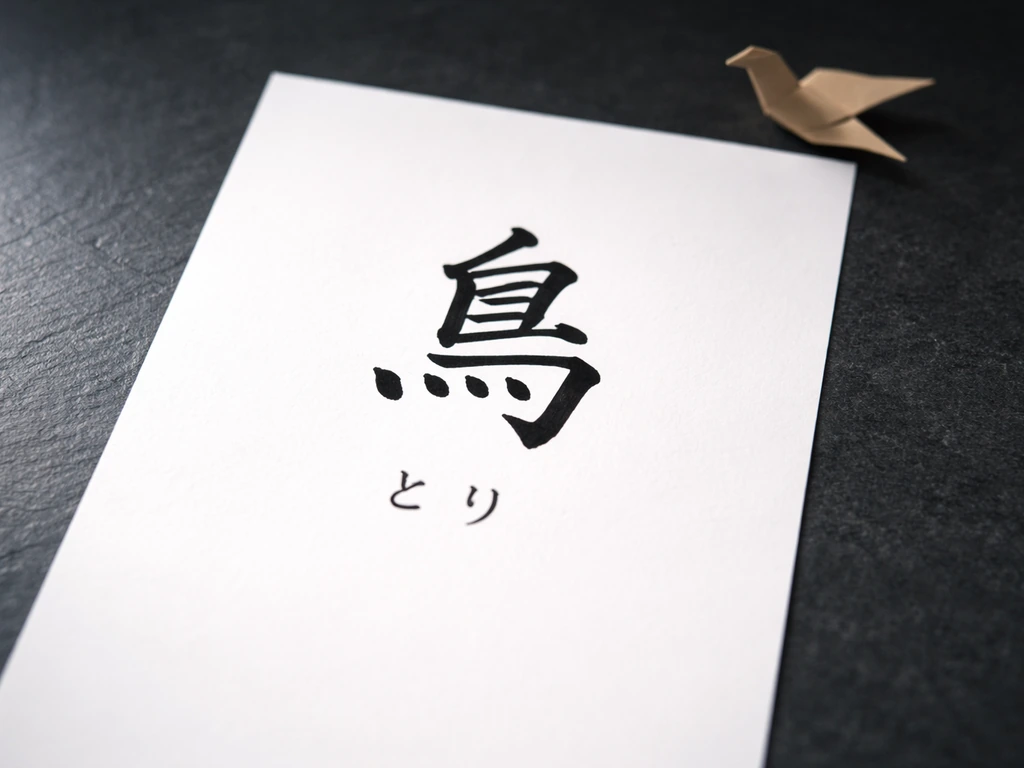
The simplest Japanese word for "bird"
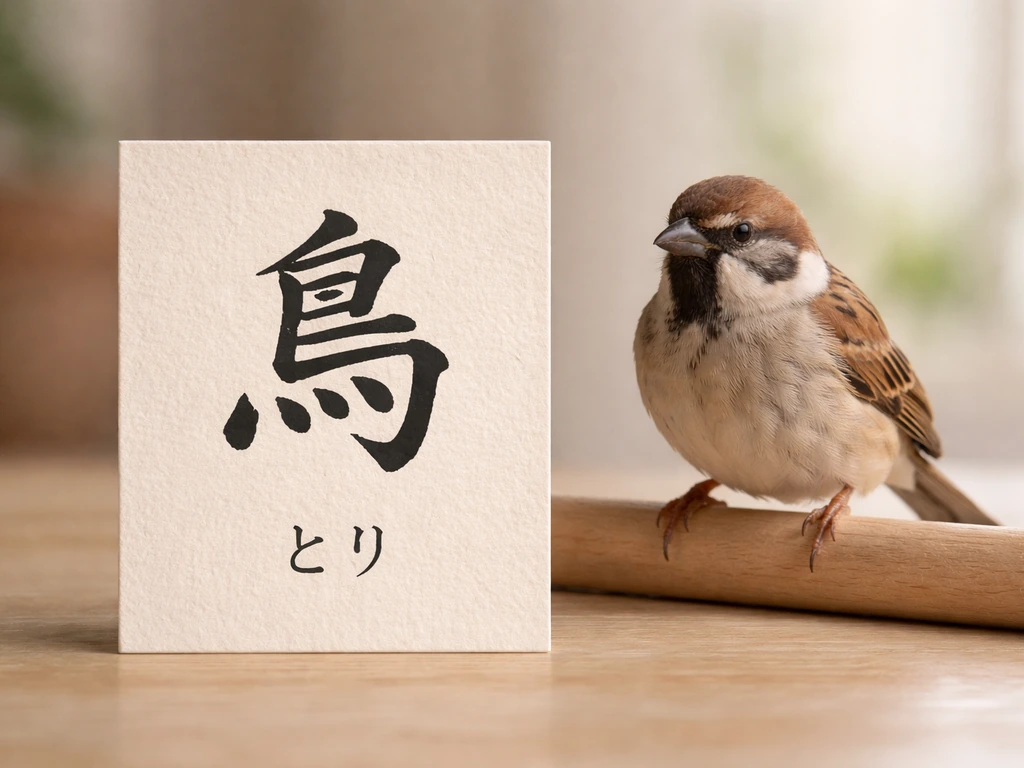
The word is 鳥 (とり / tori). It covers the full concept of "bird" as an animal, exactly the way the English word does in casual speech. If someone asks you what a robin or a crane is, you can call it a 鳥. If you want to say "I like birds," this is the word you reach for. It's taught as a basic vocabulary item even in children's dictionaries, which is a reliable sign that it's the right word for general use.
There is one formal alternative worth knowing: 鳥類 (ちょうるい / chōrui), which means "birds" in the sense of a biological class or taxonomic group. キッズネットの辞典でも、鳥類(ちょうるい)は鳥に属する動物のまとまりという分類上の意味として説明されています。. You'll see this in nature documentaries, scientific writing, and field guides when the author is talking about birds as a category of animals rather than a specific bird. For everyday conversation, though, stick with 鳥.
Meaning and nuance: when to use it vs alternatives
Think of 鳥 (tori) and 鳥類 (chōrui) as sitting on a spectrum from casual to formal. If you're a birder chatting about the wild birds you spotted this morning, 鳥 is exactly right. If you're reading a biology textbook or a conservation report discussing avian populations, 鳥類 is the expected term. The distinction is similar to saying "birds" versus "avians" or "the avian class" in English.
The word 鳥 also acts as a building block in common compound words. 野鳥 (やちょう / yachō) means "wild birds," and water birds are 水鳥 (みずとり / mizutori). If you spend time watching birds in the field, you'll encounter these compounds constantly. Understanding that 鳥 is the root makes it much easier to decode new vocabulary when you run into it. Just as how you say bird in Hawaiian reflects that language's unique roots, the Japanese term carries its own layered history through kanji compounds.
Pronunciation guide (romanization + tips)
In romaji (the romanized spelling of Japanese), the word is written <strong>tori</strong>. Breaking it down: "to" sounds like the English word "toe," and "ri" sounds like "ree" but with a softer, flatter "r" that doesn't quite exist in English. The Japanese "r" is produced by lightly tapping the tongue against the ridge just behind the upper teeth, somewhere between an English "r," "l," and "d." It's one of those sounds that clicks into place with a little practice.
Japanese also uses pitch accent, meaning the pitch of your voice on each syllable matters. For とり (tori), the standard pitch pattern is low-high: your voice is lower on "to" and rises slightly on "ri." This is different from the flat, equal stress English speakers tend to default to. Getting the pitch right isn't essential for basic communication, but it does make your Japanese sound more natural, and it helps avoid rare cases where different words share the same consonants and vowels but have different pitch patterns.
IPA transcription for the curious: /to.ɾi/. The ɾ symbol represents that light tongue-tap described above.
How to write "bird" in Japanese (kanji/kana)
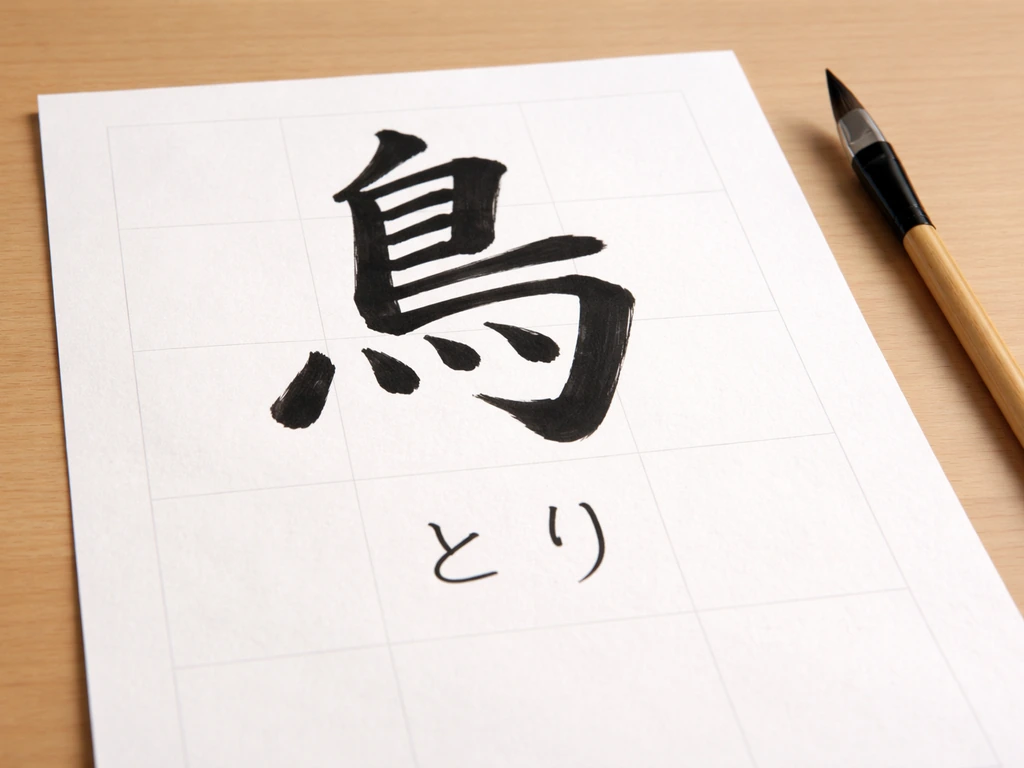
Japanese uses three writing systems, and for the word "bird" you'll encounter two of them. The most common way to write it is with the kanji character <strong>鳥</strong>. Kanji are characters borrowed from Chinese that each carry a meaning, and 鳥 is the dedicated character for "bird. 鳥 (Radical 196, 鳥部) is the bird radical, composed of 11 strokes, and it is used as the radical category for characters associated with bird blank" rel="noopener noreferrer">鳥 is the dedicated character for "bird.. " It's a pictograph, and if you look at it carefully, you can still see the suggestion of a bird shape: a head at the top, a body, wings, and four strokes at the bottom that represent talons or feet.
If you want to write it in hiragana (the phonetic syllabary used for native Japanese words), it's <strong>とり</strong>. Children learning to read will often see it in hiragana before kanji, and you'll sometimes see hiragana used alongside kanji as a pronunciation guide called furigana. For practical purposes, if you're writing a message, a note, or a search query in Japanese, using the kanji 鳥 is the standard adult-level choice.
The kanji 鳥 is also the radical (the classifying component) used to categorize all bird-related kanji characters in Japanese dictionaries. This means that when you look up kanji for specific birds like crane (鶴, tsuru) or duck (鴨, kamo), you'll often find them under the 鳥 radical. Knowing this one character genuinely helps you navigate a large family of bird-related vocabulary.
Common example phrases and how to use "bird" in sentences
Japanese sentences typically mark the grammatical role of a noun with a particle. The particle が (ga) marks the subject of the sentence, and を (wo/o) marks the direct object. Here are some natural, practical examples you'd actually use:
- 鳥が飛んでいる。(Tori ga tonde iru.) — A bird is flying.
- 鳥が鳴いている。(Tori ga naite iru.) — A bird is singing/chirping. (鳴く / naku means to make an animal sound)
- あの鳥は何ですか?(Ano tori wa nan desu ka?) — What bird is that?
- 野鳥を観察する。(Yachō wo kansatsu suru.) — To observe wild birds.
- 私は鳥が好きです。(Watashi wa tori ga suki desu.) — I like birds.
For pet owners, a useful phrase is 鳥を飼っています (Tori wo katte imasu), meaning "I keep/own a bird." The verb 飼う (kau) specifically means to keep an animal as a pet, so it's the right word here rather than the homophone 買う (kau), which means to buy. Speaking of other languages in the same region: if you're curious how bird vocabulary works in a neighboring language, it's worth checking out how to say bird in Korean, since both Japanese and Korean share some structural similarities in how compound animal terms are built.
Quick cheat sheet + troubleshooting common mix-ups
At-a-glance reference
| Term | Characters | Pronunciation | When to use it |
|---|---|---|---|
| bird (general) | 鳥 / とり | tori | Everyday speech, pet talk, birdwatching |
| birds (taxonomic class) | 鳥類 | chōrui | Scientific or formal writing |
| wild birds | 野鳥 | yachō | Nature, wildlife, field guides |
| water birds | 水鳥 | mizutori | Wetland species, nature talk |
| chicken (the animal) | 鶏 / にわとり | niwatori | Specifically domestic chickens |
The biggest mix-up: 鳥 vs 鶏
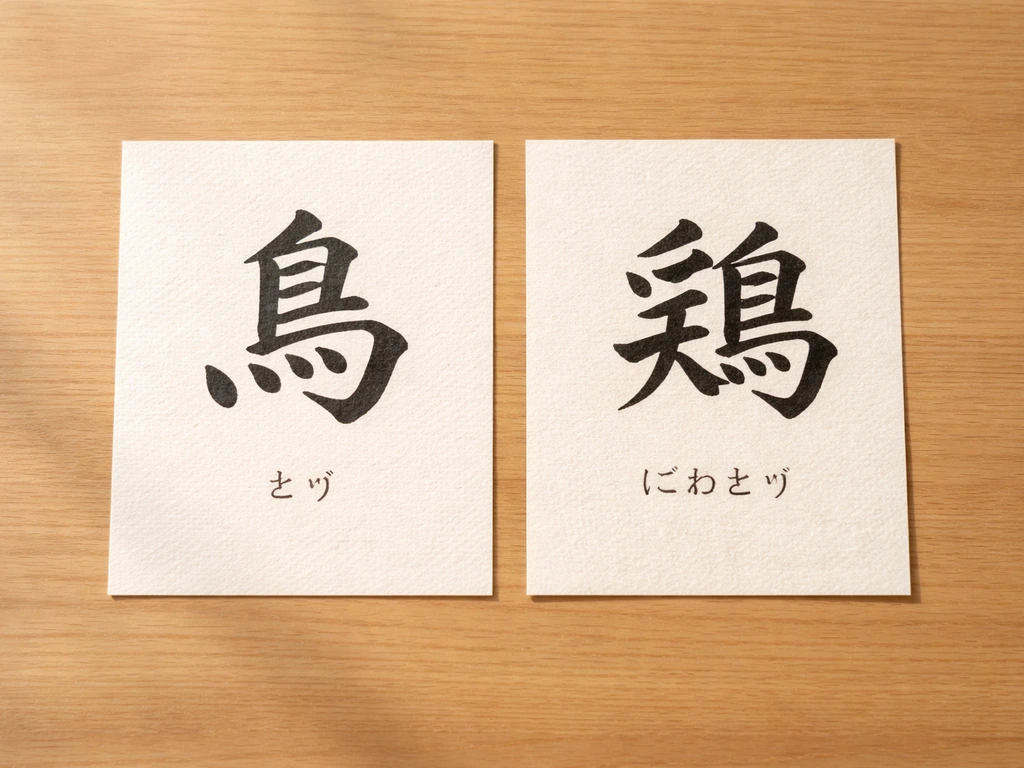
The most common mistake learners make is confusing 鳥 (tori, bird) with 鶏 (niwatori, chicken). They look similar, they share the word "tori" in their readings, and that overlap trips people up regularly. Here's the easy way to keep them straight: 鳥 on its own means bird in general, while 鶏 (or にわとり, literally "garden bird") refers specifically to the domestic chicken. If you're talking about the bird you saw outside, use 鳥. If you're talking about what's in your soup, you probably mean 鶏. There is also a third character, 酉 (tori), which is the rooster symbol from the Chinese zodiac, but it's not used as a regular word for bird in modern Japanese.
Everyday vs. formal: don't overthink it
Some learners see 鳥類 (chōrui) and assume it's more "correct" because it looks more official. It isn't, for everyday use. Using 鳥類 when you're just pointing at a pigeon would sound oddly formal, the way saying "avian specimen" instead of "bird" would in English. Save 鳥類 for contexts where you're explicitly discussing birds as a biological group or scientific category. This is the same kind of register distinction you find when comparing everyday vocabulary across languages, which is something worth keeping in mind whether you're learning how to say bird in Hebrew or any other language.
Don't confuse bird compounds for different animals
Because 鳥 is so productive as a word root, learners sometimes overgeneralize and assume any word containing 鳥 refers to the same thing. It doesn't. 海鳥 (umidori) means seabird, 猛禽 (mōkin) means raptor or bird of prey, and specific species names like 鶴 (tsuru, crane) or 鷹 (taka, hawk) don't use 鳥 at all, even though they're clearly birds. The safest approach is to treat 鳥 as your default general term and look up compound or species words individually as you need them. That's the same methodical approach that helps with naming puzzles in any language, including questions like which Hawaiian island is also known as Bird Island, where cultural and linguistic context changes everything.
The bottom line: 鳥 (tori) is the word. Learn the kanji, practice the pronunciation with that soft Japanese "r," and use the particle patterns shown above and you'll be able to talk about birds in Japanese with genuine confidence.
FAQ
How do you say “bird” in Japanese when you mean a specific bird (like a pigeon or sparrow) rather than birds in general?
Use 鳥 for general “bird,” but for a specific species you should use its specific kanji name (for example 鶴 = crane, 鷹 = hawk). If you do not know the species, a safe fallback is ハト (hato) for “pigeon” or 鳩, and for unknown birds you can say 鳥みたいな鳥 (tori mitai na tori), meaning “a bird like a bird,” which sounds natural when you truly cannot identify it.
What’s the difference between とり (hiragana) and 鳥 (kanji) when writing “bird”?
とり (hiragana) is fine for messages, kids’ materials, and quick reading, but it is less precise in contexts where 鳥 could be misread as part of another word. 鳥 (kanji) is the standard adult choice and also helps when searching, bookmarking, or writing notes, because it reduces ambiguity with similar-looking characters.
If I want to say “birdwatching,” should I use 鳥 by itself?
Usually yes as part of a compound, but “birdwatching” is commonly expressed as バードウォッチング (bādo wotchingu) in everyday Japanese, especially in casual conversation. If you write about it in Japanese, you may also see 野鳥観察 (やちょうかんさつ, yachō kansatsu), which is closer to “observing wild birds.”
How do you say “a bird” or “the bird” in Japanese?
Japanese often omits articles, so you can just say 鳥 (tori) with context. For “a bird,” you might say ある鳥が... (aru tori ga...), meaning “there is a bird that…”. For “the bird,” you typically use a pointing phrase like その鳥 (sono tori, that bird) or その鳥は… (sono tori wa…), rather than an article.
What particle should I use with 鳥 if I want to say “I see a bird” or “I like birds”?
For “I see a bird,” the verb often takes the direct-object particle を, for example 鳥を見ます (tori o mimasu). For “I like birds,” use the object form as well, for example 鳥が好きです (tori ga suki desu). The difference is that 好き often uses が to mark the thing being liked.
People confuse 鳥 and 鶏, but what about other lookalikes like 鳥類 or 酉?
鳥類 (ちょうるい) is still about birds as a group, but it is register-heavy and can sound too formal for casual speech. 酉 (とり) is not a “bird” word in everyday Japanese, it relates to the Chinese zodiac rooster, so do not use it to mean bird even though the reading can be とり. When in doubt, stick to 鳥 for “bird” and look up any unusual reading for other characters.
Is there a natural way to ask “What bird is that?” in Japanese?
A common, natural phrasing is あの鳥は何ですか (ano tori wa nan desu ka), meaning “What is that bird?” You can also use どんな鳥 (donna tori, what kind of bird) if you are unsure of the exact species.
Can I use romaji like “tori” in situations like texting, signs, or search queries?
Yes, “tori” is usable for typing, but it can reduce accuracy because Japanese search tools may interpret it in multiple ways. If you can, include the kanji 鳥 in the query or message, especially when you want results about the concept “bird” rather than other meanings tied to similar readings.
Does pitch accent matter for being understood when I say とり?
Usually not for comprehension, but it matters for sounding natural. The typical pattern is low then rises (low-high). If you cannot control pitch yet, focus first on the correct soft “r” tongue tap, and keep the rhythm even, you will still be understood in most everyday conversations.
Next Article
How to Pronounce Mynah Bird (MY-nah vs my-NAY)
Learn how to pronounce mynah birds word mynah or myna, with syllables, stress, and quick self-check tips.