The Russian word for "bird" is птица (pronounced PTEE-tsa). Wiktionary lists the Russian word птица with the [IPA pronunciation \[ˈptit͡sɐ\]](https://en.wiktionary.org/wiki/%D0%BF%D1%82%D0%B8%D1%86%D0%B0) and includes key grammatical details such as genitive plural пти́цы and stress-marked forms. That's the core answer, and if you just needed to know the word and move on, there it is. But if you want to spell it correctly in Cyrillic, say it without an awkward accent, and actually use it in a sentence, keep reading because there are a few practical things worth knowing.
How to Say Bird in Russian: Word, Spelling, Pronunciation

James Ridgley
16 Apr 2026
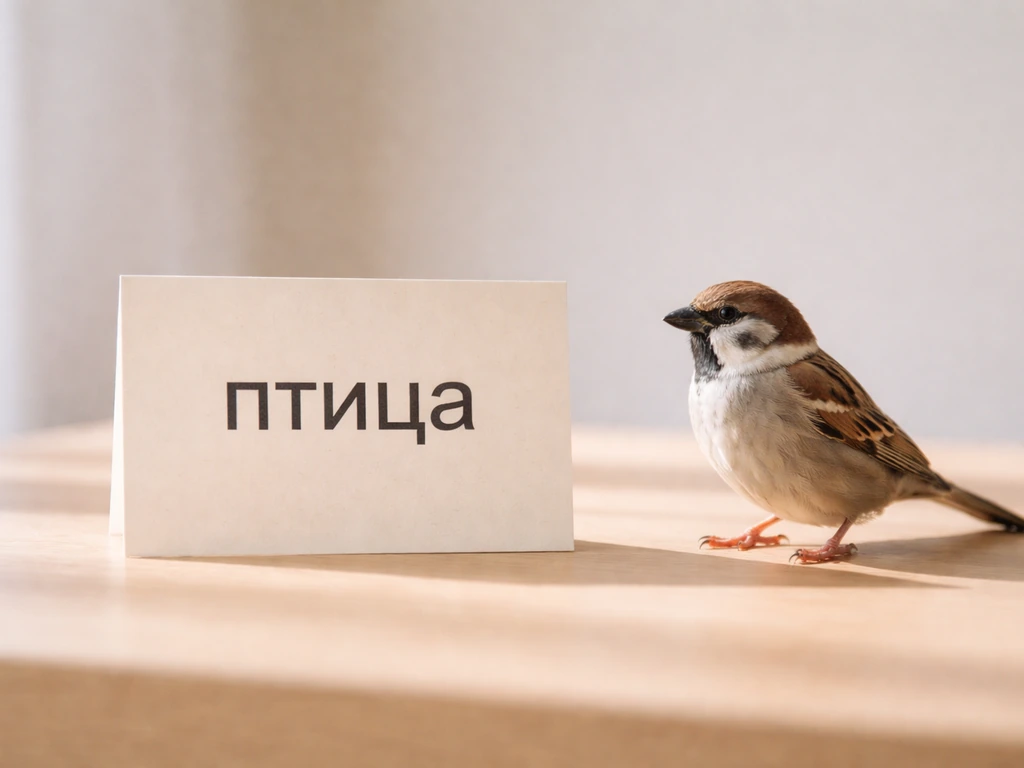
The core Russian word for "bird"
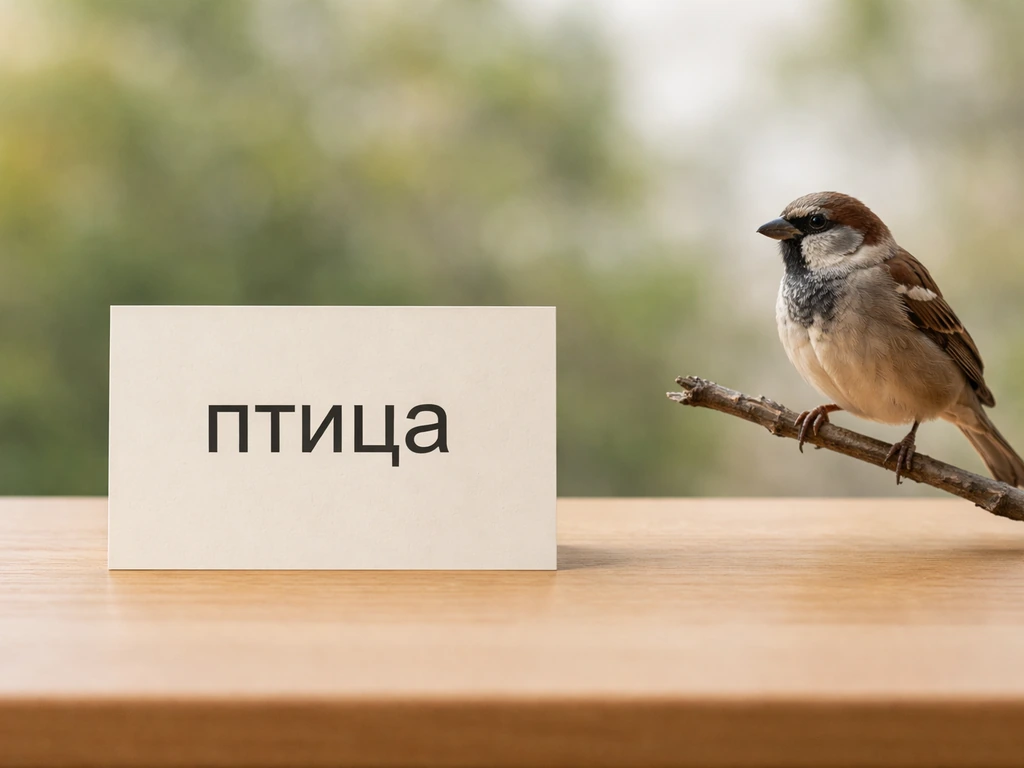
The standard Russian word for bird is птица. It's a feminine noun, and it covers the general concept of a bird the same way the English word does: any feathered, winged animal. You'll see this word in dictionaries, textbooks, wildlife guides, and casual conversation. It's the word a Russian speaker would use if they pointed at a sparrow on a fence and said "look, a bird."
The word has deep Slavic roots. Etymologically, птица is connected to old roots tied to the idea of a young creature or hatchling, and it shows up across other Slavic languages in recognizable forms. That historical background doesn't change how you use it today, but it's a reminder that this is one of those fundamental, ancient words in the language, not a borrowed term.
How to spell it in Cyrillic
In Cyrillic script, the word is spelled птица. Here's a quick breakdown of the letters: П (P) + Т (T) + И (I) + Ц (TS) + А (A). The Cyrillic alphabet maps fairly directly onto pronunciation here, which makes this one of the more beginner-friendly Russian words to learn to read and write.
| Form | Cyrillic | Meaning |
|---|---|---|
| Singular (nominative) | пти́ца | a bird / the bird |
| Singular (accusative) | пти́цу | a bird (as object, e.g. "I see a bird") |
| Plural (nominative) | пти́цы | birds / the birds |
| Plural (genitive) | пти́ц | of birds (e.g. "a flock of birds") |
| Plural (dative) | пти́цам | to/for birds |
| Plural (instrumental) | пти́цами | with/by birds |
The stress mark (the accent over the и) is important. Russian words have a fixed stress, and getting it wrong is the number one way to sound foreign. The stressed syllable in птица is the first one: PTEE-tsa, not pti-TSA. That stress stays on the first syllable across all the case forms listed above.
How to actually pronounce птица
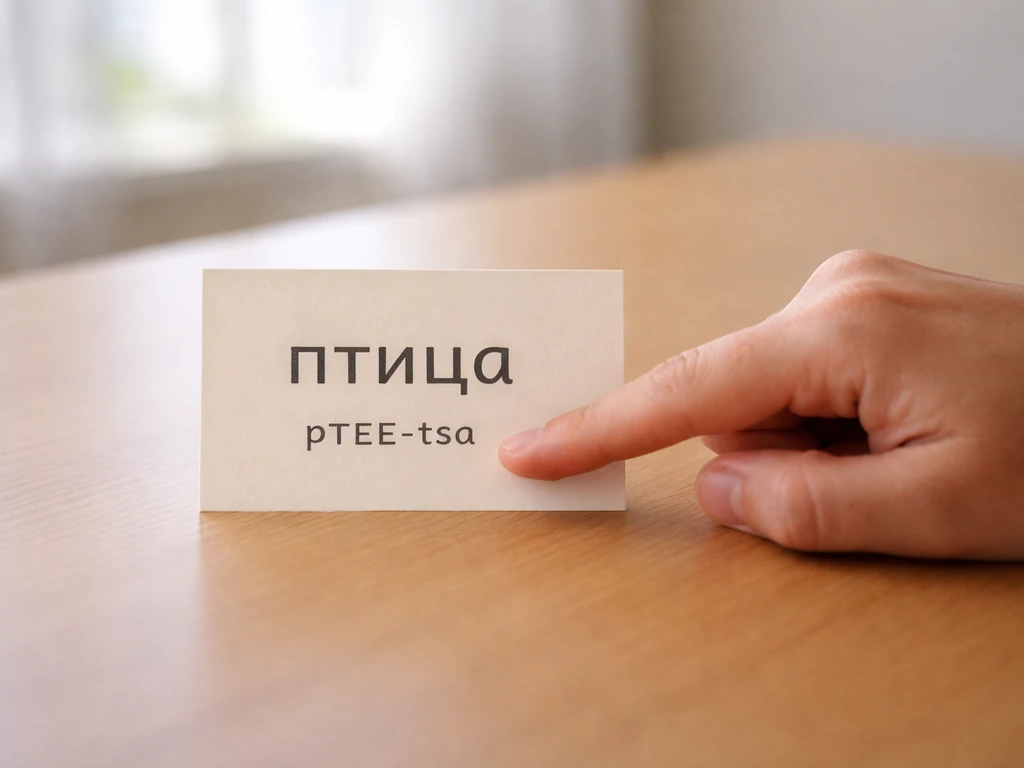
In IPA (International Phonetic Alphabet), птица is transcribed as /ˈptʲitsə/. If IPA isn't your thing, the practical phonetic breakdown is: PTEE-tsa. The tricky part for English speakers is the opening PT consonant cluster. English almost never starts a word with PT, so it feels unnatural at first. The trick is to not insert a vowel sound between the P and the T. Say "PT" like one quick movement, then "ee-tsa."
The ц letter represents a "ts" sound, like the end of the English word "cats." So the ending of птица sounds like "-tsa," not "-ka" or "-cha." Once you get the PT cluster and the TS sound locked in, the whole word flows easily. Regional accents across Russia don't change the word dramatically, but you may hear slight vowel softening in some dialects. The standard Moscow pronunciation (PTEE-tsa) is what you'll hear in formal media and what's modeled on pronunciation databases.
Generic "bird" vs. ornithological and specialist use
In everyday Russian, птица handles all the same general jobs that "bird" does in English. You use it to describe any bird you see, talk about birds as a category of animal, or refer to a specific unnamed bird. In scientific and ornithological contexts, птицы (the plural) is also used as the label for the class of animals (Aves), so you'll see it in biology textbooks the same way you'd say "birds" as a class in English.
One nuance worth knowing: Russian does have more specific or elevated terms that show up in certain contexts. The word пернатые (literally "the feathered ones") is used as a poetic or collective term for birds, especially in literature or nature writing. In hunting contexts, you might encounter пернатая дичь, meaning game birds specifically. These aren't words you need for everyday use, but if you're reading Russian wildlife content or older literature, knowing they refer to birds will help you avoid confusion.
For anyone curious about how to say bird in other languages, it's worth noting that Russian птица is distinctly different from the roots used in Romance languages (like French oiseau or Spanish pájaro), reflecting Russian's Slavic heritage rather than Latin influence.
Using птица in common phrases
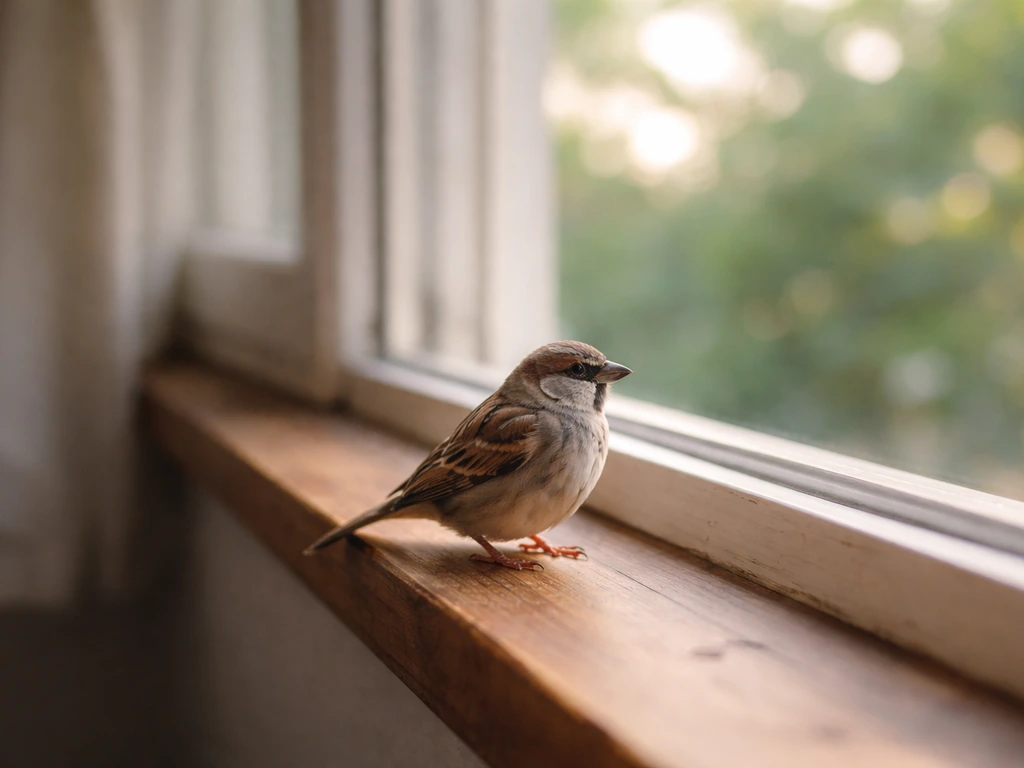
Russian doesn't use articles (no "a" or "the"), so птица can mean both "a bird" and "the bird" depending on context. Here are natural sentence patterns you can reuse immediately:
- Пти́ца мо́жет пари́ть. — A bird can glide. (general statement)
- Пти́ца в гнезде́. — The bird is in the nest. (specific bird)
- Пти́ца подобрала́ пру́тик. — The bird picked up a twig.
- Пти́цы улете́ли. — The birds flew away. (plural)
- Не все пти́цы стро́ят гнёзда. — Not all birds build nests.
- Я ви́жу пти́цу. — I see a bird. (accusative form: птицу)
- Стая пти́ц. — A flock of birds. (genitive plural: птиц)
Notice that the plural form пти́цы is used for both "birds" in a general sense and "the birds" in a specific sense. Context does the work that articles do in English. The accusative form пти́цу appears when the bird is the direct object of a verb (you see it, you catch it, you photograph it). If you're just starting out with Russian, focusing on пти́ца (singular) and пти́цы (plural) will cover the vast majority of situations you'll encounter.
If you've ever tackled a crossword or word puzzle involving bird vocabulary and wondered oh say can you say bird in a different script, Russian is actually one of the more phonetically consistent languages for this, since Cyrillic maps closely to pronunciation once you learn the alphabet.
Finding Russian names for specific birds
Knowing how to say "bird" in Russian is the foundation, but if you're a birder, pet owner, or just curious what a specific species is called in Russian, you'll need to go a step further. The good news is that Russian common names for birds are well-documented and actively maintained.
The IOC World Bird List is one of the most reliable places to cross-reference Russian common names for bird species. The IOC list is updated regularly, and those updates matter because taxonomy changes over time, meaning a species may be split, lumped, or renamed. The same principle applies in Russian: names that were standard a decade ago may have been revised. Always check against the current version of an authoritative list rather than relying on older printed resources.
eBird is another practical resource here. It supports alternate common names including Russian-language names, and it updates its taxonomy annually to reflect current science. When you're looking up a specific bird, the Russian name shown in eBird will reflect the most current accepted terminology, which is especially useful if you're comparing field notes or communicating with Russian-speaking birders.
If you use a birding app, it's worth checking which taxonomic authority it uses. Some apps let you choose between IOC, eBird/Clements, or other checklists, and the Russian names may vary slightly depending on which standard the app follows. Understanding how to say bird in English versus its Russian equivalent is straightforward for common species, but for rarer or recently reclassified birds, a quick cross-check against a current list saves confusion.
One more thing to keep in mind: the word птица itself sometimes appears as part of a compound or descriptive name for a species in Russian, similar to how English uses "bird" in names like "frigatebird" or "lyre bird." When you see птица in a longer Russian bird name, that's your anchor point telling you you're looking at a bird species descriptor.
Quick reference: everything you need in one place
For a broader look at bird vocabulary across multiple languages, the how to say bird guide covers the patterns and parallels worth knowing if you're working across more than one language. But for Russian specifically, here's the condensed version of everything covered above:
- The Russian word for bird is птица (PTEE-tsa)
- Stress falls on the first syllable: PTEE-tsa, never pti-TSA
- Plural (birds) is пти́цы (PTEE-tsy)
- Accusative singular (direct object) is пти́цу (PTEE-tsu)
- Genitive plural (of birds, flock of birds) is пти́ц (PTEETS)
- Russian has no articles, so птица covers both "a bird" and "the bird"
- For specific species names, cross-check IOC World Bird List or eBird for current Russian common names
FAQ
Does птица mean “a bird” or “the bird” in Russian?
It depends on what the Russian sentence is doing. If you want “a bird” (indefinite), you usually still use птица, because Russian does not have a separate “a” versus “the.” If you want to emphasize “the bird” (definite), context, word order, and sometimes adding a demonstrative like эта птица (this bird) or та птица (that bird) will do the job.
How do I avoid a common mispronunciation when saying птица?
For pronunciation, treat ц as “ts” and note the palatal softening after т and д sounds in connected speech. In normal slow learning, keep it as PTEE-tsa, with a clear “ts” at the end. If you say it too slowly, some learners accidentally add an extra vowel after t, which can make it sound like a different word.
What should I watch for with the plural stress in птицы?
Yes, and it can be a beginner trap. The plural is птицы, with stress shifting as shown by standard spelling conventions you may see in dictionaries. When you say it as a standalone word, the stressed syllable is typically on the first syllable in the plural, so don’t pronounce it like “pti-tsý” with the stress on the second part.
If I want to say “I see a bird,” which form do I use (птица or птицу)?
The accusative singular is птицу (for the direct object). If you are learning from sentence examples, remember that the form changes depending on the verb, not just meaning. A useful test is to ask yourself “Is this the thing I see/catch/photo?” If yes, choose птицу.
How do Russians usually express general statements like “birds are…”?
When you use birds as a category, Russian commonly uses птицы (plural) without needing an article. For example, to express a general idea like “Birds have wings,” you typically use a plural form and let the grammar carry the meaning, rather than forcing an English-style “the” or “a.”
When would I use perнатые or пернатая дичь instead of птица?
You might see птица in older or poetic writing with collective usage, but for modern everyday talk people often choose species-specific words or use collective phrasing like пернатые. If you are reading wildlife prose and feel “bird” is too vague, check whether the context uses пернатые or a hunting term like пернатая дичь to narrow the meaning.
Does птица work for slang or figurative meanings of “bird”?
If you mean “bird” in a figurative sense (for example, “don’t be a bird” as an insult or “bird” as slang), Russian still usually uses птица, but tone and additional words matter a lot. Many figurative uses are not direct one-to-one translations, so look for the exact phrase in context rather than translating word-by-word.
How can I recognize bird species names in Russian when птица appears in a longer word?
If you see birds in compound species names, птица often functions as the anchor that the phrase is about a bird species. Practically, that means you can scan the name for птица first, then read the qualifier (the adjective or second element) to identify which kind of bird it is.
Next Article
How to Pronounce Mynah Bird (MY-nah vs my-NAY)
Learn how to pronounce mynah birds word mynah or myna, with syllables, stress, and quick self-check tips.