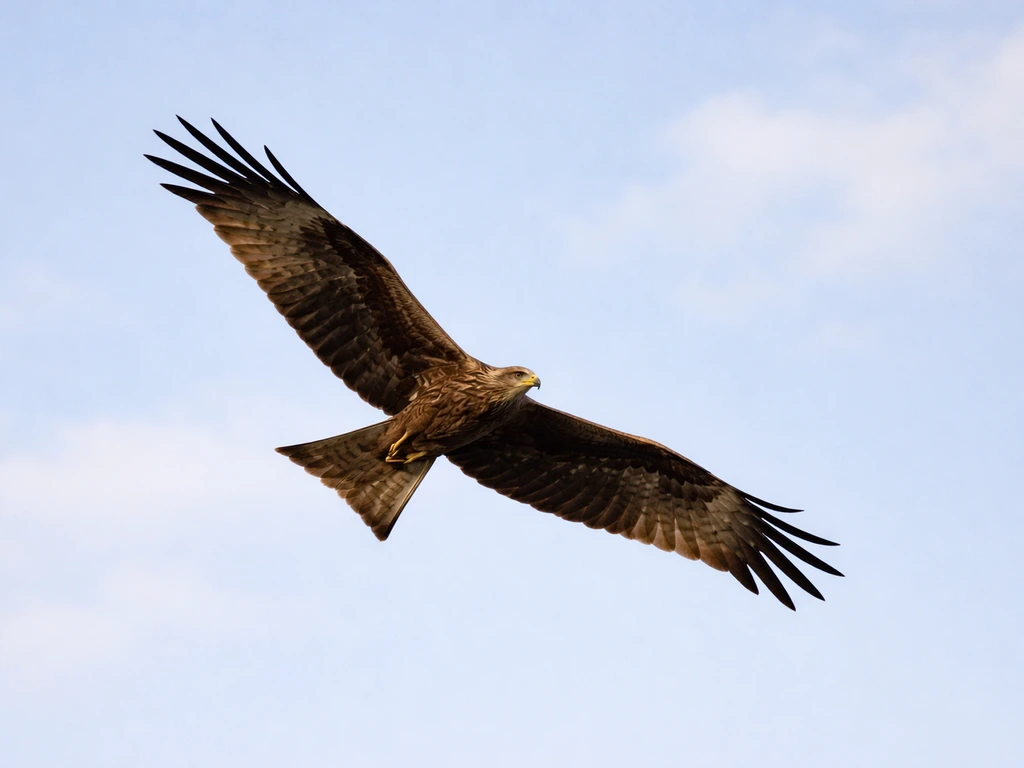
The Samdi bird in English is the Black Kite, a medium-sized bird of prey with the scientific name Milvus migrans. In English, the akala bird is referred to as the Black Kite (Milvus migrans). "Samdi" (sometimes spelled "shiyalu samdi" or "samali") is a Gujarati vernacular name used in India, particularly in Gujarat, for this common, wide-ranging raptor. If someone from Gujarat pointed at a dark brown hawk soaring over a city and said "samdi," they were almost certainly talking about the Black Kite. If you are looking for the answer to what is bater bird called in english, the English name for this Samdi bird is the Black Kite English name of Samdi bird.
What Is Samdi Bird Called in English? Name and ID Guide

James Ridgley
12 May 2026
What does "Samdi" mean and where does it come from?
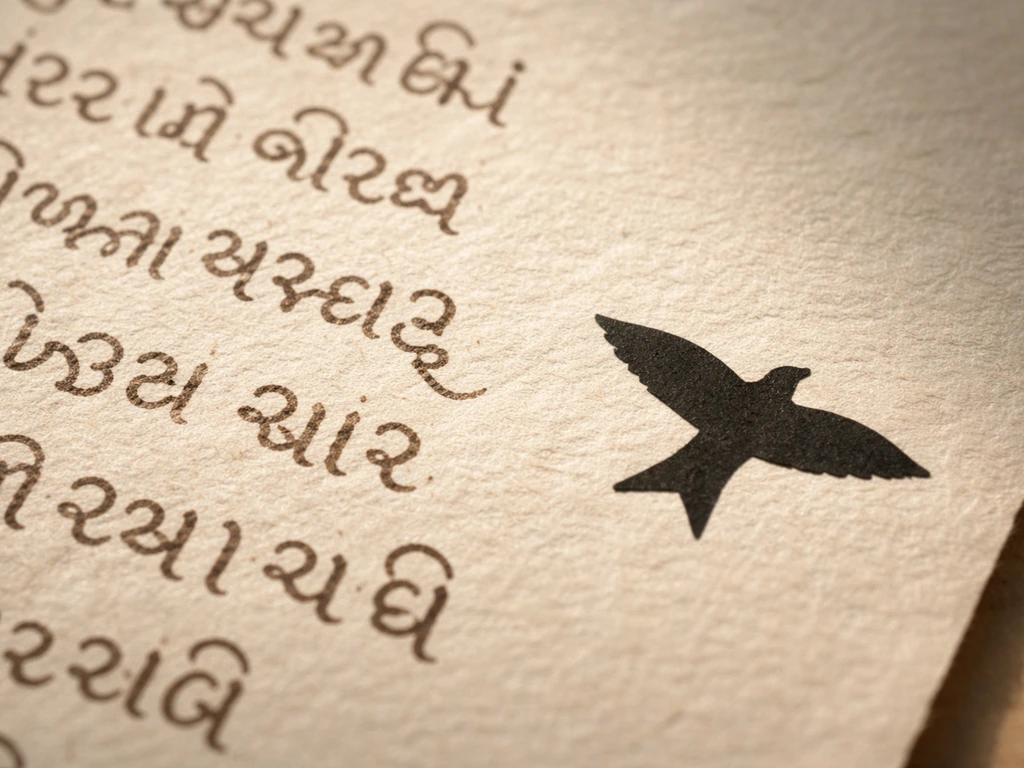
"Samdi" is a vernacular bird name from the Gujarati language, spoken primarily in the Indian state of Gujarat and among Gujarati-speaking communities worldwide. It is a local common name, not a formal scientific term, which means it exists in oral tradition and regional writing rather than in standardized ornithological references. You may also see it written as "samali," "samdhi," or bundled into a phrase like "shiyalu samdi" (which roughly translates to the winter kite, reflecting the seasonal abundance of these birds during cooler months in the region).
The word is a transliteration from the Gujarati script into the Roman alphabet, which is why the spelling varies depending on who is writing it. There is no single universally agreed-upon Romanization, so you will encounter samdi, samadi, and samali depending on the writer's dialect, transliteration habit, or how the word sounds in their particular region. All of these spelling variants point to the same bird.
The English name and scientific name: Black Kite, Milvus migrans
The English name for the samdi is the Black Kite. The full Latin binomial is Milvus migrans. This is one of the most widely recognized raptors in the world, appearing across tropical and temperate zones in Africa, Europe, Asia, and Australasia. Collins English Dictionary defines “black kite” as the Old World kite Milvus migrans, with dark brown plumage and a forked tail blank" rel="noopener noreferrer">appearing across tropical and temperate zones in Africa, Europe, Asia, and Australasia. In Afrikaans, people may look for the equivalent term for the Black Kite when they ask what a bird in Afrikaans is. In India, it is arguably the most commonly seen large bird of prey because it thrives in cities, follows fishing boats, and scavenges at markets and rubbish dumps.
The name is recognized consistently across all major ornithological authorities: eBird uses "Black Kite" for Milvus migrans, the IOC World Bird List lists it the same way, and BirdLife International's species fact sheets confirm the same Latin binomial. So no matter which checklist or field guide you consult, the English name and scientific name remain stable.
How to confirm it is the right bird using location and physical traits
If you are trying to verify that the bird someone calls "samdi" is genuinely the Black Kite and not something else, two checks will settle it quickly: location and appearance.
Location check
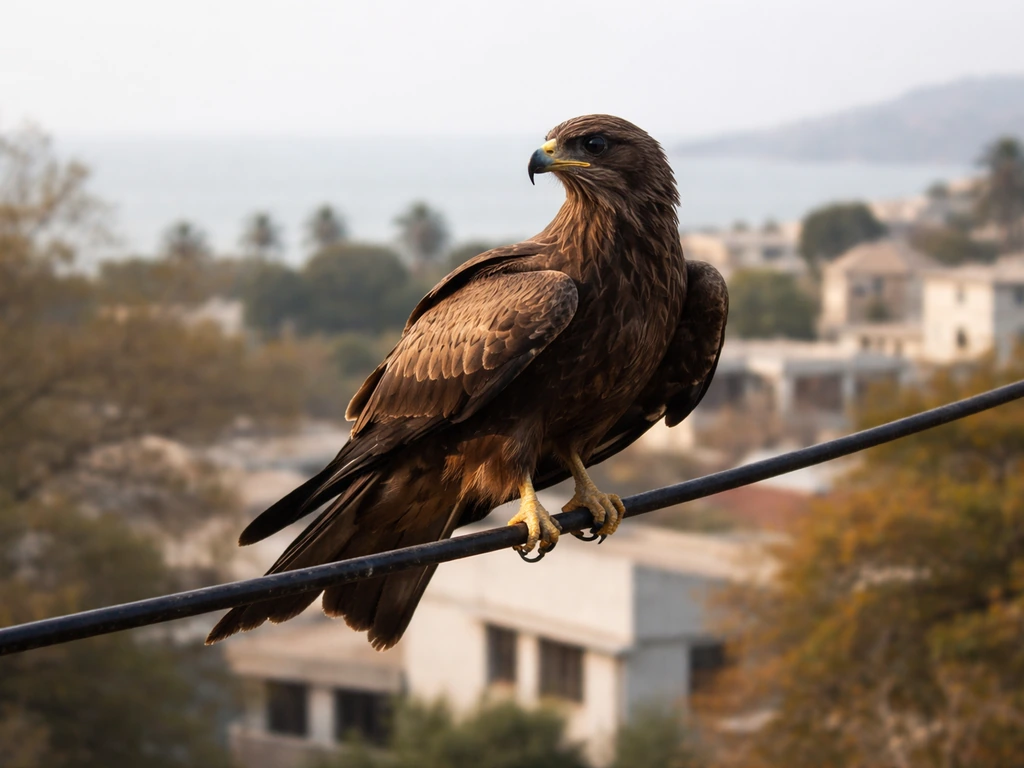
Milvus migrans has a huge range across Eurasia, Africa, and Australasia, with multiple subspecies. The subspecies most relevant to Gujarat and India broadly is Milvus migrans govinda, sometimes called the Pariah Kite, which is an abundant resident across the Indian subcontinent. If the person using the word "samdi" is based in Gujarat, western India, or the broader Indian subcontinent, the Black Kite is by far the most likely match.
Physical traits to look for
- Dark brown body overall, appearing almost blackish in flight but warm brown up close
- Slightly forked tail (the fork is subtle compared to the Red Kite, but visible in a soaring bird)
- Angled, long wings that give it a distinctive buoyant, tilting flight style
- Hooked beak with yellow skin around the base (cere), yellow gape line, and yellow feet
- Medium size: roughly 55 to 65 cm in length with a wingspan of around 140 to 155 cm
- Vociferous bird: makes a shrill, whinnying call in flight, and a descending whistle followed by a staccato pattern that is quite recognizable once you have heard it
If the bird you are trying to identify matches that profile and it was spotted in India or another part of the Black Kite's broad range, you can be confident the samdi is your Black Kite. For absolute certainty, cross-check on eBird by entering your location and looking for Milvus migrans sightings, or check the IOC World Bird List where you can map local names to the scientific name.
Spelling and pronunciation of "Black Kite" in English
The English name is straightforward to spell and say. "Black Kite" is two words, both capitalized when referring to the species by its formal English common name (as is standard in ornithology). Pronunciation is exactly as it looks: BLAK KYT (IPA: /blæk kaɪt/). There is no tricky stress or silent letter to worry about.
On the Gujarati side, "samdi" is pronounced roughly SAM-dee, with equal stress on both syllables. "Samali" (a related spelling you may encounter in vernacular name lists) sounds like sah-MAH-lee. Neither version has a direct English-language pronunciation standard because they are regional vernacular terms, but knowing these rough phonetics helps when you are asking a local what bird they mean or searching for the term online.
| Term | Language/Context | Pronunciation (approx.) | Refers to |
|---|---|---|---|
| Samdi | Gujarati vernacular | SAM-dee | Black Kite (Milvus migrans) |
| Shiyalu samdi | Gujarati phrase | shee-YAH-loo SAM-dee | Black Kite (seasonal reference) |
| Samali | Gujarati variant spelling | sah-MAH-lee | Black Kite (Milvus migrans) |
| Black Kite | English common name | BLAK KYT (/blæk kaɪt/) | Milvus migrans |
| Milvus migrans | Latin scientific name | MIL-vus MY-granz | Black Kite |
Why you might find multiple matches or conflicting names
Local vernacular names like "samdi" are not assigned or controlled by any authority. They develop organically in communities, which means the same word can sometimes refer to more than one species in different localities, or the same species can collect dozens of different local names across even a small geographic region. This is exactly the kind of naming ambiguity that makes the Latin binomial system so useful: Milvus migrans always means the same bird, regardless of which language or dialect you speak. If you are also wondering about the anatomy, bird feet are typically described by terms like talons and toes, which can help when identifying similar raptors.
Even the formal English common names are not entirely immune to change. The IOC World Bird List updates its English name recommendations periodically, and what one checklist calls the "Black Kite" another might split or lump differently. For example, some taxonomic treatments separate the Australian subspecies as a distinct species. The Clements Checklist maintained by Cornell Lab also goes through periodic revisions. This is worth knowing if you are comparing bird lists across sources and the names do not match perfectly: the underlying science is still evolving, and English common names sometimes shift to reflect new taxonomy.
For this reason, whenever you are trying to resolve a regional bird name like samdi, the cleanest approach is to go straight to the scientific name. Once you have Milvus migrans confirmed, you can look it up in any global database and know exactly what you are dealing with, regardless of what the local name happens to be. This is the same principle that helps when sorting out other Indian regional bird names like the vak (usually a heron) or the cheel (also often a kite), where the English and local names can overlap or create confusion. The “vak” is usually a different type of bird, so it is best to confirm the exact species name in English before using local labels.
Where the name "samdi" actually comes from
The etymology of vernacular bird names in South Asian languages is rarely documented with the same rigor as scientific Latin names, but "samdi" and its variants likely derive from the bird's behavioral or physical characteristics as observed by local communities over generations. The root may relate to the bird's dark coloration or its ubiquitous scavenging presence around human settlements. "Shiyalu samdi" specifically signals a seasonal observation: shiyalu means winter in Gujarati, and the name captures the fact that Black Kites are especially visible in Gujarat during the cooler months.
The formal English name "Black Kite" follows a simpler logic: "black" for the bird's overall dark appearance, and "kite" for the family Accipitridae group it belongs to. The word "kite" as a bird name in English is old, appearing in medieval English texts to describe large soaring raptors. The toy kite was actually named after the bird, not the other way around, because its hovering, soaring flight reminded observers of the bird. The Latin species name migrans means "migrating" or "wandering," which reflects the wide-ranging, migratory behavior of many populations of this species across its enormous global range.
How to verify the identification yourself today
- Search eBird for "Black Kite" and filter by your location or India to see recent sightings and range maps for Milvus migrans.
- Check the IOC World Bird List species table for Milvus migrans: it lists the accepted English name, scientific name, and in some versions local/vernacular names.
- Compare the physical description above against a photo: the forked tail, dark brown plumage, yellow feet and cere, and tilting soaring flight are definitive in combination.
- If you have an audio recording, compare it to the Black Kite call on Cornell Lab's Macaulay Library or xeno-canto: the shrill descending whistle is distinctive and widely recorded.
- For a double-check on the Gujarati name specifically, the Buceros ENVIS Newsletter vernacular name tables list Gujarati names for Indian raptors and include samali and related forms under Milvus migrans.
FAQ
How can I confirm “samdi” is Black Kite if I only have a photo or video?
Look for a slim, medium kite with long wings and a relatively shallow V when gliding. Black Kites often show a lighter head and variable streaking on the belly, and they are common around roads, markets, and fishing activity. If the bird looks like a falcon or a larger eagle with heavier build, it is more likely a different species being called “samdi” locally.
Could “samdi” ever refer to a different bird in Gujarat?
Yes, vernacular names can overlap. While “samdi” in Gujarat is most often used for the Black Kite, locals may apply similar-sounding words to other kites depending on neighborhood, season, or which raptor is easiest to see that week. When in doubt, verify using the scientific name Milvus migrans or cross-check with a local field list.
Is “samali,” “samdhi,” or “shiyalu samdi” the same as samdi?
They are closely related spelling variants of the same Gujarati vernacular label for the Black Kite, but “shiyalu samdi” is specifically used for the winter-season version (more frequent sightings in cooler months). If someone uses a different suffix or an unrelated description like “tank kite” or “fish kite,” they might be naming a different raptor.
What is the closest English name if someone says “pariah kite” instead?
In India, “pariah kite” is often used as a local common name for the Black Kite subspecies Milvus migrans govinda. In English, you should still treat the overall species name as Black Kite, but the local phrase may be pointing to a more resident, subcontinent-focused population.
Do English bird guides always use “Black Kite” for Milvus migrans?
Most major checklists use “Black Kite,” but taxonomic revisions can cause splits or reassignments at the subspecies or regional population level. If two guides disagree, use the scientific name Milvus migrans (or check for synonym listings) to avoid confusion.
How should I pronounce “Black Kite” and “samdi” correctly when asking locals?
“Black Kite” is pronounced like “blæk kaɪt.” For “samdi,” a practical pronunciation guide is “SAM-dee,” with stress on both syllables. If you are hearing “samali,” the rough sound people use is “sah-MAH-lee,” so matching the speaker’s vowel pattern can help you confirm you are talking about the same bird.
If someone asks “what bird is samdi,” what is the safest short answer?
Say “It’s the Black Kite (Milvus migrans).” If you want to be extra safe, add that it’s the common raptor widely seen around cities in Gujarat and across much of the Indian subcontinent, then ask where and when the bird was seen.
Where can “samdi” be found, beyond Gujarat?
The Black Kite has a broad range across Africa, Europe, Asia, and Australasia. So if someone heard the word in a different region but described a kite-type raptor matching Milvus migrans, it is still plausible, especially in areas where kites scavenge around human settlements and follow fishing activity.
Why is it better to rely on the scientific name when identifying birds from local names?
Because regional common names are not standardized and can shift by dialect or locality, one local word can sometimes cover multiple species. Milvus migrans is stable across languages, so confirming the scientific name reduces the chance you mislabel a similar kite or raptor as “samdi.”
Next Article
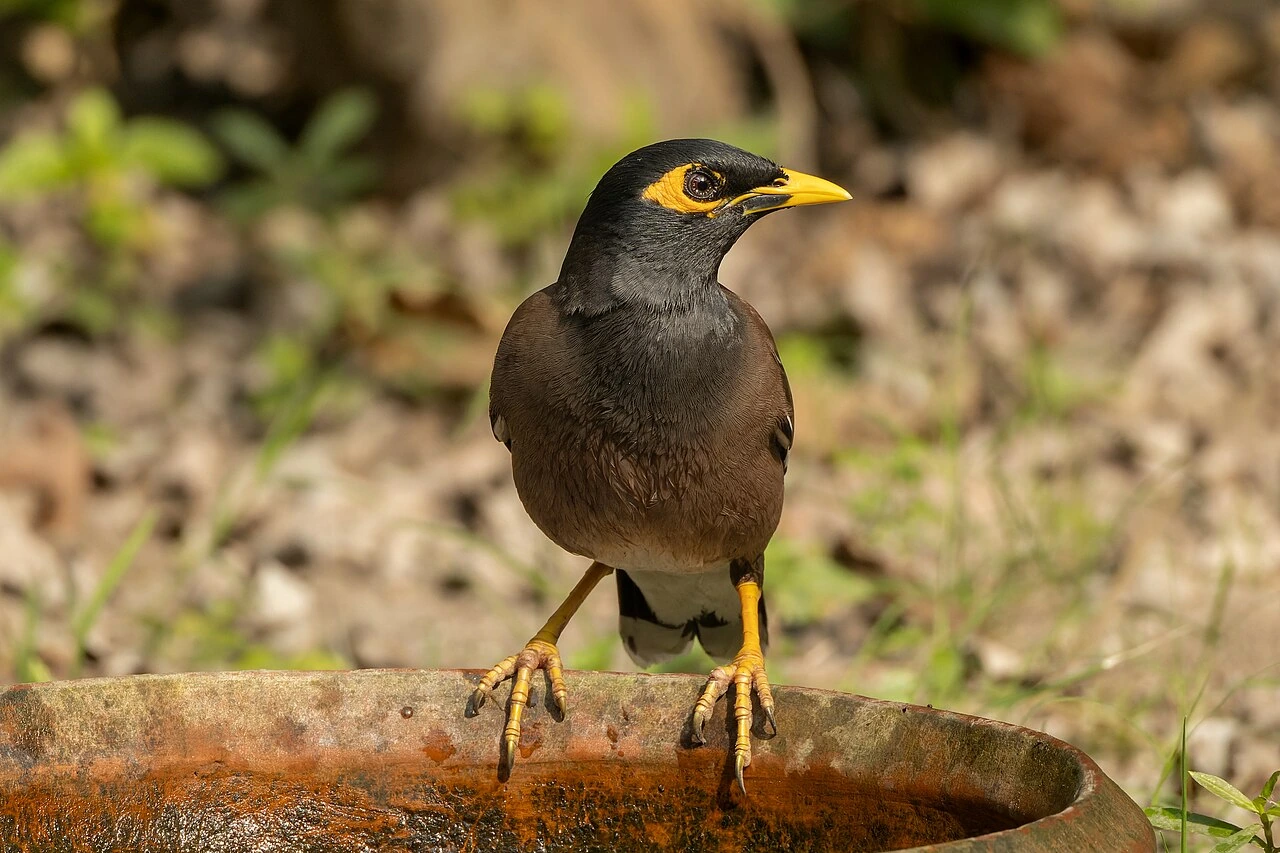
How to Pronounce Mynah Bird (MY-nah vs my-NAY)
Learn how to pronounce mynah birds word mynah or myna, with syllables, stress, and quick self-check tips.