If you're staring at a crossword grid with a 6-letter slot starting with A and the clue reads something like "common bird," your best candidates are AVOCET, AMAZON, and ANCONA, but honestly, AVOCET is the one that comes up most often in English-language puzzles. Let's work through the full shortlist, check the spelling rules, and figure out how to confirm which one fits your specific grid today.
Common Bird 6 Letters Starting with A: Best Answers

James Ridgley
10 Apr 2026
Decode the clue: what "common bird 6 letters starting with A" actually means
In crossword construction, the word "common" in a bird clue is almost never a scientific qualifier. It's shorthand for "widely known" or "frequently encountered," the same way "common blackbird" in everyday English just means the blackbird most people recognise (Turdus merula), not some rarified specimen. So when you see "common bird" as a clue, the setter is pointing you toward a species name that a general English-speaking audience would be expected to know, not necessarily the rarest or most technical ornithological term.
There's a second layer of ambiguity worth unpacking: "common" could be regional. A "common" bird in the UK puzzle world may differ from a "common" bird in a US crossword. British setters love waders and coastal birds; American setters lean toward backyard species. Knowing which side of the Atlantic your puzzle comes from can cut the shortlist in half immediately. If the clue gave you a starting letter like A, that's a useful constraint, but it still leaves you with several genuinely common birds to consider.
Shortlist of likely species: 6-letter common bird names starting with A

Here are the strongest candidates, ranked by how often they appear in English crosswords and how widely the names are recognised. Each is exactly 6 letters, starts with A, and refers to a genuinely common or well-known bird species.
| Bird name | Letters | Region where 'common' | Type of bird |
|---|---|---|---|
| AVOCET | 6 | UK, Europe, North America | Wading shorebird |
| AMAZON | 6 | Americas, worldwide (pet trade) | Parrot genus |
| ADJUTANT | 8 — does not fit | Asia | Large stork (ruled out) |
| ALCIDS | 6 | North Atlantic | Seabird family (plural form) |
| ANHINGA | 7 — does not fit | Americas | Darter (ruled out) |
| AVIFAU | Not a bird name | — | Ruled out |
| AGOUTI | 6 — not a bird | — | Ruled out (mammal) |
After filtering strictly for real common English bird names at exactly 6 letters starting with A, the practical shortlist narrows to three serious contenders: AVOCET, AMAZON, and ALCIDS. AVOCET is almost certainly the answer in a British-leaning puzzle. AMAZON works better if the clue has a parrot or tropical angle. ALCIDS is less commonly seen as a standalone answer but does appear in some general-knowledge puzzles. If you are working on a puzzle with both 6- and 7-letter bird answer slots, you can use the crossing letters to knock out options quickly.
Spelling rules: plurals, variants, and hyphens to watch for
Crossword answers almost always use the simplest, most standard English spelling. Hyphens are dropped (most grids don't include them as separate squares), and the singular form is strongly preferred unless the clue specifically says "birds" (plural) or uses a plural indicator like "some" or "many." So even if you've seen "avocets" in a field guide, the grid answer will be AVOCET.
Watch for spelling variants: AMAZON is sometimes spelled with a lowercase 'a' in casual writing, but as a bird name it refers to Amazona parrots, and in a grid it's always AMAZON (no trailing S unless the clue demands it). ALCIDS is already a plural (the singular is alcid), so it would only appear if the clue pointed to a family or group. Variant spellings like "avoset" do exist historically, but modern dictionaries and crossword databases standardise on AVOCET, so don't be tempted by the older form.
One quick check worth doing: if your grid has a crossing letter in position 3 or 4, use it to eliminate options immediately. AVOCET has O in position 3; AMAZON has A in position 3. That single crossing letter is often enough to confirm your answer without needing to research any further.
How to say these names: pronunciation and common English usage
AVOCET is pronounced AV-oh-set (IPA: /ˈæv.ə.sɛt/). The stress is firmly on the first syllable. Some people stumble and say "a-VOH-set" but that's nonstandard, put the emphasis upfront. In everyday birding conversation, you'll hear it called simply "the avocet" with no further qualifier, since in Europe the pied avocet (Recurvirostra avosetta) is the assumed default. North American birders sometimes say "American avocet" to distinguish their species, but in a crossword context, AVOCET alone is always acceptable.
AMAZON as a bird name is pronounced AZ-uh-mun (IPA: /ˈæz.ə.mən/), exactly as you'd say the river or the company. It refers to a large group of green parrots in the genus Amazona and is commonly used in the pet trade and among parrot enthusiasts. If the clue has any hint of a parrot or tropical bird, AMAZON is your answer. For a broader look at how common bird names scale up in letter count, the clue patterns around common birds with 7 letters follow very similar construction rules.
Where these names come from: etymology of the leading candidates
Avocet
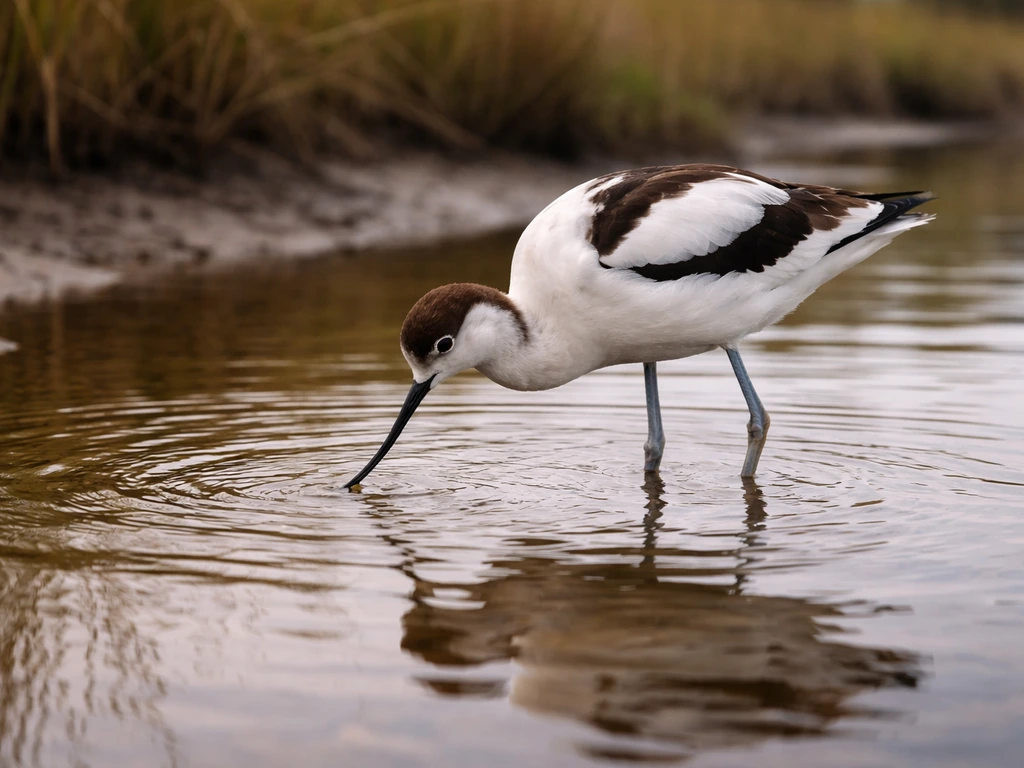
The word "avocet" came into English in the early 18th century, borrowed from the French avocette, which itself came from the Italian avosetta. The Italian origin is thought to derive from a dialect word, possibly linked to a perceived resemblance to an advocate or lawyer (the upturned bill perhaps suggesting someone arguing a point, though this etymology is speculative). The scientific genus name Recurvirostra simply means "curved-backward beak" in Latin, which is exactly what you see on the bird, that elegantly recurved, upward-sweeping bill is the avocet's defining feature and the likely reason it keeps turning up in field guide covers and puzzles alike.
Amazon (the parrot)
The name Amazon for these parrots comes directly from the Amazon River region of South America, where many species in the Amazona genus are native. The river's name itself is generally traced to a Spanish explorer's account of female warriors he claimed to encounter, which he linked to the Amazons of Greek mythology. The genus name Amazona was formalised by ornithologist René Lesson in 1830. Interestingly, many Amazon parrot species have their own distinct 6- or 7-letter common names (like the "mealy" or "lilac" amazon), but in puzzle terms, AMAZON alone is the standard entry.
Alcid
ALCIDS takes its name from the family Alcidae, which itself derives from the genus Alca, the Latin name for the razor-billed auk. The U.S. Fish & Wildlife Service describes common murres as Alcidae seabirds that nest in large breeding colonies on rocky cliffs above the ocean blank" rel="noopener noreferrer">family Alcidae. The root is thought to trace back to a Norse or Old Norse word for the great auk, reflecting how deeply these North Atlantic seabirds are embedded in the maritime cultures that named them. If you enjoy the seabird angle, it's worth noting that common marine birds with 7 letters include some of the alcid family's cousins, which occasionally appear in the same puzzle sets.
Verify with a quick bird ID: region, habitat, and appearance
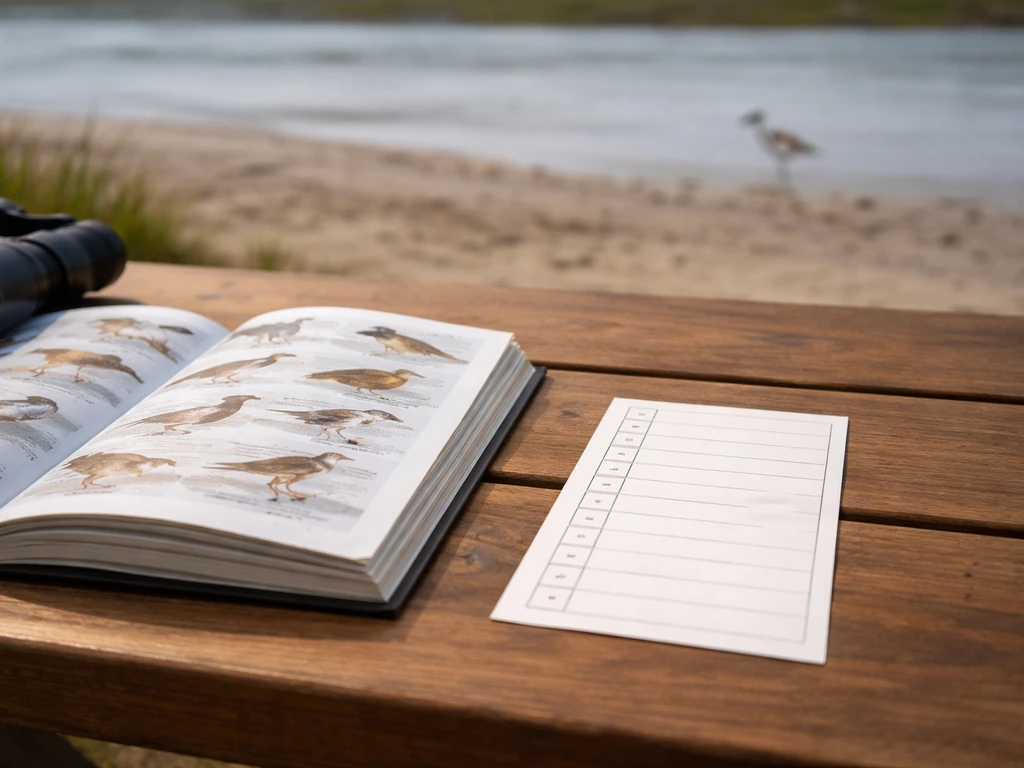
If you want to double-check your answer by tying it to real-world bird knowledge, which is genuinely useful when a clue has a geographical or visual hint, here's how to do it fast.
For AVOCET: you're looking for a wading bird, roughly the size of a slim duck, with black-and-white patterning and that unmistakable upturned bill. In the UK it's strongly associated with shallow coastal lagoons and managed wetland reserves like the RSPB's Minsmere in Suffolk. In North America, the American avocet (a closely related species) frequents shallow lakes and prairie wetlands, especially in the western states. If a clue mentions water, wading, or a curved bill, AVOCET is almost certainly correct. The common garden birds with 6 letters category, by contrast, tends to pull up very different names, avocets don't belong in your backyard.
For AMAZON: the visual cue is a stocky, mostly green parrot with short squared-off tail feathers and bright patches of red, yellow, or blue on the wings or face depending on species. Natural habitat is tropical and subtropical forest from Mexico down through South America, but in the UK and US context these birds are far more often encountered as pets or in zoo collections than in the wild. If the clue has a pet, tropical, or parrot-specific hint, lean toward AMAZON.
For ALCIDS (if the plural fits): picture compact, black-and-white seabirds built like miniature penguins, built for diving rather than long-distance flight. USGS reports measured diving depths for several alcids such as murres, razorbills, puffins, and guillemots, supporting that these birds are capable divers. Puffins, murres, razorbills, and guillemots are all alcids. They're common in North Atlantic and North Pacific coastal regions. If the puzzle clue mentions the sea, cliffs, or diving birds, ALCIDS becomes a strong contender.
How to pick the right answer for your puzzle right now
Start with AVOCET. It's the most common 6-letter, A-starting bird name in English crosswords, it's a genuinely widespread and well-known species, and its spelling is unambiguous. Check your crossing letters first: if position 3 is not O, AVOCET is out and you move to AMAZON (position 3 = A) or ALCIDS (position 3 = C). If you have no crossing letters yet, go with AVOCET as your working answer and revisit if other fills force a change.
If the clue has additional context, a question mark suggesting a cryptic element, a geographical hint, or a theme (parrots, seabirds, waders), use that context to weight your shortlist accordingly. Puzzles that clue birds at 8 letters or 7 letters often appear in the same grid, so if you can confirm a nearby answer, it will frequently tell you whether the setter is leaning British (waders, coastal birds) or international (parrots, general species).
The bottom line: AVOCET is your answer in the vast majority of cases. It's a genuine common bird, the spelling is standard, the pronunciation is straightforward (AV-oh-set), and it has a genuinely interesting etymology to boot. Fill it in with confidence, check your crossing letters, and move on.
FAQ
Is “common bird” always asking for a specific species name, or could it be a general category?
In most crosswords, “common bird” is meant as a species name, not a generic phrase. That means you usually avoid generic options like “animal” or “bird” and stick to a specific 6-letter bird label. If the clue also includes a plural indicator, then you may need a family or group term rather than a single species.
How should I treat the word “common” if the puzzle has a theme or unusual general-knowledge style?
Yes, “common” can act like a setter style marker rather than a biological term. If your grid looks like it prefers widely recognized English names, AVOCET is the safest default. If the theme or other entries point to tropical parrots or seabirds, switch to AMAZON or ALCIDS respectively.
What’s the fastest elimination method if I only have 1 or 2 crossing letters?
If you have any crossing letters, use them first, but also check where the letter conflicts would land in common misspellings. For example, AVOCET is eliminated immediately if you do not have O as the third letter. Likewise, AMAZON is eliminated if the third letter is not A. Without crossings, you can still apply the “standard spelling” rule, which means you should not try older or alternate spellings.
Could AMAZON be a trick because it is also the river or the company?
Some puzzles treat “Amazon” as ambiguous because it is also a company name and a river name. In bird clues, setters normally expect the parrot usage, especially if nearby clues or theme markers mention parrots, tropical locations, or pet birds. If the cross letters match AMAZON, it usually overrides the non-bird associations.
When would ALCIDS be correct, given that it is already a plural-looking form?
ALCIDS is only valid if the puzzle structure supports a plural. If your clue is clearly singular (for example, “common bird” without any plural cue) and the answer length is 6, ALCIDS is often a weaker fit than AVOCET or AMAZON. When you do try ALCIDS, confirm the plural agreement with the clue wording or nearby parsing.
Do I need to worry about capitalization or plural endings in the grid?
Crossword databases standardize capitalization and spelling, and grids usually expect the canonical form. So even if your research search results show lowercase variants, or if you see field-guide plural forms like “avosets,” the grid entry should be the single canonical spelling that matches the slot length.
What clue add-ons should make me switch away from AVOCET?
If the clue includes an explicit habitat or visual cue, prioritize the bird that matches that habitat more than the one that only matches “common.” Water, wading, and an upturned bill generally push toward AVOCET. Parrot or tropical hints push toward AMAZON. Sea, cliffs, and diving seabirds push toward ALCIDS.
What if my slot is 6 letters but the clue does not specify starting with A?
If the clue is “common bird” but the answer slot does not start with A, then your specific shortlist in this article no longer applies. In that case, re-evaluate common 6-letter bird names for the given starting letter and check how the puzzle’s British versus international style influences the list.
Next Article
How to Pronounce Mynah Bird (MY-nah vs my-NAY)
Learn how to pronounce mynah birds word mynah or myna, with syllables, stress, and quick self-check tips.