"Ibis bird" is pronounced EYE-bis bird. The stress falls on the first syllable, the first vowel sounds like the word "eye," and the whole thing takes less than a second to say. Cambridge, Merriam-Webster, Wiktionary, and Forvo all agree on the IPA: /ˈaɪ.bɪs/. That's it. Everything else in this guide is about making sure you nail it consistently and avoid the handful of mistakes that trip people up.
How to Pronounce Ibis Bird in English: IPA Guide

James Ridgley
13 Apr 2026
What "ibis" means (and why "bird" doesn't change anything)
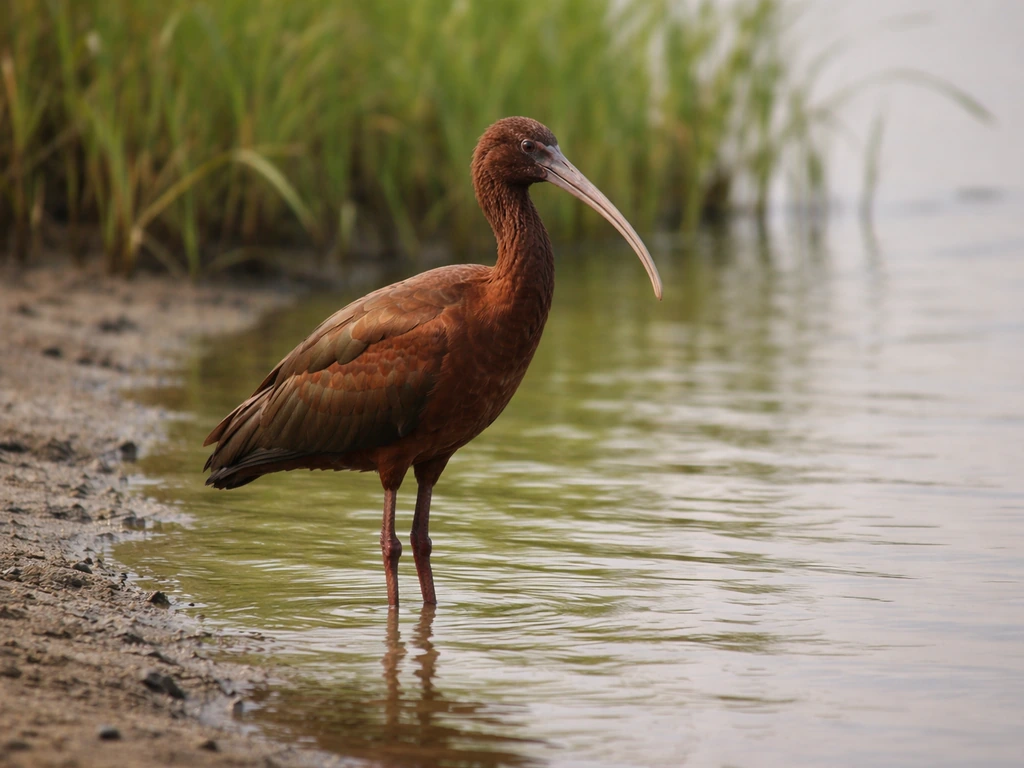
"Ibis" is a noun that refers to a group of large wading birds with long, curved bills. You'll find them on every continent except Antarctica, and they're hard to miss: think of the glossy ibis picking through a wetland, or the sacred ibis depicted in ancient Egyptian art. The word "ibis" by itself already names a bird, so when people say "ibis bird," the word "bird" is just a clarifying descriptor, the same way someone might say "quail bird" or "dove bird" when explaining the animal to someone unfamiliar with the name.
The practical takeaway: when you're figuring out how to pronounce the phrase, the only word that needs attention is "ibis." The second word, "bird," is its own simple syllable (/bɝːd/ in standard American English) and does not shift the vowels or stress inside "ibis" at all. Nail "ibis" and you've nailed the whole phrase. If you've ever looked up how to pronounce dove bird for the same reason, you'll recognize the pattern: a single short bird name that just needs a confident first syllable.
The correct pronunciation: IPA and syllable breakdown
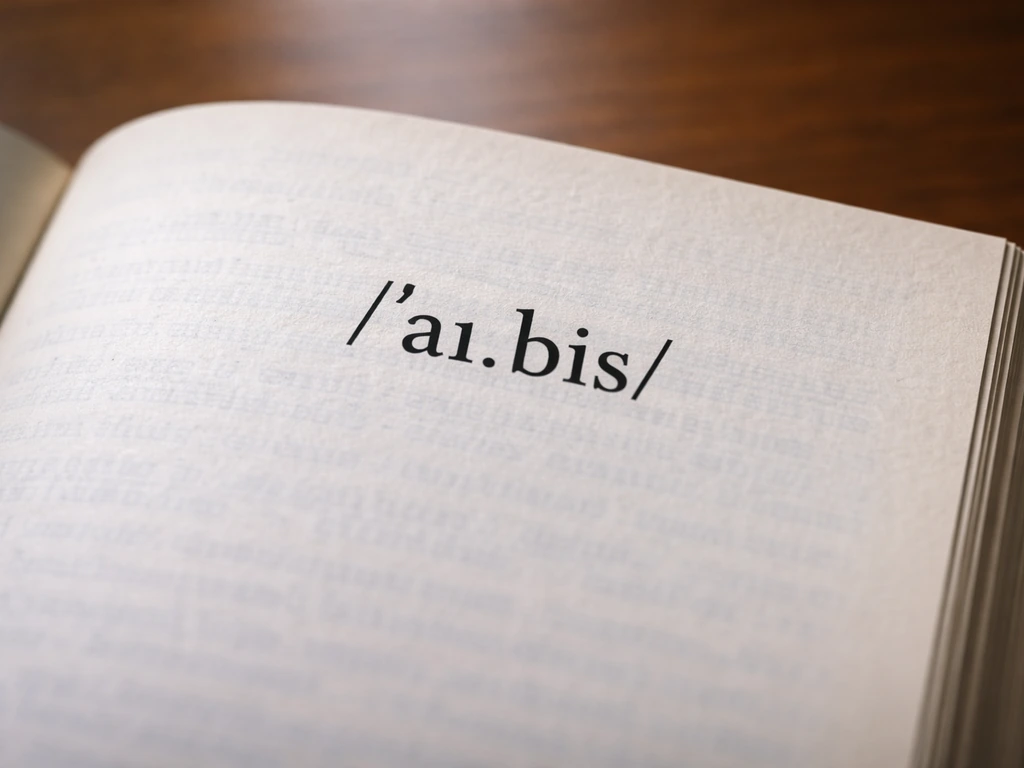
Every major dictionary gives "ibis" the same IPA transcription: /ˈaɪ.bɪs/. This is identical in both UK and US English, which is unusual and worth noting because it means there's genuinely no regional variation to worry about. Wiktionary lists “ibis” (UK, US) with IPA /ˈaɪ.bɪs/ identical in both UK and US English. Whether you're in Boston or Birmingham, you say it the same way.
| Format | Pronunciation |
|---|---|
| IPA (UK & US) | /ˈaɪ.bɪs/ |
| Easy phonetic spelling | EYE-bis |
| Number of syllables | 2 |
| Stressed syllable | First (EYE-) |
| Full phrase "ibis bird" | EYE-bis BURD |
The first syllable /aɪ/ is the same vowel sound as the word "eye" or the letter "I." The second syllable /bɪs/ rhymes with "miss" or "bliss." Put them together and you get EYE-bis. It's a short word and worth remembering that it only has two syllables, not three. If you're the kind of person who likes to count syllables before committing to a pronunciation, this is covered in the same way that how many syllables in bird breaks down the basics for single-syllable bird words.
Stress, pacing, and sound-by-sound tips
The primary stress marker in /ˈaɪ.bɪs/ sits in front of the first syllable. That little mark (ˈ) means you lean into "EYE" and let "-bis" follow lightly behind it. The second syllable is short and unstressed. Some dictionaries, including Britannica, actually transcribe the second vowel as a reduced schwa (/bəs/ instead of /bɪs/), which tells you that speakers naturally swallow that vowel a little. Either way, the key is not to give the second syllable its own weight.
Here's a sound-by-sound breakdown to walk through slowly before you speed it up:
- /aɪ/ — Open your mouth and say the word "eye." That exact sound is your first syllable.
- /b/ — Close your lips and release a quick "b" sound to start the second syllable.
- /ɪs/ — End with a short, clipped "is" sound, like the end of the word "bliss." Don't hold it long.
- Combine: EYE + bis = EYE-bis. Say it as one smooth two-syllable word, weight on the first.
When you move to the full phrase, the natural spoken rhythm is EYE-bis BURD, two words with a slight pause between them. Neither word is swallowed. The same stress-first logic that applies here also helps when pronouncing other bird names. For instance, if you've ever worked out how to pronounce quail bird, you'll notice that bird names consistently front-load their stress.
Common mispronunciations and how to fix them

There are three mispronunciations I hear most often, and all three have a simple fix.
- Saying "EE-bis" (/ˈiːbɪs/) instead of "EYE-bis": This is the most common mistake. The first vowel is /aɪ/ (the "I" in "eye"), not the long /iː/ sound you'd use in "eel" or "eagle." Fix it by literally saying the word "eye" out loud, then attaching "-bis" right after: eye...eye-bis...ibis.
- Putting stress on the second syllable: Some people say "eye-BIS" with a rising emphasis at the end, possibly because the "-bis" ending sounds unfamiliar. Don't. The IPA is clear: the stress marker goes before the first syllable. If you've ever heard someone say "eye-BIS," that's the wrong pattern. Keep the weight on "EYE."
- Adding a third syllable: "EYE-bee-us" or "IB-ee-us" are both wrong. Ibis is exactly two syllables. The /b/ goes directly into /ɪs/ with no vowel between them. If you find yourself inserting an extra vowel, slow down and say each written sound: /aɪ/ then /bɪs/, no gaps.
The vowel error is the one worth drilling the most. The same /aɪ/ vowel that trips people up in "ibis" appears in plenty of common English words, so connecting it to a familiar sound anchors it quickly. Understanding what's happening at the vowel level is a lot easier when you know what the vowel sound of bird involves, since that phonics knowledge transfers across bird names.
Quick practice drills and a cheat sentence
The fastest way to lock in a pronunciation is repetition with a small anchor. Try this sequence:
- Say "eye" three times out loud. Feel where the sound sits in your mouth.
- Add "-bis" directly after: eye-bis, eye-bis, eye-bis. No pause between the two syllables.
- Say it as a complete word ten times at a comfortable pace: ibis, ibis, ibis...
- Now say the full phrase: ibis bird, ibis bird, ibis bird.
- Use the cheat sentence below and say it aloud twice.
Cheat sentence: "I saw an ibis bird by the eye of the river." That sentence contains the word "eye" right next to "ibis," which reinforces the correct first vowel every time you say it. It's a small trick, but it works.
If you want to go further, listening to real audio recordings is the best supplement. Cambridge Dictionary's pronunciation page has audio playback for "ibis" that you can replay as many times as you need. Pair that audio with your own repetitions and the gap between hearing it and saying it closes fast. This kind of active listening is just as useful when learning how to pronounce vireo bird, another two-syllable name where stress placement makes all the difference.
One more useful angle: bird calls and bird sounds are their own language, and getting comfortable with bird-related phonics generally makes all bird names easier. If you've ever been curious about how to spell bird sounds, that same ear-training mindset helps with pronouncing the names themselves.
Where the word "ibis" comes from and why it sounds the way it does
The word "ibis" entered English through Latin and Ancient Greek, and both of those forms trace back to an ancient Egyptian word for the bird. The Egyptians held the ibis sacred, associating it with the god Thoth, and the name traveled through classical languages into modern European ones largely unchanged in spelling. A government wildlife resource hosted by the City of Idaho Falls similarly frames the sacred ibis in cultural and religious terms, including its sacred associations held the ibis sacred. That's why "ibis" looks like it could be a Latin scientific term, because it essentially is one.
In English, borrowed Latin and Greek words tend to follow predictable vowel patterns, and the /aɪ/ sound in the first syllable of "ibis" is a textbook example of how English readers pronounce a Latin short "i" when it leads an open stressed syllable. The same pattern appears in words like "iris" (EYE-ris) and "icon" (EYE-con). So the pronunciation isn't arbitrary: it reflects how English systematically absorbed classical vocabulary.
Knowing this makes it easier to remember, because "ibis" is behaving exactly like the other Latin-rooted words you already pronounce correctly without thinking twice. This etymology connection also shows up in the broader world of how to pronounce bird of prey terms, many of which carry Latin and Greek roots that shape their English sounds in similar ways.
FAQ
Is it “EYE-bis” or “I-bis,” and should I pronounce the first syllable like the letter I?
Use “EYE-bis” (first syllable /aɪ/), the same sound as “eye” or the letter “I.” Don’t switch it to a shorter “ih” sound, which is a common slip when people skim the spelling.
Do I need to say a long vowel in the second syllable, like “EYE-bis” vs “EYE-bice”?
No, the second syllable is short and unstressed (often /bɪs/, sometimes described with more vowel reduction). Avoid adding extra length or turning it into something that sounds like “-ice”.
How should I pronounce “ibis bird” if I’m speaking quickly or without pausing between the words?
You still keep “bird” as its own syllable group, “BURD,” and maintain the main stress on “ibis.” In fast speech, the gap may shrink, but don’t swallow “bird” or make the first syllable drift toward a stress shift.
What’s the most common mistake people make with “ibis,” and how can I correct it fast?
The biggest error is getting the first vowel wrong (using a non-/aɪ/ sound). Repeating a two-word anchor like “eye ibis” helps because it forces your mouth to practice the correct “EYE” onset each time.
Is the pronunciation different in UK vs US English for “ibis bird”?
No, “ibis” is consistently /ˈaɪ.bɪs/ in both UK and US English. Any difference you notice is more about how much speakers reduce the second vowel, not about changing the core pronunciation.
How do I pronounce it if I’m using the word “ibis” alone, not “ibis bird”?
It’s the same as part of the phrase: /ˈaɪ.bɪs/. You don’t need to change stress or vowels just because “bird” is omitted.
What if I confuse “ibis” with similar-sounding words like “obits” or “ibis” as “EE-bis”?
That confusion usually comes from dropping or reshaping the /aɪ/ diphthong. Practice by exaggerating “eye” first (EYE-), then attach the short /bɪs/ quickly, so the vowel doesn’t flatten.
Should I use “schwa” in the second syllable, and does it change how I should say the phrase?
Even if a dictionary labels the second vowel as more reduced, you still keep it unstressed and light. For practical speaking, focus on getting “EYE” right, then say a short, quiet “bis/bəs” after it without emphasis.
Next Article
How Many Syllables in Bird Learn the Count Fast
Find the syllable count for bird, with syllable breakdown, IPA pronunciation, and a quick method to verify.