The nēnē bird is pronounced "NAY-nay", two syllables, both rhyming with the English word "day." If you've been saying "NEE-nee" (like the letter N followed by a long E), you're in good company, but that's the most common mistake English speakers make. Say it like you're mimicking the bird's own call: nay-nay. That's it. Everything below explains exactly why, and how to nail it every time.
How to Pronounce Nene Bird Correctly (Nēnē Goose)

James Ridgley
14 Apr 2026
Which "nene bird" are we talking about?
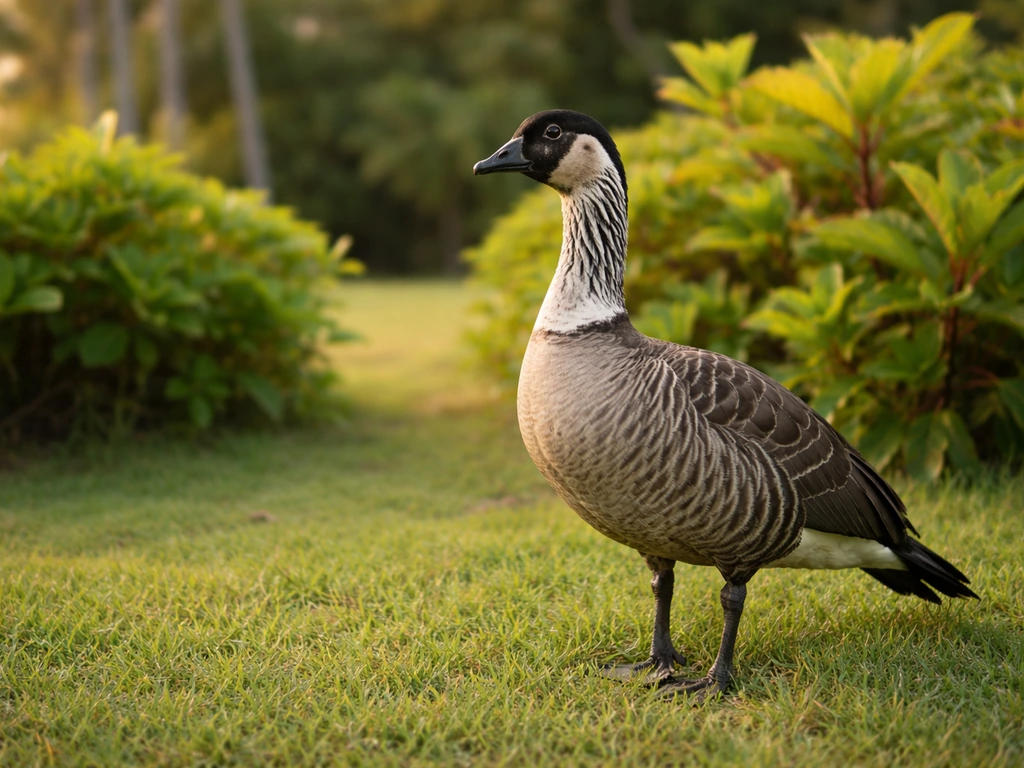
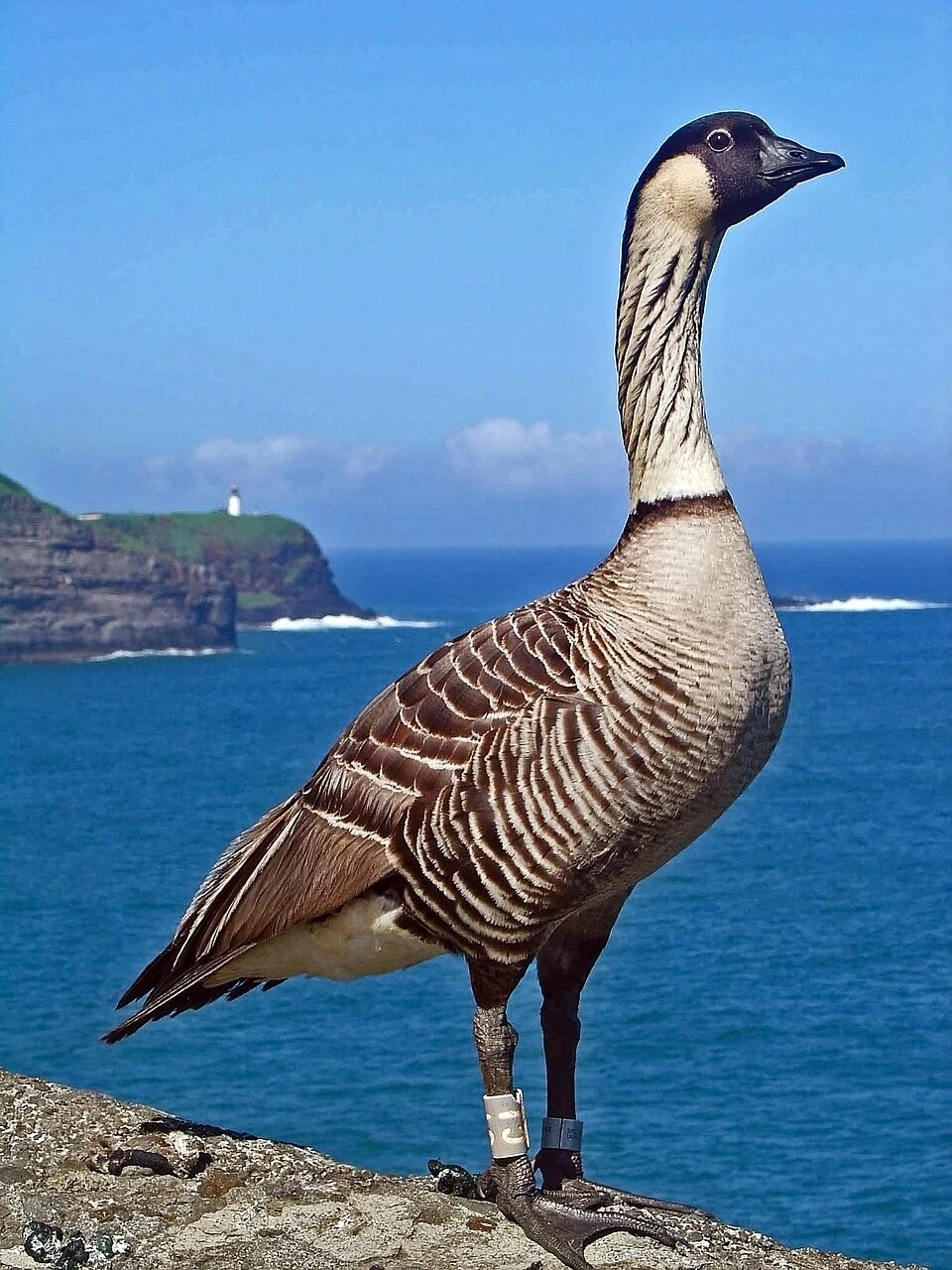
Before diving into sounds and syllables, it's worth being clear: "nene bird" refers to the Hawaiian goose, scientific name Branta sandvicensis. This is the state bird of Hawaiʻi, the rarest goose in the world at one point, and the subject of decades of conservation work by the U. Haleakalā National Park (NPS) spells the bird’s name “Nēnē” and identifies it as Hawaiʻi’s state bird, the Hawaiian goose (Branta sandvicensis). S. Fish & Wildlife Service and the Hawaiʻi Department of Land and Natural Resources. When you see "nene bird" in a crossword clue, a field guide, or a birding forum, this is the species being referenced, not a different goose, not a regional nickname for something else, and not a typo.
You'll sometimes see people searching for this pronunciation alongside other unusually spelled bird names. If you've also wondered how to pronounce hoopoe bird, the challenge is similar: a short, repeated syllable structure that English speakers instinctively misread. The nēnē has the added layer of Hawaiian phonology, which we'll walk through clearly.
Correct spelling variants and what they mean
You'll encounter this bird's name spelled three different ways, and they all refer to the same species. Here's how to read each one:
| Spelling | Context | What it signals |
|---|---|---|
| Nēnē | Official Hawaiian orthography, used by USFWS, NPS, Hawaiʻi DLNR, Hawaii Tourism Authority | Correct Hawaiian form; macrons indicate long vowels — pronounce the ē as a drawn-out "ay" sound |
| Nene | Common English writing, Wikipedia, older conservation documents, crossword clues | Same bird, macrons dropped for convenience; pronunciation is unchanged |
| Nene goose / Hawaiian goose | English common-name usage, general audience writing | Descriptive label for the same species, Branta sandvicensis |
The macron (kahakō in Hawaiian) over each ē is not decorative. It is an instruction: elongate that vowel. A Hawaiian pronunciation classroom resource explains that kahakō marks a vowel that should be drawn out longer than an unmarked vowel. The American Bird Conservancy's diacritics guide puts it plainly: kahakō is a long stress mark over a vowel, covering ā, ē, ī, ō, and ū. So when you see nēnē with both ē's carrying a macron, that's telling you both syllables get that longer, "ay"-quality vowel. Drop the macrons in casual writing if you must, but don't drop the sound they represent when you speak.
Pronunciation breakdown: syllables, stress, and IPA
Syllables
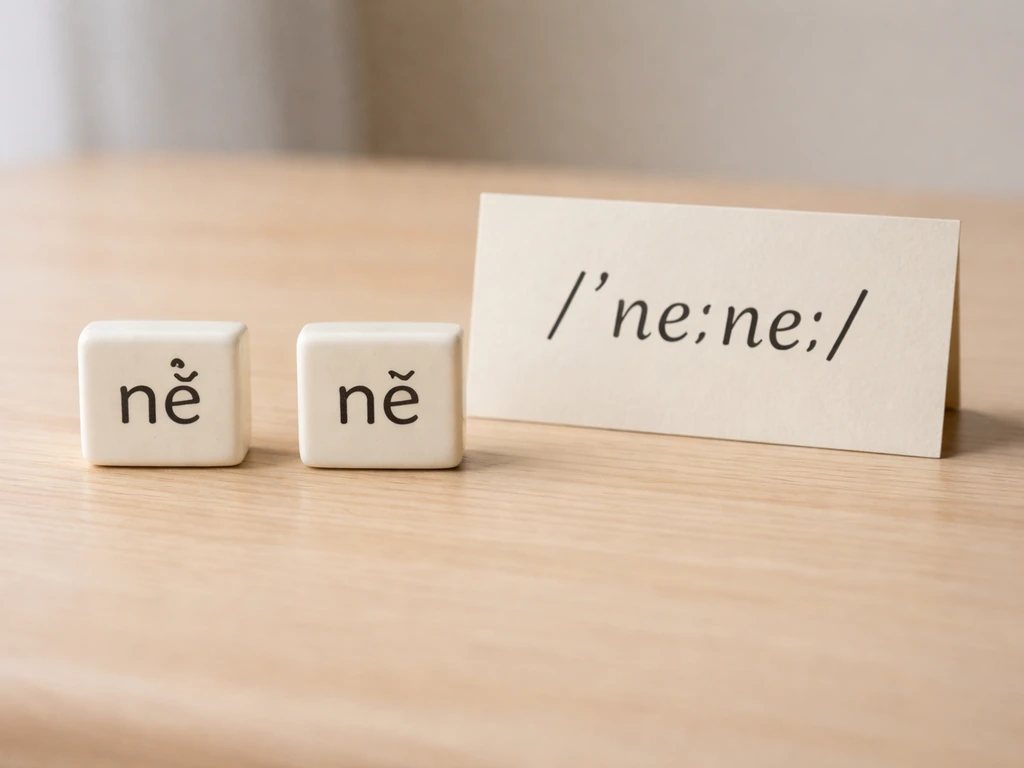
Nēnē has exactly two syllables: NĒ + NĒ. Hawaiian syllable structure follows a (consonant)+(vowel) pattern, meaning every syllable ends in a vowel and syllables don't blend or collapse into each other. So you say each nē as a distinct unit. There is no version of this word that's one syllable, and no version where the two parts blend into a diphthong like "neen." Two clean, equal syllables.
Stress
Hawaiian stress is predictable and falls on the penultimate (second-to-last) mora. For a simple two-syllable word like nēnē, that means the first syllable carries the primary stress: NĒ-nē. In practice, both syllables sound nearly equal because both vowels are long, so the difference is subtle. Don't overthink stress here. If both syllables sound like "nay," you're already correct.
IPA
The Hawaiian IPA for nēnē is /ˈneːneː/, the colon-like symbol (ː) after each e confirms vowel length. When English speakers say this word using the English approximation, it comes out as /ˈneɪneɪ/, which is the "ay" sound from words like "day" or "say." Either transcription will land you in the right place. The key letter-to-sound mapping: Hawaiian ē = IPA [eː] = English "ay" as in "day."
Say it like this: accent-friendly guide
No matter which English accent you speak with, the core approximation holds. Here's how to land the sound from a few common starting points:
| Accent | Say it like... | Watch out for |
|---|---|---|
| General American (US) | "NAY-nay" — same vowel as in "day," "say," "way" | Don't say "NEE-nee" — that's the most common US error |
| Southern American English | "NAY-nay" — the vowel naturally glides slightly ("nay-ee") which is fine and close enough | Avoid over-gliding into two full syllables per nē |
| British RP | "NAY-nay" — same vowel as in "they" or "grey" | Don't reduce the second syllable to a schwa ("NAY-nuh") |
| Australian English | "NAY-nay" — rhymes with "hey hey" | Same NEE-nee trap applies; resist the short-i instinct |
The phonetic approximation "nay-nay" isn't just a convenience invented for English speakers. It's grounded in the bird's own behavior. A U.S. Fish & Wildlife Service draft recovery plan describes the nēnē's call as a low murmuring "nay or nay-nay" sound, and a Haleakalā National Park brochure uses the same "nay-nay" phrasing to describe what you'll hear when you encounter one. The name and the call are genuinely connected, which makes the approximation easy to remember.
Practice script and common mistakes to avoid
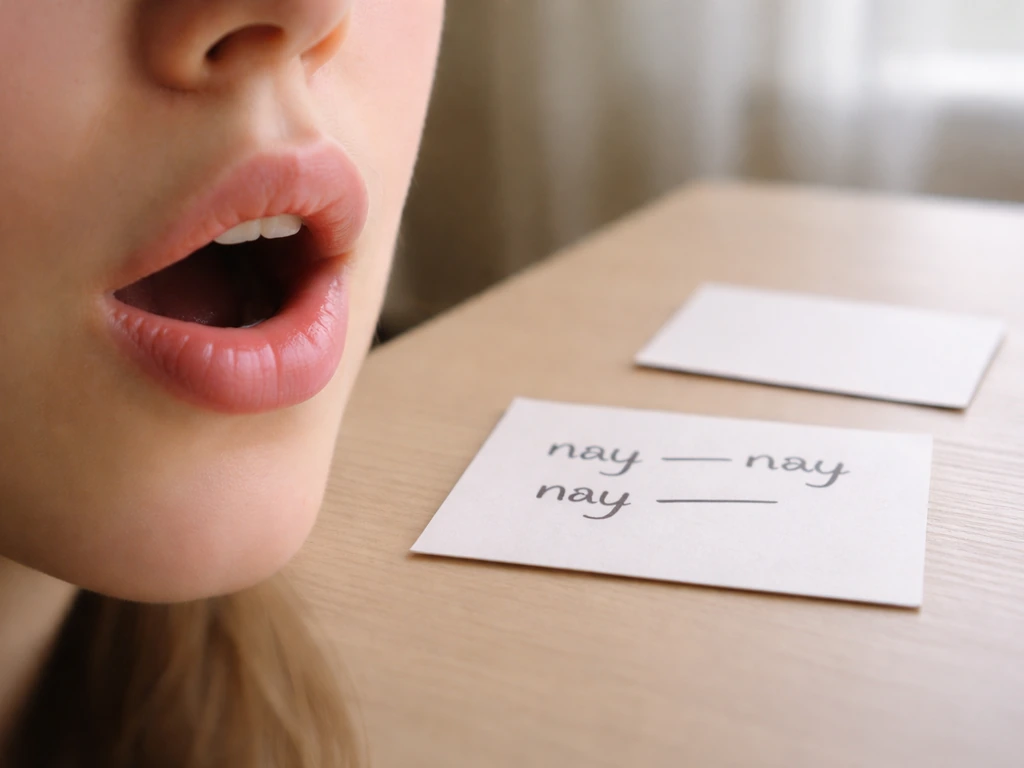
Practice script
Run through this short script out loud a few times. The repetition cements the vowel shape in your mouth faster than reading alone.
- Start with a single "nay" — hold the vowel for a beat: "naaaaay." Get comfortable with that long, open vowel.
- Now say "nay" twice with a brief pause: "nay... nay." Don't rush.
- Close the gap: "nay-nay." Equal length on both syllables.
- Add the context: "The nay-nay is a Hawaiian goose."
- Use the correct spelling in your head as you say it: nēnē. Let the macrons remind you to hold each vowel.
Common mistakes to avoid
- Saying "NEE-nee" — this is the single most common error. The ē in Hawaiian is not the English long-E (as in "see" or "tree"). It's the sound in "they" and "day."
- Saying "NEN-ay" or "NEN-ee" — some speakers unconsciously shorten the first syllable to a quick "en" sound. Both syllables should have the same full "ay" vowel.
- Collapsing it to one syllable — "neen" or "nane" both lose a syllable. This bird's name is always two beats.
- Stressing the second syllable heavily: "nay-NAY." Primary stress lands on the first syllable. Both are close to equal, but the first leads.
- Skipping the vowel length entirely and treating it like the English name "Renée" with a clipped final syllable — both syllables in nēnē are equally held.
It helps to draw a comparison to other birds with names that trip people up. The challenge of an unfamiliar vowel sequence is something you also run into when figuring out how to pronounce magpie bird, where the spelling looks simple but the vowel in "pie" surprises non-native English speakers, or when tackling how to pronounce rhea bird, where the digraph "rh" causes hesitation. In each case, the fix is the same: identify the vowel, hold it, and don't substitute your native-language default.
How to verify and keep it consistent
Where to check your pronunciation
The most authoritative verification method is to go to Hawaiian-language sources. Ulukau, the Hawaiian Electronic Library, provides access to authoritative Hawaiian dictionary materials and is a go-to resource for confirming spelling and pronunciation expectations for any Hawaiian word, including nēnē. For audio comparisons, HowToPronounce offers community-submitted recordings from multiple speakers, which lets you hear how real people say the word and compare against your own attempt. Neither source will give you a conflicting answer here: both will confirm the "nay-nay" pronunciation.
The National Park Service also publishes guidance on pronouncing Hawaiian names using diacritics, a useful framework if you're planning a visit to Haleakalā or any of the Hawaiʻi parks where you're likely to encounter nēnē in the wild or on signage. The National Park Service also uses the blank" rel="noopener noreferrer">macron spelling “nēnē” for the Hawaiian goose (Branta sandvicensis) in its endangered-species overview. Applying that same principle (let the kahakō tell you how to say the vowel) works perfectly for nēnē.
Keeping it consistent in conversation
Once you've got "nay-nay" locked in, the challenge becomes not drifting back to "NEE-nee" when you're talking quickly or in a group. A few practical habits help. First, always mentally spell the word as nēnē, with the macrons, even when you're writing it without them. The visual macron serves as a pronunciation reminder. Second, use the full phrase "Hawaiian goose" alongside it the first time you mention the bird in any conversation, this anchors both the identity and the pronunciation in context. Third, if you're in a birding group or puzzle community where the name comes up regularly, say it aloud a few times before the event rather than encountering it cold.
Bird names from non-English languages consistently reward this kind of intentional practice. The same issue comes up with names like the mynah bird, where English speakers encounter multiple spellings before they settle on the right sound, or with the xeme bird, where the initial letter throws people entirely. And questions like what the myna bird is called in English show how naming layers, the original-language name, the anglicized version, the common label, create genuine confusion. Nēnē is actually simpler than most: one name, one bird, one consistent "nay-nay" pronunciation backed by official conservation sources, Hawaiian language authorities, and even the bird's own call.
If you want to go deeper into Hawaiian phonology, the kahakō concept applies across the entire language, not just to nēnē. ʻŌlelo Online's pronunciation lessons on macrons are a practical place to continue, especially if you're planning to pronounce other Hawaiian bird or place names with confidence. But for nēnē specifically, you have everything you need: NAY-nay, /ˈneɪneɪ/, two equal syllables, both rhyming with "day." Say it like the bird sounds, and you'll never get it wrong.
FAQ
What if the word is spelled as nene (no macrons) in a crossword or caption, how should I pronounce it?
If you see nēnē written without macrons, say it as if the long vowels are still there. The sound stays “NAY-nay,” not “NEE-nee,” because the key is the vowel length, not the extra marks on paper.
How do I avoid accidentally saying nēnē as one syllable (like neen)?
Try counting beats instead of letters: you should hear two complete “nay” units (NĒ + NĒ). A common slip is to compress them into one “neen,” which happens when you blend the vowels. Keep a tiny separation between the two syllables.
Where does the stress go in nēnē, and how noticeable should it sound?
“NĒ-nē” is the stress pattern, but because both vowels are long, the difference sounds subtle. A practical test is to keep both syllables “day-like,” then make only the first one very slightly louder or more intentional.
Why do some recordings sound like a different vowel (for example, closer to “nay-neh”)?
If you hear people say “nay-neh” or “naynay” with an extra vowel sound, that is usually an English smoothing habit. For nēnē, keep the vowel consistent in both syllables, “NAY” quality for each, with no extra middle sound.
Is it okay if the second “nay” sounds a bit weaker when I speak quickly?
In many natural conversations, you may hear the second syllable slightly softer, especially at the end of a phrase. That softening is fine as long as it does not shorten the vowel. The “ay” quality should remain.
What’s a good quick trick if I’m introducing the bird to someone who keeps mispronouncing it?
Yes. If you use the full label, it helps prevent drift to “NEE-nee.” Say the phrase once as “nēnē, Hawaiian goose” so your brain links the pronunciation to the species identity and not just the spelling.
How can I tell from the spelling whether the vowels are long enough for “NAY-nay”?
If you are unsure which spelling you are looking at, prioritize the vowel length cues. When both vowels are written as ē (with kahakō), you pronounce them as long “ay” vowels, still “NAY-nAY.”
What practice method helps me most if my tongue keeps blending the two syllables?
Even if you can read it, practice in “call-and-response” rhythm: say “nay” once, pause a beat, then say “nay” again. This matches the two-part structure and reinforces the separation between syllables.
When comparing my pronunciation to audio recordings, what feature should I match most closely?
For listening practice, focus on vowel length rather than exact pitch. The best match to “NAY-nay” will hold the vowel in each syllable, even if speakers vary slightly in timing and accent.
Does the kahakō rule for Hawaiian diacritics apply here the same way, or is nēnē an exception?
If you see the same bird discussed alongside other Hawaiian names with diacritics, use the same rule set: kahakō (macron) means elongate the vowel. For nēnē specifically, that rule produces the repeating long “ay” sound.
Next Article
How to Pronounce Oriole Bird: IPA, Tips, and Practice
Get the correct IPA and syllable breakdown to pronounce oriole bird, fix common mistakes, and practice drills fast.