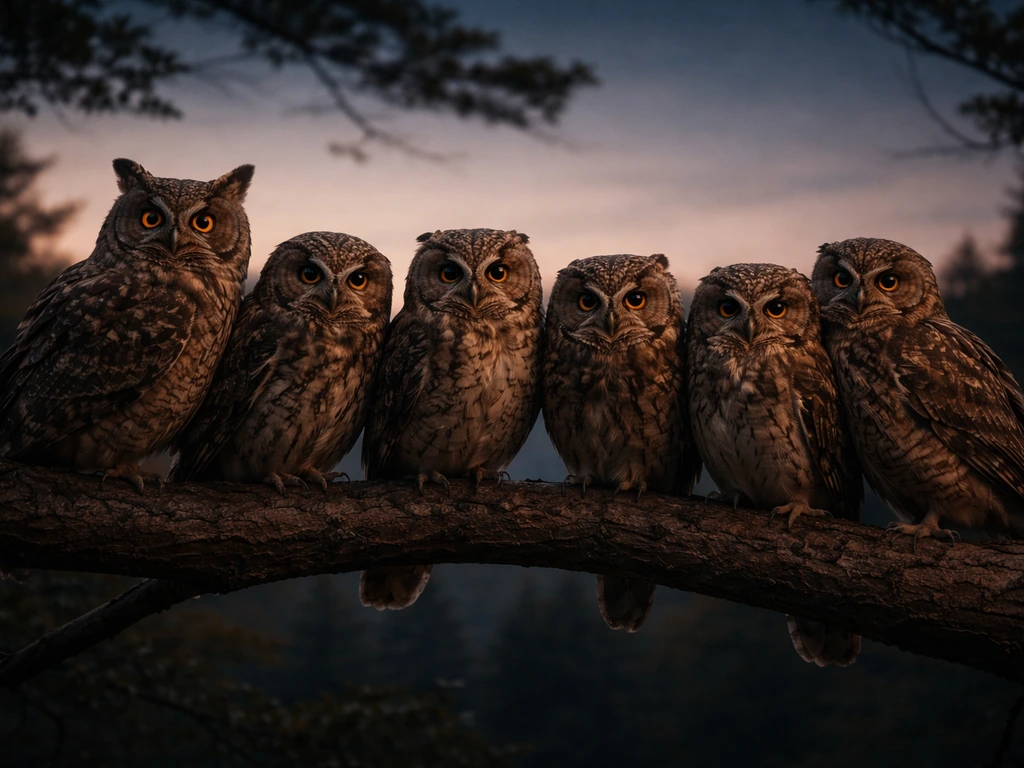
The most common collective noun for birds is "flock" as in "a flock of birds." That is the word you will reach for in everyday speech, birdwatching notes, and most writing. But English also has a rich set of species-specific or behavior-specific collective nouns for birds, like a murmuration of starlings, a murder of crows, a gaggle of geese, or a parliament of owls, and knowing which one to use (and when) is where things get genuinely interesting. Merriam-Webster defines “blank" rel="noopener noreferrer">murmuration” and includes the example “a great murmuration of starlings.”. Cambridge English Dictionary defines “blank" rel="noopener noreferrer">murder of crows” as a group phrase for crows.
What Is the Collective Noun for Bird? (Flocks and More)

James Ridgley
28 Apr 2026

What a collective noun actually is
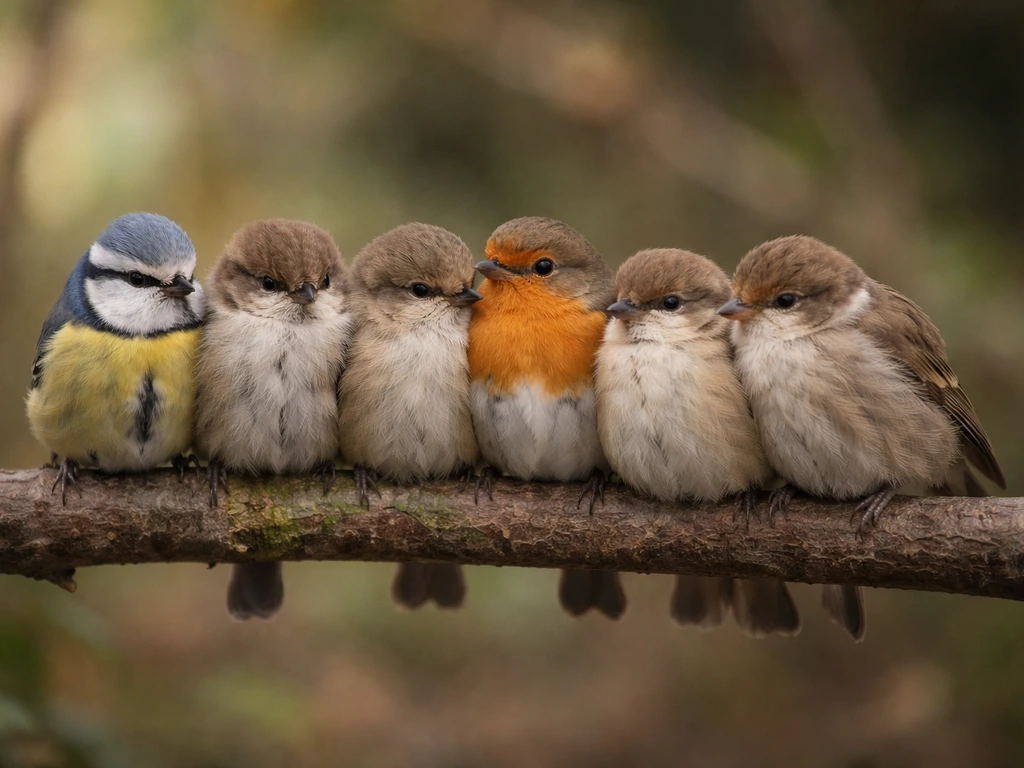
A collective noun is a single noun that refers to a group of people, animals, or things. Think of words like "team," "herd," or "flock." Cambridge defines it as a noun that can take either a singular or plural verb depending on whether you are treating the group as one unit or as a collection of individuals. Merriam-Webster gives the same two-word summary: nouns like "team" and "flock" that refer to a group of things. The practical upshot is that a collective noun sits at the front of a phrase and does the heavy lifting: "a flock of birds" uses "flock" as the collective head, while "birds" becomes the thing being grouped.
It is worth separating collective nouns from mass nouns (also called uncountable nouns). A mass noun like "water" or "sand" describes something you cannot easily count in individual units. Collective nouns, by contrast, refer to countable groups of individuals, so "a flock" is perfectly countable: you can have one flock, two flocks, several flocks. That distinction matters when you are writing and need to decide whether your noun takes a singular or plural verb.
Is "bird" itself a collective noun?
No, "bird" is not a collective noun. It is a regular countable noun: one bird, two birds, a hundred birds. When people search for "what is the collective noun for bird," they are usually asking what word describes a group of birds, not whether "bird" itself works as a collective. The answer is that "bird" on its own simply becomes "birds" in the plural. It does not magically transform into a collective term the way "flock" or "murmuration" does. If you wrote "a bird of sparrows," it would not make sense to any English speaker. You need a proper collective noun like "flock" to form that construction.
This is a common point of confusion, especially for people working on grammar exercises, crossword clues, or word puzzles. The word you want is almost always "flock" for general use, with more specific terms available when the species or situation calls for them.
The collective nouns you will actually use
Most collective nouns for birds fall into two camps: the everyday general terms and the species-specific or behavior-specific ones. Here is a quick breakdown of the ones that come up most often in real usage.
General collective nouns for any group of birds
- Flock: the most widely used and universally understood term. Works for any species, any context, mixed groups or single-species groups. Oxford Learner's Dictionary labels it countable and notes it can take a singular or plural verb.
- Flight: used to describe birds moving together through the air, slightly less common than flock but perfectly standard.
- Congregation: an older, more formal term occasionally used in literary or scientific contexts.
Species-specific collective nouns worth knowing
| Collective noun | Bird species | Notes |
|---|---|---|
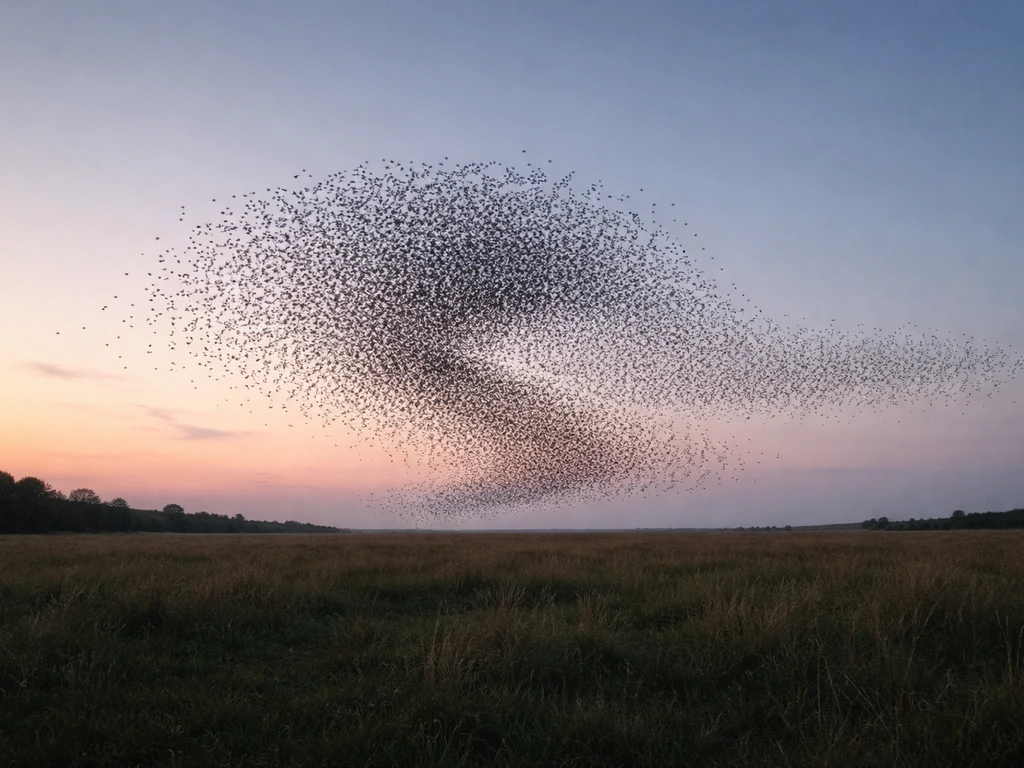
| Murmuration | Starlings | Refers specifically to the swirling, shifting aerial display of starlings in flight. Merriam-Webster gives the example "a great murmuration of starlings." |
| Murder | Crows | Cambridge includes this as a meaning-based collective noun tied specifically to crows. |
| Gaggle | Geese | Merriam-Webster defines it as "a flock of geese when not in flight," so it is position-specific as well as species-specific. |
| Parliament | Owls | Documented in educational materials including UK Parliament resources. Also the subject of a dedicated sibling topic on this site. |
| Charm | Goldfinches (and sometimes other small birds) | A well-known poetic collective, especially associated with goldfinches. |
| Colony | Penguins, gulls, and other nesting birds | Common in ornithological writing when describing breeding groups. |
The species-specific ones are fun, and they show up in crossword puzzles, pub quizzes, and nature writing all the time. But in everyday conversation, almost nobody says "a murmuration" unless they are specifically talking about starlings doing their famous aerial display. For anything else, "flock" is the safe, natural choice.
Picking the right collective noun for your situation
The choice really comes down to three factors: species, behavior, and context. If you are describing a group of mixed-species birds foraging together in a hedge, "flock" is the correct and natural word. Ornithologists actually use the term "mixed flock" or "mixed-species foraging flock" for these groups, which confirms that "flock" handles the general case even in scientific usage. If you are watching thousands of starlings wheel across a winter sky, "murmuration" is both accurate and vivid. And if you are writing a poem or a quiz question, reaching for the specific terms (murder, charm, parliament) adds color.
A practical guide for choosing:
- General group of birds, any species or mixed: use "flock."
- Specific species where a traditional collective noun exists: use the species-specific term when it adds clarity or precision (murmuration for starlings, gaggle for geese on the ground, etc.).
- Formal or scientific writing: "flock" remains the standard; species-specific terms are fine when the species is identified.
- Creative writing, poetry, or quizzes: the specific collective nouns are fair game and often preferred.
- Casual speech or conversation: stick with "flock" unless you specifically want to show off the species-specific term.
Grammar rules and example sentences you can copy
The verb agreement question trips people up more than anything else. According to Cambridge, a collective noun can take a singular or plural verb depending on whether you are treating the group as one unit or as a collection of individuals. In American English, Britannica notes, collective nouns typically take a singular verb. In British English, plural verbs are more common when emphasizing the individuals within the group. So both "the flock is roosting" and "the flock are roosting in different trees" are defensible depending on your variety of English and what you want to emphasize.
Here are example sentences you can use directly or adapt:
- "A flock of birds settled on the telephone wire." (Singular verb, American English style, group treated as one unit.)
- "A flock of birds were arguing over the bread crusts." (Plural verb, British English style, emphasizing the individual birds.)
- "We watched a murmuration of starlings over the estuary at dusk."
- "A murder of crows gathered in the oak tree every evening."
- "A gaggle of geese blocked the path by the pond."
- "A parliament of owls was roosting in the old barn."
- "A charm of goldfinches descended on the thistle feeder."
One thing to avoid: do not use a species-specific collective with the wrong species. Saying "a murmuration of pigeons" is technically incorrect and will raise eyebrows among anyone who knows the term. When in doubt, "flock" is always safe and always correct.
How this connects to broader bird naming and language
Collective nouns sit within a much larger world of bird-related language and naming conventions. The same English vocabulary that gives us "murmuration" and "murder" also shapes how we name species, discuss their behavior, and describe them in field guides. If you are interested in why specific collective nouns exist for specific birds (for example, why owls get a "parliament" or why goldfinches earn a "charm"), those terms often have roots in medieval English hunting traditions and early natural history writing, where poetic or evocative terms were favored over plain description. If you want the owl parliament definition, it refers to a group of owls, usually in a poetic or traditional sense.
The question of what to call groups of specific birds also connects directly to some closely related topics. There is a fascinating story behind the owl-parliament connection, and the collective noun "conventicle" or "tribe" is assigned to at least one specific bird species that surprises most people. If you want that specific collective noun for the particular bird it applies to, see conventicle or tribe in this related explainer. Similarly, the word "charm" as a collective noun for certain birds has its own etymological history worth exploring. If you want the details on the charm collective noun for which bird, the etymology is the best place to start. These are all corners of the same broader question: how does English language assign names and group terms to birds, and where do those conventions come from?
Even the straightforward question of whether you say "bird" or "birds" in different grammatical contexts connects to how collective nouns work. Understanding that "bird" is a count noun (not a collective or mass noun) clears up a lot of confusion when you are writing about groups. And if you are curious about bird naming in other contexts, languages, and cultures, the same principles that govern collective nouns in English have parallels in many other languages, though the specific terms vary considerably.
FAQ
Is “bird” ever used as a collective noun in informal English?
Not in standard English grammar. “Bird” stays a count noun (one bird, two birds), so “a bird” or “a flock of birds” are different constructions. If you mean “birds in general,” you usually switch to “birds” or “birdlife,” not “bird” as a group word.
Should I write “a flock of birds” or “a flock of bird”?
Write “birds.” The collective noun “flock” refers to a group, and the grouped items must be plural in this frame. “A flock of bird” sounds incorrect unless you are using “bird” in a very unusual way to mean “bird species” as a category.
What verb should I use with “flock,” “murmuration,” or another collective noun?
In American English, singular verbs are usually preferred (“the flock is feeding”). In British English, plural verbs are common when you want to highlight individuals (“the flock are feeding”). If you are writing for a specific audience, match that publication’s style.
Can I combine a collective noun with “of” plus a singular species name?
Often yes, if the singular refers to a category, not a single animal. For example, “a flock of sparrows” uses “sparrows” as a species group. If you mean one individual, you would not say “a flock of a sparrow,” you would say “one sparrow” or “a sparrow.”
Is “mixed flock” a correct term, or should I stick to “flock”?
“Mixed flock” is a natural, commonly understood descriptor, especially in birdwatching and more technical writing. “Flock” alone is still the safe default for everyday speech, so use “mixed flock” when you specifically need to emphasize multiple species.
Are the poetic collective nouns always tied to specific species?
Yes, many are species-anchored in traditional usage, so using them for the wrong bird can sound wrong to knowledgeable readers. When you are unsure which species a term is associated with, “flock” avoids the mismatch.
What’s a good rule of thumb for choosing between “flock” and a specific term like “murder of crows”?
Use “flock” when you want a general, accurate group term or when the species mix is unclear. Use a specific term when the species and context match the traditional association and you want a vivid, puzzle-friendly phrasing.
How should I pluralize the collective noun itself, for example “two flocks”?
You can pluralize the collective noun because “flock” is countable in this usage. “Two flocks of birds” is standard. Just keep the grouped noun plural after “of,” unless you are intentionally using a different category meaning.
Next Article
Parliament Definition Bird: Meaning, Name Origins, and ID Help
Find the right bird term behind parliament definition: names, spelling, pronunciation, etymology, and ID checks.