The answer is KLEE, four letters. The clue points to Paul Klee, the Swiss-German painter who created "Cat and Bird" in 1928. That painting now lives in MoMA's permanent collection and has become a reliable crossword reference, particularly in the New York Times puzzle where it appeared most recently on January 15, 2023.
Paul Who Painted Cat and Bird Crossword Clue Solver Guide

James Ridgley
4 Jun 2026
What the clue is actually asking
"Paul who painted Cat and Bird" is a straightforward person clue. The constructor is giving you a first name (Paul) plus a specific artwork title ("Cat and Bird") as the identifying detail. The expected answer is the artist's surname only. That's normal for crosswords: you'd fill in KLEE, not PAUL KLEE, and not PAULKLEE. The artwork title is doing the heavy lifting here because there are plenty of famous Pauls in art history, and "Cat and Bird" is the detail that locks in exactly one of them.
Notice the clue doesn't ask you to name the bird in the painting or identify the cat breed. It's using the painting's title as a lookup key. That distinction matters when you're scanning your memory: you don't need ornithology knowledge to crack this one, you just need to recognize the title.
Paul Klee is your answer, and here's why he's the only real candidate
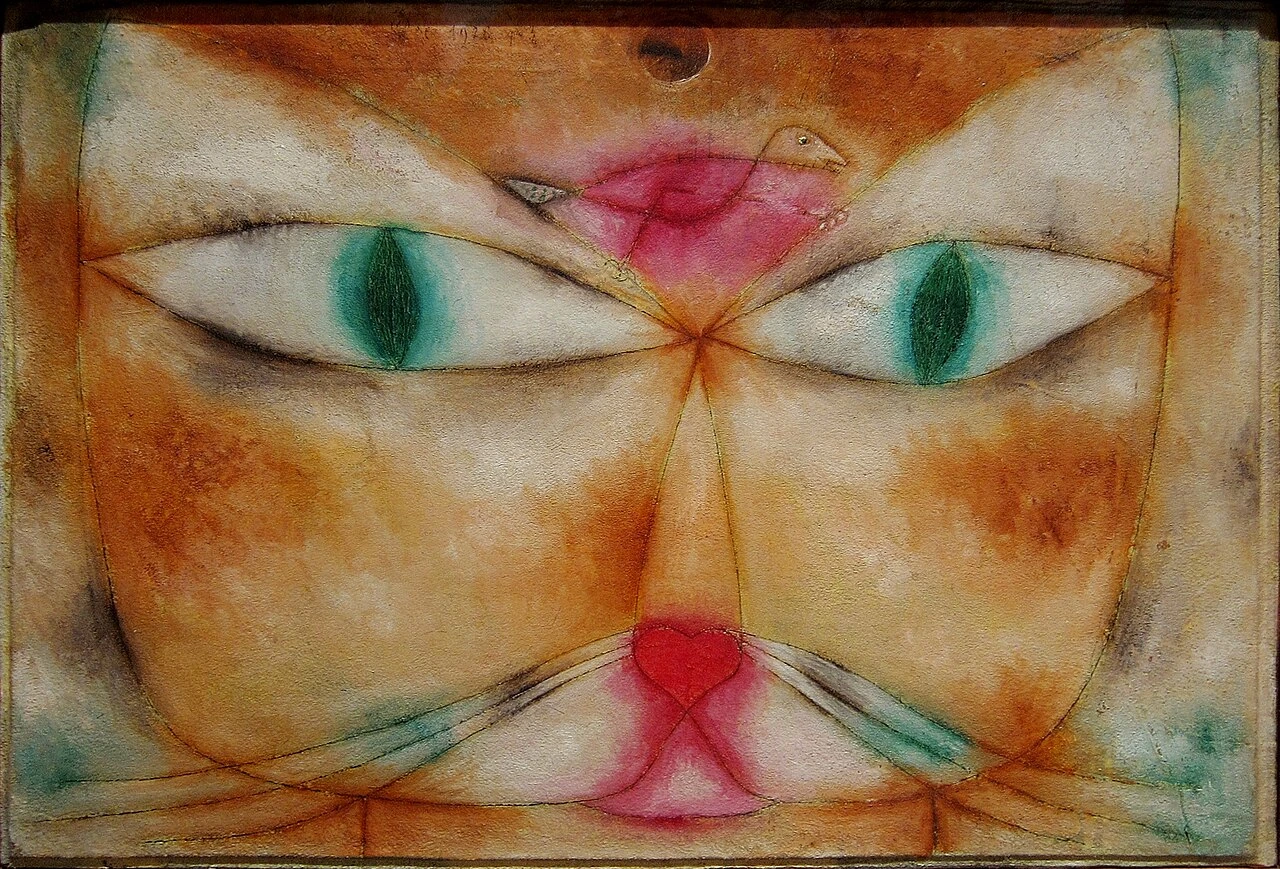
Paul Klee (1879 to 1940) was a Swiss-German artist associated with Expressionism, Cubism, and the Bauhaus movement. He's well-known in the art world, and his name is equally well-known in crossword grids because KLEE is a four-letter, vowel-consonant mix that constructors love. The specific painting "Cat and Bird" was completed in 1928 and shows a stylized cat with a small bird perched on its forehead. MoMA holds the original. That combination of a famous-enough Paul, a short surname, and a memorable artwork title makes KLEE a near-certain answer whenever this clue appears.
It's worth running through the other famous Pauls in art just to rule them out, which also helps if your grid gives you an unexpected letter.
| Paul | Surname (crossword entry) | Letters | Known for | "Cat and Bird" connection |
|---|---|---|---|---|
| Paul Klee | KLEE | 4 | Bauhaus, Expressionism, whimsical figurative work | Painted "Cat and Bird" in 1928 — direct match |
| Paul Gauguin | GAUGUIN | 7 | Post-Impressionism, Tahitian paintings | No known cat-and-bird painting |
| Paul Cézanne | CEZANNE | 7 | Post-Impressionism, still lifes, Card Players | No cat-and-bird connection |
| Paul Signac | SIGNAC | 6 | Pointillism, Neo-Impressionism | No cat-and-bird connection |
| Paul Rubens | RUBENS | 6 | Baroque, large figurative canvases | No cat-and-bird connection |
If your grid clearly shows a 4-letter entry, KLEE is the only name that fits. If for some reason the grid shows 7 letters, revisit the clue wording carefully because "Cat and Bird" as an artwork title belongs exclusively to Klee.
Checking grid constraints before you commit

Before writing anything in, count the boxes. The confirmed answer length for this clue is 4 letters: K-L-E-E. WordFinder by YourDictionary also lists “Paul who painted "Cat and Bird"” as KLEE, 4 letters, and notes it was last seen in The New York Times on Jan 15, 2023 The confirmed answer length for this clue is 4 letters: K-L-E-E.. If you count anything other than four boxes, double-check that you're looking at the right numbered entry. This clue has appeared in the NYT grid, and in those contexts the entry is always 4 letters.
Next, check your cross letters. Any letter you've already filled in from intersecting answers should align with KLEE. Here's what to look for at each position:
| Position | Letter | What to check |
|---|---|---|
| 1 | K | An uncommon first letter — if a crossing answer has given you something other than K here, recheck that crossing answer first |
| 2 | L | Very common letter, unlikely to cause a conflict |
| 3 | E | Common, but check if the crossing answer has a vowel requirement here |
| 4 | E | Double-E ending is distinctive — if crossing answer suggests a consonant, one of your answers is wrong |
The opening K is the most useful diagnostic. If a crossing down answer has produced a K in that slot, you can be highly confident KLEE is correct. If the crossing answer gave you anything else at position 1, go back and re-examine that intersecting clue because KLEE is essentially the only answer to this specific clue in major puzzle databases.
The bird in the painting and why it matters for your grid
The bird in "Cat and Bird" is not identified by species in the painting itself or in MoMA's catalog entry. Klee described it only as a small bird perched on the cat's forehead, rendered in his signature stylized, semi-abstract style. There is no named species: no sparrow, no finch, no wren. The title simply says "Bird" (in German: "Katze und Vogel"), and the clue writer is using that generic title noun as the hook.
That's actually useful information for solving. You won't encounter a separate clue in the same puzzle asking you to name the bird species, because there isn't one to name. The bird reference is entirely contained within the painting title and serves only to help you identify Klee. So if you were wondering whether you needed to know the English name or German name of a specific bird species to crack this clue, the answer is no.
The German title, "Katze und Vogel," is worth knowing as trivia context. "Vogel" simply means bird in German, and it's the generic noun just as "Bird" is in the English title. Some crossword clues reference the German title directly, usually in more themed or multilingual puzzles, but the standard English-language crossword version sticks with the English title and expects KLEE as the answer either way.
Spelling KLEE correctly and how it shows up in puzzles
KLEE is spelled K-L-E-E, and that double-E ending is consistent every time. There are no alternate accepted spellings in crosswords. You won't see KLEE shortened, pluralized, or modified because it's a proper surname and it's entered exactly as written.
The name is pronounced "KLAY" (rhymes with "clay"), with the double-E representing the long A sound in German. If you've been mentally reading it as "KLEE" to rhyme with "free," you're not alone, but the German pronunciation is KLAY. For the purposes of filling a crossword grid, pronunciation doesn't matter at all since you're writing letters, but knowing this helps you recognize the name in conversation or when a clue is read aloud in a puzzle event.
KLEE is what crossword enthusiasts would call "crosswordese" in the best sense: a short, vowel-rich name that constructors return to regularly. You'll see it clued in various ways across different puzzles:
- Paul who painted "Cat and Bird" (the most specific and direct version)
- Swiss-German abstract painter Paul _
- Bauhaus artist Paul
- "Twittering Machine" painter (another famous Klee work)
- "Fish Magic" painter
- Paul of the Bauhaus
Knowing these variants helps you recognize KLEE when the clue is worded differently. If you solve this clue today and KLEE sticks in your memory, you'll have a useful 4-letter answer ready for future puzzles, especially NYT grids where Klee appears repeatedly.
A step-by-step workflow when you're not sure
Even when you suspect an answer, it's worth running a quick verification routine before committing in ink or locking it in a digital puzzle. Here's the process I use for person-clues like this one:
- Count the boxes first. Confirm the entry is 4 letters. If it isn't, recheck which numbered entry you're solving.
- Write in any cross letters you already have from intersecting answers. Even one confirmed letter speeds up verification.
- Test KLEE against your existing cross letters. K at position 1, L at position 2, E at position 3, E at position 4. Any conflict? If yes, revisit the intersecting answer, not KLEE.
- If position 1 is blank, try filling in K and see whether it unlocks any crossing answers. A K starting position is unusual enough that its crossing answer will either confirm or reject it quickly.
- If you have a crossing answer that ends in a letter matching position 1, 2, 3, or 4 of your entry, compare that letter to KLEE's sequence. A mismatch means one of the two answers needs revisiting.
- When all four letters check out against their crossings, lock in KLEE with confidence.
This test-by-letters approach works for any person clue, not just Klee. It's the same workflow useful for clues like those involving names that sound like bird names (a type of clue that shows up in its own category of wordplay puzzles) or clues about what birds do physically. If you are wondering about what a bird does with its beak in crossword language, that can fall under the same physical-action clue pattern what birds do physically.
These “bird name” wordplay clues are a close cousin of a riddle where the answer is bird, too names that sound like bird names. If you are dealing with a rival bird is not on time crossword clue, use the same cross-letter verification approach to confirm the intended answer.
If you're trying to solve a different clue that says “clean up as a bird does,” look for wording that points to a wiping or brushing action rather than a specific bird species clean up as a bird does crossword. Kylo is an example of a surname clue whose sound can nudge you toward a bird-name style answer in crossword wordplay names that sound like bird names.
The principle is the same: get any letter anchor from a crossing answer, test your candidate answer against it, and use conflicts to re-examine the weaker of the two answers rather than abandoning your best candidate too quickly.
The short version if you just need the answer
Fill in KLEE. Four letters: K-L-E-E. Paul Klee painted "Cat and Bird" in 1928, MoMA holds the painting, and every major crossword database confirms this answer for this clue. The bird in the painting has no species name, so no additional bird-identification knowledge is required. If your grid's crossing letters support a K in the first position and a double-E ending, you're done.
FAQ
If the grid gives me 4 letters but one crossing conflicts, what should I check first for this clue?
Recheck the entry length and the first letter position. For this clue, KLEE is keyed to “Cat and Bird,” so if any intersecting entry forces a different first letter than K, go back to that intersecting clue and verify the number and orientation. Most contradictions come from mis-numbering or an already-wrong letter propagating.
Could the answer ever be “PAUL” or “KLEE” combined in the same entry?
No for standard person-artist clues of this format. The grid entry expects only the surname, so you fill KLEE, not PAUL and not an added first name. If your entry looks like it requires 5 or more letters, confirm you are not accidentally filling the wrong clue number.
What if my puzzle uses a different language version of the artwork title, like “Katze und Vogel”?
The surname answer stays the same. “Katze und Vogel” is just the German wording for the same generic cat-and-bird title, and crosswords still resolve it to KLEE. You would not need bird species translation to proceed, because the species is not named in the clue.
Do I need to know the bird species depicted in the painting to solve this?
No. The bird is referenced generically through the title, and the painting description does not provide a specific species name you could plug into the grid. If you find yourself guessing species like sparrow or finch, that is a sign you are overthinking the artwork detail.
How should I handle it if my crossings spell something that looks close to KLEE, like KLEA, KLIE, or KLEE with one letter off?
Treat it as a mismatch and debug the intersecting clue that supplied the incorrect letter. KLEE’s spelling is fixed as K-L-E-E, with the double E at the end. A one-letter deviation usually means the crossing answer is wrong, not that the constructor accepted an alternate spelling.
Is the clue sometimes confused with other “Paul” artists, and how do I rule them out quickly?
Yes, if you only remember “Paul” names generally. The deciding factor here is the artwork title “Cat and Bird,” which narrows it strongly to Klee. A quick rule is, if the grid length is 4 and your crossings allow K as the first letter and E as the final two letters, you can be confident you are not dealing with another Paul.
Does pronunciation matter for this clue, especially if I am playing digitally with voice clues?
Not for filling the grid. Even if someone reads it as KLAY in conversation, the puzzle expects the letters K-L-E-E. Use crossings and letter positions, not spoken rhythm, to avoid locking in a homophone-based mistake.
What is the fastest verification routine before finalizing KLEE?
First count the boxes to confirm 4 letters. Then verify letter anchors from crossings, especially position 1 (should be K) and positions 3 and 4 (should be E and E). If either fails, identify the intersecting entry causing the conflict and re-solve that crossing rather than switching away from KLEE immediately.
Next Article
What a Bird Does With Its Beak Crossword Clue Answer
Find the best beak-action crossword answer, from pecking to preening, using clue grammar and letter counts.