The Hawaiian word for bird is manu. That's it, short and clean: manu (pronounced "MAH-noo"). It covers "bird" in the general sense and can technically extend to any winged creature. Whether you're asking about a bird you spotted, naming a pet, or trying to understand Hawaiian wildlife signage, manu is the word you need.
How Do You Say Bird in Hawaiian: Word, Pronunciation, Examples

James Ridgley
18 Apr 2026
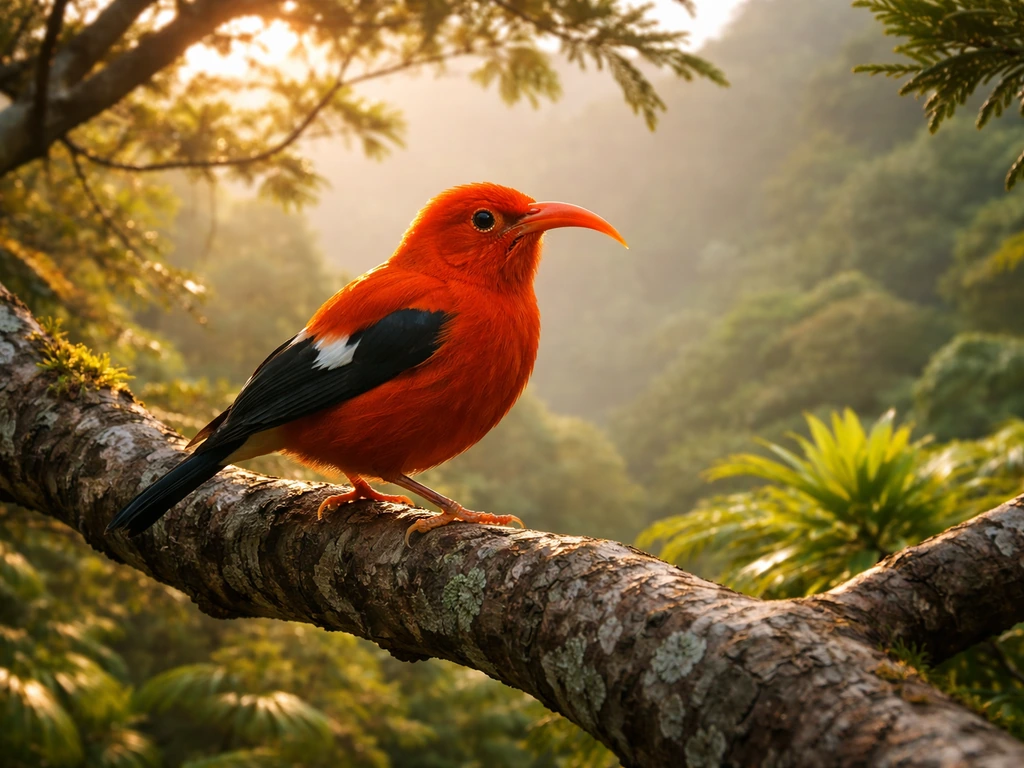
The Hawaiian word(s) for "bird": general vs. specific
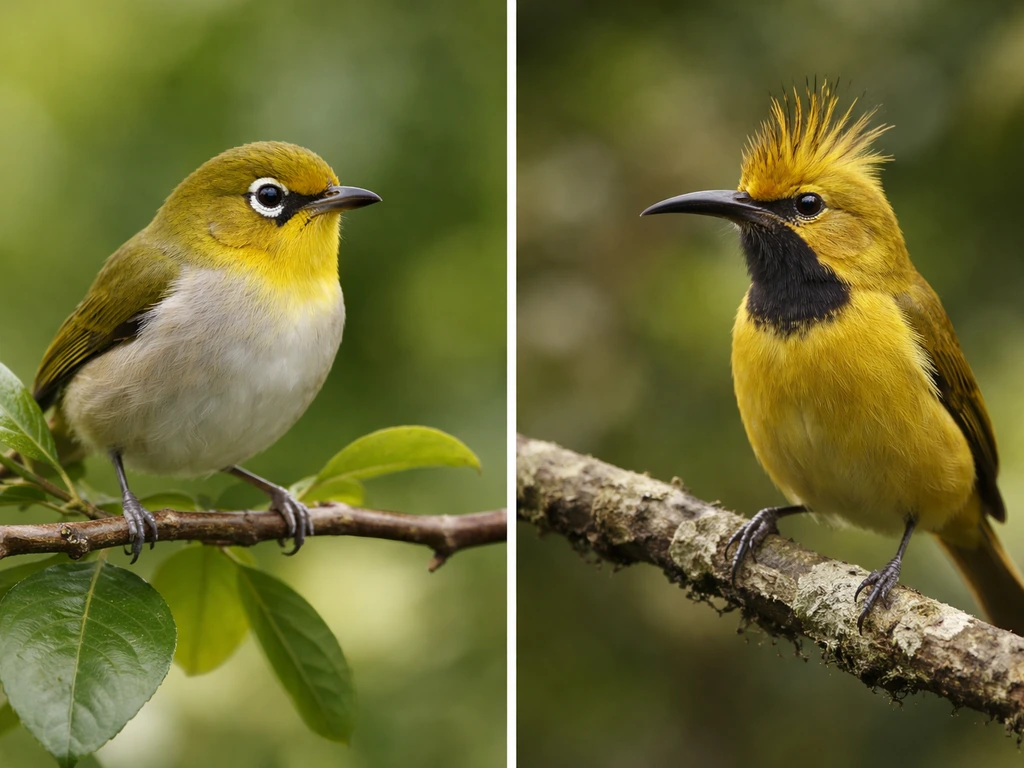
Manu is the everyday general term for "bird" in Hawaiian, much like how "bird" works in English. Hawai'i Public Radio's Hawaiian Word of the Day program defines it as "bird or any winged creature," and that's the best working definition to keep in mind. You'll see it used in plural contexts too: nā manu means "birds" (nā is the Hawaiian plural article), and the DLNR has used phrases like "Makahiki o Nā Manu Nahele" (Year of the Forest Birds) in official programs, which shows just how naturally manu functions as the go-to general term. DLNR describes “Makahiki o Nā Manu Nahele” as “The Year of the Forest Birds” and lists it as a campaign hub organized with multiple partners, including DLNR Forestry & Wildlife Makahiki o Nā Manu Nahele" (Year of the Forest Birds).
Where Hawaiian diverges from English is at the species level. Hawaiian has rich, specific names for individual bird species, and in real conversation, native speakers often use those specific names rather than reaching for manu. For example, the Hawaiian coot is called the ʻAlae keʻokeʻo, and a native honeycreeper is referred to as the Hawaiʻi ʻamakihi. Hawaiʻi Public Radio’s Manu Minute describes the ʻAlae keʻokeʻo (Hawaiian coot) and notes that it lives in fresh and brackish wetlands across the Hawaiian Islands. These aren't just nicknames; they're the standard names people use when talking about a particular bird. Think of manu as the category and species-specific names as the precise labels, similar to how you might say "bird" casually but "American robin" when you mean a specific one.
How to pronounce manu
Hawaiian pronunciation is highly regular once you know the vowel sounds, which makes manu one of the easier words to pick up. Every syllable is pronounced, and vowels are pure sounds, not blended the way English vowels often are.
- ma: sounds like "mah" (the "a" in "father," not the "a" in "map")
- nu: sounds like "noo" (like "noon" without the second n)
- Full word: MAH-noo, with equal or slightly stronger stress on the first syllable
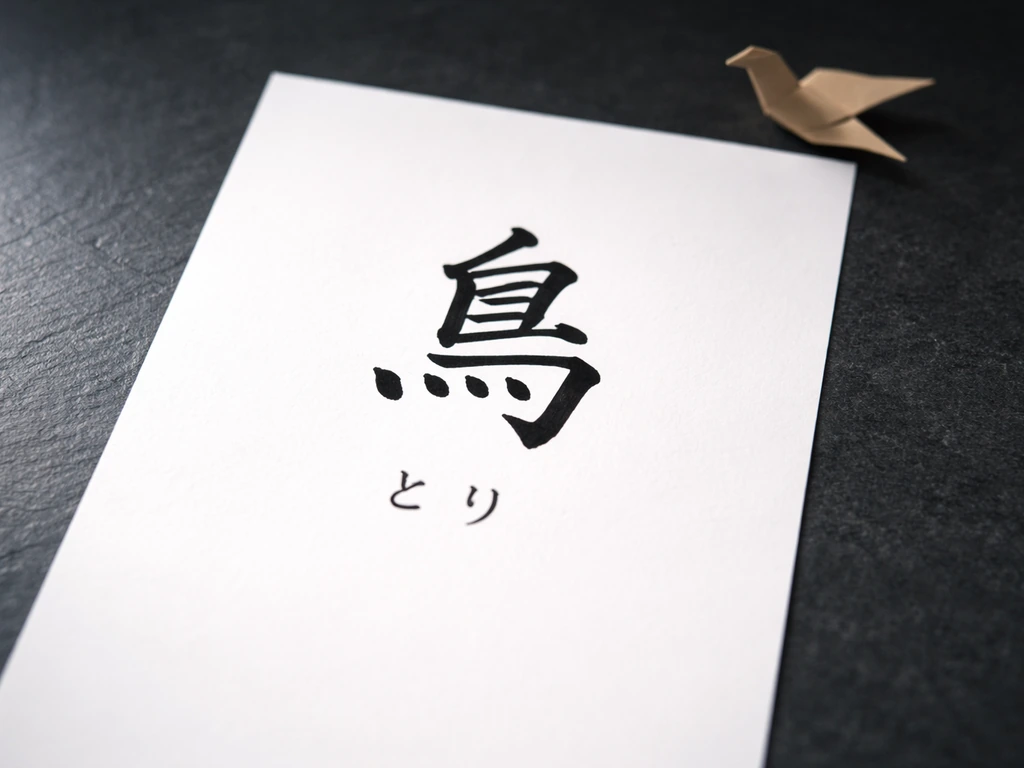
There's no silent letter, no tricky blend, and no glottal stop (ʻokina) in manu itself, which makes it beginner-friendly. Just say "mah" then "noo" at a calm, even pace. If you've ever tried saying bird in Japanese (tori) or bird in Korean (sae), you'll notice manu is actually simpler to land on the first try because Hawaiian vowels behave so consistently.
Spelling it correctly: diacritics and what they mean
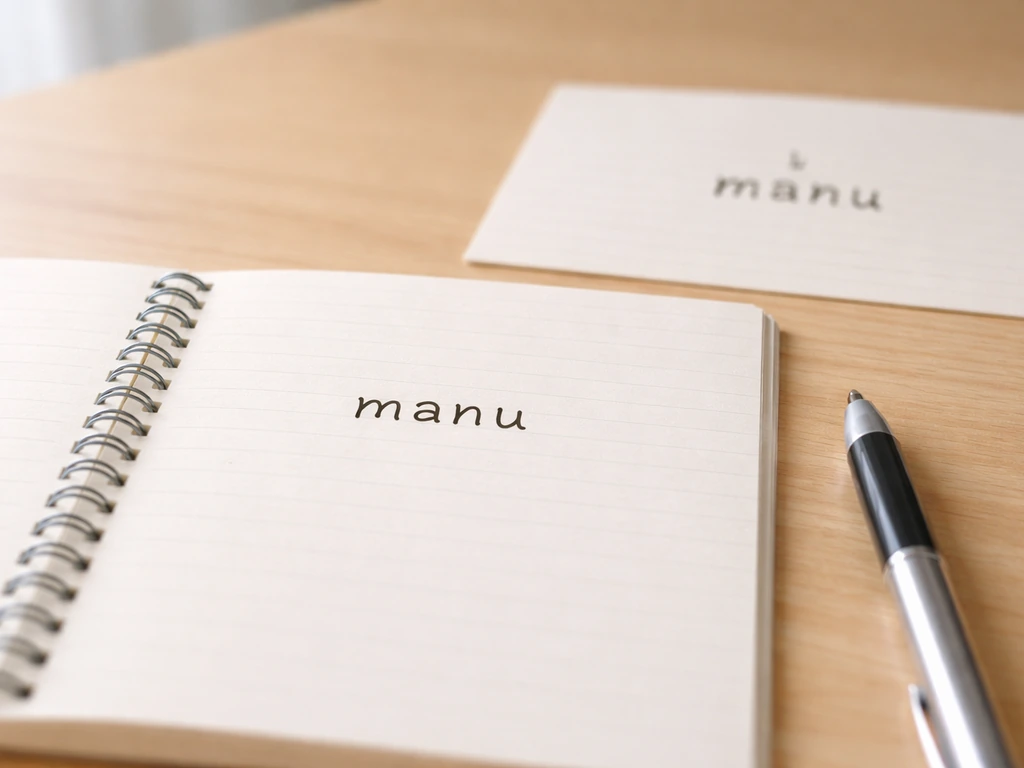
Good news: manu has no diacritics. You write it exactly as it looks: m-a-n-u. No macron (kahakō) over any vowel, and no glottal stop (ʻokina) before any letter. That makes it one of the cleaner Hawaiian words to type and write.
That said, you'll encounter diacritics constantly when reading Hawaiian bird names, so it helps to understand the two marks used in the language. The kahakō is a macron, a horizontal bar over a vowel (like ā or ō), that signals the vowel is held longer than normal. The ʻokina looks like a reversed apostrophe (ʻ) and represents a glottal stop, the brief catch in your throat between sounds, like the pause in the middle of "uh-oh." Both marks change meaning and pronunciation, so leaving them out when writing other bird names can cause real confusion. For manu specifically, you're in the clear, but keep these marks in mind when you move on to specific species names.
| Mark | Hawaiian name | What it does | Example |
|---|---|---|---|
| Macron (ā, ō, etc.) | Kahakō | Indicates a long (held) vowel | nā (the plural article for "the") |
| Glottal stop (ʻ) | ʻOkina | Brief stop in airflow, functions as a consonant | ʻAlae (as in ʻAlae keʻokeʻo, the Hawaiian coot) |
Context matters: when to use manu and when to use a species name
Use manu when you're speaking generally: talking about birds as a category, asking if someone saw a bird, or describing something a bird did without specifying what kind. Many people also use the name “Bird Island” to refer to which Hawaiian island is known for birds. It's the right word for signs, captions, and general wildlife references. University of Hawaiʻi at Hilo even runs a radio series built around the word manu to introduce listeners to different Hawaiian birds, which tells you how central and familiar the term is in everyday Hawaiian-language media.
Switch to a species-specific name when you're identifying a particular bird. If you're birdwatching and want to tell someone what you saw, using manu alone would be like telling a friend you saw "a vehicle" instead of "a red pickup truck." The specific name carries the real information. Hawaiian has distinct names for dozens of native species, and learning those alongside manu is what makes you genuinely useful in a field or conservation context.
One more context to be aware of: manu also functions as a productive word element in compound terms and proper names. You'll spot it embedded in longer Hawaiian words and place names, where it contributes its "bird" meaning to the compound. This is similar to how the site covers broader bird-naming patterns across languages, from Hawaiian to Hebrew, and manu's role as a word-building block is part of what makes it such a foundational term to learn first. If you’re also learning how to say bird in Hebrew, the next step after mastering Hawaiian manu is to compare the Hebrew word with these general and species-specific patterns.
Bird vocabulary you'll want right after manu
Once you have manu down, a handful of related Hawaiian terms become immediately useful, especially if your interest is birdwatching, Hawaiian wildlife, or the cultural history of birds in Hawaiʻi.
- Nā manu: "birds" (plural). The article nā marks plurality in Hawaiian, so nā manu is birds as a group.
- Manu nahele: forest bird (nahele means forest). You'll see this in conservation program names and on trail signage.
- Kia manu: traditional bird catcher. Historically, kia manu were specialized practitioners who caught birds in the forest canopy, often to harvest feathers for ceremonial objects. The term appears in Hawaiian featherwork glossaries and is deeply tied to the cultural history of Hawaiian birds.
- ʻAmakihi, ʻapapane, nēnē: examples of specific bird names worth learning if you're visiting or birdwatching. The nēnē is the Hawaiian state bird.
- ʻŌlelo Hawaiʻi: the Hawaiian language itself. Knowing the term is useful when you're looking up pronunciation resources or language programs.
If you've already looked up how to say bird in Japanese or explored bird terminology in other languages, you'll notice that Hawaiian bird vocabulary is unusually rich in species-specific names tied to ecology and culture, not just description. That depth reflects how central birds were, and still are, to Hawaiian identity and environment.
Ready-to-use sentences with manu
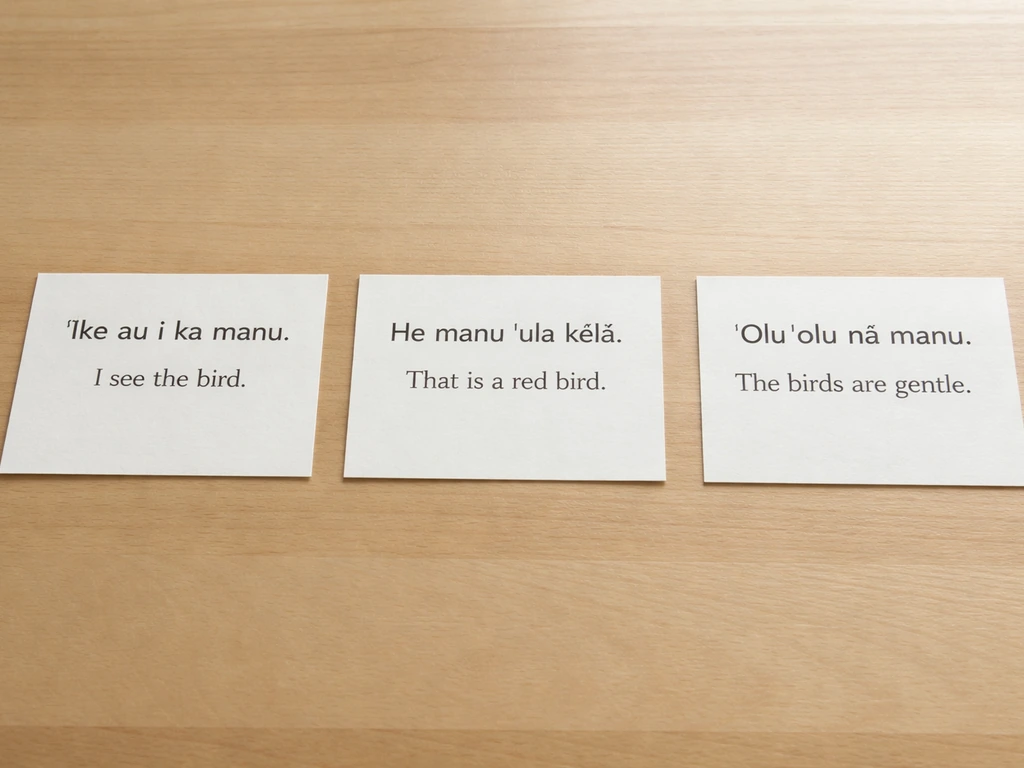
Here are practical example sentences you can copy, say aloud for practice, or use as a starting point for your own Hawaiian phrases. Pronunciation guides are included in parentheses.
| Hawaiian | English meaning | Pronunciation guide |
|---|---|---|
| He manu. | It is a bird. / That's a bird. | heh MAH-noo |
| Nā manu. | The birds. | nah MAH-noo |
| He manu nani. | It is a beautiful bird. | heh MAH-noo NAH-nee |
| Makahiki o Nā Manu Nahele. | Year of the Forest Birds. | mah-kah-HEE-kee oh nah MAH-noo nah-HEH-leh |
| ʻO wai ka inoa o kēia manu? | What is the name of this bird? | oh why kah ee-NOH-ah oh KAY-ee-ah MAH-noo |
The last sentence is the most practically useful one if you're birdwatching or in a field setting and want to ask someone what species you're looking at. Even if your Hawaiian goes no further than manu right now, these sentences give you a real foothold in the language and an immediate way to use what you've learned.
FAQ
Do you ever say “nānā manu” or a phrase with “manu,” or is “manu” enough by itself?
“Manu” is enough for the basic meaning (bird), but for a natural request you typically add a verb. For example, you can ask about what you see with a structure like “ʻike ʻoe i ka manu?” (do you see the bird?), instead of relying on a fragment. If you’re only pointing at something, using just “manu!” or “He manu!” is usually understood, but it sounds more like an observation than a question.
What’s the correct way to say “birds” (plural), and do you change manu?
Use the plural article “nā” before the noun. “Nāʻ manu” is “birds,” while “manu” stays the same spelling. If you’re writing, the plural marker is “nā” with the macron, but the word “manu” itself has no diacritics.
If I forget the ʻokina and kahakō marks in a bird species name, will I be understood?
You might be understood in casual conversation, but leaving out the glottal stop or vowel length can change the word. It can also make it harder for listeners to distinguish between similar-looking species names. The practical fix is to type the whole species name exactly as written once you start learning specific birds, even though “manu” itself is straightforward.
How do you handle “bird” when you mean the animal in general versus a specific type (like a chick)?
For general meaning, “manu” works. For a more specific idea like a chick, fledgling, or particular life stage, Hawaiian typically uses a species name or a dedicated term rather than relying on “manu” alone. If you are unsure, start with “manu” and ask what kind using the species-name you hear from locals.
Is “manu” used for birds only, or can it include other winged animals?
In everyday use, it means bird, and it can extend to winged creatures in a general sense. If you’re talking to someone about a bat, insect, or flying creature that is not a bird, they may still understand what you mean, but you’ll sound more precise by using the specific Hawaiian term for that type if you have it.
What word should I use if I want to say “birdhouse” or “birdwatching” in Hawaiian, is it always manu?
Often, “manu” appears as part of longer compounds or proper names that build the concept of birds. However, not every related English word maps to a simple “manu + noun” pattern. A good approach is to memorize a few common full phrases used locally, especially for activities like birdwatching, rather than assuming a one-word compound for everything.
If I’m writing by hand or typing on a phone, how can I enter diacritics correctly for Hawaiian bird names?
For “manu” you do not need diacritics. For other bird species names, focus on two marks: the kahakō (macron) and the ʻokina. On most devices you can enable Hawaiian keyboard layouts to type these directly. If you cannot, it is better to omit the whole species name and stick to “manu” than to guess the marks in a way that changes pronunciation.
Do native speakers prefer species names over “manu,” and when should I switch?
In many real-world conversations, people switch to species names when they can identify the bird, especially in birdwatching. Use “manu” when you do not know the species yet, when you are speaking generally, or when you are referencing birds as a category. Once you have a likely ID, switch to the species-specific name to be maximally accurate.
How should I ask someone what species a bird is, given that I only know “manu” right now?
You can ask in a way that anchors on “manu” while inviting the species label. For example, after pointing you can ask something like “He aha kēia manu?” (what bird is this?). Then listen for the species name, repeat it back for confirmation, and use that label next time.
Next Article
How Do You Say Bird in Japanese: Pronunciation and Writing
Learn Japanese for bird: tori, pronunciation tips, how to write 鳥 or とり, plus common phrases and usage.