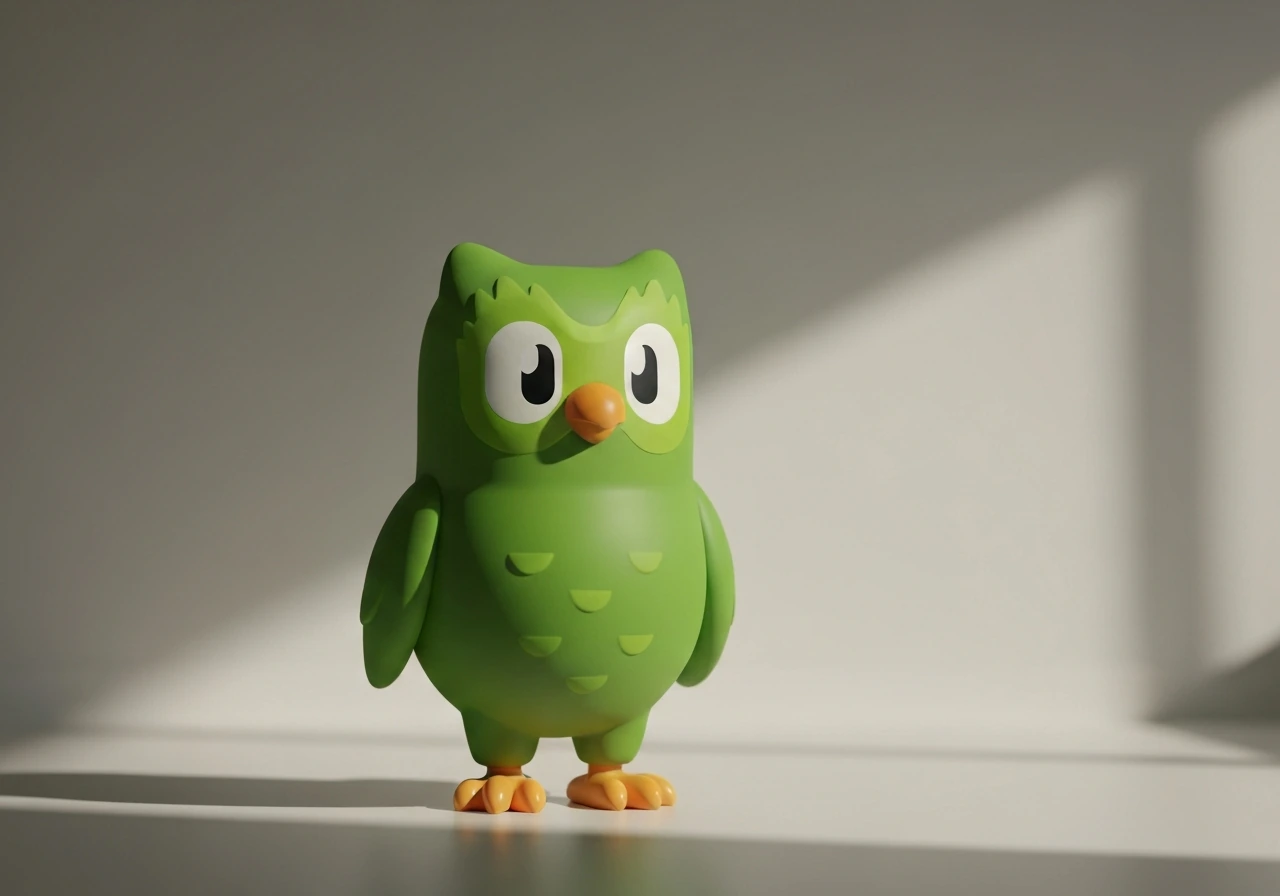
Duolingo's bird mascot, Duo, is officially male. Duolingo's own brand guidelines and design blog posts consistently use male pronouns (he/him) when referring to Duo, and the brand guidelines explicitly state that Duo is a boy. So if you've been wondering whether the green owl is male or female, the short answer is: male, and it comes straight from the source. For additional context, Building character: How a cast of characters can help you learn a language provides a relevant source on this topic.
What Gender Is the Duolingo Bird? Best Answer Today

James Ridgley
20 Apr 2026
What the Duolingo bird actually is (and why people ask about gender)
Duo is a stylized green owl. He's been Duolingo's mascot since the app launched, and while a sibling topic on this site covers what species he's based on in more detail, the short version is that he's a cartoonish great horned owl-inspired design rather than a photorealistic bird. Because he's a character with a personality, a voice, and a narrative presence, it's natural to wonder whether Duolingo has assigned him a sex or gender. Plenty of animated or branded animal characters are left deliberately ambiguous, which is why the question comes up so often.
There's also a secondary reason people ask: many are approaching the question from a language-learning angle. If you're studying Spanish or French with Duolingo, you've probably already encountered the concept of grammatical gender for birds (a separate but related question covered elsewhere on this site). That grammatical curiosity often spills over into wondering about Duo himself.
How to spot Duo's sex in Duolingo's own branding

The clearest place to look is Duolingo's brand design guidelines. The guidelines instruct writers and designers to treat Duo as male, stating plainly that Duo is a boy and that using the pronouns he and him is correct. This isn't buried in a footnote, it's part of the character documentation that Duolingo's own content teams use.
Two official Duolingo blog posts back this up. A 2013 post titled 'Reshaping Duo' uses male-gendered language throughout, including phrases like 'His color and species weren't up for debate' and 'he would need...' when describing redesign decisions. A 2020 post, 'Building character: How a cast of characters can help you learn a language,' does the same, with lines like 'He is constructed very simply...' and references to other characters needing to 'resemble Duo.' These are art and design pipeline posts, not fan wikis, so the pronoun use is intentional and authoritative.
Why bird gender is confusing in the first place
A lot of the confusion around 'what gender is the Duolingo bird' comes from a very reasonable assumption: that you can tell a bird's sex by looking at it. For many common species, that's true. Male cardinals are red; females are brown. Male peacocks have the spectacular tail; females don't. But for plenty of other birds, especially owls, the two sexes look nearly identical (what ornithologists call sexually monomorphic plumage). In great horned owls, for example, males and females have the same coloring, and the female is actually larger than the male, which is the reverse of most birds.
Research published in journals like the Journal of Field Ornithology has documented that in sexually monomorphic species, visual identification of sex can be unreliable or impossible without genetic testing. USDA Forest Service research on northern spotted owls found that even acoustic monitoring (listening to calls) was needed to distinguish sex reliably. A commercial avian DNA sexing provider notes that chromosomal testing is often the only definitive method for many species. The point here is that even with real owls, 'just look at it' is often not a valid answer. With a cartoon owl, it's even less useful, which is exactly why checking official character documentation is the right move.
The official and credible sources worth checking
If you want to verify this yourself rather than take my word for it, here are the actual places to look, ranked by reliability:
- Duolingo's brand guidelines (design.duolingo.com or similar brand portal pages): This is the most authoritative source because it's written for internal and external use and governs how Duo is described across all official communications.
- Duolingo's official blog (blog.duolingo.com): The 'Reshaping Duo' (2013) and 'Building character' (2020) posts both use consistent male pronouns and are written by Duolingo's own design and content teams.
- Duolingo's in-app character descriptions and help documentation: These sometimes include character bios that reinforce the brand guidelines.
- Duolingo's social media accounts: Official posts and replies from verified Duolingo accounts occasionally address character questions directly, and the pronoun use there is consistent with he/him.
- Community wikis and fan discussions: Lower reliability, but Duolingo's community forums and fan wikis (like the Duolingo Wiki on Fandom) generally echo the official stance because they draw from the same official materials.
If you still can't confirm it: what you can reasonably conclude
The evidence here is actually unusually clear for a cartoon mascot. Multiple official Duolingo documents use male pronouns, and the brand guidelines include an explicit statement. That's a higher level of confirmation than most fictional animal characters get. Still, if you want to do your own verification:
- Search 'Duolingo brand guidelines' and look for any character or writing section that mentions Duo's pronouns.
- Read the 'Reshaping Duo' and 'Building character' blog posts directly on Duolingo's blog and note the pronoun use in context.
- Check Duolingo's official Twitter or Instagram for any posts where staff have replied to gender questions directly.
- Search the Duolingo community forums (forum.duolingo.com, now partly migrated to Reddit) for moderator-confirmed answers, which tend to align with official materials.
What you can reasonably conclude without doing all of that: Duo is male, per Duolingo's official materials. For Duolingo, the bird mascot’s identity comes through as male, not just as a general rule for birds bird is male. This is as confirmed as it gets for a branded mascot.
How sex and gender work in bird naming and ornithology
Since this site is specifically a bird-naming and language reference, it's worth untangling a few terms that get mixed up in questions like this one. 'Sex' and 'gender' mean different things in ornithology and linguistics, and understanding the difference helps you interpret any claim about a bird's sex more carefully.
Sex vs. gender in the context of birds
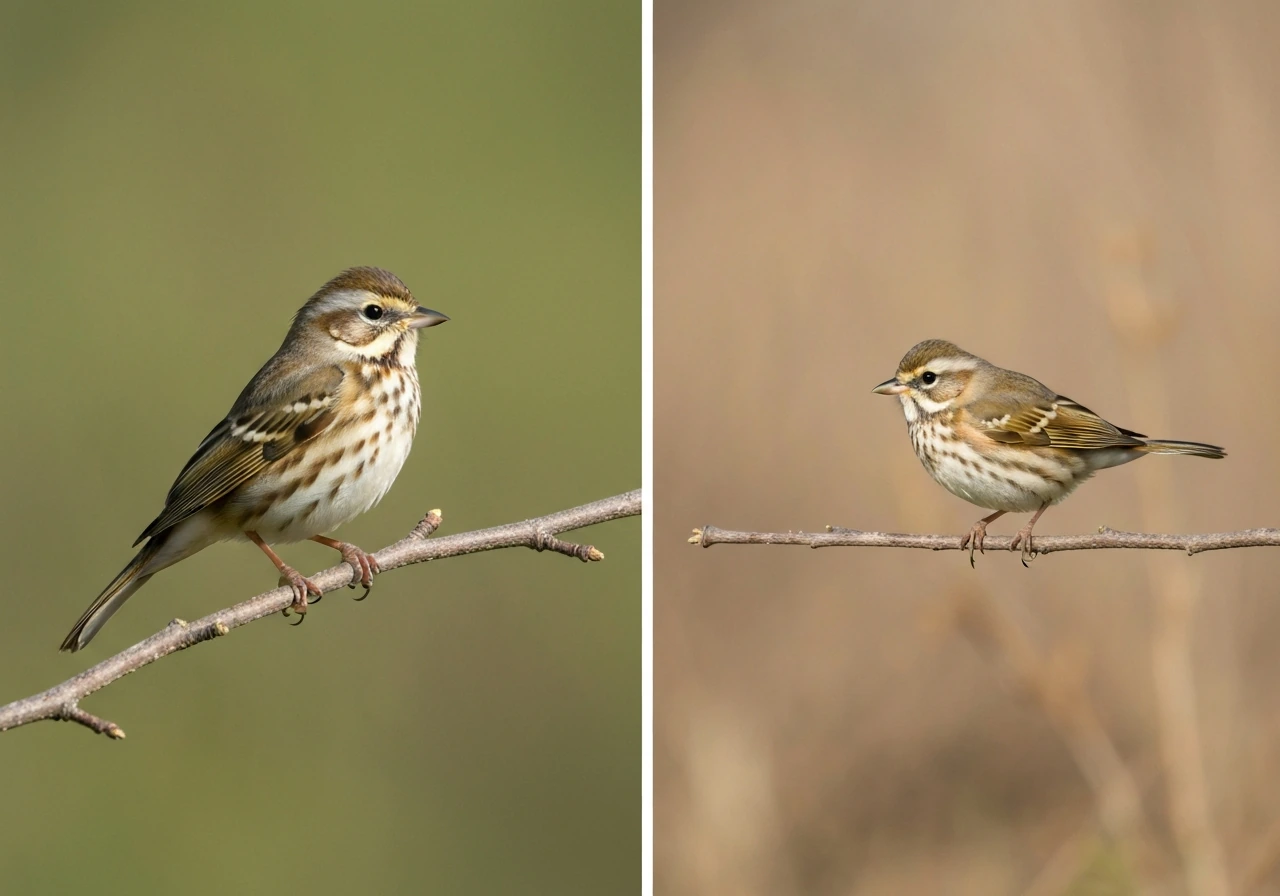
In biology and ornithology, 'sex' refers to biological reproductive status: male, female, or in some cases intersex. For real birds, sex is determined by chromosomes (birds use ZW/ZZ sex determination rather than the mammalian XY/XX system), and because many species are visually similar between sexes, confirmation often requires DNA testing, laparoscopy, or behavioral observation. There is no concept of 'gender' in ornithology for wild birds, that's a social construct applied to humans.
For a fictional character like Duo, 'gender' is the right word to use because it refers to the character identity assigned by the creators. Duolingo has assigned Duo a male gender identity, reflected in the he/him pronouns used across official materials. It's a character decision, not a biological one.
Grammatical gender is a separate thing entirely
If your reason for asking is related to language learning, particularly Spanish or French, you're probably bumping into grammatical gender rather than biological sex. If you're wondering whether “pájaro” sounds like it should be masculine or feminine in Spanish, that's exactly the grammatical-gender question this article is getting at grammatical gender. In Spanish, the word for bird ('pájaro') is grammatically masculine, while in French 'oiseau' is also masculine. In French, “oiseau” is grammatically masculine, which is why you would use masculine forms like “un” with it is also masculine. But grammatical gender in these languages is a property of the noun, not a statement about the actual sex of any individual bird. A female sparrow is still referred to with masculine article forms in Spanish ('el gorrión') because the word itself is masculine. This site covers the grammatical gender of bird-related words in Spanish and French in separate dedicated articles, which go deeper into those language-specific patterns.
A quick comparison: biological sex vs. grammatical gender vs. character gender
| Concept | What it applies to | How it's determined | Relevant to Duo? |
|---|---|---|---|
| Biological sex | Real animals | Chromosomes, anatomy, DNA testing | No (Duo is fictional) |
| Grammatical gender | Words in gendered languages (Spanish, French, etc.) | Language convention, dictionary entry | Only if you're translating Duo's name |
| Character gender | Fictional characters | Creator/author designation | Yes — Duolingo designates Duo as male |
Keeping these three concepts separate makes it much easier to evaluate any claim you read about a bird's sex or gender, whether it's about a cartoon mascot or a real owl in a field guide. For Duo specifically, the relevant concept is character gender, and on that question Duolingo has been consistent and explicit: he's male. If you were really trying to figure out what bird Duolingo uses as its mascot, Duo is a stylized green owl he's male.
FAQ
If the Duolingo bird is male, why do some people online call him a girl?
Because Duo is a mascot character, Duolingo’s documentation treats his identity using human-style pronouns (he/him). If you see people calling him “she” online, that is fan interpretation, not consistent with Duolingo’s official character writeups and guidelines.
Is Duolingo bird gender the same thing as bird sex in biology?
“Sex” and “gender” are different concepts for real birds, and there is no biological sex implied for a cartoon design. For Duo, “gender” means the identity Duolingo assigns to the character, which is why the answer is based on creator documentation rather than how real owls would be sexed in the wild.
Can I figure out what gender the Duolingo bird is just by looking at him?
No, you cannot reliably determine Duo’s gender by appearance. Even with real great horned owls, males and females can look similar, and researchers often need non-visual methods. With a stylized owl mascot, visual guessing is even less dependable than checking official character materials.
Does Duolingo bird gender affect grammatical gender in Spanish or French?
If you are asking for language-learning reasons, the “gender” that matters is grammatical gender of the noun in a specific language. Duo’s pronouns do not affect whether you use masculine or feminine articles for words like “bird” in Spanish or French.
How can I verify the Duolingo bird’s gender beyond social media claims?
Duo’s gender is consistent across Duolingo’s public design and character content that uses he/him language. If you want to double-check a particular claim you encountered, verify whether it points to Duolingo’s brand guidelines or official blog posts, not to secondary fan pages.
Is it acceptable to refer to Duo as “they” or “them”?
Using “they/them” for Duo is usually a personal style choice, but it is not the same as what Duolingo uses. If you want to match Duolingo’s established characterization, default to he/him.
Does Duo being male mean the real owl species is male or that males and females look different in his design?
Duo’s “male” identity is for the character, not a statement about the real-world species’s biology. Even if Duo is inspired by an owl, the creator-assigned gender of the mascot should not be assumed to match the sex characteristics of actual owls.
Why do translations sometimes use different pronouns for Duo?
If you are seeing inconsistent pronouns, treat it as a translation or community usage issue. Duolingo’s internal and official materials consistently describe Duo with male pronouns, so the most reliable approach is to align with the official he/him wording for English and equivalents in other languages.
Next Article
What Bird Is Duolingo Called? Name, Pronunciation
Get the Duolingo bird name, correct spelling and pronunciation, and common versus scientific naming explained.