The word "bird" in English is pronounced /bɜːd/ in British English and /bɝːd/ in American English, spelled b-i-r-d, and made plural simply by adding an "s" to get "birds." That covers the core question. But if you want to say it confidently in another language, use it correctly in birdwatching or pet contexts, or understand how generic "bird" connects to specific bird names, there is a lot more useful ground to cover here.
How to Say Bird: Pronunciation, Spelling, and Naming by Language

James Ridgley
17 Apr 2026
What "bird" actually means (and when it gets specific)
In its standard, everyday sense, "bird" refers to any feathered, winged vertebrate that lays eggs. That is the definition you will find in Merriam-Webster, and it covers everything from a backyard sparrow to an ostrich. This is the generic sense: it does not point to any particular species, just to the class of animal.
Where it gets interesting is that "bird" can also carry slang or informal meanings depending on region and context. In British English, "bird" is informal for a young woman. In older American slang, it could mean an odd or eccentric person. Cambridge and Oxford both flag these additional senses. For the purposes of this guide, though, we are focused on the animal meaning, which is what almost everyone searching for how to say the word needs.
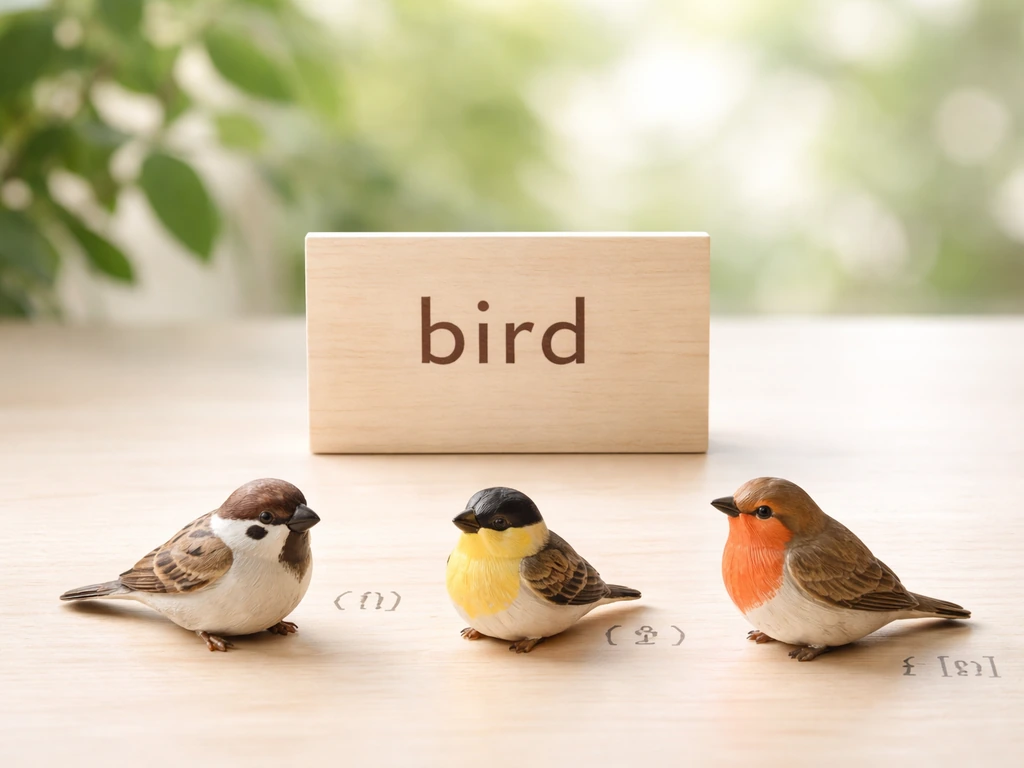
The distinction between generic and specific matters most when you move from "I saw a bird" to "I saw a black-capped chickadee." The generic word gets you into the conversation; specific names, whether common English names or scientific binomial names, take you to the exact species. We will get to that later in the guide.
How to say "bird" in English: spelling, pronunciation, and plural
Spelling is straightforward: b-i-r-d. No silent letters, no tricky combinations. The plural is birds, formed by adding a plain "s" with no spelling change to the root word. Cambridge Dictionary treats "bird" as a standard countable noun, so you say "a bird" for one and "birds" for more than one, following the most basic English plural rule.
Pronunciation is where people sometimes get tripped up, mainly because of the vowel. The IPA for British English (Received Pronunciation) is /bɜːd/. Cambridge Dictionary provides IPA pronunciations for “bird,” listing UK /bɜːd/ and US /bɝːd/. The IPA for American English is /bɝːd/. In plain terms: the British vowel is a long, unrounded "uh" sound (like the vowel in "her" without any r-coloring), while the American vowel is the same "uh" but with a distinct r-color baked into it. That r-coloring is called rhoticity, and it is the main difference you hear between a British and American speaker saying the word.
If you want to hear both, how to say bird in English goes deeper into the phonetics, regional accent variations, and common pronunciation mistakes. For a quick practical check, rhyme it with "heard," "word," and "absurd" and you will land on the right vowel every time.
| Feature | British English | American English |
|---|---|---|
| IPA | /bɜːd/ | /bɝːd/ |
| Vowel quality | Unrounded, no r-color | Rhotic (r-colored) |
| Stress | Single syllable, stressed | Single syllable, stressed |
| Plural | birds /bɜːdz/ | birds /bɝːdz/ |
| Sounds like | "herd" (British) | "heard" (American) |
How to say "bird" in other common languages
If you are traveling, birdwatching abroad, or just curious about how other languages handle this word, here are the most commonly needed translations with pronunciation notes. For a broader reference covering dozens of languages, how to say bird in other languages is worth bookmarking.
| Language | Word | IPA | Approximate pronunciation | Notes |
|---|---|---|---|---|
| Spanish | pájaro | /ˈpa.xa.ɾo/ | PAH-ha-roh | The 'j' is a guttural h sound, not English j |
| French | oiseau | /wa.zo/ | wah-ZOH | Silent letters everywhere; the 'oi' = 'wah' |
| German | Vogel | /ˈvoːɡəl/ | FOH-gel | Capital V because all German nouns are capitalized |
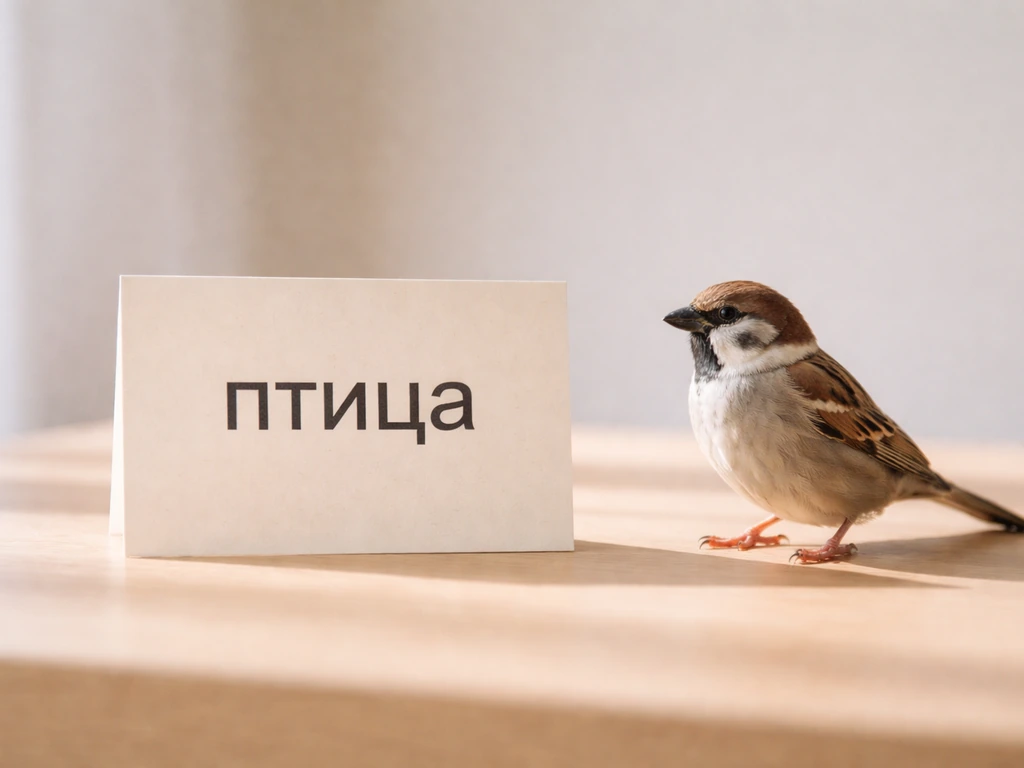
| Russian | птица | /ˈptʲit͡sə/ | PTEE-tsa | The 'pt' consonant cluster at the start is the hardest part for English speakers |
| Italian | uccello | /utˈtʃɛllo/ | oo-CHEL-loh | Double 'l' and the 'ch' sound |
| Portuguese | pássaro | /ˈpasaɾu/ | PAH-sah-roo | Similar to Spanish but different vowel qualities |
| Mandarin Chinese | 鸟 (niǎo) | /ni̯ɑ̌ʊ̯/ | nyow (falling-rising tone) | Tone is critical; wrong tone changes meaning |
| Japanese | 鳥 (tori) | /toɾi/ | TOH-ree | Even stress, no emphasis on either syllable |
Russian deserves a special note because the word птица (ptitsa) starts with a consonant cluster that simply does not exist at the start of English words. English speakers tend to insert a vowel and say "ih-PTEE-tsa," which sounds unnatural to a Russian ear. Practice holding the "pt" together with no vowel before it. For a full breakdown of the Russian word including audio guides and grammar notes, how to say bird in Russian covers everything you need.
French "oiseau" is arguably the trickiest on this list for English speakers because nearly every letter is either silent or doing something unexpected. The "oi" combination produces a "wah" sound, and the final "eau" is just "oh." Say "wah-ZOH" and you are close enough for practical use.
Regional quirks, common variations, and bird-related compounds
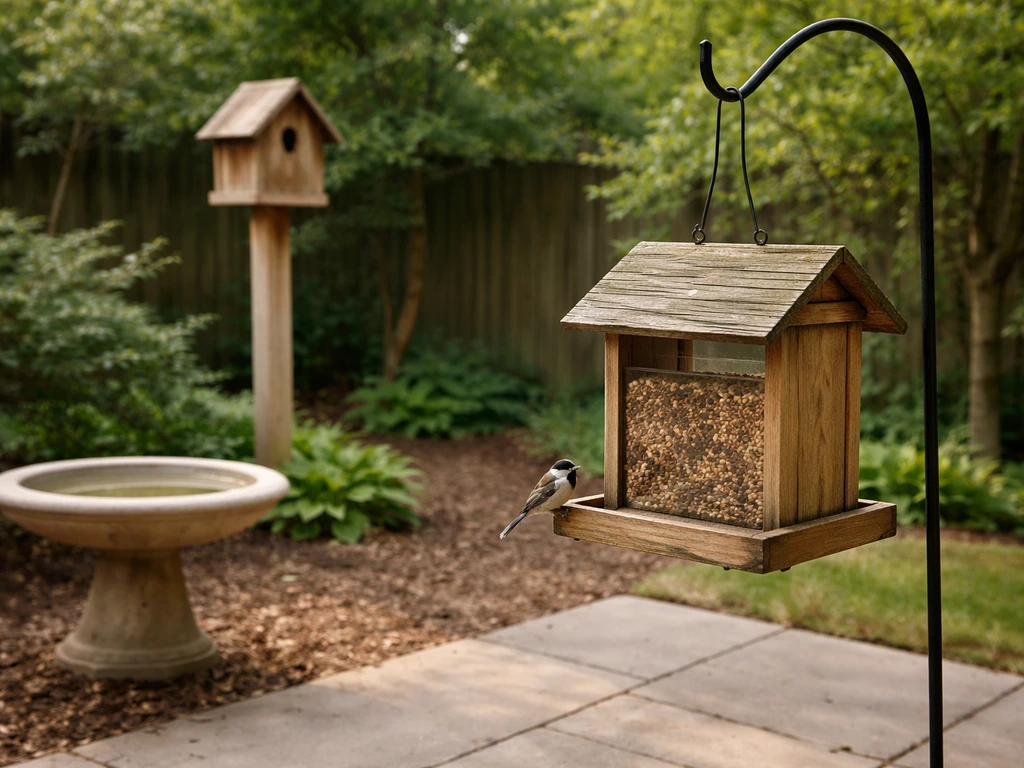
In everyday English, "bird" and "birds" are used differently depending on context. "A bird landed on my feeder" uses the singular countable sense. "Birds are migrating early this year" uses the plural in a general statement. You would not say "Bird are migrating" without an article or plural marker, because "bird" in English requires grammatical marking when used in the animal sense. This is a common stumbling block for learners translating from languages where articles work differently.
English also builds a large family of compound words from "bird," and spelling them correctly matters. The main ones to know: birdhouse is one word (no hyphen), birdwatching is one word, birdbath is one word, and birdcage is one word. These are all standard single-word compounds. You may occasionally see "bird-watching" hyphenated in older texts, but the current standard in both Cambridge and Oxford is the solid compound birdwatching.
There is also a fun phonetic tradition connected to bird language: the tongue-twister "oh say can you say bird" style puzzles that play on the vowel sound and rhyming patterns of the word. These are a genuinely useful (and entertaining) way to practice the English vowel in "bird" because they force you to repeat it rapidly in different phonetic contexts.
In regional British English, particularly in parts of Northern England, the vowel in "bird" can shift slightly toward a shorter sound. In some Southern US dialects, the vowel can merge with other vowels in unexpected ways. Neither of these variations affects understanding in normal conversation, but they are worth knowing if you are trying to pin down a specific accent.
From the generic word to specific bird names
Once you are comfortable saying "bird" in the language you need, the natural next step is learning the names of specific species. This is where naming conventions start to matter, and they work quite differently depending on whether you are using common English names or scientific names.
Common English names in birdwatching and pet contexts
Common bird names in English can be genuinely confusing to pronounce correctly. Audubon has noted that even experienced birders regularly mispronounce species names, and that standard dictionaries do not always reflect how names are used in the field. "Plover" (rhymes with "lover," not "mover"), "Gyrfalcon" (the G is silent: JER-falcon), and "Pileated" (both PIE-lee-ay-ted and PILL-ee-ay-ted are accepted) are classic examples. The safest approach is to check a dedicated bird pronunciation reference rather than guessing from spelling.
For birdwatchers, the IOC World Bird List maintains a principle of assigning one recommended international English name per species, specifically to reduce the confusion that arises when multiple regional English names exist for the same bird. This is why you will sometimes see a species name in a field guide that differs from what local birders call it.
For pet owners, common names matter in a more personal way. If you own a parrot or a budgie, you are likely using both the common English name for the species and a personal name for the individual bird. Neither has a fixed pronunciation rule, but the species name should at least be checked against a reliable reference so you are confident saying it to a vet or fellow bird owner.
Scientific names: the basics you need to know
Scientific names for birds follow binomial nomenclature: a two-part Latin or Greek-derived name consisting of the genus and the species epithet. The genus is always capitalized and the species epithet is always lowercase, and the full name is always italicized in print (or underlined when italics are not available). So the House Sparrow is Passer domesticus, with "Passer" capitalized and "domesticus" lowercase, both in italics. This convention is consistent across all of biology, not just birds.
Pronouncing scientific names is its own skill. Because they are derived from Latin and Greek, there is no single universally correct pronunciation in everyday English use, and you will hear variation even among ornithologists. The key rule is consistency: pick a pronunciation and use it confidently. Nobody in the field will correct you for saying a Latinized name slightly differently, as long as the name itself is right.
A quick checklist before you say or write "bird"

Use this as a last-second reference before a conversation, a written piece, or a language exercise. It covers the most common places people go wrong.
- Spelling: b-i-r-d in English. No alternative spellings are accepted in standard usage.
- Plural: birds. Just add an "s." No vowel change, no irregular form.
- British pronunciation: /bɜːd/ — the vowel is like the "ur" in "fur" without r-coloring. Rhymes with "herd."
- American pronunciation: /bɝːd/ — the same vowel but with clear r-coloring. Rhymes with "heard" in an American accent.
- Compound words: birdhouse, birdwatching, birdbath, birdcage are all one word with no hyphen in current standard usage.
- In other languages: check the IPA and listen to a native speaker recording before trusting your intuition from the spelling. French "oiseau" and Russian "птица" look nothing like they sound.
- For specific bird names (species): verify pronunciation with a birding reference or field guide pronunciation guide, not just a general dictionary.
- For scientific names: genus is capitalized, species is lowercase, and the full name is italicized. Always.
- When in doubt about a compound or plural: Cambridge Dictionary and Merriam-Webster are both free online and will give you the current standard form within seconds.
The word "bird" is one of the simplest in English, but it opens into a surprisingly rich space once you start moving across languages and into species-level naming. Getting the pronunciation right in your target language, nailing the spelling of compound words, and knowing when to switch from a common name to a scientific name will make you sound much more confident whether you are out in the field with binoculars or just trying to tell someone what you saw in the garden this morning.
FAQ
When should I use “a bird,” “the bird,” or just “bird” in a sentence?
Yes, in English you typically say “a bird” for the first mention and then “the bird” if you mean the same one again (for example, “I saw a bird. The bird landed on the feeder”). This article’s “article or plural marker” point applies here, because “bird” alone usually sounds incomplete or nonstandard without a determiner.
Is “bird” ever used without plural or an article for general statements?
In English, “birds” is plural, but “bird” can also be used as an uncountable-like general idea in certain expressions, such as “Birds migrate early” (generic plural) rather than “Bird migrate.” For everyday generic statements about species as a class, use plural plus a verb in the plural form.
Does “bird” change in tense, or only the verb around it?
“Bird” itself does not change for tense, but the verb does. For example, “a bird is singing” (present continuous) and “the birds were singing” (past). If you are translating, make sure you map tense and auxiliary verbs, not just the noun “bird.”
How can I avoid mixing up the pronunciation check with the correct spelling?
If you are reading aloud, be careful with similar words: “bird” (/bɜːd/ or /bɝːd/) is not the same as “word” or “heard” in spelling, even though it rhymes. The rhyme check helps pronunciation, but spelling must still be b-i-r-d.
Are “birdwatching,” “bird-watching,” and “bird bath” all acceptable spellings?
For compound forms, standard modern English typically writes them as one word (birdhouse, birdwatching, birdbath, birdcage). If you see a hyphen in older writing, treat it as nonstandard for current general use, especially in formal contexts like signage or instructions.
When I see “bird” inside a phrase like “bird of prey,” does it still mean any bird?
In birding contexts, you may see “bird” used in names that refer to a broader family (for instance, “bird of prey” or “waterbird”), but those are expressions you should treat as fixed phrases. Do not try to treat them as literal “any feathered winged vertebrate,” because the phrase has a conventional meaning.
How do I decide when to use a common name versus a scientific name in writing or conversation?
If you are unsure whether to use a common or scientific name, a good rule is: use the common English name for quick everyday communication, and switch to the scientific name when you need precision across regions (for example, in a logbook, vet notes, or a formal report).
What’s the safest strategy if I’m worried about pronouncing scientific bird names correctly?
For scientific names, consistency matters more than perfection in pronunciation. A practical approach is to say it the same way every time, and double-check the genus capital letter and species lowercase letter when writing, because capitalization mistakes are more likely to cause misunderstandings than minor pronunciation differences.
Next Article
How to Say Bird in Russian: Word, Spelling, Pronunciation
Learn the Russian word for bird with correct Cyrillic spelling and pronunciation, plus tips for specific bird names