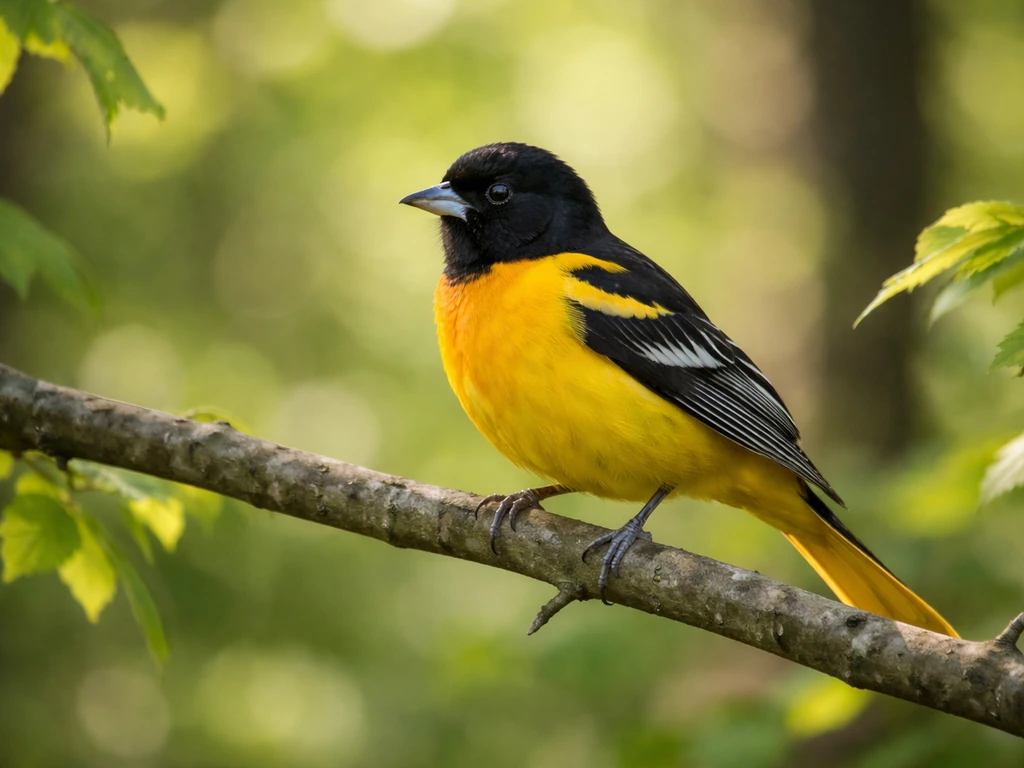
The correct spelling is <strong>oriole</strong> (singular) and <strong>orioles</strong> (plural). That is o-r-i-o-l-e, six letters, no extra letters, no swapped vowels. Every major dictionary confirms it: Merriam-Webster, Britannica, Cambridge, Collins, and Dictionary.com all list the headword as <em>oriole</em> with the standard plural <em>orioles</em>. If you typed "orieol," "orioel," or "oreole" into a search engine and ended up here, you now have your answer.
How Do You Spell Oriole Bird: Spelling, Pronunciation, Meaning

James Ridgley
15 Apr 2026
The correct spelling, spelled out
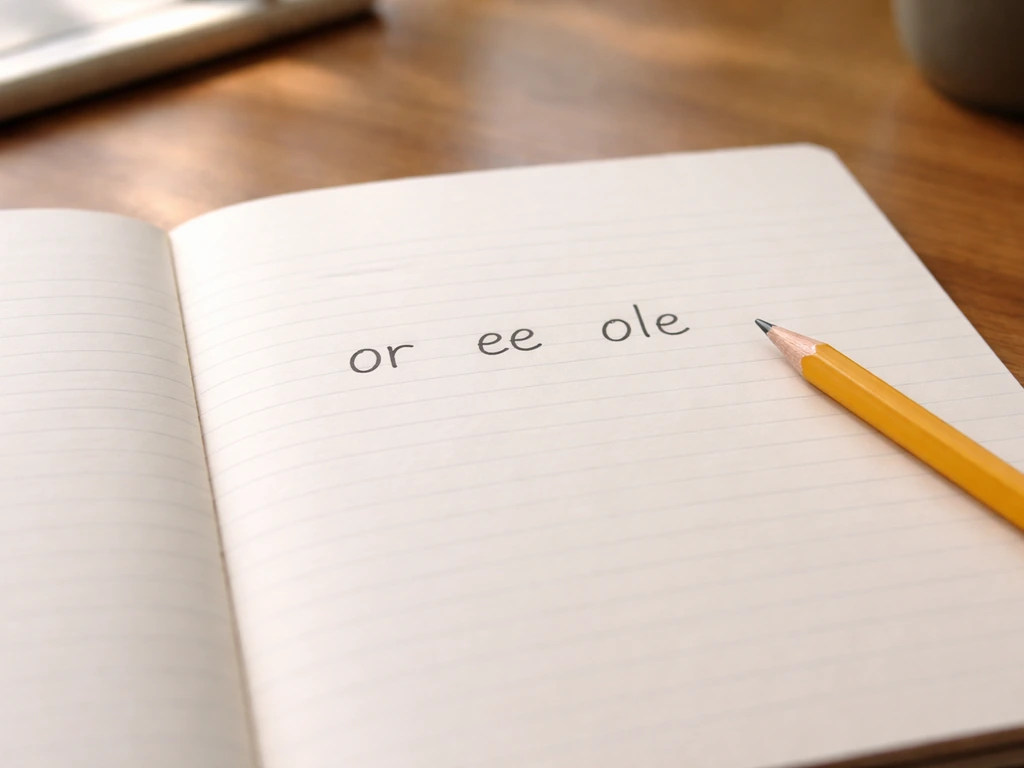
Oriole breaks into three syllables: OR-ee-ole. Merriam-Webster even shows it hyphenated as <em>ori·ole</em> to signal those natural breaks. The singular is used when you are talking about one bird ("I saw an oriole this morning") and the plural orioles is used for more than one ("Baltimore orioles nest in elm trees"). Both forms are standard English nouns and appear in every major field guide and dictionary with exactly that spelling. There is no alternate or variant spelling in modern English usage.
If you are writing a crossword answer, a pet name, or a bird journal entry, oriole is the one spelling you need. It does not change based on American versus British English either: both sides of the Atlantic spell it the same way.
Oriole vs similar bird names (quick spelling check)
A few bird names look or sound similar enough to cause confusion, especially for word-puzzle solvers or people browsing bird name lists. Here is a fast comparison so you can check yourself against the most common mix-ups.
| Word | What it is | Common mistake to avoid |
|---|---|---|
| oriole | The bird you are looking for | Spelling it 'oreole,' 'orieol,' or 'orioel' |
| Oriolus | The Old World genus (scientific Latin) | Using this as the English common name — it is not |
| oribi | A small antelope, not a bird | Confusing it with oriole in word games |
| oropendola | A related New World icterid bird | Mixing up with oriole in South/Central American birding contexts |
| warbler | A completely different bird family | Occasionally confused when describing small colorful songbirds |
One thing worth noting: if you are browsing a list of bird names that start with O, you will run into oriole quickly, but you may also see osprey, owl, and ovenbird. None of those are spelled similarly enough to trip you up, but seeing them all together reinforces that oriole really does start with the vowel sequence o-r-i-o.
How to say it: pronunciation and common mispronunciations

The standard American English pronunciation is <strong>OR-ee-ole</strong>. In IPA notation (the kind you see in Merriam-Webster, Cambridge, and Britannica Dictionary entries) it is rendered as /ˈɔːr.i.oʊl/. The stress lands firmly on the first syllable: <em>OR</em>. The second syllable is a short "ee" sound, and the final syllable sounds like the word "ole" as in a cheer. Put it together: OR-ee-ole.
The two most common mispronunciations I hear are "or-EE-oh-lay" (influenced by the Oreo cookie brand, believe it or not) and "OAR-ee-ol" (compressing the last syllable). Neither is standard. If you want a full breakdown of stress, IPA, and audio guidance, the dedicated piece on how to pronounce oriole bird goes into much more detail than I have room for here.
Where the word 'oriole' actually comes from
The word oriole entered English in the 18th century and has a pleasingly logical etymology: it traces back through French <em>oriol</em> and Old Provençal <em>auriol</em> to Medieval Latin <em>oriolus</em>, and from there all the way to classical Latin <em>aureolus</em>, meaning "golden." That Latin root comes from <em>aurum</em>, the Latin word for gold. BirdNote sums it up neatly: the name means essentially "the golden one," which makes perfect sense when you see the vivid yellow-orange plumage of a Baltimore oriole for the first time.
Oxford Learner's Dictionaries confirms the same chain: late 18th century, from Medieval Latin <em>oriolus</em> via Old French <em>oriol</em>, from Latin <em>aureolus</em> ("golden"), from <em>aurum</em> ("gold"). So every time you write or say "oriole," you are using a word that is essentially a 300-year-old English version of the Latin word for gold. That is a handy fact for pub quizzes as much as for birdwatching.
If you are curious about what ornithologists and taxonomists decided to call the oriole bird officially versus what people use in everyday speech, that distinction is worth a short explanation in its own section below.
English common names vs scientific names in birding resources
In everyday English and in field guides, "oriole" is the common name. You will see it paired with a geographic or descriptive modifier: Baltimore oriole, Bullock's oriole, orchard oriole, hooded oriole. That is the standard format in North American ornithology: a capitalized modifier plus the capitalized species label. Bullock's oriole, for example, carries the scientific name <em>Icterus bullockii</em>, and the Baltimore oriole maps to <em>Icterus galbula</em>. The orchard oriole is <em>Icterus spurius</em>. All three belong to the family Icteridae, the New World blackbird family.
This is where the English word "oriole" gets slightly complicated: Old World orioles (birds found in Europe, Africa, and Asia) belong to the genus <em>Oriolus</em> and the family Oriolidae. New World orioles (like the ones most North American birders see) belong to the family Icteridae and the genus <em>Icterus</em>. They share the English name "oriole" because of their similar golden coloring, but they are not closely related scientifically. That is a great example of why common names and scientific names do not always map one-to-one.
Cornell Lab field guides handle this cleanly: each species page shows the common name prominently (e.g., Baltimore Oriole) with the scientific name directly below it. Audubon's field guide does the same. Most printed field guides include both common and scientific names in their index, so you can verify your spelling of "oriole" by looking it up either way. If you ever run across an unusual-looking bird name and want to place it, checking what bird starts with N or hunting through an alphabetical index is a fast way to orient yourself in a guide.
One practical note for word-puzzle solvers: because "Orioles" is also the name of a Major League Baseball team, search results for "oriole" can get noisy. If you want bird-specific context, pair your search with "bird" or go straight to All About Birds (Cornell Lab) or Audubon.org. For the mascot angle specifically, there is a good overview of what the oriole bird mascot name is if that is the context you are working in.
Easy ways to remember the spelling
The most reliable memory trick is to connect the spelling directly to the etymology. The word comes from the Latin <em>aureolus</em> (golden), and it still has that vowel-heavy, golden feel: o-r-i-o-l-e. Notice the two O's flanking the R and I in the middle. Think of those two O's as the bird's two bright eye-rings framing a golden face.
- Count the vowels: there are four vowels in six letters (o, i, o, e). It is a vowel-rich word, which matches its flowing, three-syllable pronunciation.
- Use the syllable split as a spelling scaffold: OR + ee + OLE. The last chunk is just the word 'ole,' spelled the same way.
- Remember the Latin root 'aurum' (gold): the word was built to mean 'golden one,' and the soft vowel sounds reflect that origin.
- If you can spell the name Orion (the constellation), you already have the start: O-R-I. Add O-L-E and you are done.
- Write it once by hand. Research on spelling retention consistently shows that writing a word out once, slowly and deliberately, locks the pattern faster than retyping it.
For anyone who lands on this question while browsing bird names alphabetically, it is worth noting that the oriole is far from the only interesting bird name starting with a vowel. If you want to explore further, looking into what bird starts with X is a fun exercise in ornithological spelling, since that short list includes some genuinely obscure species names.
How to double-check in a birding resource
If you want to verify the spelling independently rather than just taking my word for it, the fastest routes are: (1) open Merriam-Webster (merriam-webster.com) and search "oriole" -- the headword and plural form appear immediately at the top of the entry; (2) go to All About Birds (allaboutbirds.org) and search for any oriole species -- the common name appears in bold at the top of each species page; (3) check any printed North American field guide's index under O, where you will find Baltimore oriole, Bullock's oriole, orchard oriole, and others listed alphabetically.
For spelling questions that come up while solving word puzzles or writing bird-related content, a general English dictionary and a birding field guide together give you the complete picture: the dictionary confirms standard English spelling and pronunciation, and the field guide confirms the specific common-name form used in ornithology. Both will say oriole. You can also think of it the way you would check how to spell soar like a bird, where the right source (a general dictionary for the verb, a field guide for the bird name) gives you a clear and confident answer fast.
Bottom line: spell it oriole, pronounce it OR-ee-ole, and remember it means "golden one." Those three things together will serve you well in every context where the word comes up, whether you are filling in a crossword, naming a pet, writing a field note, or just settling an argument.
FAQ
When should I use “oriole” versus “orioles” in a sentence?
Use the singular form “oriole” when you mean one bird, even if the species name is plural in some contexts (for example, “a juvenile oriole”). For multiple birds, use “orioles.”
What are the most common misspellings of oriole, and what should I avoid?
It is spelled without an extra vowel or swapped letters: o-r-i-o-l-e. Common wrong forms include “orieol,” “orioel,” “oreole,” and “oriele,” but the correct spelling stays exactly “oriole.”
Does “Orioles” mean the same thing as “orioles” the bird?
“Orioles” is the standard plural of the bird name, but it can also refer to other proper nouns (like the baseball team). If you are worried about search confusion, add “bird” or an oriole species name (for example, “Baltimore oriole”).
Is the spelling different in British English or American English?
No. The spelling “oriole” is the same in American and British English, and there is no widely accepted alternate spelling variant in modern usage.
If a crossword clue says “bird,” how do I know it is “oriole” and not a look-alike bird name?
If your clue is “bird,” “oriole” is the safer bet than similarly themed birds that start with nearby letters. For example, “osprey,” “owl,” and “ovenbird” are different spellings and are not variants of “oriole.”
Should I capitalize “Oriole” or keep it lowercase?
In formal writing, you can capitalize “Oriole” only when it is part of a proper name or title, such as “Baltimore Oriole” in a field guide style. In normal text, keep it lowercase (for example, “I saw an oriole”).
How should I write names like “Baltimore oriole” or “Bullock’s oriole” correctly?
In lists or species names, many bird references use a capitalized modifier plus “Oriole” (for example, “Bullock’s Oriole”). That capitalization pattern does not change the spelling of “oriole,” it only changes styling.
What should I do if my spellchecker keeps marking “oriole” as incorrect?
If you are writing about the bird but your spellcheck keeps flagging it, use “oriole” as the exact headword it should accept. Also double-check you are not accidentally typing “orieol” or “orioel,” which can look correct to a spellcheck after character swaps.
If someone mentions “oriole” in a scientific or taxonomy context, how can I keep it straight from the common name?
If you are unsure whether you are dealing with the bird or the Latin-derived common name in a taxonomic context, go by the standard English common name “oriole,” then pair it with the correct species identifier you are reading (for example, Baltimore or Bullock’s).
Next Article
What Bird Starts With X? Common X-Bird Names and Spelling
List of the few common English birds starting with X, with spellings like Xantus’s hummingbird and pronunciation help.