There are very few English bird names that start with X. If you're trying to answer a quiz question, solve a crossword, or just satisfy your curiosity, the two names you're almost certainly looking for are Xantus's Hummingbird and Xantus's Murrelet. Those are the most commonly cited X-starting birds in English-language birding resources, and they're the ones that show up most often in puzzles and trivia. A handful of others exist, like Xavier's Greenbul and Xinjiang Ground-jay, and we'll cover those too. But for most practical purposes, Xantus is where you'll land.
What Bird Starts With X? Common X-Bird Names and Spelling

James Ridgley
15 Apr 2026
Why so few birds start with X

The short answer is that X is simply one of the rarest initial letters in English vocabulary, and bird common names follow the same pattern. English orthography almost never starts everyday words with X, so bird names that do start with it are almost always built from something else: either an eponym (a person's name, like Xantus) or a geographic name (like Xinjiang or Xingu). That's not a coincidence. It's a structural feature of how English bird names get formed. When ornithologists needed a common English name for a species discovered or collected by someone named Xantus, the possessive form of that name naturally created an X-initial label. The same logic applies to region-named birds. So don't expect to find dozens of options here. The list is genuinely short, and that's completely normal.
The most likely X-starting bird names in English
Here are the main English-name birds starting with X that you're likely to encounter in any context, from a field guide to a word puzzle:
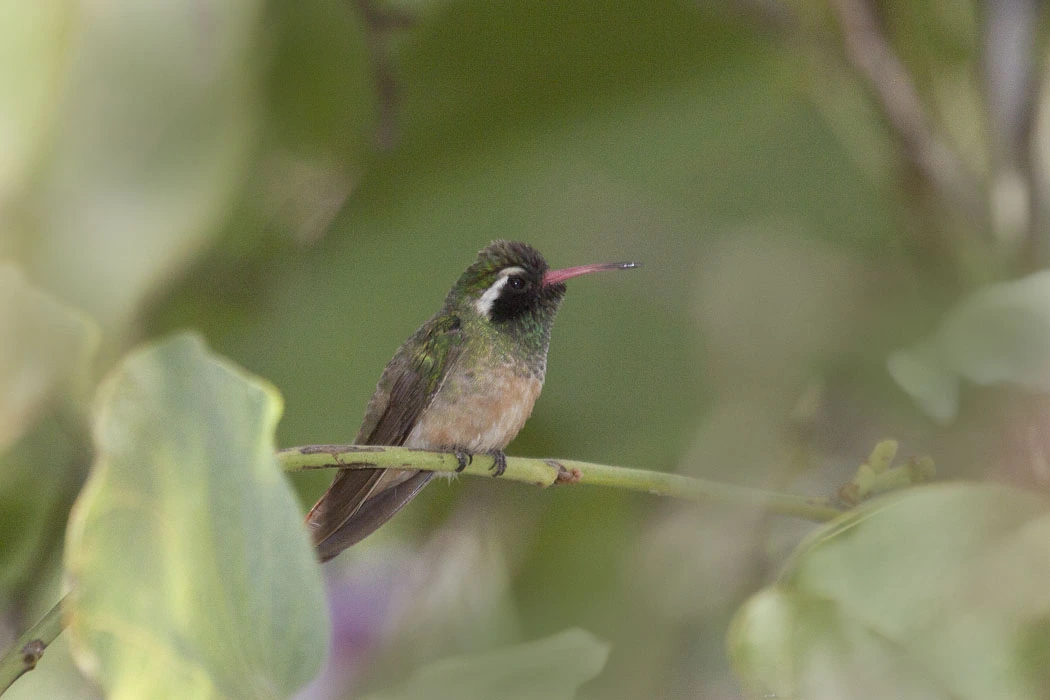
- Xantus's Hummingbird (Basilinna xantusii): The most commonly cited X-initial bird in North American birding. Found around the Baja California Peninsula, particularly near Cape San Lucas. This is the go-to answer for most trivia questions asking for a bird that starts with X.
- Xantus's Murrelet (historical): A seabird that was later split into two separate species: Scripps's Murrelet and Guadalupe Murrelet. The name "Xantus's Murrelet" still appears in older field guides and puzzle databases, so it's worth knowing even if modern taxonomy no longer recognizes it as a single species.
- Xavier's Greenbul: An African songbird named after French explorer Xavier Dybowski. Less common in English-language puzzles but does appear in birding word lists.
- Xinjiang Ground-jay: Named after the Xinjiang region of China. A region-based name rather than an eponym, and another legitimate X-initial English common name.
- Xingu Scale-backed Antbird: A South American species whose name comes from the Xingu river region of Brazil. Another geographic X-initial name.
If your puzzle or question is North America-focused, Xantus's Hummingbird is almost certainly the intended answer. If it's a global birding list, Xavier's Greenbul or Xinjiang Ground-jay might be in play. And if you're working with an older source, Xantus's Murrelet could appear even though it has since been taxonomically split.
Spelling and pronunciation you can trust
Getting the spelling right
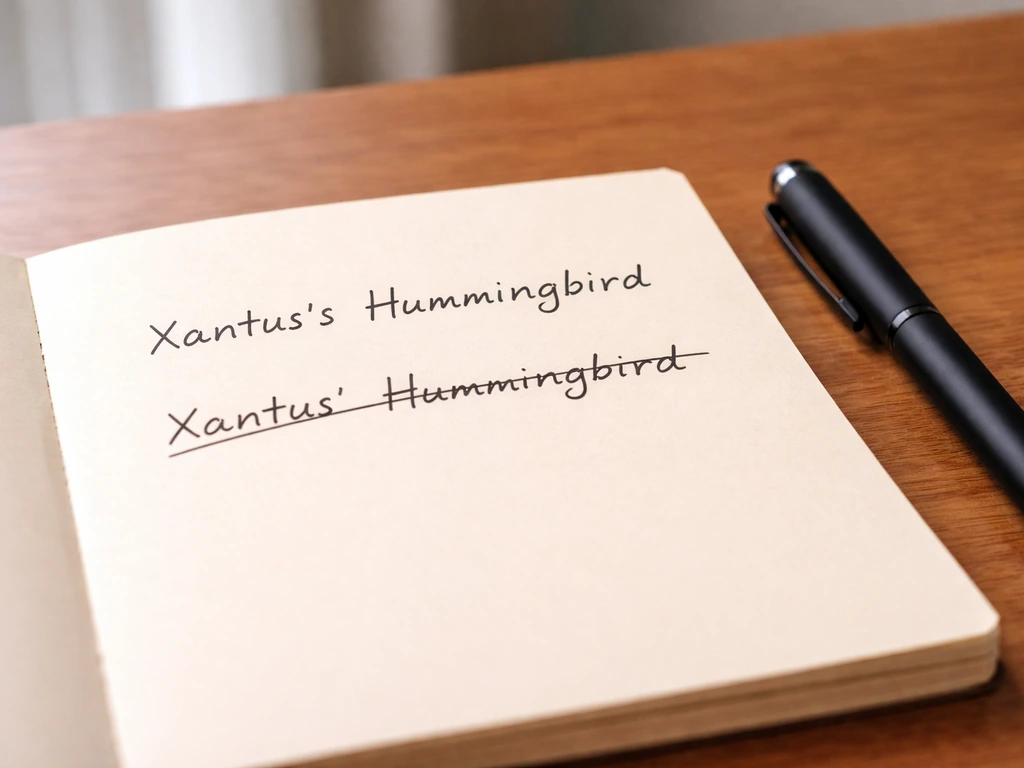
The official spelling used by the American Ornithological Society (AOS), the U.S. Fish and Wildlife Service (USFWS), Audubon, and eBird is "Xantus's Hummingbird" with a possessive apostrophe followed by a second S. The AOS's naming guidelines are explicit about this: when an eponym already ends in S, you still add apostrophe-S, not just an apostrophe alone. So "Xantus's" is correct, not "Xantus'" (though you will see "Xantus' Murrelet" on at least one USFWS database page, which is a known punctuation variant). If a puzzle or quiz shows either form, treat them as referring to the same bird rather than two different species.
The same possessive convention applies broadly across English bird names, similar to how the oriole bird has its name rooted in a specific naming tradition. The pattern matters when you're checking your spelling in a quiz or looking up a species in a database.
How to pronounce Xantus's
This trips people up because the X looks like it should sound like the letter X, but in English it doesn't. The name comes from John Xantus de Vesey, and the pronunciation follows the same rule as words like "Xerox" or "xylophone" where the X makes a Z sound at the start. Xantus's Hummingbird is pronounced ZAN-tuss-iz HUM-ing-burd. In IPA, the Xantus's portion is approximately /ˈzæn.t.əsᵻz/. Think of it as rhyming with "phantoms" but starting with a Z: ZAN-tuss. The Cambridge Dictionary confirms this phonetic behavior for the Xanthus root name, showing the initial sound as /z/. So if you've been saying "EX-antus" or "KSAN-tus," you can update that now.
Quick way to verify the right answer for quizzes and puzzles
When you're staring at a puzzle clue that says "bird starting with X," use these steps to lock in the right answer quickly:
- Check the letter count. "Xantus's Hummingbird" has 19 letters (including the apostrophe and space, or count just the letters depending on how your puzzle works). "Xantus's Murrelet" is shorter. If your puzzle gives you a grid length, that narrows it down fast.
- Check whether the puzzle is North America-specific or global. North American puzzles almost always mean Xantus's Hummingbird. Global or African-themed puzzles might point to Xavier's Greenbul.
- Check the publication date of your source. If it predates 2012, "Xantus's Murrelet" was still a valid single species. After the 2012 taxonomic split by the AOS/North American Classification Committee, it became Scripps's Murrelet and Guadalupe Murrelet.
- Look for the apostrophe clue. If the puzzle shows "Xantus' " with a blank after the apostrophe, that confirms you're dealing with the possessive form (Xantus's), not a standalone word.
- When in doubt, go with Xantus's Hummingbird. It is the most widely recognized, most frequently listed, and most commonly intended X-bird in English.
This kind of letter-count strategy is useful any time you're solving alphabet-based bird puzzles, whether you're looking for birds starting with X or doing the same exercise for birds that start with N, where the list gets much longer.
Cross-language and alternative naming conventions
"Bird starting with X" can mean different things depending on whether you're working with English common names, scientific (Latin) names, or names in other languages. That distinction matters more than it might seem.
In scientific nomenclature, many more birds have genus or species names starting with X. The genus Xenops (a group of small South American birds), Xenus (sandpipers), and Xiphorhynchus (woodcreepers) all begin with X in their scientific names, even though their English common names do not. If someone asks you for a bird whose scientific name starts with X, you have far more choices. But if the question is specifically about the English common name, you're back to the short list above.
In other languages, the picture shifts again. Spanish, Portuguese, French, and German bird names don't necessarily start with X even for the same species, because those languages use their own naming conventions and transliteration rules. The International Ornithologists' Union (IOU) handles cross-language naming standards, but the X-initial constraint only applies when you're specifically working with English common names. A bird called "Xantus's Hummingbird" in English might be referred to by a completely different initial letter in Spanish ornithological literature. This also matters for transliteration: Chinese or Arabic bird names written in their native scripts don't have X-initial names the same way English does, but romanized versions might, which is how "Xinjiang Ground-jay" gets its X in English.
It's a similar disambiguation issue to what you encounter with other vowel- and consonant-edge cases in English bird naming, like understanding which bird names start with O and realizing that the list looks very different depending on whether you're checking English names or Latin genus names.
Where these X names actually come from
John Xantus and his birds
Both Xantus's Hummingbird and the historical Xantus's Murrelet are named after John Xantus de Vesey, a Hungarian-born naturalist and collector who worked in North America in the mid-1800s. He collected specimens near Cape San Lucas in Baja California, and the hummingbird he found there was later named in his honor by the ornithologist George Newbold Lawrence. The scientific epithet in the current name, Basilinna xantusii, preserves that connection directly. So when you see "Xantus's" on a bird, you're reading a direct reference to this one specific person. The possessive form (Xantus's, not just Xantus) is intentional: it signals that the bird belongs to his legacy, naming-wise.
Xavier's Greenbul and geographic names
Xavier's Greenbul follows the same eponym logic but with a French explorer: Xavier Dybowski, who traveled through Central Africa in the late 19th century. The Xinjiang Ground-jay and Xingu Scale-backed Antbird take a different route entirely: they use place names (Xinjiang province in China and the Xingu river in Brazil) as their naming source. This geographic naming pathway is actually how most non-eponym X-initial bird names get created. The place starts with X, so the bird's English name does too.
A note on spelling consistency across eponym names
The possessive apostrophe convention used in names like Xantus's is the same standard applied across all English bird eponyms. You see it in names like Ross's Goose, Smith's Longspur, and many others. If you've ever wondered how to spell the oriole bird correctly and whether punctuation matters, the same attention to detail applies here. Getting the apostrophe right in Xantus's isn't just pedantic; it's the difference between matching the official species name in a database and coming up empty in a search.
Comparing the main X-starting birds at a glance

| Bird Name | Region | Name Source | Still Valid Species? | Most Likely in Puzzles? |
|---|---|---|---|---|
| Xantus's Hummingbird | Baja California, Mexico | Eponym (John Xantus) | Yes | Yes (most common) |
| Xantus's Murrelet | Pacific Coast | Eponym (John Xantus) | No (split 2012) | Yes (older sources) |
| Xavier's Greenbul | Central/West Africa | Eponym (Xavier Dybowski) | Yes | Sometimes |
| Xinjiang Ground-jay | Central Asia (China) | Geographic (Xinjiang region) | Yes | Occasionally |
| Xingu Scale-backed Antbird | South America (Brazil) | Geographic (Xingu river) | Yes | Rarely |
For most readers, Xantus's Hummingbird is the definitive answer to "what bird starts with X." It is the most widely recognized, has the most authoritative sourcing behind its spelling and pronunciation, and appears most consistently across field guides, databases, and quiz resources. If your context points elsewhere, the table above gives you a quick way to match the right bird to the right scenario.
Bird naming conventions reward close attention to spelling and pronunciation details, whether you're working through a puzzle or just trying to say the name correctly on a birdwatching trip. For reference, the same care applies when you're checking how to pronounce the oriole bird correctly: the official spelling and the spoken form don't always match what you'd expect at first glance, and X-starting names are a perfect example of that gap.
One last practical tip: if your puzzle clue mentions a baseball team or a mascot alongside a bird starting with a particular letter, you may be dealing with a different kind of bird-name question entirely. It's worth knowing that the oriole bird has a well-known mascot name in sports, and puzzle writers sometimes mix common knowledge like that into bird alphabet clues to throw you off. Similarly, if a clue references a word that sounds like flying or gliding, it might be testing whether you know how to spell soar like a bird rather than asking for a species name at all. Keep the full context of the clue in mind before you commit to an answer.
FAQ
How do I know whether a quiz means common English names or scientific names when it says “bird starting with X”?
If the clue says “English bird name starting with X,” the answer is essentially Xantus's Hummingbird (and you might also see the historical Xantus's Murrelet in older sources). If the clue is “scientific name starts with X,” then you can instead look for genus or species names beginning with X, like Xenops, Xiphorhynchus, or Xenus, which will not appear as X-initial letters in the English common names.
Is “Xantus’” with only an apostrophe ever correct, or should I always write “Xantus’s”?
Use “Xantus’s” with an apostrophe and an S, even though you may see “Xantus’” in some database pages. In other words, treat Xantus’s and Xantus’ as the same bird for most practical purposes, but the most authoritative standard form is Xantus's Hummingbird.
Do puzzles expect the apostrophe in “Xantus’s Hummingbird,” or can I omit it?
When the clue includes an apostrophe or “possessive” wording, it is more likely asking for the exact common-name form. For example, “Xantus hummingbird” may be accepted by some apps, but if a site matches exact spelling, you may need “Xantus's Hummingbird” including the apostrophe and the second S.
What common spelling or formatting mistakes happen with “Xinjiang Ground-jay” in word puzzles?
“Xinjiang Ground-jay” uses a place-based root, but it is easy to misread the second word as “jaybird” or to mix up hyphenation. If the clue provides letter counts, match the spacing and hyphen exactly as written in the source you’re using, because some crosswords also treat hyphens inconsistently.
If I pronounce it like “ZAN-tuss,” should the spelling also start with Z in my answer?
Don’t rely on pronunciation to infer spelling. The initial “X” in Xantus's behaves like a Z sound in English (for most speakers), so “ZAN-tuss” is the pronunciation many people expect, but the written form still begins with the letter X and includes the possessive punctuation.
What’s the fastest way to narrow down the right X bird when there are multiple options?
If the clue says “bird starts with X and is a hummingbird,” that strongly points to Xantus's Hummingbird, not Xavier's Greenbul or Xinjiang Ground-jay. If it says “ground-jay,” “greenbul,” “scale-backed antbird,” or similar descriptive terms, use those descriptors to avoid grabbing the wrong X eponym.
Can I use bird names from other languages that start with X, or should I stick to English names only?
Yes, some “X” bird answers you may find online are actually different categories, such as non-English translations or romanized names, where the initial letter may not be X in that language’s official common-name form. For an English crossword or an English-language trivia answer, stick to English common names.
In alphabet and crossword clues, do I only need the first letter to be X, or does the clue sometimes require X to appear elsewhere too?
Crossword clues often separate “starts with X” from “has X as the first letter.” If the clue only says “starts with X,” you only need the first letter of the English common-name spelling. If the clue says something like “contains X” or “X appears in the third letter,” then you must use the full letter pattern, not just the initial letter.
How can I quickly tell whether an X bird name is eponym-based or place-based (and therefore likely to be an English common name)?
A good sanity check is to look for X-anchored eponyms and places in the name itself. If the name contains “-’s” (possessive) like Xantus’s, it is eponym-based. If it’s a region or river like Xinjiang or Xingu, it is place-based. That helps you avoid mistaking an X-initial scientific name for an English common-name answer.
What should I do if the clue mentions sports mascots or teams alongside “bird starting with X”?
If a clue references a baseball team or mascot along with “bird starting with X,” it may be a red herring where “bird” refers to a sports nickname rather than an actual species. In that case, confirm whether the expected answer is a team mascot name versus an ornithological common name.
Next Article
How to Pronounce Nene Bird Correctly (Nēnē Goose)
Learn how to pronounce the Hawaiian nēnē bird with syllables, stress, IPA, and say-it-like tips for nē long-e sounds.