The most common birds whose English names start with N are the nuthatch, the nighthawk, and the nene. If you're in North America and trying to place a backyard bird or solve a puzzle clue, nuthatch and nighthawk cover the vast majority of cases. If you're in Hawaii, nene is your bird. Below is a practical breakdown of each one, including spelling, pronunciation, and how to verify which one you're actually dealing with.
What Bird Starts With N? Common Options and How to Verify

James Ridgley
19 Apr 2026
Quick answer: the most common N birds
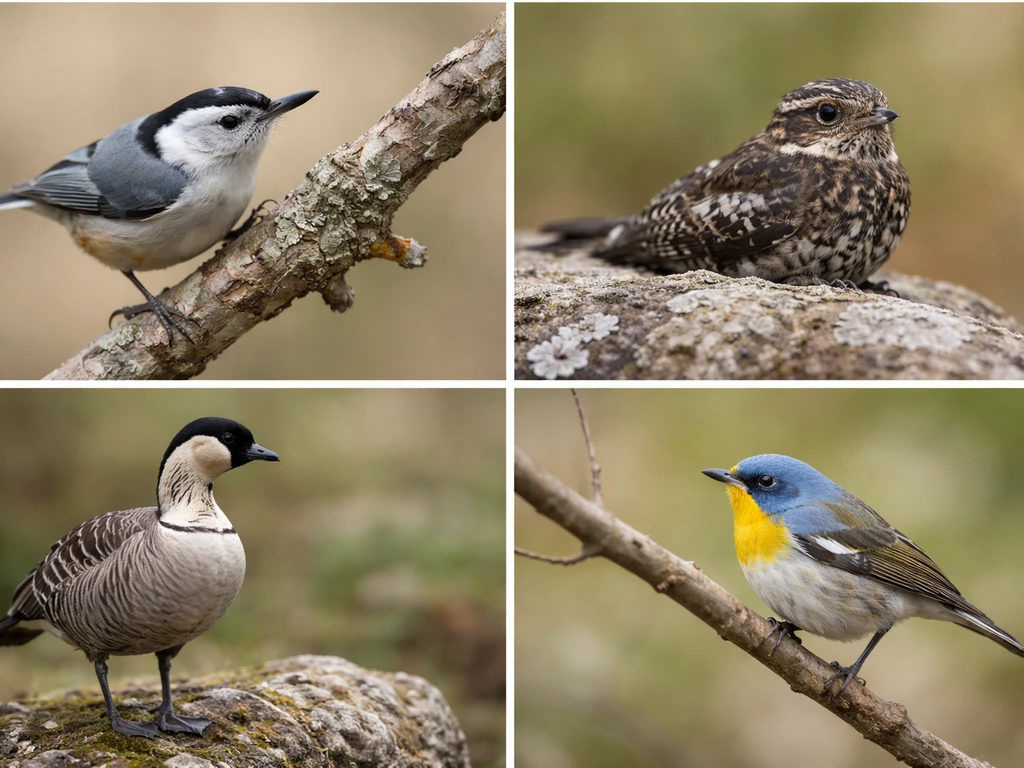
Here are the birds most likely to come up when someone searches for a bird starting with N, whether for birdwatching, a crossword, or a word puzzle:
| Bird Name | Region | Habitat | Standout Feature |
|---|---|---|---|
| Nuthatch (White-breasted / Red-breasted) | North America (widespread) | Forests, backyards, feeders | Creeps headfirst down tree trunks |
| Common Nighthawk | North America (breeds widely) | Open skies, rooftops, edges | Long pointed wings, nasal 'peent' call at dusk |
| Nene (Hawaiian Goose) | Hawaii only | Volcanic slopes, grasslands | Endemic to Hawaiian Islands, 'nay-nay' call |
There are plenty of other N birds in the world (Northern Cardinal, Northern Flicker, Northern Harrier, Nightingale, and more), but if you're working from a single-letter clue or trying to ID a bird you just saw, the three above are the highest-probability starting points for most English-speaking readers.
Spelling and pronunciation for each candidate
Nuthatch
Spelled exactly as it sounds: N-U-T-H-A-T-C-H. The IPA pronunciation is /ˈnʌtˌhæt͡ʃ/, which breaks down to 'NUT-hatch' in plain English. The first syllable rhymes with 'gut,' and the second rhymes with 'atch.' Cambridge Dictionary confirms this pronunciation if you want to double-check. A common mistake is writing 'nuthach' (dropping the T), so keep the T in there. There are multiple nuthatch species, with the White-breasted Nuthatch and the Red-breasted Nuthatch being the two you're most likely to encounter in North America.
Common Nighthawk
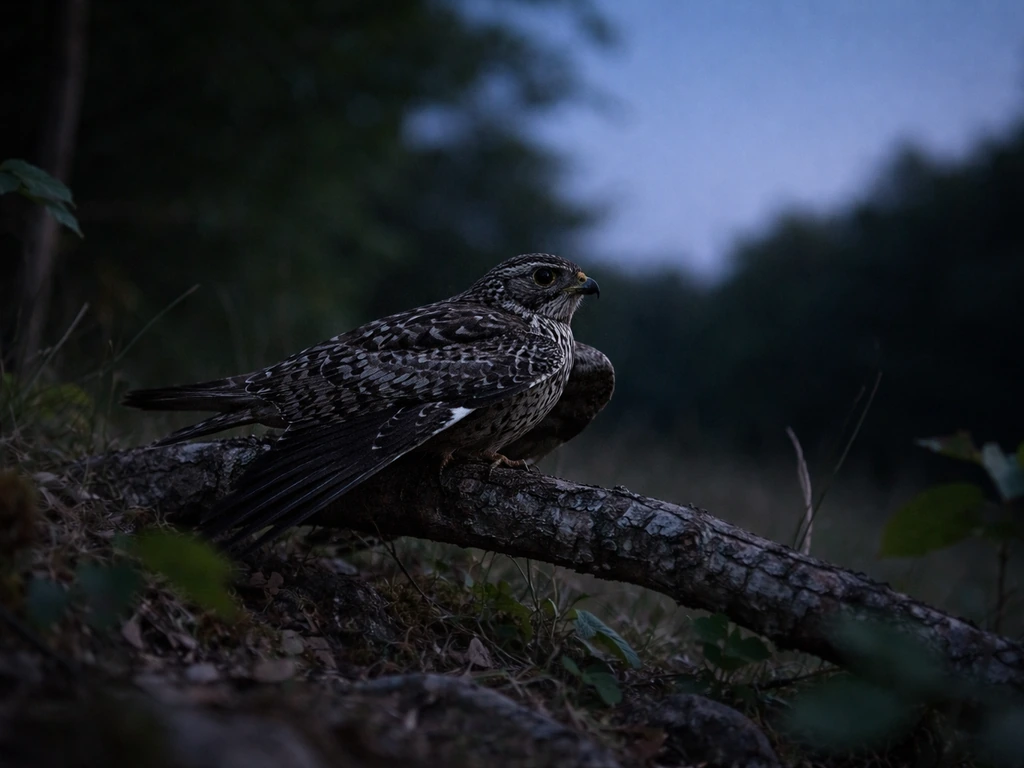
Spelled N-I-G-H-T-H-A-W-K. In one r/birding thread about Common Nighthawks, birders discuss identifying the species by its “blank" rel="noopener noreferrer">Peent!” call and then verifying it through follow-up discussion. Pronounced 'NITE-hawk,' with the silent GH following standard English spelling rules, just like 'night' in everyday use. The full common name is 'Common Nighthawk,' so if a puzzle asks for a bird starting with N, the answer could be either 'Nighthawk' or 'Common Nighthawk' depending on how many letters you need. One point of confusion worth flagging: nighthawks belong to the broader nightjar family, so you may see the word 'nightjar' used as a family label. The Common Nighthawk is its own species with its own Cornell Lab field-guide entry, separate from other nightjars. Wikipedia notes that the blank" rel="noopener noreferrer">common nighthawk’s most conspicuous vocalization is a nasal “peent” or “beernt” during flight.
Nene (Hawaiian Goose)
This one trips people up on spelling and pronunciation. The bird's name is officially spelled Nēnē (with macrons over both E's), though you'll often see it written as 'nene' without diacritical marks. The IPA pronunciation is /ˈneɪneɪ/, which means it's said 'NAY-nay,' not 'NEE-nee.' Both the National Park Service and the American Bird Conservancy confirm this pronunciation, describing the bird's own low murmuring call as sounding like 'nay-nay,' which is literally how it got its name. For word puzzles, do not assume the unaccented spelling 'nene' is wrong. Both forms appear in authoritative sources, and the accented form is the official Hawaiian spelling.
Common names vs scientific names: why it matters for 'starts with N'
Whether a bird 'starts with N' depends entirely on which name you're using. Common names (the everyday English names like 'nuthatch' or 'nighthawk') are informal and can vary by region, change over time, and sometimes refer to different birds entirely depending on where you are. Scientific names are standardized Latin binomials in the format Genus species, such as Chordeiles minor for the Common Nighthawk. The American Ornithological Society maintains official guidelines for English bird names and updates them when species are split, lumped, or renamed, so a bird that 'starts with N' today might have started with a different letter before a recent taxonomic revision.
For most everyday purposes, common names are what people mean when they ask 'what bird starts with N?' But it's worth knowing that the scientific name for the same bird may start with a completely different letter. The White-breasted Nuthatch, for example, is Sitta carolinensis in Latin. Neither 'Sitta' nor 'carolinensis' starts with N. So if someone gives you a scientific name as the answer to a puzzle clue phrased as 'starts with N,' that would only work if the clue is specifically asking for the common English name.
The reverse is also possible: a bird whose common name starts with a different letter might have a genus name starting with N. This is why it's always worth clarifying whether a puzzle or question is asking about the English common name or the scientific name. For the purposes of this article and most practical birdwatching contexts, we're talking about English common names.
Narrowing it down by location, habitat, and what you see
If you're trying to identify a specific bird you've spotted and think it might be one of the N birds above, here's how to use context clues to narrow it down fast. For an oriole you can also use the tips above to get the exact pronunciation first, then confirm it against a trusted bird list or app.
Nuthatch
- Location: Found across most of North America, including suburban backyards and wooded areas
- Habitat: Trees, bird feeders, forest edges. They love suet feeders.
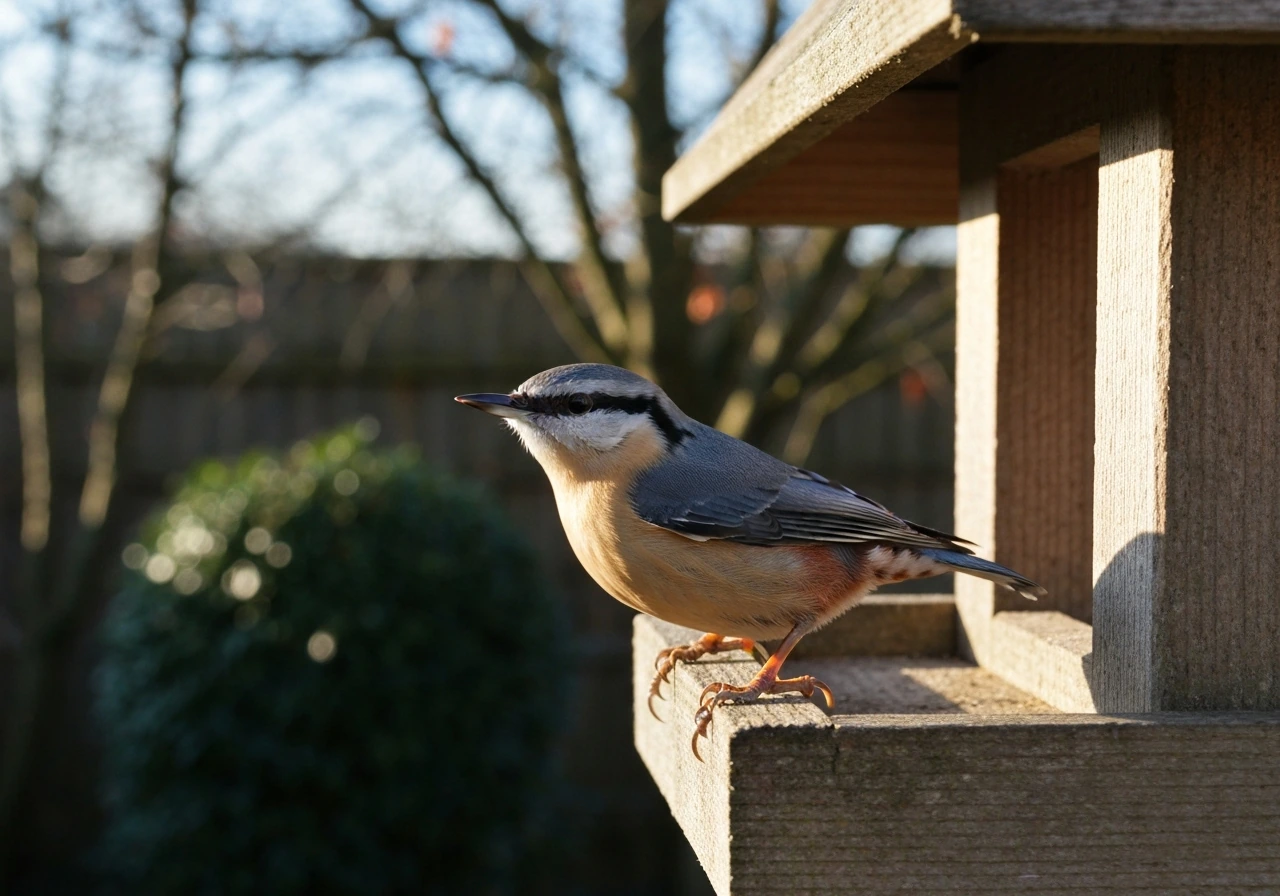
- Visual cue: Small, compact bird with a big head and no visible neck. The defining behavior is creeping headfirst DOWN a tree trunk, which almost no other bird does.
- Sound: A nasal, repetitive 'yank-yank' or 'whi-whi-whi' depending on the species
- Key ID split: White-breasted Nuthatch has a plain white face and underparts; Red-breasted has a rusty-orange chest and a bold eye stripe
Common Nighthawk
- Location: Breeds across most of North America, including urban areas
- Habitat: Open skies above cities, rooftops, grasslands, and forest edges
- Visual cue: Slender body with very long, pointed wings and a medium-length tail. Look for a white bar across each wing in flight.
- Timing: Most active at dusk and dawn. If you're hearing or seeing a bird that fits this description in daylight, reconsider your ID.
- Sound: A loud, nasal 'peent' or 'beer' call while flying. Hard to miss once you've heard it.
Nene
- Location: Hawaii only. This bird is endemic to the Hawaiian Islands, so if you're not in Hawaii, it's not a nene.
- Habitat: Volcanic slopes, lava fields, and grasslands on Hawaii's main islands
- Visual cue: Looks like a goose with a streaked neck and reduced webbing between the toes (adapted for walking on lava rather than swimming)
- Sound: A soft, low murmuring call that sounds like 'nay-nay'
How to verify your bird using apps and authoritative lists
Once you have a candidate name, verifying it takes less than two minutes using the right tools. Here's the most practical workflow:
- Cornell Lab's All About Birds (allaboutbirds.org): Type in the bird name and you'll get a full species page with photos, range maps, and audio clips. This is the fastest way to confirm spelling, visual ID, and sound at the same time. Both the Common Nighthawk and White-breasted Nuthatch have dedicated pages.
- eBird range maps (ebird.org or science.ebird.org): If you want to know whether a specific N bird is expected in your location, pull up the range map. The Common Nighthawk page on eBird's Status and Trends tool, for example, shows you exactly where and when the bird is likely to appear.
- Merlin Bird ID app (free, from Cornell Lab): Tap 'Sound ID' or 'Photo ID,' and the app will suggest matches based on what it hears or sees. It will give you the correctly spelled common name as its result. One caveat: Merlin's Photo ID may not distinguish between subspecies, so if you need that level of precision, cross-reference with a species-level field guide.
- American Ornithological Society (AOS) checklist: For authoritative English spelling of any North American bird, the AOS checklist is the gold standard. It reflects the most current taxonomic decisions, including any recent name changes.
For non-North American birds starting with N, the same verification approach applies but use region-specific resources like the British Trust for Ornithology (BTO) for UK birds, or BirdLife International for global coverage. The Nightingale, for example, is a well-known N bird in Europe and the UK, and its name, spelled N-I-G-H-T-I-N-G-A-L-E, comes up frequently in word puzzles and literature. If you specifically need a bird name that starts with O, common options include the oriole and the osprey, depending on your clue length The Nightingale. If your clue is about the oriole, you can spell it as O-R-I-O-L-E orilie. The oriole bird is commonly pronounced 'OR-ee-ohl' in everyday English. If your clue is specifically about the oriole bird mascot name, you can double-check the exact team or mascot wording before finalizing the answer. If you're wondering does the oriole bird have a name, the best approach is to confirm the exact common name used in your region.
If it's a word puzzle: first letter vs first sound, and other edge cases
Word puzzle clues that say 'starts with N' almost always mean the first written letter is N, not the first phonetic sound. That distinction rarely causes problems with bird names since most N birds actually start with the /n/ sound as well. But a few edge cases are worth knowing.
The nene is the trickiest one here. Its name starts with the letter N, but it's pronounced 'NAY-nay,' so the first sound is actually /n/ followed immediately by the /eɪ/ vowel. That's consistent. The issue with the nene in puzzles is the spelling variation: you may encounter it as 'nene,' 'nēnē,' or even 'Hawaiian Goose' in different puzzle sets. If your puzzle has four letters and the first is N, 'nene' is a strong candidate. Just make sure you're using the unaccented form if the puzzle doesn't support special characters. If you are wondering how do you spell sore like a bird for a puzzle answer, use the exact spelling rules from your clue format.
Another edge case: birds whose full common name starts with a modifier before the N-word. 'Common Nighthawk' starts with C, not N. 'Northern Cardinal' starts with N. 'Northern Flicker' starts with N. If your puzzle clue asks for a bird 'starting with N' and requires more than seven or eight letters, you may be looking for a two-word name like 'Northern Harrier' or 'Nightingale' rather than a single word. Always count the letters available in your grid before committing to a candidate.
There's also the nightjar vs nighthawk distinction that comes up in puzzle editing. Nightjar is the family-level name and a valid bird name in its own right (it refers to specific species in Europe and elsewhere). Nighthawk refers to a specific group within that family, including the Common Nighthawk. Both start with N, both are real bird names, and they are not interchangeable. If your puzzle says 'nightjar' and you've been writing 'nighthawk,' check the letter count and any crossing answers to confirm which one is intended.
If you're working on a puzzle that involves birds starting with other letters too, the same verification approach applies across the board: use All About Birds or the AOS checklist to confirm the exact spelled common name before committing to an answer. The sibling question of birds starting with other letters follows the same logic, and it's always worth doing a quick range or habitat check to make sure the bird you've chosen actually makes geographic sense.
FAQ
What if my puzzle clue says “bird starting with N” but gives a letter count that doesn’t match nuthatch, nighthawk, or nene?
Treat it as a strong hint to look for a two-word common name that begins with N, such as Northern Harrier, Northern Flicker, or Nightingale. Count spaces as either letters or separate entries depending on the puzzle format, then verify the exact spelled common name length before locking it in.
How can I tell whether the clue wants “Nighthawk” or “Common Nighthawk”?
Check the number of boxes. If the grid has enough letters for the extra word, “Common” must be included in the answer. If it does not, “Nighthawk” is the intended common name, not the family term nightjar.
If a clue uses “Nightjar,” does that mean I should answer “Nighthawk”?
Not automatically. Nightjar is a different level (family or a separate name used in some regions), while nighthawk is a specific common name for certain nightjars. Use crossing letters and letter count to decide which word the puzzle editor intended.
Can “Northern Cardinal” or “Northern Flicker” appear even though the article lists higher-probability options first?
Yes, especially when the puzzle grid is long enough for “Northern” plus the second word. If crossings suggest “cardinal” or “flicker,” those should beat shorter one-word options even though they were not the top three everyday picks.
Does “starts with N” mean the first letter must be N, or the first sound must be /n/?
Most puzzles mean the first written letter. Bird names that start with N almost always also start with the /n/ sound, but the nene spelling variation (nene vs nēnē) can cause confusion if the puzzle supports or forbids diacritics.
What should I do if my crossword won’t let me use macrons (for nēnē)?
Use the unaccented spelling nene when the puzzle system only supports basic letters. In other words, treat nene as a valid spelling for puzzle entry unless the clue explicitly requires the diacritic form.
If someone provides a scientific name, how do I convert it to a common-name answer starting with N (if needed)?
First identify the species, then look up the standardized English common name used for your puzzle context. Scientific names often start with a completely different letter than the common name, so you should not assume the first letter of the Latin genus matches the puzzle requirement.
Are there common mistakes people make when writing “nuthatch” or “nighthawk” for puzzles?
For nuthatch, the most common miss is dropping the T and writing nuthach. For nighthawk, watch the full spelling, it is not “night-hawk” with a hyphen, and the clue usually expects the single standard common name form.
What’s the fastest way to verify the bird I saw before I commit to an answer?
Use a three-check workflow: confirm the location (region or country), match the general habitat (backyard, open sky, forest edge), then compare distinctive traits from photos or sound to the specific N candidate. This prevents mixing up similarly named birds across regions.
Next Article
How Do You Spell Oriole Bird: Spelling, Pronunciation, Meaning
Learn how to spell oriole and pronounce it, plus meaning, origin, and tips to avoid confusing similar bird names