There is no single universal slang term for bird beaks. When people search for "blank" rel="noopener noreferrer">bird beak slang," they are almost always looking for one of three things: the casual everyday words people use to describe beak shapes (pointy, hooked, flat, spoon-shaped), the informal birdwatcher vocabulary that bridges plain English and real ornithology, or the figurative uses of "bird beak" as a metaphor in everyday speech. This guide covers all three, and it also shows you how to translate those casual descriptions into the correct terminology so you can search confidently, ask precise questions, and actually find the bird or beak type you are thinking of. If you’re also wondering whether “bird seed” is written as one word or two, the spelling details matter for finding the right info bird beak.
What Are Bird Beaks Slang Terms Mean and How to Use Them

Is there actually "bird beak" slang, or is it just descriptions?
Honestly, it is mostly descriptions. Unlike some subcultures that develop tight, insider slang for specific things, the bird world has not produced a widely accepted street-level slang vocabulary for beak types. What you will find instead is a spectrum: on one end, totally informal everyday language ("that bird with the weirdly long curved beak"), and on the other end, precise ornithological terms (decurved, serrated, rhamphotheca). In between sits the casual but semi-standard vocabulary that birders, pet owners, and nature educators use every day.
It is also worth flagging one genuine slang confusion: the word "beak" itself carries non-bird meanings. blank" rel="noopener noreferrer">In British English, "beak" is slang for a judge, a magistrate, or sometimes a school headmaster. So if you encounter "beak" used as slang online and it has nothing to do with birds, that is the most likely explanation. For everything bird-related on this site, "beak" means exactly what it looks like: the protruding mouthpart of a bird, which is also called the bill. Modern ornithology treats "beak" and "bill" as fully interchangeable, which is good to know when you start translating casual descriptions into searchable terminology.
Common slang-style ways people describe beak shapes
These are the phrases that come up constantly in bird forums, pet communities, and casual conversation. They are not official terms, but they are intuitive and widely understood, so they make a reasonable starting point.
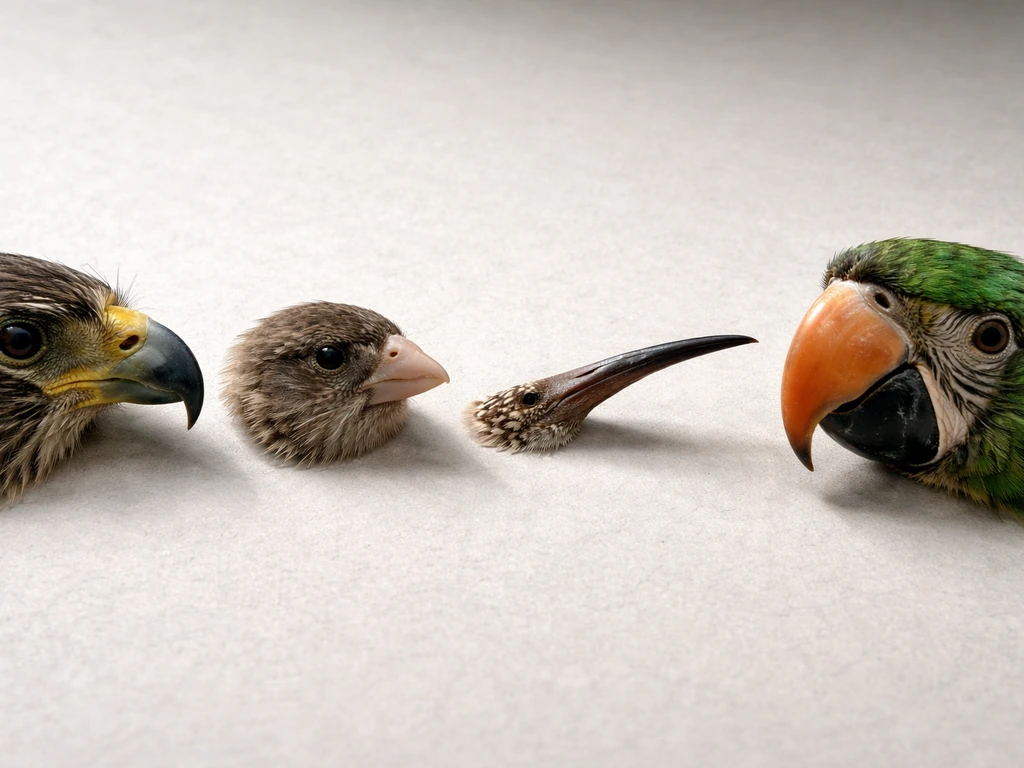
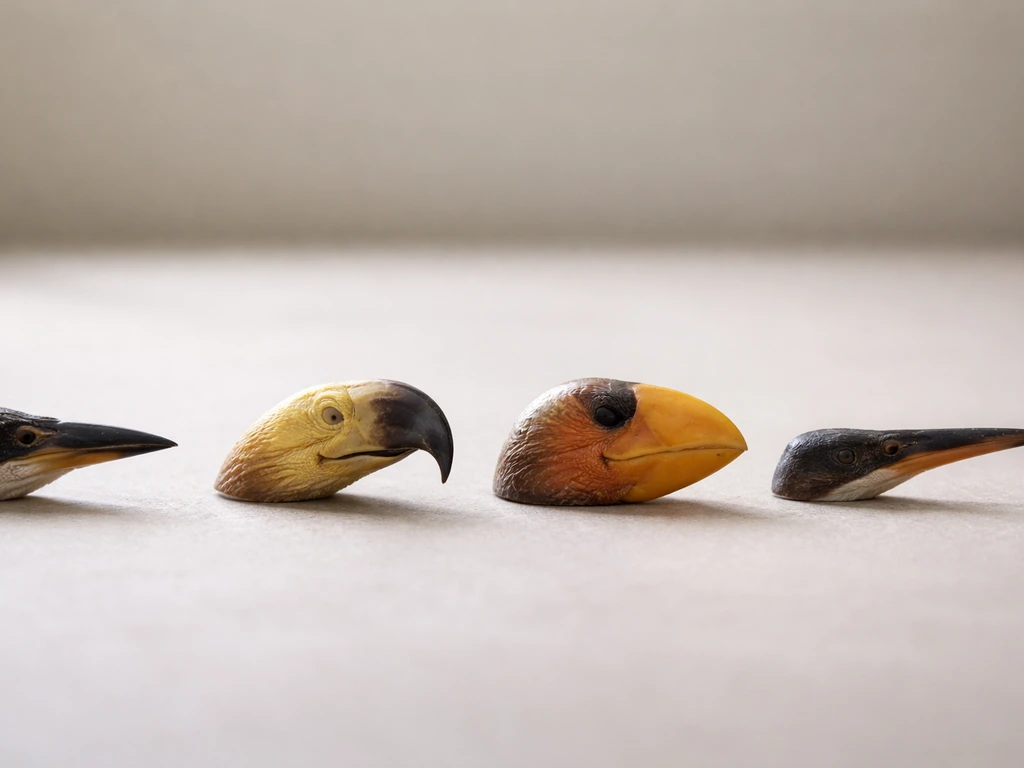
- Pointy beak: a slim, straight, sharp-tipped bill, usually associated with insect-eating birds like warblers or wrens
- Hooked beak: a bill that curves downward at the tip, the go-to description for raptors like hawks and eagles, and also for parrots
- Flat bill or spoon bill: a wide, flat, spatula-shaped bill associated with ducks and spoonbills
- Seed-cracker bill: a short, thick, conical bill built for crushing seeds, the classic image people have of finches and sparrows
- Long curved beak: informal description for birds like hummingbirds, curlews, or ibises whose bills arc noticeably downward or follow a curve
- Chisel beak: the blocky, wedge-shaped bill associated with woodpeckers, used because it literally functions like a chisel
- Tweezers beak: a thin, needle-like bill that people associate with birds that probe flowers or pick tiny insects from bark
- Duck bill or flat-nosed: casual terms applied to any wide, rounded bill, not only on ducks but sometimes on platypus-adjacent comparisons
None of these are official ornithology terms, but they are consistent enough that if you describe a bird this way in a birding group or a pet owner forum, people will immediately know what you mean. The challenge is that they are too vague for scientific identification, which is where the translation step below becomes genuinely useful.
Translate casual descriptions into real bird/beak terminology
Here is a direct mapping from the informal phrases people use to the correct terms you will find in field guides, ornithology references, and scientific databases. Once you know the real term, your searches become dramatically more productive.
| Casual / Slang Description | Correct Ornithological Term | Example Birds |
|---|---|---|
| Pointy beak | Thin, straight, or awl-shaped bill | Warblers, wrens, kingfishers |
| Hooked beak | Hooked or raptorial bill (also: falcate) | Hawks, eagles, owls, parrots, falcons |
| Flat bill / duck bill | Spatulate or lamellate bill | Ducks, spoonbills, flamingos |
| Seed-cracker bill | Conical or granivorous bill | Finches, sparrows, grosbeaks, cardinals |
| Long curved beak | Decurved bill | Curlews, ibises, sunbirds, hummingbirds |
| Upward curved beak | Recurved or upcurved bill | Avocets, stilts |
| Chisel beak | Chisel-shaped or dagger bill | Woodpeckers, nuthatches |
| Tweezers beak / needle beak | Slender or probe bill | Hummingbirds, sunbirds, some warblers |
| Crossed beak | Crossed or crossbill | Crossbills (Loxia species) |
| Pelican pouch beak | Expandable gular pouch bill | Pelicans, frigatebirds |
A few anatomy terms that come up once you go deeper: the gape is the interior of a bird's open mouth (the gap you see when the bird opens wide), and the cere is the fleshy patch at the base of the bill in birds like parrots, pigeons, and raptors. If someone mentions a bird's cere color, they are referring to that small fleshy area above the bill, not the bill itself. These terms appear regularly in pet bird communities and avian vet discussions, so it helps to recognize them even if you will not use them every day. For a deeper dive into what the bird's mouth structure is actually called, the topic of what the mouth of a bird is called covers this from a naming angle.
When "bird beak" is used as a metaphor (what it means in context)
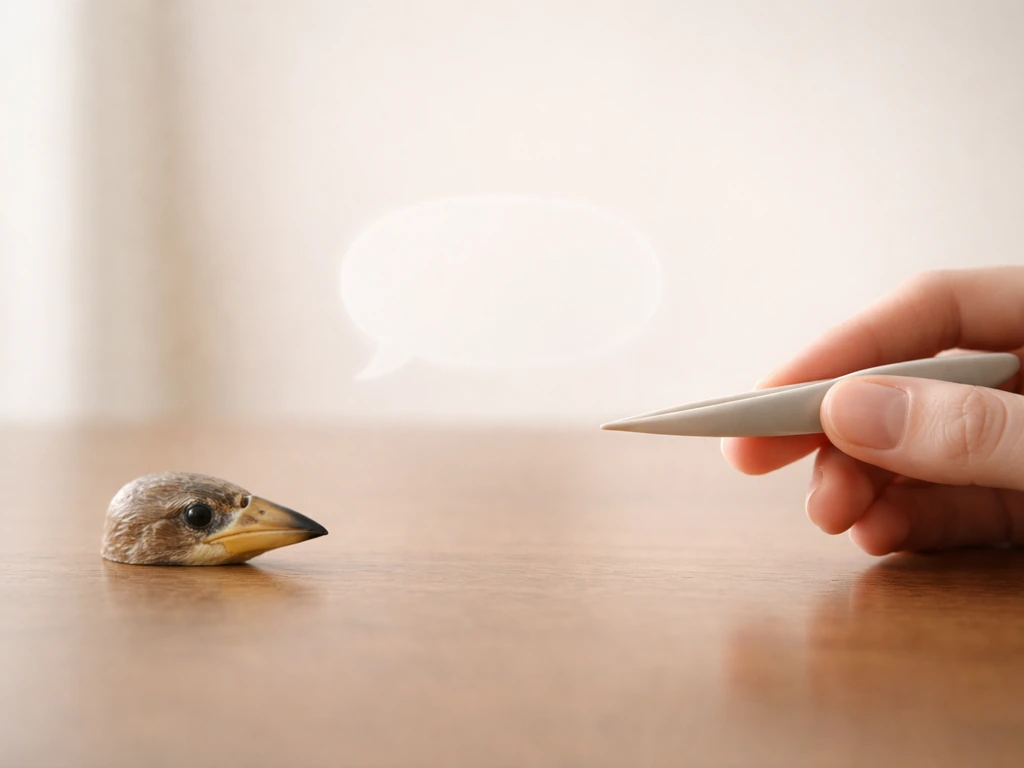
Outside of literal bird identification, "bird beak" or just "beak" shows up as a figurative description in everyday English. The most common uses are physical comparisons: someone might describe a person's prominent, pointed nose as "a real bird beak" or say that a pair of pliers looks "like a bird's beak. " In fashion and design writing, a collar or shoe shape that narrows to a curved point is sometimes called bird-beak shaped.
If you meant “bird-watching” specifically, that spelling and the hyphenation matter for how people search and find birding content is bird watching hyphenated. In cooking, a "bird's beak knife" (also called a tourné knife or paring knife with a curved tip) is a standard culinary term for the small knife used to shape vegetables.
In slang at a broader cultural level, "beak" alone (without "bird") carries the British English meaning mentioned earlier: a judge or magistrate. In the Cambridge English Dictionary, “beak” is also given as UK old-fashioned slang meaning a judge or magistrate British English meaning mentioned earlier: a judge or magistrate.
That usage dates back centuries and has nothing to do with ornithology, so if you see "beak" used in British crime dramas or older literature in a context that involves authority or the law, that is the meaning at play. Urban Dictionary entries for "beak" also include drug-related slang in some regional dialects, which is another completely separate usage. If you meant the Urban Dictionary angle for bird beak slang, the topic on what are bird beaks covers that specifically Urban Dictionary entries for "beak". For any bird-language question, the bird anatomy meaning is the one that applies here.
How to figure out the beak type from appearance (quick ID tips)
If you have a photo of a bird (or a bird in front of you) and you want to identify the beak type quickly, here is a practical approach that works whether you are a beginner or just need a fast answer.
- Look at the length relative to the head: a bill shorter than the head suggests a seed-eater or insect-gleaner; a bill as long as or longer than the head suggests a probing, fishing, or nectar-feeding species
- Check the tip shape first: hooked tip means predator or fruit-eater (raptors, parrots); straight pointed tip means insect-eater or generalist; flat or rounded tip means filter-feeder or dabbler
- Note the width: a wide, flat bill usually means water-feeding or filter-feeding; a narrow, compressed bill usually means precise picking or probing
- Check for a curve direction: downward (decurved) or upward (recurved) curves are strong ID clues that narrow species down quickly
- Look at the base: a thick, strong base with a conical shape points to seed-cracking; a slender, tapered base points to probing or picking insects
- Note any visible cere or fleshy patches at the base, which immediately signals parrot, pigeon, dove, or raptor families
Once you have made those observations, map your notes onto the terminology table above. A "short, thick, rounded-tip bill with a strong base" translates to a conical granivorous bill, and your search terms become much more precise from there. Apps like Merlin (Cornell Lab) let you input these physical features and return species matches, so the translation step feeds directly into a practical identification workflow.
Next-step guide: how to search or name the bird/beak correctly

The biggest mistake people make after searching for bird beak slang is stopping at the casual description. If you’re using social or trending slang while searching, you may also see references like shellac the bird is the most popular finger that show up alongside bird-related terms. Once you have the right term from the table above, here is how to take it further and actually get the information you need.
- Use the correct beak-shape term as your search anchor: instead of searching "bird with pointy beak," try "awl-shaped bill bird" or "thin straight bill insectivore" for more precise results
- Pair the beak term with a habitat or region: "decurved bill shorebird North America" will give you far better results than "long curved beak bird"
- If you are naming or describing a pet bird, use the correct term plus the species name when asking a vet or posting in a forum (for example: "my cockatiel's hooked raptorial bill" instead of "my bird's pointy hooked thing")
- For crossword clues or word puzzles, know that the standard answer for a bird's beak in most puzzles is simply BILL or BEAK, and the related anatomy term that often appears in more advanced clues is CERE or GAPE
- When searching this site, try the actual beak type name (conical, decurved, spatulate) rather than the slang version, as terminology articles and naming guides are organized around the correct terms
- To avoid confusion with non-bird slang uses of "beak," add the word "ornithology" or "bird anatomy" to your search query when you want strictly bird-related results
One last note: because "beak" and "bill" are fully interchangeable in modern ornithology, do not worry about which word to use when you are asking questions or searching. If you’re wondering which word can be placed before bottle, bell, and bird, that phrase is essentially asking for related “beak/bill” naming terms which word can be placed before bottle bell and bird. Either word will get you to the same place.
If you are curious about the naming side of this (why some birds are called by one word versus the other, and what the formal name for a bird's mouth structure is), the question of what another name for the beak of a bird is goes into more depth on that specific angle. What another name for the beak of a bird is goes into that naming angle in more depth.
And if you want to see how slang intersects with bird beak language from a more explicitly dictionary-style angle, the what-are-bird-beaks Urban Dictionary topic covers the online slang dimension more directly.
FAQ
What are bird beaks slang terms when I see “hooked,” “pointy,” or “flat” online, are those real slang or just descriptions?
They are usually casual descriptions rather than standardized slang. To use them effectively, combine the shape words with a diet cue (for example, “hooked beak” plus “meat” or “raptor”) or with a location (region or habitat), then map the result to formal terms like hooked, decurved, or conical during your search.
Is “beak” always interchangeable with “bill” in slang, or only in ornithology?
In bird contexts, yes, modern ornithology treats them as interchangeable, so searches will match either word. In general slang, not necessarily. If the post is about courts, authority, or school leadership (especially in British English), “beak” likely means a judge, not a bird mouthpart.
When someone says “cere color,” what exactly are they referring to, and do I need to memorize it?
They mean the fleshy area at the base of the upper bill (common in parrots, pigeons, and some raptors), not the bill itself. You do not need to memorize it for casual conversation, but if you are trying to confirm an ID from photos, recognizing “cere” can narrow options quickly.
What does “gape” mean, and why does it matter for identifying a bird from a video?
Gape is the interior opening you see when a bird opens its mouth wide. In feeding videos, gape shape and how it opens can be a useful clue, especially for young birds or species that gape conspicuously when begging, but it is less helpful if the bird never opens its mouth.
If I search for “bird beak slang” and get irrelevant results like crime shows or drug slang, what should I do?
Add a disambiguator to your query, such as “bird bill anatomy,” “bird beak terms,” “cere gape rhamphotheca,” or “ornithology.” This forces the search to the bird-meaning side and avoids the British “beak” (judge) or unrelated regional slang meanings.
Are there any common “street-level” slang terms for beak types that I should rely on for fast IDs?
Usually, no single universally recognized slang set exists for beak types. The reliable shortcut is to treat the slang as shape descriptions, then convert them into formal categories (for example, curved for hooked or decurved, thick and rounded for conical) before using an ID app or field guide.
What is a good way to translate my own observations into searchable terms when I have no idea what the scientific words are?
Write three notes: beak length (short vs long), width/thickness (thin vs thick), and tip shape (flat, rounded, hooked, or strongly curved). Then add one behavioral or diet keyword you observed, like “seed,” “insect,” “nectar,” or “fishing,” and use those as your query before looking up formal terminology.
If “bird beak knife” comes up, is that related to birds, or is it a different term entirely?
It is unrelated to birds as anatomy. “Bird’s beak” there refers to a curved-tipped knife used for kitchen prep, and it follows food and tool vocabulary, not ornithology. When you see that phrase, check whether the context is cooking or design to avoid mixing meanings.
How do I confirm I am using the right “beak/bill” terminology when asking questions in a birding group or vet forum?
Use “bill” or “beak” along with one specific feature term (cere, gape, or tip shape) in your question. For example, “What does the cere color indicate?” is clearer than “what does the beak mean?” and it reduces back-and-forth if other members are using different naming preferences.
Mouth of Bird Is Called: Beak vs Bill vs Rostrum
Learn what a bird mouth is called beak, bill, or rostrum and how to use each term correctly.