Bird homophones are words connected to birds, either bird names or bird-related terms, that sound identical to completely different words but carry different meanings and often different spellings. Think of "tern" (the seabird) and "turn" (to rotate), or "crane" (the wading bird) and "crane" (the construction machine). If you have ever written the wrong word in a sentence, missed a crossword answer, or stumbled over a bird name while reading a field guide, you are dealing with homophones.
Bird Homophones Meaning: Examples, Pronunciation, Quick Guide

James Ridgley
14 Apr 2026
A Reddit thread in EnglishLearning also shows that many learners mix up homonym, homophone, and homograph, which can make early definitions feel confusing. This guide walks through exactly what they are, gives you practical examples, and shows you how to pick the right one every time.
What 'bird homophones' means in everyday English

A homophone, as Merriam-Webster defines it, is a word that is pronounced the same as another word but has a different meaning or spelling. The classic example is "sea" and "see." Oxford Learner's Dictionaries gives "plain" and "plane" as another pair. Britannica points out that homophones can be spelled differently or even identically, so context is really the only thing that separates them. The key rule is this: same sound, different meaning.
It is also worth knowing what homophones are not. blank" rel="noopener noreferrer">Merriam-Webster draws a clear line between homophones, homographs (same spelling, different meaning or pronunciation), and homonyms (a broader umbrella term). If you are asking what is a bird homophone in a precise grammatical sense, the answer is a bird name or bird-related word that shares its sound with a non-bird word but means something entirely different in that pairing.
Bird homophones pop up constantly in everyday English because so many bird names are short, phonetically simple words that the language has borrowed for other purposes. Once you know what to look for, you start spotting them everywhere: in puzzles, in poetry, in birdwatching notes, and in everyday conversation.
Common bird-word homophone pairs and examples
Some of the most frequently confused bird homophones come from birds whose names sound just like ordinary English words. Here are the main ones worth knowing, along with a note on how each word is actually used.
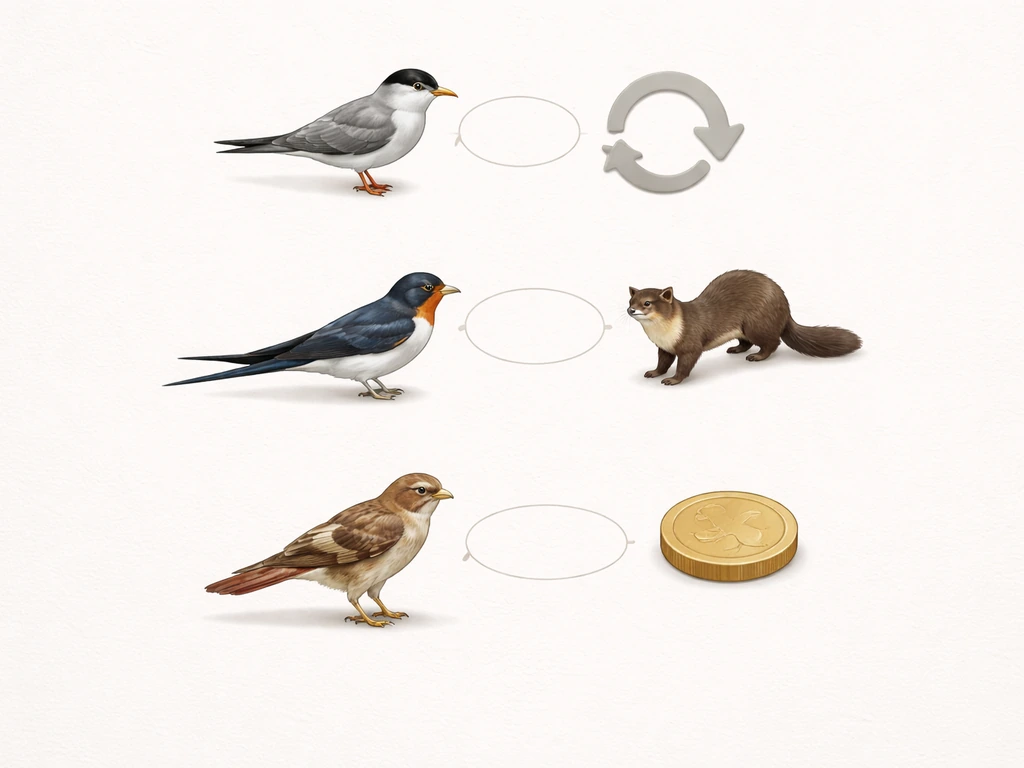
- Tern / Turn: A tern is a seabird in the family Laridae, known for long migrations. "Turn" means to rotate or change direction. They sound identical in standard American and British English.
- Wren / Ren: Wren is the small, loud songbird. "Ren" is a less common given name but appears in names and abbreviations. The pair trips people up in name-spelling contexts.
- Jay / J: A jay is a corvid bird (Blue Jay, Steller's Jay). The letter "J" sounds the same. In crosswords, this pair causes regular confusion.
- Crane / Crane: Same spelling, but a crane is both a large wading bird and a construction lifting machine. This is technically a homonym, but because the bird sense and the machine sense are so frequently confused, it belongs in any practical bird homophones list.
- Kite / Kite: Same spelling again. A kite is a bird of prey (Red Kite, Black Kite) and also the diamond-shaped flying toy. Context is everything here.
- Martin / Marten: A martin is a swallow-family bird (Purple Martin, House Martin). A marten is a small carnivorous mammal. Same pronunciation, different spelling.
- Erne / Earn: An erne (also spelled "ern") is an archaic and poetic word for an eagle, especially the white-tailed eagle. "Earn" means to receive in return for work. These sound identical.
- Teal / Teal: A teal is a small dabbling duck. Teal is also a blue-green color. Same word, different meanings, which makes it a homonym within English.
- Rook / Rook: A rook is a corvid bird common in Europe. A rook is also a chess piece. Same sound, very different contexts.
- Ibis / Ibis: Not a homophone pair in English, but worth noting that "ibis" has no common sound-alike, so it rarely causes confusion.
- Swift / Swift: A swift is a fast-flying bird in the family Apodidae. "Swift" is also an adjective meaning fast. The bird was literally named for the quality.
- Robin / Robin: Both a bird name and a common given name, which creates context confusion even though the spelling is identical.
- Lark / Lark: A lark is a songbird (Skylark, Meadowlark). A lark also means a playful adventure or joke. Same word doing double duty.
- Finch / Finch: Both a bird and a surname. No spelling difference, but the context of use differs completely.
- Grouse / Grouse: A grouse is a game bird. To grouse means to complain. Same spelling, completely different meanings.
A few of these pairs involve words that are a bird that is a synonym for nuts in informal slang, which shows how bird names can slip into figurative language and create a second layer of potential confusion when someone reads them out of context.
How to figure out the right word from context
The fastest way to pick the correct homophone is to look at the surrounding sentence and ask: is this sentence talking about a living creature, or something else? That single question resolves most bird homophone confusion instantly.
For pairs where the spelling differs (martin/marten, tern/turn, erne/earn), also look at the surrounding words for category clues. If the sentence mentions nesting, migration, wingspan, or a habitat like marsh or coastline, the bird word is almost certainly correct. If the sentence is about salary, movement, or direction, reach for the non-bird spelling.
For same-spelling homonyms like crane, kite, rook, lark, and grouse, the part of speech sometimes helps. "The crane stood motionless" is almost certainly about the bird; "a crane was parked on the building site" is the machine. "She had a good lark" means a funny adventure; "a lark sang overhead" means the bird. When in doubt, ask whether the sentence makes sense with the bird meaning first, then try the alternative.
One more trick: check whether the word is being used as a noun or a verb. Is bird a noun in the sentence you are reading? In almost every case, bird names function as nouns. If the word is being used as a verb (to crane one's neck, to lark about, to grouse at someone), it is not being used as a bird name.
Spelling and pronunciation tips for the tricky cases

Tern vs. turn
Both words are pronounced "TURN" (IPA: /tɜːrn/). The bird is spelled T-E-R-N. Memory trick: a tern lives near the sea, and "sea" also uses an unexpected vowel spelling. If it flies and dives into water, it is "tern."
Martin vs. marten
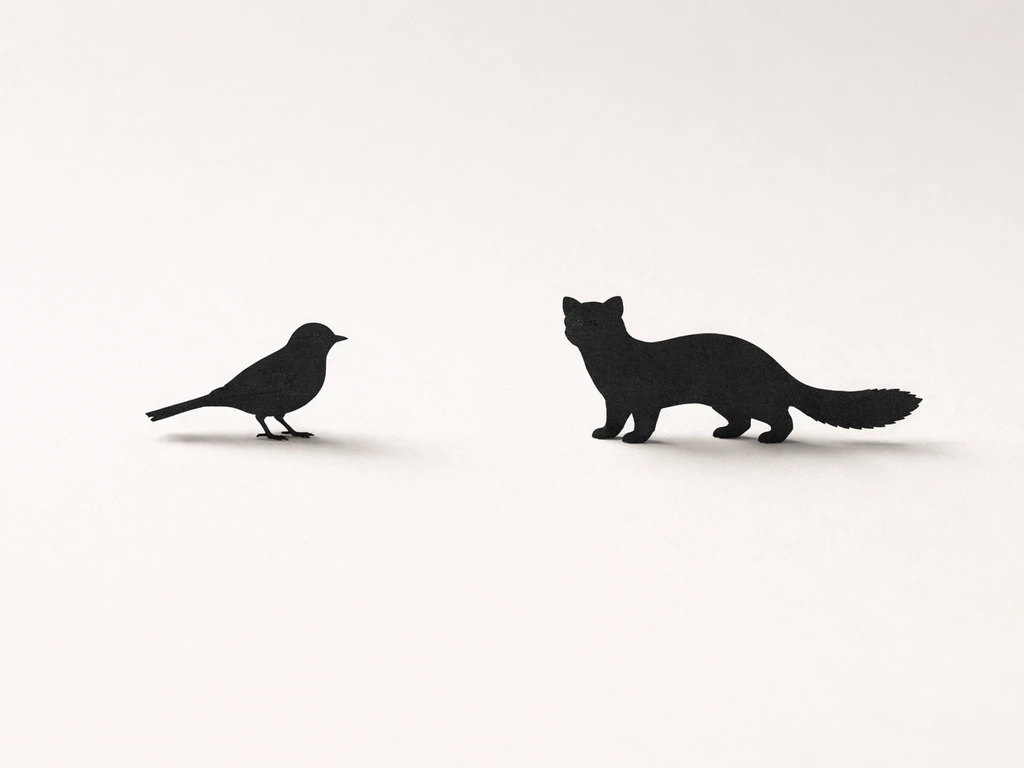
Both are pronounced "MAR-tin" (IPA: /ˈmɑːrtɪn/). The bird is martin (one "a"), the mammal is marten (with an "e"). The marten is in the weasel family, the martin is in the swallow family. If it nests in a birdhouse, it is martin.
Erne vs. earn
Both are pronounced "URN" (IPA: /ɜːrn/). Erne is spelled E-R-N-E (or sometimes just E-R-N) and refers to an eagle, especially the white-tailed eagle. It appears frequently in poetry and crossword puzzles. Earn means to receive compensation. If you see it in a nature poem about a soaring bird, it is erne.
Grouse (the complaints vs. the bird)
Grouse as a bird name is pronounced "GROWSS" (IPA: /ɡraʊs/). As a verb meaning to complain, it is pronounced exactly the same way. The spelling never changes. This is one where etymology actually helps: the game bird likely comes from an Old French root, while the complaining verb is a later coinage. Knowing that the grouse is a fat, ground-dwelling game bird of moorlands helps you picture the bird sense clearly.
If you want to go deeper on the roots of bird names like these, exploring words with ornith meaning bird gives you a useful anchor. When a word contains that Greek root, there is no ambiguity: you are in bird territory.
Where bird names show up in puzzles and wordplay
Crossword constructors love bird homophones because they create legitimate misdirection. A clue like "Wheeled around" could yield TERN (as in the bird "turned" into a homophone of its action). "Something soaring and archaic" might clue ERNE, which will fool solvers who only know EARN. ROOK appears constantly in chess-themed clues but can just as easily be the corvid.
In cryptic crosswords, the rules are even more layered. Bird homophones are used in "sounds like" indicators where the solver is told a word is pronounced like the answer. You might see a clue like "Sounds like you're about to rotate, seabird" pointing to TERN. Understanding the homophone relationship is not just trivia: it is a solving tool.
In word games like Wordle or Spelling Bee, bird names trip players up precisely because of spelling versus sound confusion. Players guess TERN when they are thinking of TURN, or type MARTIN when the puzzle wants MARTEN. Knowing the bird-specific spelling is a direct competitive advantage.
Poetry is another arena where bird homophones do heavy lifting. Poets have used ERNE as a poetic-sounding word for eagle for centuries, partly because it sounds like EARN and creates a subliminal resonance. LARK is used for both the bird and the sense of frivolity in the same line in dozens of English poems. If you are analyzing a poem or writing one, knowing which sense is in play changes the reading entirely.
Quick reference list of bird homophones (with meanings)

| Bird word | Bird meaning | Homophone / alternate meaning | Same spelling? |
|---|---|---|---|
| Tern | A seabird (Laridae family) known for long migration | Turn: to rotate or change direction | No |
| Martin | A swallow-family bird (Purple Martin, House Martin) | Marten: a carnivorous mammal in the weasel family | No |
| Erne | Archaic/poetic word for eagle (white-tailed eagle) | Earn: to receive payment for work | No |
| Jay | A corvid bird (Blue Jay, Steller's Jay) | J: the letter of the alphabet | No |
| Crane | A large wading bird (Whooping Crane, Sandhill Crane) | Crane: a construction lifting machine / to crane one's neck | Yes |
| Kite | A bird of prey (Red Kite, Black Kite) | Kite: a diamond-shaped flying toy | Yes |
| Rook | A corvid bird common in Europe | Rook: a chess piece / to swindle someone | Yes |
| Lark | A songbird (Skylark, Meadowlark) | Lark: a playful adventure or joke | Yes |
| Swift | A fast-flying bird (family Apodidae) | Swift: adjective meaning fast or quick | Yes |
| Grouse | A game bird of moorlands | Grouse: to complain | Yes |
| Teal | A small dabbling duck | Teal: a blue-green color | Yes |
| Robin | A familiar songbird (American Robin, European Robin) | Robin: a common given name | Yes |
| Finch | A seed-eating songbird (Goldfinch, House Finch) | Finch: a common surname | Yes |
| Martin | See above (bird) | Martin: a common given name | Yes |
The short version: when the word is spelled differently from its sound-alike, look up both spellings to confirm which one fits the context. When the spelling is identical and the word does double duty (crane, kite, rook), read the surrounding sentence for category clues. Bird homophones are genuinely fun once you start noticing them, and they are one of the reasons English bird vocabulary has such rich overlap with the rest of the language.
FAQ
Can a bird homophone be different depending on the context (for example a proper name)?
Homophones are based on sound, not meaning category. A word can be a bird homophone in one context and not in another, for example TERN matches TURN, but TERN becomes a different idea if the sentence is using it as a proper name (a ship, a surname, or a brand). Check whether the intended word is functioning as a bird name or as the non-bird meaning.
What if the two homophones sound slightly different in my accent, or sound the same in fast speech? Which should I trust?
Yes. In some dialects or faster speech, vowel quality can blur distinctions, especially with reduced vowels. That is why context still matters, even if you think the two words sound identical. When proofreading, read the sentence aloud slowly, then verify the meaning by category clues (bird habitat or movement versus direction, payment, or general English meaning).
How do bird homophones change when I see plurals or possessives (like martins’)?
If a sentence uses plural or possessive forms, the bird clue still usually shows up, for example “the martins’ nests” points to the bird spelling. But watch for irregular forms that make you assume the wrong base word, like adding -s to a non-bird verb. A practical approach is to strip the ending and identify the base candidate that best fits the surrounding meaning.
I keep making mistakes when using dictation or autocorrect. What’s a reliable way to catch bird homophone errors?
In writing, homophone mistakes often happen during dictation because the speech-to-text system chooses the most frequent general word. To reduce errors, keep a quick “bird list” in mind for your target text, then after typing, run a meaning check: does the sentence mention feathers, wings, hunting, nesting, or a habitat? If yes, you are likely in the bird spelling, otherwise reassess.
For same-spelling cases like crane or lark, how can I decide which meaning is intended?
If the spelling is the same (crane, kite, rook, lark, grouse), you cannot rely on spelling, so use part of speech and semantic role. For example, “kite” near weather, kite strings, or geometry is likely the object, while “kite” near hunting and birds is the bird. When uncertain, test it by rewriting the sentence with a clearer synonym (bird species versus non-bird action or object).
In crosswords or cryptics, how do I avoid being misled by the clue surface meaning?
Crossword clues often rely on wordplay, so you should look at both the bird definition and how the clue signals the mechanism. A “sounds like” indicator means you should map the clue to the bird spelling, even if the surface meaning points elsewhere. If the clue is themed (chess, nature, poetry), prioritize the theme, then confirm with the entry length.
What’s the fastest decision method when I spot a possible bird homophone in a sentence?
In quick proofreading, identify the “anchor nouns” nearby. If you see words like marsh, coast, seabird, nest, migration, feathers, or eagle, choose the bird spelling (tern, erne, martin). If you see words like compensation, direction, salary, rotate, or complain, choose the non-bird meaning (earn, turn, grouse verb). This is faster than memorizing every pair.
How should I handle bird homophones where one meaning has more than one spelling (like erne)?
Some pairs can have multiple spellings (erne sometimes appears as E-R-N). In those cases, do not assume you must match a single spelling from memory. Instead, verify the surrounding words (nature poem tone and eagle context for erne, money or receiving context for earn) and then use the spelling that best fits the expected form in the specific activity (crossword entry versus normal text).
Is checking grammar and word function enough to resolve bird homophones?
A good sanity check is whether substituting the non-bird word keeps the sentence grammatical and meaningful. For verbs, bird homophones may act like actions (to lark about, to crane one’s neck, to grouse), and that usually signals the non-bird meaning. If the word can only be a bird within the sentence structure, then the bird spelling is the correct match.
What’s an effective way to practice bird homophones so it sticks?
For self-study, pick one bird word and learn its full sound-alike partner plus one high-frequency context word. For example, tern pairs with turn and is commonly surrounded by sea or coastline language. Then create two example sentences and say them aloud, one that clearly demands the bird meaning and one that clearly demands the non-bird meaning.
Next Article
Is Bird a Noun? Grammar Guide for Bird as Noun or Verb
Learn if bird is a noun or verb, when it can act like an adjective, and quick tests for your sentence.