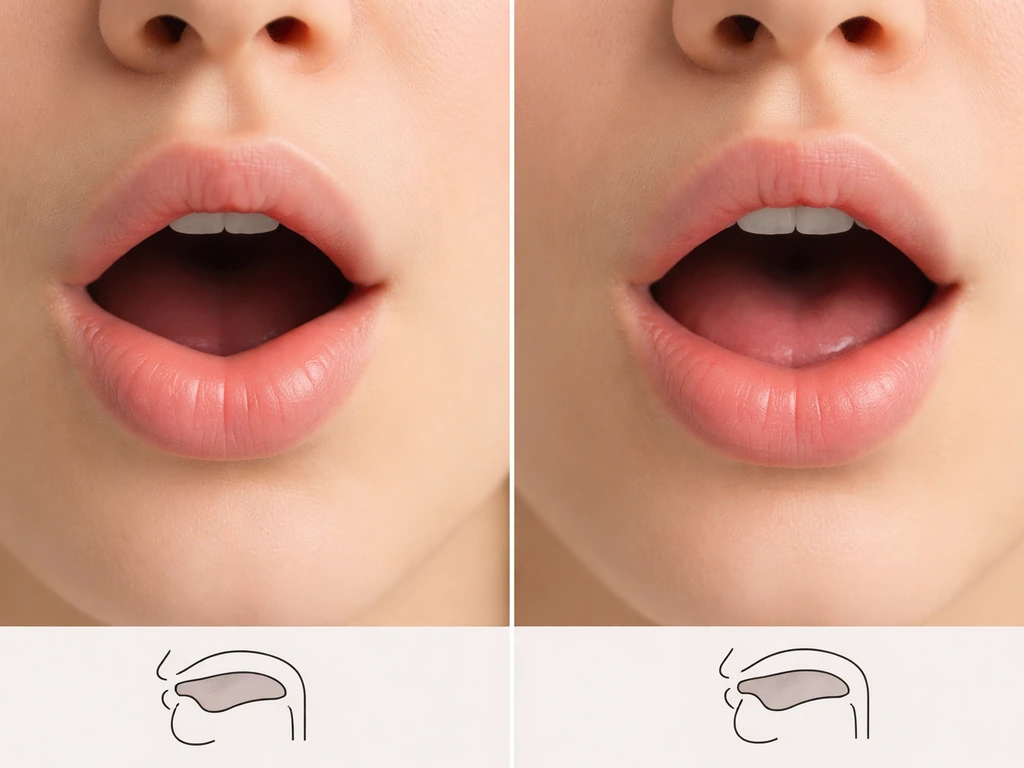
"Frigate bird" is pronounced FRIG-ut BURD. The stress lands firmly on the first syllable of "frigate," the middle syllable is a quick unstressed schwa, and "bird" follows as a single clean syllable. In IPA, the full phrase is /ˈfrɪɡət bɜːd/ in British English and /ˈfrɪɡət bɝːd/ in American English. That's it. If you can say those two words with the stress in the right place, you're done.
How to Pronounce Frigate Bird: Simple Step-by-Step

James Ridgley
17 Apr 2026
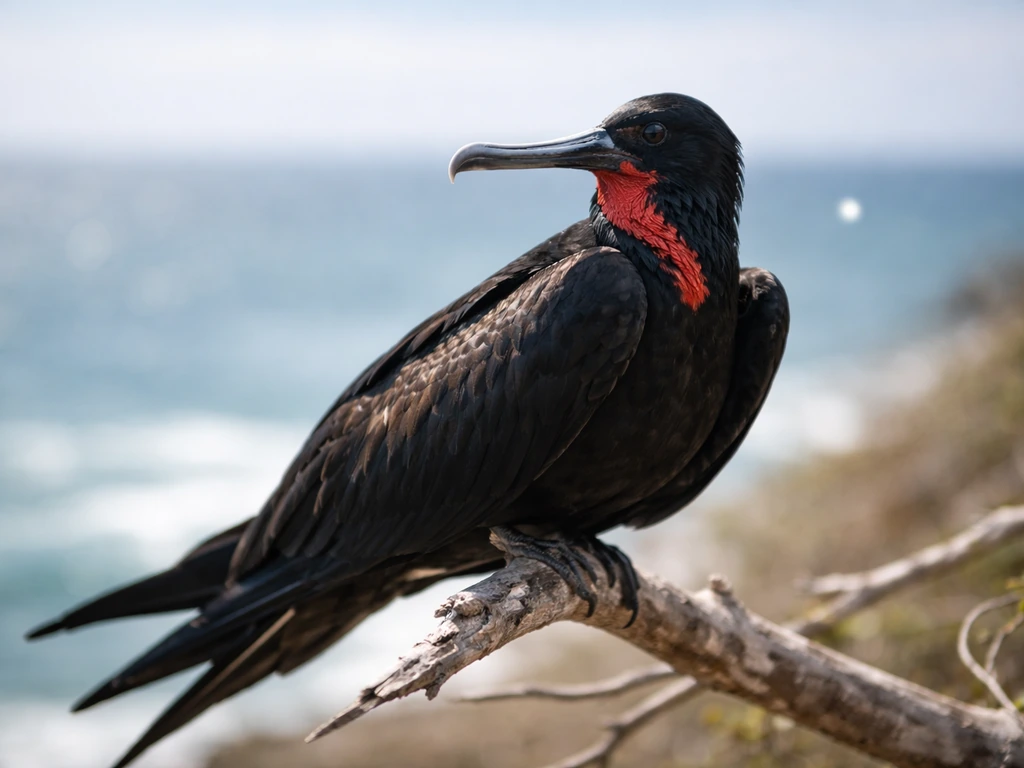
The standard pronunciation at a glance
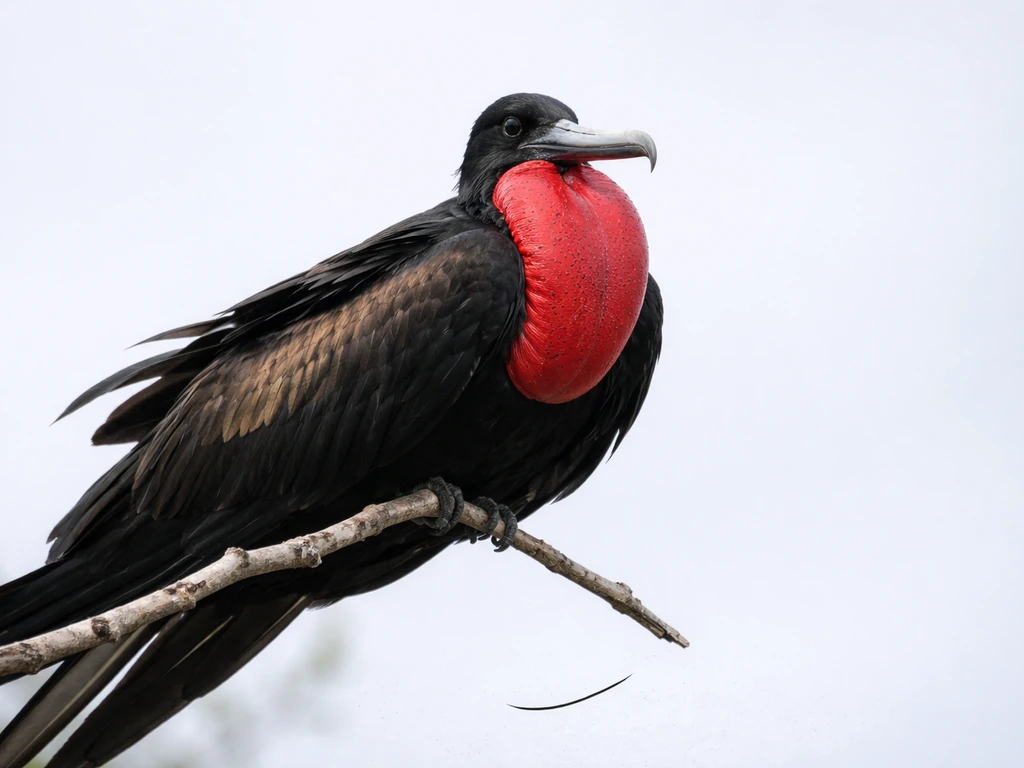
Every major dictionary, including Cambridge, Oxford, and Merriam-Webster, agrees on one thing: "frigate" has two syllables and the stress goes on the first one. No exceptions for the bird name. Oxford Learner's Dictionaries lists the full phrase IPA as /ˈfrɪɡət bɜːd/ (UK) and /ˈfrɪɡət bɜːrd/ (US), confirming that the phrase-level stress sits on "FRI-" rather than on "bird." So when you say the whole thing, it sounds like a trochee followed by a single beat: FRIG-ut BURD.
The frigate bird (family Fregatidae) takes its English name from the frigate warship, a connection that actually traces back to French mariners who called the bird "la frégate" because of how it soared fast and aggressively above the waves, much like the ships they sailed. That French origin is why English speakers sometimes second-guess the spelling or stress, but the English pronunciation has fully settled: two syllables, first syllable stressed, schwa in the second.
Phonetic spellings and syllable breakdowns
Here are the most practical ways to write out the pronunciation, from formal IPA to plain-English syllable guides:
| Format | Frigate | Bird | Full phrase |
|---|---|---|---|
| IPA (UK) | /ˈfrɪɡ.ət/ | /bɜːd/ | /ˈfrɪɡət bɜːd/ |
| IPA (US) | /ˈfrɪɡ.ət/ | /bɝːd/ | /ˈfrɪɡət bɝːd/ |
| Easy syllable guide | FRIG-ut | BURD | FRIG-ut BURD |
| Stress marked | FRIG-ut (stress on FRIG) | BURD (one syllable) | FRIG-ut BURD |
The "FRIG" part rhymes with "wig" or "twig," using the short /ɪ/ vowel. The second syllable "-ut" is completely unstressed, like the "a" in "about" or the "er" in "butter." Then "BURD" is a single syllable with a vowel that shifts slightly depending on your accent, but in either case it rhymes clearly with "heard," "word," and "third."
Breaking down each word separately
Saying "frigate" on its own
"Frigate" trips people up more than "bird" does, so it deserves a close look. Merriam-Webster syllabifies it as fri-gət, and Cambridge confirms the same IPA (/ˈfrɪɡ. Cambridge Dictionary lists the pronunciation of “frigate” as /ˈfrɪɡ.ət/ (UK), with stress on the first syllable Cambridge confirms the same IPA. ət/) for both UK and US speakers. The key moves are: start with a short, crisp /fr/ blend, hit the short "i" vowel (as in "it"), land on the hard /g/, then drop into the unstressed schwa /-ət/. The whole word takes about half a second to say. There is no long "eye" sound, no silent letter, and no third syllable hiding anywhere.
Saying "bird" on its own
"Bird" is one syllable and almost everyone already says it correctly. The only real variation is the vowel. In British English, Cambridge gives it as /bɜːd/, a long non-rhotic vowel, so the "r" is not pronounced as a distinct consonant and the word sounds like "buhd" with a lengthened vowel. In American English, the vowel becomes /bɝːd/, rhotic and r-colored, the way most Americans already say it. If you want to go deeper on this, how to pronounce bird covers the full phonetic breakdown of that single syllable across accents.
Common mispronunciations to watch out for
Most mistakes with "frigate bird" happen on the first word. Here are the ones that come up most often:
- Stressing the wrong syllable: saying fri-GATE instead of FRIG-ut. This is the most common error, probably because the word looks like it ends in a strong syllable ("-gate"), but the "-gate" spelling is misleading. The second syllable is weak and unstressed in standard pronunciation.
- Saying a long "eye" in the first syllable: pronouncing it FRY-gut instead of FRIG-ut. The vowel in "fri-" is the short /ɪ/ sound as in "fridge" or "frigid," not the long /aɪ/ as in "fry."
- Adding an extra syllable: some people say FRIG-uh-tee or FRIG-ah-tay, as if the word has three syllables or a vowel at the end. It doesn't. Two syllables only.
- Pronouncing the "g" softly: the /g/ in "frigate" is always a hard /g/ as in "go," never a soft /dʒ/ as in "gentle." Think of "frigid" to anchor the sound.
- Merging the two words into one mangled compound: saying something like fruh-GAT-berd. Keeping the two words slightly separate in your mind helps maintain the correct stress on "FRIG."
The spelling is the biggest trap here. Because English has words like "conjugate" and "delegate" where the final syllable carries weight, your brain may pattern-match "frigate" to that group. It doesn't belong there. Anchor it to "frigid" instead: FRIG-id, FRIG-ut. Same vowel, same stress, same hard /g/.
Regional and accent variations
The stress pattern for "frigate bird" is consistent across every major English dialect: stress on "FRIG," unstressed schwa for "-ut," then "bird." What changes across accents is the vowel quality, not the stress. Here's how the main varieties compare:
| Accent | "Frigate" IPA | "Bird" IPA | Practical note |
|---|---|---|---|
| Standard American | /ˈfrɪɡ.ət/ | /bɝːd/ | Rhotic r in "bird"; vowel in FRIG is short /ɪ/ |
| Standard British (RP) | /ˈfrɪɡ.ət/ | /bɜːd/ | Non-rhotic; "bird" sounds like buhd with a long vowel |
| Australian English | /ˈfrɪɡ.ət/ | /bɜːd/ | Similar to RP; slightly different vowel quality in FRIG |
| South African English | /ˈfrɪɡ.ət/ | /bɜːd/ | Non-rhotic like RP; vowel in FRIG may be slightly more open |
The most noticeable split is the rhotic versus non-rhotic difference in "bird." American speakers color the vowel with an r-sound (bɝːd), while British, Australian, and South African speakers drop the r and lengthen the vowel instead (bɜːd). Both are perfectly correct, and neither version changes how you say "frigate." If you're watching bird documentaries or field guide videos from different countries, you'll hear this difference clearly, but the two-syllable FRIG-ut stays stable throughout.
It's worth knowing that this same rhotic/non-rhotic split shows up across many bird names. If you've ever wondered about how to pronounce grebe bird, you'll notice the same vowel shift in "bird" depending on where the speaker is from, while the first word stays consistent. The pattern repeats across the whole bird-naming vocabulary.
How to adapt your pronunciation naturally
If you're an American speaker talking to British birders, or vice versa, you don't need to change anything about how you say "frigate." Just keep your natural "bird" vowel. No one in a birding group is going to flag you for saying bɝːd versus bɜːd. The stress pattern is what matters for comprehension, and that's the same everywhere.
For learners of English as a second language, the safest model is the American or British pronunciation from a dictionary audio sample, both of which are available on Cambridge and Forvo for the word "frigate" and the full compound "frigatebird." Listening to a native audio clip alongside the IPA is genuinely the fastest way to lock in the right stress. You'll hear immediately that the first syllable hits harder and the second fades quickly.
Putting it all together
Say it out loud a few times using this rhythm: FRIG-ut BURD. Short sharp start, quick fade in the middle, clean landing at the end. If you can say "frigid" already, you've got the first syllable nailed, just swap the final "-id" for an "-ut" schwa. That's genuinely all there is to it.
Bird names that feature two-word constructions like this one follow very similar patterns throughout English. The same first-syllable stress logic applies to plenty of other species names. If you're building confidence with bird pronunciation more broadly, it helps to work through a few in parallel. For instance, how to pronounce swallow bird walks through another two-word bird phrase where stress placement is the key issue, and comparing the two side by side is a quick way to internalize the pattern.
One more thing worth knowing: "frigate bird" and "frigatebird" are both accepted written forms. Some field guides and ornithological sources write it as one word, some as two. The pronunciation does not change either way. Whether you see it hyphenated, compounded, or spaced, you say FRIG-ut BURD. Spelling variants like this come up often in bird nomenclature, and if you've ever come across similar questions, such as how to pronounce weaver bird or how to pronounce budgie bird, you'll find that the spoken form typically stays stable even when the written form varies.
For anyone coming at this from a wading-bird or shorebird angle, the frigate bird actually belongs to a broader group of seabirds that birders often encounter near coastlines alongside species like plovers. If you find yourself navigating pronunciation questions for that whole category, how to pronounce wading bird and how to say plover bird are both practical companions to this guide. And if you've ever had a similar stumble over a more familiar bird's name, how to pronounce turkey bird is a useful reminder that even everyday bird names have phonetic nuances worth checking.
FAQ
Do I pronounce “frigate bird” differently if it’s written as “frigatebird” or “frigate-bird”?
No. The written form can change between two words, one word, or hyphenation, but the spoken stress stays the same (FRIG-ut BURD).
Should I say a hard “g” in “frigate,” or does it soften when I speak quickly?
Keep the hard /g/ sound. In the fast rhythm of FRIG-ut BURD, speakers may shorten the middle vowel, but the /g/ should not turn into a softer glide.
What’s the most common pronunciation mistake people make with “frigate” in this phrase?
Putting stress on the second syllable, like FRIG-at BURD. The phrase-level stress must stay on the first syllable, like FRIG-ut BURD.
Can I exaggerate the schwa sound in “-ut,” or should it disappear almost completely?
It should be very short and unstressed, but not fully deleted. Think quick fade for the middle syllable, so you still hear an “uh”-like beat between FRIG and BURD.
How do I handle “bird” if I’m using British English, and I keep adding an “r”?
For a British-style /bɜːd/, avoid pronouncing a distinct “r.” If your accent is rhotic (common in many places), you can still aim for the longer, non-r-colored vowel without changing the stress.
Will changing only the “bird” vowel affect whether people understand me?
Usually no. Comprehension depends much more on stress in “FRIG” and the two-syllable structure of “frigate.” Small vowel differences in “bird” are normal across English varieties.
Is it acceptable to mix accents, for example using an American “bird” vowel with a British “frigate”?
Yes, it’s fine. The key instruction is to keep the same syllable pattern and stress (FRIG-ut BURD). Accent mixing affects vowel color, not whether listeners can identify the phrase.
How can I practice if I’m struggling to land on the right stress in “frigate bird”?
Use the “frigid” anchor method: say FRIG-id, then swap the final part to FRIG-ut (same first-syllable punch). Repeat with a short pause after “FRIG,” then say BURD cleanly.
Do I pronounce “frigate bird” with two syllables total, or is “bird” counted separately?
Count it as two main words with syllables inside “frigate.” You get three syllables in “frigate” (fri-gət) plus one syllable for “bird,” but the rhythm you should feel is FRIG-ut BURD (stress on FRIG only).
If I’m reading it in a field guide, how do I know where to break the words when speaking?
Break after “frigate” naturally at the word boundary: FRIG-ut, then BURD. Even when written as one word, the speech should still treat it like two chunks for clarity.
Next Article
How to Pronounce Bird in English Step by Step
Step by step guide to pronounce bird in English, with UK vs US sounds, drills, fixes, and bird phrases