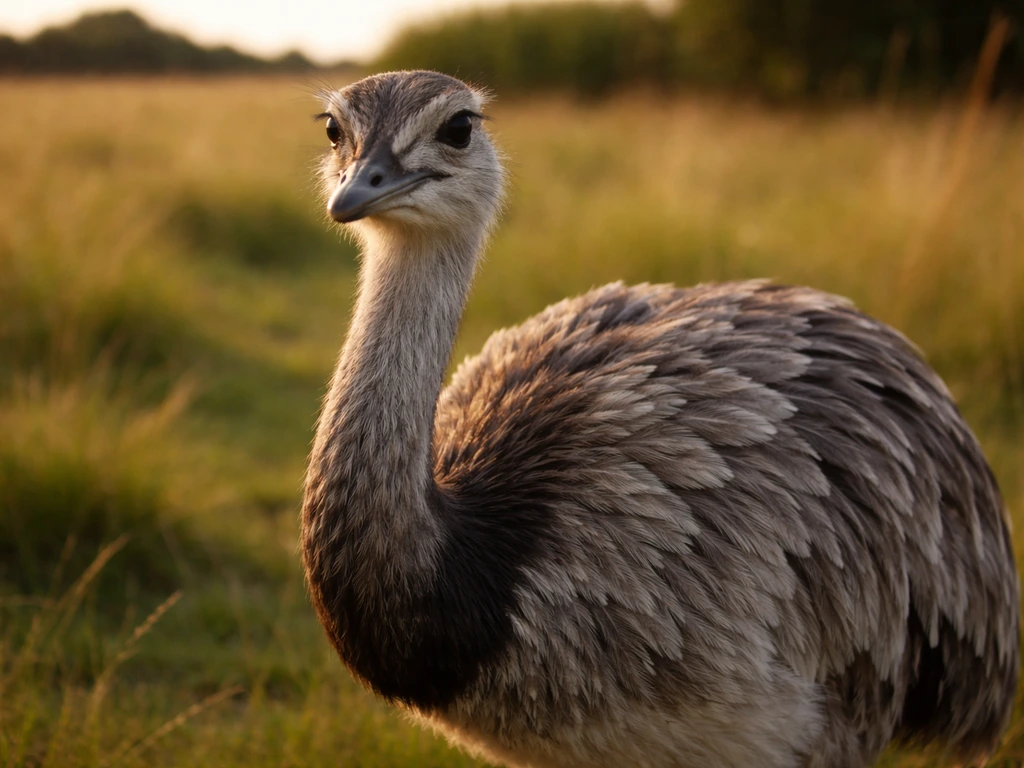
Rhea the bird is pronounced REE-uh, two syllables, with the stress firmly on the first one. Say it exactly like the name "Rhea" as in the Greek Titan, or like the beginning of "reebok" followed by a soft "uh." Every major dictionary agrees on this: Merriam-Webster gives /ˈrē-ə/, Cambridge gives /ˈriː.ə/, and Oxford lists /ˈriːə/. You're not going to go wrong with REE-uh in any English-speaking bird conversation.
How to Pronounce Rhea Bird: Correct Sound Guide

James Ridgley
29 Apr 2026
The two main English variants you'll hear
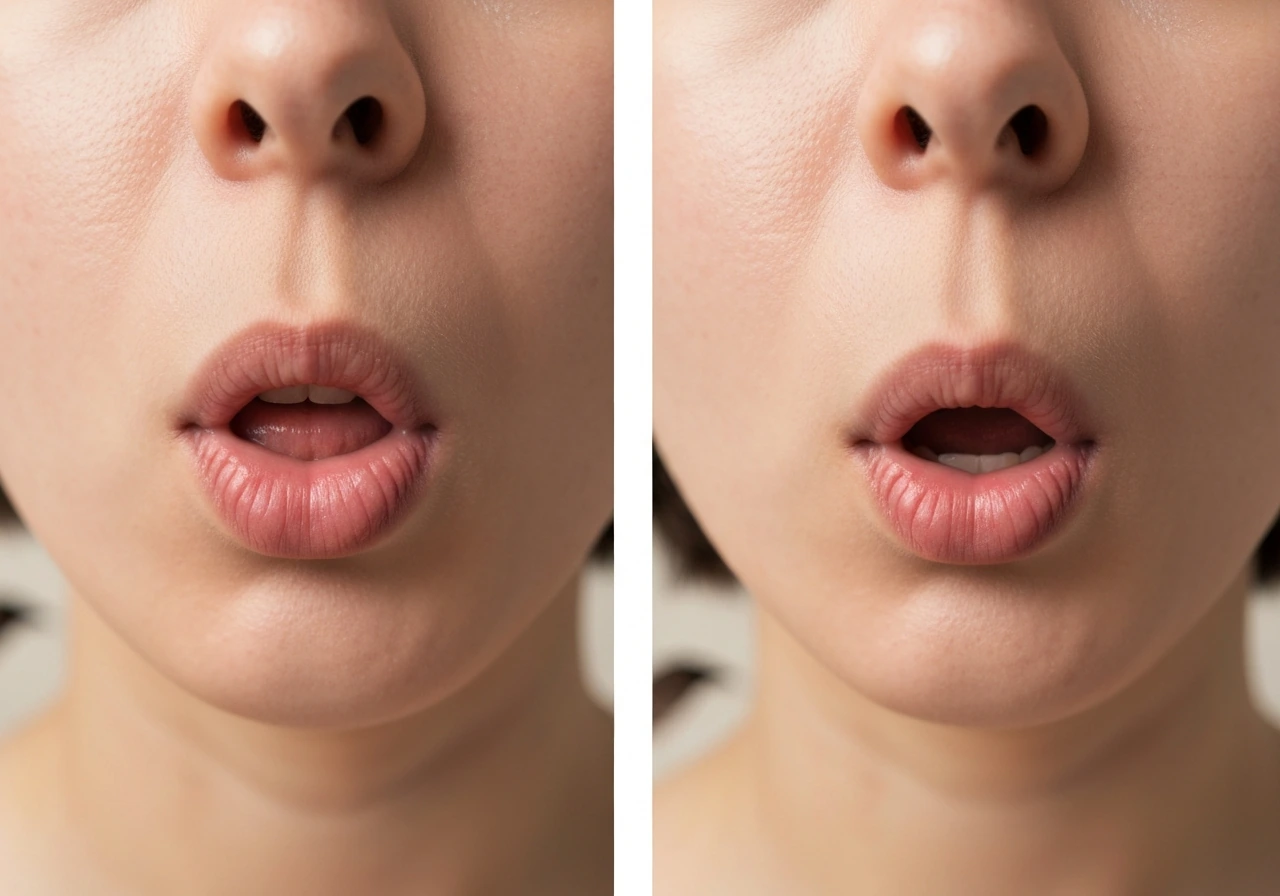
In practice, you'll run into two slightly different ways people say this bird's name, and both are completely acceptable. In English, the myna bird is called a myna rhea. The first is REE-uh, where the second syllable gets a soft, unstressed "uh" sound (the schwa, written as /ə/ in IPA). The second variant is REE-ah, where the final syllable sounds a little more open, like the "a" in "spa." A USDA document on poultry literally spells it out in parentheses as "REE-ah," and birding sites like Bird Watcher's General Store use the same spelling. The difference between REE-uh and REE-ah is tiny in casual speech, and no one at a bird park or ornithology lecture is going to blink at either one.
The IPA for the standard pronunciation is /ˈriːə/. If you want to decode that: the /ˈ/ marks primary stress on the first syllable, /riː/ is a long "ee" sound (like the word "reef" without the f), and /ə/ is that neutral, unstressed vowel at the end. Put it together and you get REE-uh. Simple.
Breaking it down syllable by syllable
Rhea has exactly two syllables: RHEA = REE + uh. The first syllable (REE) carries all the stress. The second syllable (uh) is weak and quick. Think of it like the name "Mia" or "Leah" but starting with an R. If you've ever said the name "Thea" or "Bea," you already have the rhythm down.
- Syllable count: 2
- Syllable breakdown: REE - uh
- Stressed syllable: REE (first syllable, always)
- IPA: /ˈriːə/
- Phonetic spelling: REE-uh or REE-ah
- Rhymes with: Leah, Thea, idea (minus the last syllable)
One reliable memory trick: the name comes from the Greek Titan Rhea, mother of Zeus. If you already know how to say that name from mythology class, you're already saying the bird's name correctly. The naturalist Paul Möhring applied this name to the bird genus back in 1752, and English speakers have been pronouncing it the same way ever since.
How to say "greater rhea" and "lesser rhea"
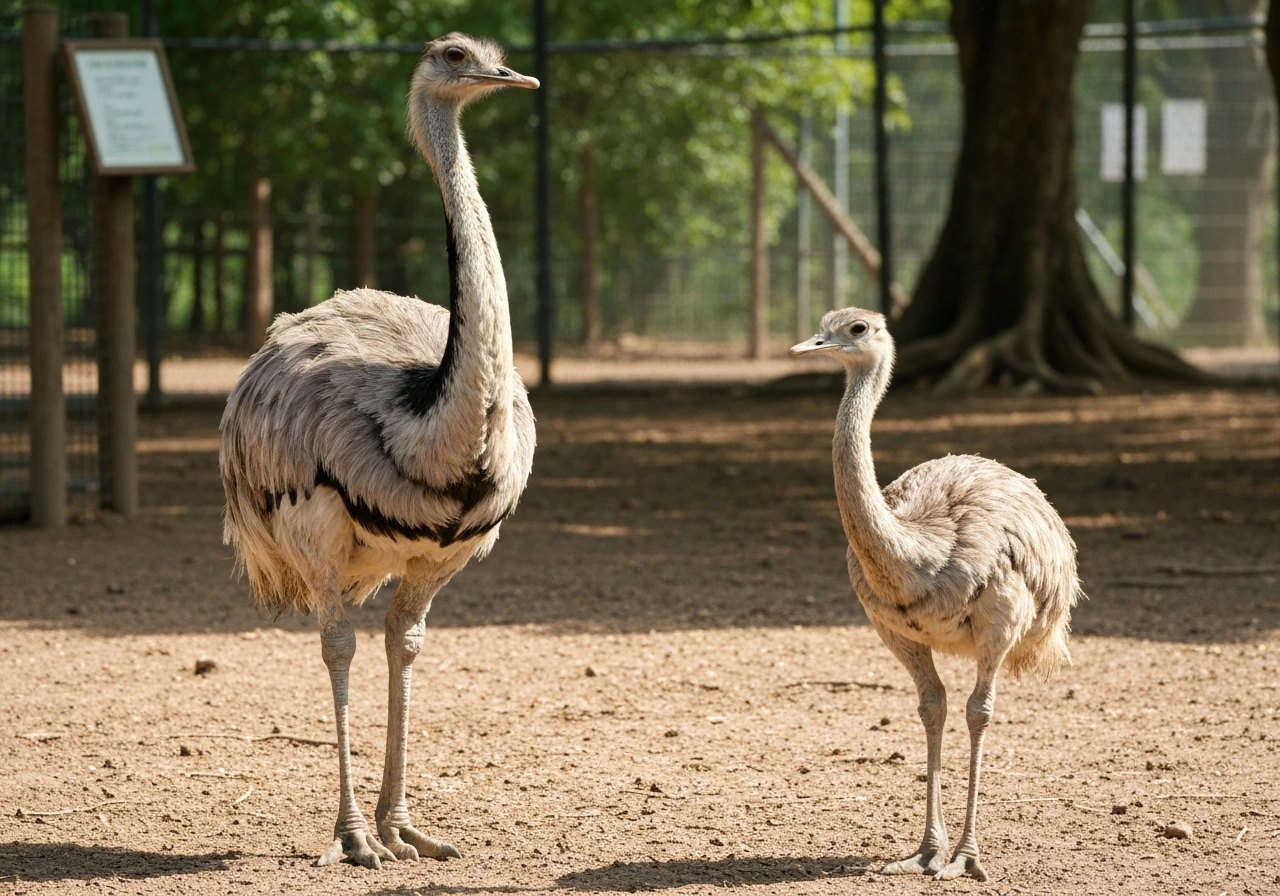
These are the two species names you're most likely to encounter in field guides, wildlife documentaries, and bird park signage. Both follow a straightforward pattern: the modifier (greater or lesser) gets its normal English stress, and "rhea" is always REE-uh at the end.
| Common Name | Scientific Name | Pronunciation | Phonetic Spelling |
|---|---|---|---|
| Greater rhea | Rhea americana | /ˈɡreɪtər ˈriːə/ | GRAY-ter REE-uh |
| Lesser rhea | Rhea pennata | /ˈlɛsər ˈriːə/ | LESS-er REE-uh |
| Darwin's rhea | Rhea pennata | /ˈdɑːrwɪnz ˈriːə/ | DAR-winz REE-uh |
Darwin's rhea is another name for the lesser rhea (Rhea pennata), so you'll see both terms used interchangeably depending on who's writing the guide. Either way, the "rhea" portion stays exactly the same. In fast, casual speech, "greater rhea" often flows as one smooth unit: GRAY-ter-REE-uh, almost like three syllables running together. That's perfectly normal and how most birders say it.
Mispronunciations to watch out for
The biggest mispronunciation, by far, is RAY-uh. This comes up constantly online, including on Reddit threads where people debate whether "Rhea" the name and "rhea" the bird are said the same way. They are. Both are REE-uh, not RAY-uh. The RAY-uh confusion probably comes from the "rh" spelling looking unusual in English, or from readers guessing it works like the name "Ray" with an "uh" added. It doesn't.
A second common error is treating it as one syllable: just "REE" with no trailing vowel. You can hear this in fast speech, and while people will still understand you, it technically drops the second syllable the word requires. Make sure that soft "uh" at the end is there, even if it's brief.
- RAY-uh: wrong. The vowel in the first syllable is a long "ee," not "ay."
- REE (one syllable, no ending): missing the schwa. Add the trailing -uh.
- REE-hee-uh (three syllables): overthinking it. The "rh" is just an R sound. Two syllables only.
- RY-uh: sometimes heard from people influenced by the spelling. Incorrect.
- REE-ay: reversing the syllable quality. The second syllable is unstressed and quiet, not a strong "ay."
Quick fix for RAY-uh: say the word "reef," drop the f, and add a soft "uh." Reef... ree... REE-uh. That's it.
Regional accents won't cause problems here
Because rhea is a two-syllable word with a clear long vowel in the first syllable, it travels well across regional accents. An American speaker and a British speaker will both land in recognizably the same place. Cambridge's UK transcription is /ˈriː.ə/ and the US pronunciation is identical in structure. The long "ee" in the first syllable is stable across most English accents, which makes rhea easier to communicate clearly than some bird names.
In Australian or New Zealand English, the vowel in "REE" occasionally shifts slightly but stays recognizable. In strong regional accents where the final schwa becomes more like a full vowel (REE-ah rather than REE-uh), that's still well within the accepted range and won't confuse anyone who knows the bird. If you're wondering how to pronounce a mynah bird, the key is getting the correct syllable stress for “myna” (MY-nah) that still well within the accepted range and won't confuse anyone who knows the bird. If you're ever uncertain whether you're being understood, just add the species modifier: "the greater REE-uh" is harder to misinterpret than "REE-uh" alone in noisy environments like an open field or a zoo.
How other languages handle the name
If you're reading bird guides from South America, where rheas actually live, you'll run into different names entirely. Wikipedia’s “blank" rel="noopener noreferrer">Rhea) (bird)” article identifies rheas as South American ratite birds. In Spanish, the rhea is commonly called ñandú (pronounced roughly nyahn-DOO), borrowed from the Guaraní language. In Portuguese, particularly in Brazil, the word is ema (EH-mah). Neither of these resembles the English "rhea" at all, which is why the genus name Rhea (from Greek mythology) became the dominant term in English and international scientific contexts.
In scientific Latin, as used in taxonomy, Rhea americana is typically read with a Latin-influenced pronunciation by ornithologists: REE-uh ah-meh-ree-KAH-nah. But in everyday English birding conversations, most people just say "greater REE-uh" and leave the Latin for the field guide text. The genus name itself, being a proper noun borrowed directly from Greek mythology, keeps the same REE-uh pronunciation across both English and scientific Latin contexts.
If you enjoy working through unusual bird name pronunciations, rhea is actually one of the more consistent ones across sources. Compare that to some genuinely tricky names like hoopoe or xeme, where English speakers regularly disagree on the "right" way to say it. For xeme, you generally pronounce it as “ZEH-mee” in English. If you want the same kind of quick help for another bird name, here’s how to pronounce hoopoe bird. With rhea, every major dictionary points to the same answer: REE-uh, stress on the first syllable, and you're done. If you're specifically wondering how to pronounce magpie bird, use this same quick REE-uh rhythm as a starting point and then follow the bird-name syllables you see in your source.
FAQ
How should I pronounce “greater rhea” or “lesser rhea” without tripping over the rhythm?
Keep “rhea” as REE-uh, but let the modifier keep its normal stress, so you get GRAY-ter-REE-uh and LESS-er-REE-uh. In quick speech it may blend, but the first syllable of “rhea” stays the long “ee” sound.
Is “rhea” pronounced the same as the Greek name Rhea in everyday English?
Yes, in English usage the bird genus name follows the same REE-uh pattern as the mythological name. The common mistake is trying to map it to “Ray,” which will sound different from standard English pronunciation.
Do I need to say the final “uh” syllable every time, or can I drop it when speaking fast?
You should try to include it, even if it is brief. If you remove it completely, you effectively turn two syllables into one (REE only), which can make listeners momentarily unsure you meant the bird name.
What’s the best way to correct myself if I accidentally said “RAY-uh” out loud?
Immediately restart with the “reef” cue: say “reef…ree…REE-uh,” and keep the stress on the first syllable. You do not need to overcorrect the consonants, the key difference is the vowel (ee vs ay).
How is “Rhea americana” typically said in English versus “scientific Latin” style?
In everyday birding English, people usually say “greater REE-uh” (or just “rhea”) rather than using a full Latin-style rendering. If you are speaking in a taxonomic context, you may hear an ornithologist-style Latin reading, but that is not the default in casual conversation.
If I’m reading a guide aloud, what should I do when the guide uses “pennata” for Darwin’s rhea?
Pronounce “pennata” according to the guide’s own phonetic cues, but treat the shared genus part consistently as REE-uh. Darwin’s rhea is just another label for the lesser rhea grouping, so the “rhea” part does not change.
Does “rhea” sound different in strong Australian or New Zealand accents?
It can shift slightly toward REE-ah when the final vowel becomes fuller, but it should still be recognizable as a two-syllable form with stress on the first syllable. If you get self-conscious, use the longer “ee” start and a clear final weak vowel to match the accepted range.
How do I avoid confusion with similarly spelled words like “rhyme” or “ray” when speaking?
Anchor it to the “reef” trick for the first syllable, and remember the word ends with a soft vowel, not “uh” like “Ray” plus “uh.” Saying it as REE-uh is enough to keep it distinct from “ray” in most accents.
Next Article
How to Pronounce Nene Bird Correctly (Nēnē Goose)
Learn how to pronounce the Hawaiian nēnē bird with syllables, stress, IPA, and say-it-like tips for nē long-e sounds.