The most common English spellings for bird sounds are: <strong>chirp</strong>, <strong>tweet</strong>, <strong>caw</strong>, <strong>hoot</strong>, <strong>cuckoo</strong>, <strong>cheep</strong>, <strong>peep</strong>, and <strong>warble</strong>. Those eight cover the vast majority of situations where you need to write a bird call in English text. If you are trying to spell a specific bird sound you heard, read the sections below to narrow down the right choice and check your spelling.
How to Spell Bird Sounds: Calls, Variants, and Tips

James Ridgley
14 Apr 2026
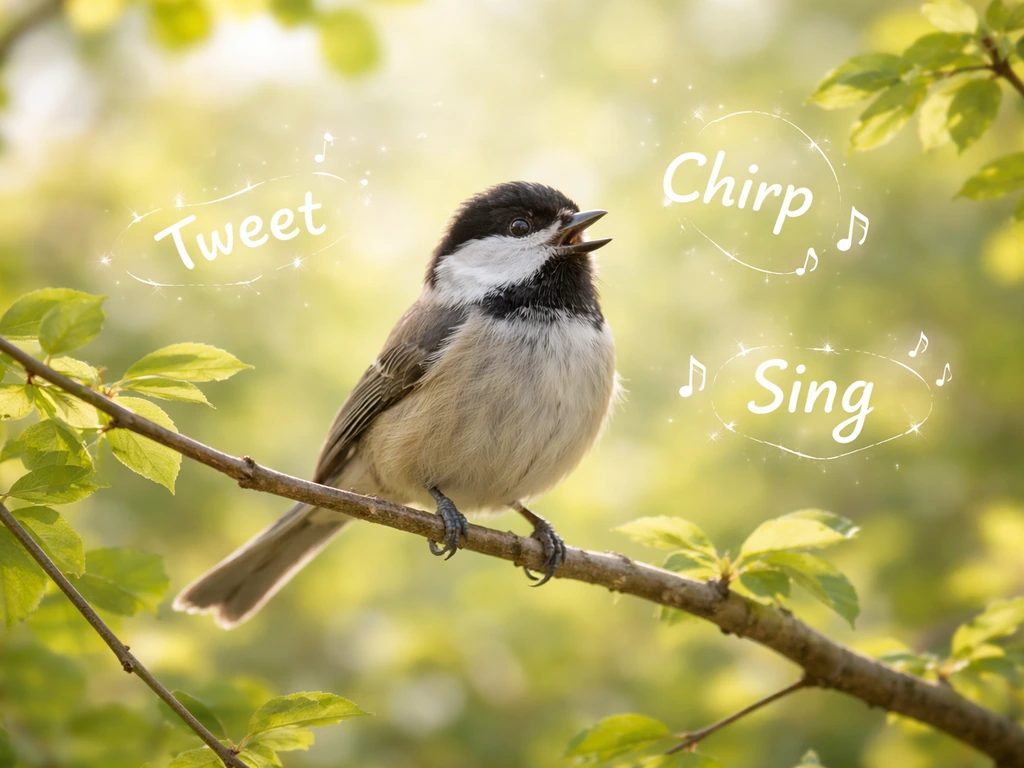
Common bird-call spellings in English
Merriam-Webster's bird-sounds wordlist treats chirp, whistle, hoot, and tweet as the core English bird-sound words. That is a reasonable shortlist for everyday writing. Here are the spellings you will actually encounter in dictionaries, field guides, and everyday text, along with which birds they belong to and how each word is pronounced.
| Spelling | Typical bird(s) | Pronunciation (informal) | IPA |
|---|---|---|---|
| chirp | Sparrows, finches, crickets | CHERP | /tʃɜːrp/ |
| tweet | Songbirds (general) | TWEET | /twiːt/ |
| cheep | Chicks, small sparrows | CHEEP | /tʃiːp/ |
| peep | Chicks, shorebirds | PEEP | /piːp/ |
| caw | Crows, rooks, ravens | KAW | /kɔː/ |
| hoot | Owls | HOOT | /huːt/ |
| cuckoo | Cuckoos | KUK-oo (UK), KOO-koo (US) | /ˈkʊk.uː/ or /ˈkuː.kuː/ |
| warble | Warblers, thrushes | WOR-bul | /ˈwɔːr.bəl/ |
| trill | Canaries, wrens, some frogs | TRIL | /trɪl/ |
| screech | Screech owls, hawks | SKREECH | /skriːtʃ/ |
Oxford Learner's Dictionaries defines chirp as "a short high sound made by small birds and some insects," and Cambridge agrees, describing it as especially of a bird making a short high sound. Those definitions confirm that chirp is the right word when you want to describe a quick, bright note from a small bird. Caw, by contrast, is for rough and loud calls: both Merriam-Webster and Cambridge specifically associate it with crows and rooks. Matching the character of the sound to the right word is the first step.
Cuckoo deserves a special note. The spelling is completely stable in English, but the pronunciation shifts depending on where you are. The UK IPA is /ˈkʊk.uː/ and the US IPA is /ˈkuː.kuː/, which is why the first syllable can sound either like "cook" or "coo" depending on the speaker. In birding notes for the Black-billed Cuckoo, you will also see the call written out as "cu cu cu" or "cucucu" to capture the rhythm of the actual call rather than the word. Both spellings are in use; "cuckoo" is the dictionary form, while "cu cu cu" is a field transcription.
Why bird sounds don't have one correct spelling
Bird calls are onomatopoeia, meaning the written word tries to imitate a real sound. The problem is that human ears interpret the same sound differently depending on their native language, regional accent, and what sound patterns their brain already knows. There is no acoustic alphabet that maps a chirp to a single universally agreed string of letters, so every culture builds its own approximation.
Even within English, the same call can produce multiple spellings. Wikipedia's cross-linguistic onomatopoeia data lists chirp, tweet, cheep, and peep as all being used in English for small-bird sounds. That is not sloppiness; those words genuinely describe slightly different pitches and lengths of call. Chirp and cheep overlap a lot, but cheep tends to suggest a thinner, softer sound (think baby chick) while chirp implies a crisper note. When you are writing informally and just want a bird sound, any of those spellings is defensible. When precision matters, the character of the sound guides your choice.
There is also a purely phonological reason for variation. the vowel sound of bird in English (the stressed /ɜːr/ sound in words like "bird," "chirp," and "twitter") does not exist in many other languages, so non-English speakers transcribe the same call with completely different vowels. That is why what English speakers write as "tweet" becomes something like "tuit" or "tiuit" in Spanish-language bird guides.
How to match a bird's call to the right onomatopoeia
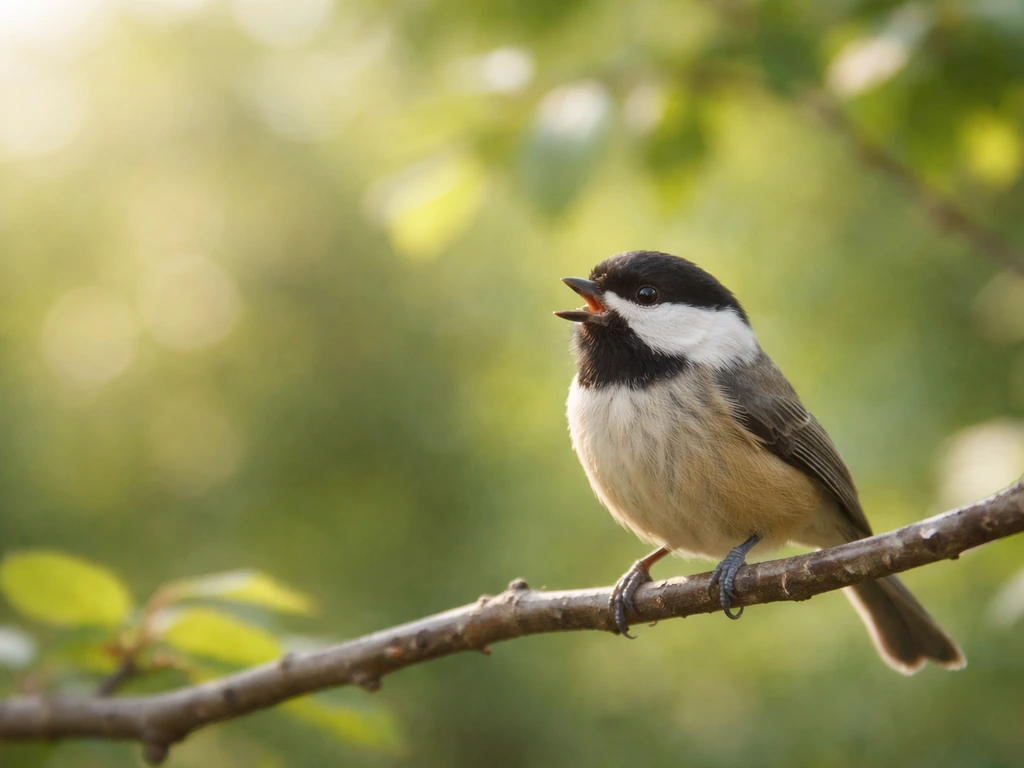
The practical method is to break the call into three questions: How long is it? How high is the pitch? Is it smooth or rough? Answering those three narrows your spelling options significantly.
- Short, crisp, high-pitched note from a small bird: chirp or cheep (cheep for very soft or thin sounds, chirp for sharper ones)
- Thin, high, sustained note: peep (especially for chicks or shorebirds)
- Melodic, multi-note phrase: song, warble, or trill
- Loud, harsh, flat note from a large corvid (crow, raven, rook): caw
- Low, resonant call from an owl: hoot
- Two-note repeating call from a cuckoo: cuckoo (or cu-coo)
- High, clear, single note: tweet or whistle
USDA birding glossaries use multi-word sound strings like "chuck, chip, chink" alongside chirp to show that birdwatchers have always used a cluster of related spellings for related calls. If you are writing for a field guide or a crossword clue, matching the exact phonetic character of the call matters more than picking the most popular spelling. If you just need a casual representation of a bird noise in a text message or a story, go with chirp or tweet and you will be understood immediately.
For birds that are harder to categorize, it helps to know the species first. Knowing how to pronounce vireo bird names, for example, is useful context when you are trying to match a high, thin vireo call to its written form, because the species name itself often signals the call type. Similarly, understanding how to pronounce quail bird names helps you connect the bobwhite's name directly to its onomatopoeic call.
Transcription differences by region and by language
Across languages, bird call spellings can look almost unrecognizable compared to their English equivalents. This is one of the most interesting quirks in bird nomenclature.
| Language | Crow call | Small-bird call | Cuckoo call |
|---|---|---|---|
| English | caw | chirp / tweet | cuckoo |
| French | croâ / croa | cui-cui | coucou |
| German | krah / krächz | piep / zwitschern | kuckuck |
| Spanish | croac / graznido | pío / gorjeo | cucú |
| Japanese | kā kā (カーカー) | chun chun (チュンチュン) | kakkō (カッコウ) |
| Finnish | kraa | piip / tsirp | käki (from the call käk) |
The cuckoo column is a good illustration of how stable the underlying call is and how differently languages still write it. German "kuckuck," French "coucou," Spanish "cucú," and English "cuckoo" are all trying to write the same two-note call, and you can hear the resemblance even across languages. The crow column is more varied because the harsh, raspy quality of a crow call is transcribed through whichever rough consonants are most available in each language's phonology.
Regional English variation is also real. Australian English uses "twit twoo" for owl calls in some contexts where British English more often uses "tu-whit tu-whoo," and American English tends to blank" rel="noopener noreferrer">simplify owl sounds to just "hoot." None of these is wrong; they reflect different regional transcription habits. If you are writing for an international audience, the dictionary spellings (hoot, caw, chirp) are safest because they are broadly understood. Birds of prey in particular attract a wide range of call transcriptions because their screams and screeches are hard to capture with standard vowels.
Quick pronunciation tips for spelling bird sounds out loud

Reading bird-sound words back out loud is its own skill, especially when the words appear in field guides with phonetic spellings rather than standard dictionary entries. Here are the key pronunciation points to keep in mind.
- Chirp: the "ir" is the /ɜːr/ sound as in "her" or "stir," not a short i. Say it crisply: CHERP.
- Tweet: rhymes exactly with "sweet." The double-e is a long /iː/ sound.
- Caw: rhymes with "saw" and "law." The vowel is an open /ɔː/. Do not pronounce the w.
- Hoot: rhymes with "boot" and "loot." Long /uː/ vowel.
- Cuckoo: the UK version has a short "cook" sound in the first syllable (/kʊk/), the US version has a long "coo" sound (/kuː/). Both are correct.
- Cheep: rhymes with "sleep." It is NOT the same vowel as "chip" — make it a long /iː/.
- Warble: stress the first syllable: WOR-bul. The second syllable is a schwa.
If you are trying to reproduce a bird sound phonetically for a field guide, puzzle answer, or just curious about syllable count, it helps to break the word down. How many syllables are in bird is actually a useful jumping-off point here, because understanding that "bird" itself is one syllable with a vowel-r combination helps you decode the transcription conventions used in bird call spellings like chirp, twitter, and warble.
For specific birds that are commonly mispronounced, working through their call names is even more valuable. For instance, knowing how to pronounce ibis correctly (EYE-bis, not IH-bis) gives you a better feel for why the ibis call, often written as a honking or grunting grunt, sounds so different from its elegant name. And how to pronounce dove bird names feeds directly into understanding how "coo" (the dove's call) is spelled and sounded: DOVE rhymes with "love," but its call "coo" rhymes with "blue" and "true." That vowel mismatch trips people up.
How to verify the right spelling today
Here is a practical workflow you can run in about five minutes when you hear a bird call and want to know the correct English spelling for it.
- Identify the bird if you can. Even a rough identification ("some kind of owl," "a small sparrow-type bird," "definitely a crow") narrows your spelling options dramatically. Use a bird ID app like Merlin or Cornell Lab's website if needed.
- Search the bird's name plus "call" or "sound" on Merriam-Webster or Cambridge Dictionary. For common species, both dictionaries list the onomatopoeic term in the definition (e.g., caw for crows, hoot for owls).
- Check Cornell Lab's All About Birds. Each species page includes a written description of the call and links to audio recordings. Compare what you heard to the written description and audio to confirm the match.
- For unusual or foreign-species calls, try the Xeno-canto database. It has crowd-sourced audio recordings for thousands of species and includes transcription notes. Search the species, listen to recordings, and note how contributors describe the call in text.
- Cross-check your spelling against at least one dictionary entry to confirm it is a standard English word, not just a personal phonetic guess. For chirp, caw, hoot, tweet, and cuckoo, Merriam-Webster has full entries. For more obscure spellings, check that they appear in a published field guide or birding glossary.
- If you are writing for a specific audience (crossword, field guide, children's book), match the register. Crosswords almost always use the single-word dictionary spelling. Field guides may use phonetic strings like "cu-cu-cu." Children's books prefer monosyllabic, punchy spellings like "tweet" over "warble."
That workflow handles about 95% of real-world bird-sound spelling questions. The edge cases are calls that genuinely have no standard English spelling, usually from rare species or from very unusual call types (alarm rattles, mechanical-sounding drumming). In those cases, use a phonetic description in plain language ("a rapid, descending rattle") rather than inventing a new onomatopoeic spelling, which risks confusing readers.
One final tip: if you are working on bird-related language in a non-English context, or comparing how a call is spelled across languages, start with the cross-linguistic onomatopoeia data on Wikipedia as a quick orientation table, then verify each language's version against a native-language dictionary. The English spellings are the most standardized, but even English has regional variants, so the dictionary check is always worth doing.
FAQ
If I cannot identify the bird species, what is the safest way to spell the call in English?
Use dictionary-form, widely recognized spellings like chirp, tweet, caw, hoot, and warble. If the sound does not clearly fit one of those, describe it in plain terms (for example, “a slow descending rattle”) instead of inventing an onomatopoeia that may not be understood.
Should I match the exact number of syllables when spelling bird sounds (for example, cuckoo vs “cu cu cu”)?
Match syllable rhythm only when the source you are writing for expects transcription style, such as field notes or puzzles. For general prose, the single standard spelling (cuckoo, hoot) is usually clearer and reads more naturally than a syllable-stretched version.
Are spellings like cheep, cheep-cheep, or peep all correct, or am I getting them wrong?
They can all be correct, depending on pitch and length. cheep often suggests a thinner, softer, shorter note, while peep is commonly heard as a sharper, smaller “peep” sound. If you repeat it, keep the repetition consistent with what you actually heard (single note vs repeated peeping).
What if the call sounds “high and thin,” but none of the common words fit?
First use the three-part filter from the article, length (short vs long), pitch (high vs low), and quality (smooth vs rough). If you still cannot map it, switch to a qualitative description like “a quick, squeaky call” rather than forcing chirp/tweet/cheep when the sound quality differs.
How do I spell owl calls correctly when different regions use different strings?
If you need one version for an international audience, pick hoot for general American usage, and caw or chirp only if they truly match. Otherwise, follow the regional convention you are targeting, such as “twit twoo” versus “tu-whit tu-whoo,” since each reflects that region’s transcription habit.
Do I capitalize bird-sound words like I would for bird names?
In most writing, no. Treat them like ordinary sound-effect words inside a sentence. Capitalization only makes sense in special contexts like titles or graphic text sound effects where style guidelines matter.
When writing for a crossword puzzle or a field guide, is it better to guess or to verify?
Verify. For clue-like precision, use species-specific resources or at least a dictionary-style form, then compare with what the call actually does (rough vs smooth, rising vs falling). A mismatched spelling can waste an otherwise correct answer.
Why do people argue about the spelling of the same bird call (like tweet vs chirp)?
Because onomatopoeia is interpretive, listeners from different accents and languages often hear different vowel or consonant patterns in the same acoustic sound. If you need consistency, stick to one transcription convention for your whole piece rather than mixing styles across paragraphs.
What should I write if the bird sound is mechanical-sounding, like drumming or an alarm rattle?
Avoid inventing a new onomatopoeic word. Use a plain-language phonetic description such as “rapid drumming” or “a descending rattle,” and include a frequency cue if you heard bursts (for example, “short bursts of rattling”).
How can I tell whether I should use a single sound word or a multi-part string?
If the call is clearly patterned into repeated beats or multiple notes, use a multi-part string that reflects that rhythm (for example, repeating units for rhythmic calls). If it is a single note or a smooth sustained call, a single standard word (tweet, hoot, warble) is usually the better fit.
Next Article
How to Pronounce Ibis Bird in English: IPA Guide
Learn how to pronounce ibis bird in English with IPA, syllable breakdown, stress tips, and common mistakes to avoid.