Bird is spelled B-I-R-D. That's it: four letters, no silent letters, no tricky doubles. Merriam-Webster lists it exactly that way, and every major English dictionary agrees. There are no alternative standard spellings in modern English, so if you typed "bird" and it matches those four letters in that order, you've got it right.
How Do You Spell Bird Exactly? Spelling, Pronunciation

James Ridgley
23 Mar 2026
Common misspellings and how to catch them fast
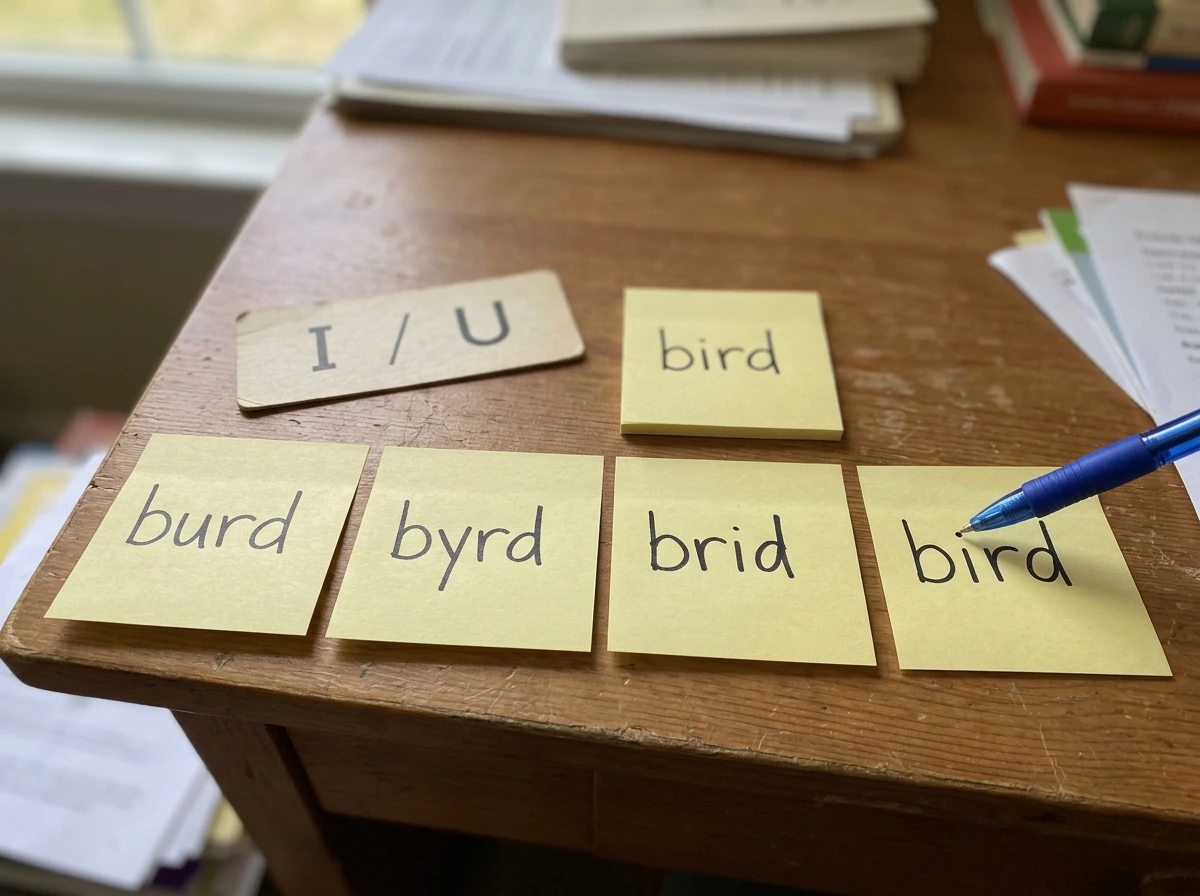
The most common misspelling is "burd", swapping the I and U to match how the word sounds to some ears. Research on recurring spelling errors has actually flagged the bird-to-burd substitution as a documented pattern. Merriam-Webster also notes "byrd" and "burd" as sound-alike forms that trip people up. The old dialectal variant "brid" (more on that in the etymology section below) occasionally shows up too, though that one is mostly a historical curiosity rather than a current mistake.
The quickest self-check: remember the vowel is I, not U. If you can remember the word "sir" or "stir," the same I-R pattern applies to "bird." You can also just type it into any browser search bar or a free dictionary site like Merriam-Webster and confirm the headword instantly. Spellcheck will flag "burd" and "byrd" (unless you're writing about the explorer) right away.
- burd — the most frequent error; replace U with I
- byrd — a surname, not the animal word
- brid — a historical Old English form, not correct in modern writing
- birdd or brird — typos from finger-slip; just count the letters: four
How to pronounce it and why the spelling makes sense
In standard American English, "bird" is pronounced roughly as "burd" (rhymes with "heard" and "word"), which is exactly why people reach for the U when spelling it. Cambridge Dictionary provides the learner-friendly pronunciation and IPA-based respelling for “bird,” including commonly cited UK English variants blank" rel="noopener noreferrer">pronounced roughly as "burd". The vowel sound is what linguists write as /ɜr/ or, in full IPA, /bɜɹd/ for American English. British Received Pronunciation uses /bɜːd/, where the R is less pronounced but the core vowel is the same stretched "er" sound.
The key thing to internalize: the sound is /ɜr/ but the spelling is IR, not UR. The same pattern shows up in "girl," "first," and "sir." English is full of words where IR, UR, and ER all produce the same vowel sound, so it's genuinely understandable to second-guess yourself. Just anchor to B-I-R-D and you're set. The spelling has been standardized for centuries and isn't going to change.
Using "bird" in everyday phrases and contexts
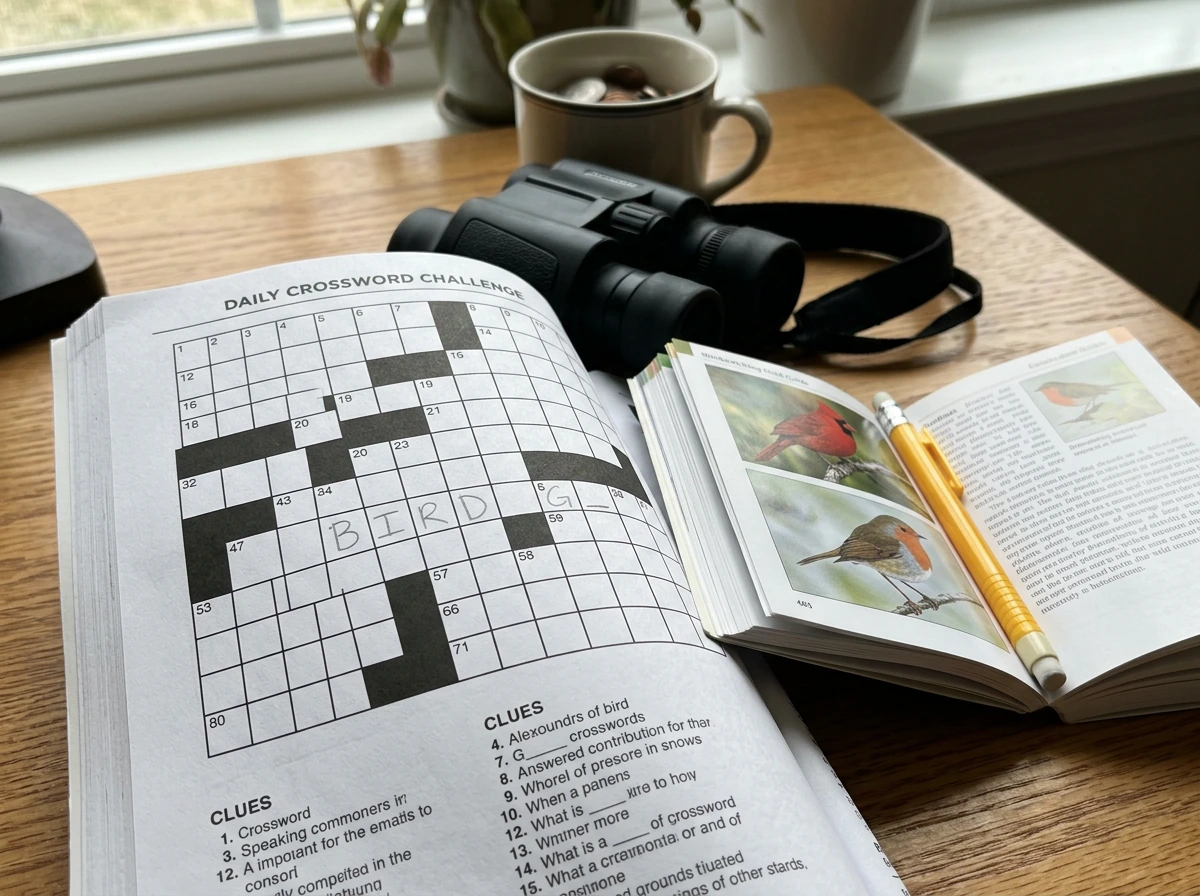
Whether you're writing about birdwatching, naming a pet, filling in a crossword, or describing something in a field guide, the base spelling stays locked as "bird." It doesn't shift internally no matter what you attach to it. The plural is simply "birds" (add an S). The activity form is "birding." Compound words and phrases keep "bird" whole: bird feeder, bird song, bird of paradise, bird name, birdwatcher. Nothing tricky there.
For pet owners naming a parrot, parakeet, or canary: you'll often want to combine "bird" with a descriptor in writing ("my pet bird," "a talking bird") and the spelling never changes. If you're hunting through crossword clues, "bird" as a four-letter answer fits cleanly: B, I, R, D across four squares. Word puzzle enthusiasts sometimes also encounter specific bird names in clues (like pigeon, <span>cuckoo</span>, or toucan) where the spelling gets trickier, but the generic word "bird" itself is one of the more reliable four-letter entries you'll come across.
Where the word "bird" actually comes from
This is the part that explains a lot of the spelling confusion. The Old English word was "bridd," and it originally meant specifically a young bird or nestling, not birds in general. Through Middle English, the spelling shifted between "brid" and "bird" before the modern form settled as "bird." So the historical variant "brid" (letters flipped from the modern order) was actually the earlier spelling, not a mistake. Over time, the language standardized around B-I-R-D, and that's been the fixed form ever since. The I-R-D sequence you see today is the result of several hundred years of gradual standardization, which is why it's so stable now.
How "bird" looks in other languages
If you're working across languages, say for a multilingual bird guide, a translation project, or just curiosity about how the concept maps elsewhere, the word for "bird" looks very different from language to language. There's no universal spelling pattern here the way there sometimes is with scientific Latin names in ornithology. Here's a quick reference for some of the most common languages:
| Language | Word for Bird | Notes |
|---|---|---|
| English | bird | B-I-R-D; plural: birds |
| French | oiseau | Pronounced roughly oh-ZOH; plural: oiseaux |
| Spanish | ave / pájaro | Ave is more formal/scientific; pájaro is everyday speech |
| German | Vogel | Pronounced FOH-gel; plural: Vögel (with umlaut) |
| Latin (scientific) | avis | Root of words like avian, aviation, aviary |
The Latin root "avis" is worth noting because it's the basis for a lot of English bird-related vocabulary: avian, aviary, avifauna. If you ever see those words and wonder why they don't contain "bird" at all, that's why. Scientific ornithology draws heavily on Latin and Greek rather than the Germanic Old English that gave us the everyday word "bird." For readers curious about how specific bird names translate across languages, related guides on this site cover individual species like pigeon, cuckoo, toucan, and phoenix with their own spelling and pronunciation breakdowns.
Your quick-reference checklist
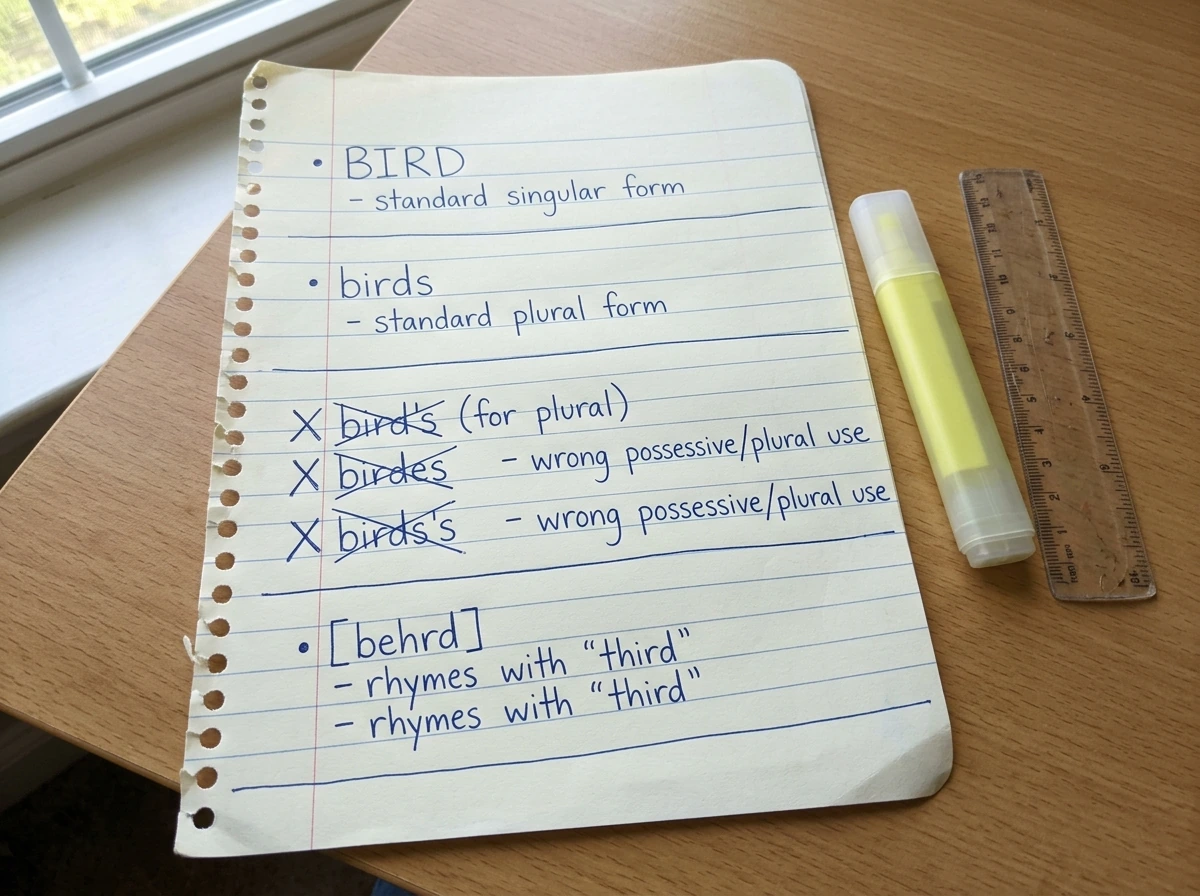
- Correct spelling: B-I-R-D (four letters, vowel is I not U)
- Plural: birds (just add S, no internal changes)
- Common wrong versions to avoid: burd, byrd, brid
- Pronunciation: rhymes with "heard" and "word" — /bɜɹd/ in American English
- Compounds keep the spelling intact: birdwatcher, bird feeder, bird song
- Verify anytime at Merriam-Webster or any major dictionary by searching the headword
Bottom line: if spelling "bird" has ever tripped you up, you're not alone, the vowel sound genuinely maps to U in the ear but to I on the page. Now that you know the history behind it and have a clear anchor (think "sir," "stir," "girl"), it should stick. Type it as B-I-R-D every time and you'll never second-guess it again.
FAQ
Is there any alternative standard spelling for bird in modern English (like “brid” or “byrd”)?
No. The only current standard spelling is B-I-R-D. Forms like “brid” are historical or dialectal, and “byrd” or “burd” typically appear as names or nonstandard misspellings, depending on context.
What should I do if spellcheck keeps suggesting “burd” when I type bird?
Look at the replacement options carefully. If your intent is the animal, choose “bird” and add it to your dictionary if offered. If spellcheck repeatedly suggests a replacement, check whether you have a custom dictionary entry or language setting that’s skewing suggestions.
How do you spell bird in plural form for a form or caption (birds vs. birdes)?
Use “birds” by simply adding S to the end. There is no common alternative plural spelling like “birdes” in modern standard English.
Is “bird” still spelled the same inside longer words, like birdwatcher or birdhouse?
Yes. The base word remains intact as “bird” in compounds, including birdwatcher, birdhouse, and bird feeder. You do not swap the vowel to match how it sounds in these longer terms.
Can I ever spell bird with an apostrophe, like “bird’s” for possession?
Yes, when you need possession. For example, “the bird’s nest” takes an apostrophe after the D. It’s still spelled B-I-R-D, with the apostrophe only indicating possession.
What’s the correct spelling for a word describing the activity, is it “birding” or “birdering”?
“Birding” is the standard spelling for the activity term. “Birder” is the person, “birding” is the practice, and “birdering” is not standard.
If I am writing about multiple bird species, do I translate or capitalize it differently, like “Bird” in Bird Name lists?
In normal writing, keep it lowercase (bird, birds). Capitalize only if you’re using it at the start of a sentence or as part of a specific title or proper name, not just because it appears in a list.
How do you spell bird in US vs UK spelling rules?
The spelling does not change between US and UK English. The differences are in pronunciation (British may pronounce the R more lightly), not in letters.
What’s the most common typo to watch for when typing bird on a keyboard?
The common mistake is swapping the vowel order, typing “burd” instead of “bird” (I and U reversed). A quick fix is to recall the internal pattern from “sir” or “girl” (I after the first letter, then R).
When would “byrd” be correct instead of “bird”?
“Byrd” can be correct as a proper noun, such as a person’s surname or a specific title. If you mean the animal, you almost always want “bird,” not “byrd”.
Next Article
How Do You Spell Toucan the Bird? Correct Spelling and Pronunciation
Correct spelling toucan and simple phonetic pronunciation to say it right and avoid common letter-order mistakes.