If you've landed here because you saw 'S is for bird' on a worksheet, puzzle, or alphabet activity, the most common answers are Sparrow, Swallow, and Swan. Those three cover the vast majority of letter-S bird clues you'll encounter. If you need a full list of English bird names starting with S, correct spellings and pronunciations, and a quick look at where those names come from scientifically, you're in the right place.
S Is for Bird: Common Birds Starting With S

James Ridgley
20 May 2026
What 'S is for bird' actually means (and why it's a bit ambiguous)
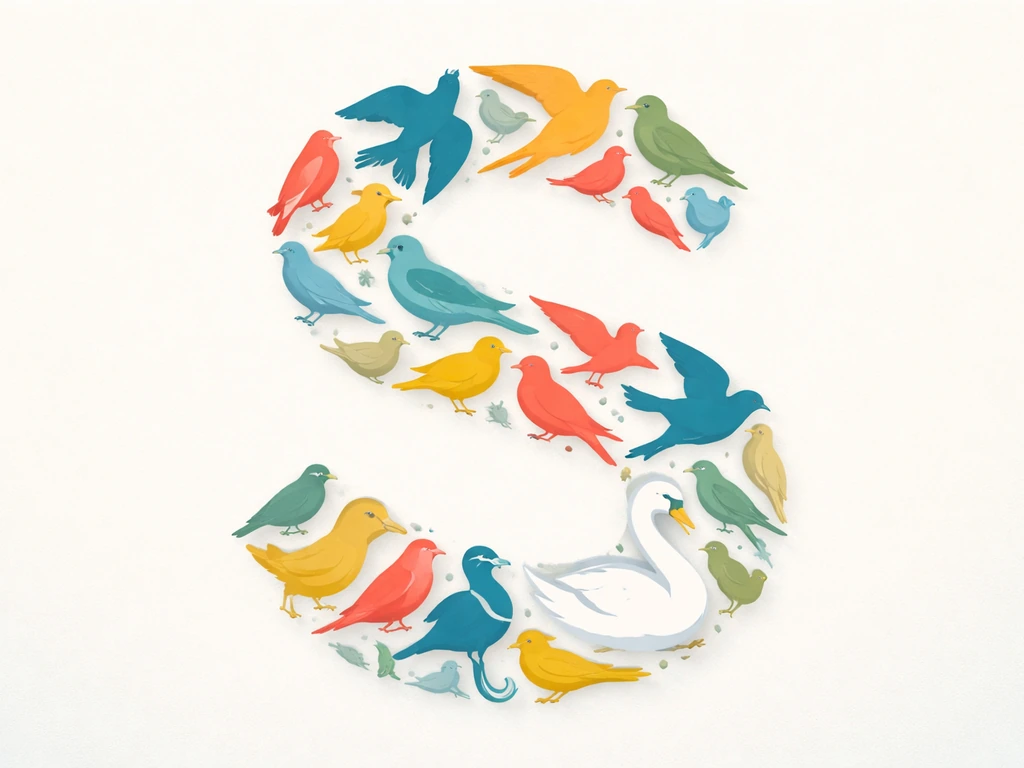
The phrase 'S is for bird' shows up in two main contexts. The first is alphabet learning materials aimed at children, where a letter is paired with a word that starts with that letter's sound. You've probably seen pages that read 'S is for Swan' or 'S is for Sparrow,' sometimes complete with a craft or sound drill like '/s/–/s/–swan.' The second context is word puzzles, crosswords, and birding worksheets where a clue asks for a bird whose name begins with a specific letter.
Either way, the core question is the same: which bird names start with S? The answer isn't a single species. There are dozens of English bird names that begin with S, so the useful approach is to know the most common ones cold, understand how they're spelled and pronounced, and then know where to look if you need something more specific. (If you're also curious about other letter-to-bird pairings, the same logic applies to B is for bird, and there's a companion piece on that topic worth checking out.)
Bird names that start with S: the most useful list
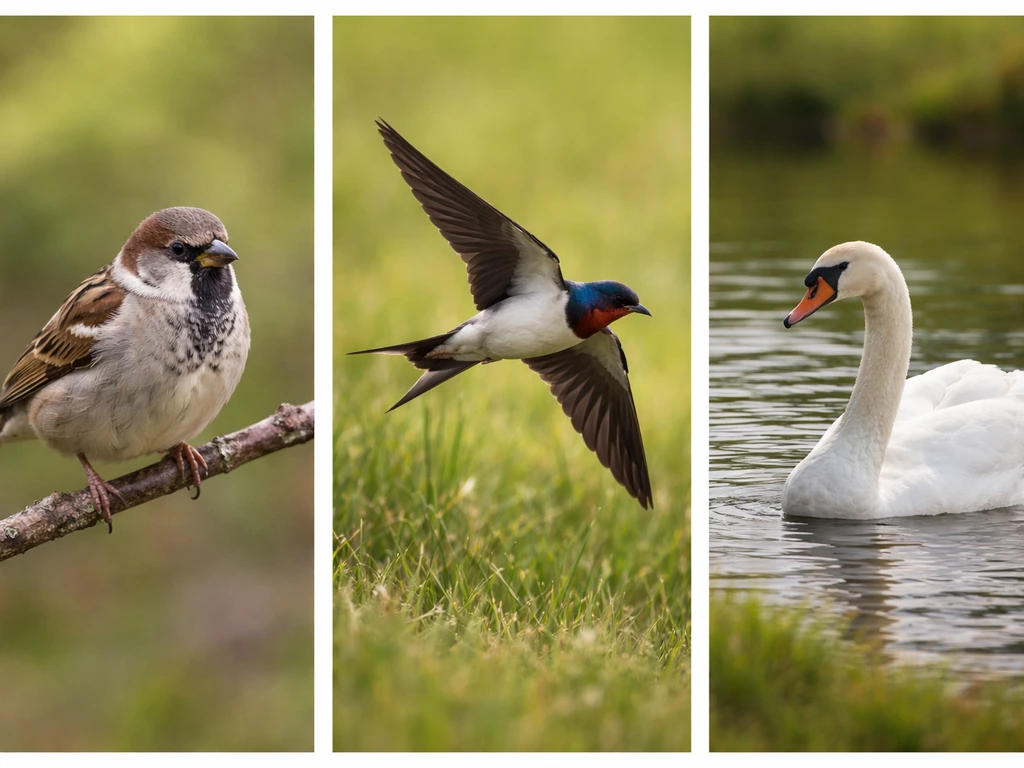
Below are the most widely recognized English bird names that begin with S. These are the names you'll encounter in field guides, worksheets, pet stores, and everyday conversation. I've kept this focused on common, unambiguous examples rather than burying you in rare regional species.
| Common Name | Type / Notes | Found In |
|---|---|---|
| Sparrow | Small seed-eating songbird; many species (House Sparrow, Song Sparrow, etc.) | Worldwide; very common in North America and Europe |
| Swallow | Small, fast-flying insectivore; long pointed wings | Worldwide; Barn Swallow most familiar in North America |
| Swan | Large, long-necked waterbird; white or black plumage | Worldwide; Mute Swan, Trumpeter Swan, Black Swan |
| Starling | Medium-sized, iridescent songbird; highly social | Europe, North America (introduced); European Starling |
| Stork | Large wading bird; white with black wing tips | Europe, Africa, Asia; White Stork most iconic |
| Snipe | Wading shorebird; long straight bill | Wetlands globally; Common Snipe, Wilson's Snipe |
| Sandpiper | Small to medium shorebird; probes wet sand | Coastlines and wetlands worldwide |
| Skua | Large seabird; aggressive and piratical behavior | Polar and sub-polar oceans |
| Shearwater | Seabird; long wings; glides close to water surface | Open oceans worldwide |
| Sunbird | Small nectar-feeding bird; often brilliantly colored | Africa, Asia, Australia |
| Stilt | Wading bird; extremely long pink legs | Wetlands worldwide; Black-necked Stilt in North America |
| Spoonbill | Wading bird; distinctive spatula-shaped bill | Americas, Europe, Africa, Asia; Roseate Spoonbill |
| Shoveler | Dabbling duck; wide, shovel-shaped bill | Northern Hemisphere; Northern Shoveler |
For children's alphabet activities, Sparrow, Swallow, and Swan are by far the most popular choices because they're simple, one-syllable or two-syllable words that young learners can say easily. For crossword clues or birding puzzles, Snipe, Skua, and Sandpiper come up frequently because they have distinctive letter patterns.
How to spell and pronounce these S-bird names
Spelling and pronunciation trip people up more often than you'd expect, especially with less familiar species. Here's a practical guide for the key ones.
The three most common S-birds: Sparrow, Swallow, Swan
| Name | Correct Spelling | Pronunciation (Phonetic) | IPA | Common Mistake |
|---|---|---|---|---|
| Sparrow | S-P-A-R-R-O-W | SPARR-oh | /ˈspær.oʊ/ | Spelling as 'sparo' or 'sparow' (missing the double R) |
| Swallow | S-W-A-L-L-O-W | SWOL-oh | /ˈswɒl.oʊ/ (UK) / /ˈswɑː.loʊ/ (US) | Pronouncing it to rhyme with 'shallow' (the first syllable vowel differs slightly by dialect) |
| Swan | S-W-A-N | SWON | /swɒn/ (UK) / /swɑːn/ (US) | Spelling as 'swann' or 'swaun' |
Swallow is the one that causes the most pronunciation confusion. For the standard pronunciation entry and definition of “swallow” as a small bird, see Merriam-Webster’s dictionary Swallow is the one that causes the most pronunciation confusion. In British English the first syllable sounds like 'swol' (rhyming with 'doll'), while in American English it shifts toward 'swah.' Both are correct for their respective dialects. The double-L in the spelling is a reliable clue that the vowel is short.
A few trickier names
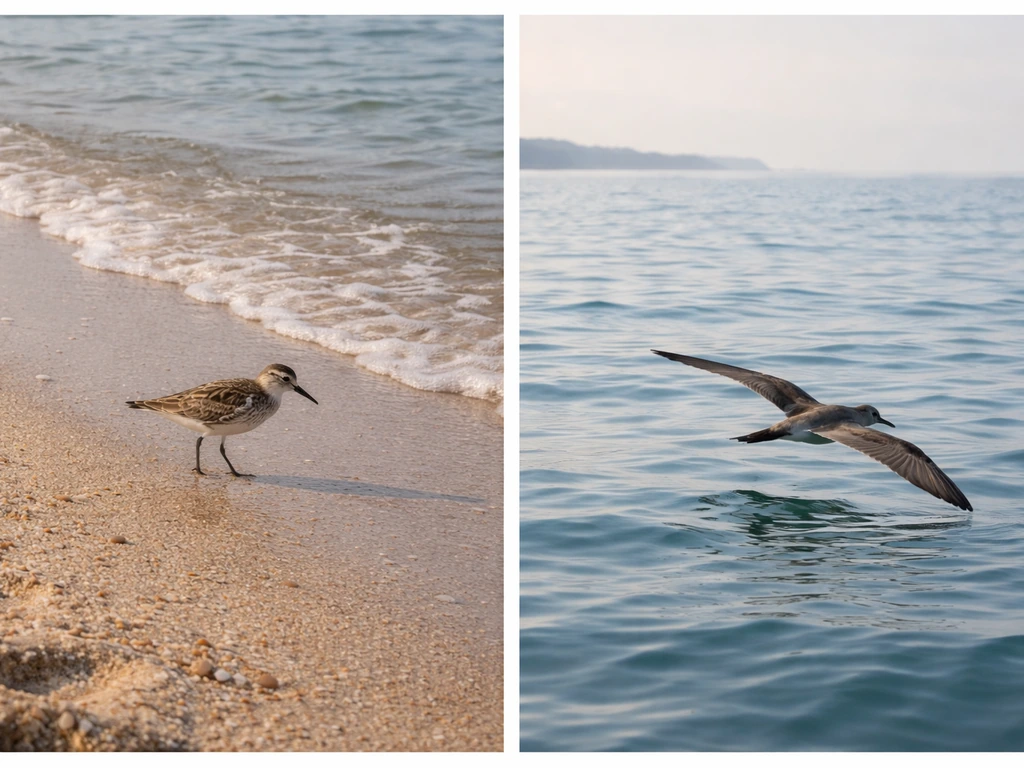
- Sandpiper: SAND-py-per (/ˈsænd.paɪ.pər/). Spelled exactly as it sounds. People occasionally write 'sandpipier' as a typo.
- Shearwater: SHEER-waw-ter (/ˈʃɪər.wɔː.tər/). Two words fused into one. The 'shear' part refers to how the bird shears the water surface with its wingtips.
- Spoonbill: SPOON-bil (/ˈspuːn.bɪl/). Straightforward compound word; occasionally misspelled as 'spoonbill' with an extra L at the end.
- Skua: SKYOO-uh (/ˈskjuː.ə/). The unusual vowel combination trips people up. It's not 'SKOO-ah'; the 'u' is a long 'yoo' sound.
- Snipe: SNYP (/snaɪp/). Simple and phonetically regular, but worth noting that 'sniper' in the military sense literally derives from how hard it is to shoot this bird.
Scientific names: what the Latin tells you about S-birds
Every bird species has a two-part scientific name called a binomen: the first part is the genus (always capitalized) and the second part is the specific epithet (lowercase). Both parts are italicized in formal writing. This system comes from the International Code of Zoological Nomenclature (ICZN), and it means that no matter what language you speak or what common name you use, the scientific name is the same worldwide.
One thing that confuses people is why the ending of the species epithet sometimes changes depending on the genus. That's Latin grammar at work: adjectival epithets must agree in grammatical gender with the genus name. So if the genus is feminine, a Latin adjective in the epithet takes a feminine ending. This is purely a naming convention and doesn't change the species' identity.
| Common Name | Scientific Name | Genus Meaning | Epithet Meaning |
|---|---|---|---|
| Song Sparrow | Melospiza melodia | Melos (song) + spiza (finch) | melodia: melody, musical |
| Barn Swallow | Hirundo rustica | Hirundo: swallow (Latin) | rustica: of the countryside, rural |
| Mute Swan | Cygnus olor | Cygnus: swan (Latin/Greek) | olor: swan (Latin, redundant intensifier) |
| European Starling | Sturnus vulgaris | Sturnus: starling (Latin) | vulgaris: common, widespread |
| White Stork | Ciconia ciconia | Ciconia: stork (Latin) | ciconia: stork (tautonym, same word repeated) |
| Roseate Spoonbill | Platalea ajaja | Platalea: spoonbill (Latin, 'flat') | ajaja: from a Tupi indigenous name |
| Northern Shoveler | Spatula clypeata | Spatula: spatula, spoon shape | clypeata: shield-bearing, armed |
| Black-necked Stilt | Himantopus mexicanus | Himantopus: strap-foot (Greek) | mexicanus: of Mexico |
The Song Sparrow is a particularly nice example for worksheets because its genus Melospiza breaks down into the Greek roots 'melos' (song) and 'spiza' (finch), which perfectly describes the bird. Resources like Cornell Lab's All About Birds and eBird both list 'Melospiza melodia' as the scientific name, so if you're cross-checking for a puzzle or project, either source will confirm it.
Where S-bird names actually come from
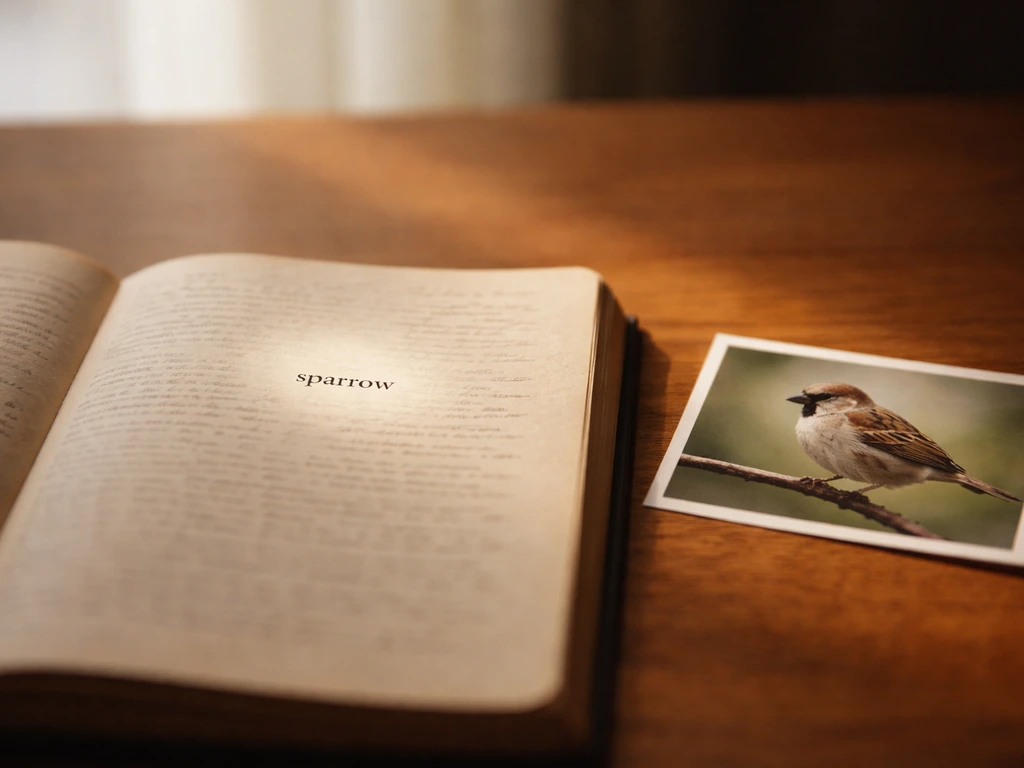
Etymology is one of the most satisfying parts of bird naming, because the stories behind common words are usually hiding in plain sight.
Sparrow
The word 'sparrow' is Old English in origin, from 'spearwa,' and traces back to Proto-Germanic roots. It's one of the oldest bird names in the English language, appearing in texts going back over a thousand years. Merriam-Webster notes that it refers to any of several small seed-eating songbirds, which is why 'sparrow' functions almost as a category name in English rather than pointing to a single species. That's also why you'll see it qualified constantly: House Sparrow, Song Sparrow, Chipping Sparrow, and so on.
Swallow
The bird-word 'swallow' comes from Old English 'swealwe,' again Proto-Germanic in root, and is completely unrelated to the swallow meaning 'to ingest.' The two English words just happen to be spelled and pronounced the same way. The bird's name likely has onomatopoeic or descriptive origins related to its swift, swooping flight.
Swan
Swan comes from Old English 'swan' and Proto-Germanic 'swanaz,' which is thought to be connected to a root meaning 'to sound' or 'to sing,' possibly referencing the whooping calls of wild swans like the Whooper Swan or Trumpeter Swan. The Mute Swan (the common European species) is ironically named for being quieter than its relatives, though it isn't completely silent.
Snipe
Snipe comes from Old Norse 'snipa,' a name that spread through Scandinavian and Germanic languages. Because snipe are notoriously difficult to hunt due to their erratic zigzag flight when flushed, a skilled marksman who could pick one off became known as a 'sniper.' The military term is directly borrowed from the bird.
Skua
Skua comes from the Faroese word 'skúgvur,' referring to the Great Skua. The Faroe Islands, sitting in the North Atlantic, were historically central to early European awareness of these aggressive seabirds. The word passed into English via Scandinavian and Dutch seafaring vocabulary.
Using this for puzzles, worksheets, and pet names
Solving alphabet clues and worksheets
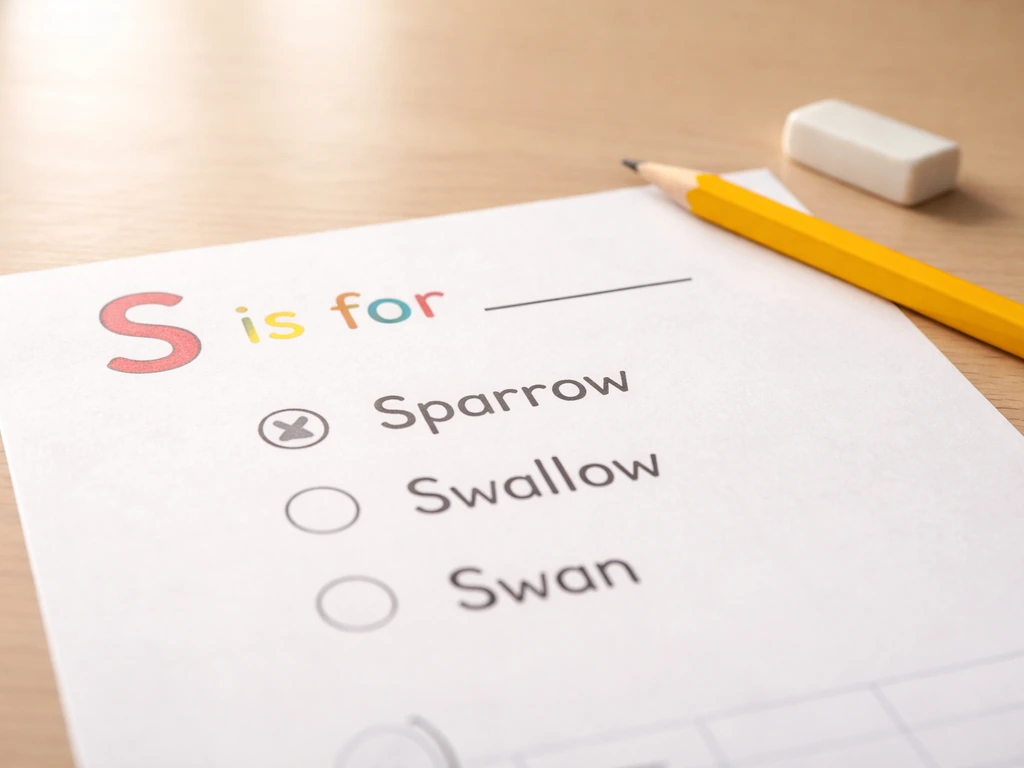
If your worksheet or puzzle says 'S is for _' and expects a single bird name, the answer is almost always Sparrow, Swallow, or Swan. Swan is especially common in early-childhood alphabet books because it's a single syllable, iconic in appearance, and the long neck makes it visually distinctive on a flashcard. For phonics-focused materials that drill the '/s/' sound, 'S is for Swan' appears frequently because 'sw-' is a common consonant blend taught early.
For more advanced puzzles or birding-specific worksheets where you need to match a common name to a scientific name, start with eBird's Explore Species tool or Cornell Lab's All About Birds. Both let you type in either the common name or the scientific name and immediately see the cross-reference. eBird is particularly useful because it maintains consistent English name sets aligned with major taxonomic checklists, which means you'll get the 'official' common name rather than a regional nickname.
Choosing an S-bird name for a pet
If you're naming a pet bird and want an S-themed name inspired by real species, here are the practical considerations:
- Ease of pronunciation matters daily: Short names like Swan or Sparrow are easier to call out repeatedly than Shearwater or Sandpiper.
- Consider your bird's personality or appearance: A graceful white cockatoo named Swan makes intuitive sense; a small, brown, busy bird named Sparrow is similarly fitting.
- Swallow works well for a fast, agile bird like a parakeet or a swift-moving small parrot.
- If you want something less common, Skye (inspired by Skua) or Starla (inspired by Starling) let you nod to the S-bird theme without using the full species name.
- Check that the name isn't easily confused with a command your bird already knows. 'Sunny' might be confused with 'come' sounds depending on how you train; 'Swan' is clear and distinct.
Where to look if you need more S-birds
If none of the birds in this article match what you're looking for, three resources will get you there quickly. eBird's species search lets you browse by region and filter alphabetically. Cornell Lab's All About Birds has a searchable North American guide with photos, sounds, and range maps. For global species including less common names, iNaturalist's bird taxonomy pages list common names alongside scientific names for thousands of species, and you can search by any part of a name. Between those three, you'll find any S-bird that exists.
One last thing worth knowing: the question of what a letter 'stands for' in bird naming goes deeper than alphabet charts. In this article, you can think of “S is for bird” as shorthand for the letter S paired with a bird name, such as Sparrow, Swallow, or Swan. If you're curious about how letters appear in formal bird codes, abbreviations, or banding systems, that connects to a broader topic around what letters represent in birding shorthand.
If you’re wondering what letter a European bird is, the answer depends on the specific bird and the code or naming system you’re using. And if you're interested in how other letters map to bird names (the way B maps to birds like Bunting, Bluebird, or Blue Jay), the same lookup approach works consistently across the alphabet.
FAQ
What should I do if my worksheet wants one specific answer but multiple S birds seem to fit (for example, Sparrow and Swallow)?
Check whether the clue includes extra constraints like length (number of letters), a category hint (shorebird, seabird, songbird), or a spelling feature (double L, double N). If none are given, standard alphabet sheets usually expect Sparrow, Swallow, or Swan, with Swan most common in very young-child materials.
How can I tell the difference between a Swallow bird clue and the word “swallow” meaning to eat or drink?
Rely on context cues. If the clue or worksheet includes an illustration, habitat (insects, aerial), or a “bird” prompt, it’s the species. If it appears in a vocabulary or grammar exercise without bird context, it likely means ingesting.
If a crossword gives me a pattern like “S _ _ _ _ w” for an S bird, what are the most likely matches?
Use letter pattern matching against common candidates. For example, “S____w” often points toward Swallow variants, while “Snipe” is shorter and fits different patterns. If the crossword restricts to common English bird names, stick to widely used options first rather than regional species.
What spelling mistakes are most common with these S bird names?
Sparrow is frequently misspelled with one “r” or an “e” inserted by mistake. Swallow often gets the “a” vowel wrong or loses one of the “l” letters. Swan is usually safe, but it can be confused with “swam” in handwriting.
For worksheets that use sound drills, should I pronounce “S is for Swan” as “sw” or just “s”?
Most phonics sheets intend the initial blend “sw” when the word begins with “sw-”. If the activity is only practicing the /s/ sound, the worksheet usually isolates it or uses a different example. When unsure, follow the sound guide exactly as printed.
If my puzzle says “S is for bird (scientific name required),” how do I format it correctly?
Scientific names are two-part, genus plus specific epithet. The genus starts with a capital letter, the epithet is lowercase, and in formal writing they’re italicized. For Song Sparrow, the pair is Melospiza melodia, not a single-word label.
Why does the scientific name sometimes look different across sources for birds starting with S?
Common names usually stay stable, but taxonomy can be updated, which can change scientific names, punctuation, or classification placement. If a puzzle expects an “official” scientific name, use one database consistently (for example, a major birding taxonomy reference) and copy the spelling and capitalization exactly.
Is “Snipe” pronounced the same everywhere, and what should I watch for on a phonics worksheet?
Snipe is typically pronounced with an initial “sni-” sound. The key trap is dropping or altering the silent-style middle sounds in fast speech, which can lead to wrong spelling guesses. If the worksheet provides a phonetic hint, match it exactly.
What if a pet bird name list needs something S-themed, but I only want names that are clearly real species?
Prefer species that are widely recognized in bird lists, like Sparrow, Swallow, or Swan. If you go beyond those, confirm that the common name is used in reputable species checklists so you don’t end up with a nickname that sounds right but isn’t consistently treated as a distinct species name.
For “S is for bird” activities aimed at kids, is Swan always the best pick?
It’s usually the easiest because it’s short and visually distinctive, but not always. If the worksheet targets a specific theme like seabirds or shorebirds, Swan may be a mismatch even though it starts with S.
Next Article
What Does Bird Plus Letter Mean? How to Decode It
Decode bird plus letter codes: checklist, banding, puzzles, and notation. Find the legend to get the right bird name and