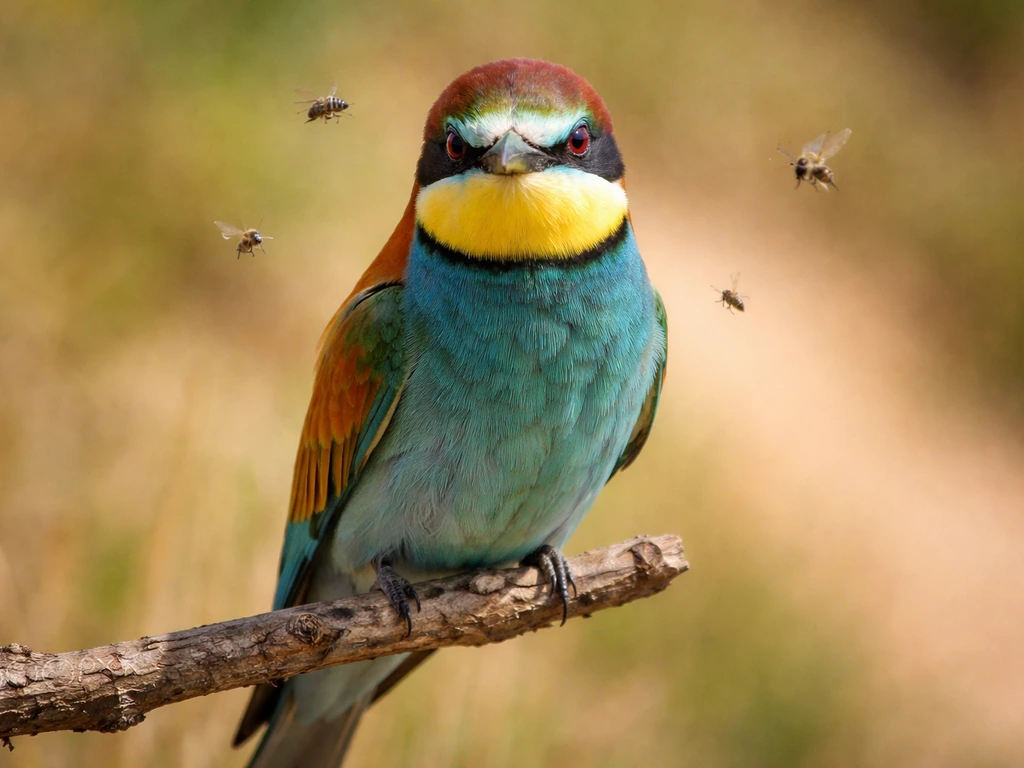
When you see a crossword clue that starts with "bird whose diet," the puzzle is almost always asking you to name a specific bird based on what it eats. The food or prey mentioned in the clue is the key: match that food to the bird most famously associated with it, check the letter count, and confirm with any crossing letters you already have. The most common answers you'll encounter are OSPREY (fish), VULTURE (carrion), KINGFISHER (fish), FLAMINGO (algae or brine shrimp), and OWL (rodents/mice), but the exact answer depends entirely on what the clue says the bird eats.
Bird Whose Diet Crossword Clue: Likely Answers and Fixes

James Ridgley
15 May 2026
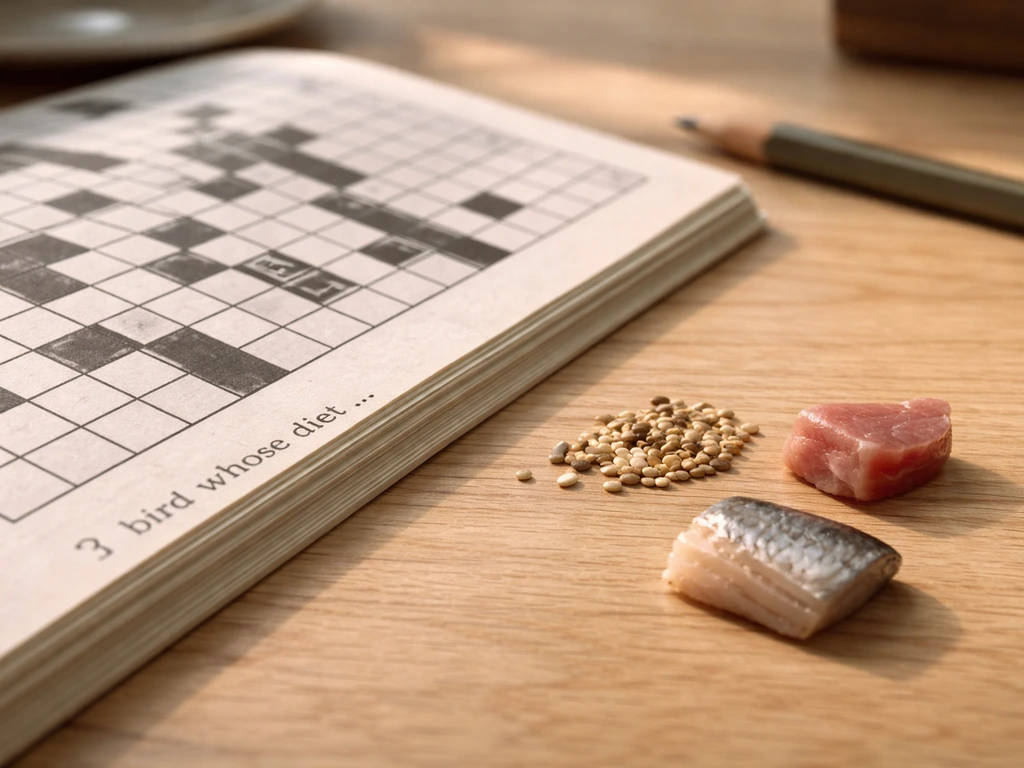
What this clue type is really asking
"Bird whose diet" clues are straightforward definition-style clues, not cryptic wordplay. The setter is describing a real biological trait of a bird and asking you to name it. There's no anagram, hidden word, or wordplay to unpack. The phrase after "bird whose diet" gives you the food source, and your job is to identify which bird fits that description and also fits the letter grid. For example, "Bird whose diet includes berries that grow on lava" points to FLAMINGO (a real NYT crossword clue from March 2025). Another documented example, "S American bird whose diet consists mainly of ants," has an 8-letter answer. Another documented example, "S American bird whose diet consists mainly of ants," also appears as a solved clue variant in crossword databases with an 8-letter answer length. So read the full clue carefully: the food detail is the whole puzzle.
The most likely crossword answers by diet

Here are the birds crossword constructors reach for most often when building diet-based clues, organized by what the bird eats. These are your first guesses before you even look at the letter count.
| Bird | Primary Diet | Letters | Why Setters Love It |
|---|---|---|---|
| OSPREY | Fish (99% of diet) | 6 | Extreme dietary specificity makes it unmistakable |
| KINGFISHER | Fish (up to 97% in some species) | 10 | Fish-diet link is almost as strong as osprey |
| VULTURE | Carrion (dead animals) | 7 | Scavenger diet is iconic and easy to clue |
| FLAMINGO | Algae, brine shrimp, crustaceans | 8 | Unusual filter-feeding diet gives setters creative room |
| OWL | Rodents, mice, small mammals | 3 | Short fill; rodent/mouse clues come up often |
| HERON | Fish, frogs, small animals | 5 | Common wading bird; fish-diet clues appear regularly |
| PAINTED BUNTING | Seeds (grass seeds), insects | 14 | Seed-diet clues sometimes target colorful finch-type birds |
| STARLING | Insects, fruit, seeds (omnivore) | 8 | Omnivore diet gives setters flexible clue options |
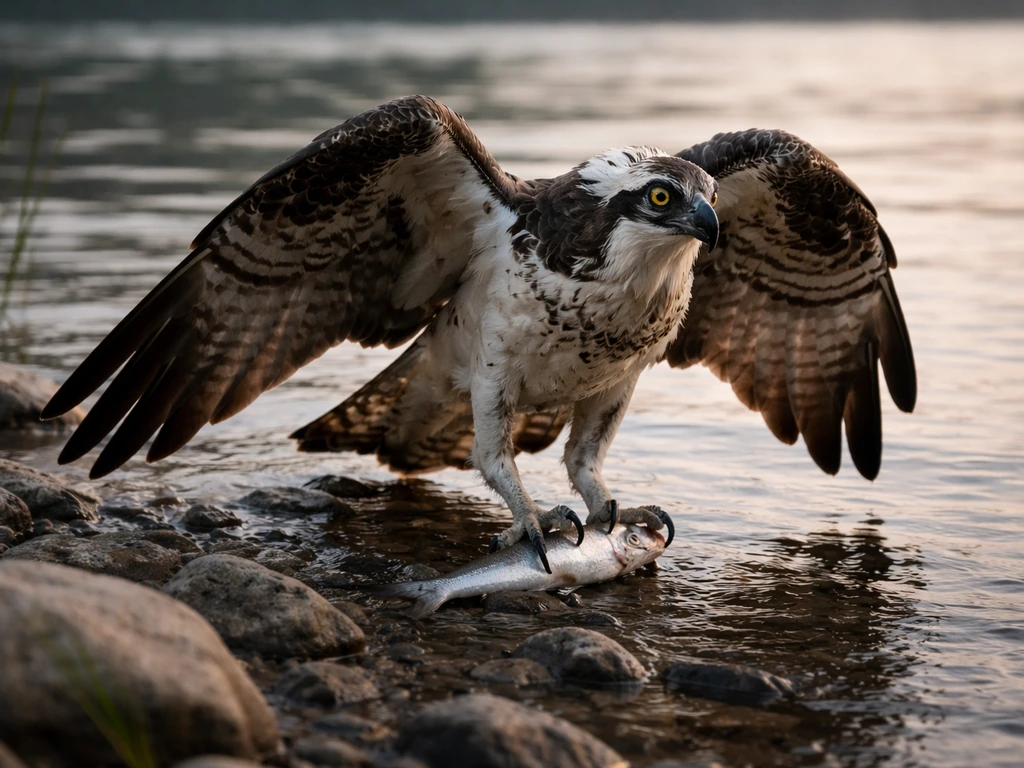
For fish-eating clues specifically, OSPREY and KINGFISHER are the two strongest candidates. Fish make up roughly 99% of an osprey's diet according to Cornell Lab of Ornithology data, and the common kingfisher shows a similar pattern (97% fish in some European studies). Vultures are the go-to answer for any clue mentioning carrion, dead animals, or scavenging. If the clue mentions rodents, mice, or small mammals, think OWL first.
How to narrow it down: letter count, pattern, and crossing letters
Once you have two or three candidate birds in mind, the letter count printed in parentheses after the clue cuts the list fast. Here's how to work through it systematically.
- Count the squares in the answer row or column. This is your first filter. If you have 6 squares and the clue mentions fish, OSPREY jumps to the front immediately.
- Check any letters you've already filled in from crossing answers. Even one confirmed letter (say, a K in position 1) can eliminate OSPREY and point you straight to KINGFISHER.
- Write out the letter pattern you have so far. Something like SRY tells you the answer is almost certainly OSPREY. A pattern like UTR_ with 7 letters points to VULTURE.
- If two birds have the same letter count (VULTURE and FLAMINGO are both 7 and 8 letters respectively), rely on the food clue to choose, then verify against crossing words.
- Backtrack deliberately if your first guess breaks a crossing answer. Erase the candidate and try the next bird on your list. Don't force a square that makes another answer impossible.
Crossing letters are the most powerful tool you have for any ambiguous diet clue. Each square in a crossword belongs to both an Across and a Down answer, so every crossing letter is a confirmed data point. Experienced solvers use crossings aggressively rather than waiting until they're stuck. Fill in a few surrounding answers first if you can, then return to the diet clue with two or three fixed letters already in the grid.
Diet-based bird identification: food to bird in plain English
If you know what the clue says the bird eats, here's a direct cheat sheet for the most common food-to-bird mappings that crossword setters actually use.
- Fish: OSPREY, KINGFISHER, HERON, PELICAN, MERGANSER (a fish-eating duck)
- Carrion / dead animals: VULTURE (Turkey Vulture for North American puzzles, Griffon Vulture for UK/European ones)
- Rodents / mice / small mammals: OWL (Great Horned Owl, Barn Owl, Screech Owl depending on letter count)
- Algae / brine shrimp / crustaceans: FLAMINGO
- Ants / termites: ANTBIRD (8 letters, South American; matches the documented 8-letter ant-diet clue)
- Nectar: HUMMINGBIRD or SUNBIRD depending on letter count and geography
- Seeds / grain: BUNTING, FINCH, SPARROW, DOVE
- Insects (broadly): SWALLOW, SWIFT, FLYCATCHER, MARTIN
- Berries / fruit: WAXWING, THRUSH, STARLING
The strongest clues in this category describe a diet that is nearly exclusive to one species or group. Fish at 99% of the diet screams osprey. Carrion almost exclusively means vulture. The more unusual the food source (lava berries, brine shrimp, leaf-cutter ants), the more the clue is pointing to something exotic and specific, so don't default to a common bird if the diet description sounds unusual.
Handling variant clue phrasing: diet, feeds on, eats
The phrase "bird whose diet" is just one way setters write this clue. You'll see the same underlying idea dressed up in different wording, and it all maps to the same solving method. Here are the most common variants and how to read them.
| Clue Phrasing | What It Means | Example Answer |
|---|---|---|
| Bird whose diet consists of fish | Identify bird by fish diet | OSPREY or KINGFISHER |
| Bird that feeds mainly on fish | Same as above | OSPREY |
| Fish-eating bird | Diet adjective + bird | OSPREY, HERON, KINGFISHER |
| Carrion-eating bird | Diet adjective + bird | VULTURE |
| Bird that eats carrion | Verb phrasing, same concept | VULTURE |
| Piscivorous bird | Formal adjective for fish-eating | OSPREY or KINGFISHER |
| Scavenging bird | Behavior-based diet clue | VULTURE or CONDOR |
| Nectar-feeding bird | Diet by food type | HUMMINGBIRD or SUNBIRD |
The word "piscivorous" in a clue is a direct tell for fish-eating birds, so OSPREY or KINGFISHER should be your first two guesses. "Scavenging" or "carrion" means vulture family. Cornell’s All About Birds notes that Turkey Vultures feed on carrion and use their sense of smell to locate it blank" rel="noopener noreferrer">carrion means vulture family. If the clue uses "feeds on" or "eats" rather than "diet," treat it identically: it's still a definitional clue pointing to a bird's feeding specialization. The grammar changes; the logic doesn't.
Spelling, pronunciation, and naming variants for the top answer birds
Getting the spelling right matters because one wrong letter can cascade into wrong crossing answers. Here are the most commonly entered birds for diet clues, with the spellings, alternative names, and pronunciation notes you need to fill in the grid confidently.
OSPREY
Spelled O-S-P-R-E-Y. Six letters. The name comes from the Medieval Latin "avis prede" (bird of prey), filtered through Old French. Common misspellings include OSPRAY and OSPERY, neither of which appears in crossword grids. Pronunciation: OZ-pray (rhymes with "loz-enge" start, then "pray"). Also sometimes called the fish hawk or fish eagle in informal use, but crossword grids will always use OSPREY. The plural is OSPREYS, not OSPRIES.
VULTURE
Spelled V-U-L-T-U-R-E. Seven letters. Pronunciation: VUL-cher (rhymes with "culture"). In North American puzzles you'll most often see TURKEY VULTURE as the full name if the grid has space for it, but VULTURE alone is far more common as crossword fill. The New World vultures (Turkey Vulture, Black Vulture, Condor) and Old World vultures are biologically distinct families, but for crossword purposes they're all clued the same way via their carrion-eating habit. CONDOR (6 letters) is a related answer to keep in mind for scavenger clues.
KINGFISHER
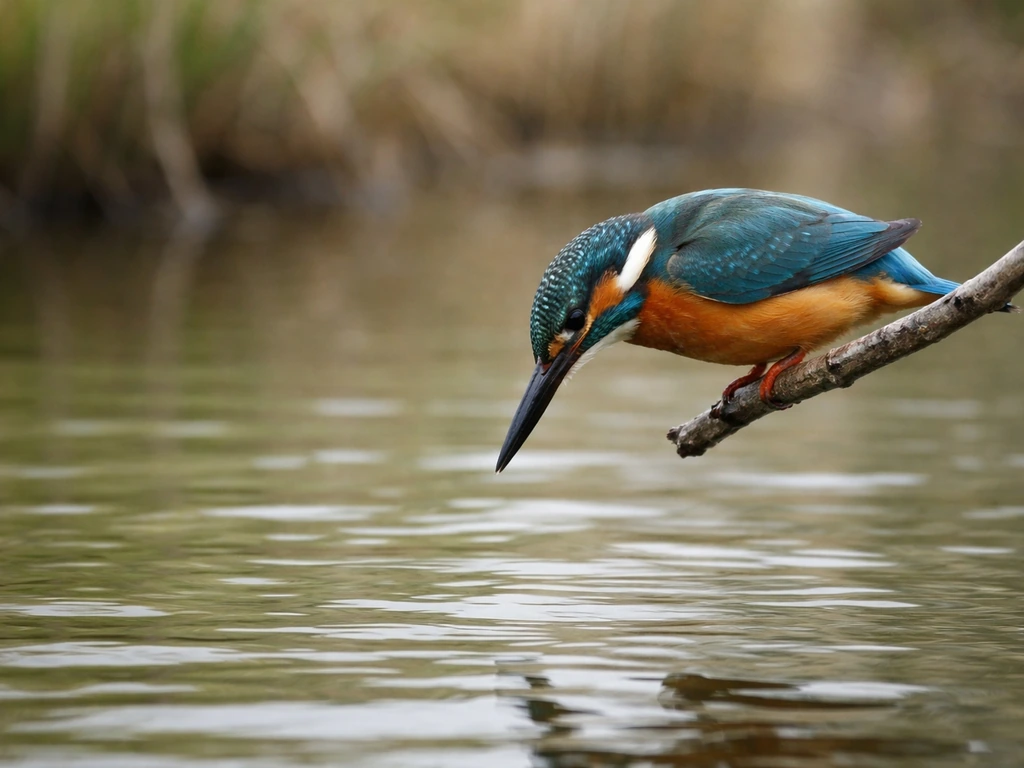
Spelled K-I-N-G-F-I-S-H-E-R. Ten letters, one word, no hyphen. Pronunciation: KING-fish-er. The name is transparent English: a fisher king, a bird that fishes supremely well. Don't split it into two words in the grid. The belted kingfisher is the most common North American species; the common kingfisher (also called European kingfisher or river kingfisher) is the typical reference in UK-origin puzzles. Both are clued the same way via their fish diet.
FLAMINGO
Spelled F-L-A-M-I-N-G-O. Eight letters. Pronunciation: fluh-MING-go (stress on the second syllable). The name derives from the Portuguese and Spanish "flamingo" or "flamengo," linked to the Latin "flamma" (flame) referencing the bird's color. The plural is FLAMINGOS or FLAMINGOES, but puzzle grids use the singular FLAMINGO. Common misspelling: FLAMINGO is sometimes written FLAMINGOE (incorrect) or confused with FLAMENCO (the dance, a different word entirely).
HERON
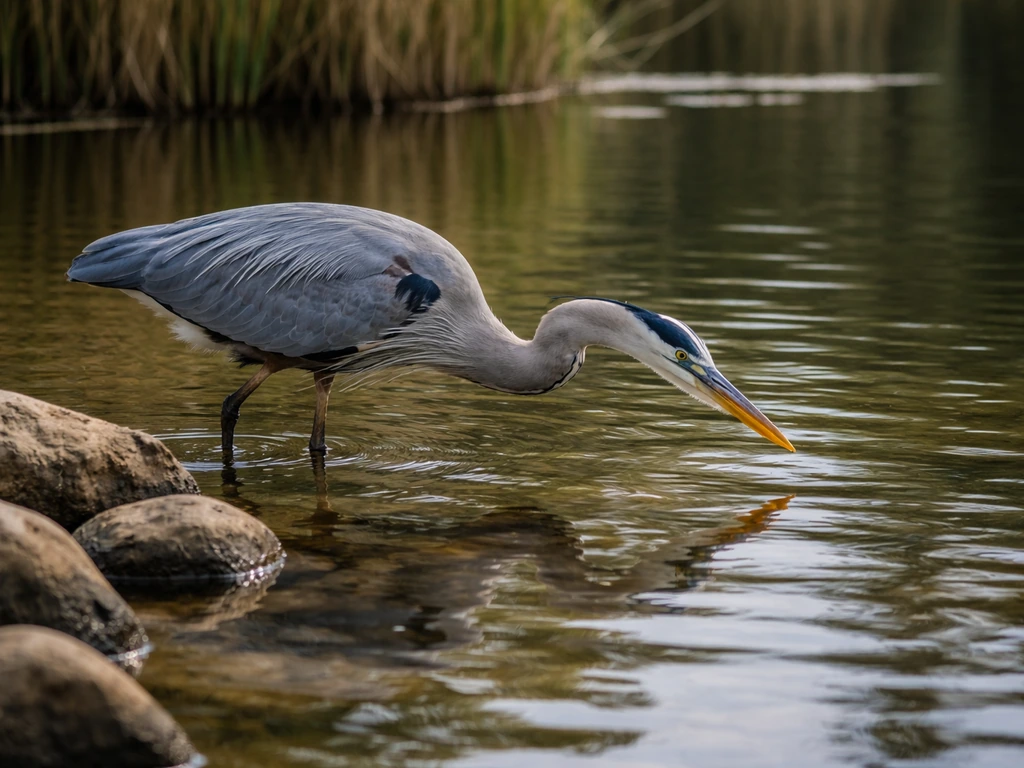
Spelled H-E-R-O-N. Five letters. Pronunciation: HEHR-on (rhymes with "heron" logically, but the stress is on the first syllable: HEH-run in American English). The great blue heron is the species most North American solvers picture, but clue answers just use HERON without the adjective. Don't confuse it with EGRET, which is a related wading bird (5 letters too) that also eats fish and frogs. If the clue specifies a pure fish diet, HERON fits; if it mentions a white bird or plume, EGRET is worth trying.
OWL
Spelled O-W-L. Three letters. One of the shortest possible fills for a bird clue. Pronunciation: OWL (rhymes with "growl"). If you have 3 squares and a rodent or mouse diet clue, OWL is almost always correct. If you have more squares, the answer is likely a specific owl species: BARN OWL (7 letters with the space), GREAT HORNED OWL (13 letters), SCREECH OWL (10 letters with space), or similar. Puzzle grids usually avoid the space and write compound names as one word or split them across two words in the fill.
What to do if your first answer doesn't fit
If you've tried your best candidate and it's breaking crossing answers, don't panic. Work through this sequence: first, check the spelling of your candidate (ospray vs osprey is a real mistake people make). Second, reconsider the diet category: is the clue describing fish generically or something more specific like freshwater fish, which might favor KINGFISHER over OSPREY? Third, check if the crossing answer itself might be wrong rather than your bird. Fourth, if none of that resolves it, try the next bird on the same diet list. Fish-diet clues can give you OSPREY, KINGFISHER, HERON, or PELICAN depending on letter count, so work through all of them.
Diet clues in crosswords are some of the most solvable once you know the food-to-bird mapping. Clues involving more unusual bird behaviors, like which bird incubates eggs differently or which bird is named for its color, follow a similar definitional structure but require a different knowledge base. If a clue leans into a distinctive, richly colored tail, the answer is likely a bird with a famous vibrant display. A colorful bird often mentioned in this kind of clue is the flamingo, which is named for its diet and its distinctive color. For clues like "bird whose male incubates the eggs," you use the same approach: identify the feeding or nesting trait, then match the bird name to the letter count and crossings. For this type of clue, your main toolkit is simple: read the food, map it to the bird, count the letters, and confirm with crossings. A similar example is the crossword clue about a bird that has one drink, which also points you to identify the bird from its diet wording bird has one drink crossword clue. That sequence will get you the right answer almost every time.
FAQ
If the clue doesn’t say “bird whose diet,” but uses words like “feeds on” or “piscivorous,” do I solve it the same way?
Yes, but treat “piscivorous,” “feeds on,” and “eats” as identical signals. The key is what the food is (fish, carrion, rodents, ants, algae/brine shrimp), not the exact wording, then validate with letter count and any fixed crossing letters.
What if the food in the clue is more specific than “fish” or “carrion”?
Don’t assume the clue is describing the diet of the most famous bird in your head. If it mentions a specific food type, such as “freshwater fish,” “shellfish,” or “insects,” you may need a different candidate than the usual fish pair (OSPREY/KINGFISHER). Use the diet category to narrow, then let the grid length decide.
My crossings fight back, what mistake should I check first?
If you get contradictions, the most common culprit is spelling variation of the bird name (like mixing up OSPREY with OSPRAY/OSPERy, or FLAMINGO with FLAMINGOE). Verify each letter against the grid pattern before changing your bird-category guess.
Do I need the exact bird species, or will the crossword use a general form like HERON?
Crossword clue answers are usually species-neutral and fit the most standard crossword form. For example, a clue may imply “great blue heron” or “belted kingfisher” biologically, but the fill is commonly HERON or KINGFISHER. If the clue has an unusual length requirement, then look for the more specific species form that matches.
Is “bird whose diet” ever a cryptic clue with hidden wordplay?
No. Many solvers lose time by trying to interpret the phrase as cryptic wordplay. For “bird whose diet” clues, the phrase is definitional, so focus on mapping the described food to the bird, then confirm length and crossings.
How should I handle rodent clues that might actually be about frogs or other prey?
If the clue says something like “rodents,” “mice,” or “small mammals,” start with OWL (or a specific owl only if the letter count forces it). If the clue instead says something like “frogs” or “amphibians,” reconsider related waders like EGRET, because the food mismatch will break your crossings.
How do I use the number in parentheses efficiently when I have multiple possible birds?
Use the letter count as the fastest discriminator once you have 2 or 3 candidates. For instance, a 3-letter answer strongly points to OWL, 6 letters often points to OSPREY, 7 to VULTURE, and 8 to FLAMINGO. If the length doesn’t match, don’t force the bird, try the next diet-matching option.
What if the puzzle layout supports multiple words, like TURKEY VULTURE or GREAT HORNED OWL?
If the grid allows spaces, some full names appear as multiple-word entries (for example TURKEY VULTURE, GREAT HORNED OWL). If the grid is single-word only, expect the shorter standard fill (VULTURE, OWL). Check whether the entry length includes a space.
The clue mentions something exotic like brine shrimp or lava berries, should I still start with OSPREY/KINGFISHER/VULTURE?
When the clue uses an unusual diet description, treat it as a stronger pointer to the specific, named crossword bird rather than defaulting to the common diet category answers. Then only switch to the general options (OSPREY, VULTURE, OWL, etc.) if the crossings and length confirm.
Could the problem be that a crossing word is wrong, not the bird?
If your bird choice is right but one crossing answer is wrong, everything can cascade. Re-check nearby filled answers by their own definitions or letter patterns first, because fixing the crossing can immediately make the bird entry snap into place.
Next Article
Colorful Bird Named for Its Diet NYT Crossword Clue
Find the NYT crossword answer for colorful bird named for its diet with linguistics, candidates, and quick verification