Whether "bird" is masculine or feminine depends entirely on what you mean. If you mean the Duolingo bird specifically, its gender is a separate pop-culture detail rather than a grammar rule about the word “bird” what gender is the duolingo bird. blank" rel="noopener noreferrer">In English, the word "bird" has no grammatical gender at all. In French it's masculine (un oiseau), in Spanish it's masculine (el pájaro), in German it's masculine (der Vogel), and in Russian it's feminine (птица, ptitsa). If you're asking about the actual sex of a living bird rather than a grammar question, that comes down to species biology, and the answer varies by species.
Bird is masculine or feminine? Grammar vs biological sex

James Ridgley
28 Apr 2026
Why this question keeps coming up
People search "is bird masculine or feminine" for at least two completely different reasons, and it's worth knowing which one you have. The first is a grammar question: you're writing or translating a sentence in French, Spanish, German, or another language with gendered nouns, and you need to know which article, adjective ending, or pronoun to use. The second is a biology question: you have a pet bird or you're watching birds in the field, and you want to know whether the individual in front of you is a male or a female.
The two meanings mix together because English speakers aren't used to thinking about nouns having gender. When someone learning French sees "le/la" or someone learning Spanish sees "el/la," the instinct is to ask whether the thing itself is masculine or feminine. But grammatical gender and biological sex are separate systems, and a language can assign a masculine noun gender to a word that refers to female animals, or a feminine noun gender to a word for a male animal. Understanding that split is the key to getting both questions right.
Grammatical gender: "bird" in English vs. other languages
English does not assign grammatical gender to nouns. Cambridge Grammar makes this explicit: English doesn't have separate noun forms for masculine and feminine, and any distinction between male and female is handled through context or extra words like "male" and "female," not through the word itself. So in English, "bird" is simply neutral. You don't have to worry about articles changing or adjective endings shifting based on gender, because none of that applies.
Other languages are a different story. Here's how the most commonly searched languages handle the primary word for "bird":
| Language | Word for "bird" | Grammatical gender | Example with article |
|---|---|---|---|
| French | oiseau | Masculine | un oiseau / l'oiseau |
| Spanish | pájaro | Masculine | el pájaro / un pájaro |
| German | Vogel | Masculine | der Vogel / ein Vogel |
| Russian | птица (ptitsa) | Feminine | одна птица (odna ptitsa) |
| English | bird | No grammatical gender | a bird / the bird |
French: The Larousse dictionary and Cambridge Dictionary both list oiseau as a nom masculin (masculine noun). That means you use "un oiseau" (not "une oiseau") and "le/l'oiseau" as the definite article. Any adjective modifying oiseau takes its masculine form too, so "a beautiful bird" is "un bel oiseau," not "une belle oiseau."
Spanish: The Real Academia Española (RAE) lists pájaro as nombre masculino. You say "el pájaro" and "un pájaro." Interestingly, the RAE student dictionary also lists pájara as a separate feminine form, used when you specifically want to refer to a female bird of this type. But pájaro as a generic word for bird is masculine.
German: Duden lists Vogel as a masculine noun (Substantiv, maskulin), so it takes the masculine definite article "der Vogel" and indefinite "ein Vogel." German gender is especially worth double-checking because it doesn't follow obvious patterns.
Russian: This is the outlier in the common languages. Птица (ptitsa) is a feminine noun in Russian. That affects which adjective forms and verb past-tense forms you use alongside it.
How to check grammatical gender for any language

The fastest method is to look up the word in a dictionary written in or for that language, not a translation tool. Look for abbreviations like m. En la entrada del diccionario del estudiante de la RAE, «colibrí» aparece como «m. (nombre masculino)», mostrando cómo la RAE indica el género gramatical de los sustantivos Look for abbreviations like m.. or masc. (masculine), f. or fém. (feminine), or n. (neuter). Larousse for French, the RAE for Spanish, Duden for German, and Wiktionary for many other languages are reliable starting points. These sources spell it out explicitly, and you avoid guessing based on the word's sound or ending.
The biology side: male vs. female birds and how to tell
If your question is actually about whether a specific bird is biologically male or female, the answer depends on the species. Birds are not grammatically gendered in nature, they are sexually dimorphic (or not), and the tools for telling them apart range from easy visual checks to DNA analysis.
Visual dimorphism: when you can tell by looking
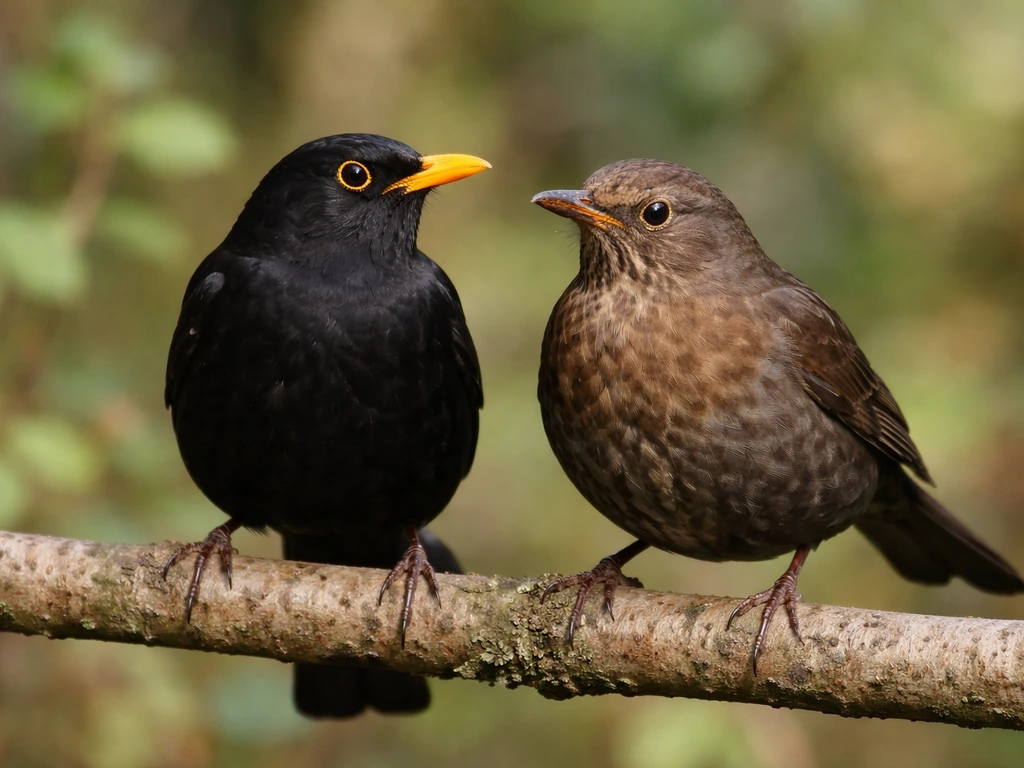
Many species make it easy. Male blackbirds (merles) have jet-black plumage and a yellow-orange bill; females are brown and mottled. Male peacocks have the famous train; females don't. Male cardinals are red; females are brownish-red. When a species has clear plumage, size, or color differences between sexes, visual sexing is reliable and is what most field guides walk you through.
Monomorphic species: when you can't easily tell by looking
Many species look identical regardless of sex, which ornithologists call monomorphic plumage. Research published in ornithology journals notes that sexing monomorphic birds from visual traits alone is generally unreliable. In those cases, scientists use body measurements and size ratios (sexual size dimorphism) as a fallback. For pet owners, the options are similar: some common pet birds like cockatiels can be visually sexed when they're mature and in typical coloration, but certain color mutations (the lutino mutation, for example) make visual sexing much harder.
Definitive methods when visual ID fails
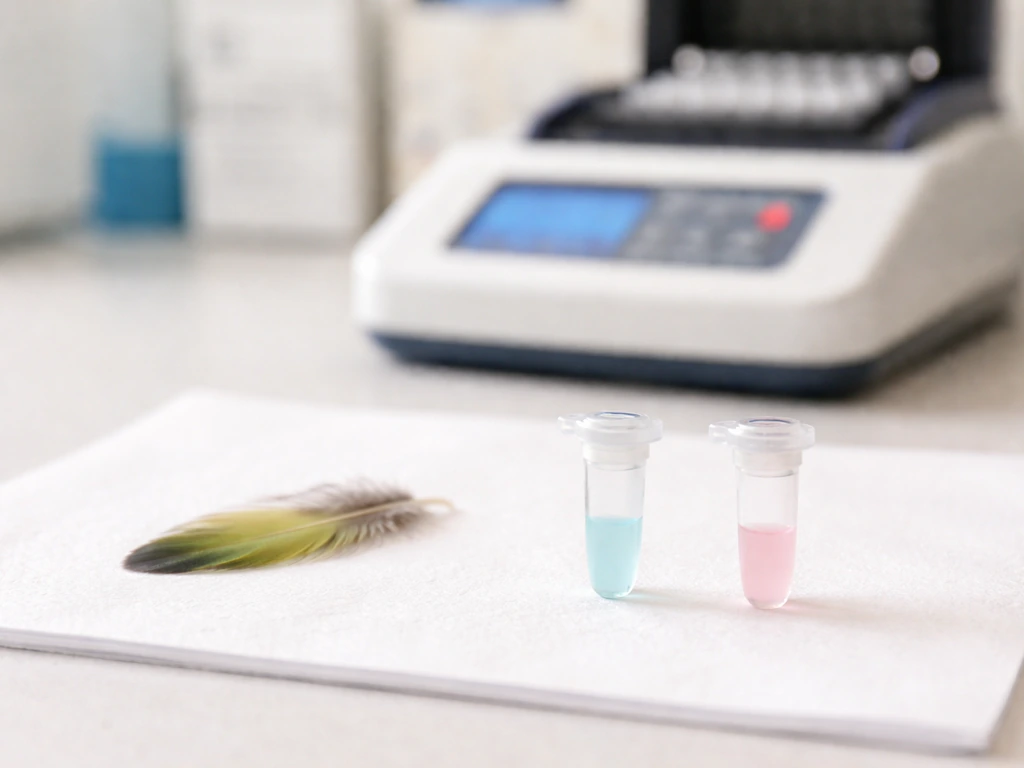
- DNA sexing: A feather or blood sample is tested using PCR to amplify targets on the Z and W sex chromosomes (males have ZZ, females have ZW). This is the most widely used method for captive and pet birds where visual cues are ambiguous.
- Endoscopy: A veterinarian uses a small scope to directly view internal reproductive organs. It's definitive but invasive.
- Behavioral cues: Egg-laying confirms a female. Courtship displays, singing in certain species, and territorial behavior can suggest sex but are not as definitive as DNA.
For a pet bird where knowing the sex matters, asking your avian vet about DNA testing is the most straightforward route. The test is non-invasive (a feather sample often suffices), inexpensive, and gives you a clear answer.
When names and sex don't match: the common exceptions
One of the most confusing things people run into is that a grammatically masculine or feminine word for a bird type does not say anything about the sex of the individual bird being described. In French, you can have a female bird that is grammatically described using masculine noun "oiseau" because oiseau is always masculine regardless of the bird's sex. Similarly, an English robin named "Bob" could be female, and a parrot named "Princess" could be male. The word and the name don't dictate the biology.
There's also the separate issue of species common names. "Duck" is grammatically neutral in English and refers to either sex, but technically "duck" is sometimes used specifically for the female of the species, with "drake" used for the male. "Hen" and "cock" (or "rooster") distinguish female and male chickens. Some species have completely different common names for male and female (peacock vs. peahen). These are vocabulary choices specific to each species, not rules that generalize across all birds.
In gendered languages, the mismatch between grammatical gender and biological sex is built into the system. The grammatical gender of the word you're using for "bird" doesn't change depending on whether you're talking about a male or female individual. To specify the sex in Spanish, for example, you'd add "macho" (male) or "hembra" (female) rather than changing the article on pájaro.
How to phrase it correctly in English and in gendered languages
In English
Since English has no grammatical gender for nouns, you just say "a bird" or "the bird" regardless of anything. To specify biological sex, you add a word: "a male bird," "a female bird," or the species-specific term ("a hen," "a drake," "a peahen"). English pronouns can signal sex: "she laid an egg" vs. "he sang from the treetop," though many speakers use "it" for birds unless the sex is known and relevant.
In French
Use masculine agreement for oiseau in all cases. "Un bel oiseau" (a beautiful bird), "l'oiseau est grand" (the bird is big). To specify the sex of the actual bird, use "un oiseau mâle" or "un oiseau femelle." The adjective mâle/femelle doesn't change the grammatical gender of oiseau, which stays masculine.
In Spanish
Use masculine agreement for pájaro. "El pájaro pequeño" (the small bird), "un pájaro bonito" (a pretty bird). To specify a female bird, you can say "un pájaro hembra" or, if the word allows it, "la pájara" (the RAE does list this feminine form). Check whether the specific species has its own masculine/feminine pair, as many do in Spanish.
In German
Use masculine agreement for Vogel. "Der kleine Vogel" (the small bird), "ein schöner Vogel" (a beautiful bird). Case endings change in German (nominative der, accusative den, dative dem, genitive des Vogels), but the gender stays masculine throughout.
In Russian
Use feminine agreement for птица (ptitsa). Adjectives and past-tense verbs agree with the feminine gender of the noun, not with the sex of the bird. So you'd say "большая птица" (bolshaya ptitsa, "a big bird") using the feminine form of the adjective.
Quick lookup and next steps for your specific bird or language
If you needed a fast answer for a grammar exercise, crossword, or translation, you now have it: English has no grammatical gender for "bird"; French, Spanish, and German are all masculine; Russian is feminine. For other languages not listed here, check the word in a native-language dictionary (Larousse, RAE, Duden, or Wiktionary are all good) and look for the gender abbreviation in the entry.
If you needed the biology answer for a specific species, start with a species-specific field guide or the relevant page on a site like All About Birds (Cornell Lab) to see whether your species is sexually dimorphic and what the visual markers are. If you can't tell by looking, or if you have a pet bird in a tricky color mutation, a DNA test ordered through your avian vet is the cleanest solution. It works for virtually any species and takes guesswork out of the equation entirely.
For French and Spanish specifically, the grammatical gender question about "bird" connects to broader questions about how those languages handle bird names and species terminology. Spanish bird names and French bird names each have their own patterns worth exploring if you're doing translation work or writing about birds in those languages. And if you've landed here from a question about a specific famous bird, like the Duolingo owl, there are separate questions about what gender that character is officially assigned, which is a mix of language and pop-culture convention rather than pure grammar.
FAQ
In English, can “bird” ever be masculine or feminine in grammar?
No, English “bird” has no grammatical gender. If you want to reflect sex in English, use extra words like “male bird” or “female bird,” or species terms like “hen” and “drake,” because the noun itself stays neutral.
Does the grammatical gender in French, Spanish, or German change if the bird is female?
It does not. The noun stays the same gender, for example French oiseau stays masculine whether the bird is male or female. To specify sex, add “mâle/femelle” in French, “macho/hembra” in Spanish, or the relevant male or female species word.
Is “pájaro” masculine in Spanish even when I mean a female bird?
Yes for the generic word “pájaro.” You can still describe a female individual by adding “hembra,” or by using a separate feminine term if the dictionary recognizes one for that specific bird type. But the article and adjective agreement follow the noun’s grammatical gender, not the animal’s sex.
In French, why do people sometimes say “une belle oiseau” by mistake?
It’s a common learner error: treating the word like it “should” match the animal’s sex. The fix is to remember that oiseau is always masculine grammatically, so you use “un/ l’oiseau” and “bel” (masculine forms), and then add “mâle/femelle” only if you need to specify sex.
For Russian “птица,” do adjectives always use feminine forms even if the bird is male?
Yes. Russian adjective and past-tense agreement follows the grammatical gender of “птица” (feminine). If you need biological sex, you add a separate word that indicates male or female, rather than trying to change adjective agreement.
When would I prefer DNA testing over visual sexing for a pet bird?
Use DNA testing when the species is monomorphic (both sexes look alike) or when color mutations blur normal visual markers, including many pet-bird mutations. It also helps when you need high confidence for breeding decisions.
Are “hen,” “cock,” “rooster,” and “drake” universal bird terms or species-specific?
They are vocabulary conventions tied to particular species, not general “bird gender rules.” For example, “hen/cock” applies to chickens, while some birds have entirely different common names for male versus female like peacock versus peahen.
If I’m translating into a gendered language, should I translate biological sex first or grammar first?
Grammar first. Get the noun’s grammatical gender correct for articles and agreement (French oiseau masculine, Spanish pájaro masculine, German Vogel masculine, Russian птица feminine). Then add explicit sex words (mâle/femelle, macho/hembra) only when the sentence requires it.
How can I quickly verify the gender of a word in a new language without guessing?
Check a native-language dictionary entry for abbreviations like masc., fem., or n. The same dictionary often also shows how adjectives and articles change, which prevents mistakes caused by relying on word endings or pronunciation.
Next Article
What Gender Is the Duolingo Bird? Best Answer Today
Find whether the Duolingo bird has an official gender, what evidence exists, and how to verify it.