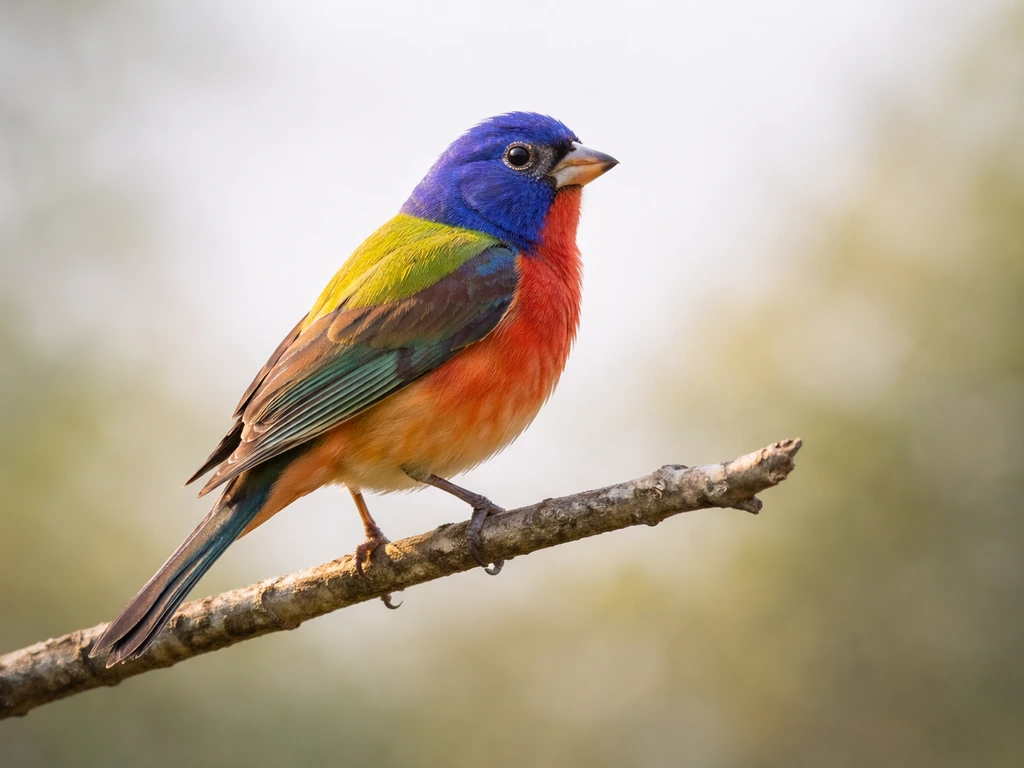
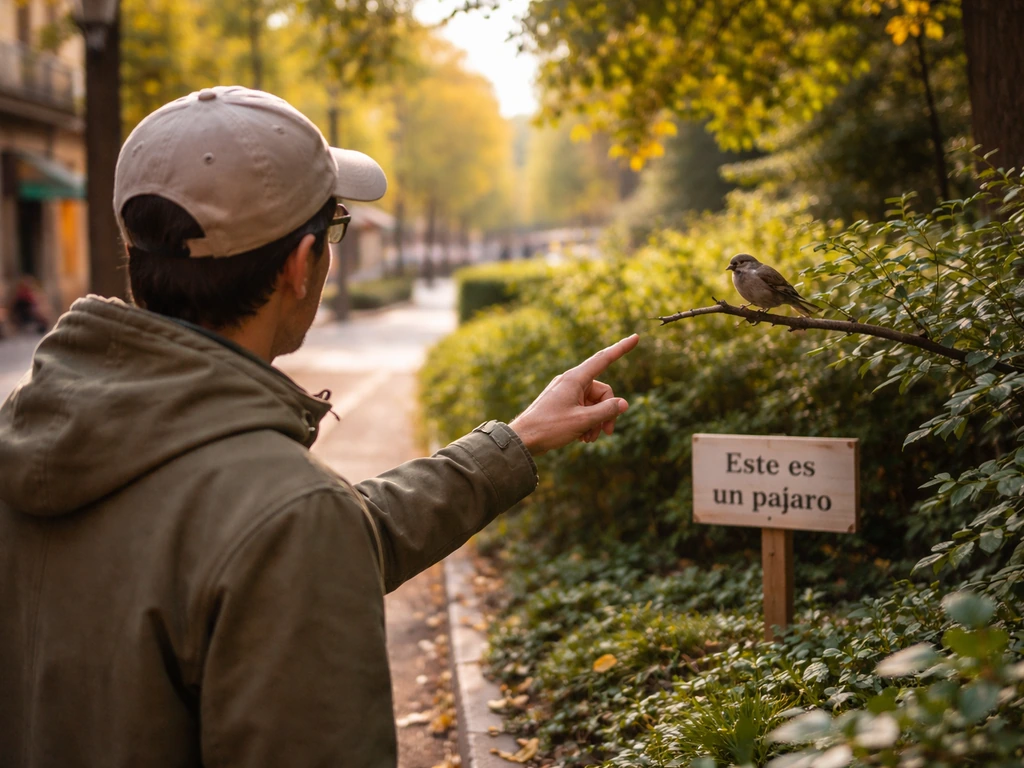
The most natural way to say "this is a bird" in Spanish is "Este es un pájaro" if you mean a generic bird, or "Esta es un ave" if you want the more formal or scientific-sounding word for bird. Both are correct, but they carry slightly different weight: pájaro is everyday, ave is broader and used in biology, formal writing, and when you want to refer to the whole class of birds.
This is a bird en español: Cómo decirlo y nombrar aves

James Ridgley
15 May 2026
What "This Is a Bird" Means in Spanish (Common Translations)
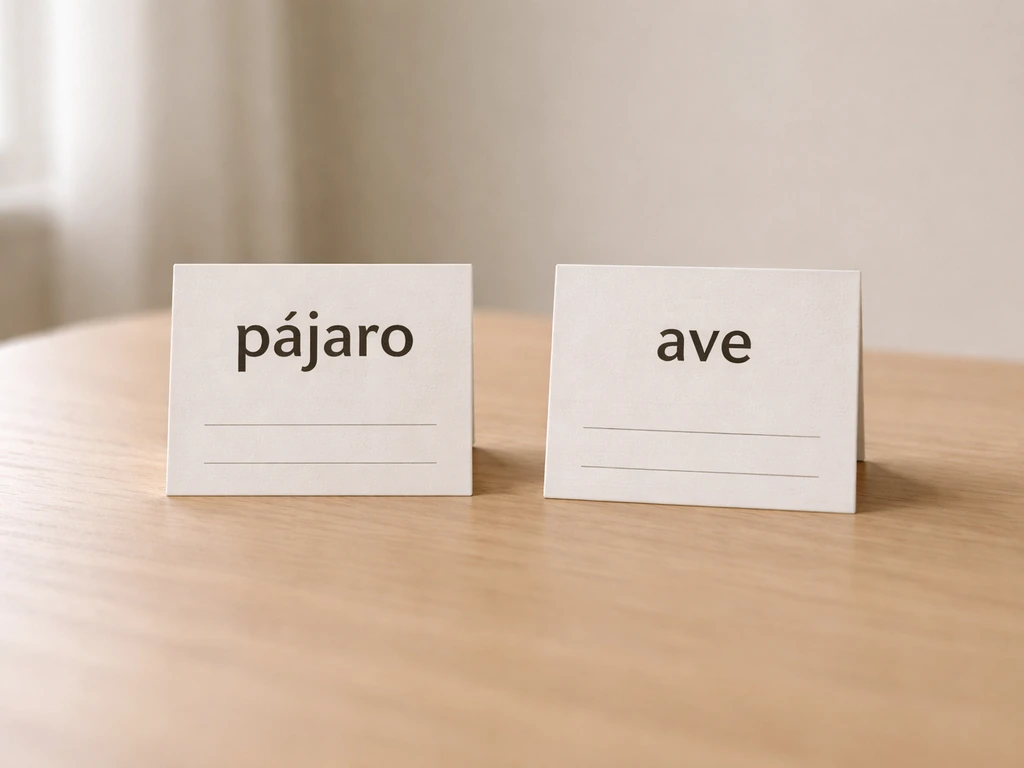
Spanish has two main words for bird, and which one you use changes your sentence slightly. Pájaro (masculine) is the go-to word in everyday conversation, so "Este es un pájaro" sounds natural whether you're pointing at a pigeon in the park or showing a photo to a friend. Ave (feminine) is grammatically trickier because even though it ends in -e, it is a feminine noun, so the demonstrative has to match: "Esta es un ave." You might also hear "Este animal es un ave" when someone wants to be explicit, for example in a classroom or field guide context.
| Situation | Spanish phrase | Notes |
|---|---|---|
| Casual, pointing at any bird | Este es un pájaro. | Most common everyday use; pájaro is masculine |
| Formal or scientific context | Esta es un ave. | Ave is feminine; used in biology and formal writing |
| Specifying it is an animal/bird | Este animal es un ave. | Useful for clarifying in educational settings |
| Talking about a pet bird | Este es mi pájaro. | Possessive replaces the article |
| Describing a species formally | Esta especie es un ave rapaz. | Rapaz = bird of prey; very formal register |
One thing to keep in mind: pájaro can carry colloquial meanings beyond the literal bird (there is a Spanish idiom "es un pájaro de cuenta" meaning someone is a shady character), so in a strict scientific context, ave is the safer, cleaner choice. In normal life, pájaro is what everyone says.
Spanish Bird Naming Basics: Common Names vs Scientific Names
Like in English, Spanish bird names exist on two levels: the common name (nombre común) that everyday people use, and the scientific name (nombre científico) that comes from Latin or Greek binomial nomenclature. Common names vary by country and region. What people in Mexico call a perico (small parrot), someone in Argentina might call a cotorra. Scientific names, on the other hand, are universal: Psittacara mitratus means the same bird in every country. If you are also looking at Croatian pop culture references, “Better Call Saul” is known in Croatian fan discussions too.
Scientific naming follows the Linnaean binomial system regardless of what language surrounds the text. The genus name gets a capital letter and the species epithet stays lowercase, and both are italicized in formal writing: Grus grus for the common crane, for example. When the species is not fully identified, you will see abbreviations like sp. (one unknown species of a genus) or spp. (multiple unknown species). This convention is the same whether you are reading a Spanish, English, or French ornithology journal.
How to Say Common Bird Types in Spanish
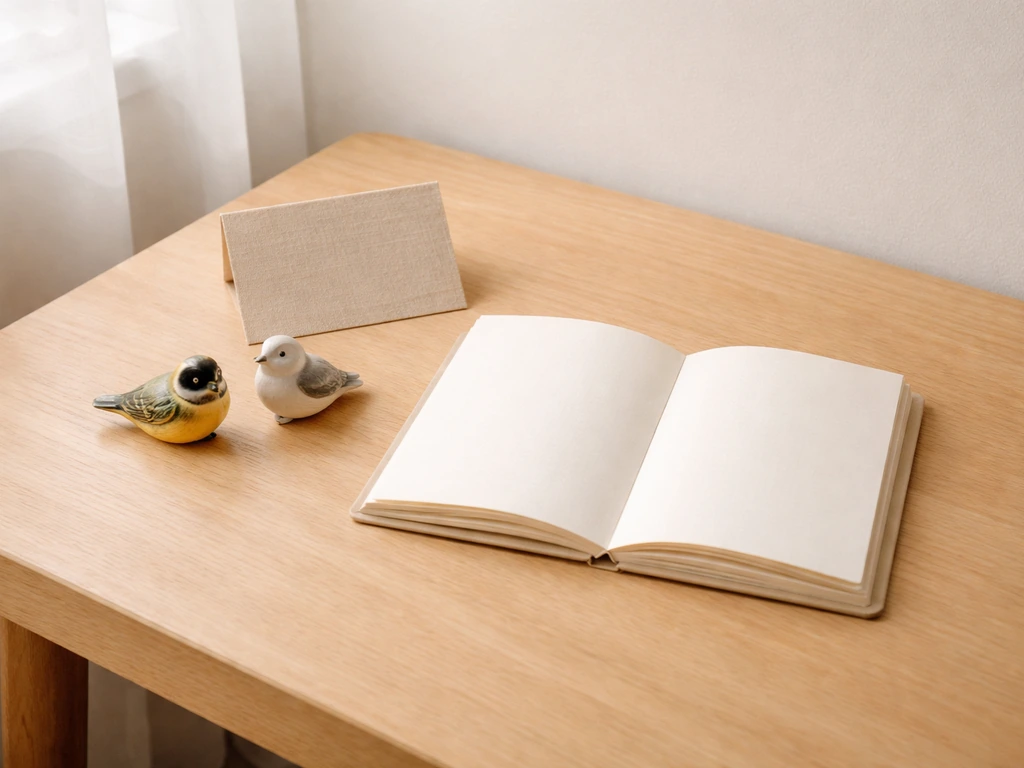
Here is a quick practical reference for bird types you are likely to encounter, along with their gender and a simple pronunciation hint.
| English | Spanish | Gender | Approximate pronunciation |
|---|---|---|---|
| Bird (generic) | pájaro | Masculine | PAH-hah-roh |
| Bird (formal/scientific) | ave | Feminine | AH-veh |
| Sparrow | gorrión | Masculine | goh-RYOHN |
| Finch | pinzón | Masculine | peen-SOHN |
| Pigeon / Dove | paloma | Feminine | pah-LOH-mah |
| Eagle | águila | Feminine | AH-ghee-lah |
| Owl | búho | Masculine | BOO-oh |
| Parrot (large) | loro | Masculine | LOH-roh |
| Parrot (small) | perico | Masculine | peh-REE-koh |
| Crane | grulla | Feminine | GROO-yah |
| Hummingbird | colibrí | Masculine | koh-lee-BREE |
| Partridge | perdiz | Feminine | pehr-DEES |
A few of these are worth flagging. Águila (eagle) is feminine even though it starts with a stressed "a," which in Spanish triggers the use of the masculine article el in the singular for phonetic flow: el águila, but las águilas in the plural. Paloma is the usual word for both pigeon and dove; Spanish does not make the same distinction English does. And loro vs perico depends heavily on region and the size of the bird, so both are worth knowing.
Spelling and Accents: Getting Bird Names Right
Accent marks in Spanish are not decorative. They follow strict rules based on syllable stress, and getting them wrong changes the word. The Royal Spanish Academy (RAE) breaks Spanish words into four stress types: aguda (stress on the last syllable), llana or grave (stress on the second-to-last), esdrújula (stress on the third-to-last), and sobresdrújula (even further back). Aguda words get a written accent if they end in a vowel, -n, or -s. Esdrújula words always get an accent. Llana words get an accent only when they do NOT end in a vowel, -n, or -s.
Applied to bird names, this explains why colibrí carries an accent (it ends in a vowel but is aguda, stressed on the final syllable: co-li-BRÍ) and why búho has one too (it ends in a vowel and is llana, but the accent mark here separates the vowels into two syllables: BÚ-ho, not a diphthong). Gorrión gets its tilde because it is aguda ending in -n. Pájaro, on the other hand, is esdrújula (PÁ-ja-ro), so it always takes an accent on the first syllable. Missing these accents is a common mistake even among fluent speakers typing quickly, but in written Spanish they matter for accuracy.
- pájaro: accent on first syllable (esdrújula rule, always accented)
- colibrí: accent on last syllable (aguda ending in vowel)
- búho: accent separates the diphthong buo into two syllables (BÚ-ho)
- gorrión: accent on last syllable (aguda ending in -n)
- pinzón: accent on last syllable (aguda ending in -n)
- águila: accent on first syllable (esdrújula), also takes el in singular for phonetics
- perdiz: no accent (aguda ending in -z, which does not trigger a tilde)
Pronunciation Guide for Bird Names in Spanish

Spanish pronunciation is relatively consistent once you know a few rules, which makes bird names easier than they might look on paper. The letter j is always a strong guttural h sound (like clearing your throat lightly), so pájaro sounds like PAH-hah-roh, not PAH-jar-oh. The ll combination sounds like a y in most of Latin America, making grulla sound like GROO-yah. La RAE define blank" rel="noopener noreferrer">grulla como el término común en español para “crane bird” (grulla, femenino). The letter ñ (as in piñón, a type of pine but also related to bird seed terminology) sounds like the ny in "canyon."
Stress is the other thing to lock in. Once you know where the accent falls, you know where to put weight in the word. In colibrí, everything leads to that final i: koh-lee-BREE. In búho, the accent keeps the two vowels separate so it stays BOO-oh, two clear syllables. If you are using bird names out loud, for example identifying a bird on a walk or talking to a Spanish-speaking birder, nailing the stress makes you sound far more confident than worrying about any single consonant.
| Word | IPA (approximate) | Plain phonetic |
|---|---|---|
| pájaro | /ˈpa.xa.ɾo/ | PAH-hah-roh |
| ave | /ˈa.βe/ | AH-veh |
| colibrí | /ko.li.ˈbɾi/ | koh-lee-BREE |
| búho | /ˈbu.o/ | BOO-oh |
| gorrión | /ɡo.ˈrjon/ | goh-RYOHN |
| águila | /ˈa.ɣi.la/ | AH-ghee-lah |
| grulla | /ˈɡɾu.ʎa/ | GROO-yah |
| paloma | /pa.ˈlo.ma/ | pah-LOH-mah |
| pinzón | /pin.ˈson/ | peen-SOHN |
| perdiz | /peɾ.ˈdiθ/ (Spain) or /peɾ.ˈdis/ (LatAm) | pehr-DEES |
Naming Conventions and Capitalization in Spanish Bird Names
In Spanish, common bird names are not capitalized the way some English style guides capitalize species names. You write gorrión, not Gorrión, in the middle of a sentence. This is the same rule that applies to most common nouns in Spanish. Scientific names, however, follow the international standard regardless of the surrounding language: the genus is capitalized and the whole binomial is italicized. So in a Spanish ornithology text you would see "el gorrión común (Passer domesticus)" with Passer capitalized and the entire name in italics.
For ranks above genus (family, order, class), the RAE recommends writing them in roman (non-italic) type. So Passeriformes (the order containing sparrows, finches, and most songbirds) stays upright, while the genus Passer and species domesticus go italic. When a species is unknown, sp. follows the genus in roman type: Passer sp. If you are writing field notes or a blog post in Spanish, following these conventions instantly signals that you know what you are doing.
Where Spanish Bird Names Actually Come From
Most Spanish bird names trace back to Latin, which makes sense given Spanish's roots as a Vulgar Latin descendant. Pájaro comes from the Latin passer, the same root that gives the scientific family name Passeridae (the sparrows). The path was roughly passer to pássaro to páxaro in Old Spanish before settling into the modern pájaro. Paloma and palomo come directly from the Latin palumbus and palumba (wood pigeon), which you can still see in the binomial Columba palumbus, the common wood pigeon.
Grulla shares its root with the Latin Grus, which is why the scientific genus for cranes is simply Grus, and the common crane is Grus grus. The Spanish word and the scientific name are direct cousins from the same Latin origin. Colibrí is different: it is a loanword from a Caribbean indigenous language (most likely Carib), which is why it does not follow the Latin-root pattern of the others. It entered Spanish during the colonial period as explorers encountered hummingbirds for the first time in the Americas. These etymological layers, Latin foundations plus indigenous borrowings, are what make Spanish bird nomenclature so interesting to dig into.
If you find yourself exploring related questions, the same naming logic applies to other specific bird phrases in Spanish. . Also, if you are wondering “is the painted bird in English,” it helps to know how Spanish bird wording maps to English usage.
How you say a crane in Spanish, how to describe a bird's physical features, or how to talk about birds in phrases like "each bird has a cracker" all follow the same grammar principles around gender agreement and vocabulary that this article covers. each bird has a cracker en español uses the same gender and word-choice rules described above. You can also use Spanish phrases for physical features, like describing a bird’s head size, to be more specific.
If you want the specific bird word, the common crane is grulla in Spanish how you say a crane in Spanish. The core skill is the same: know your word's gender, apply the right accent, and you will be understood clearly in any Spanish-speaking context. If you want to describe it, you can say that bird has a small head in Spanish as "ese pájaro tiene la cabeza pequeña.".
FAQ
Should I say “Este es un pájaro” or “Esta es un ave” in Spanish, and what’s the common mistake?
Choose based on meaning (everyday versus formal) but also match grammar. Ave is feminine, so even though it starts with a stressed a-sound, you still use the masculine article pattern “un ave” in this sentence (“Esta es un ave”). The most common mistake is using “una ave” or mismatching the demonstrative form.
Can I say “Esta es un pájaro” (with esta) instead of “Este es un pájaro”?
No. Pájaro is masculine, so the demonstrative must be masculine in agreement: “Este es un pájaro.” Using “Esta” makes the gender disagree and sounds off to native speakers.
Is “un ave” always correct, or do I ever need “una”?
“Un ave” is correct with the indefinite article in most everyday sentences. If you use a plural or a definite article, you must follow gender and number, for example “las aves” or “el ave” (for a single bird, used with a singular definite article). If you tell me the exact sentence you want, I can confirm the correct article.
When talking to someone, is “Este animal es un ave” better than “Es un ave”?
It depends on emphasis and context. “Es un ave” is shorter and usually fine if the bird is already clearly the topic. “Este animal es un ave” is more explicit and works well when you are identifying something among multiple animals (classroom, field guide, or comparing birds).
Do Spanish bird names get capital letters like in English?
Common bird names are typically lowercase in the middle of a sentence, so you write “un gorrión” or “el gorrión.” Capitalization is mainly for scientific names or standardized taxonomic text. If you are labeling a photo caption, keep it lowercase unless your style guide requires otherwise.
How do I write the scientific name if I am unsure about italics or punctuation?
The key is the genus capitalization and species lowercase, even if italics are missing in plain text. Genus + species should be in that order, for example “Passer domesticus.” In formal writing, italicize the whole binomial, and include the accent marks exactly as used in the species epithet.
What does “sp.” or “spp.” mean when it appears in bird names in Spanish texts?
“sp.” means one unspecified species within a known genus, “spp.” means multiple unspecified species within that genus. In both cases, you keep the genus capitalized and the abbreviation follows the genus, and it is usually written without italics for the abbreviation portion in many style traditions.
Are accents critical for bird names, or will people still understand without them?
Accents are important because they can change the word or stress pattern enough to sound wrong. With birds, misplacing or omitting marks like in “colibrí,” “búho,” “gorrión,” or “pájaro” can cause noticeable pronunciation errors and may be treated as spelling mistakes in written contexts.
How do I pronounce the “j” in bird names like “pájaro”?
In Spanish, “j” is a strong guttural “h” sound. So “pájaro” starts with that guttural sound, not a soft “h” and not a “j” sound like in English. If you’re unsure, say “PAH” for the first syllable and keep the following syllables smooth.
Is “loro” or “perico” the safest word across Spanish-speaking countries?
Neither is universal. “Loro” is often understood as parrot in many places, while “perico” is more regionally tied and can refer to smaller parrots. If you want maximum clarity for an international audience, “loro” is usually safer, or use the specific common name used locally plus a descriptor like “pequeño” (small).
How can I avoid confusion between “paloma” (pigeon/dove) and English “dove” specifically?
In Spanish, “paloma” covers both pigeon and dove, so you need extra context if you mean the English “dove.” For example, you can add descriptors like “paloma mansa” (dove-like/domesticated) or “paloma mensajera” (carrier dove), depending on the exact species you mean.
If I want to describe a bird’s features, do I need to worry about gender again?
Yes. Any adjectives you use to describe the bird must match the bird’s grammatical gender. Even though the bird itself is not grammatically masculine or feminine, Spanish requires agreement, so “pájaro” takes masculine adjectives, while “ave” takes feminine adjectives.
Next Article
Is the Painted Bird in English? Identify the Species
Learn what painted bird means in English, how to map it to the right species, and how to confirm the name.