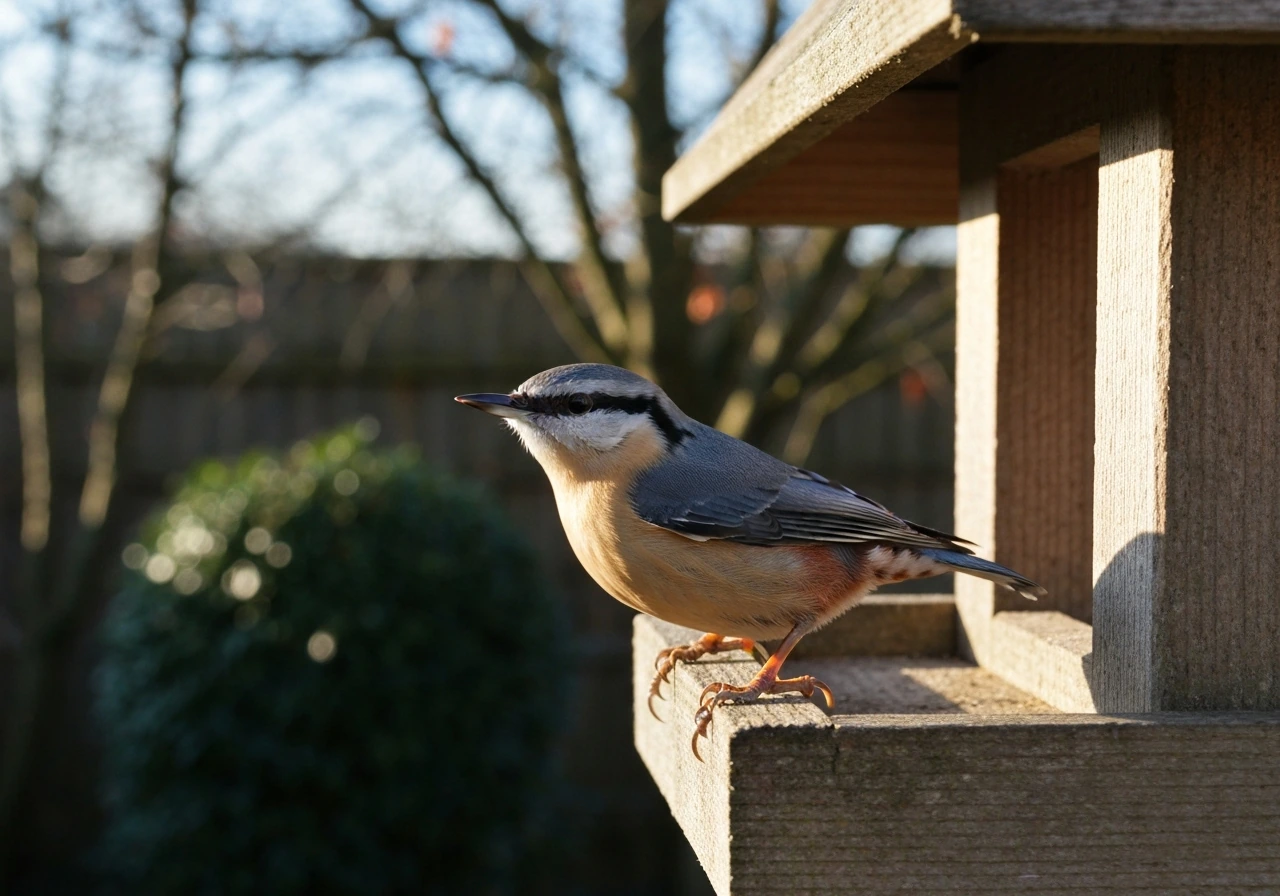
Yes, the oriole bird has a name, but it's not one name for one species. "Oriole" is a common name shared by roughly 60 species split across two completely unrelated bird families. If you're in North America and someone says "oriole," they almost certainly mean a New World oriole from the genus Icterus. If you're in Europe, Asia, or Africa, they likely mean an Old World oriole from the genus Oriolus.
Does the Oriole Bird Have a Name? Common and Scientific Names

James Ridgley
23 Apr 2026
So the honest answer is: the oriole has names, plural, and which one applies depends on where you are and which bird you're actually looking at. If you meant a different kind of bird clue, you might also be wondering what bird starts with X and which species that points to. What bird starts with n can also help you narrow down which species someone is referring to. If you meant a different kind of bird clue, you can also try the question what bird starts with n to see if that helps narrow it down.
What "Oriole" Actually Means
"Oriole" is a common name, not a scientific one. That distinction matters a lot here. A common name is just an informal label that people in a particular region or language agreed to use. It's not regulated, it doesn't map neatly to a single species, and it can shift depending on who's talking. The word "oriole" itself comes from the Latin word aureolus, meaning "golden" or "golden-colored," which describes the bright yellow plumage you'll see on many oriole species. So when you say "oriole," you're really saying something closer to "the golden bird," which is why so many visually similar (but unrelated) birds ended up sharing the name.
The takeaway is that "oriole" functions more like a category label than a single bird's name. There isn't one single oriole species the way there's one bald eagle or one flamingo. There are dozens of birds called orioles, and they belong to two separate families that aren't even closely related to each other.
Which Orioles People Usually Mean
In practice, most people asking about "the oriole" are thinking of one of two groups, depending on where they live.
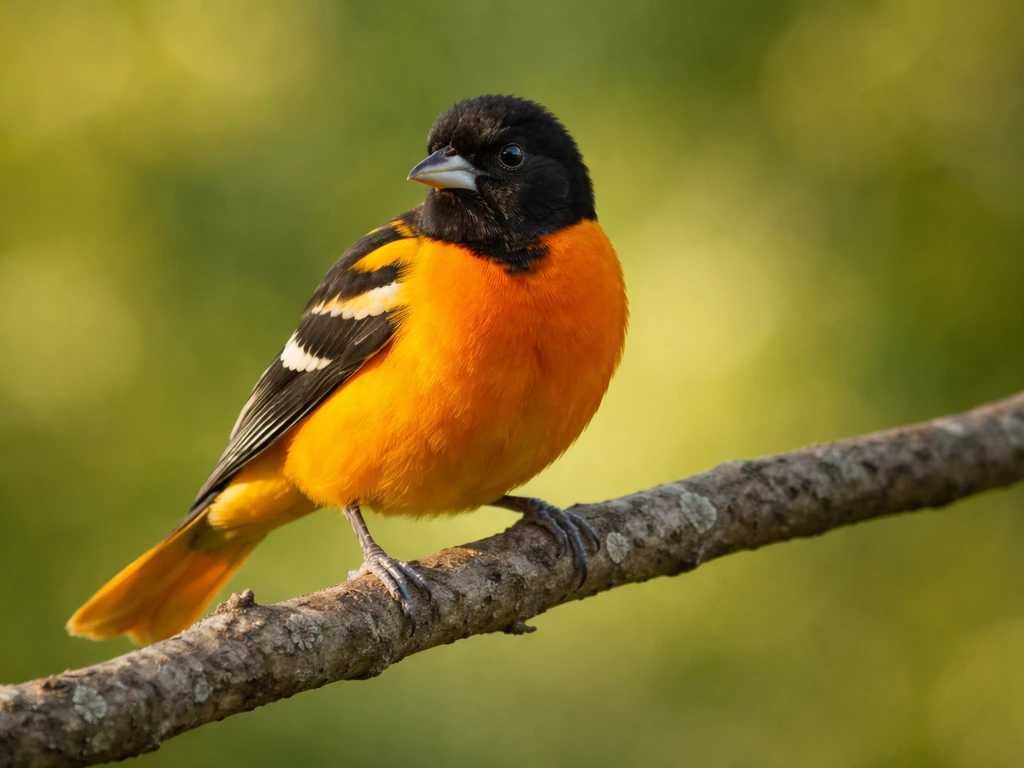
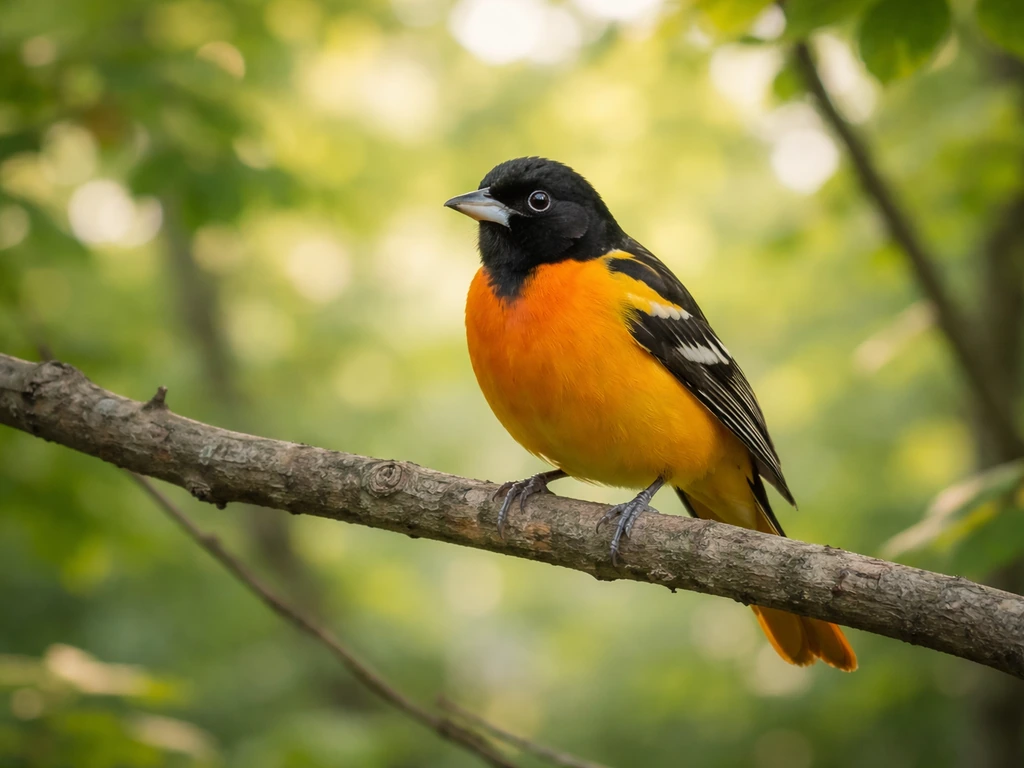
- New World orioles (genus Icterus, family Icteridae): About 30 species found across North America, Central America, South America, and the Caribbean. The Baltimore Oriole (Icterus galbula) and Bullock's Oriole (Icterus bullockii) are the most commonly spotted in the continental US. These are the birds North American birders usually mean.
- Old World orioles (genus Oriolus, family Oriolidae): About 30 species found across Europe, Africa, and Asia. The Eurasian Golden Oriole (Oriolus oriolus) is the classic example, and what a European birdwatcher pictures when they hear the word.
- Despite sharing the name, these two groups are not closely related. New World orioles are actually more closely related to blackbirds and meadowlarks than they are to Old World orioles.
If you're in the US and you've spotted a bright orange-and-black bird hanging around your backyard feeder or nectar plants in spring and summer, you're almost certainly looking at a New World oriole, most likely a Baltimore Oriole in the eastern half of the country or a Bullock's Oriole in the west.
Oriole Scientific Names and How to Read Them

Scientific names follow a two-part Latin system called binomial nomenclature. Every species gets a genus name (capitalized) followed by a species name (lowercase). Together they uniquely identify one single species worldwide, no ambiguity, no regional variation. That's what makes them useful when common names get messy.
| Common Name | Scientific Name | Family | Range |
|---|---|---|---|
| Baltimore Oriole | Icterus galbula | Icteridae | Eastern North America |
| Bullock's Oriole | Icterus bullockii | Icteridae | Western North America |
| Orchard Oriole | Icterus spurius | Icteridae | Eastern/Central North America |
| Scott's Oriole | Icterus parisorum | Icteridae | Southwestern North America |
| Eurasian Golden Oriole | Oriolus oriolus | Oriolidae | Europe, Asia, Africa |
Breaking down a name like Icterus galbula: Icterus is the genus name, derived from the Greek word for a yellow bird. Galbula is the species name, also Latin for "yellowish." So the Baltimore Oriole's scientific name is essentially "yellow yellow bird," which tells you exactly why it got the name it did. For Old World orioles, Oriolus oriolus doubles up on the genus name as the species name, which happens frequently when a species is the most representative or first-described member of its group.
How to Spell and Say "Oriole" (and the Latin Names)
The common name is spelled O-R-I-O-L-E. It's a word that trips people up because of the two back-to-back vowel pairs ("ori" and "ole"), and it's easy to accidentally write "oriole" as "orial" or "oriel." The spelling question comes up enough that it's worth just saying plainly: three syllables, ends in "-ole," not "-al" or "-el." If you want the full breakdown on that, the spelling of oriole is covered in more depth in a companion piece on this site.
Pronunciation: "oriole" is said OR-ee-ole (IPA: /ˈɔːr.i.oʊl/). The stress lands on the first syllable. It does not rhyme with "folio" or "portfolio" despite looking a bit like it might. For the scientific names, Icterus is pronounced IK-teh-rus, and galbula is GAL-byoo-lah. Oriolus is or-ee-OH-lus. If you're ever unsure how to say an oriole's name out loud, a pronunciation guide for the oriole bird is also available on this site.
Orioles in Birdwatching vs Ornithology
In everyday birdwatching, people use common names almost exclusively. You'll hear "I spotted a Baltimore Oriole" at the feeder, not "I spotted an Icterus galbula." Field guides like the Sibley Guide and the Audubon Society's regional guides all lead with common names because that's how most birders think and talk. Common names are also what you'll find on apps like eBird and Merlin when you're logging sightings.
In ornithology (the formal scientific study of birds), scientific names take center stage. When researchers publish papers, describe new species, or communicate across language barriers, scientific names eliminate ambiguity. A Brazilian ornithologist and a Finnish ornithologist both know exactly which bird Icterus galbula refers to, even if neither one uses English as a first language. This is precisely why the two-name Latin system exists.
One practical consequence of this: if you're trying to look up an oriole in a foreign-language bird database, searching by scientific name will get you there faster than trying to translate a common name. "Oriole" in French is loriot, in Spanish it's oriol or bolsero depending on region, and in German it's Pirol for the Old World species. The scientific name stays the same in all of them.
How to Figure Out Which Oriole You're Looking At
If you've seen a bird and you're not sure which oriole it is, here's a quick practical process to narrow it down.
- Check your location first. If you're in North America, you're looking at an Icterus species. If you're in Europe, Africa, or Asia, you're looking at an Oriolus species. Geography alone eliminates half the confusion immediately.
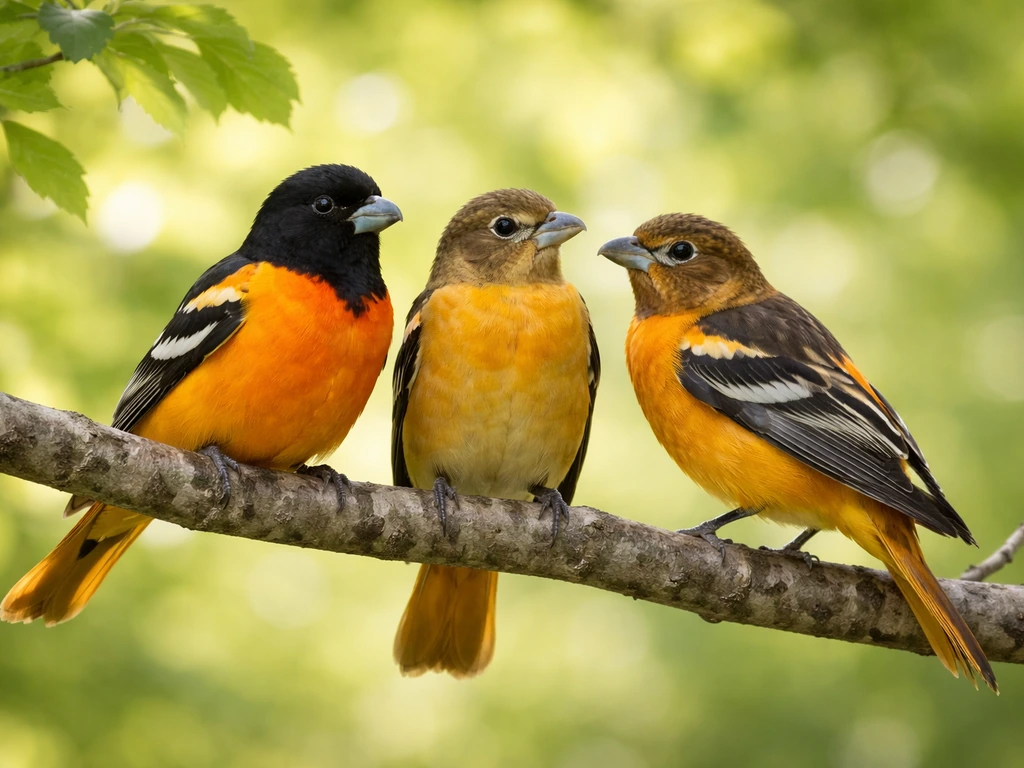
- Look at the markings. Baltimore Orioles have a vivid orange breast and belly with a black head and back. Bullock's Orioles have an orange face with a black eye stripe and white wing patches. Orchard Orioles are darker, with a chestnut-red breast rather than orange. Old World Golden Orioles are almost entirely yellow with black wings.
- Note the season and habitat. Most North American orioles arrive in spring (April to May) and leave by fall. They favor open woodland edges, parks, and suburban yards with fruiting trees. They're attracted to oranges and grape jelly at feeders.
- Use a reliable field guide or app. The Cornell Lab of Ornithology's All About Birds website (allaboutbirds.org) and the Merlin Bird ID app are both free and give you range maps, photos, and sounds. Search by your location and the colors you saw.
- Confirm the scientific name once you've identified the species, especially if you're logging your sighting or asking for help in a birdwatching forum. Saying "I think it was Icterus galbula" removes any regional naming confusion.
Quick Color Check for Common North American Orioles
| Species | Head Color | Breast/Belly | Wing Pattern | Where to Look |
|---|---|---|---|---|
| Baltimore Oriole | Black (male) | Bright orange | White wing bars | Eastern US, spring/summer |
| Bullock's Oriole | Orange face, black eye stripe | Orange | Large white wing patch | Western US, spring/summer |
| Orchard Oriole | Black (male) | Chestnut/dark red | White wing bars | Eastern/Central US, spring/summer |
| Scott's Oriole | Black head and upper chest | Bright yellow | White wing bars | Southwestern US, spring/summer |
Your Next Steps After This
If you just wanted to know what the bird is called: it's an oriole, it belongs to either genus Icterus (New World) or Oriolus (Old World), and the exact species name depends on which one you've got. The Eurasian golden oriole is scientifically named Oriolus oriolus and is an Old World oriole Oriolus (Old World).
If you're in the eastern US and you saw an orange-and-black bird, start with Baltimore Oriole (Icterus galbula) and verify against a range map. If you want to make sure you're spelling it right, it's O-R-I-O-L-E, and if you need help saying it, go with OR-ee-ole.
For anyone who's curious about the mascot side of things, the Baltimore Orioles baseball team's bird character is a separate topic with its own naming history worth exploring. And if you're here because you hit "oriole" in a crossword or word puzzle, you now have the spelling, the pronunciation, and enough background to feel confident about it.
FAQ
If someone says “the oriole,” do they always mean the Baltimore Oriole?
Usually, yes. In North America, “oriole” in casual conversation typically means a New World oriole, most often a Baltimore Oriole (Icterus galbula) in the east or a Bullock’s Oriole (Icterus bullockii) in the west. If you are outside that range, “oriole” may refer to Old World orioles in the genus Oriolus, so location is the first filter.
Is there one official name for all orioles?
Yes, but only in a limited way. There is no single official “oriole” name tied to one species because “oriole” is a common category covering multiple species across two different genera. The closest thing to an exact name is a scientific binomial like Icterus galbula, which always points to one specific species worldwide.
How can I tell which oriole species someone is talking about if “oriole” is vague?
To avoid getting the wrong species, match three things: where you are (North America versus Europe/Asia/Africa), what the bird looks like (orange, yellow, black patterning varies by species), and the time of year (many orioles are strongly seasonal). If you are unsure, use the genus first, Icterus for New World or Oriolus for Old World, then confirm the likely species with a local range map.
What is the correct spelling of “oriole,” and do misspellings cause problems when searching?
Spelling can matter most when you are searching. Common misspellings like “orial” or “oriel” can pull up unrelated results, especially in bird apps or dictionaries. The standard spelling is O-R-I-O-L-E, three syllables, and it ends with “-ole.”
Should I look up orioles by common name or scientific name in bird apps?
Often, but not always. Many birding apps and databases support partial text, but using the scientific name tends to be more reliable when common names differ by country or language. For example, if you can identify “Baltimore Oriole,” entering Icterus galbula will work even if the local common-name term is different.
What’s a common mistake people make when identifying an oriole?
Many references will call them “orioles,” but you might also encounter confusing look-alikes. Some birds with similar bright coloring are not orioles at all, so don’t rely on color alone. If a bird is not in the expected genus for your location (Icterus in North America, Oriolus elsewhere), double-check before you lock in the ID.
Why do scientists use Latin names instead of saying “oriole”?
Yes. “Oriole” is primarily a label used in everyday birdwatching, while scientific names are used in formal communication to prevent ambiguity. If you are reading research papers, field surveys, or conservation documents, expect binomial names because they stay consistent across languages and regions.
In a crossword or word puzzle, is the answer usually “oriole” even though there are many species?
Crosswords and puzzles can be tricky because they usually want the common word, not the scientific binomial. If the answer length is short, “ORIOLE” is typically the target. If the clue is broader or includes “golden,” it may still point to “oriole” based on the name’s Latin roots, but the safest approach is to check letter count.
Next Article
What Bird Starts With N? Common Options and How to Verify
Birds starting with N shortlist plus spelling and pronunciation tips, and how to verify using range, habitat, and naming