Chough is pronounced exactly like "chuff", one syllable, rhyming with "stuff" and "puff." The IPA is /tʃʌf/: the "ch" sounds like the start of "cheese," the vowel is the short "uh" in "cup," and the word ends with a clean /f/ sound. Despite looking like it might rhyme with "cough" or "through," it doesn't. Just say "chuff" and you're there.
How to Pronounce Chough Bird Name Correctly

James Ridgley
28 May 2026
What the chough actually is
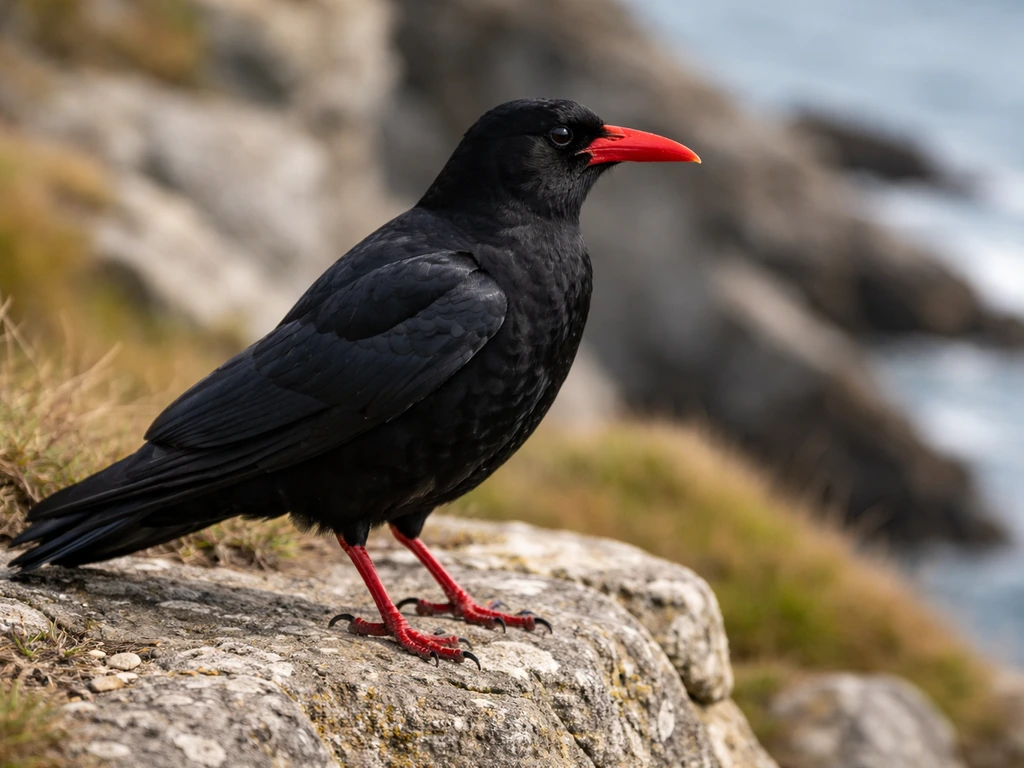
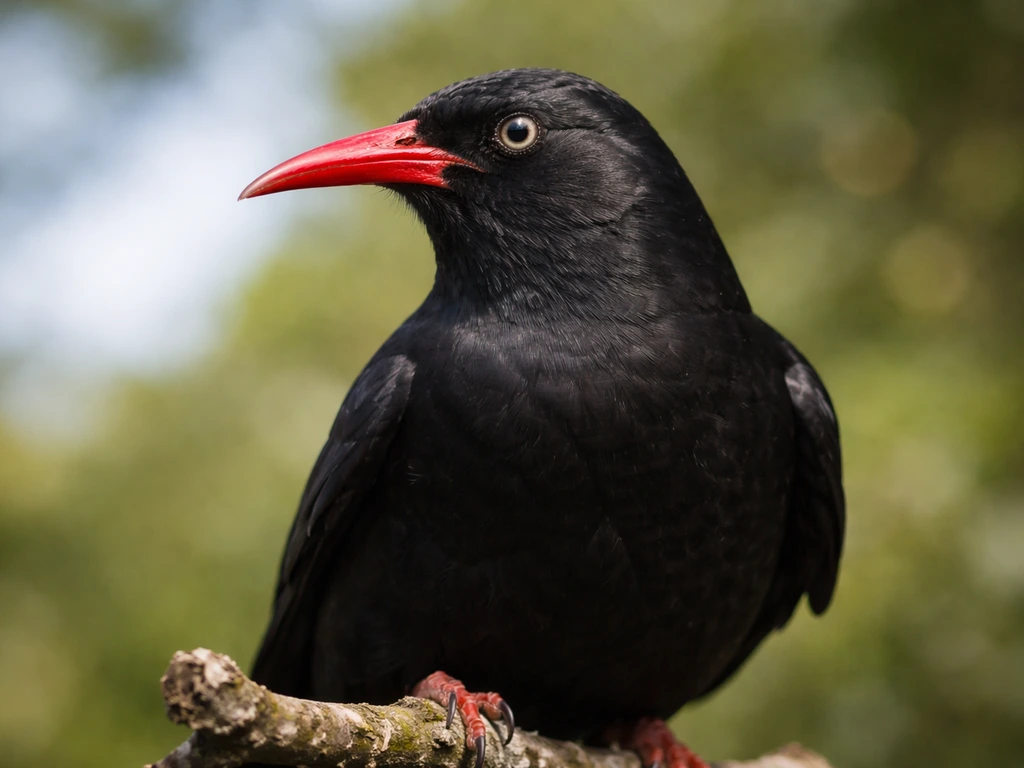
The chough is a striking corvid, a member of the crow family, known for its glossy black plumage and vivid bill. In modern ornithology, the name applies to two closely related species in the genus Pyrrhocorax. The red-billed chough (Pyrrhocorax pyrrhocorax) is the one most people mean when they say "chough" in a UK context; it's the species tracked by the BTO, protected by conservation bodies like NatureScot, and featured in RSPB bird guides. The yellow-billed chough (Pyrrhocorax graculus), also called the alpine chough, lives at higher elevations across Europe and Asia. When you see "chough" without a qualifier in a British field guide or crossword, it almost always means the red-billed species.
Worth knowing if you're coming at this from a word puzzle angle: "chough" is a legitimate Scrabble-valid English word and occasionally appears in cryptic crosswords precisely because its spelling is so deceptive. It looks like it should sound nothing like it does, which is part of why people search for the pronunciation in the first place.
The correct pronunciation, broken down
"Chough" is a single syllable. Cambridge Dictionary, Oxford Learner's Dictionaries, and Merriam-Webster all agree on this. Here's the sound-by-sound breakdown:
| Part | Sound | Sounds like... |
|---|---|---|
| ch- | /tʃ/ | "ch" in cheese or child |
| -ou- | /ʌ/ | "u" in cup or "uh" in luck |
| -gh | /f/ | "f" in fish or puff |
Put those three sounds together smoothly and you get /tʃʌf/, one tight syllable with stress on (and only on) that single beat. Merriam-Webster writes it as ˈchəf in its respelling system, which conveys the same thing: "ch" + a short central vowel + "f."
The easy shortcut: just say "chuff"

The RSPB's own bird account spells it out directly: chough rhymes with "chuff." That's the quickest mnemonic you'll ever need. If you know how to say "chuff" (as in the sound a steam engine makes), you already know how to say "chough." Same vowel, same ending, identical sound. The only difference is the spelling on the page.
Another useful rhyme set: tough, rough, enough, stuff, puff. All of those end in the same /ʌf/ sound. Slot "ch" in front of that sound and you've nailed it. This also works as a useful memory trick for the whole "-ough" puzzle in English more broadly, more on that below.
Why people get it wrong (and how to avoid it)
The culprit is the "-ough" spelling, which is one of English's most unreliable letter combinations. Depending on the word, "ough" can be pronounced at least six different ways. Consider: through (/uː/), though (/oʊ/), cough (/ɒf/), bought (/ɔː/), rough (/ʌf/), hiccough (/ʌp/). There's no single rule, which means your brain tries to pattern-match "chough" against a word it already knows, and it often lands on the wrong one.
The two most common mistakes are pronouncing it to rhyme with "cough" (so it comes out like "koff" with a ch-) or reading it as "chow" by analogy with "plough." A third mistake is treating the "gh" as silent and saying something like "choo" or "chow." None of those are right. The key thing to lock in is that the "gh" here is pronounced as /f/, just like it is in rough, tough, and enough. Once you know that, the rest falls into place.
- "Choff" (rhyming with cough) — wrong vowel sound; avoid by remembering the vowel is "uh," not "oh"
- "Chow" (rhyming with plough) — wrong vowel and ending; "gh" is not silent here
- "Choo" or "chew" — treats the spelling like "through"; not correct for this word
- "Kog" or "Cog" — mishearing the initial "ch" as a hard /k/; "ch" in chough is the same soft affricate as in "church"
UK vs US: is there actually a difference?
This is one of those reassuringly simple cases where British and American English agree completely. Cambridge Dictionary lists both the UK and US pronunciation of "chough" as /tʃʌf/, the same IPA for both. Merriam-Webster's American English entry gives ˈchəf, which maps to the same sound. There's no accent-driven vowel shift, no stress difference, and no alternate American pronunciation lurking in regional dialects. Whether you're birding in Cornwall or Colorado, "chuff" is the accepted pronunciation.
The yellow-billed chough (alpine chough) is more familiar to North American birders through the closely related North American species discussions, but the word itself is still pronounced the same way whenever it appears. You might also occasionally hear slight variations in how quickly or clipped the vowel sounds in different regional accents, but no major dictionary recognizes a distinct alternate form. If someone tells you there's a completely different American pronunciation, they're mistaken.
How to practice and confirm you've got it right
The most effective way to lock in a new pronunciation is to hear it and say it in quick succession. Here's a short routine that works well: Cambridge Dictionary’s pronunciation page lets you match the UK and US sounds and practice them syllable-by-syllable until they flow as one Here's a short routine that works well.
- Say each sound slowly in isolation: "ch" (as in chess)... "uh" (as in cup)... "f" (as in fan).
- Now merge them together without pausing: ch-uh-f, then chuhf, then chuff. Aim for one smooth beat.
- Go to Cambridge Dictionary's pronunciation page for "chough" and listen to the audio clip (both UK and US buttons play the same sound). Say the word just before you hit play, then compare.
- Repeat the listen-and-match step three or four times. If your version consistently matches the audio, you're done.
- Use it in a sentence out loud: "I spotted a red-billed chough on the cliff face." Saying it in context helps it stick better than drilling the word in isolation.
You can also use Merriam-Webster or Dictionary.com as backup audio references, both have speaker icons next to the entry that play a clear model pronunciation. The checklist to run against yourself is simple: did you start with a "ch" sound (not a hard "k")? Did the vowel sound like "uh" (not "oh" or "oo")? Did the word end in /f/ (not a silent letter or a /g/)? If you can check all three boxes, you're pronouncing it correctly.
One broader takeaway worth keeping: once you've learned that "-ough" can equal /ʌf/ (as in rough, tough, enough, and chough), you've gained a useful pattern that helps decode other tricky English bird and place names too. If you want the same kind of confidence for another species name, this guide on how to pronounce tanager bird can help you get it right on the first try.
It won't always apply, "through" and "though" play by different rules, but it's a reliable chunk of knowledge for that particular family of words. Bird names in English often carry exactly this kind of spelling-pronunciation mismatch, which is something you'll notice if you explore names like cockatiel, caique, or potoo, all of which have their own counterintuitive pronunciation quirks worth getting familiar with.
If you are also learning the caique bird name, you can use the same approach to decode its pronunciation step by step. If you are wondering how to pronounce cockatiel bird, look for the common “ka-KUH-tiel” style guidance used in dictionaries and practice saying it once slowly, then at full speed.
FAQ
If I say “chuff” instead of “chough,” will people still understand me when talking about the bird?
In most birding settings, you can say it exactly like “chuff” and you will be understood. If you hear someone say “chuff” for the bird, they are almost certainly referring to the same name, since dictionaries and bird guides use the same one-syllable sound (/tʃʌf/) in both the UK and US.
What quick self-check can I do to confirm I am pronouncing the “gh” correctly?
Look at the spelling cues: you want the “ch” onset, the vowel like “uh” (short and unstretched), and a final sound that is clearly /f/. A quick self-check is to cover your mouth slightly and say it, then listen for whether the ending is an /f/ (air and friction) rather than a silent “gh.”
How can I avoid adding an extra syllable when saying chough?
If you already know “chuff” from the mnemonic, keep the rhythm tight, one beat only. In many incorrect attempts, learners accidentally add an extra schwa-like sound or stretch the vowel, which makes it start to resemble words like “cough” or “chow.” Aim for one smooth syllable, no pause in the middle.
I know “-ough” is tricky, so how do I decide which pronunciation rule applies to chough?
If you are reading it from a page, don’t rely on the most common “-ough” pronunciations you know. “Chough” is part of the “-ough equals /ʌf/” cluster, like rough, tough, and enough, so treat “ough” here as producing /ʌf/ rather than /ɒf/, /oʊ/, or /uː/.
What is the most common first-letter mistake people make, and how do I correct it?
Don’t switch the opening sound to “k.” The “ch” should sound like the start of “cheese,” not like “choir” or “coat.” If you ever catch yourself saying “k-” first, reset to “ch” and immediately keep the rest the same as “chuff.”
Do different English accents change how chough is pronounced?
In practice, regional accents can slightly change how quickly the vowel is spoken, but they do not create an alternate standard pronunciation in dictionaries. If someone claims there is a completely different American pronunciation, treat it as a mishearing or confusion with another word, since the accepted sound stays the same.
If I keep messing up the vowel or ending, what rehearsal method works best?
If you miss the mnemonic, use a two-step rehearsal: first say “ch,” then say “uh,” then say “f,” and blend them together in one quick run. The goal is to end with the /f/ sound, not with a breathy “h,” and not with a g-like ending.
Why does “chough” cause so much confusion for people who know English spelling rules?
Because “chough” is often used in crosswords and wordplay, some people anticipate a “silent gh” or a “cough-like” rhyme and then lock into the wrong pattern. If you are facing that trap, force yourself to compare to “rough, tough, enough,” then add the “ch-” onset, so the whole word stays in the /tʃʌf/ family.
Next Article
How to Pronounce Tanager Bird: IPA, Stress, Fixes
IPA and stress guide to pronounce tanager bird, fix common vowel and stress errors, plus species name tips