Potoo is pronounced poh-TOO, with two syllables and the stress firmly on the second one. The IPA is /poʊˈtuː/ in American English and /pəʊˈtuː/ in British English. Say it like the word "poe" followed by "too," and run them together so the second syllable lands harder: poh-TOO. That's it. Every major dictionary agrees on this, and once you hear it you'll never second-guess it again.
How to Pronounce Potoo Bird Correctly (IPA Guide)

James Ridgley
19 May 2026

The most common mispronunciations (and why people get it wrong)
The spelling "potoo" trips people up because it looks like it could be said several different ways. If you've never heard the word out loud, your brain might go for POH-toh, puh-TOH, or even puh-TOO with a reduced first vowel. Some folks go the other direction and stress the first syllable, saying POH-too, which is actually close but puts the emphasis in the wrong place. The correct stress is on the second syllable: poh-TOO, not POH-too.
- POH-toh: wrong vowel on the second syllable. That second "oo" is a long "oo" sound as in "moon," not "oh."
- puh-TOH: reduced first vowel and wrong second vowel. Both are off.
- POH-too: the syllables are right but the stress is on the wrong one. Flip it to the second syllable.
- puh-TOO: the second syllable is correct but the first is too reduced. It should be a clear "poh" sound, not a murmur.
- poe-TOO: this is actually acceptable in casual speech, since "poh" and "poe" represent essentially the same /oʊ/ vowel.
The double-o at the end is the most reliable part of the word: it is always the long "oo" as in "moon" or "too." Everything else causes more confusion than it should, mostly because the first syllable looks like it might rhyme with "pot" or "cot." It doesn't. Think of it as rhyming with "go" or "toe," not "hot" or "lot."
IPA breakdown and syllable structure
For anyone who uses IPA as a reference, here is exactly how potoo breaks down. The word has two syllables: po and too. The stress mark (ˈ) sits before the second syllable, meaning that syllable gets the emphasis.
| Variety | IPA | Syllable split | Stress |
|---|---|---|---|
| American English | /poʊˈtuː/ | po · too | Second syllable (too) |
| British English | /pəʊˈtuː/ | po · too | Second syllable (too) |
| Merriam-Webster respelling | /pōˈtü/ | po · too | Second syllable (too) |
| Dictionary.com respelling | [poh-too] | poh · too | Second syllable (too) |
The only real difference between American and British pronunciation is the quality of that first vowel. American English uses a full diphthong /oʊ/ (like the "o" in "go"), while British English uses /əʊ/, which starts from a more central position. In practice, when speaking casually in either accent, both land very close to the same sound. The second syllable /tuː/ is identical across both varieties.
How to say it right now, without any IPA knowledge
Forget the IPA for a second. Here are three practical ways to lock in the correct pronunciation so you can say it confidently the next time it comes up in a conversation, a quiz, or a field guide discussion. For example, to learn how to pronounce tanager bird, start by sounding out the word clearly by syllable and then match the natural stress pattern you hear from native speakers.
- Say the word "potato" out loud, then drop the middle: po-TA-to becomes po-too. Ignore the middle syllable and move the stress from the middle to the end: poh-TOO.
- Say "go" then say "to." Now put them together quickly: go-to. Now swap "go" for "poh": poh-too. Stress the second half.
- Think of the phrase "I need to" and replace "I need" with "poh": poh-TOO. The rhythm is the same as the "to" at the end of that phrase, which your mouth already knows how to say.
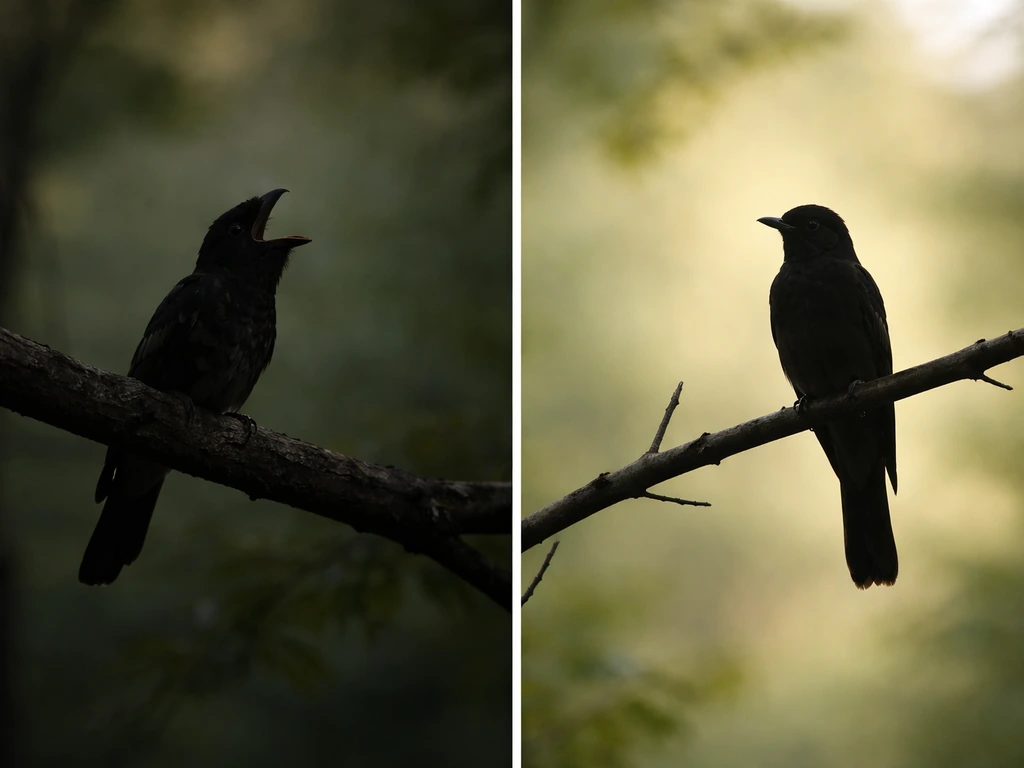
A helpful memory hook: the potoo bird is famous for its haunting, repetitive call, which eBird describes onomatopoetically as "POO, POO, Poo, poo, poo." That drawn-out "oo" sound is built right into the bird's name. The second syllable of potoo is essentially the bird calling back at you. Once you make that connection, the pronunciation sticks.
Why the spelling looks strange but the pronunciation makes sense
The word "potoo" looks a little odd in English because it isn't originally English at all. It entered English around 1840 to 1850 as "potoo" via Jamaican English, where the older form was "patoo." That Jamaican English word came from Twi (a language spoken in Ghana and Ivory Coast), specifically the word "patú," meaning owl. This matters for pronunciation because the word was borrowed phonetically: English speakers were essentially writing down how the word sounded to them, not following English spelling rules.
Merriam-Webster labels the word's origin as "blank" rel="noopener noreferrer">imitative," reflecting the idea that the name echoes the bird's call. That aligns with the Twi root, which was itself likely sound-inspired. So when the spelling looks like it should be said differently, it's worth remembering that the word was designed to capture a sound, not follow a spelling pattern. The double-o at the end is doing exactly what it looks like it should do: making a long "oo" sound. The first syllable "po" is just following the same vowel logic. The whole word sounds the way it looks, once you know that "po" rhymes with "go."
Potoo vs. similar bird names: keeping them straight
Potoo sits in an interesting neighborhood of bird names that can cause confusion, either because they sound similar, look similar on a page, or come up in the same contexts (field guides, word puzzles, birding conversations). Here's how potoo compares to a few names that tend to get mixed up with it.
Potoo vs. cuckoo
The ending "-oo" in potoo leads some people to rhyme it mentally with cuckoo (CUK-oo), which has a stressed first syllable and a reduced second one. Potoo is the opposite: the first syllable is lighter and the second gets the stress. Cuckoo: CUK-oo. Potoo: poh-TOO. Different birds, different stress patterns.
Potoo vs. tattoo
Funnily enough, "tattoo" is actually one of the better rhymes for potoo. Both are two syllables, both stress the second syllable, and both end in the same "-too" sound: ta-TOO, poh-TOO. If you can say "tattoo" you can say "potoo."
Potoo vs. other owl-adjacent night birds
The potoo (genus Nyctibius) is sometimes confused with nightjars, frogmouths, and owlets in casual conversation, partly because they occupy a similar ecological niche. None of those names are pronounced anything like potoo, but people sometimes swap the names entirely when speaking from memory, which can create the impression of mispronunciation when it's actually a naming error. The potoo is its own distinct group, not a type of owl, even though its Twi-language ancestor word meant "owl."
Potoo vs. other tricky bird names
If you've landed here while working through a collection of difficult bird name pronunciations, potoo is actually one of the easier ones once you know the rule. Names like chough (pronounced "chuff") and caique (roughly "kai-EEK") have much less intuitive spellings. For caique specifically, a common way to approach the pronunciation is to say it like “kai-EEK.”. Tanager (TAN-uh-jer) and cockatiel (kok-uh-TEEL) are more phonetically predictable in English but still catch people off guard. By comparison, potoo follows its own internal logic very consistently: the spelling tells you exactly what to say, as long as you know that "po" sounds like "go" and the stress lands on "too."
Quick-reference summary
| Feature | Answer |
|---|---|
| Correct pronunciation | poh-TOO |
| IPA (American) | /poʊˈtuː/ |
| IPA (British) | /pəʊˈtuː/ |
| Number of syllables | 2 |
| Stressed syllable | Second (TOO) |
| Rhymes with | tattoo, taboo, shampoo |
| Common mispronunciation | POH-too (wrong stress), POH-toh (wrong vowel) |
| Word origin | Jamaican English "patoo," from Twi "patú" (owl), first recorded 1840-50 |
FAQ
I’m hearing people say a reduced first syllable, like “puh-TOO.” Is that still acceptable?
Use “poh-TOO” with stress on the second syllable, even if you feel tempted to soften the first vowel. The first syllable is not “hot” or “lot,” it rhymes with “go” or “toe,” and the “oo” stays long like “too.”
What’s the most common mistake when saying potoo in conversation (speed or stress)?
If you say it too fast, you can accidentally shift the stress. A quick fix is to exaggerate the rhythm for one try: say “po…TOO” with a noticeable pause, then remove the pause once it feels natural.
How should I pronounce potoo when it’s in the middle of a sentence, not by itself?
In a typical sentence, keep the same word stress, then link it smoothly to neighbors. For example, say it as a single beat unit with “poh-TOO” followed immediately by the next word, without adding an extra syllable or changing “oo” to a shorter “uh.”
How can I tell whether I’m accidentally saying “POH-too” instead of “poh-TOO”?
Avoid the temptation to start with “POH” like “hot.” The “po” part is closer to “go,” and the second syllable must be “TOO” with clear length, not a short “uh.” If you remember “go-TOO,” you’ll land on the right form.
Does the “oo” at the end of potoo ever change sound depending on accent or speed?
The final “oo” is always long (as in “moon” or “too”). Don’t switch it to “-uh” the way English sometimes does with unstressed spellings, and don’t make it like “oo” in “book” with a different vowel quality.
If I’m aiming for British English, should I change the pronunciation of the second syllable too?
Don’t worry about saying the first vowel differently between American and British. The consistent part is the stress on the second syllable and the long “tuː” ending, so “poh-TOO” and “pəʊ-TOO” both communicate the word correctly.
If I’m describing the bird call (like “POO, POO”), does that change how I pronounce the bird’s name?
The name is used the same way even when people are discussing the bird’s call. You still say “poh-TOO,” and if you’re quoting the call, match the chant-like repetition rather than changing the word’s stress.
How can I self-check that someone else is pronouncing potoo correctly?
If you’re unsure whether a conversation is using “potoo” correctly, focus on the stress pattern. Hearing it said as “POH-too” (stress on the first syllable) is the main giveaway that the speaker has swapped the stress.
What’s a quick practice method to train my mouth for the two-syllable stress pattern?
To practice, say “go” then “too” back-to-back with a single stress: “go-TOO,” then shift “go” to “poh” while keeping the “TOO” beat. This keeps the two syllables distinct and reinforces the second-syllable emphasis.
Next Article
How to Pronounce Cockatiel Bird: Correct IPA, Syllables
Get the correct how to pronounce cockatiel bird, with IPA, syllable stress guide, and US vs UK variations.