Tanager is pronounced TAN-uh-jer, with the stress firmly on the first syllable. In IPA it looks like /ˈtæn ə dʒər/, and the whole word rhymes roughly with "manager" if you drop the "m." Three syllables, first one stressed, last one soft and quick. That's really all you need to say it correctly in any English-speaking context.
How to Pronounce Tanager Bird: IPA, Stress, Fixes

James Ridgley
22 May 2026
What exactly is a tanager (and why the name matters)
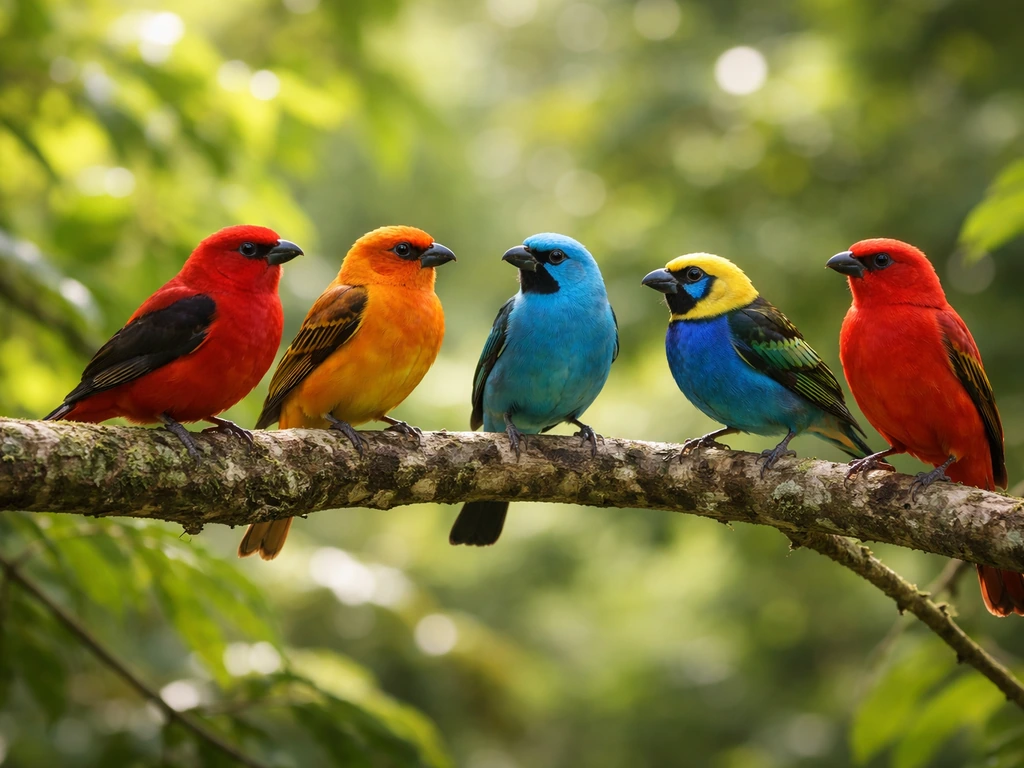
In everyday English, "tanager" is a common name applied to a large group of colorful songbirds found mostly in the Americas. When birders in North America talk about a tanager, they usually mean one of the species in the genus Piranga, like the Scarlet Tanager or Western Tanager. But the word is also the informal shorthand for the whole family Thraupidae, which Merriam-Webster defines as "numerous chiefly tropical American oscine birds" and which the BTO describes as one of the most diverse bird families in the world, ranging from sparrow-sized to starling-sized. So "tanager" does double duty: it's a species-level common name and a family-level reference. Either way, the pronunciation is the same.
Knowing what the word actually refers to helps you feel more confident saying it out loud, whether you're calling out a sighting on a trail, filling in a crossword answer, or looking up a pet name. It's a real English word with a long history, not a made-up scientific term, so there's no reason to hesitate.
Step-by-step pronunciation guide
Here's the full breakdown so you can say it with confidence immediately.
| Element | Detail |
|---|---|
| Syllables | tan - a - ger (3 syllables) |
| Stress | First syllable: TAN |
| IPA (General American) | /ˈtæn ə dʒər/ |
| IPA (British/non-rhotic) | /ˈtæn ə dʒə/ |
| Plain-English guide | TAN-uh-jer |
| Rhymes with | manager, passenger (roughly) |
Syllable by syllable

- TAN: Say the "tan" in "tanline" or "tangle." The vowel is the short /æ/ sound, like in "cat." This syllable gets the full stress.
- uh: A very short, relaxed schwa sound, like the "a" in "about." Don't over-pronounce this one.
- jer: Rhymes with "her" or "stir," with a soft /dʒ/ at the start (like the "g" in "ginger"). In American English, the final -r is fully voiced.
Common mispronunciations and how to fix them fast
Most people who stumble on "tanager" make one of three mistakes. All of them are easy to correct once you spot them.
| The mistake | What it sounds like | Quick fix |
|---|---|---|
| Stressing the wrong syllable | tan-AY-ger or tan-AH-ger | Move the stress to the front: TAN comes first and loudest. |
| Stretching the middle vowel | TAN-ay-jer (long A) | The middle syllable is a quick, unstressed schwa: just "uh," not "ay." |
| Mispronouncing the -ger ending | TAN-uh-gur (hard G) | The -ger ending uses a soft /dʒ/ sound, like the J in "jar," not a hard G like in "tiger." |
| Adding an extra syllable | TAN-a-ga-er or TAN-uh-ger-er | It's three syllables only: TAN-uh-jer. No extras. |
The hard-G mistake is probably the most common because the spelling ends in "-ger," and the brain wants to map that to words like "tiger" or "lager." But in "tanager," the -ger follows the same soft-J pattern as words like "manager" or "stranger." Once you hear that connection, it sticks.
How pronunciation shifts across English accents
The core pronunciation, TAN-uh-jer with first-syllable stress, is consistent across all major English dialects. What changes slightly is the final -r and some vowel coloring.
- General American (US): All three syllables are clear, and the final -r is fully pronounced. You get /ˈtæn ə dʒər/ with a crisp rhotic ending.
- British RP: The final -r is dropped (non-rhotic), so it sounds like /ˈtæn ə dʒə/. The ending rhymes with "sofa" rather than "stir."
- Australian English: Similar to British in being non-rhotic, but the first vowel can sound slightly higher. Still TAN-uh-juh to the ear.
- Canadian English: Very close to General American. The /æ/ in the first syllable might be slightly raised in some regions, but the stress and structure are identical.
None of these regional differences affect intelligibility. Whether you're talking to a birder in Texas or Yorkshire, saying TAN-uh-jer will land perfectly. The field guides, dictionaries (Merriam-Webster, Collins, Dictionary.com), and ornithological sources all agree on the stress pattern.
Pronouncing specific tanager species names
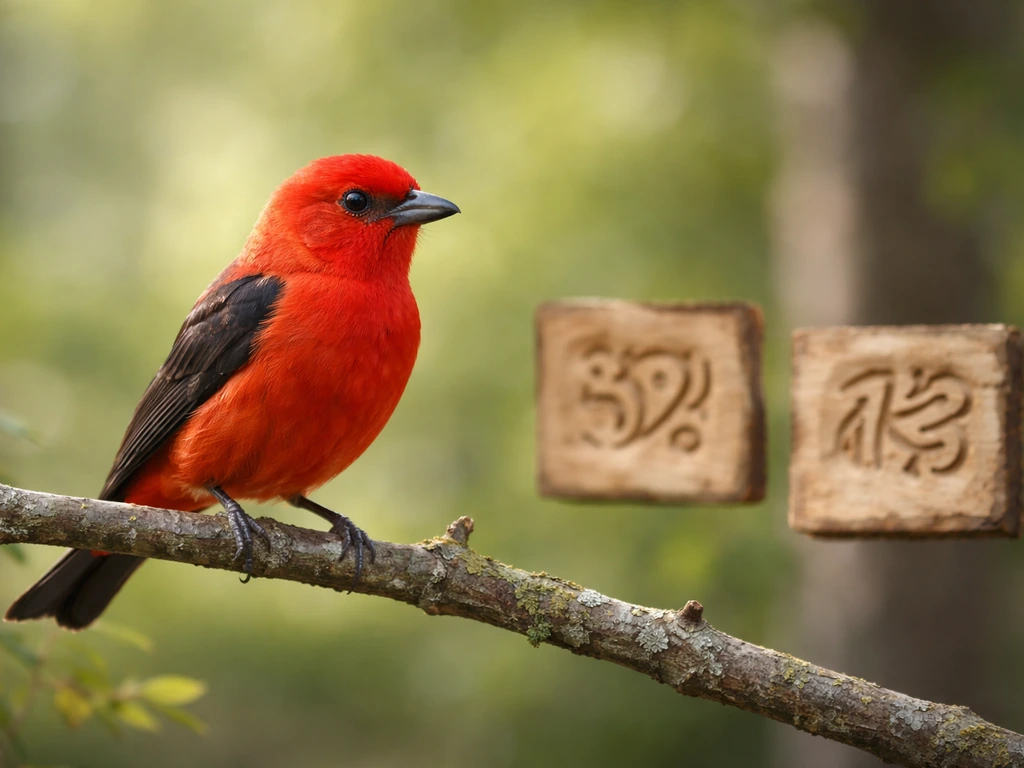
A lot of people searching for how to say "tanager" are really trying to say a full species name out loud, like "Scarlet Tanager" or "Western Tanager." The word "tanager" itself is the easy part once you know it. If you're wondering how to pronounce the chough bird, the approach is similar: focus on the short vowel and the word's core consonant sounds so it lands clearly. The tricky bits are usually the species epithet in front of it. Here's a rundown of the most common ones.
| Species name | Pronunciation | Notes |
|---|---|---|
| Scarlet Tanager | SKAR-lit TAN-uh-jer | Stress "SKAR" hard; "scarlet" is two syllables. IPA: /ˈskɑːr lɪt ˈtæn ə dʒər/ |
| Western Tanager | WES-turn TAN-uh-jer | Straightforward; stress both first syllables of each word. |
| Summer Tanager | SUM-er TAN-uh-jer | Easy two-word combo; no traps here. |
| Flame-colored Tanager | FLAYM-KUL-erd TAN-uh-jer | Hyphenated modifier; say both parts evenly, then tanager. |
| Bay-headed Tanager | BAY-HED-id TAN-uh-jer | Another compound modifier; keep each element clear. |
| Blue-gray Tanager | BLOO-gray TAN-uh-jer | Simple color compound; no vowel surprises. |
The Scarlet Tanager is the one worth practicing most carefully, because "scarlet" has that /ɑː/ vowel (the broad A in "car") that some people soften into "scur-lit," which sounds muddled. Hit the SKAR syllable cleanly, and the rest of the name follows easily. The Western and Summer Tanagers are essentially no-trap names: both modifiers are common everyday words. The blank" rel="noopener noreferrer">summer tanager is a recognized species name for Piranga rubra, which is why “summer tanager” is often spoken as a two-word unit plus “tanager” tail.
If you enjoy learning how bird names sound in different contexts, you might also find it useful to look into how other colorful bird names are pronounced, such as the cockatiel, caique, or potoo. If you are wondering about how to say it, check out our guide on how to pronounce potoo bird. If you are also looking up the caique bird, the pronunciation will follow the same idea of checking the word’s roots and common English spelling patterns. If you’re also looking for clarity on how to pronounce a cockatiel bird, a quick guide to the syllables and stress will help you say it naturally. Like tanager, many of those names come from non-English roots and trip people up in similar ways.
Why tanager sounds the way it does (the etymology makes it click)
Understanding where a word comes from almost always makes the pronunciation make more sense. "Tanager" entered English in the 1600s, first appearing as "tanagra," borrowed from Modern Latin tanagra. That Latin form came from Portuguese tangará, which itself was borrowed from Tupi, the indigenous South American language spoken by peoples in the region where these birds were first documented by European naturalists. The Tupi word tangara was a bird name of uncertain specific meaning, but it was the name the birds had long before Europeans arrived.
The shift from the Portuguese tangará (three syllables, stress on the last: tan-ga-RAH) to the English tanager (three syllables, stress on the first: TAN-uh-jer) is a classic example of English pulling a loanword into its own stress patterns. English almost always front-loads stress, so the exotic tangará got anglicized into TAN-uh-jer. The spelling also shifted: the Portuguese -á ending became the English -er, following the same pattern as words like "manager" and "passenger" that were also pulled from other languages and domesticated into English sound habits.
So the slightly unusual spelling (why -a-ger and not something more phonetically obvious?) is a trace of that Portuguese-to-English journey. Once you see that, the pronunciation stops feeling arbitrary. It's TAN-uh-jer because English took tangará, put its own stress rules on it, and reshaped the ending into something that felt natural to English ears. The same Tupi-via-Portuguese root story applies to quite a few Neotropical bird names, and it's a reminder that the naming history of birds is genuinely global.
FAQ
If I only know the spelling, what should I do to avoid mispronouncing tanager?
In most English conversations you can say it as “tan-uh-jer” and you will be understood. If you want to be extra clear, keep the final “-jer” with a voiced “j” sound (like “manager”), not a hard “g” (like “tiger”).
Does the pronunciation change when I say “Scarlet Tanager” or other full species names?
Yes. For “Scarlet Tanager,” the common slip is turning “scarlet” into something closer to “scur-lit.” Aim for a clean “SKAR” at the start, then keep “tan-uh-jer” the same as the base word.
Is the stress pattern the same in different English dialects?
Generally no. The stress stays on the first syllable, but the vowel colors can vary slightly by accent. The “TAN” part is the anchor, so even if the “uh” feels more or less like “uh” in your accent, people should still recognize it.
What’s the most common syllable-count mistake people make with “tanager”?
Don’t break it into four beats. It’s three syllables, TAN-uh-jer. If you hear yourself saying “tan-a-jer” or inserting an extra vowel, slow down and compress the middle syllable (“uh” stays short).
Should I pronounce the final “r” strongly, or is it more of a light blend?
In careful speaking, the “r” at the end is lightly articulated, then blends into the sound before it depending on your accent. Practically, you can keep the last syllable close to “jer” and not overemphasize a separate “r” sound.
What’s a good “good enough” way to practice if I’m learning by reading first and hearing later?
If you are reading silently and only need an approximate sound, use the rhythm “TAN-uh-jer” and remember the first syllable is stressed. When you later hear it spoken in your local birding group, adjust only the vowel coloring, not the stress.
How can I tell if I’m accidentally saying it like “tiger” instead of “manager”?
You might be mixing up “tanager” with “tanager” in spelling-based guesses, where “-ger” tempts a hard “g.” A quick self-check is to compare it to “manager,” both share the same soft “j” sound before the final ending.
Does “tanager” mean different things in birding, and does that affect how I should say it?
It can help to distinguish the bird name from the general family meaning, but the sound stays the same either way. “Tanager” is used as shorthand for a genus-level bird (for example, Scarlet Tanager) and also informally for the tanager family, so pronunciation does not change.
Next Article
How to Pronounce Caique Bird Correctly in English
Get the correct English pronunciation of caique bird, avoid common mispronunciations, and practice US vs UK variants.