Cockatiel is pronounced kock-uh-TEEL, with the stress landing firmly on that last syllable. Three syllables total: COCK (like the rooster) + uh (a quick, almost throwaway schwa) + TEEL (rhymes with "reel" or "deal"). Say it out loud: kock-uh-TEEL. That's it. You're done.
How to Pronounce Cockatiel Bird: Correct IPA, Syllables

James Ridgley
18 May 2026
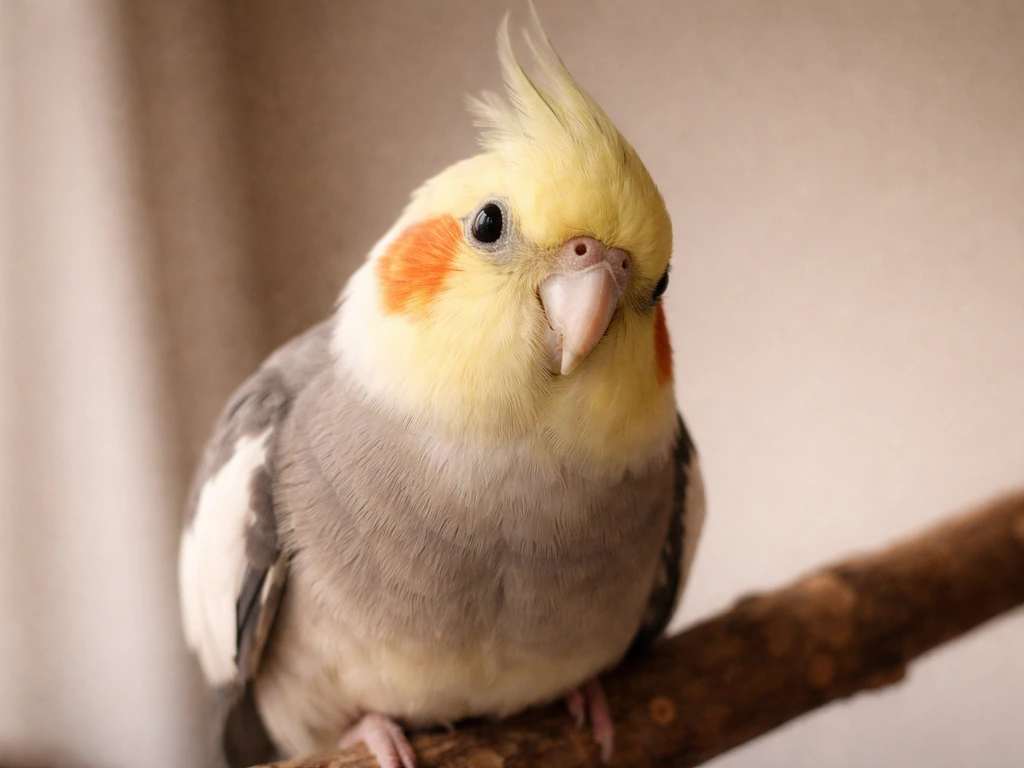
The correct pronunciation: cockatiel vs. cock-a-TIEL
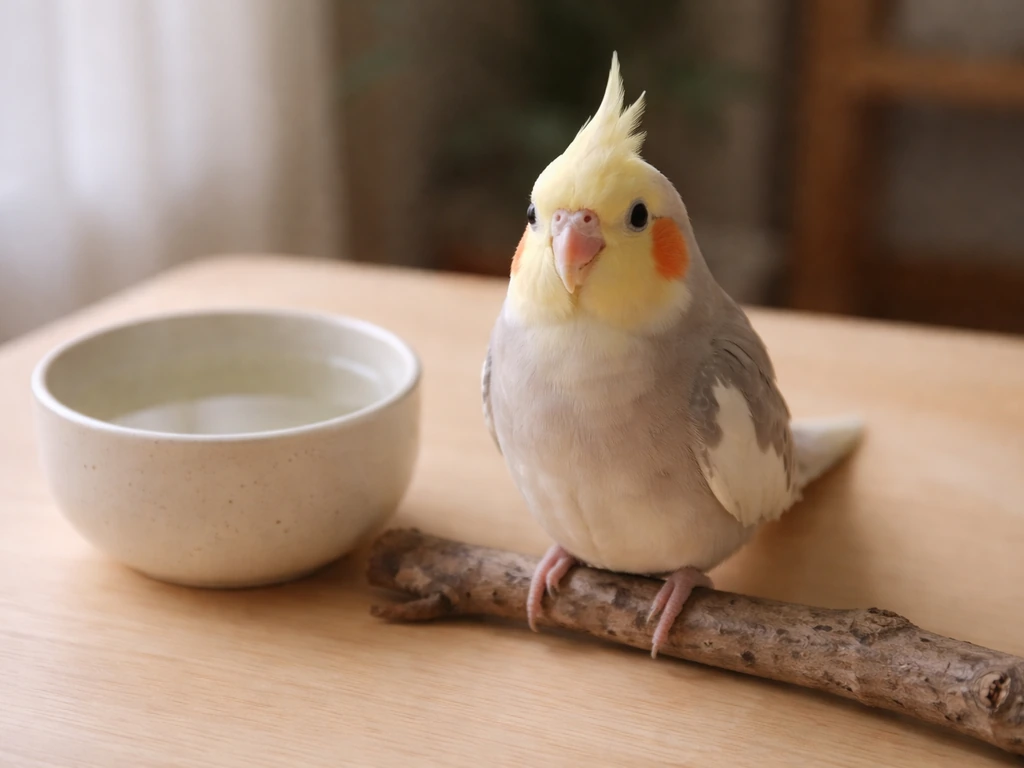
The word has three syllables and the stress belongs on the final one: kock-uh-TEEL. The middle syllable is barely there, just a light schwa sound (that "uh" you make when you're mildly surprised). Don't linger on it. The rhythm you're going for is almost like a two-beat word: KOCK then TEEL, with a soft connector in between.
Some dictionaries do place the primary stress on the first syllable, giving you something like KOCK-uh-teel. Merriam-Webster, for example, uses the respelling ˈkäk-ə-ˌtēl, with the main stress mark on "kock." Britannica follows a similar pattern. But in everyday speech, and in most British and international English references, the final syllable "teel" carries the punch. You'll hear both versions from confident, fluent English speakers, so don't stress too much (pun intended) if you hear variation. The key things that never change: three syllables, the vowel in the final syllable sounds like "eel," and the middle syllable stays light.
Common mispronunciations and why they happen
Most people who stumble on this word do so for one of three reasons: they've only ever seen it written, they're confusing it with "cockatoo," or they're trying to stress a syllable that doesn't want the attention.
- Saying "COCK-uh-till" (rhyming with "fill"): The "-tiel" ending looks like it might rhyme with "fill" or "tile," but it doesn't. The "ie" combo here makes an "ee" sound, so it's always "-TEEL," not "-till" or "-tile."
- Saying "cock-uh-TYE-ul" (two syllables in the ending): Some people try to give the "-tiel" two full beats, turning it into "TYE-ul." It's one syllable, rhyming with "deal."
- Saying "COCK-uh-too-el" (blending it with cockatoo): The cockatoo connection is real (more on that below), and it trips people up by making them half-expect a "-too" sound at the end.
- Overstressing "COCK-" while swallowing the ending: Saying "COCK-uh-tl" with almost no ending at all. The last syllable needs to ring out clearly.
The cockatoo confusion is worth flagging on its own. Cockatoo ends in "-too" (rhymes with "zoo"), and cockatiel ends in "-teel" (rhymes with "feel"). The two birds share a common name root, so visually they look related, but the endings sound completely different. Cockatoo: kock-uh-TOO. Cockatiel: kock-uh-TEEL. Keep those two endings distinct in your head and you're sorted.
IPA pronunciation and syllable stress
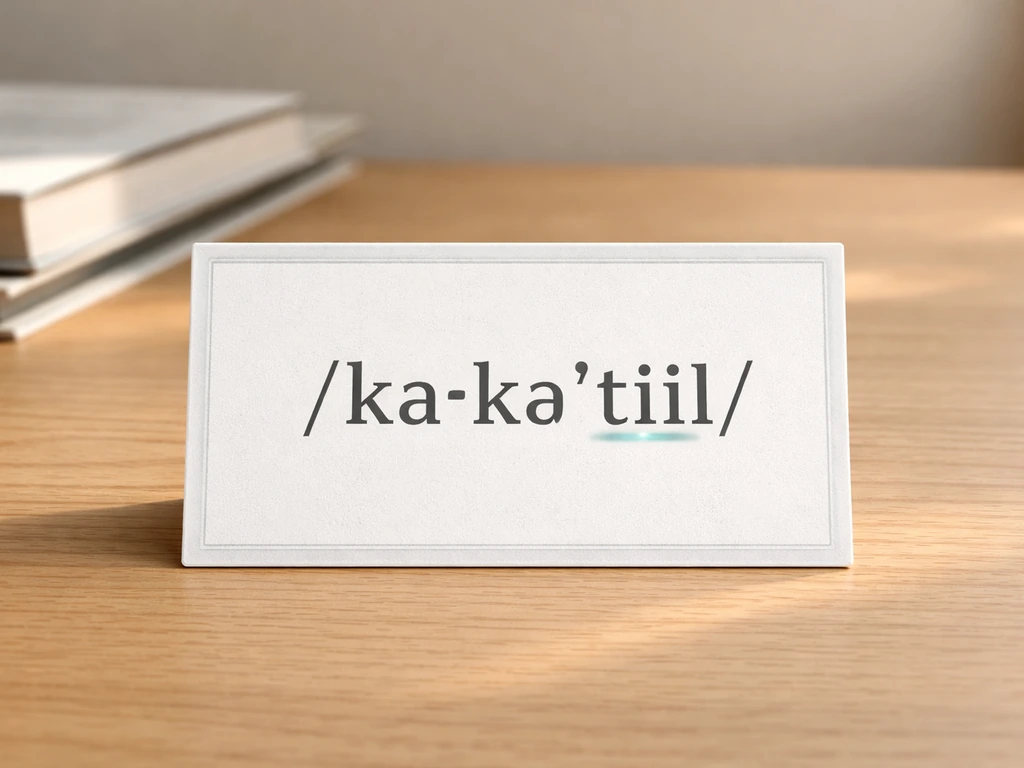
If you're comfortable with IPA (the International Phonetic Alphabet), here's how the major dictionaries represent "cockatiel":
| Source | IPA | Stress placement |
|---|---|---|
| Oxford Learner's | /ˌkɒkəˈtiːl/ | Primary stress on final syllable (-tiːl) |
| Wiktionary (US) | /ˌkɒk.əˈtil/ | Primary stress on final syllable (-til) |
| WordReference (UK) | /ˌkɒkəˈtɪəl/ | Primary stress on final syllable (-tɪəl) |
| Merriam-Webster | /ˈkäk-ə-ˌtēl/ | Primary stress on first syllable (käk-) |
| Britannica | /ˈkɑːkəˌtiːl/ | Primary stress on first syllable (kɑːk-) |
A quick note on reading IPA stress marks: the symbol /ˈ/ marks primary (stronger) stress on the syllable that follows it, and /ˌ/ marks secondary (lighter) stress. So in /ˌkɒkəˈtiːl/, the main beat is on "tiːl" and "kɒk" gets a lighter secondary stress. In /ˈkäk-ə-ˌtēl/, it's flipped: "käk" is the main beat and "tēl" is secondary. Both are considered correct pronunciations. The safest and most widely recognized everyday version is kock-uh-TEEL with the emphasis at the end.
How US and UK accents handle it differently
The core syllable structure and stress are consistent across US and UK English, but the vowel sounds shift a bit depending on your accent.
In British English, the first syllable "cock" uses the short /ɒ/ vowel (the same vowel you'd use in British "hot" or "lot"). The final syllable is a long, clean /tiːl/. In some UK pronunciations, particularly from WordReference's UK IPA /ˌkɒkəˈtɪəl/, the final vowel can sound slightly closer to "tee-ul" with a very slight glide, though this is subtle.
In American English, that first vowel shifts toward /ɑː/ (the "ah" sound Americans use in "father" or "hot"), giving you "kahk" rather than "cock." The final syllable stays as a crisp "-teel." So a US speaker tends to say "kahk-uh-TEEL" and a UK speaker says "cock-uh-TEEL," but both land on the same bird. If you've ever watched nature documentaries from both sides of the Atlantic, you'll notice this first-syllable vowel shift happens across loads of bird names, not just cockatiel.
Spelling, related words, and common confusions
The spelling "cockatiel" is the standard English form. You might occasionally see "cockateel" (a phonetic misspelling that makes sense given how it sounds) or "cockertiel," but these are errors. The correct single word: c-o-c-k-a-t-i-e-l.
The possessive form is "cockatiel's" (as in "the cockatiel's crest"), and the plural is simply "cockatiels." Neither of these changes the pronunciation of the base word in any significant way.
The word "cockatiel" shares its root with "cockatoo," and both ultimately trace back through Dutch and Malay to a word for these crested parrots. That shared ancestry is why the openings sound so similar (both start with "kock-uh-") but the endings diverge completely. Cockatoo ends in "-too" (from the Malay "kakatua") while cockatiel ends in "-teel" (from the Dutch "kaketielje," a diminutive form, essentially meaning "little cockatoo"). Once you know the diminutive angle, the "-teel" ending actually makes intuitive sense: it's softer and lighter than the bold "-too" of its larger relative.
This is a good reminder that bird names with similar spellings don't always rhyme. Other bird names that catch people off guard in a similar way include caique (it's "kah-EEK," not "cake") and chough (it's "chuff," rhyming with "stuff"). English bird names borrow from Dutch, Malay, French, and beyond, so spelling and pronunciation often don't follow obvious English rules.
How to pronounce the scientific name: Nymphicus hollandicus
The cockatiel's scientific name is Nymphicus hollandicus (first described by Kerr in 1792). If you're reading bird-care guides, taxonomy references, or field resources, you'll run into this. Here's how to break it down:
- Nymphicus: nim-FY-kus. Three syllables: nim (rhymes with "him") + FY (rhymes with "my") + kus (rhymes with "us"). The stress goes on the second syllable: nim-FY-kus.
- hollandicus: hol-AN-di-kus. Four syllables: hol + AN (the stressed beat) + di + kus. It's the Latin form of "Hollandic" or "of Holland," referencing the former Dutch colony of New Holland (Australia), where the bird was first described.
- Together: nim-FY-kus hol-AN-di-kus.
You don't need to know the scientific name to own one of these birds or talk about them confidently. But if you're using field guides, writing about avian taxonomy, or just enjoy knowing the full name of things, it's a satisfying one to get right.
Quick practice tips to say it naturally
The goal isn't just to know it, it's to say it without thinking twice. Here's a short routine that actually works:
- Say it like a robot first. Give each syllable equal weight: COCK. UH. TEEL. Three separate beats, no rushing. This trains your mouth to hit all three syllables correctly.
- Now collapse it naturally. Say "kock-uh" as one quick breath, then let "TEEL" land with a bit of emphasis. You're looking for the rhythm of "uh-oh-DEAL" but starting with "kock" instead.
- Contrast it with cockatoo. Say both back to back: kock-uh-TEEL, kock-uh-TOO. Notice how the endings rhyme with "feel" and "shoe" respectively. Drilling this contrast locks in the "-teel" ending.
- Use it in a full sentence out loud. Try: "I just got a cockatiel." Or: "The cockatiel's crest is raised." Embedding it in natural speech removes the self-consciousness that makes people fumble the word.
- Check yourself against a dictionary audio clip. Both Cambridge and Oxford Learner's Dictionaries have audio playback. Listen once, repeat three times without the audio, then check again. Three rounds of this and it's in your memory.
The word becomes second nature fast because it has a satisfying, rhythmic shape: light-light-STRONG. Once that pattern clicks, you'll never second-guess it again. And if you're enjoying digging into bird name pronunciations, names like potoo, tanager, and caique are worth exploring next because they each have their own unexpected pronunciation quirks. And the same idea applies when you learn how to pronounce the chough bird correctly. If you’re wondering how to pronounce tanager bird, it’s a helpful next step to learn the simple rhythm and vowel sounds specific to that word. If you want a quick next step, check out how to pronounce potoo bird and its “pot-to” style rhythm.
FAQ
How should I say “cockatiel” if I’m speaking in a slow, careful way versus casual conversation?
In both cases, keep three syllables and preserve the final “-teel” vowel. In careful speech you can make the middle schwa slightly longer, but avoid turning it into a full “a” or “ee,” which is the most common slow-speech mistake.
Is it okay to say “cock-uh-TEAL” with a full “ea” instead of an “eel” sound?
Try to keep the final vowel close to “eel” (a clean long /iː/). Using a more exaggerated “ea” diphthong can make people think you said a different ending, especially if you also give the middle syllable too much weight.
What’s the best way to avoid mixing it up with “cockatoo” when I’m talking quickly?
Use a timing cue: “kock” then “teel,” where “teel” starts as soon as the word ends. If you pause after “kock,” your brain may slide into the common “-too” pattern, so keep the last two beats together.
How do I pronounce “cockatiel” when it appears as part of another word or phrase (like “cockatiel cage”)?
The base word pronunciation stays the same. The only change is linking: you may slightly compress the middle “uh” so “cock-uh-TEEL cage” flows without inserting an extra vowel between the words.
Do I pronounce it differently if I’m saying “the cockatiel” versus “a cockatiel” (with articles)?
Articles do not change the cockatiel syllables. Just make sure the stress still lands on the final syllable of “cockatiel,” not on “a” or “the,” since that’s another frequent source of mis-stress.
How should I say it in writing that I want people to read out loud (like “kock-uh-teel”)?
Your respelling should reflect the stress: “kock-uh-TEEL.” If you don’t mark stress, many readers will default to the first syllable, creating the “KOCK-uh-teel” variant you may not intend.
Are the spellings “cockateel” or “cockertiel” ever acceptable, or just errors?
They are best treated as misspellings. Even if they seem to “sound like” the right ending, they may mislead readers in guides or care resources, and the correct standard spelling is the one that appears in most dictionaries.
Does the possessive form “cockatiel’s” change pronunciation at all?
Usually no. You’ll pronounce “cockatiel” the same, then add the possessive “z” sound. It should sound like “cock-uh-TEEL-iz,” where the stress remains on “TEEL” not on the possessive ending.
How do I pronounce it in IPA if I don’t know whether the dictionary is using US or UK conventions?
Use the principle from the stress marks: look for main stress on the syllable corresponding to “-tiːl” or “-teel.” If the IPA puts the primary stress earlier in the word, that’s a valid variant, but for everyday consensus aim for kock-uh-TEEL.
What’s the most likely pronunciation error I should listen for from other people?
The most common error is giving the middle syllable too much clarity, turning the quick “uh” into something like “uh-EE” or shifting the ending away from “-teel.” If the word sounds like it rhymes with “cockatoo,” they likely said the wrong ending.
Next Article
How to Pronounce Xeme Bird: Say It Like This
Learn how to pronounce xeme bird step by step with IPA, syllables, stress, and common mistakes to avoid.