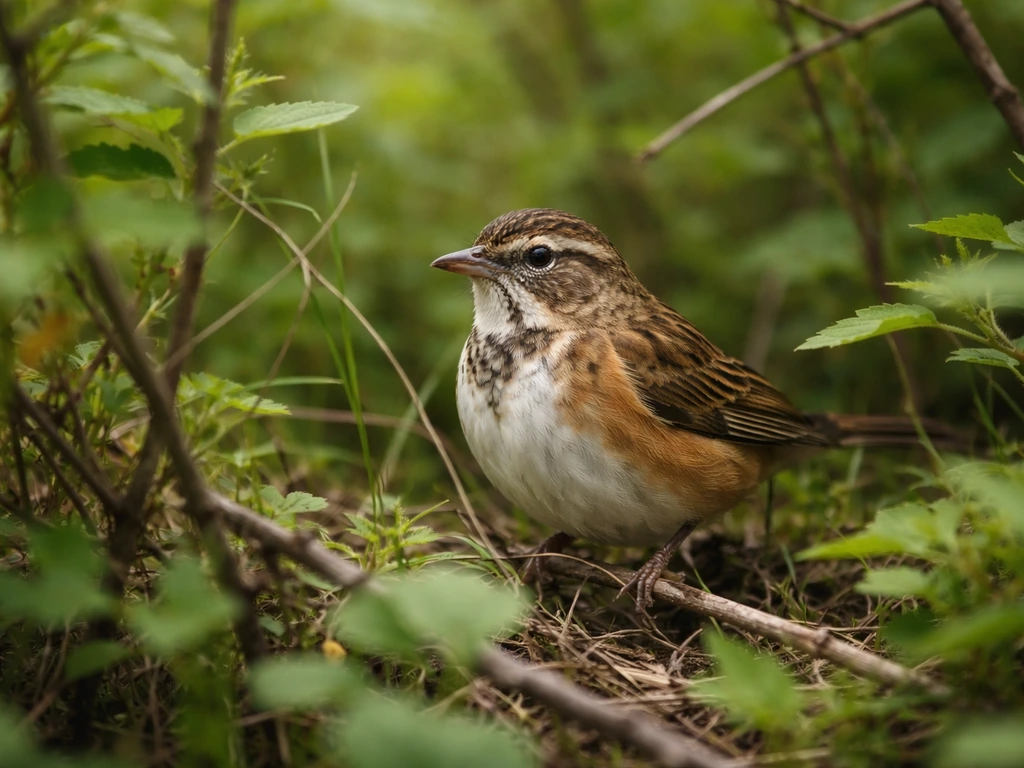
Towa is not a bird species with a pronoun preference. It is a language, specifically the Jemez Pueblo language spoken in New Mexico, also called Jemez or Hemish, and it belongs to the Kiowa-Tanoan language family. If you landed here searching for 'Towa bird pronouns,' you are most likely trying to figure out how birds or animals are grammatically referred to in the Towa language, and that is exactly what this article covers: which pronoun forms Towa uses for animals, what rules drive those choices, and how to correctly translate and verify them.
What Are Towa Bird Pronouns? Meaning and Grammar Guide

James Ridgley
27 Apr 2026
What 'Towa' and 'Bird Pronouns' Actually Mean
Let's clear up the two parts of the phrase before going further. 'Towa' (sometimes spelled Towa or referred to as Jemez) is the indigenous language of the Jemez Pueblo people in Sandoval County, New Mexico. It is one of the four branches of the Kiowa-Tanoan family, alongside Kiowa, Tiwa, and Tewa. Those four names look very similar on a page, which causes constant confusion for people researching Indigenous languages of the American Southwest. Towa is not Tewa. It is not Tiwa. If you see any of those labels in a source, double-check which branch is actually being discussed before applying grammatical details to Towa specifically.
'Bird pronouns' in a linguistic context simply means: what grammatical markers or pronominal forms does Towa use when speakers refer to a bird in a sentence? It has nothing to do with personal identity pronouns in the modern social sense. This is purely about grammar, specifically how a language encodes reference to a non-human animate entity like a bird.
One more disambiguation worth flagging: some readers arrive at this question through bird-naming resources, having seen 'Towa' listed somewhere in connection with a bird name or pronunciation guide. Towa the language is not a common source of English bird common names. If you are trying to pronounce a bird name like towhee, junco, kakapo, or anhinga, those are drawn from very different linguistic origins and are separate questions from Towa grammar entirely.
For help pronouncing anhinga in English, use a pronunciation guide matched to the dialect you speak. If you specifically mean the towhee bird pronunciation in English, use a pronunciation guide that matches your dialect. If you are also wondering how to pronounce “junco bird,” check a pronunciation guide that matches the species and region you mean.
What Pronouns Actually Do in a Language
A pronoun is a word or marker that stands in for a noun so you do not have to repeat it. In English, once you say 'the hawk,' you can switch to 'it' or 'she' or 'he' depending on how you choose to refer to that bird. The choice of pronoun in English for animals is largely convention: 'it' is the default, but pet owners and naturalists often use gendered pronouns. That choice is mostly stylistic in English.
In many other languages, pronoun choice is not stylistic at all. It is grammatically required and governed by rules involving animacy (is the referent alive or not?), number (singular or plural?), grammatical person (first, second, or third?), and sometimes the topic or discourse role the referent plays in the sentence. Towa is one of those rule-governed languages, and understanding that structure is the key to understanding how birds get referenced within it.
How Towa Refers to Birds and Animals
Towa, like other Tanoan languages, uses a system of pronominal prefixes and suffixes attached to verbs rather than free-standing pronoun words the way English does. This means that in Towa, the 'pronoun' is not typically a separate word you can point to on a page the way 'it' or 'they' are in English. Instead, it is built into the verb form itself through prefixes that encode the grammatical person, number, and animacy of the subject and object.
For birds and other animals (non-human animates), Towa uses third-person pronominal prefixes that mark animate reference. These differ from the prefixes used for inanimate objects. Birds fall into the animate category, so they take the animate third-person set of markers, not the inanimate set. This is the core rule: if you are referring to a bird in Towa, you are using animate pronominal morphology, full stop.
Towa documentation is limited because the Jemez community has historically discouraged the creation and circulation of written materials about their language. This is a cultural preference rooted in protecting sacred and community knowledge, and it means that publicly available grammar descriptions are sparse and sometimes outdated. The most reliable scholarly work comes from academic linguists who have worked with community permission, but those sources are not always freely accessible online.
When the Pronoun Forms Change: Animacy, Number, Person, and Context
Even within the animate category, Towa pronominal marking shifts based on several factors. Here is how to think about each one:
- Animacy: Birds are animate. Rocks, feathers lying on the ground, and nests without birds in them are inanimate. The animate vs. inanimate distinction changes the prefix set entirely, so getting this right is step one.
- Number: Towa distinguishes singular from plural referents. One bird takes a singular animate third-person marker; a flock of birds takes a plural animate third-person marker. The forms are different, so the number of birds you are talking about matters grammatically.
- Person: First person (the speaker), second person (the listener), and third person (the bird or animal being discussed) each have distinct prefix sets. When talking about a bird, you are almost always dealing with third-person forms.
- Topic and discourse role: Tanoan languages including Towa can shift pronominal forms based on whether the referent is the established topic of conversation or a newly introduced one. A bird mentioned for the first time in a story may be marked differently than a bird that has already been established as the subject being tracked.
- Verb class: The verb itself can affect what pronominal prefix appears. Different verb classes in Towa take different prefix paradigms, so the same bird as a subject might look slightly different depending on whether the verb describes motion, perception, or state.
None of these rules are random. They form a coherent system, but that system requires learning verb paradigms and prefix sets rather than just memorizing a pronoun list the way you might in Spanish or French.
Real Examples You Can Map to Bird References
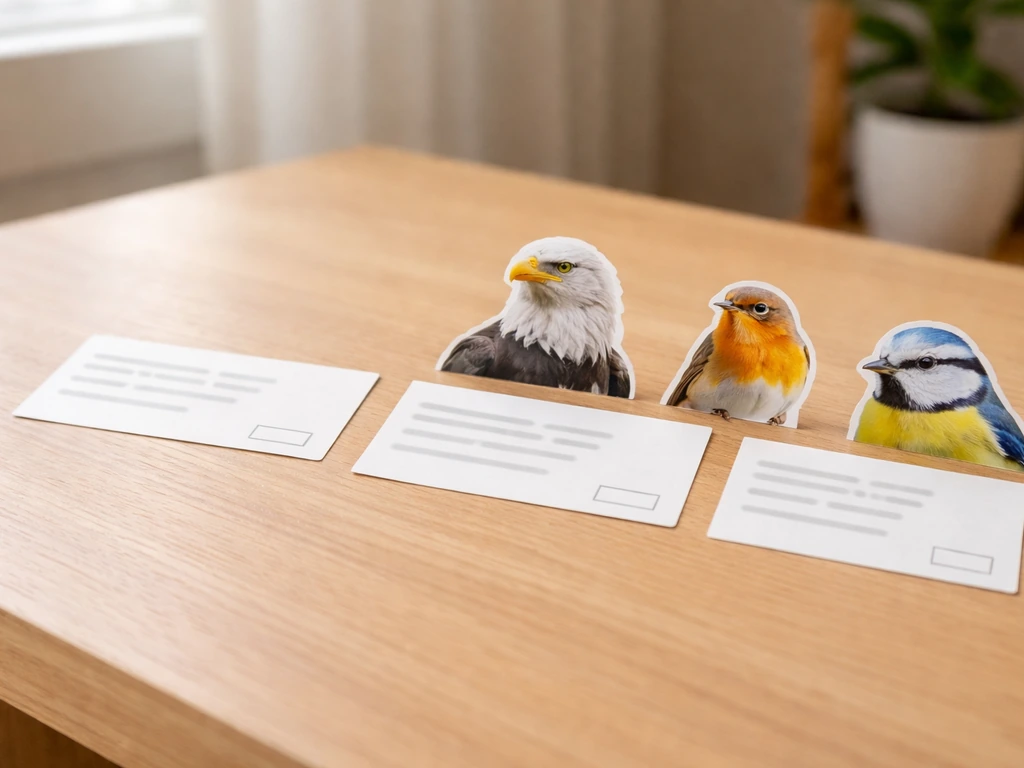
Because Towa documentation is limited, working with fully authenticated example sentences is difficult without access to community-approved resources. That said, here is how the logic plays out in practice, using placeholder structure to show the pattern:
- Referring to a single bird acting as the subject of a verb (for example, 'the eagle flies'): you would attach a singular animate third-person subject prefix to the verb. The bird itself may or may not be named; the prefix carries the reference.
- Referring to a bird as the object of an action (for example, 'he sees the hawk'): the verb takes an animate third-person object prefix, distinct from the subject prefix. Object and subject marking are separate slots in the verb template.
- Referring to a group of birds: the plural animate third-person prefix replaces the singular form. English speakers sometimes forget this because English verbs do not change to show the animacy of an object, only the subject number ('sees' vs. 'see').
- Tracking a specific bird through a narrative: once a bird has been introduced, subsequent verbs referencing it use what linguists call a coreferential or anaphoric form, which may be reduced or altered from the full form used at first mention.
If you are working from a bird name list and trying to construct a Towa sentence about a specific species, the species name slots in as the noun, and the pronominal marking on the verb handles the reference. You do not assign a standalone pronoun word to the bird the way English does with 'it' or 'they.'
English vs. Towa: Where Confusion Creeps In
| Feature | English | Towa |
|---|---|---|
| Pronoun type | Free-standing words ('it', 'they', 'she') | Prefixes/suffixes attached to the verb |
| Animacy distinction | No grammatical animacy; style choice only | Grammatically required; animate vs. inanimate changes prefix set |
| Number marking | Pronoun changes ('it' vs. 'they') | Prefix changes on the verb for singular vs. plural |
| Default animal pronoun | 'It' is standard; gendered pronouns optional | Animate third-person prefix; no equivalent of gendered 'he'/'she' for birds |
| Written availability | Fully documented, abundant resources | Sparse; community restrictions limit written grammar materials |
The biggest trap for English speakers is looking for a word that means 'it' or 'they' in Towa and expecting to swap it in the way English works. That word does not exist as a standalone item in the same way. The reference is encoded in the verb, and pulling it out of that context gives you an incomplete and potentially misleading picture.
A second common confusion: because Towa, Tewa, and Tiwa look so similar in writing, grammar descriptions of Tewa (spoken at pueblos like San Ildefonso and Santa Clara) sometimes get mistakenly applied to Towa. Tewa is better documented than Towa, so researchers sometimes find Tewa grammar resources more easily and assume they transfer. They do not transfer cleanly. The languages are related but have diverged significantly.
How to Find Accurate Towa Grammar Sources Today
Here is the honest practical picture: Towa is one of the most under-documented languages in North America by design. The Jemez Pueblo community has actively chosen to limit written resources, which means you will not find a comprehensive freely available Towa grammar online. What you can do instead:
- Start with EBSCO's Research Starters on Kiowa-Tanoan languages, which gives a solid overview of the language family and clearly separates Towa from Tewa and Tiwa. This helps you confirm you are looking at the right branch before going deeper.
- Search JSTOR and linguistic journal databases (like Language, International Journal of American Linguistics, or Anthropological Linguistics) for peer-reviewed papers on Jemez or Towa grammar. Academic linguists like Paul Kroskrity have published work on Arizona Tewa, and comparative Tanoan work will sometimes include Towa data.
- Contact the Jemez Pueblo directly or through their official tribal website. The community itself is the authoritative source, and some language revitalization efforts have produced materials that are shared through community channels rather than public databases.
- Check the Endangered Languages Archive (ELAR) and PARADISEC, which host recordings and documentation projects for under-resourced languages. Towa materials, if deposited, would be there.
- If you are verifying a specific pronoun form for a sentence or translation, look for it in a verb paradigm table from a linguistic description, not a word list or online dictionary. Word lists will not show you the morphological structure.
- For pronunciation of the pronominal prefixes themselves, IPA transcriptions in academic papers are your most reliable guide. Community recordings are even better if you can access them.
If your original question came from a bird-naming context, such as trying to understand how a bird species name is spelled, said aloud, or used in a different language, that is a separate path. Bird common names in English typically come from Latin, Greek, Indigenous American languages, descriptive English terms, or the names of naturalists. Towa is not a major source of English bird common names, so if you encountered 'Towa' in a bird name context, it is worth double-checking whether the source actually meant Tewa, a place name, or something else entirely. For pronunciation guides to specific bird names, the kind of practical phonetic breakdowns you find for names like towhee, junco, kakapo, or anhinga follow a completely different methodology than Towa grammatical analysis.
The bottom line: blank" rel="noopener noreferrer">Towa bird pronouns are animate third-person pronominal prefixes built into the verb, governed by animacy, number, person, and discourse role. An Oxford Research Encyclopedia overview also notes that in Kiowa-Tanoan languages, agreement systems encode multiple grammatical identities in pronominal prefixes. They are not standalone words, and they are not well-documented in freely available resources. For accurate forms, academic linguistics papers and direct community engagement are your two most reliable paths.
FAQ
If Towa has “bird pronouns,” can I look up a single word for “it” and use it for any bird?
No. In Towa, reference to a bird is encoded in the verb’s pronominal morphology (prefixes and suffixes), so you generally cannot substitute a “pronoun word” the way you would with English “it” or “they.”
Does Towa always treat every non-human noun like a “bird pronoun” category (animate)?
Not automatically. Towa marking distinguishes animate versus inanimate reference, and birds are treated as animate non-human entities. If the sentence’s referent is not treated as animate in Towa’s categories (for example, a non-living thing or a mass noun), you would use a different pronominal set.
What if the bird is mentioned in the sentence but it is not the subject or object, how does that affect the pronominal marking?
Only if the bird is acting as the grammatically relevant argument in the verb (typically subject or object). If the bird is mentioned but not the verb’s indexed argument, you may not see the same pronominal material as you would when the bird is the direct subject or object.
If the bird is female or male, do Towa “bird pronouns” change the way English does with she and he?
In English, “she” versus “he” for animals is usually a stylistic choice. In Towa, the crucial factors are grammatical person, number, and animacy, plus discourse role and the argument structure. So you should not assume gendered pronouns map over from English habits.
If I include the bird’s name in the sentence, do I still need the verb to carry the “bird pronoun” information?
Usually not. Towa verb indexing can encode who does what to whom, so the noun phrase for the bird may appear for clarity while the verb still carries the pronominal information. You cannot reliably infer the pronominal markers by looking only at whether the noun is present.
Why might “bird pronoun” prefixes or verb forms I find online not match what I expect?
They can. Many under-documented languages have forms that vary by speaker, community usage, or the specific verb paradigm. If you are using a secondary source, verify that the example sentences and paradigms come from the Towa language (not Tewa or Tiwa) and from the relevant era or dialect the source describes.
When translating Towa sentences into English, should I mirror the English pronoun exactly (like it vs they), or is that only approximate?
Because the pronominal system is tied to verb structure, translating between Towa and English can mislead you. An English translation might use “it,” “they,” or even a gendered pronoun, but those choices are often not the direct grammatical reflection of Towa indexing.
How do I handle multiple birds in Towa, do the verb-markers change for plural?
Yes, plural requires checking the number category used by the verb’s indexing. If you are referring to multiple birds, you generally need the verb forms that mark plural number, not the singular animate set.
What’s the most common mistake when trying to “apply” Towa pronominal markers to bird sentences without verb analysis?
You should avoid treating pronominal prefixes as free-standing pronouns. A practical test is to look for the verb’s argument roles (who acts, who is affected). If you are not sure which role the bird has, you may pick the wrong person-number indexing even if you have the “animate” category right.
What is the safest workflow to figure out the correct Towa pronominal marking for a bird in a new sentence?
Start with the verb you need (or its glossed lemma) and then determine which argument positions are filled by the bird (subject or object), whether the bird is singular or plural, and how discourse role is intended. Only after that should you select the corresponding pronominal morphology; using a memorized list without verb paradigm context is likely to fail.
Next Article
How to Pronounce Towhee Bird: IPA, Syllables, and Stress
Learn how to pronounce towhee bird correctly with IPA, syllables, stress, common mistakes, and chewink guidance.