The phrase 'shellac the bird is the most popular finger' is almost certainly a piece of phonetic wordplay pointing to a real bird name. Break it apart and you get two embedded clues: 'shellac' sounds like it contains a bird name hiding inside it, and 'most popular finger' is a nudge toward a specific digit or letter-key that completes or confirms the puzzle. The most likely intended bird is the LARK, with the Horned Lark being the strongest candidate when you factor in both the sound of 'shellac' and the secondary clue about fingers. Here is how to work through that logic step by step.
Shellac the Bird Is the Most Popular Finger Meaning Explained

James Ridgley
21 Apr 2026
Decode the phrase: what 'shellac' and 'popular finger' are pointing to
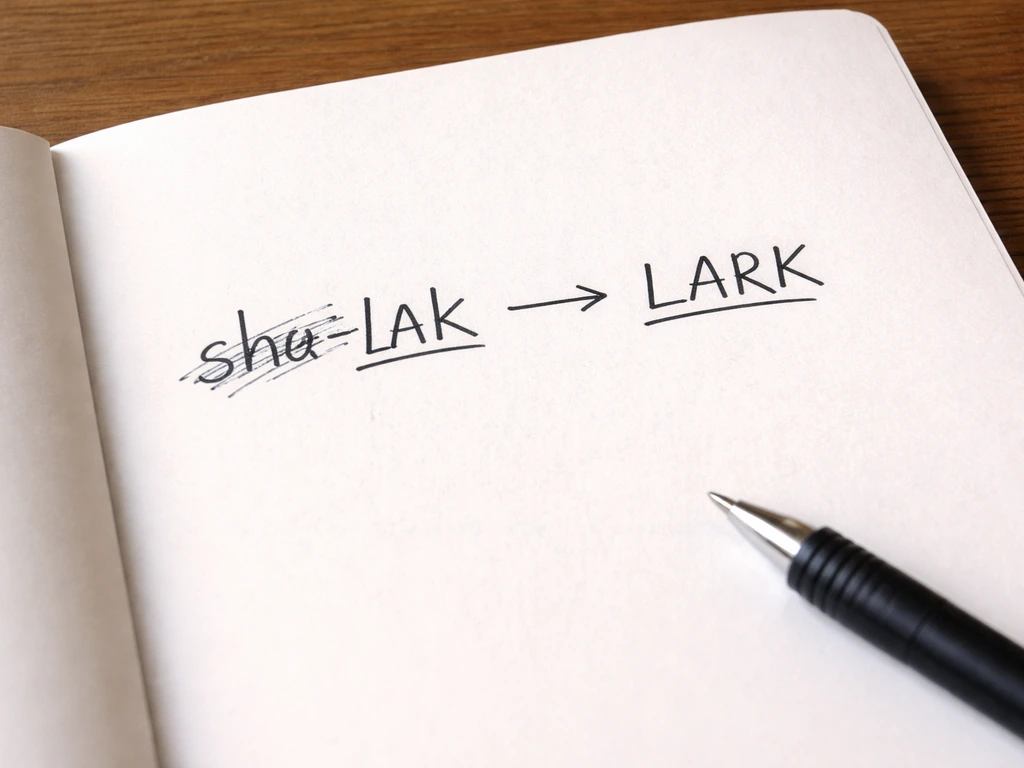
Start with 'shellac.' Merriam-Webster gives its pronunciation as shə-ˈlak. Say it out loud slowly: shuh-LAK. Now strip away the first syllable ('shuh') and you are left with LAK, which is phonetically very close to LARK if you add the final consonant. That is the core trick: 'shellac' is being used as a sound-container for the bird name 'lark' hiding inside it. This kind of phonetic embedding is common in word puzzles, crossword clues, and tongue-in-cheek riddles about bird names.
Now for 'most popular finger.' In everyday English, the 'most popular finger' is a cheeky reference to the middle finger, which is also the longest finger on the human hand. But in a wordplay or keyboard context, 'finger' can also point to the letter or key that a specific finger presses most often. On a standard QWERTY keyboard, the middle fingers of both hands tend to press the letters K and D most frequently among their assigned keys. K is the letter that completes 'LAK' into 'LARK.' So the clue 'most popular finger' is giving you the K you need to land on LARK from the 'shellac' sound.
Put it together: shell-AC (hidden sound: LAK) + the 'popular finger' (the K) = LARK. The full phrase is a roundabout way of saying: 'The bird whose name sounds like the end of shellac, with the most-used finger completing it.' That bird is the lark.
Bird-name mapping: candidate birds that match the sounds and spellings
Once you have 'lark' as your target sound, the next question is which lark? The word 'lark' covers a whole family of birds. Here are the strongest candidates and why each one fits or falls short:
| Bird Name | Why It Fits | Why It Might Not Be the Answer |
|---|---|---|
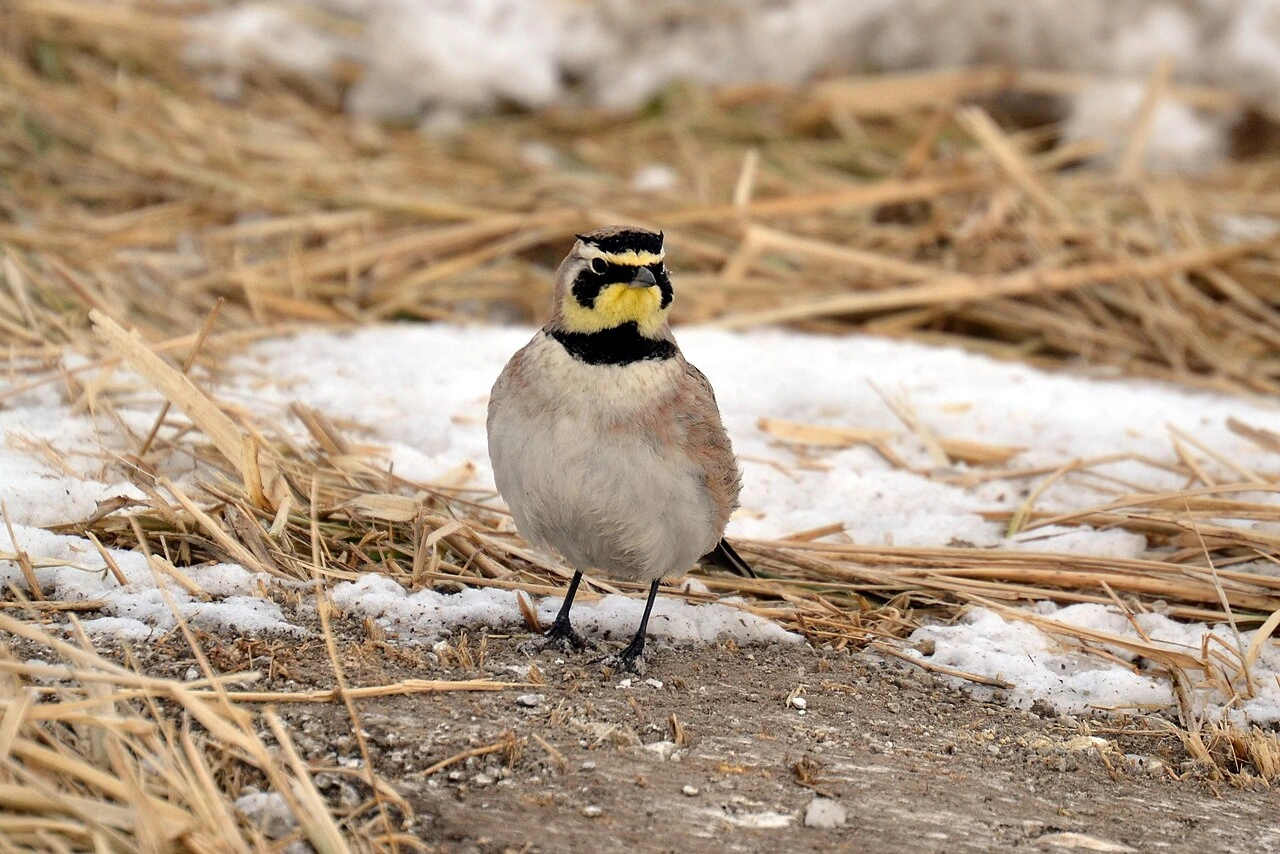
| Horned Lark (Eremophila alpestris) | Most widespread lark in North America; prominently featured on Cornell Lab's All About Birds; also called 'Shore Lark' in some regions | The name 'Horned' adds a modifier, so the base clue points to lark generically first |
| Lark (family Alaudidae, generic) | Purest match to the sound extracted from 'shellac'; Merriam-Webster has a standalone definition entry for lark as a bird | Too broad as a species answer; puzzles usually want a specific bird |
| Lark Bunting (Calamospiza melanocorys) | Cornell Lab All About Birds has a dedicated Lark Bunting page; 'lark' appears in its common name | It is a bunting that borrowed the lark name, not a true lark; less phonetically clean |
| Skylark (Alauda arvensis) | Iconic lark species in British English; 'sky' + 'lark' shares the terminal -lark sound | Less common in North American bird-watching contexts; the clue does not suggest a compound name |
| Shore Lark | Alternative English name for the Horned Lark; used in European and some regional U.S. contexts | Same bird as Horned Lark; the two names are interchangeable depending on geography |
The Horned Lark is the best single answer for a North American audience. The Cornell Lab’s All About Birds describes the Horned Lark as a widespread songbird across fields, deserts, and tundra blank" rel="noopener noreferrer">Horned Lark is a widespread songbird across fields, deserts, and tundra. It is the only lark native to North America, it appears in every major field guide, and it has the added hook of a regional alias (Shore Lark) that puzzle writers sometimes exploit. If the puzzle has a British English bent, Skylark becomes a strong alternate.
Pronunciation and spelling verification across common bird-name usages
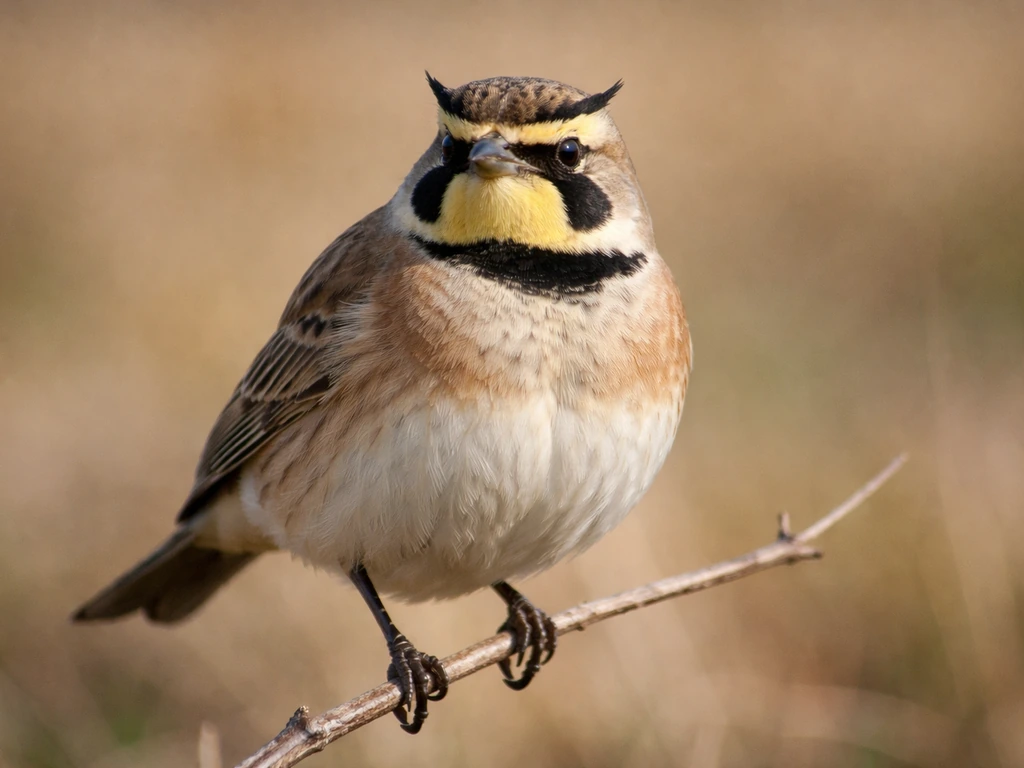
The word 'lark' is spelled L-A-R-K in every standard English reference and pronounced exactly as it looks: /lɑːrk/ in American English, /lɑːk/ in British English. There are no common misspellings or variant spellings in standard ornithological usage. Cornell Lab's All About Birds and eBird both list it as 'Horned Lark' (two words, no hyphen) for the species Eremophila alpestris, and that is the form you should default to unless a regional guide says otherwise. Also note that many birding terms and related phrases are written with hyphens, so it is worth checking the exact spelling when you look them up hyphenated.
One thing worth checking: eBird supports alternate common names, so in some settings 'Shore Lark' will appear alongside or instead of 'Horned Lark.' If you are trying to match a puzzle answer to a field guide entry, make sure you are looking at both common-name options. The spelling does not change, but the modifier before 'Lark' can differ by region or database setting.
For pronunciation of 'shellac' itself: shuh-LAK (stress on the second syllable). Say it fast and the 'lak' ending is clear. The connection to 'lark' requires only the addition of an R, which is a standard phonetic shift that puzzle writers lean on all the time, especially in rhyming or near-homophone riddles.
Etymology and word origins: why the clue might reference these words
The etymology of 'shellac' is interesting in its own right, and it adds texture to why a puzzle writer might pick it as a clue. Shellac comes from the female lac bug (Kerria lacca, formerly Laccifer lacca), which secretes a resin that is scraped from tree bark. The word itself is a compound of 'shell' (for the flake-like form) and 'lac' (from the Hindi/Sanskrit word for the resin). Etymonline traces the slang verbal sense, meaning to beat or defeat soundly, back to around 1930. That slang layer could itself be a sub-clue: 'shellac the bird' might be read as 'beat the bird (name),' i.e., pound the word until the hidden bird name falls out.
The word 'lark' has a separate etymology worth knowing. As a bird name it comes from Old English 'lawerce' or 'laewerce,' which evolved through Middle English into 'lark.' The birds were well known in medieval England and feature in countless idioms and proverbs. The separate meaning of 'lark' as a carefree adventure or prank is believed to be a 19th-century development, possibly from dialect words meaning to play. That dual meaning (bird and playful escapade) is another reason puzzle writers love the word: it has built-in ambiguity.
The 'most popular finger' clue also has etymological resonance. 'The finger,' as a gesture, is well documented across cultures and has its own linguistic history. In a wordplay context, calling the middle finger the 'most popular' is a winking reference that doubles as a directional nudge: in the word LARK, the letter K is the last letter, and K is typed by the middle finger of the right hand on a QWERTY keyboard. The clue is layered: social joke on the surface, letter-key hint underneath.
How to confirm the correct bird: what to check and how to search

Once you have a hypothesis, confirming it takes about two minutes with the right sources. Here is a reliable sequence:
- Search Cornell Lab's All About Birds (allaboutbirds.org) for 'Lark.' You will see Horned Lark as the primary lark entry for North America, confirming it is a real, widely recognized species with a stable common name.
- Check Merriam-Webster for 'lark' as a noun. The dictionary confirms it as a bird-family term, which validates that 'lark' is the right direction even if you then need to specify the species.
- Verify pronunciation on Collins or Merriam-Webster's audio player. Both confirm that 'shellac' ends in the sound /lak/, close enough to 'lark' to justify the clue.
- Look up the eBird species page for Horned Lark and check the 'alternate common names' section. If 'Shore Lark' appears, you know the puzzle might also accept that answer.
- If the puzzle has a British English context, run the same search on the British Trust for Ornithology (BTO) website, where 'Shore Lark' is the default common name for the same species.
- Cross-check the finger clue: type LARK on your keyboard and notice that K is struck by your right middle finger. If the puzzle logic holds, that confirms the letter and the bird name simultaneously.
Common ambiguities and multiple plausible solutions
This kind of wordplay puzzle almost always has at least one alternative reading, and this one is no exception. To connect this riddle to other bird-name formats, you can also think about which word can be placed before bottle, bell, and bird which word can be placed before bottle, bell and bird. Here are the main ambiguities to keep in mind:
- LARK vs. LAC BUG: Because shellac literally comes from the lac bug, someone could argue the clue is pointing to the lac bug rather than a bird at all. But the phrase explicitly says 'the bird,' so lark wins on context.
- Which lark species: The puzzle might want the generic answer 'lark' rather than a specific species. In a crossword or trivia context, LARK (four letters) is often the intended answer. Horned Lark is the safe species-level answer for North American puzzles.
- Shore Lark vs. Horned Lark: These are the same bird, but if the puzzle answer blank has a specific letter count, one name will fit and the other will not. Count the spaces before committing.
- The 'popular finger' interpretation: Not everyone reads this as a keyboard reference. Some readers may interpret 'popular finger' as 'index finger' (which is sometimes called the pointer or popular finger in some cultural contexts), which on a keyboard presses F, G, R, T, V, B in QWERTY. None of those letters neatly complete a common bird name from the 'lak' sound, which supports the middle-finger/K reading as more likely.
- Skylark as an alternate: If the puzzle has a literary or British English flavor, Skylark is a valid answer. It contains 'lark,' it is globally famous (Shelley's 'To a Skylark'), and the 'shell' at the start of 'shellac' almost mirrors the 'sky' prefix in a visual rhyme. This is a stretch, but worth noting for poetic or literary puzzle contexts.
- Lark Bunting: Some puzzle databases list Lark Bunting as a valid 'lark' answer. It is a real North American bird with a Cornell Lab page, but it is not a true lark, so a careful puzzle writer would not prefer it.
Next-step workflow for solving similar bird wordplay puzzles
If you run into another bird-naming riddle with this kind of structure, here is the workflow that works consistently. If you are also curious about birding slang, see what is bird watching slang for common jargon and playful terms. It applies whether you are solving a crossword, a riddle, a trivia question, or a tongue-twister about bird names (and it connects to the broader world of bird-name language questions, like understanding bird beak slang or decoding what the mouth of a bird is called in formal versus informal English). If you are also wondering what bird beaks slang refers to, it usually means informal terms people use for a bird’s bill in casual conversation. If you are specifically wondering about bird beak slang, check how informal names differ from standard terms what are bird beaks urban dictionary. If you are specifically wondering about bird beak slang, check how informal names differ from standard terms bird beaks slang. In formal terms, the mouth of a bird is often called its beak, though everyday wording can vary mouth of a bird is called. Another common term for a bird’s beak is its “bill.”.
- Isolate the sound clue: say the strange or unfamiliar word out loud and listen for a bird name hiding inside it. Focus on the stressed syllable first.
- Strip affixes: remove any prefix or suffix from the clue word and see if what remains sounds like a bird name. 'Shellac' minus 'she-' leaves 'llac,' which approximates 'lark.'
- Check letter count: if the puzzle gives you blank spaces, count them before you commit to a species name vs. a generic name (LARK = 4 letters; HORNED LARK = 10 letters with space).
- Use a secondary clue to narrow the species: 'most popular finger' or similar secondary clues usually point to a specific letter, number, or modifier that distinguishes one candidate from another.
- Verify with Cornell Lab or Merriam-Webster: these two sources cover common English names authoritatively and are free to search. For alternate names, add eBird to your toolkit.
- Check etymology if you are stuck: Etymonline often reveals why a word sounds like something else, which can confirm or rule out a phonetic connection.
- Consider regional name variants: the same bird may be called something different in British vs. American English (Horned Lark vs. Shore Lark is a perfect example). If your first answer does not fit, try the regional alternate.
- If no single answer is clear, list all plausible candidates with their letter counts and verify each one against the puzzle constraints before choosing.
Bird-name wordplay puzzles reward the same skills that help with any bird-language question: knowing that common names vary by region, that spelling and pronunciation do not always match intuition, and that etymology often explains why two words sound suspiciously similar. Those same skills are useful whenever you are digging into how bird names work across languages and contexts, whether you are trying to understand what bird beaks are called in different registers or figuring out whether a compound bird name is spelled as one word or two. A quick takeaway on the wording is: "is bird seed one word or two" depends on whether you mean the compound noun as written in standard usage. The lark, in particular, is a bird whose name punches well above its size in the language and wordplay world.
FAQ
Does the “most popular finger” part always point to the letter K?
Yes, on a non-QWERTY layout the “most popular finger” step can change or fail. If the puzzle was designed for mobile or another keyboard, treat the finger clue as a general hint toward a “key that’s associated with the middle finger” rather than specifically the K on QWERTY.
How can I tell whether the riddle is using US or UK pronunciation?
If the puzzle source is UK-based, “most popular finger” could still land on the same final letter (K), but the “lark” pronunciation may be framed differently (/lɑːk/ versus /lɑːrk/). The written target stays LARK, but confirmation might rely more on spelling than on sound.
What’s the fastest way to verify the bird name without overthinking pronunciation?
A good check is whether the bird name also fits the exact letter embedding, not just the rhyme. For this riddle, LAK to LARK is consistent, but you should test whether any alternative bird spelling would require unusual letters or nonstandard spelling.
Should I answer “Horned Lark” or “Shore Lark” if both show up?
Look for whether the answer is expected to be a “common name” used in birding databases. Horned Lark (two words) is the safest default, but some lists also show Shore Lark as an alternate common name, so match what the puzzle’s intended audience would recognize.
Could the riddle be referring to “lark” meaning a prank instead of the bird?
If you see “lark” used in idioms, don’t assume it must mean the figurative “prank” sense. In a riddle that explicitly mentions “bird” (shellac the bird), the bird-name reading should be prioritized unless the clue includes extra language that signals mischief rather than taxonomy.
What common misspellings would break this kind of wordplay?
Spelling matters: “lark” is spelled L-A-R-K. The puzzle’s logic depends on adding an R to go from LAK to LARK, so if a proposed solution changes the spelling, it likely breaks the phonetic container trick.
What workflow should I use for other “bird-name hidden inside a phrase” riddles?
If you want to solve similar puzzles, rewrite the phrase into two tasks: (1) find what substring or near-homophone is “hidden” inside a clue word (here, shellac contains LAK), then (2) use the second clue to supply missing letters or a completion key. This keeps you from forcing a meaning that only works as a joke.
How do I adapt the answer for crossword or trivia formats?
If the source is a crossword or trivia setting, they may expect the species common name format used by specific databases or clue setters. When in doubt, use the most standard, two-word common name form (Horned Lark) and only swap aliases if the puzzle length or category forces it.
Next Article
What Are Bird Beaks Slang Terms Mean and How to Use Them
Clarifies bird beak slang meanings, links common nicknames to proper beak shape terms, and shows how to search or use th