"Bird" is a common noun and, more specifically, a singular count noun in English. It names a general category of animal rather than one specific individual, it can be counted (one bird, two birds), it takes the indefinite article "a" in the singular, and it has a standard plural form: birds. That covers the core answer, but the details of how noun types work with "bird" are worth walking through, especially because a few edge cases can trip people up.
Bird Is Which Type of Noun? Common Noun Explained

James Ridgley
17 May 2026
The direct answer: what type of noun is "bird"?
In standard English grammar, "bird" belongs to two overlapping noun categories at once. First, it is a common noun, meaning it refers to a general class of living creature rather than naming one particular, specific individual. Second, it is a count noun (also called a countable noun), meaning you can attach numbers to it and it has both a singular and a plural form. Merriam-Webster lists "bird" as a noun with no proper-noun designation, and Britannica Dictionary explicitly labels the entry as "BIRD [count]," confirming the count-noun classification in a standard reference.
Common noun vs. proper noun: and when does it change?
A common noun names a type or category of thing. A proper noun, by contrast, names one specific, unique individual and is capitalized in writing. "Bird" in everyday use is always a common noun: you are talking about the general idea of a feathered, winged animal, not one particular named entity. So in "A bird landed on the fence," the word is a common noun with a lowercase b.
Where things get interesting is in official bird species names and brand names. Merriam-Webster points out that some nouns can function as both common and proper nouns depending on context. In formal ornithological writing, the accepted convention is to capitalize the full common name of a recognized species, so "American Robin" or "Barn Owl" are treated as proper nouns. Here, the proper noun is the full species name, not the standalone word "bird." If you write "the bird flew south," bird is still common. If you write "the bird is a Great Blue Heron," then "Great Blue Heron" is the proper noun doing the naming work, while "bird" stays common. This distinction matters a lot on a site focused on bird naming and nomenclature, and it comes up constantly in field guides and species lists.
The word "bird" can also appear inside a proper noun, like in a brand name, a pub name, or a band name ("The Bird" as a specific named bar, for example). In those cases, the capital letter signals proper-noun use. But that is about the specific name, not about the word "bird" in general. For grammar purposes, your default should always be: "bird" alone is a common noun.
Count noun vs. mass noun: how "bird" actually behaves
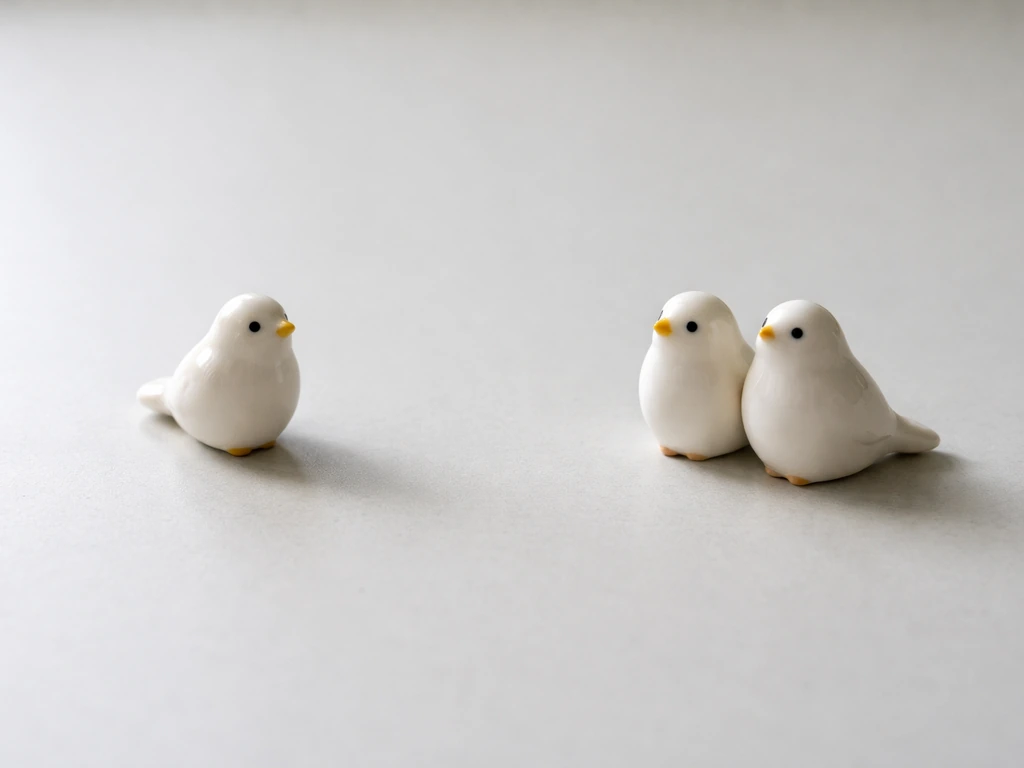
The count-noun vs. mass-noun (noncount noun) distinction is just as important as the common vs. proper distinction. A mass noun, sometimes called an uncountable noun, refers to something that cannot be counted in individual units. Classic examples are "water," "rice," or "music." You cannot say "one water, two waters" in the same way you count apples. Mass nouns generally have no plural form and do not use the indefinite article "a/an."
"Bird" is the opposite. Britannica Dictionary marks it as [count], which means it can be counted, it has a plural form (birds), and it works with "a/an" in the singular. Cambridge's grammar guidance reinforces this: countable nouns can appear with "a/an" and with numbers, while uncountable nouns cannot. So "a bird," "one bird," "three birds," and "many birds" are all perfectly natural. If you tried to use "bird" as a mass noun ("I saw bird in the garden"), it would sound grammatically wrong to a native speaker because bird is not a mass noun.
| Feature | Count noun (bird) | Mass/noncount noun (e.g., water) |
|---|---|---|
| Has a plural form | Yes: birds | No: not "waters" in ordinary use |
| Takes "a/an" | Yes: a bird | No: not "a water" in ordinary use |
| Works with numbers | Yes: two birds | No: not "two waters" in ordinary use |
| Works with "many" | Yes: many birds | No: use "much water" instead |
| Works with "few" | Yes: few birds | No: use "little water" instead |
Singular, plural, and the right determiners to use
Because "bird" is a count noun, it follows predictable patterns with articles and quantifiers. In the singular, you need a determiner: "a bird," "the bird," "this bird," "that bird," or "one bird" all work. You would not say just "Bird flew overhead" in standard English (that sounds like a name or a headline). In the plural, "birds" can stand alone or take a quantifier: "birds flew overhead," "some birds," "a few birds," "many birds," "the birds," or "those birds" are all correct.
Britannica Dictionary gives two concrete examples that show this range. "A large bird flew overhead" is the classic singular count-noun structure with the indefinite article "a." "We met some smashing birds" shows the plural with the quantifier "some." Oxford Learner's Dictionaries confirms the pattern: use "a/an + singular countable noun" and "any" with plural count nouns in negative sentences and most questions. So "I didn't see any birds" and "Did you see any birds?" follow the standard rule.
- Singular with indefinite article: "A bird is perched on the branch."
- Singular with definite article: "The bird flew away."
- Plural with no article: "Birds migrate south in autumn."
- Plural with 'some': "I spotted some birds near the feeder."
- Plural with 'many': "Many birds were singing at dawn."
- Plural with 'few': "Few birds came to our garden this winter."
- Negative plural with 'any': "I didn't hear any birds this morning."
Quick sentence check: practice spotting "bird" as a noun
One of the fastest ways to confirm a word's noun type is to drop it into a test sentence and see which grammar rules it follows. Try these with "bird" and check your instincts.
- "A bird landed on my windowsill." — Here, "bird" is the subject, a singular count noun with the indefinite article "a." Common noun, count noun. Correct.
- "The birds outside were very loud." — "Birds" is the subject, plural count noun with definite article "the." Still a common noun. Correct.
- "She has never seen such a beautiful bird." — "Bird" is the object of the verb, singular count noun. Common noun. Correct.
- "The American Robin is a bird." — "Bird" is the predicate noun here. "American Robin" is the proper noun (species name). "Bird" itself remains a common noun. Correct.
- "Bird is chirping outside." (no article) — Awkward in standard English for a common noun. This would only work if "Bird" were a name (a proper noun used as a nickname, for instance). Without a name context, it is grammatically odd.
That last example is a useful quick test: if removing the article makes the sentence feel like you are referring to a named individual, you are probably in proper-noun territory. If it just sounds grammatically broken, that is a signal the word needs a determiner because it is a count noun.
Common confusion and how to verify noun type for any word
The most common mix-up people have with "bird" is thinking that because so many bird species have official names, "bird" itself must sometimes be a proper noun. It doesn't work that way. The proper noun is the specific species name, like "Snowy Owl" or "House Sparrow." The word "bird" is just the general category sitting underneath all of those specific names. Similarly, if you are wondering whether "bird" is a pronoun (since pronouns replace nouns), the answer is no: it is always a noun, never a pronoun. Similarly, if you are wondering whether "bird" is a pronoun (since pronouns replace nouns), the answer is no: it is always a noun, never a pronoun. (If you want the direct checklist for pronouns, see also whether “is bird a pronoun.”). Those “bird” forms and homophones are easy to mix up, so it helps to start by checking the homophones meaning for each spelling bird homophones meaning. A pronoun like "it" or "they" might replace "bird" in a sentence, but "bird" itself is always the noun being replaced.
Another point of confusion is the adjective question. People sometimes ask what the adjective form of "bird" is, or they see "bird" used before another noun ("bird feeder," "bird call") and wonder if it has become an adjective. When "bird" modifies another noun like that, it is functioning as a noun adjunct (a noun used as a modifier), but it stays classified as a noun. It has not transformed into a true adjective.
Here is a simple three-step method to verify the noun type of any word, which you can apply to "bird" or to any other word you are curious about:
- Check a major dictionary entry. Britannica Dictionary and Merriam-Webster both label nouns as [count] or [noncount] (or mark them as proper). The label is usually right next to the definition. For "bird," Britannica shows [count] explicitly.
- Try the pluralization test. If the word forms a natural plural with "-s" or another ending, it is almost certainly a count noun. "Birds" works fine, confirming count status. If pluralizing sounds wrong or impossible (like "musics" or "furnitures"), it is likely a noncount noun.
- Try the "a/an" test. Put "a" or "an" in front of the word in a sentence. "A bird" sounds perfectly natural. If "a word" sounds unnatural ("a music," "a luggage"), the word is noncount. For the common vs. proper question, check whether the word is capitalized specifically to name one unique individual. If it is, it is a proper noun.
These tests work for the vast majority of English nouns, and they are the same diagnostic logic that dictionaries like Britannica and Cambridge use when they assign their [count] and [noncount] labels. Once you have run a word through those three checks, you will have a confident, verified answer rather than a guess.
FAQ
Is “bird” always singular in meaning, or can it refer to one or many?
It can refer to one or many. The word “bird” is singular, so it needs a determiner like “a bird” or “the bird.” When you want the plural meaning, use “birds,” for example “birds migrate earlier” or “some birds.”
Can “bird” be used without “a,” “the,” or any determiner?
In standard grammar, “bird” usually needs a determiner in the singular, so “A bird landed” is fine, but “Bird landed” sounds like a headline or a name. In the plural, “birds” can stand alone, so “Birds landed” is generally acceptable without “the” or “some.”
Is “bird” ever a mass noun (like “bird” meaning birds as a substance)?
No. “Bird” is a count noun, so you normally cannot say “I saw bird” to mean multiple birds, and you cannot use it like “water” or “rice.” If you need a noncount style, you would rephrase, for example “I saw bird species” or “I saw birdlife,” depending on intended meaning.
Why does “bird” look like it could be an adjective in phrases like “bird feeder” or “bird call”?
In “bird feeder,” “bird” is still a noun functioning as a modifier (a noun used to describe another noun). It stays classified as a noun, even though it appears right before another noun. You can test this by swapping in another noun, like “cat feeder” or “songbird feeder,” and the structure remains “noun + noun.”
What’s the difference between “the bird” and “Bird” with a capital B?
“the bird” uses “bird” as a common noun, referring to a particular bird in context. “Bird” with a capital B is likely part of a proper name, such as a business, person, or named venue. Capitalization signals that “Bird” is being used as the name, not as the general category word.
In sentences like “The bird flew south,” is “bird” still a common noun?
Yes. Even when the reference is specific, “bird” remains a common noun because it names a category of thing, not a unique labeled entity. Specificity here comes from the determiner “the,” not from changing noun type to proper noun.
Does “bird” ever become part of a proper noun by itself, like in “The Bird” as a place?
It can be, but only because the whole phrase functions as a proper name. In “I went to The Bird,” the capitalized “The Bird” is the name of a pub, bar, band, or similar entity. The grammar label is proper noun for the named label, even though the general word “bird” is still common when it appears lowercase and alone.
How do articles and quantifiers change between singular “bird” and plural “birds”?
Singular typically uses “a/an” or another determiner, for example “a bird,” “this bird,” “one bird.” Plural typically uses “birds,” often with a quantifier or determiner like “some birds,” “many birds,” “those birds.” The determiner choice depends on whether you mean all birds, specific birds, or an indefinite amount.
Is “bird” related to pronouns in any way, or can it act as a pronoun?
“Bird” cannot act as a pronoun. Pronouns like “it” or “they” can replace a noun like “bird” in a sentence, but the word “bird” itself stays a noun in every normal use.
What should I do if I want to sound correct when I remove the article, like “Birds flew overhead”?
For plural, you can often omit the article. “Birds flew overhead” generally sounds correct as a general statement or scene description. For singular, omit the determiner only if you intend a headline or a stylized label; otherwise use “a bird” or “the bird.”
Next Article
What Is the Adjective of Bird? Bird, Avian, Birdlike Guide
Find the adjective of bird: bird, plus when to use avian, birdlike, and ornithological with examples and tips.