If your crossword clue reads 'common bird' with a 6-letter count, the answer is almost certainly blank" rel="noopener noreferrer">PIGEON. If the letter count is 7, go with SPARROW. These two answers dominate crossword databases for this exact clue phrasing, and they hold up whether the clue says 'common bird' or 'common birds' in both US and UK puzzles.
Common Bird 6 Letters 7 Letters Answer Guide

James Ridgley
2 May 2026
What 'common bird' actually means in a word puzzle
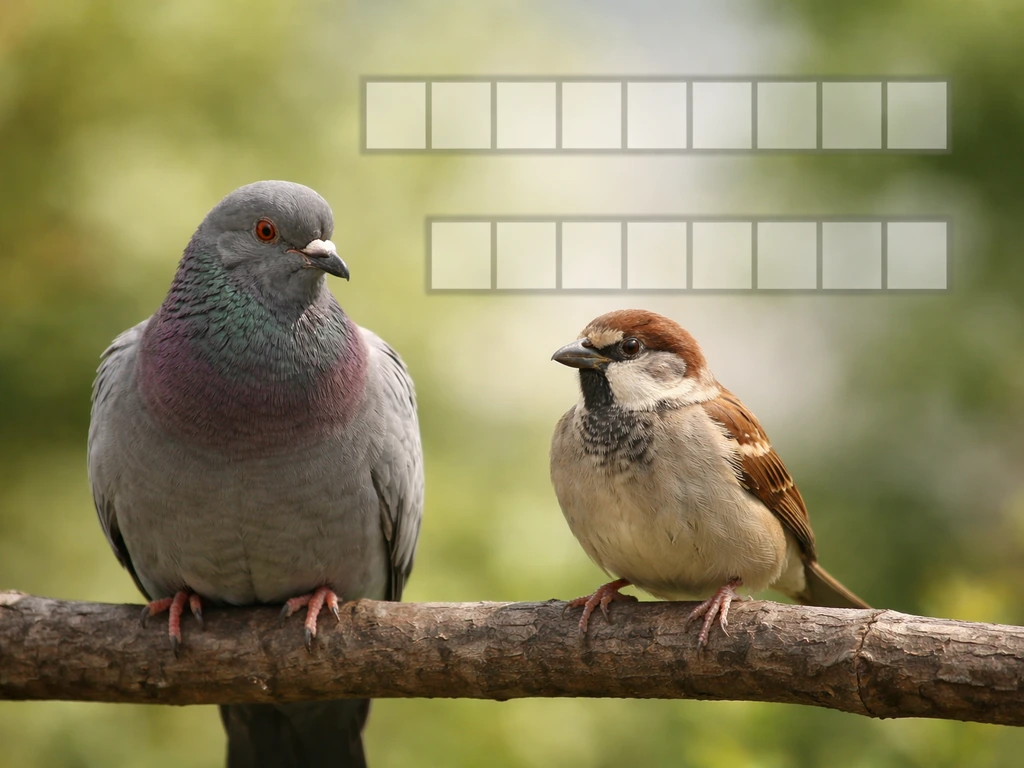
In everyday language, 'common bird' could mean a bird you see all the time, a bird with 'common' literally in its name (like the Common Starling or Common Kestrel), or just a well-known species used as a generic example. Crossword setters use all three of these interpretations, which is part of what makes this clue type tricky. That said, when databases list the top answers for the bare clue 'COMMON BIRD,' the pattern is consistent: PIGEON at 6 letters and SPARROW at 7 letters appear far more often than any alternative.
It's also worth noting that 'common birds' (plural clue wording) doesn't necessarily mean the answer is plural. Crossword convention frequently pairs a plural clue with a singular species name. SPARROW, for instance, is the confirmed answer for 'Common birds (7)' in multiple puzzle databases, even though the clue ends in an 's.' The letter count in parentheses is always your most reliable guide to the exact form of the answer.
6-letter vs 7-letter bird names: spelling them out
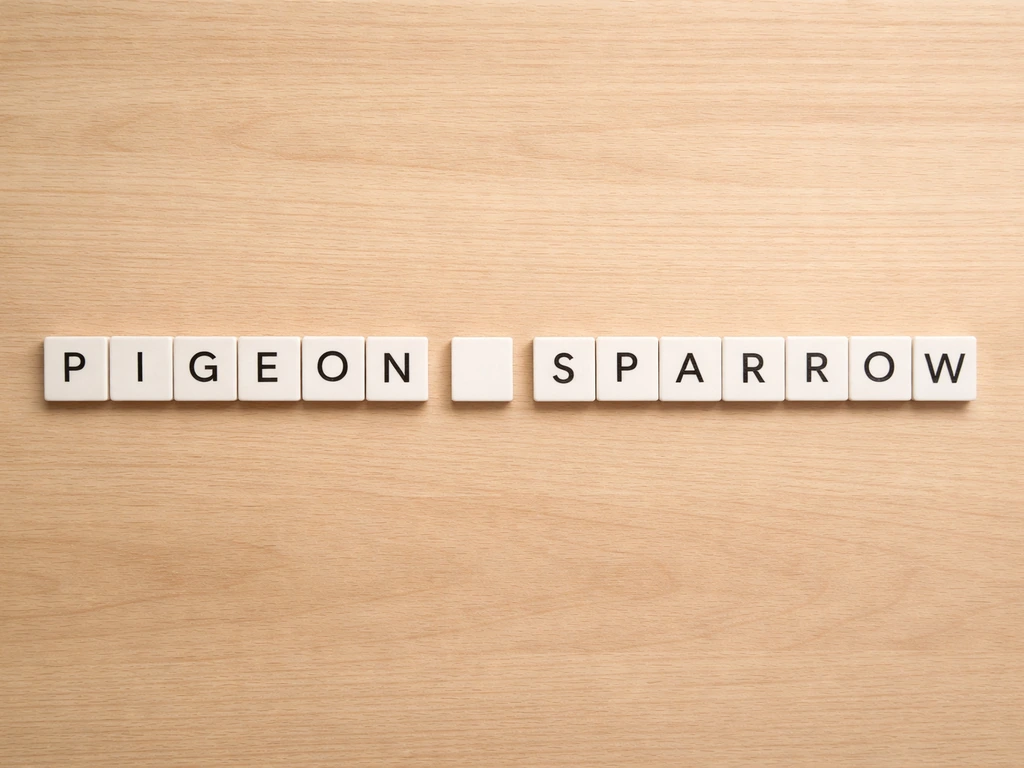
Before locking in an answer, it helps to lay out the candidates with exact letter counts so you're not second-guessing yourself at the grid. Here are the most plausible options across both lengths, spelled correctly.
| Bird Name | Letters | Spelling Notes | Puzzle Frequency |
|---|---|---|---|
| PIGEON | 6 | Standard English; no variants in crosswords | Very high (top answer at 6) |
| MARTIN | 6 | As in House Martin; less common as a standalone clue answer | Moderate |
| THRUSH | 6 | UK garden bird; appears in garden-bird clue variants | Moderate |
| LINNET | 6 | Small UK finch; used in some themed puzzles | Lower |
| SPARROW | 7 | Standard English; plural is SPARROWS | Very high (top answer at 7) |
| SWALLOW | 7 | Barn Swallow or Common Swallow; appears in seasonal clues | High |
| STARLING | 8 | One letter too long for a 7-count clue | Not applicable at 7 |
| WARBLER | 7 | Used in bird-themed and nature crosswords | Moderate |
| FINCH | 5 | One letter short for a 6-count clue | Not applicable at 6 |
The clear frontrunners are PIGEON (6) and SPARROW (7). The others are worth keeping in mind if crossing letters rule out those two, but they're secondary options.
Most likely answers by category
Everyday and widely recognized birds
PIGEON is the go-to 6-letter answer because feral pigeons are genuinely one of the most universally recognized birds on earth, familiar to anyone in a city regardless of country. SPARROW earns the 7-letter slot for similar reasons: the House Sparrow is among the most frequently recorded birds at backyard feeders across North America, and it has topped the RSPB's Big Garden Birdwatch survey in the UK for multiple consecutive years. Both birds carry the 'common' label in the truest sense.
Backyard and garden birds
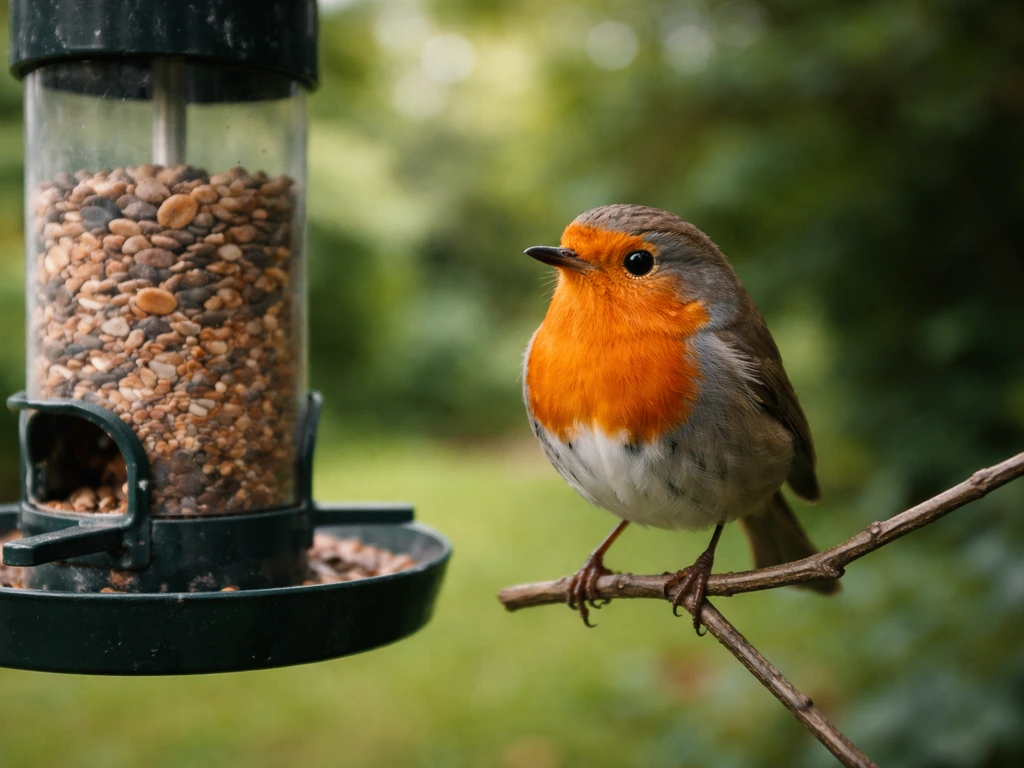
If the clue specifies 'common garden bird' rather than just 'common bird,' the answer space shifts slightly. In a UK context, ROBIN (5 letters) becomes a strong candidate, as does THRUSH (6 letters). The American Robin is similarly iconic in North American backyards, though ROBIN at 5 letters only fits a 5-count clue. For a 6-letter garden-bird clue in a UK puzzle, THRUSH is worth checking before PIGEON. A common garden bird with a 6-letter crossword answer is usually THRUSH in UK puzzles common garden bird 6 letters. For 7 letters in a garden-bird context, SPARROW remains the safest bet on both sides of the Atlantic.
Pet birds
Pet-bird clues occasionally surface in trivia and themed crosswords. PIGEON actually fits here too, since racing and fancy pigeons are common as kept birds. CANARY (6 letters) is another strong 6-letter option in a pet-bird context. PARROT (6 letters) is plausible but usually appears under more specific clue wording. If the clue hints at a pet or caged bird rather than a wild one, CANARY is worth checking alongside PIGEON.
Confirming the match: pronunciation, spelling variants, and plurals
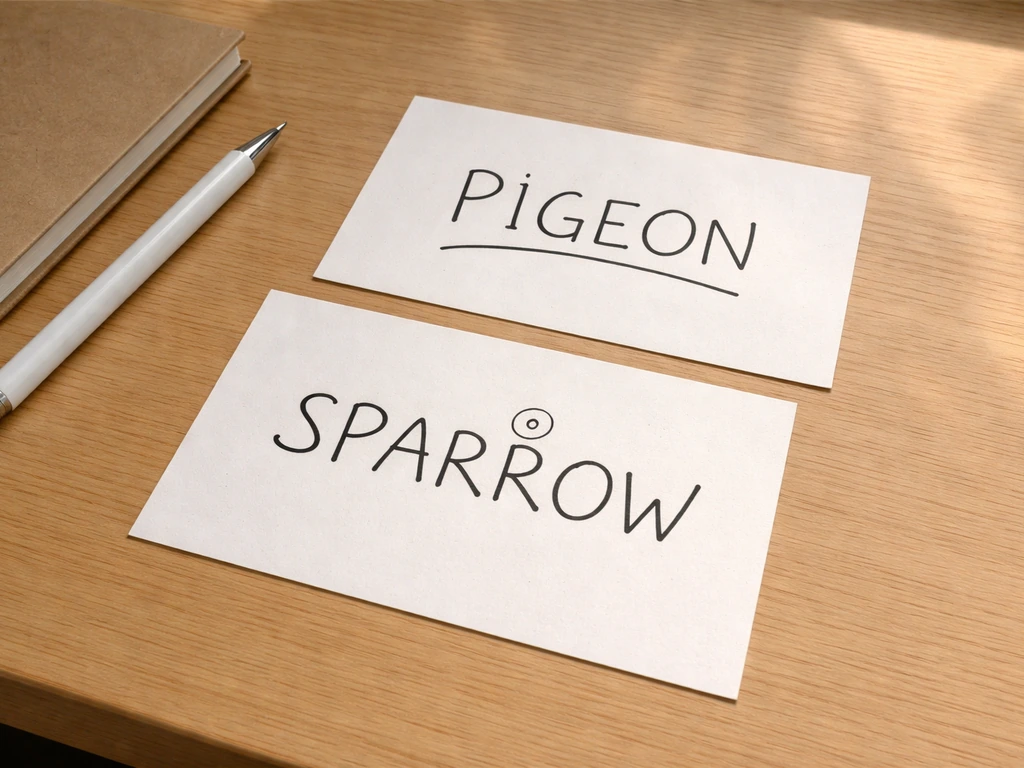
Once you've landed on PIGEON or SPARROW, a quick spelling and pronunciation check prevents grid errors. PIGEON is spelled P-I-G-E-O-N, pronounced 'PIJ-un' (IPA: /ˈpɪdʒ.ən/). There are no accepted alternative English spellings in standard crossword use. Merriam-Webster and Oxford Learner's Dictionaries both confirm this single standard form, so if crossing letters suggest a different vowel arrangement, it's worth re-examining the crossing answer rather than changing the bird name. The plural is PIGEONS (7 letters), which matters if your grid needs one more letter than you expected.
SPARROW is spelled S-P-A-R-R-O-W, pronounced 'SPAR-oh' (IPA: /ˈspær.əʊ/ in British English, /ˈspær.oʊ/ in American English). Note the double R in the middle, which is a common point of hesitation. Collins and Britannica both confirm the plural as SPARROWS (8 letters). Again, if your 7-letter count is firm, you want the singular SPARROW, not the plural.
How to handle blanks, synonyms, and regional name differences
If you already have some crossing letters filled in, use them to rule out candidates fast. A grid square showing a confirmed 'G' in position 3 of a 6-letter answer points strongly to PIGEON (P-I-G-E-O-N). A confirmed 'R' in position 4 of a 7-letter answer points to SPARROW (S-P-A-R-R-O-W). Work with what you have before pulling up a word list.
Synonyms can open up the answer space if the leading candidates don't fit. 'Common bird' clues sometimes use synonyms for 'common' like 'everyday,' 'familiar,' 'widespread,' or 'garden.' These hint at the same shortlist. If the clue says 'widespread bird (7),' treat it exactly the same way as 'common bird (7)' and start with SPARROW.
Regional naming differences are a real factor. A UK puzzle setter may write 'common garden bird' and mean THRUSH or even ROBIN in ways that wouldn't occur to a North American solver. Meanwhile, a US puzzle setter writing 'common bird' might be thinking of the American Robin or the House Sparrow specifically as North American icons. When the puzzle's origin is unclear, default to the crossword-database consensus: PIGEON at 6, SPARROW at 7. Those answers cross national conventions cleanly.
On punctuation: if the clue includes an apostrophe or a hyphen (for instance, 'bird's song' or 'common-garden bird'), standard crossword convention is to ignore apostrophes entirely and treat hyphens as blank spaces. This means a hyphenated bird name like HOUSE-SPARROW would be entered as HOUSESPARROW in a grid, or the setter would simply use SPARROW as the intended answer without the prefix. Don't let punctuation in the clue change your letter count.
A quick cross-language check for puzzle solvers
Most English-language crosswords use common names rather than scientific (Latin) names, but it's worth knowing why this matters for letter counts. The scientific name for the common pigeon is Columba livia, and for the house sparrow it's Passer domesticus. Neither of these would fit a standard crossword slot labeled 'common bird,' and crossword databases confirm they don't appear as answers to this clue. Scientific names are binomial (two-part genus and species), which makes them unwieldy for grid entries and nearly always absent from mainstream puzzles unless the clue explicitly asks for a Latin or scientific name.
Where language does matter practically is in translated or multilingual puzzle contexts. The French word for pigeon is also 'pigeon' (6 letters, same spelling), which occasionally tricks solvers into thinking they've landed on an English-only answer when it actually crosses languages. The Spanish word is 'paloma' (6 letters), and the German is 'Taube' (5 letters). If you're solving an English puzzle, none of these apply, but if the puzzle has a French or multilingual theme, 'pigeon' remains safe.
SPARROW translates to 'moineau' in French (7 letters, interestingly), 'gorrión' in Spanish (7 letters with an accent that wouldn't affect a grid), and 'Spatz' in German (5 letters). These alignments are coincidental but occasionally useful as a sanity check when a puzzle has a European theme.
One last point worth keeping in mind: the phrase 'common name' in biology simply means the everyday, non-scientific label for a species. One common name can refer to multiple species (there are dozens of birds called 'sparrow'), and one species can have multiple common names depending on the region. This ambiguity is exactly why crossword databases converge on the most recognizable, broadly accepted form of the name: SPARROW rather than HOUSE SPARROW, PIGEON rather than FERAL PIGEON. Stick to the short, clean, widely recognized form and you'll be right far more often than not.
Your fastest path to the right answer
- Check the letter count in parentheses first. (6) means PIGEON is your starting point. (7) means SPARROW.
- Plug in any crossing letters you already have to confirm or eliminate the candidate.
- If the leading candidate doesn't fit the crossings, move to secondary options: THRUSH or CANARY at 6, SWALLOW or WARBLER at 7.
- If the clue says 'garden bird' or has a UK context, bump THRUSH (6) up the list before PIGEON.
- If the clue says 'pet bird,' check CANARY (6) before PIGEON.
- Ignore punctuation in the clue. Apostrophes count zero letters; hyphens are treated as blank spaces.
- Do not use scientific names unless the clue explicitly asks for Latin or scientific terminology.
If you're working across related puzzle clues, it's also worth knowing that some crossword databases break these down further by specific context: common garden birds at 6 letters, common marine birds at 7 letters, and even 8-letter common bird names each have their own shortlists worth exploring when the clue wording goes beyond the bare phrase 'common bird.' But for the core clue, PIGEON and SPARROW are where to start and, most of the time, where to finish. A common marine bird with a 7-letter answer is often the sparrow in crossword contexts.
FAQ
If the clue is “common bird” but my count doesn’t match 6 or 7, what should I do next?
First trust the letter count over the article’s default shortlist. If you are sure the count is correct, use crossings to test whether the answer is likely ROBIN (5), THRUSH (6), or CANARY (6) depending on whether the grid supports those letter patterns, since setters sometimes swap in iconic “common” species when the exact 6/7 forms don’t fit.
Does “common birds” ever expect a plural answer?
Yes, but less often than you’d think. Many setters pair plural wording with a singular bird name, but if your grid forces an extra letter and crossings match the plural form, consider SPARROWS (8) after ruling out other 8-letter fits.
How should I treat spaces and prefixes like “house sparrow” or “common starling”?
In standard crosswords, spaces are usually not counted as letters. If a clue leads you to a longer name that includes a prefix, check whether the grid length fits the full phrase without punctuation, or whether the setter intended only the short form (for example, SPARROW instead of HOUSE-SPARROW).
If the clue uses capitalization like “Common Bird” in a theme, could it be a proper name?
It could be. If the puzzle has a theme that uses titles or named characters, a “common bird” clue might refer to a specific labeled item rather than the generic species. In that case, rely on crossings and theme indicators, because the default PIGEON/SPARROW answers assume a biological or everyday-usage reading.
What if there are multiple answers possible for “common bird” at the same length?
Use a fast elimination method with at least two confirmed crossing letters. For 6 letters, PIGEON is only viable if the pattern can match P-I-G-E-O-N across the appropriate positions. For 7 letters, SPARROW is only viable if the double R location can be supported by your crossings, not just the total length.
Does punctuation in the clue ever change the answer length or formatting in the grid?
Normally no. Apostrophes are ignored, and hyphens are treated like blanks. This means you should count only the letters of the bird name. If the setter uses a hyphenated term like “house-sparrow,” the grid entry typically drops the hyphen without reducing the letter count of the words it represents.
Could “common bird” be a synonym trick like “everyday” or “widespread” that changes the bird choice?
Sometimes, but it usually changes only the shortlist, not the target length. If the clue also includes context like “garden,” “backyard,” or “feeder,” it pushes you toward SPARROW for 7 letters or THRUSH for 6 in UK contexts. If the clue instead hints at city life, PIGEON becomes more likely at 6 letters.
If I’m solving a translated or multilingual-themed puzzle, which word should I trust for 6 and 7 letters?
Trust the grid length and crossings first, but be aware that pigeon equivalents can be misleading by language. “Pigeon” commonly maps cleanly to a 6-letter form, but “sparrow” may not. If the theme is European-language heavy, verify the answer’s letters against the grid rather than assuming the English species name.
Why are scientific names not showing up for this clue, and what to do if I see one anyway?
Scientific names are typically too long and structured for mainstream crossword entries labeled with everyday wording. If a Latin binomial appears, it usually means the clue explicitly asks for a scientific name. For “common bird,” treat a scientific option as a red flag and go back to standard common-name entries that match the letter count.
Next Article
Common Garden Bird 6 Letters Answers and Verification
Find the most likely 6-letter common garden bird name, verify clues, spelling and pronunciation, plus close alternatives