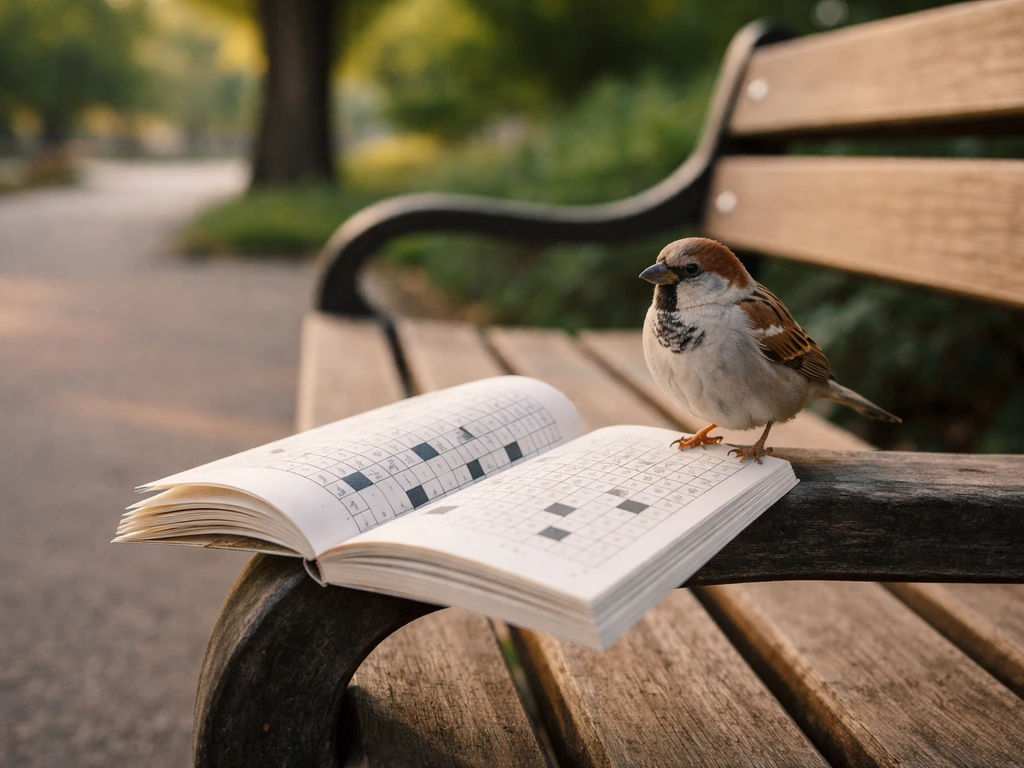
For the crossword clue 'common bird,' the two answers you'll see most often are SPARROW (7 letters) and PIGEON (6 letters). SPARROW is the single answer listed in some databases, while others list both. If your grid shows 7 blank squares, fill in SPARROW. If it shows 6, go with PIGEON. Those two choices cover the overwhelming majority of cases you'll encounter.
Common Bird Crossword Clue: Answers, Letter Count Help

James Ridgley
28 Apr 2026
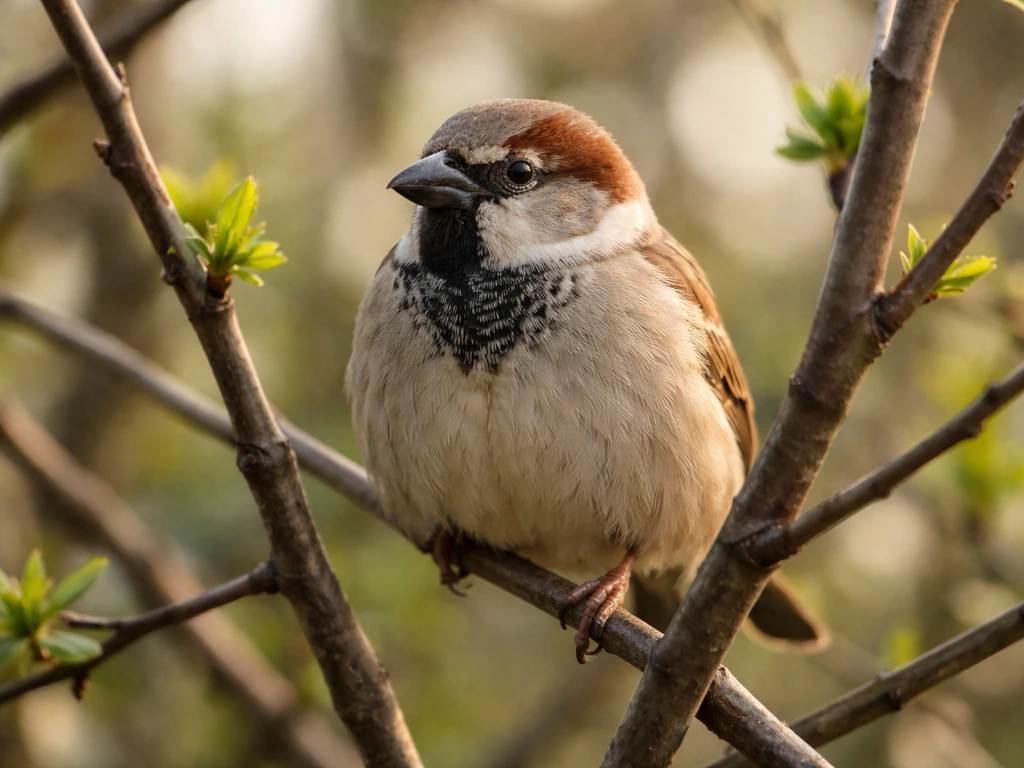
Most likely answers for 'common bird'
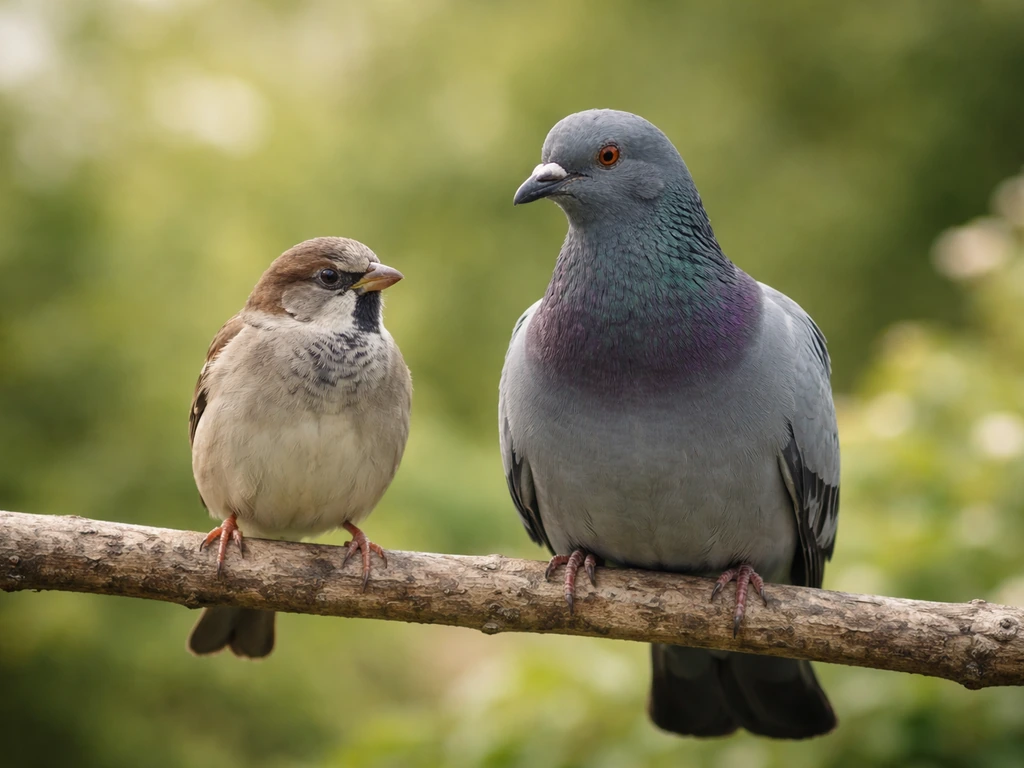
Multiple crossword databases agree on the same short list. Crossword Heaven pins a single answer: SPARROW. ScanMath and Crossword Dictionary both list exactly two primary answers by letter count: PIGEON at 6 letters and SPARROW at 7. Crossword Solver.io gives SPARROW a 95% match rating for the 7-letter version of the clue. So in practice, you're almost always choosing between these two.
| Answer | Letters | Confidence | Notes |
|---|---|---|---|
| SPARROW | 7 | Very high (95%+) | Top answer across most databases; house sparrow is the species most associated with this term |
| PIGEON | 6 | High | Rock pigeon / feral pigeon; culturally synonymous with 'common city bird' |
| PIGEONS | 7 | Moderate | Plural form; appears when clue reads 'common birds' with a (7) indicator |
| STARLING | 8 | Lower | Sometimes clued as 'common bird' in UK-leaning puzzles |
| BLUETIT | 7 | Lower | Appears in broader 'common birds (7)' datasets; UK-centric |
Beyond those top two, Wordplays lists several 7-letter candidates for 'common birds (7)' including PIGEONS, WAGTAIL, FANTAIL, BLUETIT, and JACKDAW. These are fringe answers that show up in specific puzzle contexts, but if you're stuck on a cold solve with no crossing letters yet, start with SPARROW or PIGEON and work outward.
Using letter count and theme to zero in on the right answer
Letter count is your fastest filter. The clue 'common bird' without a parenthetical length indicator is almost always SPARROW (7) or PIGEON (6). If the puzzle tells you the length in parentheses, that alone narrows it to one of the two in most cases. Here's how to layer your clues:
- Count the blank squares first. 6 squares points squarely at PIGEON; 7 squares points at SPARROW (or the less common PIGEONS if the clue is plural).
- Check crossing letters. If the third letter is revealed and it's an 'G,' PIGEON fits. If the first letter is 'S' or the fourth is 'R,' you're almost certainly looking at SPARROW.
- Look at the puzzle theme. A puzzle themed around city life or urban settings leans toward PIGEON. A general nature or garden theme leans toward SPARROW.
- Check whether the clue is plural. 'Common birds' with a (7) indicator opens up PIGEONS as a valid option alongside SPARROW.
- Consider the puzzle's regional origin. UK crosswords (especially broadsheet puzzles) are more likely to clue STARLING, BLUETIT, or WAGTAIL as 'common birds' than American puzzles are.
The bird species behind these clues
Understanding what bird each answer actually refers to helps you recognize whether the clue fits the puzzle's overall logic. Here's a quick rundown of the species most commonly hiding behind 'common bird' clues.
House Sparrow (SPARROW)
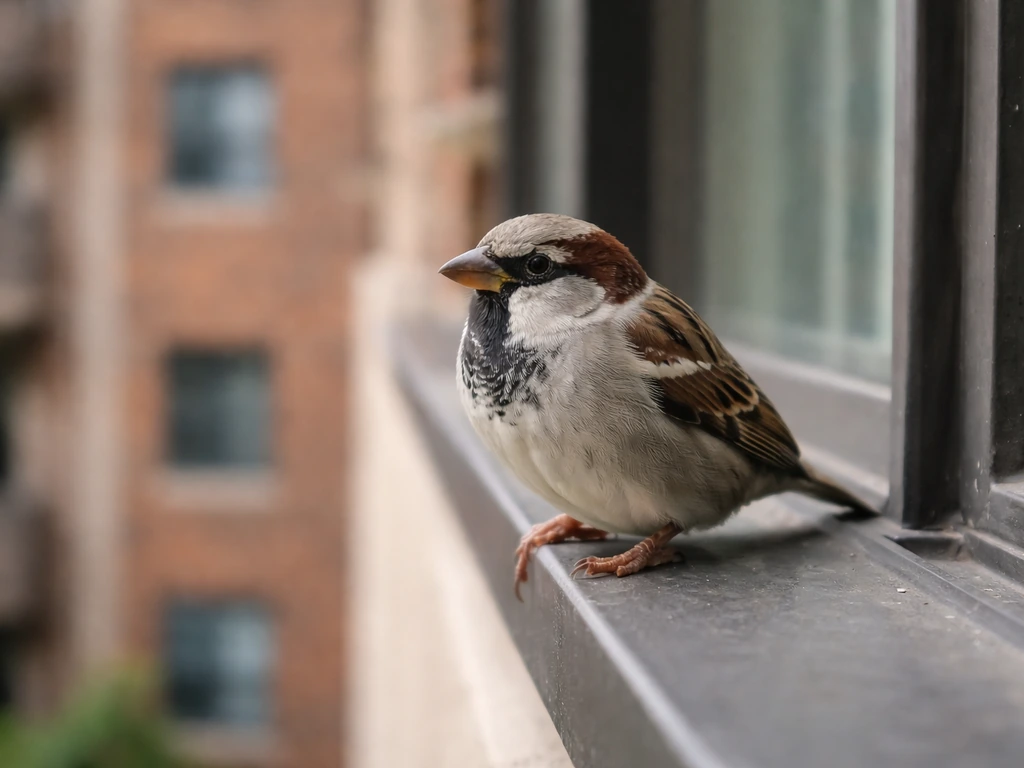
The house sparrow (Passer domesticus) is probably the bird most people picture when they hear 'common bird.' It's small (roughly 16 cm), brown and gray, lives near human settlements on every inhabited continent, and is genuinely one of the most abundant wild birds on Earth. In North America it's also called the English sparrow, which matters for crossword solvers because puzzle setters sometimes clue it as 'English bird' or 'English sparrow' instead. The word SPARROW is culturally entrenched in the English language, appearing in proverbs, Shakespeare, and everyday idiom, which is a big reason crossword setters reach for it so reliably.
Rock Pigeon / Feral Pigeon (PIGEON)
The rock pigeon (Columba livia) is the grey-blue bird you see strutting around train stations and city squares. It's considered one of the world's most widespread birds, which makes PIGEON a completely fair answer to 'common bird.' Note that the bird's official IOC English name is 'rock pigeon,' but in everyday use (and in crossword clues) it's almost always just called a pigeon. The 6-letter entry PIGEON is also a high-frequency answer for the shorter general clue 'bird,' so setters know solvers recognize it immediately.
European Starling (STARLING)
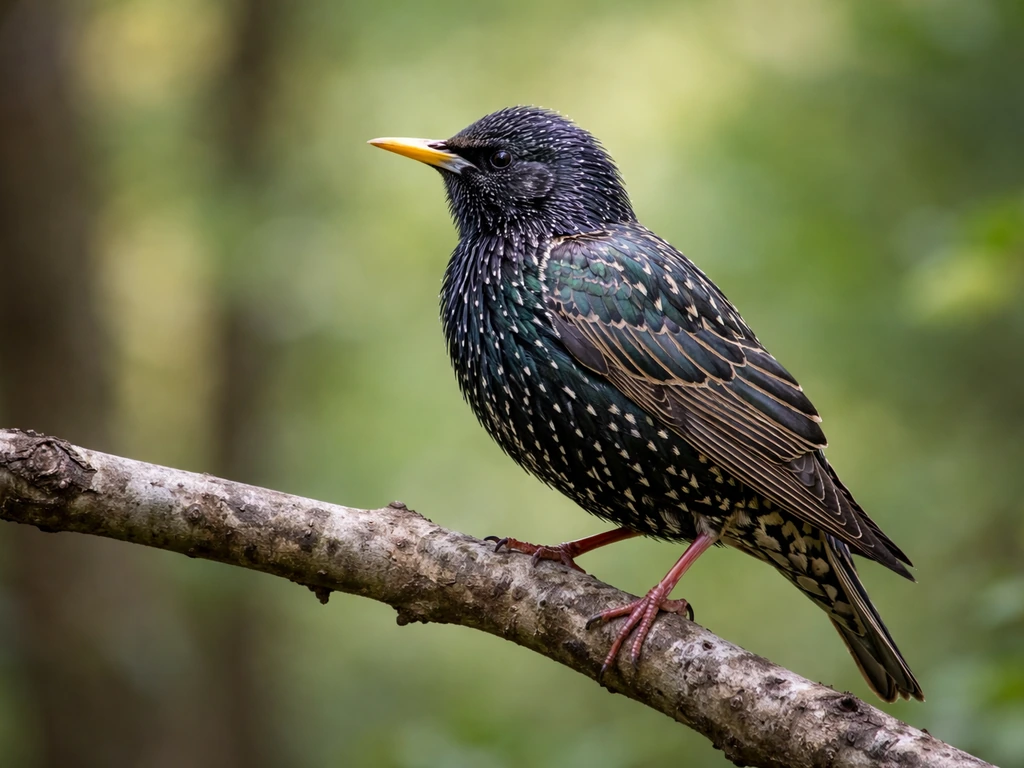
The common starling (Sturnus vulgaris) is an 8-letter answer, so it shows up less often under 'common bird' unless the puzzle specifies that length. In the UK it's one of the most familiar garden birds, which means British-style crosswords may well use it. It's iridescent black with white speckles in winter, chatty, and tends to flock in enormous murmurations. If you're solving a cryptic or UK broadsheet puzzle and have 8 squares, STARLING is worth considering.
Other species that appear in 'common birds' datasets
- BLUETIT (7 letters): a small blue-and-yellow garden bird, extremely common in the UK; rarely appears in American crosswords
- WAGTAIL (7 letters): the pied wagtail is familiar across Europe; the name is vivid and crossword-friendly
- JACKDAW (7 letters): a small crow, common in UK gardens and cliffs; less likely in American puzzles
- FANTAIL (7 letters): common in New Zealand and parts of Asia; appears in datasets but not a first-guess answer for most solvers
- TIT (3 letters): a frequent short answer in the 'bird' clue family; a tit is a small perching bird common across Europe and Asia
Spelling variants and word-form traps
One of the easiest places to go wrong is getting the exact word form wrong even when you know the right bird. Here are the specific pitfalls to watch for.
- SPARROW vs SPARROWS: The clue 'common birds' (plural) might want SPARROWS (8 letters). Always count your squares before assuming singular.
- PIGEON vs PIGEONS: Similarly, PIGEONS is 7 letters and appears when the clue is plural and the grid has 7 squares.
- BLUETIT vs BLUE TIT: In everyday writing, 'blue tit' is sometimes two words, but the crossword entry is always BLUETIT (no space, 7 letters). Grids don't allow spaces.
- STARLING vs COMMON STARLING: The bird's full name is 'common starling' but the crossword entry is just STARLING.
- Capitalization: All crossword answers go in as capital letters. If you're checking a solver database and seeing mixed case, the actual grid entry is uppercase throughout.
- SPARROW and the 'English sparrow' alias: Some databases or older puzzle collections may reference the house sparrow as 'English sparrow.' If a clue reads 'English bird' or 'English sparrow,' SPARROW is still the likely fill.
Why clue answers vary: naming conventions and regional language
Bird names are messier than most people realize, and that mess flows directly into crossword puzzles. The American Ornithological Society has explicitly stated there's no single globally accepted list of English common names for birds. Different taxonomic authorities (IOC, AOS, BTO, eBird) sometimes use different English names for the same species, and those differences filter down into the clues setters write and the answers databases store.
The BTO (British Trust for Ornithology) follows IOC taxonomy but reserves the right to keep names that are deeply embedded in UK common usage, even when IOC updates its list. A BTO Garden BirdWatch factsheet exists for House Sparrows and focuses on how to spot and understand them in Britain [factsheet is available for House Sparrows](https://www. bto. org/sites/default/files/u23/downloads/House%20Sparrows.
pdf). eBird similarly acknowledges that English names differ across checklists and that some species officially support more than one English name.
What this means for you as a solver: a 'common bird' clue written by a British setter and one written by an American setter might genuinely be pointing to different birds, or to the same bird with a different name. This is the same phenomenon that shows up in the sibling clues you might encounter, like 'common marsh bird' or 'common urban bird,' where regional naming makes a real difference in which answer fits.
Common names in biology are, by definition, vernacular terms. They're based on everyday language, can vary by region, and don't always uniquely identify one species. That's why 'sparrow' in a British context might conjure the house sparrow but could also suggest the tree sparrow (Passer montanus), which is far more common in rural UK settings. Crossword setters typically default to the most culturally entrenched name, which is why SPARROW and PIGEON dominate the databases despite the formal naming complexity underneath.
A note on crosswordese
There's an established category in puzzle culture called 'crosswordese': words that appear in crosswords far more often than in everyday speech because they fit grid patterns so neatly. TIT (3 letters) is a classic example: it's a real and common bird, but it appears in crosswords disproportionately because short vowel-consonant-vowel patterns are extremely grid-friendly. PIGEON and SPARROW are the opposite: they're common in both real life and crosswords, which is exactly why they're the first-guess answers for 'common bird.'
Pronunciation context (when it matters)
Pronunciation doesn't change the grid entry, but it can help you confirm you're thinking of the right bird. SPARROW is pronounced 'SPAR-oh' (IPA: /ˈspær.oʊ/), two syllables, with the stress on the first. PIGEON is 'PIJ-un' (IPA: /ˈpɪdʒ.ən/), also two syllables, often mispronounced as 'PIG-ee-on' by non-native speakers. If you're solving a cryptic crossword where the wordplay component involves sounds or homophones, getting the pronunciation right can be the key to unpacking the clue.
A quick, repeatable solve workflow
Here's the exact process I'd walk through every time I hit a 'common bird' clue, with worked examples to show how it plays out in practice.
- Count the squares. This is the single biggest filter. 6 = PIGEON; 7 = SPARROW (or PIGEONS if plural); 8 = STARLING.
- Read the clue carefully for plural signals. 'Common birds' rather than 'common bird' means the answer is probably plural. Adjust your candidate accordingly.
- Check any revealed crossing letters. Even one confirmed letter usually eliminates one of the two main candidates.
- Consider the puzzle's origin and theme. UK puzzle, garden/nature theme, or an 'animals of Britain' category all shift the odds.
- If still stuck, default to SPARROW for 7 letters, PIGEON for 6. These are correct more often than any other answer.
Worked examples
Example 1: The clue reads 'Common bird (7).' You have 7 blank squares. No crossing letters are visible yet. Default answer: SPARROW. Fill it in: S-P-A-R-R-O-W.
Example 2: The clue reads 'Common bird (6).' Six squares, and the crossing letter in position 3 is confirmed as 'G.' Only one common bird fits: P-I-G-E-O-N. The 'G' in position 3 locks it in.
Example 3: The clue reads 'Common birds (7)' and the puzzle has a city/urban theme. The crossing letter in position 1 is 'P.' That rules out SPARROW immediately. Your answer is PIGEONS: P-I-G-E-O-N-S. This is also the kind of context where 'common urban bird' clues in related puzzles will point you in the same direction. In many puzzles, the phrase common urban bird points to the same street-frequent species like pigeon or sparrow, depending on the length and crossings.
Example 4: A UK broadsheet cryptic clue reads 'Common bird spotted in the garden (7).' The crossing third letter is 'U.' Neither SPARROW nor PIGEON has a U in position 3. Now you're in fringe-answer territory: check BLUETIT (B-L-U-E-T-I-T), where position 3 is U. That fits. This is exactly when knowing the broader list of 7-letter candidates from Wordplays pays off.
The core lesson across all four examples: letter count first, crossing letters second, theme third. A quick way to confirm answers is to use a common bird of prey crossword guide and compare how setters typically format the clue. In the vast majority of cases, those three filters get you to SPARROW or PIGEON without needing any database lookup at all. If you want a broader sweep of options, a common black bird crossword guide can help you spot likely entries beyond the standard sparrow and pigeon picks.
FAQ
If my clue is “common bird” but the grid length is 8, what should I try besides STARLING?
With 8-letter counts, STARLING is the most common default, but if crossings conflict you can test near-misses that are sometimes clued as common garden birds. Use the same approach as the article suggests, filter by the exact length, then check the letter positions with crossings before committing to any single “common” species name.
What if the clue includes a modifier like “common bird in the garden” or “common bird near cities,” but the letter count matches 7 or 6?
Modifiers usually steer toward the same two core answers, SPARROW (7) and PIGEON (6). Treat the modifier as tie-breaker only, not a replacement for letter count. If the crossings contradict SPARROW or PIGEON, then move to the fringe list the article mentions, since setters sometimes use less typical species for specific themes.
Can “common bird” ever be plural, and how do I decide between singular and plural entries?
Yes, plural shows up, most often as PIGEONS for the 7-letter form or occasionally as other pluralized entries. Your decision aid is crossings plus clue grammar: if the clue reads “common birds” or the surrounding entries create a plural-friendly pattern, try the plural forms first for the same length before branching to unrelated birds.
My answer candidate fits the length, but one crossing letter forces a mismatch. Should I still trust letter count?
Letter count is the first filter, not a guarantee. If even one crossing letter conflicts, discard the candidate immediately and re-check the other bird whose letters remain compatible. This is especially important for SPARROW and PIGEON because they differ early in the word, so one wrong crossing can flip the entire solution.
What are the most common word-form errors when solving “common bird” clues?
The two big ones are using the wrong spelling variant for the bird name and using singular versus plural. Also watch for extra letters, like accidentally adding an S when the clue clearly uses singular form, or missing an S when the clue indicates plurality or the grid length forces plural.
If the clue is in a British-style crossword, could “common bird” refer to a different sparrow than I expect?
It can. The article notes that English common names can vary by region, so in some British contexts “sparrow” could imply a different species than the house sparrow you pictured. If crossings contradict SPARROW’s letters, don’t force it, instead use length and letter positions to determine which bird name the setter actually encoded.
How can pronunciation help me if I’m stuck on a cryptic clue where the definition might be “common bird”?
Pronunciation mainly helps when the cryptic mechanism uses a sound-alike (homophone) or a phonetic hint. If you’re choosing between two candidates with the right spelling length but uncertain definition, consider whether the wordplay would naturally point to the sound pattern of SPARROW or PIGEON, then confirm with crossings.
What should I do when the clue provides no length and I only have a few crossings?
When there is no parenthetical length, use crossings to infer the most likely length first. Count the empty squares that the clue spans, or if you cannot, try the most probable lengths for common bird entries (6 or 7 for the main options). Then test the letters against crossings before exploring fringe birds.
Is it worth looking up databases every time I get “common bird,” or is there a faster solver method?
You can usually skip database lookups. The quickest method is exactly the article’s order of operations: apply length first (SPARROW 7, PIGEON 6), then check crossings, then use theme cues to decide whether to explore fringe 7-letter birds. Only use databases when length and crossings both remain ambiguous.
Next Article
Common Urban Bird Crossword Clue: Best Answer Guide
Solve the common urban bird crossword clue fast with candidate birds, synonyms, spelling checks, and letter pattern tips