
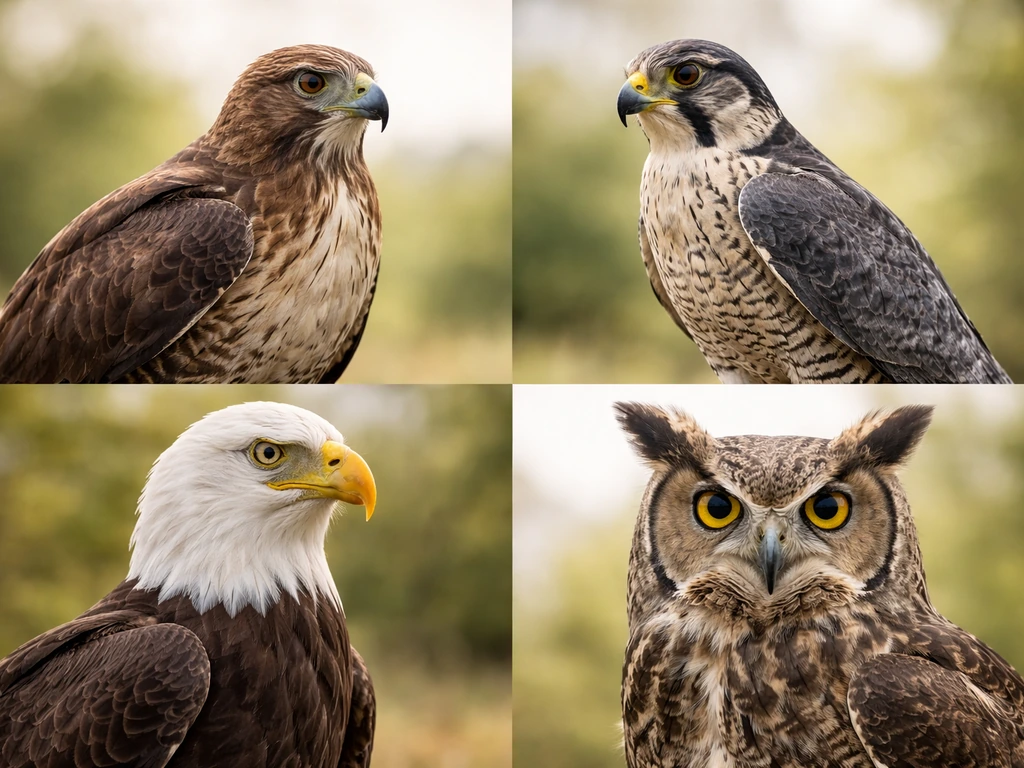
If your crossword clue reads 'common bird of prey' and you have four squares to fill, write HAWK. That's the answer flagged by the most crossword solver databases for this exact phrasing, and it makes sense: hawk is one of the shortest, most everyday English names for a bird of prey, which is exactly the kind of word setters reach for. If your grid gives you a different letter count, you're likely looking at OWL (3), FALCON (6), EAGLE (5), or the general-category term RAPTOR (6) instead.
Common Bird of Prey Crossword: Hawks, Falcons, Eagles, Owls

James Ridgley
24 Apr 2026
How crossword clues use 'common' and 'bird of prey'

In non-cryptic crosswords, the entire clue phrase usually functions as a direct definition. So 'common bird of prey' isn't asking you to find the rarest raptor or decode wordplay. The word 'common' is almost always doing one of two things: it's either describing how familiar or widespread the bird is (as in, a bird of prey that most people know), or it's part of the bird's formal common name, as in 'Common Kestrel.' Either way, it's pointing you toward a well-known, widely used English bird name, not toward a technical or obscure term.
Cryptic clues work differently, using a definition component combined with wordplay. But the 'common bird of prey' phrasing, as it appears in most published puzzle databases, reads as a clean definition clue. That means you can treat the whole phrase as a synonym hunt: what everyday English word means 'a bird of prey'? That's your answer.
Most likely crossword answers
Four specific bird names dominate the answer pool for bird-of-prey clues, plus one general category term. Here's the practical rundown of each.
HAWK (4 letters)
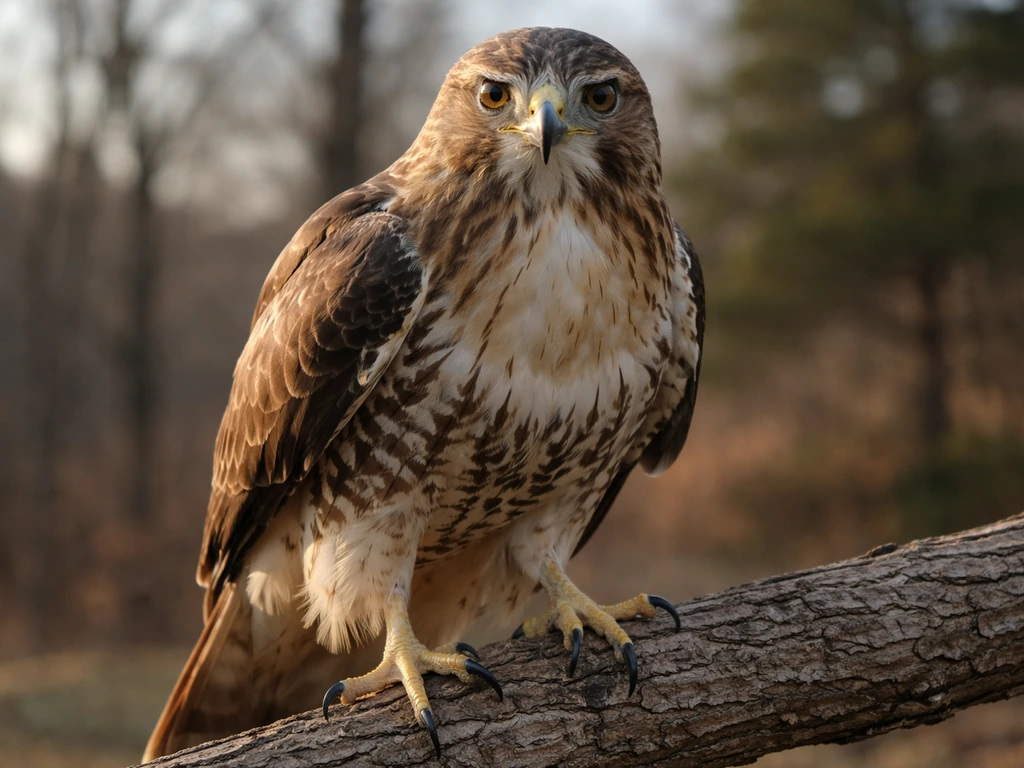
HAWK is the top answer for 'common bird of prey' at four letters. It's the go-to pick because 'hawk' is used so broadly in everyday English. Strictly speaking, hawks belong to the family Accipitridae, but in casual usage the word gets applied to a wide range of raptors, which makes it a perfect crossword definition word. It's short, clean, and unambiguous on the page.
OWL (3 letters)
OWL is the shortest answer in the pool at three letters. Owls belong to the order Strigiformes, with the typical owls family being Strigidae. They're classified as birds of prey, though they're sometimes treated separately from daytime raptors in ornithological contexts. In crosswords, though, 'bird of prey' absolutely maps to OWL, and the three-letter count is a reliable separator when your grid is tight.
EAGLE (5 letters)
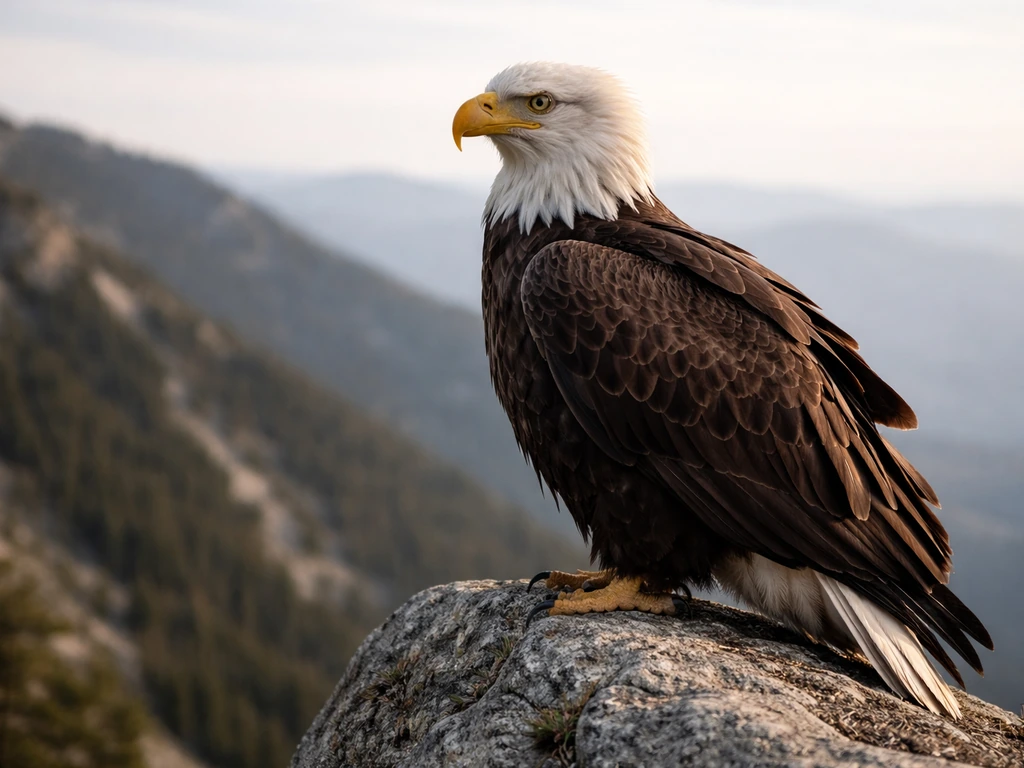
EAGLE clocks in at five letters and is one of the most iconic birds of prey in the English-speaking world. Many of the 'true eagles' belong to the genus Aquila, though the term is used broadly across several genera. If you have five squares and an E or A showing up from crossing answers, EAGLE is a strong candidate.
FALCON (6 letters)
FALCON gives you six letters and refers specifically to birds of the family Falconidae, genus Falco. It's a legitimate and common answer for six-letter bird-of-prey clues. If the clue reads something like 'swift bird of prey' or 'hunting bird,' falcon becomes even more likely.
RAPTOR (6 letters)
RAPTOR is the general-category answer, also six letters. A raptor is technically defined as a bird of prey that hunts and feeds primarily on vertebrates, making it a direct synonym for the clue phrase itself. If the clue is simply 'bird of prey' with no modifier like 'common,' RAPTOR becomes more competitive with FALCON for the six-letter slot.
Choosing the right answer by letter count and crossing letters
Letter count is almost always your first filter. Check the enumeration in the clue (the number in brackets, or simply count the squares), then match it against the candidates.
| Answer | Letter Count | Best if crossing letters include... |
|---|---|---|
| OWL | 3 | O, W, or L in position |
| HAWK | 4 | H, A, W, or K in position |
| EAGLE | 5 | E (positions 1 or 5), A, G, or L |
| FALCON | 6 | F, A, L, C, O, or N in position |
| RAPTOR | 6 | R (positions 1 or 6), A, P, T, or O |
Once you've matched the letter count, look at any crossing letters you've already filled in. A confirmed second letter of 'A' in a four-letter slot locks in HAWK almost immediately, since H-A-W-K has A in position two. For a six-letter slot, the first letter is usually your clearest differentiator: F narrows it to FALCON, and R points to RAPTOR. If you have neither F nor R confirmed, check positions two through five against both options before committing.
Common variants and singular/plural spelling issues
Singular vs. plural trips up a lot of solvers with bird names. Crossword clues for category definitions like 'bird of prey' almost always take a singular answer. You'll fill HAWK, not HAWKS, unless the clue explicitly signals a plural (for example, 'birds of prey' with an S, or a clue like 'some raptors'). Pay attention to the article in the clue: 'a bird of prey' or 'common bird of prey' without 'some' is almost certainly singular.
Spelling variants are less of an issue with this group than with some other bird families, but there are a few things to watch. FALCON is occasionally clued in puzzles as part of a compound (PEREGRINE FALCON, for instance), but when you see a short standalone clue, the single-word form FALCON is what you write. EAGLE is straightforward with no common misspellings, though non-native English speakers sometimes want to write AIGEL or EAGEL, which are both wrong. HAWK has only one standard spelling. OWL is impossible to misspell at three letters, which is part of why setters love it.
Quick naming and pronunciation notes for each bird
If you're not sure you're thinking of the right bird, these notes can help you confirm the intended answer and spell it correctly.
- HAWK: Pronounced /hɔːk/ (rhymes with 'walk' and 'talk'). The name comes from Old English 'hafoc,' related to similar Germanic words. In crosswords and everyday English, 'hawk' is used broadly for many medium-to-large daytime raptors, not just the strict taxonomic grouping.
- OWL: Pronounced /aʊl/ (one syllable, rhymes with 'howl' and 'growl'). Old English 'ule,' from Proto-Germanic roots. Owls belong to Strigidae (typical owls) or Tytonidae (barn owls). Their inclusion as 'birds of prey' is standard in crossword databases even though they're nocturnal hunters.
- EAGLE: Pronounced /ˈiːɡ.əl/ (EE-gul). From Old French 'aigle,' ultimately from Latin 'aquila,' which is also the genus name for many true eagles. If you see an eagle clue and happen to know the Latin genus, Aquila confirms you're on the right track.
- FALCON: Pronounced /ˈfɔːl.kən/ or /ˈfæl.kən/ depending on accent (FAWL-kun or FAL-kun). From Medieval Latin 'falco,' related to the genus name Falco. The family Falconidae contains true falcons. The silent 'l' in some pronunciations trips people up, but the spelling never changes.
- RAPTOR: Pronounced /ˈræp.tər/ (RAP-ter). From Latin 'raptor,' meaning 'one who seizes.' It's the most literal translation of 'bird of prey' in English, which is why it works so well as a direct definitional crossword answer.
Fallback strategy: when the clue means a general raptor term
If you've checked the letter count and crossing letters against all five candidates and nothing fits cleanly, it's worth expanding your search beyond the top five. Some less common but still plausible crossword answers for bird-of-prey clues include KITE (4), KESTREL (7), OSPREY (6), HARRIER (7), and MERLIN (6). Kestrels and kites are both well-known enough to appear in mainstream puzzles. OSPREY is frequently clued as a 'fish-eating bird of prey,' so if the clue has that fish hint, lean there.
The other scenario where the top answers don't fit is when the setter intended a more generic term rather than a specific species name. In that case, RAPTOR is usually your best six-letter general answer, but some older British puzzles use ACCIPITER (9) for a hawk-type bird of prey, or even PREDATOR in a looser sense. These are rare, but worth knowing if your grid has nine squares and nothing else makes sense.
The practical fallback process: start with the letter count, lock in any confirmed crossing letters, run through HAWK, OWL, EAGLE, FALCON, and RAPTOR in that order, and only move to secondary candidates like KITE or KESTREL if none of the top five fit your grid. This kind of systematic letter-by-letter testing is exactly what separates fast solvers from people who stare at the grid hoping something clicks. If you enjoy bird-related crossword clues, the same strategy applies to related clues like common marsh bird, common urban bird, and common black bird, where the same letter-count-first approach quickly narrows a crowded answer pool. If your clue is a common black bird crossword, the same method helps you narrow the answer by letters and crossings. If you see the same pattern for a common marsh bird crossword clue, start by matching the letter count to likely species names.
FAQ
If the clue says "common bird of prey" but my enumeration is 3, should I always choose OWL?
In most standard crosswords, yes. A 3-letter bird-of-prey definition will almost always be OWL. If crossings force a different 3-letter fit, recheck whether the clue might be defining a different bird category (for example, “bird of prey” could be part of a longer phrase in the clue text) or whether the enumeration includes punctuation or spaces.
What if I get the right letters count, but the crossings conflict with HAWK, OWL, EAGLE, FALCON, and RAPTOR?
Treat it as a setter intention issue. First, verify you are counting only the answer squares, not any grid labels. Then check for less common species that fit the exact length (KITE 4, MERLIN 6, HARRIER 7, KESTREL 7, OSPREY 6). If the length is 9 and nothing works, consider ACCIPITER as an older or less common option.
Could the clue be plural, like "common birds of prey," and change the answer?
Yes, plural clues can change everything. If the clue explicitly includes plural wording (for example, “birds of prey” or “some raptors”), you may need HAWKS or another plural form. Without that plural signal, the default is singular, which is why HAWK is the usual 4-letter answer.
Does "common bird of prey" ever point to a female or specific subtype of the bird?
Usually no. This wording typically behaves like a direct definition for a general everyday name. Crosswords rarely use sex-based or age-based modifiers in this exact phrasing, so unless the clue includes extra descriptors, stick to broad species names like HAWK, EAGLE, FALCON, OWL, or RAPTOR.
How should I handle cases where the clue is part of a longer sentence, like "common bird of prey in flight"?
Then you may be dealing with an additional definition component or wordplay. Still start with letter count, but the extra text can steer you toward a more specific species word (often KESTREL, FALCON, or OSPREY) rather than the most generic HAWK. If “in flight” appears, consider whether the answer length matches common niche terms (like KITE) instead of forcing HAWK.
If my crossing letters suggest EAGLE, but the answer length is 6, what’s the best alternative?
EAGLE will not fit a 6-letter slot, so switch to the 6-letter candidates that match the visible letters. RAPTOR is a frequent fallback for any 6-letter “bird of prey” definition, and OSPREY is a strong species alternative if your crossings match OSPREY’s pattern. For FALCON, check whether the first letter is compatible with your leading crossing.
I see "bird of prey" in the clue but not the word "common." Should I still consider RAPTOR?
Yes, especially for 6-letter answers. Removing “common” often makes the clue behave like a category definition rather than an everyday-nickname prompt. In that situation, RAPTOR becomes more competitive with FALCON, and letter count plus crossings should decide quickly.
Is there any common spelling trap with these answers that causes repeated failures?
Yes, the most common one is EAGLE being mistyped as AIGEL or EAGEL. Also watch compound cluing: if the clue text is “swift bird of prey,” you likely want FALCON alone, not PEREGRINE FALCON. For OWL and HAWK, spelling errors are rare, so use the spellcheck as a quick sanity check after crossings.
What’s the fastest way to decide between FALCON and RAPTOR for a 6-letter slot?
Use the first letter first. F points to FALCON, R points to RAPTOR. If neither is fixed, compare positions two through five against both candidates, since RAPTOR’s letter pattern (R-A-P-T-O-R) and FALCON’s pattern (F-A-L-C-O-N) differ strongly in the middle. Once you lock two or three consistent letter positions, the choice usually becomes immediate.
Next Article
Common Marsh Bird Crossword Clue Answers and How to Verify
Solve common marsh bird crossword clue with candidate answers, grid checks, spelling variants, and quick marsh bird ID t