For a clue like 'common city bird,' the answer is almost certainly PIGEON (6 letters) or SPARROW (7 letters). If your grid has 6 blank squares, go with PIGEON. If it has 7, go with SPARROW. Those two words account for the overwhelming majority of 'common city bird' and 'common bird' hits across major crossword databases, and they are the first two answers any experienced solver should test.
Common City Bird Crossword Clue: Likely Answers and Tips

James Ridgley
11 May 2026
What 'common city bird' clues usually mean
Crossword setters use clues like 'common city bird,' 'city bird,' or 'common bird in cities' as shorthand for a very familiar urban species, not an obscure one. The word 'common' here does double duty: it signals both abundance (this bird is everywhere) and familiarity (most solvers will know the name instantly). Setters deliberately avoid rare or habitat-specific birds in clues like this because the whole point is a quick, confident recognition. When you see 'city' in the clue, it narrows the field even further to species that genuinely thrive in urban environments, not countryside or coastal birds.
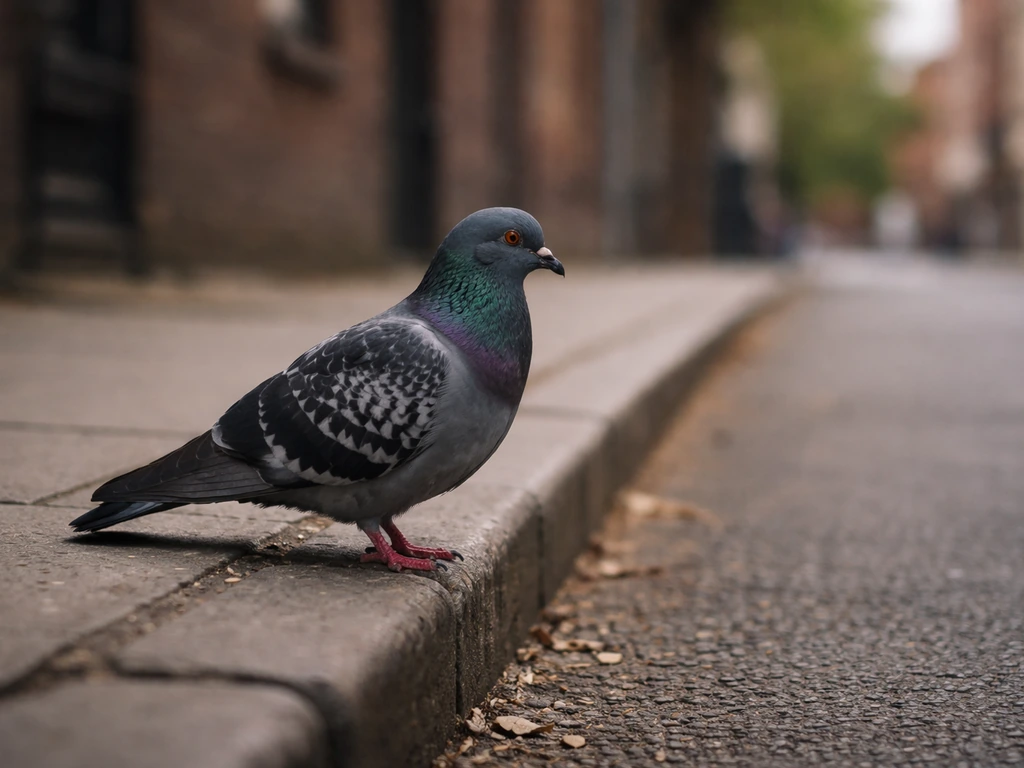
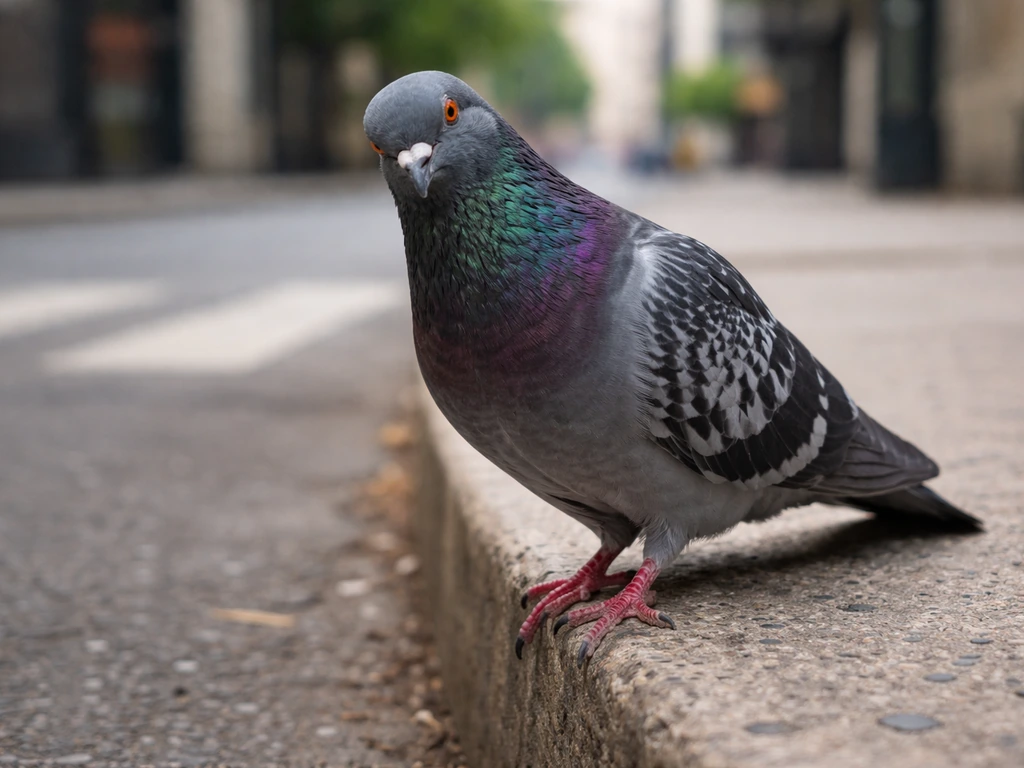
The feral pigeon, which is a descendant of the wild rock dove, is probably the most iconic city bird in the English-speaking world. It lives on ledges, parks, and train stations across almost every major city. The house sparrow is nearly as ubiquitous, famously adapted to human-built environments on every inhabited continent. In most crosswords, the common aquatic bird crossword clue usually points to a recognizable shoreline or waterfowl species house sparrow. Both have been confirmed repeatedly by crossword databases as the dominant answers for city-bird clue wordings. A clue about a 'common farmyard bird' or 'common marine bird' would push you toward a completely different set of candidates, but the moment you see 'city,' you are almost certainly looking at one of these two. A clue that says “common farmyard bird” usually points you toward a different familiar species than city birds like pigeon or sparrow.
Most likely urban bird answers
Here are the strongest candidates in rough order of probability, based on crossword database frequency and real-world urban prevalence.
| Answer | Letters | Urban credentials | How often setters use it |
|---|---|---|---|
| PIGEON | 6 | Feral pigeons (rock doves) are found in virtually every city worldwide | Very high — confirmed as the #1 answer for 'common city bird' clues including CodyCross |
| SPARROW | 7 | House sparrows thrive in cities on every inhabited continent | Very high — #2 answer for 'common bird' and 'city bird' clues across major databases |
| STARLING | 8 | Common starlings form massive roosts in city centres and are extremely recognisable | Moderate — fits when the grid demands 8 letters |
| ROBIN | 5 | Familiar garden and park bird across the UK and North America | Lower — more associated with 'garden bird' clues than specifically 'city' ones |
| CROW | 4 | Crows and ravens are increasingly common urban birds | Lower — more likely to appear under 'black bird' or 'scavenger' clue wording |
For nearly every standard crossword, the decision comes down to PIGEON vs. SPARROW vs. STARLING, chosen purely by letter count. ROBIN and CROW are worth keeping in reserve if the crossing letters force you away from the top two, but start with PIGEON and SPARROW every time.
How to match bird names to crossword constraints

Letter count is your first and fastest filter. Count the blank squares in the grid before you do anything else. A 6-letter slot almost certainly wants PIGEON. A 7-letter slot almost certainly wants SPARROW. An 8-letter slot puts STARLING in play. Once you have the count, check any letters you already have from crossing answers and see whether they fit. If you have a confirmed 'P' at position 1 and 6 blank squares total, you can be very confident the answer is PIGEON.
Singular vs. plural is the next thing to check. Most bird clues in standard crosswords use the singular form (PIGEON, SPARROW, STARLING), but if the clue reads 'common city birds' with a clear plural, the answer could be PIGEONS (7 letters) or SPARROWS (8 letters). Check whether the grid length matches those plural forms before assuming the clue is singular. A clue phrased as 'common birds (7)' has been recorded in crossword databases mapping directly to SPARROWS, so the plural is genuinely used.
Crossword setters almost always use the short colloquial name rather than a formal species name. You will see PIGEON, not ROCK DOVE or ROCK PIGEON. You will see SPARROW, not HOUSE SPARROW. This is consistent with standard crossword construction guidance that discourages obscure entries and non-standard forms. If a clue says 'common city bird' and wants a one-word answer, the answer will always be the everyday English name everyone knows, not the scientific or field-guide version.
Common spelling and pronunciation gotchas
These bird names look simple but solvers do make mistakes when filling in the grid, especially under time pressure. Here is what to watch for. If you also came across the term "cloaca meaning bird" in another context, that is a separate vocabulary point from the crossword clue itself.
- PIGEON: spelled P-I-G-E-O-N, not 'pidgeon' (a very common misspelling). The silent 'e' before 'on' trips people up. Pronounced PIJ-un (IPA: /ˈpɪdʒ.ən/). The 'g' is soft, like in 'giant.'
- SPARROW: spelled S-P-A-R-R-O-W with a double R in the middle. Pronounced SPAIR-oh (IPA: /ˈspær.oʊ/). Some people drop one R when writing quickly, producing 'sparow,' which is wrong.
- STARLING: spelled S-T-A-R-L-I-N-G, straightforward but sometimes written as 'starlng' or 'stareling' by accident. Pronounced STAR-ling (IPA: /ˈstɑːr.lɪŋ/).
- ROBIN: only 5 letters, R-O-B-I-N. The risk here is writing ROBBIN or ROBYN, neither of which is correct for the bird.
- CROW: only 4 letters, C-R-O-W. No real spelling risk, but solvers sometimes confuse it with ROOK (also 4 letters), which is a different bird that appears in its own crossword clues.
The most consequential error is the 'pidgeon' misspelling for PIGEON. It is one of the most commonly misspelled bird names in English, and if you enter it wrong in a grid, your crossing answers will not work and you will waste time troubleshooting the wrong square. When in doubt, remember: it ends in -EON, like 'geon' as in 'dungeon.'
Regional and common-name variations: which version does the puzzle use?

The bird commonly called a pigeon in everyday speech is technically the rock dove (Columba livia) or rock pigeon in formal ornithology. In North American birding, field guides now tend to use 'rock pigeon' as the official common name. In British English and casual usage worldwide, it is simply 'pigeon.' Crossword setters, whether American or British, overwhelmingly use PIGEON in the grid, not ROCKDOVE or ROCKPIGEON. The colloquial, widely understood version always wins in standard crosswords.
The sparrow situation involves more naming complexity. 'Sparrow' can refer to the house sparrow (Passer domesticus), the Eurasian tree sparrow (Passer montanus), or any of dozens of New World sparrow species. In a crossword context, the bare word SPARROW almost always means the house sparrow, the most familiar urban sparrow globally. American puzzles may very occasionally clue a specific sparrow species by its full name, but for a generic 'city bird' clue, SPARROW without a qualifier always points to the house sparrow.
British vs. American crossword conventions rarely diverge on these city-bird names because PIGEON and SPARROW are standard English on both sides of the Atlantic. Where you do sometimes see regional differences is with birds like ROBIN: the British robin (Erithacus rubecula) and the American robin (Turdus migratorius) are completely different species, and a clue referencing a 'city bird' in a British publication might lean on the British robin more readily than an American puzzle would. For city-bird clues specifically, though, PIGEON and SPARROW are safe in either context. If you enjoy solving clues about other habitat types, you will find similar naming-convention questions come up with clues about common small brown birds, common aquatic birds, and common marine birds. You can use the same approach to solve a common marine bird crossword clue by checking length, spelling, and any habitat wording in the clue.
Next steps: confirming your answer from the surrounding clues
Once you have a strong candidate (almost always PIGEON or SPARROW for a city-bird clue), use the crossing answers to verify it before committing. Work the perpendicular clues and see whether the letters you get are consistent with your bird name. If you have a 6-letter slot and your crossing letters give you P at position 1, I at position 2, and N at position 6, PIGEON is essentially confirmed. If a crossing letter contradicts your candidate (say, position 3 must be an A, which rules out PIGEON), move to the next candidate on your list.
For cryptic crosswords specifically, the clue itself contains a hidden definition plus wordplay that should independently confirm the answer. If the clue is something like 'Sound like a city bird going around the park (6),' the wordplay element (anagram, hidden word, or sound-alike) should independently lead you to the same 6-letter answer as the definition. In that case, you have two routes to the answer, not just one, and you can be confident without needing every crossing letter filled in.
If neither PIGEON nor SPARROW fits your grid constraints at all, run through the backup list: STARLING for 8 letters, ROBIN for 5, CROW for 4. Check whether the clue includes any additional context words like 'large,' 'noisy,' 'iridescent,' or 'murmuration' (all of which point strongly to STARLING). A clue that says 'common city bird, known for murmurations' with 8 letters is almost certainly STARLING. Context words like those are the setter's way of steering you toward the less obvious answer when the grid demands a less common letter count.
- Count the blank squares first and match to your candidate list: 6 = PIGEON, 7 = SPARROW, 8 = STARLING.
- Check any confirmed crossing letters against the candidate spelling (watch for the double-R in SPARROW and the -EON ending in PIGEON).
- If the clue is plural ('city birds'), add an S and recheck the letter count.
- Use any extra context words in the clue (iridescent, murmuration, cooing) to break a tie between candidates.
- Solve a few crossing answers first if you are stuck, then come back with more confirmed letters to eliminate wrong candidates.
FAQ
If the clue is “common city bird” but the answer length is 5, what should I try?
PIGEON (6) and SPARROW (7) are the usual first checks, so a 5-letter slot usually means you need a backup like ROBIN (5). Still verify with crossing letters, since ROBIN can be forced out by a single conflicting fixed letter.
What if the clue says “common city birds” (plural), but the grid length is 7?
Plural typically suggests adding an S, so check PIGEONS (7) first. SPARROWS would be 8, so if you have 7 blanks, SPARROWS is very likely out even if the crossings look tempting.
How do I handle a clue that looks like it could mean pigeon or sparrow, but one crossing letter clearly contradicts?
Treat the contradiction as decisive and switch immediately, do not keep testing by “guessing” around the wrong letter. Use the conflicting position to eliminate the candidate, then re-check the next most likely answer that matches both length and the remaining fixed letters.
Can “common city bird” ever point to something aquatic like a waterfowl?
Only if the clue includes explicit water wording. In a purely urban phrasing without terms like water, shoreline, pond, or aquatic, PIGEON or SPARROW dominate. If you see habitat cues for water, then re-run the candidate list for water-related common birds.
My letters fit SPARROW by length and crossings, but the word feels wrong for the clue. Should I still enter it?
Yes, if it truly matches the grid. Crossword clues like this are designed for quick recognition, and setters rarely expect you to infer behavior traits unless the clue adds extra descriptors. If the crossing letters confirm SPARROW, go with it rather than overthinking real-world bird variety.
What common misspellings cause the most trouble for these answers?
For PIGEON, “pidgeon” is the big one, it breaks every crossing after it. For SPARROW, incorrect letter order like “SPRAROW” or swapping the double R are common under time pressure. If the puzzle stops making sense, re-check spelling before expanding your candidate list.
Do British and American crossword conventions change the answer for “common city bird”?
For this specific clue, they almost never do. PIGEON and SPARROW are standard common names in both regions, so letter count and crossings matter more than where the puzzle is published.
In cryptic crosswords, what should I look for to confirm a city-bird answer besides crossings?
Look for the wordplay to independently generate the word, such as a hidden word or a sound-alike. If the cryptic mechanics point to the same 6- or 7-letter bird name as the surface definition, that is a strong confirmation even before every crossing is filled.
If the clue includes extra descriptors like “murmurations” or “noisy,” does that always override pigeon and sparrow?
Not always, but strong descriptor words usually override the default. “Murmurations” strongly indicates STARLING, especially with 8 letters, because it is a signature behavior that setters use to steer away from PIGEON and SPARROW.
What’s the fastest workflow when solving a “common city bird” clue from scratch?
First, count blanks to set the letter-length target (6 for PIGEON, 7 for SPARROW, 8 for STARLING). Next, apply any existing crossing letters to those candidates only. Finally, if neither fits, move to the backup list (ROBIN then CROW) using the clue’s extra context words to decide.
Next Article
Cloaca Meaning in Birds: Location, Function, and Origin
Cloaca in birds explained: location, openings, waste and egg-laying functions, plus pronunciation, origin, and common mi