Dove (the bird) is pronounced /dʌv/, rhyming with "love" and "above", one syllable, with a short "uh" vowel sound. Say it like "DUV," not "DOHV." That single distinction trips up more people than anything else about this word.
How to Pronounce Dove Bird: IPA, Steps, and Common Mistakes

James Ridgley
1 May 2026
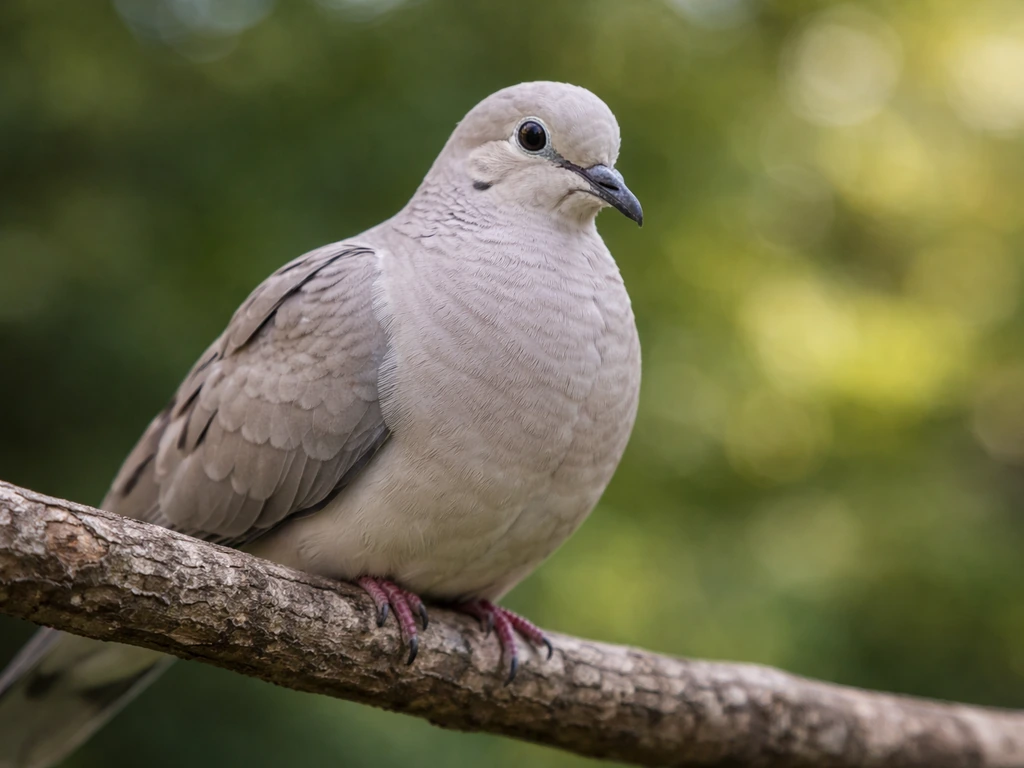
Quick English pronunciation of "dove"
In everyday American and British English, the word "dove" when you're talking about the bird sounds exactly like "luv" with a D in front. Both Cambridge and Oxford list the pronunciation as /dʌv/ for the noun. Merriam-Webster uses a respelling closer to /dōv/ in some entries, which can create confusion (more on that below), but the standard pronunciation you'll hear from birders, naturalists, and field guide narrators is always the "DUV" sound. One syllable, stress on that one syllable, short and clean.
IPA and syllable-by-syllable breakdown

Because "dove" is a single syllable, there's no syllable-splitting to worry about. Here's the full breakdown:
| Element | Detail |
|---|---|
| IPA (noun, bird) | /dʌv/ |
| Plain-speech respelling | DUV |
| Number of syllables | 1 |
| Vowel sound | Short "uh" (the /ʌ/ sound, as in "cup" or "love") |
| Opening consonant | /d/ — standard voiced D |
| Closing consonant | /v/ — voiced V, not F |
| Stress | The whole word is one stressed syllable |
The vowel here, /ʌ/, is the same sound you use in "sun," "cup," "run," and "love." If you can say those words, you can nail "dove." The V at the end is voiced (feel the vibration in your throat), not devoiced to an F sound. Practice: love, above, shove, dove. They all end the same way.
Common pronunciation mistakes and how to self-correct
There are two mistakes I see constantly, and both come from the same source: trusting the spelling.
- Saying "DOHV" (rhymes with "stove"): This is the most common error. The letter combination O-V-E often signals a long O sound ("cove," "wove," "drove"), so readers apply that rule here. Don't. "Dove" the bird is an exception. Rhyme it with "love," not "cove."
- Saying "DOHV" because of the verb: If you've heard someone say "she dove into the pool" (using "dove" as the past tense of "dive"), that word IS pronounced /doʊv/, rhyming with "stove." It's a completely different word that happens to share spelling. If you're talking about a bird, you want /dʌv/ every time.
- Softening the V to an F: Some non-native English speakers devoice the final V, producing "DUF." Keep the V voiced — hold your finger to your throat and feel the vibration as you finish the word.
The quickest self-correction tool: say "love" first, then swap the L for a D. If those two words rhyme when you say them, you're pronouncing "dove" correctly.
"Dove" the bird vs. "dove" the verb, and why it matters
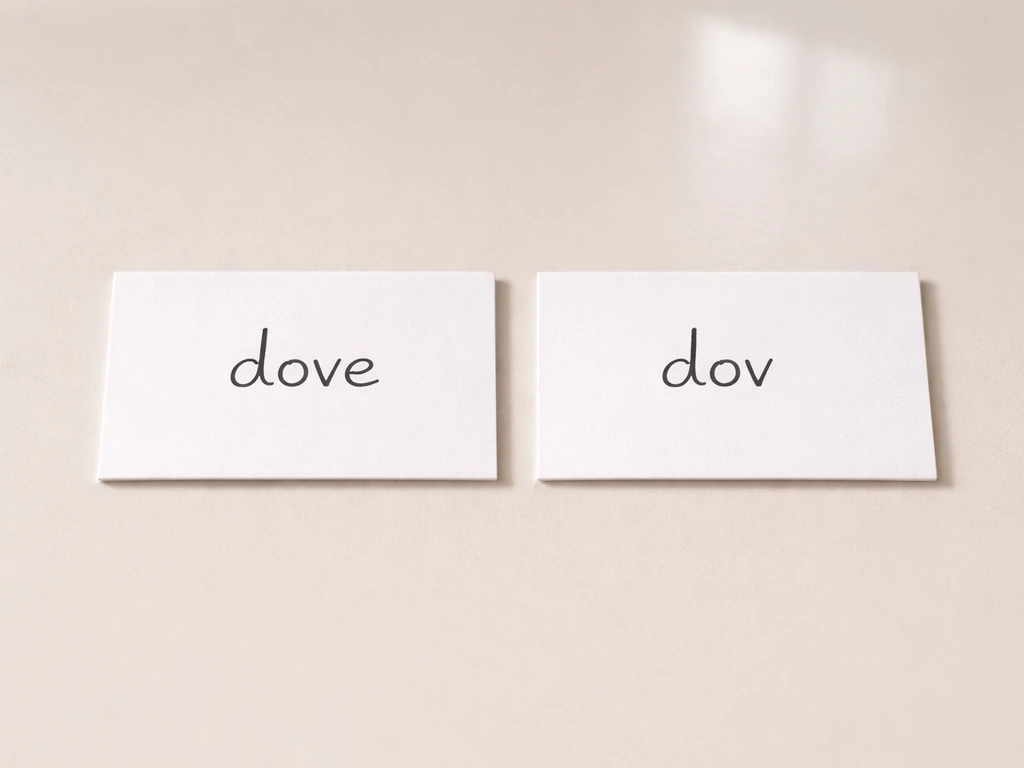
English has a genuine homograph situation here, meaning two completely different words share the same spelling but have different sounds and meanings. "Dove" as a verb is the past tense of "dive" in American English ("he dove off the cliff"), and it's pronounced blank" rel="noopener noreferrer">/doʊv/, that long O, rhyming with "stove." "Dove" as the bird is /dʌv/, the short "uh" sound, rhyming with "love." Context almost always makes the meaning clear, but the pronunciation difference is real and consistent. Bird noun = DUV. Verb past tense = DOHV. If you're on a bird-watching site, in a field, or reading a natural history book, you're almost certainly dealing with the bird, so go with /dʌv/ without hesitation.
How "dove" compares to "love" (and why that's actually useful)
"Love" and "dove" are one of the most famous rhyme pairs in English poetry, and that rhyme is your best pronunciation anchor. Both use the /ʌ/ vowel, both end in /v/, and both follow the same pattern where the O-V-E spelling produces an "uh" sound instead of the expected long O. Other words in this family include "above," "glove," and "shove." Memorizing this group makes "dove" easier to retain. Any time you second-guess yourself, just ask: does it rhyme with "love"? Yes. You're done.
Pronouncing specific dove species names
Once you have "dove" down, the next challenge is saying full species names correctly. Here are the ones people look up most often:
Mourning dove
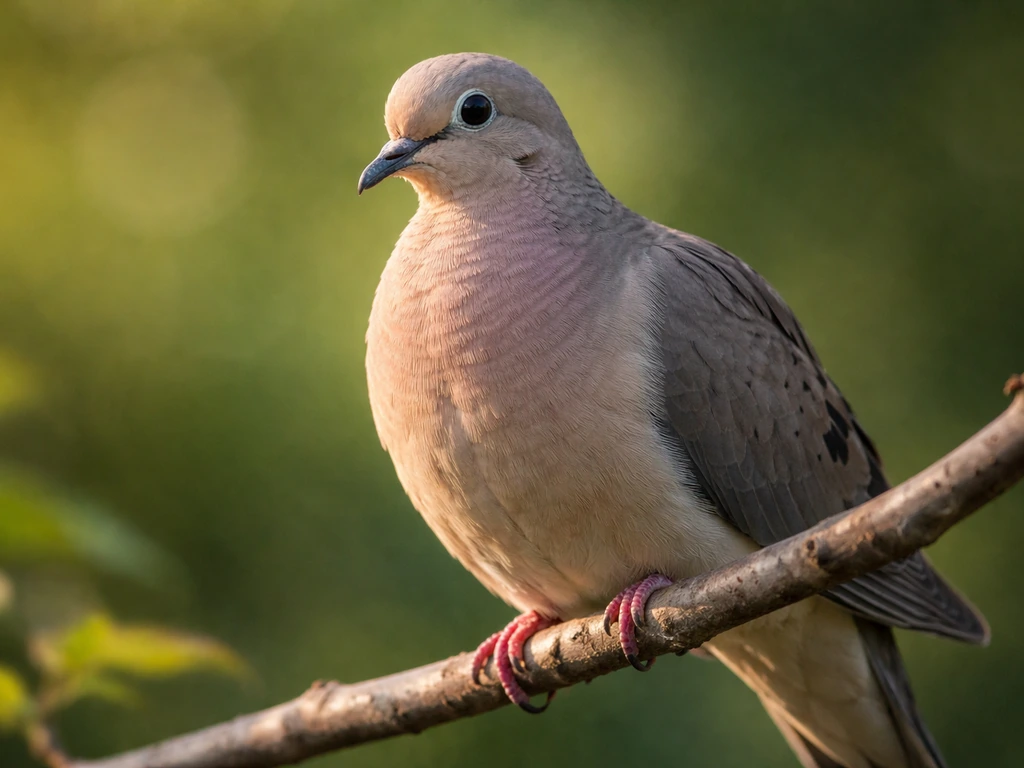
Pronounced: MOR-ning DUV. The word "mourning" here is /ˈmɔːrnɪŋ/, identical in sound to "morning" (as in morning coffee). Many people are surprised to learn they're homophones, "mourning" (grief) and "morning" (early day) sound exactly the same in most American accents. The name comes from the bird's mournful, cooing call. So the full phrase is: "MOR-ning DUV," two words, three syllables total.
White-winged dove
Pronounced: WYT-wingd DUV. Straightforward once you know "dove" is DUV. "White-winged" is /waɪt wɪŋd/, with the compound adjective carrying two stressed syllables: WHITE and WING. The full name: "WYT-wingd DUV," four syllables. No tricky sounds, just apply the "dove = DUV" rule and the rest follows.
Eurasian collared dove
Pronounced: yoo-RAY-zhun KOL-erd DUV. "Eurasian" is the part that causes most hesitation: /jʊˈreɪʒən/, with stress on the second syllable and a "zh" sound in the middle (like the S in "measure"). "Collared" is simply /ˈkɒlərd/, KOL-erd, rhyming with "hollered." Put it together: yoo-RAY-zhun KOL-erd DUV.
Inca dove
Pronounced: ING-kuh DUV. "Inca" is /ˈɪŋkə/, easy two-syllable word with stress on the first syllable. The full name is three syllables: ING-kuh DUV.
Rock dove (pigeon)
Pronounced: ROK DUV. If you need it in one line, the easiest shortcut is that “quail” and “quail bird” are pronounced together like they appear in common speech, then “bird” stays the same. This is the formal species name for the common pigeon. One syllable each: ROK DUV. Simple, but worth knowing because "rock dove" appears frequently in field guides and ornithological texts. The same /dʌv/ pronunciation applies here just as with every other dove species name in English.
How other languages pronounce their word for "dove"
If you're researching dove names across languages (useful for multilingual field guides, birding travel, or name etymology research), here's how the bird is handled in major languages:
| Language | Word for dove | Approximate pronunciation | Notes |
|---|---|---|---|
| Spanish | paloma | pah-LOH-mah | Stress on second syllable; also means pigeon in many contexts |
| French | colombe | koh-LOMB | Nasal ending; the final E is silent |
| German | Taube | TOW-buh | The AU makes an "ow" sound (as in "cow"); also means pigeon |
| Italian | colomba | koh-LOM-bah | Stress on second syllable; related to the name Columbus |
| Portuguese | pomba | POHM-bah | Short, two syllables; used across Brazil and Portugal |
| Latin (classical) | columba | koh-LUM-bah | Root of many modern names and species epithets in ornithology |
| Japanese | 鳩 (hato) | hah-toh | Also covers pigeon; flat, two-syllable word |
The Latin "columba" is worth paying attention to if you regularly read scientific bird names, since it appears in the genus Columba (which includes rock doves and many Old World pigeons) and in species epithets across ornithological naming. The Spanish "paloma" is useful for North American birders because many dove species with Spanish common names use it directly. If you enjoy pronouncing species names across multiple languages, the same careful attention to vowel sounds that applies to "dove" in English carries through to other languages too, similar to the challenge of getting ibis or vireo right when you're reading a multilingual bird list. Pronouncing ibis can be just as tricky in multilingual contexts, so a quick check of the vowel sounds helps you get it right.
Why the spelling and pronunciation confuse so many people
The word "dove" comes from Old English "dufe" and Proto-Germanic roots, and those early forms had a vowel sound much closer to what we'd recognize today as "oo" or "uh." Over centuries of sound shift, the vowel settled into the /ʌ/ we use now. The spelling, however, stayed closer to older forms and never caught up with the pronunciation change. That's the root of the confusion: English spelling is notoriously historical rather than phonetic, and "dove" is a classic example of a word where the letters tell you one story ("this looks like it should rhyme with stove") while the spoken tradition tells you another ("rhyme it with love").
The O-V-E pattern is particularly treacherous because it behaves inconsistently. "Cove," "rove," "wove," and "clove" all have a long O. But "love," "glove," "shove," and "dove" all have the short /ʌ/ sound. There's no clean rule to memorize, you just have to learn the exceptions. Think of it like the difference between "word" and "cord": the letters look parallel but the sounds diverge. For birders and language enthusiasts who spend time on pronunciation (the same careful attention that helps with quail, vireo, and bird of prey names), knowing the historical reason for the discrepancy at least makes the exception feel less random. To get vireo right, use the same careful approach and focus on how the vowels and stress land in the word quail, vireo, and bird of prey names. If you also need to pronounce bird of prey, start by saying the two words clearly, using the same DUV “dove” sound followed by “of prey.” bird of prey names.
The easiest way to lock this in permanently: make a mental note that "dove" belongs to the "love" family, not the "stove" family. Say "love, above, shove, dove" as one little sequence a couple of times. After that, /dʌv/ will feel completely natural every time you reach for it, whether you're reading a field guide entry for the mourning dove, writing a crossword clue, or just watching one land on your fence.
FAQ
Is it ever acceptable to pronounce “dove” like the verb past tense (DOHV) when talking about the bird?
In bird contexts, DOHV is considered a pronunciation mistake. The bird noun consistently uses /dʌv/ (DUV), so if you are reading a field guide name or describing a species, switch to the short “uh” vowel that makes it rhyme with “love.”
How should I pronounce “dove” if I am not sure whether the text means bird or verb?
Use a quick context check. If the sentence includes an action like “he dove off the cliff,” you want /doʊv/. If it includes species talk like “mourning dove” or mentions cooing, nests, or sightings, use /dʌv/.
Does the pronunciation change in different accents, like American vs British English?
The bird noun pronunciation stays the same, /dʌv/ in both major varieties. You may notice minor vowel coloring, but the key “DUV” rhyme with “love” remains the reliable anchor.
What’s the easiest way to practice “dove” so I don’t accidentally say “DOHV”?
Say “love” clearly, then change only the first consonant to D while keeping the same vowel and the voiced V. If the result still rhymes with “love,” you have the correct sound; if it starts rhyming with “stove,” you slid into the verb form.
Should I pronounce the V in “dove” like a light or devoiced sound?
Keep it voiced, with throat vibration, like the V in “love.” If you accidentally make it sound too much like an F (devoicing), it can make the word feel off even if your vowel is correct.
How does “dove” fit into longer phrases like “dove bird” or “dove species”?
When you say “dove” as a modifier or species label, treat it the same way each time: one syllable, /dʌv/, stress on that syllable. Don’t change it based on the fact that “bird” follows, since “dove” already carries the bird meaning.
If I’m reading a phonetic spelling or respelling from a dictionary, what should I trust most?
For everyday English and birding narration, trust the version that matches /dʌv/ and the “love” rhyme. Some dictionaries show alternative respellings for the bird term, but if it does not rhyme with “love,” treat it as an alternate guidance note rather than your target pronunciation.
What other word family words can I use to reinforce the vowel sound in “dove”?
Use “love” plus the common rhyme neighbors that share the short /ʌ/ vowel, like “above,” “shove,” and “glove.” If you can say that sequence smoothly, “dove” usually locks in because the vowel and ending /v/ stay consistent.
Next Article
How to Spell Bird Sounds: Calls, Variants, and Tips
Learn how to spell bird calls in English, with common spellings, variants, and tips for matching real sounds.