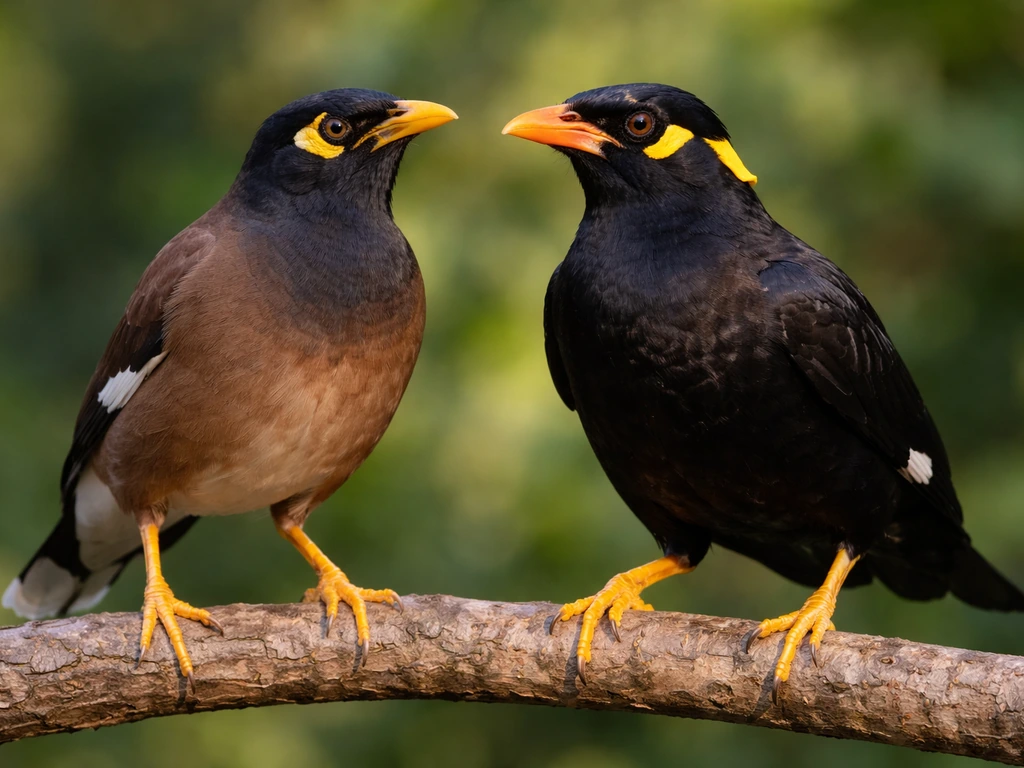
In everyday English, a myna bird is called exactly that: a "myna" (or "mynah"). The two spellings refer to the same bird, and both are accepted in standard dictionaries. When most English speakers say "myna bird," they usually mean one of two species: the Common Myna (Acridotheres tristis), also widely called the Indian Myna, or the Common Hill Myna (Gracula religiosa), the glossy black one famous for mimicking human speech. The U.S. Fish & Wildlife Service uses “Common myna” as the English common name for Acridotheres tristis Common Myna (Acridotheres tristis). Neither name is wrong, but they point to different birds, and that confusion is exactly why people end up searching this question.
What Is a Myna Bird Called in English? Names Explained

James Ridgley
6 May 2026
Common English names for myna birds
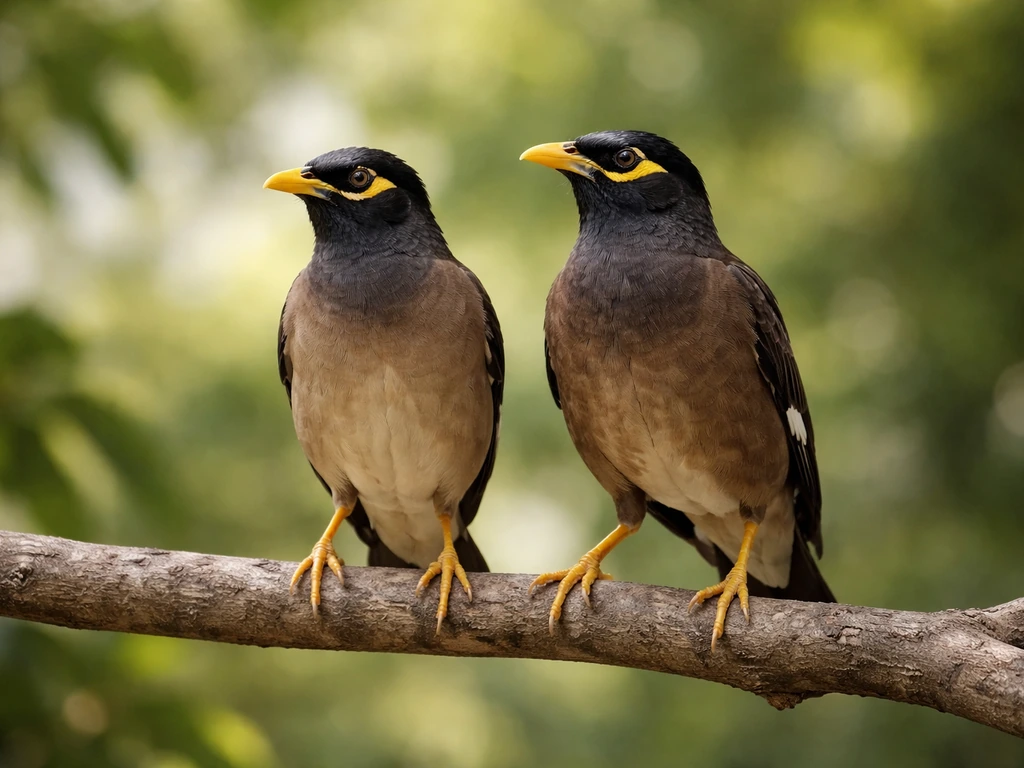
"Myna" is not the name of a single species. It works more like a group label applied to a cluster of Asian birds in the starling family (Sturnidae). That said, a handful of specific common names come up most often in English, and it helps to know them.
| Common English Name | Scientific Name | Also Called |
|---|---|---|
| Common Myna | Acridotheres tristis | Indian Myna, Common Mynah |
| Common Hill Myna | Gracula religiosa | Hill Myna, Myna Bird, Grackle (older usage) |
| Javan Myna | Acridotheres javanicus | White-vented Myna |
| Bank Myna | Acridotheres ginginianus | Bank Mynah |
The Common Myna and the Common Hill Myna are the two you'll encounter most in field guides, pet contexts, and everyday conversation. If someone says "my myna can talk," they almost certainly mean the Hill Myna. If someone says "those mynas are taking over the garden," they almost certainly mean the Common Myna, which has established feral populations well outside its South Asian homeland, including in Australia, the Middle East, and parts of North America.
Which species are actually called "myna"
The word "myna" covers a broader group than most people realize. Britannica defines "mynah" as any of a number of Asian birds in the family Sturnidae, meaning it's a category, not a single species. Within that category, two genera carry most of the common usage: Acridotheres (the ground-feeding mynas, including the Common/Indian Myna) and Gracula (the hill mynas, including the famous talking bird). When birding resources like Cornell Lab's All About Birds list a species called "Common Myna," they mean Acridotheres tristis specifically, and they deliberately distinguish it from "Common Hill Myna" to avoid exactly this confusion. Cornell Lab's All About Birds also uses blank" rel="noopener noreferrer">Acridotheres tristis specifically for the Common Myna, distinguishing it from Common Hill Myna (Gracula religiosa).
So if you're trying to pin down which myna you mean, the key split is this: ground-foraging mynas (Acridotheres genus) versus tree-dwelling, vocal mynas (Gracula genus). Both groups include species that go by "myna" in English, but they look and behave quite differently in the field.
Spelling, pronunciation, and word usage in English
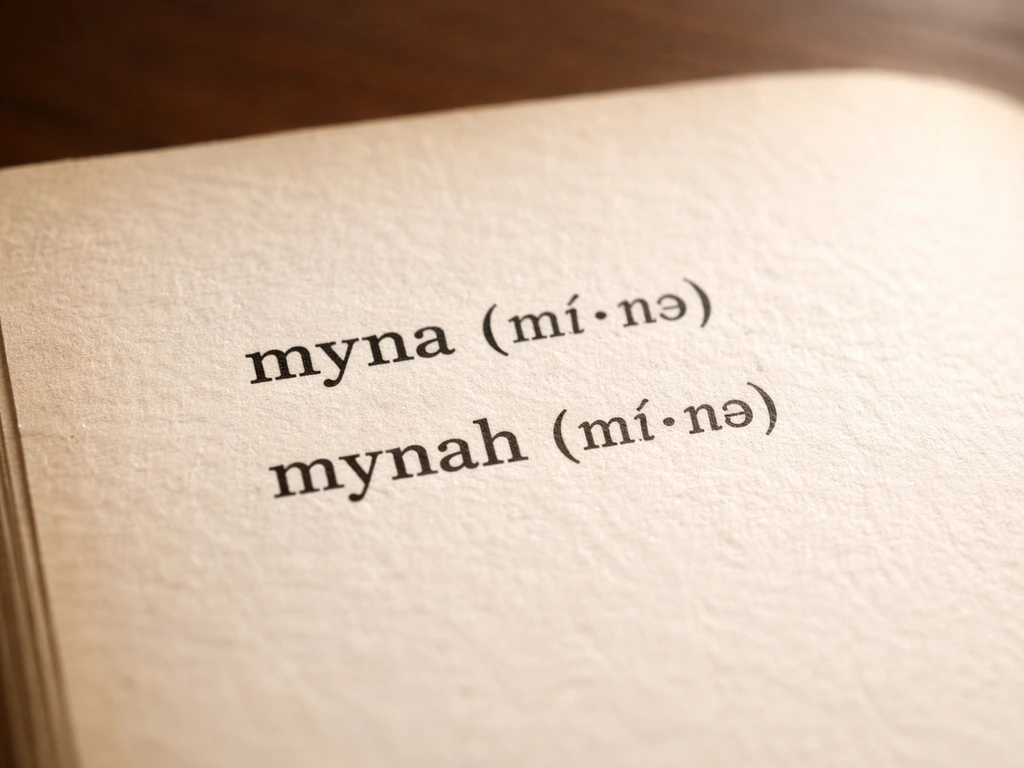
Both "myna" and "mynah" are correct English spellings, and you'll find them used interchangeably across reputable sources. Merriam-Webster uses "myna" as the primary headword, while Oxford Learner's Dictionaries leads with "mynah." Wikipedia articles on the Common Myna note the "mynah" spelling as a recognized variant. Neither is a misspelling, though "myna" is increasingly the standard in modern ornithological usage.
Pronunciation is consistent regardless of spelling. The word is pronounced MY-nuh, with the stress on the first syllable. If you are looking for how to pronounce mynah bird, just say MY-nuh with the stress on the first syllable. If you want to say it in a more complete phrase, you can say "myna bird" the same way as the single word.
If you're specifically wondering how to pronounce the nene bird, the key is to focus on the stressed syllable and keep the pronunciation consistent with the intended species name. In IPA notation, that's /ˈmaɪnə/. Cambridge Dictionary and Wiktionary both confirm this pronunciation. It rhymes with "China" and "diner," which makes it easy to remember.
You'll sometimes hear people say "MY-nah bird," which is just the same pronunciation with the variant spelling said aloud. If you need to say it clearly, use the pronunciation guide for "myna bird" and then choose the right bird name.
In general English usage, "myna bird" (two words) is common in casual speech, while "myna" alone is the term you'll see in field guides and scientific writing. Crossword clues often use both "myna" and "mynah" as valid entries, which occasionally trips people up when only one spelling fits the grid.
What mynas are called in other languages and regions
The name varies considerably depending on where you are and what language is in use, which partly explains why English speakers encounter so many spelling variants in the first place.
| Language / Region | Name Used | Notes |
|---|---|---|
| Hindi / Urdu (South Asia) | mainā (मैना) | Direct origin of the English word |
| Sanskrit (historical) | madana | Root word linked to Hindi mainā |
| Bengali (South Asia) | shalik / mayna | Commonly used for Acridotheres tristis |
| Australian English | Indian myna or Indian mynah | Reflects the bird's introduced status |
| Southeast Asian English | Javan myna / white-vented myna | For Acridotheres javanicus specifically |
| British English | mynah bird | Older form, still commonly understood |
In South Asia, the word has been in everyday use for centuries, long before it entered English. In countries where the Common Myna was introduced, like Australia and New Zealand, the bird is often called the "Indian myna" or "Indian mynah" to signal that it isn't a native species. Pet communities in the West tend to use "hill myna" or "myna bird" for Gracula religiosa, while birding communities will almost always use the full official common name to avoid ambiguity.
Where the word "myna" actually comes from
"Myna" entered English in the 18th century, borrowed from the Hindi and Urdu word mainā (मैना). That Hindi word itself traces back to Sanskrit madana. The borrowing happened during the period of British colonial presence in South Asia, which is also why the word came in with a slightly anglicized spelling: "mynah" with an added h was an early attempt by English writers to capture the sound of the Hindi word, while "myna" became the cleaner modern spelling. Both forms stuck, which is why you still see both today.
The variation in spelling is a classic case of a loanword settling into a new language before spelling conventions were standardized. Similar things happened with other bird names borrowed from South Asian languages during the same period. The fact that both spellings coexist is a direct artifact of that historical process, not a mistake by either camp.
If you find yourself digging into pronunciation guides for other unusual bird names, the same pattern of borrowed-name variation shows up repeatedly. The hoopoe, the rhea, and several other birds have names that look strange in English for exactly this kind of historical reason. The same kind of spelling and history shows up in guides for pronouncing the rhea bird. If you also came here for the hoopoe, its pronunciation differs from myna and varies by accent.
Quick ways to confirm which myna you mean
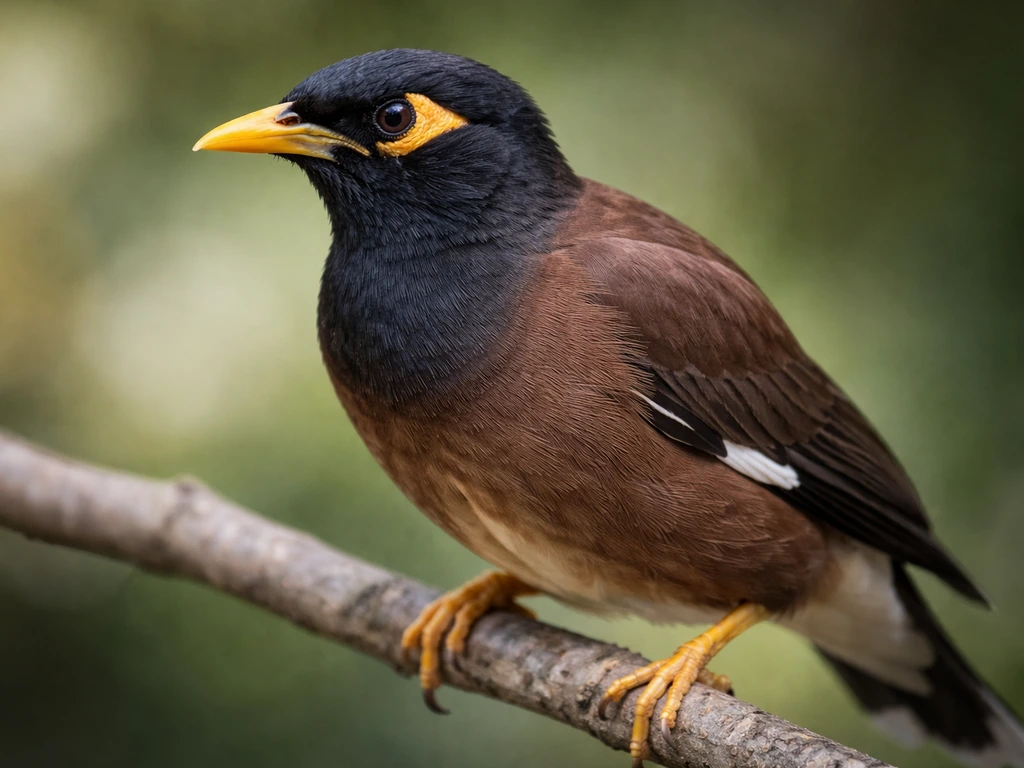
If you're trying to figure out which specific myna someone is talking about (or to clarify your own question), a few quick visual cues will get you there fast without needing to go deep into taxonomy.
- Bright yellow-orange bare skin patch behind the eye, brown body, black head, bold white wing patches in flight: that's the Common Myna (Acridotheres tristis), about 20 cm long, ground-feeding, often seen in urban parks and gardens.
- All-glossy black body with a small yellow wattle on the head and a reputation for mimicking voices: that's the Common Hill Myna (Gracula religiosa), the one most associated with talking pet birds.
- White vent (under the tail), grayish body, found in Southeast Asia: likely the Javan Myna (Acridotheres javanicus), also called the white-vented myna.
- Location matters a lot: if you're in Australia or South Africa and someone mentions a "myna problem," they mean the introduced Common Myna. If someone in a pet shop mentions a "myna," they almost certainly mean the Hill Myna.
- If you have a photo, the eye patch color is the fastest distinguishing feature between Common Myna (vivid yellow-orange skin) and Hill Myna (yellow wattle lower on the head/neck).
Cornell Lab's All About Birds is the most reliable free resource for confirming field marks if you want to cross-check a sighting. Search "Common Myna" and "Common Hill Myna" as separate entries and compare the identification photos side by side. That will resolve most cases within a minute.
To sum it up: in English, "myna" or "mynah" is the correct name, pronounced MY-nuh, and it covers a group of Asian starlings. The two species most people actually mean are the Common Myna and the Common Hill Myna. Use location, body color, and the eye-patch feature to tell them apart, and you'll have a confident ID every time.
FAQ
If I just say “myna,” will people know which bird I mean?
In everyday English, you can use “myna” and be understood, but if you need precision, specify the species name. For example, “Common Myna” usually means Acridotheres tristis, while “Common Hill Myna” means Gracula religiosa.
Are “Indian myna” and “hill myna” the same as the English names in bird guides?
Yes. In informal conversation, people often use “Indian myna” for the Common Myna, and “hill myna” for the Common Hill Myna. Those regional common names are useful shorthand, but they are less precise than the full “Common Myna” and “Common Hill Myna” names.
Is “MY-nuh” or “MY-nah” correct, and does it change what bird I’m talking about?
For “myna bird,” the stress stays on the first syllable (MY-nuh). If someone says MY-nah, it is usually just a spelling pronunciation variation, not a different bird or a different word.
If I’m searching online or in a database, does spelling “myna” vs “mynah” matter?
Using “mynah” is not wrong, but it can confuse autocomplete and some birding databases, which may default to “myna.” If you are searching online or entering it into a form, try both spellings to ensure you land on the right page.
Can “myna” alone be enough for scientific or identification purposes?
The bird name “myna” is primarily an English common name, not a complete scientific identification by itself. For an exact match, confirm the species or genus shown in the listing, especially in field guides that separate Acridotheres from Gracula.
What’s a frequent mistake people make when they mix up hill myna vs myna bird?
A common mix-up is assuming “hill myna” and “myna bird” refer to different spellings only. They can be different birds by common name, so check the description or photos, not the wording alone.
How can I tell which myna someone means based on the situation they describe?
In many casual conversations, “Indian myna” is used as a location clue, while “Common Hill Myna” includes a behavioral and appearance clue (tree-dwelling and the well-known mimic). If the sentence mentions taking over lawns or foraging on the ground, it typically points to the Common Myna.
What should I include in an ID request or caption to avoid confusion?
If you need to label a photo or share an observation, include three details: location (country or region), behavior (ground foraging vs perching in trees), and key visual traits (for example, any eye patch or overall body coloration). This reduces ambiguity even if the spelling varies.
Next Article
How to Pronounce Rhea Bird: Correct Sound Guide
Say rhea bird correctly: syllables, stress, common mispronunciations, accents, and how to pronounce greater and lesser r