The most likely crossword answer for 'common garden bird' is ROBIN (5 letters) or SPARROW (7 letters), with SPARROW confirmed as the best answer for the Daily Quick crossword on 19 February 2026. That said, this clue is genuinely open-ended, and the correct answer depends entirely on your letter count and any crossing letters already in the grid. Other strong candidates include TIT (3), WREN (4), THRUSH (6), STARLING (8), BLUETIT (7), and CHAFFINCH (9).
Common Garden Bird Crossword Clue: Best Answers and Tactics

James Ridgley
6 Jun 2026
Why 'common garden bird' is a vague crossword clue
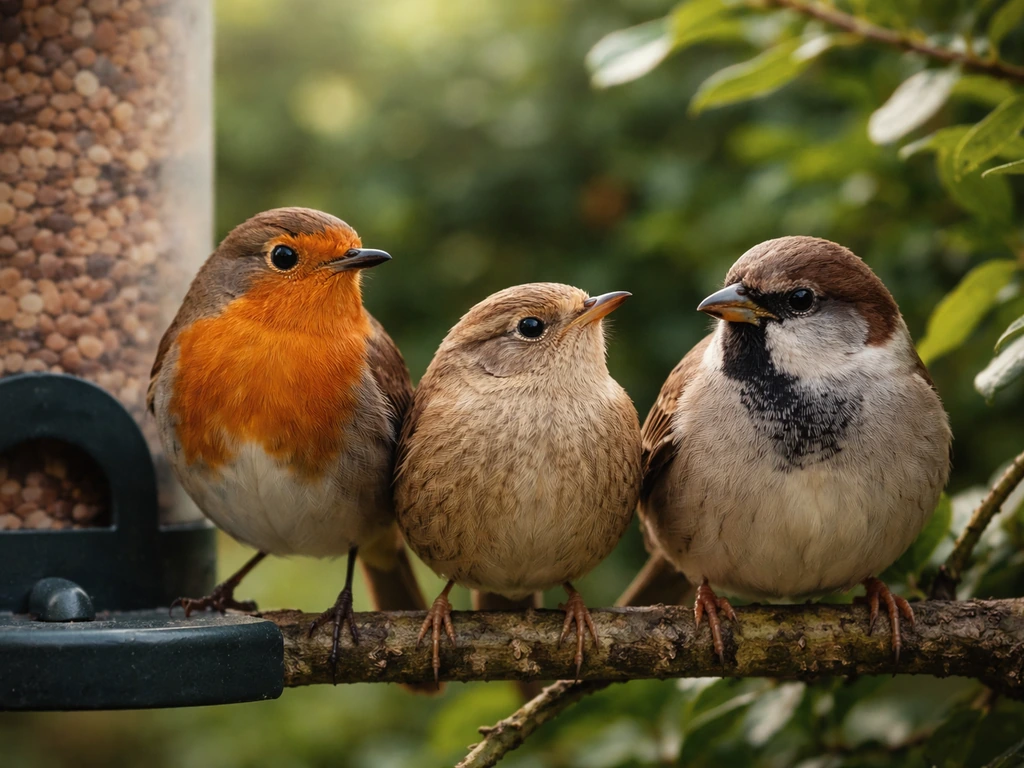
Unlike a clue that names a single species directly, 'common garden bird' describes a category. Dozens of birds qualify. In the UK, the RSPB's Big Garden Birdwatch consistently lists House Sparrow, Robin, Starling, Blackbird, Blue Tit, Chaffinch, and Wren among the most frequently spotted garden visitors. House Sparrow topped the Birdwatch charts for 21 consecutive years.
Cornell’s All About Birds notes that House Sparrows are among the most common birds and are often found in urban areas, which explains why “sparrow” is such a frequent common-garden-bird crossword answer. Any of these could be a setter's intended answer, which is why the clue frustrates solvers who go looking for one definitive species.
The grid itself is what narrows it down, not the clue wording.
Crossword setters tend to pick birds whose common names compress neatly into a single word with no hyphens or spaces. That's why you'll see ROBIN and TIT far more often than HOUSE SPARROW or GREAT TIT. The clue is essentially asking: 'Name one well-known garden bird,' and the answer is whichever species fits the letter grid. Keep that in mind as you work through the candidates below.
Most likely crossword answer candidates
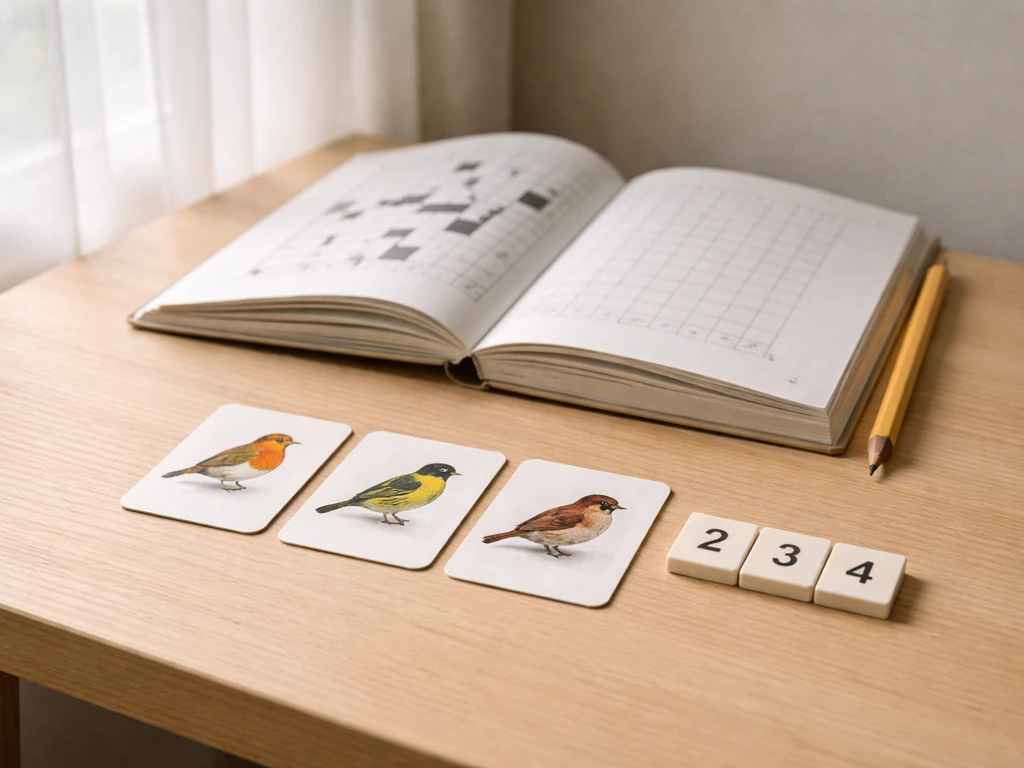
Here are the top candidates, ranked roughly by how often they appear as crossword answers for garden-bird clues, based on crossword databases and the real-world frequency of these birds in UK and US gardens.
| Answer | Letter Count | Notes |
|---|---|---|
| ROBIN | 5 | Most iconic garden bird in the UK; very common crossword answer |
| SPARROW | 7 | Confirmed best answer for Daily Quick (Feb 2026); globally recognised |
| TIT | 3 | Short, crossword-friendly; covers Blue Tit, Great Tit, etc. |
| WREN | 4 | Common UK garden bird; short and clean for grids |
| THRUSH | 6 | Song Thrush is a classic garden species; 6-letter fit |
| STARLING | 8 | Very common garden bird; useful for longer grid slots |
| BLUETIT | 7 | Single-word compression used by some setters (CrosswordTracker confirmed) |
| BLACKBIRD | 9 | Extremely common UK garden bird but longer word |
| CHAFFINCH | 9 | Appears in databases but rarely the first pick |
| BULLFINCH | 9 | Listed by CrosswordGiant but less common as a garden visitor |
ROBIN and SPARROW are your first guesses if you have no crossing letters at all. ROBIN is the go-to 5-letter answer for garden-bird clues in British puzzles, and SPARROW covers the 7-letter slot. If neither fits, work down the list using letter count.
Narrowing by letter count and crossword crossings
Letter count is the single fastest filter. Count the squares in your grid entry before anything else. Once you know the number, most candidates disappear immediately.
| Letter Count | Best Candidates |
|---|---|
| 3 | TIT |
| 4 | WREN |
| 5 | ROBIN |
| 6 | THRUSH |
| 7 | SPARROW, BLUETIT |
| 8 | STARLING |
| 9 | BLACKBIRD, CHAFFINCH, BULLFINCH |
Once you've filtered by count, look at your crossing letters. If your 5-letter slot has an R in position 1 and an N in position 5, ROBIN is almost certainly right. If your 7-letter slot starts with SP, go with [SPARROW](/bird-collective-nouns/common-farmyard-bird-crossword-clue-7-letters). A crossing letter in an unusual position (like a K in position 5 of a 9-letter slot) should push you toward BLACKBIRD over CHAFFINCH or BULLFINCH. Use every confirmed crossing before guessing.
If you're searching online using a letter-count phrase like 'common garden bird 5 letters' or 'common garden bird 6 letters,' the answer you want is almost always ROBIN for 5 and THRUSH for 6. Those same searches come up in related clue variations including 'common bird crossword clue 6 letters' and 'common British bird crossword clue,' where THRUSH and ROBIN are repeated top answers.
Spelling, singular/plural, and crossword-friendly word forms
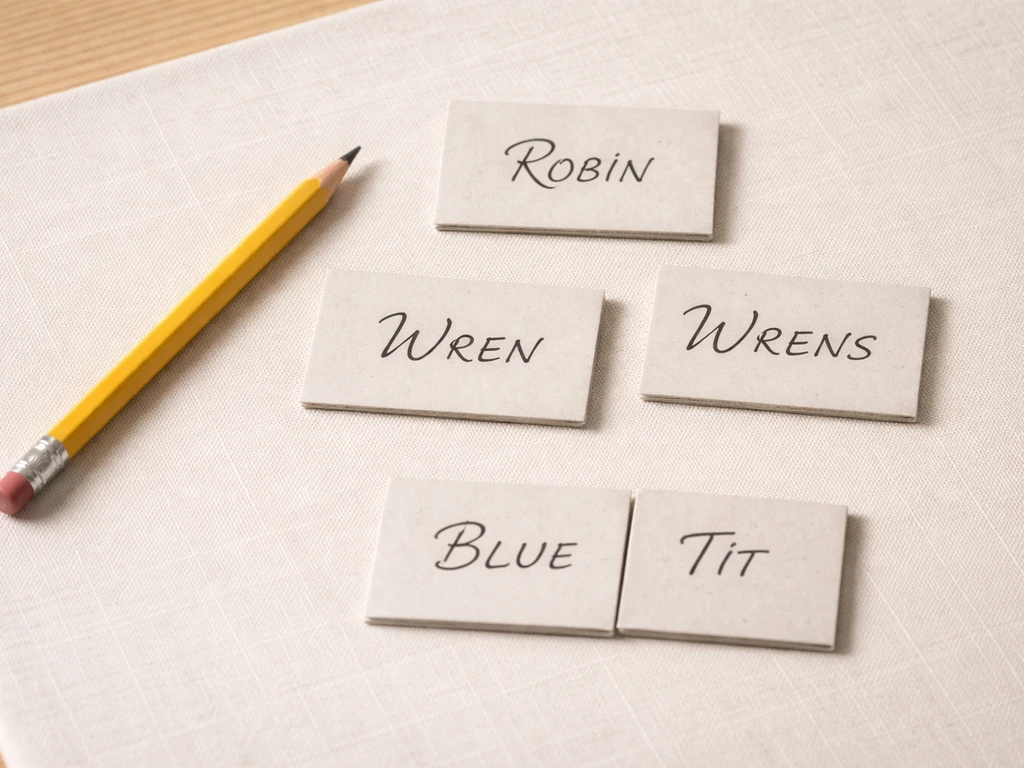
Crossword answers are almost always singular unless the clue specifically signals a plural (for example, 'common garden birds' or a clue that reads as a plural definition). So enter ROBIN, not ROBINS, and SPARROW, not SPARROWS. That's the default rule for species names in crosswords.
Watch out for two-word bird names. Blue Tit is officially two words in most field guides and the RSPB's own materials, but in crossword grids it almost always appears as BLUETIT (one word, 7 letters) when it appears at all. CrosswordTracker has a confirmed entry for BLUETIT as a single-word crossword answer. The same logic would apply to BLACKBIRD, which is standardly written as one word and fits cleanly in a 9-letter grid slot. Always check whether the grid's letter count matches the compressed single-word form rather than the spaced version.
CHAFFINCH is worth a spelling check: it's C-H-A-F-F-I-N-C-H. The double F in the middle trips people up. BULLFINCH follows the same -FINCH ending: B-U-L-L-F-I-N-C-H. Both are 9 letters. THRUSH is straightforward at 6 letters: T-H-R-U-S-H. No unusual letter combinations.
Quick pronunciation and naming notes
Knowing how these bird names sound helps you recognise them quickly, especially if you're searching by ear or confirming a name you've half-remembered.
- ROBIN: UK pronunciation /ˈrɒbɪn/ (ROB-in); US pronunciation /ˈrɑːbɪn/ (RAH-bin). The word comes from the pet name 'Robin' given to the European Robin (Erithacus rubecula) centuries ago.
- SPARROW: UK pronunciation /ˈspær.əʊ/ (SPARR-oh). Refers specifically to House Sparrow (Passer domesticus) in most crossword contexts.
- WREN: /ɹɛn/ (REN). One syllable, four letters, unfussy. Refers to the Eurasian Wren (Troglodytes troglodytes) in UK contexts.
- STARLING: UK /ˈstɑːlɪŋ/ (STAR-ling); US /ˈstɑɹlɪŋ/ (STAR-ling). The Common Starling (Sturnus vulgaris) is the species intended.
- THRUSH: one syllable, rhymes with 'brush.' Song Thrush (Turdus philomelos) is the garden species most crosswords mean.
- BLUETIT or BLUE TIT: BLOO-tit. The Blue Tit (Cyanistes caeruleus) is the most widespread tit species in UK gardens.
- CHAFFINCH: CHAFF-inch. Two syllables. The name comes from 'chaff,' the grain husks these birds were once seen picking through.
Language and naming variations that can affect clues
Most 'common garden bird' clues in English-language crosswords are built around British English common names, because this kind of clue is especially popular in UK publications and the RSPB's garden-bird tradition is deeply embedded in British culture. That means the expected answer is typically the British common name for the species, not a scientific name or an American alternative.
A few naming differences are worth knowing. The American Robin (Turdus migratorius) is a thrush, completely different from the European Robin (Erithacus rubecula), but in US crosswords 'robin' still appears as a common garden bird answer. The American House Sparrow is the same species as the British one (Passer domesticus), so SPARROW works on both sides of the Atlantic. Where things get trickier is with birds that have different common names between regions: what the British call a Blackbird (Turdus merula) is not the same thing Americans typically picture when they hear 'blackbird.'
Themed or multilingual puzzles occasionally use non-English bird names. French crosswords might use ROUGE-GORGE (robin) or MOINEAU (sparrow). Spanish puzzles might use PETIRROJO (robin) or GORRIÓN (sparrow). If you're solving a puzzle in another language or with a European theme, the same candidate species apply but the expected word form changes entirely. Related clue types like 'common European bird crossword clue' or 'common British bird crossword clue' draw from essentially the same pool of species but may reflect regional naming preferences more tightly.
Some setters also use collective or informal terms. TIT alone, without a colour modifier, is a valid crossword answer that sidesteps the Blue Tit vs. Great Tit question entirely. Setters favour this shortcut when they need a 3-letter slot filled and want something recognisably a garden bird.
If you're still stuck: a step-by-step troubleshooting checklist

- Count the grid squares for this entry. Do this first, every time, before anything else.
- Match the letter count to the candidate table above and eliminate everything that doesn't fit.
- Write in any crossing letters you've already confirmed from intersecting answers.
- Check whether the confirmed letters match ROBIN, SPARROW, THRUSH, WREN, or whichever candidate fits the count.
- If you're down to two candidates with the same letter count (e.g., SPARROW and BLUETIT at 7), look for any crossing letter that distinguishes them. A B in position 1 means BLUETIT; an S in position 1 means SPARROW.
- Search your exact letter count online: try 'common garden bird [number] letters' or 'common garden bird crossword clue answer' to see if that specific puzzle instance has been documented.
- Check CrosswordGiant or CrosswordAnswers911 for the specific publication and date if you know them. The 19 February 2026 Daily Quick, for example, has SPARROW confirmed as the best answer.
- If the puzzle is UK-focused (Guardian, Times, Telegraph, Daily Mail), lean toward British species names: ROBIN, SPARROW, BLUETIT, WREN, THRUSH, STARLING, BLACKBIRD.
- If the puzzle is US-focused, ROBIN and SPARROW remain safe bets, but watch for WREN and CHICKADEE as alternatives.
- Still stuck? Try entering the pattern into a crossword solver (e.g., ????? for 5 unknown letters) filtered by 'bird' category. That will surface any less obvious candidate you may have missed.
The bottom line: 'common garden bird' is a deliberately broad clue, and the answer is hiding in your grid, not in the clue wording. If you're stuck on a different puzzle, you can also look up what comes from a farm bird crossword clue for guidance. Lock in the letter count, use your crossings, and match against the ranked list above. In most cases you'll land on ROBIN or SPARROW, and from there a single confirmed crossing letter will seal it.
FAQ
What should I do if the clue is “common garden bird” but the grid shows 4 or 6 letters?
Use the letter count as the first lock. For 4 letters, TIT or WREN are common fits, for 6 letters, THRUSH is a frequent choice, and in tight grids a single crossing letter will quickly confirm which one matches the pattern.
Does “common garden bird” ever mean a plural bird answer in a crossword?
Usually no, unless the clue definition is explicitly plural, such as “common garden birds.” If the clue is singular, enter the species in standard singular form (for example ROBIN, not ROBINS), even if the real world birds are often seen in groups.
Should I try “house sparrow” or “blackbird” as written, or the shortened forms?
Crosswords typically expect the compressed single word, so HOUSESPARROW is unlikely because it would not fit normal grid lengths, and BLACKBIRD is more likely to appear as BLACKBIRD (one word). If the slot length matches, BLACKBIRD fits cleanly; if it does not, pivot to shorter options like SPARROW.
How can I tell whether the setter expects European Robin or American Robin?
In most English crosswords, the European-style “ROBIN” is the expected answer, but US-themed crosswords can still use ROBIN for the American robin. The practical decision tool is your grid: if it spells ROBIN exactly, accept it regardless of region, and let crossings resolve any rare alternatives.
If I only have one crossing letter, what’s the fastest way to choose between similar options?
Constrain by length first, then use the position of the crossing letter. For example, in a 5-letter slot, an initial R strongly favors ROBIN, while a conflicting letter in the last two positions can rule it out. Don’t try to “guess the bird,” match the exact letter pattern.
What if the letter count fits SPARROW but the crossings contradict it?
If crossings conflict, don’t force the length guess. Recount the squares, then check for common alternative lengths the setter might allow (for instance, if you miscount and it is actually 6 or 8, you may be seeing WREN/THRUSH/STARLING instead). After recounting, eliminate any candidate whose letters conflict with more than one crossing.
Why do some people get stuck between BLUE TIT and BLUETIT?
Because field guides write it as two words, but crosswords often compress it into one word form. If your slot is 7 letters, BLUETIT is the natural fit. If your slot is not 7, avoid forcing BLUE or TIT as separate entries unless the clue type makes that explicit.
Is CHAFFINCH always spelled with two F’s, and how do I handle typos?
Yes, the standard crossword spelling is C-H-A-F-F-I-N-C-H. If the grid gives you something inconsistent like CHAFINCH (one F), treat it as a typo in your notes, or re-check the crossings and confirm the intended spelling from the available letters.
What if my slot ends in “-FINCH” but the rest is unclear?
Both CHAFFINCH and BULLFINCH are 9 letters and share the -FINCH ending pattern. Use the middle letters (the part before FINCH) and your crossings to distinguish them, because the ending alone is not enough to separate them.
Do these answers depend on UK vs US crosswords, especially for “blackbird”?
ROBIN and SPARROW usually carry over cleanly, but “blackbird” can be ambiguous across regions. In the UK, BLACKBIRD typically refers to the Eurasian species, while American usage may point to different birds. Still, crosswords usually stick to a single grid-consistent spelling, so let your crossings decide when wording is ambiguous.
Can “common garden bird” in a non-English crossword still point to the same species list?
Often yes for the species concept, but the word form changes by language. The key is to still apply the same letter-count and crossing logic, then map your matched word to the likely bird by translation or familiar cognates (for example, robin-like vs sparrow-like forms).
If I’m solving a themed puzzle and the answer seems “off,” what should I check first?
First verify the letter count and any forced plural/singular mismatch. Then prioritize exact crossing-letter compatibility over “typical frequency.” The setter’s intended choice is whatever species name fits the exact word pattern your grid allows.
Next Article
What Comes From a Farm Bird Crossword Clue Answers
Solve farm-bird clue answers by choosing egg or other products using enumeration, singular/plural, and bird-term hints.