The most likely crossword answer for the clue 'common European bird' is SPARROW (7 letters), but BLACKBIRD (9 letters) is an equally strong candidate depending on your grid. Both species fit the clue perfectly, and puzzle makers use this phrasing for either one. Your grid's letter count is the fastest way to decide between them, so check that first before anything else.
Common European Bird Crossword Clue: Answer Guide

James Ridgley
28 May 2026
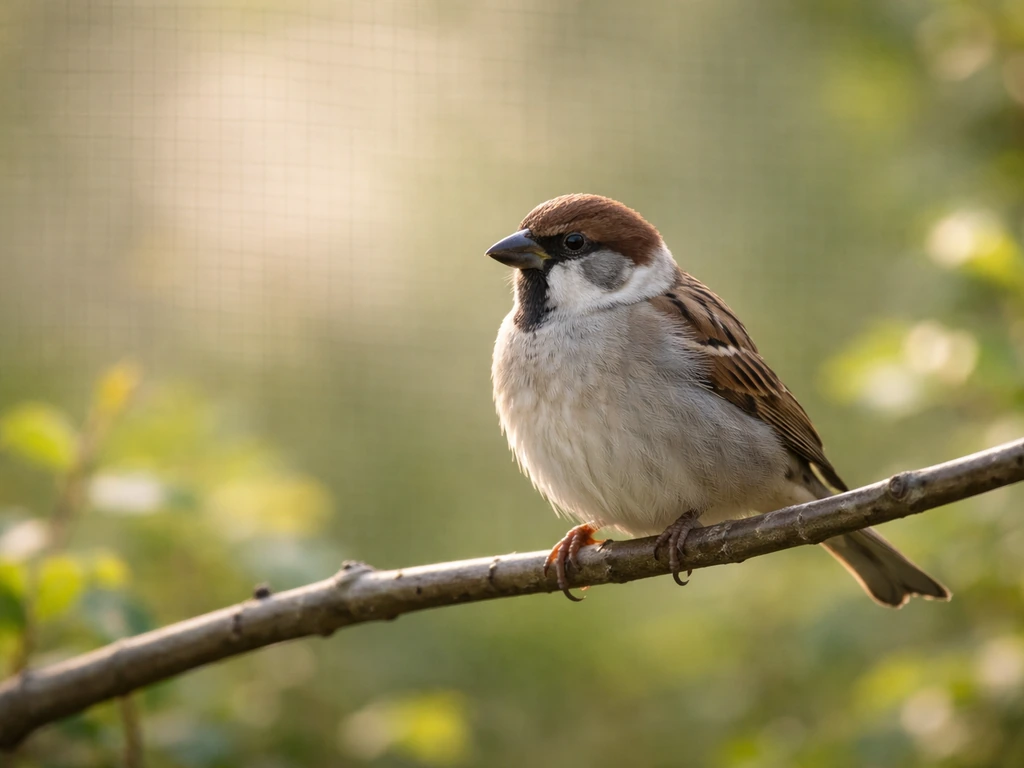
How crossword clues like 'common European bird' get interpreted
Crossword clues built around 'common European bird' are almost always asking for a single English common-name species answer, not a genus, family, or scientific name. The word 'common' does double duty here: it signals that the bird is abundant and well-known (so you won't be expected to know a rare migrant), and it sometimes echoes the actual species name itself, as in the Common Chaffinch or Common Starling. Puzzle makers lean on this phrasing because it has an authoritative ring from dictionary definitions. Collins, for instance, literally defines blackbird as 'a common European bird,' which makes the phrase almost copy-paste ready for a clue.
The convention in English-language crosswords is to enter the standard English common name as a single run of letters, no spaces, no hyphens. So 'Blue Tit' enters as BLUETIT, 'Blackbird' as BLACKBIRD, and 'Sparrow' as SPARROW. If you are working a Figgerits puzzle or a general word puzzle rather than a traditional cryptic or American grid, the convention is the same: the solution is a recognized English species name spelled out continuously.
Quick candidate list for the most likely European common birds
Here are the species you should have on your radar for this clue, ordered by how frequently they appear as crossword answers for 'common European bird' or close variants of it.
| Bird (common name) | Letters | Notes |
|---|---|---|
| SPARROW | 7 | Top answer for Figgerits and similar word puzzles; extremely common across Europe |
| BLACKBIRD | 9 | Collins definition literally reads 'a common European bird'; frequent crossword target |
| CHAFFINCH | 9 | Collins: 'small European bird'; common in cryptic and general clues |
| GOLDFINCH | 9 | Regular 'European bird' answer in crossword solver databases |
| HOOPOE | 6 | Appears in 'European bird' answer lists; more distinctive letter count |
| STONECHAT | 9 | Crossword databases map 'common European chat' directly to this answer |
| BLUETIT | 7 | Very common resident; spelling ambiguity (see below) can cause problems |
| WREN | 4 | Short and clean; pops up in simpler grids |
SPARROW and BLACKBIRD are the two you will encounter most. CHAFFINCH and GOLDFINCH share the same nine-letter count as BLACKBIRD, so if your grid gives you 9 boxes, you need at least one or two crossing letters to separate them.
How to narrow to the right answer using letter count and patterns
Count the squares first. That single step eliminates most of the field immediately. Here is the breakdown of what each letter count points you toward:
| Letter count | Most likely answer(s) |
|---|---|
| 4 | WREN |
| 6 | HOOPOE |
| 7 | SPARROW or BLUETIT |
| 9 | BLACKBIRD, CHAFFINCH, GOLDFINCH, or STONECHAT |
Once you have the count, use any crossing letters you already have. For a 9-letter answer, the first letter alone splits the field cleanly: B points to BLACKBIRD, C to CHAFFINCH, G to GOLDFINCH, S to STONECHAT. For a 7-letter answer, the third letter helps: SPARROW has an A in position 3, BLUETIT has a U. If you are solving a Figgerits puzzle and have no crossing letters at all, go with SPARROW as your first guess since that is the documented answer for this exact clue phrasing in that puzzle format.
Common spelling pitfalls and bird-name variants
Bird common names have more spelling variation than most solvers expect, and getting one letter wrong costs you the crossing entries. Watch out for these specific traps:
- SPARROW: straightforward, but solvers occasionally write SPARRO or SPAROW. The double-R is non-negotiable.
- BLACKBIRD: one word, no hyphen, no space. Some people want to write BLACK BIRD as two words, but crossword grids never split it.
- CHAFFINCH: double-F in the middle (CHAFFINCH, not CHAFINCH). The word comes from 'chaff,' and that double-F trips up a lot of solvers.
- GOLDFINCH: straightforward spelling, but confirm the D before the F. GOLFINCH (dropped D) is a common typo.
- BLUETIT: in everyday writing you may see 'blue tit' as two words or even 'blue-tit' hyphenated, but crosswords run it together as BLUETIT. Wiktionary actually lists both 'blue tit' and 'bluetit' as valid spellings, which reflects real usage ambiguity.
- STONECHAT: occasionally misspelled as STONECHAT vs STONE CHAT. Again, one word in grid entries.
- HOOPOE: the ending trips people up. It is HOOPOE (rhymes approximately with 'hoo-poh'), not HOOPOO or HOOPO.
Regional name variation is worth knowing too. In British English, the bird most people call a 'sparrow' without qualification is the House Sparrow (Passer domesticus). In broader European contexts, the Eurasian Tree Sparrow (Passer montanus) or the Spanish Sparrow can also claim the label. For crossword purposes this does not matter: SPARROW is the entered answer regardless of which sparrow species is technically meant. The same logic applies to BLACKBIRD, which in a European crossword always means the Eurasian Blackbird (Turdus merula), not the North American Red-winged Blackbird.
Confirming the solution: matching the answer style to the clue
Before you ink in your answer, run a quick three-point check. First, confirm the letter count matches the grid. Second, check that at least one authoritative source uses exactly this phrasing to describe that bird, ideally a dictionary definition or field guide entry. Collins defining blackbird as 'a common European bird' is the kind of match that tells you a puzzle editor almost certainly drew on that exact source. Third, verify the spelling against an authoritative bird name list: the IOC World Bird List and BTO both use standardized English common-name spellings, and they are freely available to check online. If your candidate name appears on BTO species pages exactly as you plan to enter it, you are good.
One more thing to check: the style of the puzzle itself. American-style crossword grids tend to use clean, well-known common names and avoid obscure species. British cryptic crosswords sometimes work the common name into the wordplay, so 'common European bird' in a cryptic might be a definition component of a longer answer rather than the direct answer itself. If you are solving a straightforward quick crossword, Figgerits, or a word-game app, treat the clue as a direct definition and go with SPARROW or BLACKBIRD based on letter count. If you are in a cryptic, look for the definition indicator and the wordplay separately.
Common vs scientific names and why it matters for spelling
Crosswords almost never use scientific names as answers, and understanding why helps you avoid second-guessing yourself. Scientific names like Turdus merula (Blackbird) or Passer domesticus (House Sparrow) are governed by the ICZN, which requires strict Latin binomial formatting. They are standardized globally, but they look nothing like a typical crossword answer and most solvers would not recognize them cold. English common names, by contrast, are curated by bodies like the IOC World Bird List and regional authorities like the BTO, which publish explicit spelling and capitalization guidelines. The IOC even has rules about compound names (one word vs two words, hyphenated vs open) to make common names consistent across publications.
What this means practically: if you are unsure whether to enter BLACKBIRD or BLACK BIRD, the IOC and BTO both write it as one unhyphenated word, 'Blackbird,' and the crossword grid will reflect that single-word convention. Similarly, the BTO lists the species as 'Blackbird' with the scientific name Turdus merula in parentheses, giving you both the grid-entry spelling and the taxonomy in one place.
For puzzles in this category, including clues similar to the common British bird or common garden bird phrasing that appears in related crossword puzzles, the same rule applies: look up the BTO or IOC spelling and enter it as one unbroken string. If you see a common garden bird crossword clue phrased this way, the same letter-count and standard spelling rules apply.
For clues that use the common British bird phrasing, the safest approach is still to match the grid spelling to the IOC or BTO standard.
The takeaway is that when a crossword asks for 'a common European bird,' it is leaning on exactly the kind of stable, dictionary-grade English common name that bird-naming authorities have been standardizing for decades. Crossword-Dictionary. com lists [candidate species for “EUROPEAN BIRD,” including BLACKBIRD, CHAFFINCH, GOLDFINCH, and HOOPOE. ](https://www.
crossword-dictionary. com/clue/european-bird) SPARROW is the go-to answer at 7 letters, BLACKBIRD at 9. It is most often answered with SPARROW (7 letters) in standard crossword grids. If you see the clue ask for common European bird in 6 letters, the answer will follow the same standard naming rules.
Know your letter count, check one crossing letter if you have it, confirm the spelling, and you are done. The answer to a what comes from a farm bird crossword clue is typically something like "egg". A what comes from a farm bird crossword clue is commonly answered with egg, since eggs are the usual product of laying hens.
FAQ
My grid length is not 7 or 9 for “common European bird,” what should I do?
If the grid letter count is 7, SPARROW is the safest entry, if it is 9, BLACKBIRD is usually the safest. For 8, 10, or other lengths, treat the clue as likely missing a letter pattern from your crossings, or it may be a different bird definition rather than the standard SPARROW or BLACKBIRD pair.
Should I enter “Black bird” or “Blackbird,” and “Sparrow” with a space or not?
In most modern English-language crosswords the solution is entered as one word with no space (BLACKBIRD, SPARROW). If your grid currently tempts you toward BLACK BIRD or SPARROW spelled as two tokens, clear that assumption and follow the one-word convention your crossword editor is using.
Crossings disagree, how can I decide quickly between SPARROW and BLACKBIRD (or other lookalikes)?
If crossings conflict, do not rely on the clue wording alone. Use the position logic from your crossings, for example with a 7-letter grid check whether you can support the third letter (SPARROW has A in position 3, BLUETIT has U). One matching crossing often beats guessing from the clue’s “common” wording.
Can crossword editor conventions make the clue answer prefer SPARROW over BLACKBIRD even when both seem possible?
Yes, some grid styles include theme or editorial conventions that prefer a specific candidate even when both could fit. If your crossword uses a restricted bird list or the grid is themeless but already filled with a bird theme, prioritize the candidate that matches the other filled bird entries.
What changes if the crossword is cryptic rather than a straightforward definition clue?
For cryptic-style British crosswords, “common European bird” may be only a definition segment, with the remaining part providing wordplay that determines the exact spelling. In those puzzles, scan for an indicator that separates definition from wordplay, and only then commit to SPARROW or BLACKBIRD based on how many letters the wordplay yields.
If I’m not using a UK bird-name convention, can the clue still be answered the usual way?
If the puzzle is not English-language or uses American naming conventions heavily, the clue can still be answered with the standard English one-word form in the grid, because crossword entries usually follow the grid’s established spellings. The main risk is region-specific birds, so let the letter pattern and standard common-name spelling win.
What are the most common spelling mistakes people make on this clue?
If you are sure the answer is one of the common-name targets but cannot find the exact spelling, check for the most common single-letter slips: BLUETIT versus SPARROW lookalikes in short grids, and GOLDFINCH versus CHAFFINCH when letter counts match. Your safest move is to re-check each crossing letter against the candidate spelling rather than re-guessing from scratch.
My grid has 9 letters and could fit BLACKBIRD or CHAFFINCH, how do I pick fast?
If your crossings reveal both a plausible BLACKBIRD and a plausible CHAFFINCH (both can be 9 letters), the first letter is the fastest disambiguator: B generally points to BLACKBIRD, C points to CHAFFINCH. If neither first letter matches, the candidate is likely wrong even if the clue sounds right.
I have no crossings at all, what should be my first guess and why?
If you have zero crossings and the puzzle format matches the common “definition-only” usage, SPARROW is the best first attempt for a 7-letter grid, BLACKBIRD for a 9-letter grid. If the format is a word-game app with documented answers, follow that app’s convention, since some platforms reuse the exact SPARROW result for this phrasing.
What if the interface asks for capitalization or hyphens, or I’m tempted to hyphenate “Blackbird”?
Many crosswords expect standardized capitalization-less entry (all lowercase in prose, but grid entry is one fixed form). Use the single established form from the grid, and only capitalize if your interface requires it. Avoid inventing alternative hyphenation for compound names.
Next Article
Common Bird Crossword Clue 6 Letters: Likely Answers
Get the best 6-letter answers to common bird crossword clues using letter count, possible candidates, and crossing check