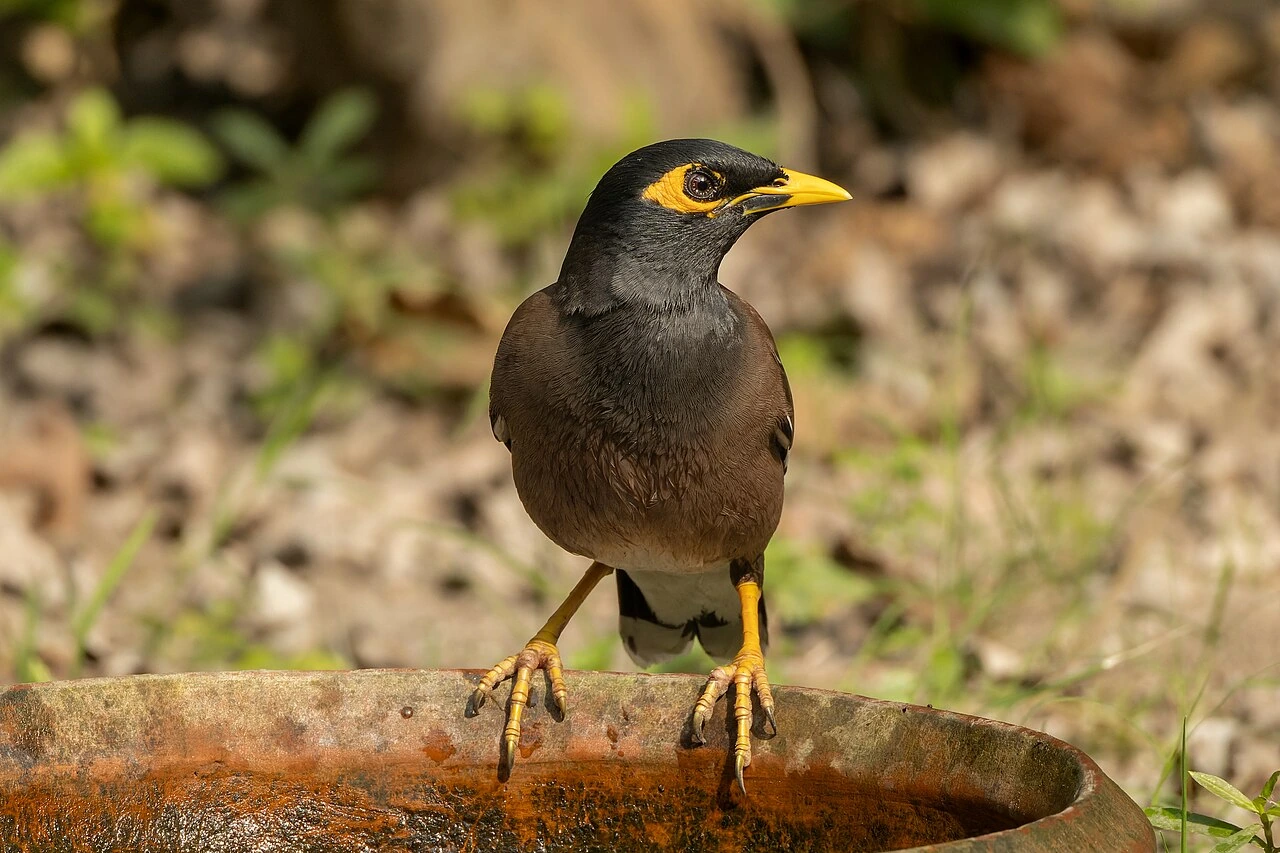
If your crossword grid has 7 spaces, write in SPARROW. That is the top-ranked answer in clue databases for 'common British bird' and it fits both the letter count and the definition perfectly. If you have 5 spaces, try ROBIN. Those two answers cover the vast majority of cases where this clue appears in UK crosswords.
Common British Bird Crossword Clue: Likely Answers

James Ridgley
22 May 2026
What 'common British bird' actually means in crossword terms
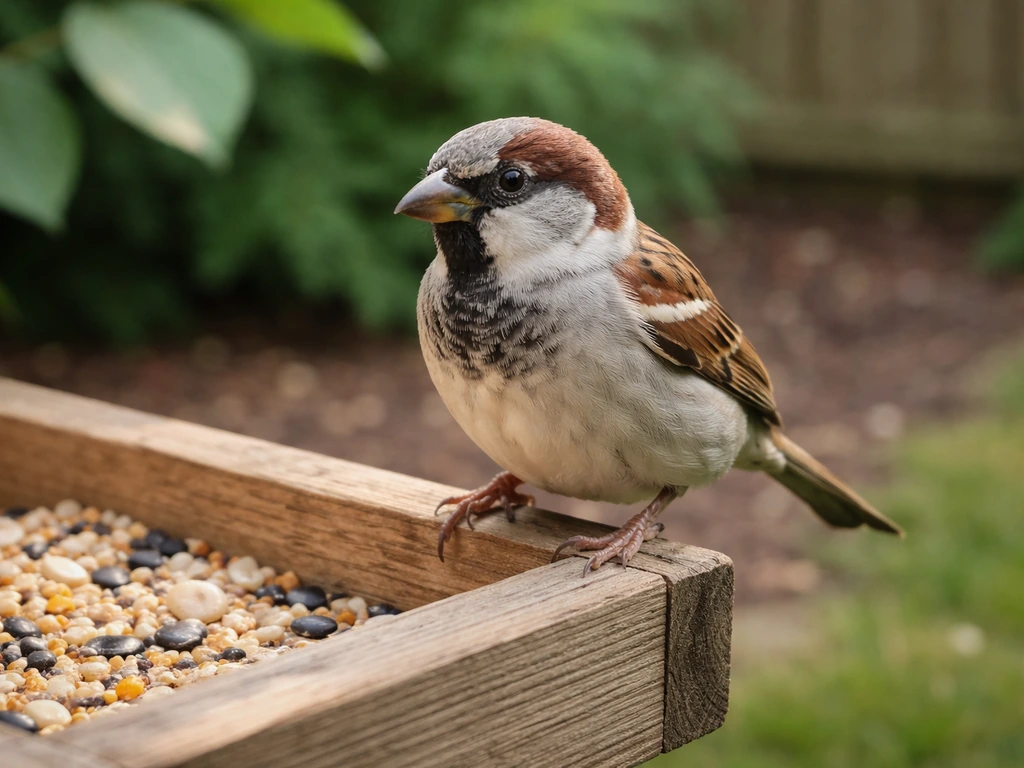
In crossword setter language, 'common' almost always means 'widespread and familiar' rather than anything derogatory. For a British crossword, that narrows the field to year-round resident species that most UK solvers would recognise by name without needing specialist knowledge: birds you see in gardens, parks, hedgerows, and farmland without any special effort. One UK clue database for the clue "bird" lists multiple common passerines such as JAY (3), TIT (3), COOT (4), ROBIN (5), MAGPIE (6), and SWALLOW (7), supporting the idea that very familiar British birds are used as short crossword answers. Setters are not thinking about rare seasonal visitors or seabirds. They want an answer that feels instantly obvious once you get it.
The RSPB Big Garden Birdwatch is genuinely useful here as a reference point. The House Sparrow has topped that survey for over 20 consecutive years, which tells you something about what 'common' looks like in practice. Robin, Blue Tit, Great Tit, Chaffinch, and Wren round out the list of species so familiar that any UK solver should know them. Crossword setters draw from exactly this pool.
How crossword clue patterns work for this phrase
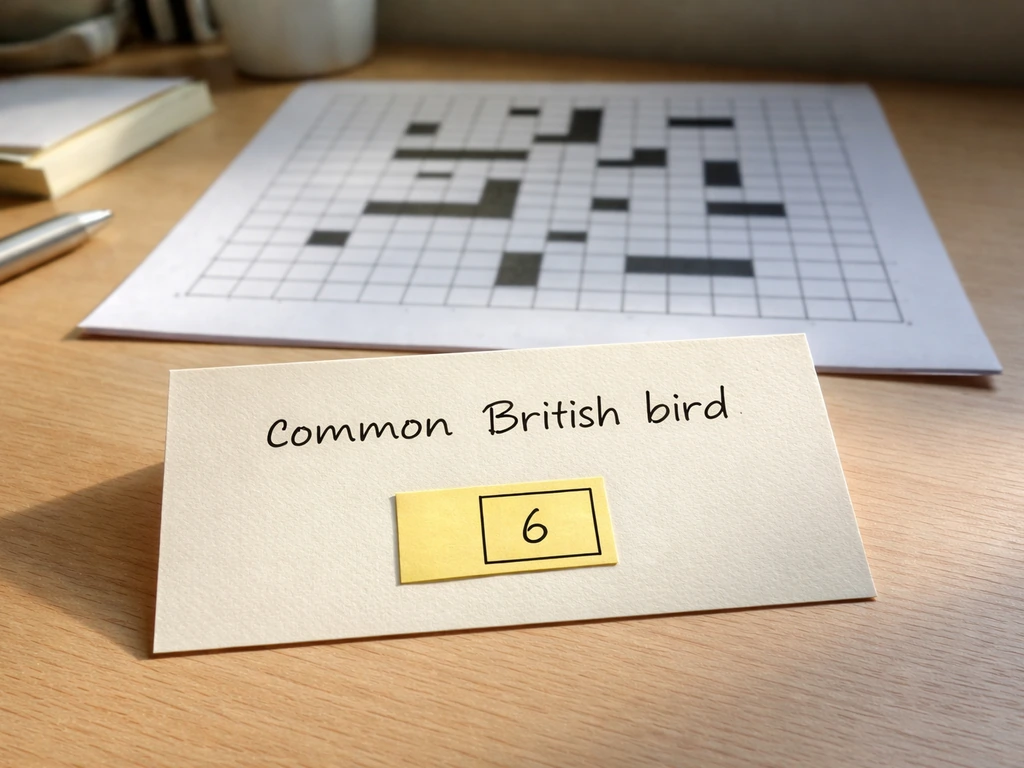
The clue 'common British bird' reads as a pure definition clue. There is no obvious wordplay signal (no anagram indicator, no hidden-word marker, no reversal cue), so the whole phrase is simply pointing you at a bird species that fits the definition. In a cryptic crossword, every clue normally has two parts: a straight definition and a wordplay section. When the clue is as clean as 'common British bird', the definition is the entire clue text and the wordplay either is absent (making it a quick clue rather than a cryptic) or is so smoothly embedded that you should treat the whole phrase as the definition first.
The enumeration, the number in brackets at the end of the clue, is your most important tool. It tells you exactly how many letters the answer contains. A single number like (7) means one word of seven letters. A hyphenated or spaced enumeration like (4,3) means two words of four and three letters respectively. Always check that first before you commit to any candidate. Solvers who skip the enumeration and go straight to guessing lose time on near-misses.
| Enumeration | Likely answer | Notes |
|---|---|---|
| (3) | JAY or TIT | Very short; TIT is generic, JAY is specific |
| (4) | WREN or COOT | WREN is garden/woodland; COOT is waterbird |
| (5) | ROBIN | Classic British garden bird; five letters exactly |
| (6) | MAGPIE | Common and distinctive; fits a 6-letter grid |
| (7) | SPARROW | Top database answer; House Sparrow is the most common UK species |
| (8) | CHAFFINCH | Nine letters — check carefully before using |
| (4,3) | BLUE TIT | Two-word form; may appear as BLUETIT in some wordlists |
The most likely answers and when each one fits
SPARROW (7 letters) is the single strongest candidate. Clue databases explicitly match 'common British bird' to SPARROW, and ecologically it makes sense: House Sparrows are the UK's most frequently counted garden bird. If your grid has seven squares and no contradictory cross letters, go with SPARROW first.
ROBIN (5 letters) is the next best option. It has strong cultural weight as a symbol of British birdlife and appears in clue databases as a direct answer to this exact phrasing. Robins are year-round residents, instantly recognisable, and short enough to fit grids that SPARROW cannot.
Beyond those two, here are the other strong candidates you should keep ready depending on your letter count and cross letters:
- WREN (4): Tiny, ubiquitous, and one of the most common UK species by population. Short answers often appear in quicker crossword grids.
- MAGPIE (6): Unmistakable and widely distributed across Britain. A setter wanting a six-letter answer has few better options.
- CHAFFINCH (9): One of the UK's most abundant birds and a Big Garden Birdwatch staple, but the length makes it less common as a crossword answer.
- BLUETIT or BLUE TIT (7 or 4,3): Extremely familiar British garden bird; the spelling variant matters a lot here, covered in detail below.
- JAY (3): Colourful woodland bird, genuinely common but less likely for this specific phrasing unless the grid demands three letters.
- COOT (4): Common on UK waterways; more plausible if other clue context hints at water or wetland habitat.
Confirming your answer with cross letters
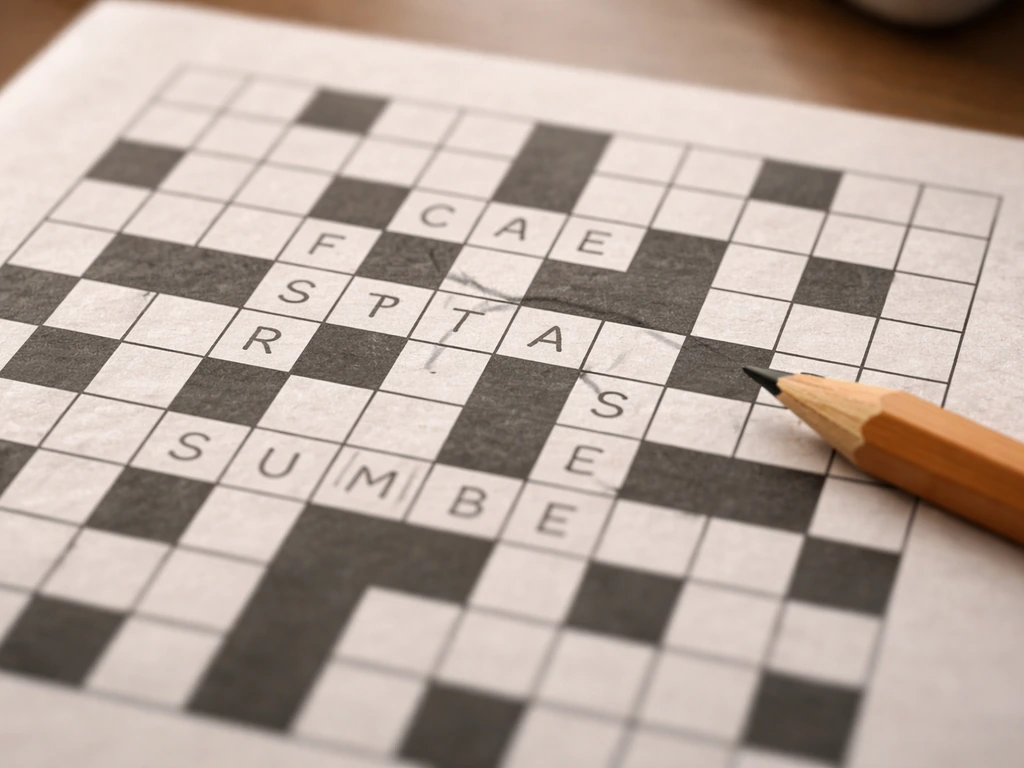
Cross letters, the letters already in your grid from intersecting answers, are your most reliable verification tool. Once you have a candidate, slot its letters into the grid and check every crossing answer. If even one crossing answer becomes impossible to complete, your candidate is wrong and you need to try another from the list above.
A common near-miss situation: solvers think of 'sparrow' and confidently write it in, only to find the third letter clashes with a crossing answer that needs an 'A' instead of an 'A'... fine, but then they realise the fifth letter should be an 'O' and one cross clue demands an 'E'. That kind of conflict is your signal to backtrack. Never erase crossing answers you are confident about in favour of a bird name you are guessing.
Also watch for whether the clue expects a singular or plural form. 'Common British bird' (singular 'bird') strongly implies a singular answer. SPARROW, ROBIN, WREN, MAGPIE are all singular. If a clue said 'common British birds', you might be looking at SPARROWS (8) or ROBINS (6), which changes the letter count entirely.
Spelling and pronunciation variants that trip solvers up
This is where bird nomenclature gets genuinely tricky for crosswords. British common names often use two words (Blue Tit, Great Tit, House Sparrow, House Martin), but crossword wordlists sometimes concatenate them into a single string. Knowing which form a particular crossword compiler uses can save you from a frustrating near-miss.
The Blue Tit case is the clearest example. Standard British usage and RSPB guidance spells it as two words: Blue Tit. But WordReference and some crossword-oriented dictionaries list it as a single entry, 'bluetit', with its own pronunciation markup. Wiktionary acknowledges both: 'blue tit (plural blue tits)' with a 'see also: bluetit' note. So if your grid has 7 unbroken squares, the setter may be expecting BLUETIT as one word. If your grid shows a space or hyphen break at position 4, you need BLUE TIT as two words (enumeration 4,3).
Similarly, HOUSE SPARROW (5,7) as a full common name is rarely a crossword answer because of its length, but SPARROW alone (7) strips off the qualifying adjective and works perfectly. Setters routinely use the shorter conventional form of a bird's name rather than the full two-word scientific common name. So if you are wondering whether a setter means House Sparrow or just Sparrow, the answer for a seven-letter grid is almost certainly just SPARROW.
A few other spelling pitfalls worth flagging:
- CHAFFINCH: double F in the middle (chAFFInch), not CHAFINCH. Easy to drop a letter under pressure.
- SWALLOW (7): genuinely common British bird but more associated with summer visitors than year-round residents, so less likely for a clue emphasising 'common' without seasonal context.
- MAGPIE: no silent letters or doubled consonants, but solvers occasionally try MAGPYE or MAGPEI under pressure. Stick with M-A-G-P-I-E.
- WREN: always four letters, never WRENN or REN. The capital-W in field guides does not affect crossword spelling.
Using habitat and season to generate better candidates
If the crossword clue gives you a bit more context, such as 'common British garden bird' or 'common British woodland bird', you can narrow the field fast using habitat logic. If you are solving a common European bird crossword clue, apply the same definition-first approach to narrow down the likely species. This is the same approach used in sibling clues like 'common garden bird' or 'common European bird', where the extra word shifts the probability toward a specific subset of species. Even without that extra word, thinking in habitats helps you rank candidates.
| Habitat/context | Top candidates | Why it fits |
|---|---|---|
| Garden | SPARROW, ROBIN, BLUETIT, CHAFFINCH, WREN | All appear on RSPB Big Garden Birdwatch top lists |
| Woodland | JAY, WREN, CHAFFINCH, NUTHATCH | Common woodland residents; NUTHATCH is 8 letters |
| Farmland | LAPWING, SKYLARK, STARLING | Open-country birds; STARLING is 8 letters |
| Water/wetland | COOT, MOORHEN, HERON | MOORHEN is 7 letters and fits 'common' well |
| Year-round resident (no season hint) | SPARROW, ROBIN, WREN, MAGPIE | Non-migratory; strongest default candidates |
Season matters too. A clue that might appear in a winter-themed puzzle or one published in January could be pointing toward species that are especially visible in winter, such as Fieldfare or Redwing (both winter visitors to the UK), but those would be unusual answers for the bare phrase 'common British bird' because they are not year-round residents. Stick to resident species unless the surrounding clues or puzzle theme give you a strong seasonal signal.
For more candidates sorted by letter count, a resource that lists British birds by number of letters (similar to a 'common bird crossword clue 6 letters' approach) can help you generate options you might not have thought of. When the clue is clearly farm-related, you may end up with a bird from a farmyard or poultry context rather than a garden species Farmyard and farm-context clues. For example, a common bird crossword clue with 6 letters often leads to ROBIN common bird crossword clue 6 letters. Farmyard and farm-context clues follow slightly different logic and pull in birds like CHICKEN, TURKEY, or GOOSE, which would not normally appear as answers to 'common British bird' in the wild-bird sense.
Quick checklist for solving today's clue fast
- Check the enumeration first. Count the squares in your grid. This one step eliminates most wrong candidates before you think about bird names at all.
- If the answer is 7 letters: try SPARROW immediately. It is the number-one database answer for this exact clue.
- If the answer is 5 letters: try ROBIN. It is the second most likely answer for this phrasing.
- Check your cross letters against the candidate. Every letter of SPARROW or ROBIN should be consistent with the intersecting answers already in your grid.
- Watch the spelling: SPARROW has no doubled letters; ROBIN is straightforward. If you are trying CHAFFINCH, remember the double F.
- If SPARROW and ROBIN both fail the cross-letter test, rank your next attempts by: WREN (4), MAGPIE (6), BLUETIT (7 as one word), SWALLOW (7), COOT (4), JAY (3).
- Confirm singular vs plural: 'common British bird' (singular) means a singular answer. Do not add an S unless the clue says 'birds'.
- If the clue has extra context words like 'garden', 'woodland', or 'water', use the habitat table above to reprioritise your candidate list before guessing.
FAQ
What should I do if the enumeration is 6 letters (so SPARROW and ROBIN do not fit)?
For this exact clue wording, treat it as a single-species prompt and check the enumeration first. If the grid shows 6 letters, “SPARROW” and “ROBIN” are out, so you should rely on crossings to pick among common residents that match the letter count, for example WREN (4), CHAFFINCH (8), BLUE TIT (4,3) or BLUETIT (7) depending on how the compiler concatenates the name.
Does “common British bird” ever mean a plural answer?
If you see a plural marker in the clue text, treat it as a different target. “Common British birds” typically pushes you toward plural forms like SPARROWS or ROBINS, which also changes the answer length, so confirm by the (number) pattern before you commit.
Is there any wordplay hidden in the clue “common British bird”?
In British cryptics, “common” is usually definitional rather than a wordplay instruction. That means you should not look for anagram indicators like “common”, “mixed”, or “bred”, and you should not expect a second part. If you want a wordplay angle, focus on the rest of the clue, but with this clue you generally treat the entire phrase as the definition.
How do I know whether a bird like “Blue Tit” should be written as one word or two?
Yes, compilers sometimes treat certain two-word bird names as one entry. The most important decision aid is the enumeration format: (4,3) usually means BLUE TIT, while a plain (7) may mean BLUETIT. If the clue has no internal spacing requirement and your enumeration is one block, try the single-string version first.
What spelling or formatting mistakes most often cause near-misses with this clue?
If the crossword uses a strict dictionary-style list, spelling variants can fail even when the letters look right. Common pitfalls include missing the second word for multiword species, using the adjective form when the clue expects the shorter form (example: HOUSE SPARROW usually collapses to SPARROW), and using spaces in a grid that expects a continuous entry. When unsure, always test against crossings immediately.
What is the best way to troubleshoot when crossings conflict after I guess SPARROW or ROBIN?
If your crossings force a rare letter sequence, do not keep swapping characters within a single attempt. Instead, backtrack to the last reliable crossing-based decision, change the bird candidate, and then re-check all affected intersections. This prevents “contaminating” the grid with letters from the wrong bird name.
Can nearby theme clues change the answer away from the “garden common resident” idea?
Don’t use the RSPB survey as a direct source of the crossword answer, but use it as a sanity check for the meaning of “common”. If the theme includes seabirds, migration, or ocean habitats, the clue may be less literal than usual, so let nearby clues override your default resident-bird expectation.
If it is a winter-themed crossword, should I consider winter birds like Fieldfare or Redwing?
Yes. If the clue appears in a puzzle with winter emphasis, solvers sometimes try winter visitors by intuition, but this specific bare phrase usually targets a year-round recognisable bird. Use surrounding crossings and theme only as a tie-breaker, not as the main driver, because “common” in setters’ phrasing typically means familiar residents.
How should I adapt my candidate list if the clue says “common British garden bird” or “common British woodland bird”?
When habitat words appear, treat them as a narrowing modifier to the resident pool rather than as a strict habitat constraint. For example, “garden” increases the probability of sparrow-type and finch-type birds, while “woodland” supports tit and wren-type candidates. Still confirm with enumeration and crossings.
Next Article
How to Pronounce Mynah Bird (MY-nah vs my-NAY)
Learn how to pronounce mynah birds word mynah or myna, with syllables, stress, and quick self-check tips.