The plural of 'bird' is 'birds.' Add a simple '-s' to the end, and you're done. No spelling changes, no irregular forms, no tricks. Whether you're writing a field journal, describing your pet parrots, or filling in a crossword, 'birds' is always correct.
What Is the Plural of Bird? Birds and Usage Rules

James Ridgley
11 May 2026
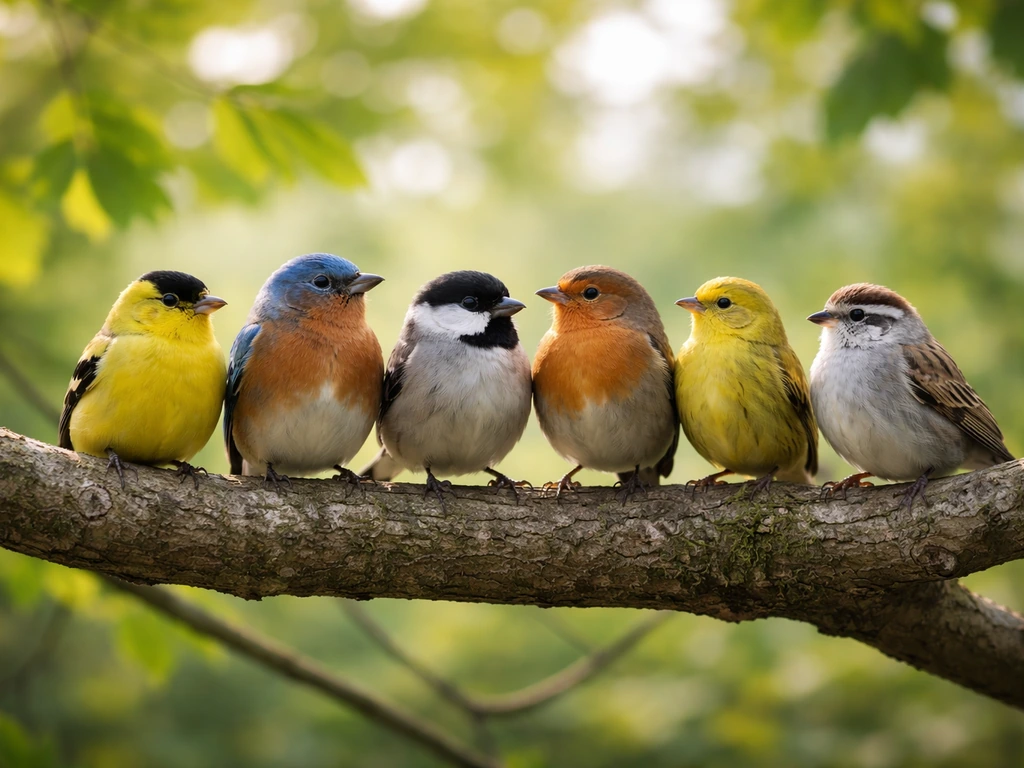
Why 'birds' follows the regular English plural rule
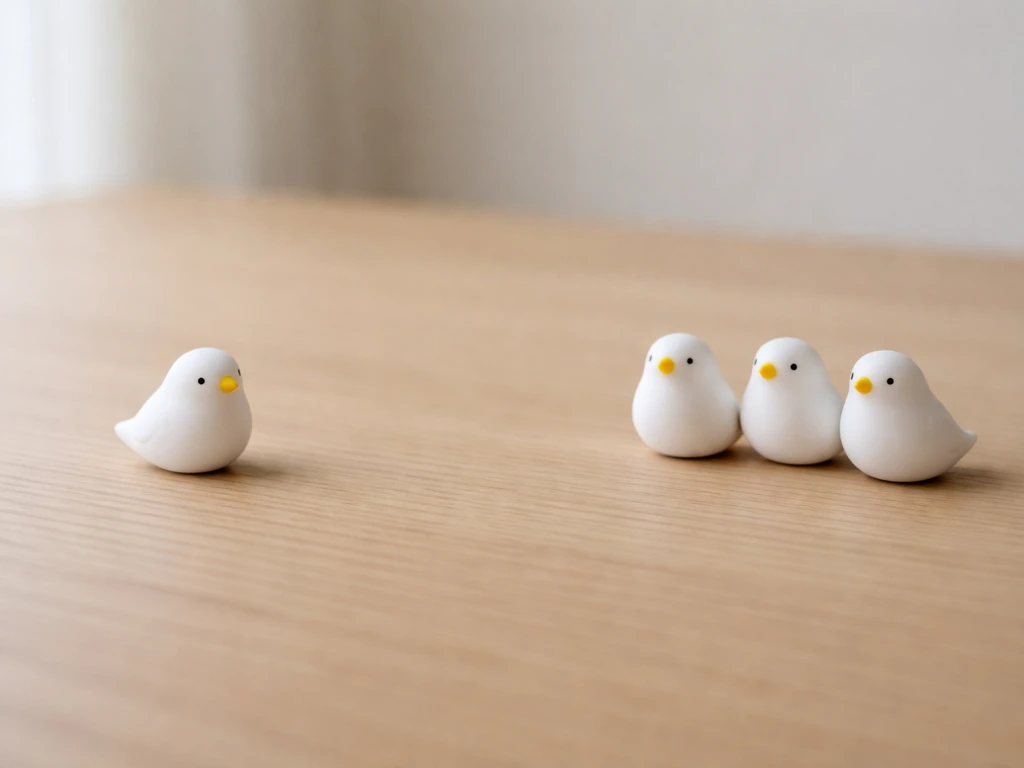
English pluralization is mostly straightforward: you add '-s' to the end of most nouns. The word 'bird' qualifies for this default treatment because it doesn't end in a sound that triggers a different rule. On Reddit's r/AskReddit, the question blank" rel="noopener noreferrer">“What is the plural of bird?” is commonly answered with “birds,” reflecting the same learner confusion. Words ending in '-s', '-x', '-sh', '-ch', or a consonant followed by '-y' have their own patterns (think 'foxes', 'churches', or 'cherries'). But 'bird' ends in a plain consonant (-d), so it just takes '-s' and becomes 'birds.' That's it.
'Bird' is also a count noun, meaning it refers to something you can count individually: one bird, two birds, a hundred birds. Oxford Learner’s Dictionaries confirms that “bird” is a common blank" rel="noopener noreferrer">count noun with standard plural formation in English. Count nouns always have both a singular and a plural form, and 'birds' is simply the plural form you reach for any time there's more than one. This same logic applies to related compound words: 'bird-watcher' becomes 'bird-watchers,' 'bird-feeder' becomes 'bird-feeders,' and so on.
How to spell and pronounce 'birds' correctly
Spelling is simple: b-i-r-d-s. There's no doubling of letters, no dropped vowels, and no '-es' ending needed. The only thing you're adding is a single 's' at the end.
Pronunciation is nearly as simple. 'Bird' is pronounced /bɜːd/ in British English and /bɝːd/ in American English. When you add the plural '-s', the final sound becomes a /z/ (not a sharp /s/), because the '-d' before it is a voiced consonant. So 'birds' sounds like /bɜːdz/ (UK) or /bɝːdz/ (US). In practical phonetic terms, think of it as 'burdz.' The '-ds' ending flows together naturally in speech; there's no separate hard stop between the 'd' and the 'z' sound.
This voiced plural ending is the same pattern you hear in words like 'words' (/wɜːdz/) or 'cards' (/kɑːdz/). Once you notice it, it becomes second nature.
Using 'birds' in real sentences
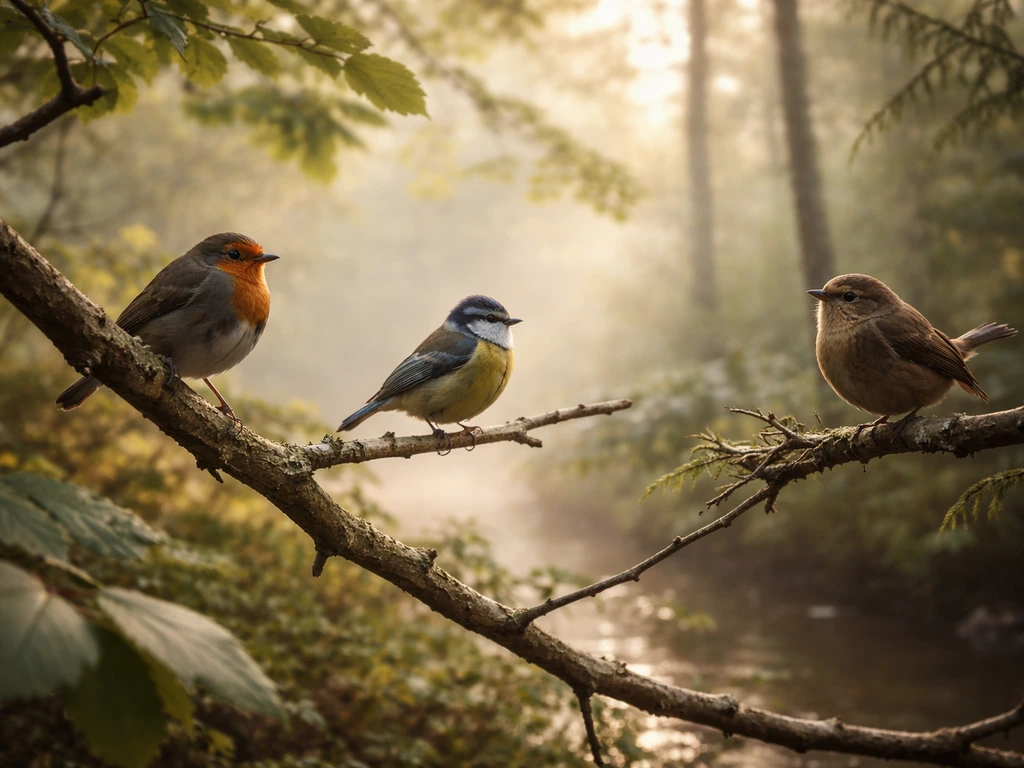
Here are a few practical examples that show 'birds' in action across the contexts most visitors to this site tend to care about:
- Birdwatching: 'The birds were singing in the trees before sunrise.' / 'We spotted three birds of prey along the ridge.'
- General nature writing: 'Birds were singing outside our window.' / 'We were woken early by the sound of the birds singing.'
- Pet context: 'I have two birds at home, a cockatiel and an African grey.' / 'My birds need fresh water every morning.'
- Feeding and wildlife: 'I like to feed the birds in the garden during winter.'
- Field guides: 'These birds migrate south in late October.'
All of these follow the same grammar: more than one bird, so you use 'birds.' The word works the same way whether you're talking about wild species or pet birds you've named yourself.
General 'birds' vs. species-specific naming
One thing worth knowing if you're on a bird-naming site: 'birds' works perfectly as a general plural, but species names have their own pluralization behavior. 'Robin' becomes 'robins', 'sparrow' becomes 'sparrows', and most species names follow the same regular '-s' rule. However, the scientific category 'species' is a special case: its plural is also 'species' (not 'specieses' or 'species's'). So you'd say 'this species' or 'ten species of birds,' never 'ten specieses.'
It's also worth separating the everyday plural 'birds' from collective nouns. If you're also wondering about collective nouns, you might be looking for the specific term people use for a group of birds. Just like with flocks, some birds even have traditional collective nouns such as a conventicle or a tribe. Collective nouns for birds include terms like a flock, a covey, and more.
When you say 'a flock of birds,' the word 'flock' is a collective noun describing the group as a single unit. You'd typically use a singular verb: 'The flock is migrating. ' But if you say 'the birds are migrating,' you're treating each individual bird separately, and the plural verb is correct. Many bird species have their own, often colorful, collective nouns beyond 'flock', and those are a whole fascinating corner of bird language worth exploring on their own.
If you’re looking for a charm collective noun for birds, check out the specific list of terms bird lovers use charm collective noun for which bird.
What if you need the plural in another language?
If you landed here because you were actually looking for how to say 'birds' in French, Spanish, German, or another language, that's a different question with different answers. English pluralization rules don't transfer directly to other languages, and each one has its own spelling, pronunciation, and grammatical gender to consider. This site covers bird names, pronunciations, and terminology across multiple languages, so if you're after the equivalent of 'birds' in a specific language, look for language-specific bird name guides here.
Quick reference
| Form | Spelling | Pronunciation (UK) | Pronunciation (US) |
|---|---|---|---|
| Singular | bird | /bɜːd/ (burd) | /bɝːd/ (berd) |
| Plural | birds | /bɜːdz/ (burdz) | /bɝːdz/ (berdz) |
The bottom line: 'birds' is the correct, standard English plural of 'bird,' confirmed by every major dictionary. It follows the default '-s' pluralization rule, pronounces with a voiced /z/ ending, and works in every context from birdwatching notes to pet care to casual conversation. A parliament is a law-making body that represents the people. No exceptions, no irregular forms to memorize.
FAQ
When should I use “bird” instead of “birds,” even if I mean more than one?
Use “bird” when it’s part of a collective or category noun phrase treated as a single unit, for example “a flock of bird” is incorrect, but “a flock of birds” is correct (the collective is singular: “The flock is migrating”). You also use “bird” when you mean the concept in general, for example “Birds eat insects” versus “A bird is eating insects.”
Is “bird’s” a correct plural or is it something else?
“Bird’s” is not plural. It’s the possessive of a single bird, meaning something belongs to one bird. For example, “the bird’s nest” is correct, while “birds nest” is wrong (it should be “birds’ nests” for multiple birds, or “nests of birds,” depending on meaning).
Do I ever need an apostrophe to pluralize “bird” (like “birds’”)?
You only use an apostrophe in the plural when you’re showing possession. Examples: “the birds’ wings” (wings belonging to multiple birds) and “the bird’s wing” (wing belonging to one bird). If you’re just counting, use “birds” with no apostrophe.
What’s the correct plural for compound terms like “birdhouse” or “bird feeder”?
For a single compound word like “birdhouse,” the usual plural is “birdhouses” (add -s to the end). For a multi-word noun like “bird feeder,” both patterns exist in practice, but the common one is to pluralize the main noun: “bird feeders.” If it’s hyphenated as a unit (like “bird-feeder”), pluralize the whole form: “bird-feeders.”
How do I pluralize “bird” when it modifies another noun, for example “bird species” or “bird song”?
Typically, you keep the plural only on “birds” when you mean more than one bird, not on “song” unless you mean multiple songs. “Bird species” is correct as an adjective phrase that means “species of birds” in general. If you mean multiple songs made by birds, you’d say “bird songs.”
Is the pronunciation of “birds” always /z/ in everyday speech?
In standard English, the plural ending is voiced, so it typically sounds like /z/ after the final voiced consonant in “bird.” In very careful speech you may hear a clearer separation, but in most everyday speech it will flow as /bɜːdz/ (UK) or /bɝːdz/ (US).
Are there cases where “species” does not stay the same in a sentence about birds?
When “species” is used as a noun, it stays “species” in both singular and plural, so you say “one species” and “ten species.” Also avoid possessive errors like “species’” unless you specifically mean possession (for example, “species’ range” is acceptable), but “specieses” is generally incorrect in modern standard usage.
Next Article
A Bird Whose Collective Noun Is Conventicle or Tribe
Find the collective noun for a bird, including conventicle or tribe, with ambiguity notes and how to verify exact usage.