
The bird clued by 'bird who might admire a large vibrantly colored tail' is almost certainly PEACOCK (7 letters). The clue is a classic cryptic-style construction: a peacock is the bird most universally associated with an enormous, brilliantly colored tail display, and 'might admire' is the setter's winking way of saying the bird would logically look up to (admire) something it already has. If your grid needs 7 letters, PEACOCK is your answer. If it's 5 letters, MACAW is worth a look. And if it's 7 letters and something feels off, QUETZAL is a strong backup.
Bird Who Might Admire a Large Vibrantly Colored Tail Crossword

James Ridgley
1 Jun 2026

What the clue is actually saying
Cryptic and semi-cryptic crossword clues almost always have two distinct components: a straight definition of the answer and a separate wordplay mechanism. In 'bird who might admire a large vibrantly colored tail,' the definition is the whole phrase read literally: a bird connected to a large, vibrantly colored tail. The 'might admire' part is the setter's playful deflection. It doesn't mean the bird admires someone else's tail. It means the bird is so famous for its spectacular tail that it practically has reason to admire its own. This kind of clue is sometimes called a characterization clue, where the wording describes the bird by implying a trait rather than stating it outright.
The key words to unpack are 'admire,' 'large,' and 'vibrantly colored.' In crossword setter language, 'admire' sits in the same synonym cluster as idolize, revere, worship, and look up to. Crosswordsolver.com’s ADMIRE clue page aligns “admire” with “IDOLIZE,” reflecting common crossword synonymy rather than a separate transformation ADMIRE aligns with IDOLIZE. None of those words are being used as a wordplay indicator here (like an anagram signal or reversal signal). Instead, 'admire' is tonal, pointing you toward a bird whose display is so impressive that admiration is the natural response. 'Large' and 'vibrantly colored' together narrow the field sharply, because very few birds are known globally for both enormous size and iridescent, eye-catching tail plumage.
How to solve bird-name crossword clues step by step
Bird clues in crosswords follow a predictable pattern once you've worked through a few of them. Here's the approach I use, which works for this clue and for similar ones like 'colorful bird named for its diet' or 'bird whose male incubates the eggs. If you see a bird whose diet crossword clue in the same style, the definition will point straight to the bird’s typical food source. For example, a clue like "colorful bird named for its diet" would similarly point you to the right bird by its defining trait. A similar style of clue can also ask for the bird whose male incubates the eggs. '
- Count the letters first. Before you try any candidate, check the grid. Most crossword databases resolve bird-tail clues to 7 letters (PEACOCK, QUETZAL) or 5 letters (MACAW). That single fact cuts your candidate list in half immediately.
- Identify the trait being described. Here it's 'large vibrantly colored tail.' That's your anchor. Think of the three or four birds that come to mind worldwide when someone says 'spectacular tail feathers.'
- Strip out the flavor language. 'Might admire' is dressing. Read around it and the clue becomes: 'bird + large vibrantly colored tail.' That's the actual definition.
- Test synonyms for the key adjectives. 'Vibrantly colored' maps to iridescent, showy, extravagant. Crossword setters often use 'showy bird' as a near-direct clue for PEACOCK. If you see any of those synonyms in related clues in the same puzzle, that's a confirmation signal.
- Check cross letters against your top candidates before committing. One confirmed cross letter at position 1 (P for PEACOCK vs. M for MACAW vs. Q for QUETZAL) settles it instantly.
The top candidate birds and why they fit
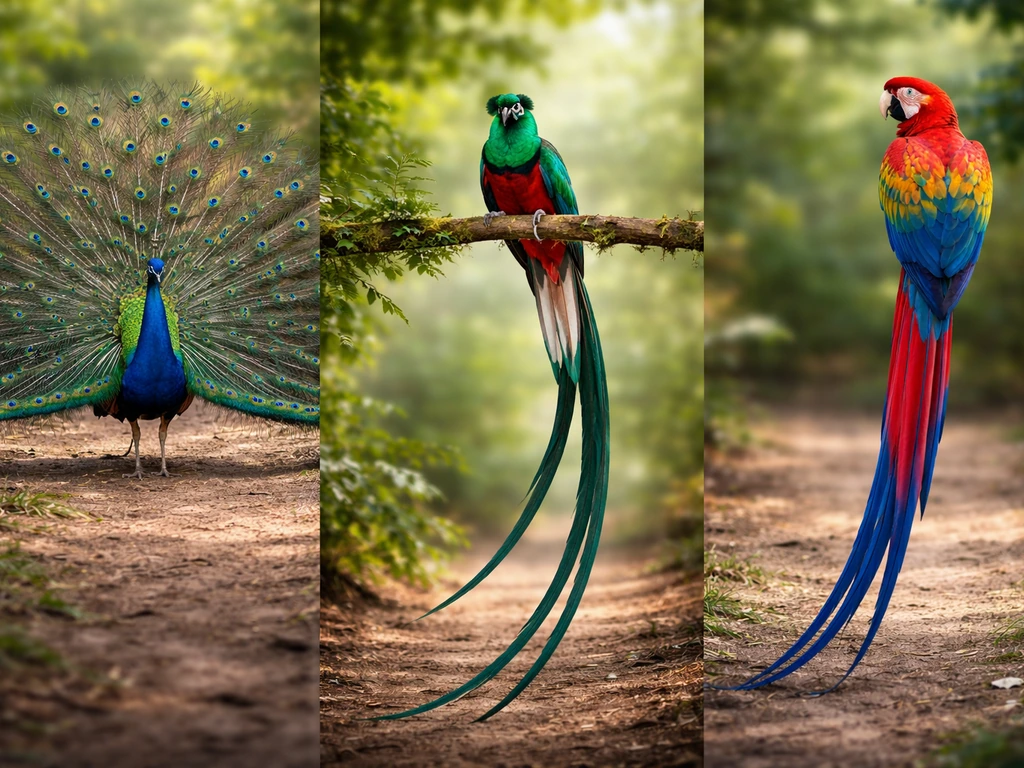
There's a short, reliable list of birds that crossword setters reach for when the clue involves a colorful, dramatically long tail. These are the ones worth knowing.
| Bird | Letters | Why it fits the clue | Strength of fit |
|---|---|---|---|
| PEACOCK | 7 | Male peafowl has the most famous large, iridescent, eye-patterned tail in the animal kingdom. Routinely clued as 'showy bird' or 'bird with extravagant tail feathers' in crosswords. | Best fit |
| QUETZAL | 7 | Resplendent quetzal has extraordinarily long, vivid green tail feathers. Named from Nahuatl, culturally iconic. Appears in crossword databases for 'long-tailed bird.' | Strong fit |
| MACAW | 5 | Large, vibrantly colored parrot with a long tail. Confirmed crossword answer for 'colorful parrot with a long tail' (NYT Mini, March 2026). | Fits if 5 letters |
| PHEASANT | 8 | Long-tailed game bird with colorful male plumage. Appears in crossword databases for 'long-tailed bird' at 8 letters. Less 'vibrant' than the others. | Weaker fit |
| TURACO | 6 | Forest bird with iridescent, colorful plumage. Appears in 'colorful bird' clue lists but rarely clued via tail description specifically. | Unlikely here |
PEACOCK is the overwhelming frontrunner. No other bird in common crossword usage combines 'large,' 'vibrantly colored,' and 'tail' as completely. The phrase 'male bird with extravagant tail feathers' resolves to peacock in crossword reference guides, and 'showy bird' at 7 letters does the same. QUETZAL is a legitimate second choice, especially in puzzles with a cultural or geographic theme (Central American wildlife, Aztec/Maya symbolism, national symbols). MACAW only applies if your letter count is 5.
Spelling and naming variants worth trying
Crossword grids use the most common English spelling of a bird's name. For PEACOCK, there's no variant to worry about: it's always PEACOCK in English crosswords. The scientific genus name is Pavo (Latin for peacock), but that won't appear in a standard grid for this clue unless the clue specifically signals Latin or scientific naming.
QUETZAL is where spelling trips people up. The correct English spelling is Q-U-E-T-Z-A-L. It's not 'quetzel,' 'quetzale,' or 'queztal,' though those misspellings are common. In Spanish (where the bird is also widely known), it's still 'quetzal.' The plural in English is either quetzals or quetzales. For a crossword grid, you want QUETZAL with no variation.
MACAW is straightforward: M-A-C-A-W, five letters, no common misspellings. The scientific family name is Psittacidae (parrots broadly) and the genus for large macaws is Ara, but again, crosswords use the common name. If you're exploring other bird-name clues in the same puzzle, the pattern of using common English names holds consistently.
Pronunciation and etymology: lock the answer in your memory
PEACOCK
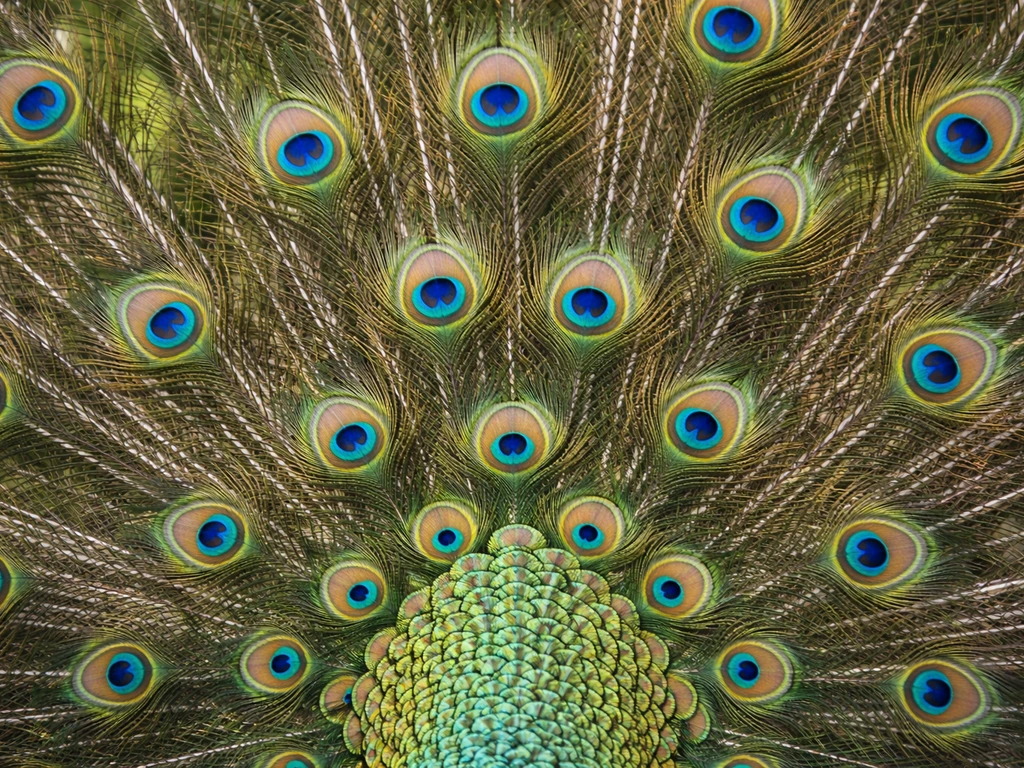
Pronounced PEE-kok (IPA: /ˈpiːkɒk/). The name traces back through Middle English forms like 'poucock' to Old English, and ultimately to Latin pāvō, which is also the genus name (Pavo). The 'pea' part of peacock has nothing to do with the vegetable: it comes from Old English 'pēa,' itself borrowed from Latin pavo. So the name essentially means 'pavo-cock,' or male pavo bird. Knowing the Latin root is useful because it connects the common name to the scientific name and makes the etymology memorable: if you ever see a crossword clue about genus Pavo or 'peafowl genus,' that's your peacock connection.
QUETZAL
Pronounced KET-sal or KET-suhl (British IPA: /ˈkɛt.səl/). The name comes from Nahuatl (the language of the Aztecs), specifically from 'quetzalli,' which referred to the long tail feathers of the resplendent quetzal. Those feathers were sacred and used in ceremonial headdresses. The scientific genus name Pharomachrus breaks down from Greek roots meaning roughly 'mantle' (pharo) and 'long' (machros), referencing the bird's dramatically long tail coverts. So both the common name and the scientific name point directly to the tail, which is exactly what the crossword clue is highlighting. That's a useful memory hook: quetzal = named for its tail feathers, same as the clue.
MACAW
Pronounced muh-KAW (stress on the second syllable). The word's exact origin is debated but is generally traced to a Tupi or Old Portuguese word for the bird. For crossword purposes, the key fact is the spelling (M-A-C-A-W) and the bird's defining traits: large size, vivid coloring across blues, greens, reds, and yellows, and a long pointed tail. Those traits map cleanly to the clue's 'large vibrantly colored tail' language.
How to confirm with cross letters and avoid lookalikes
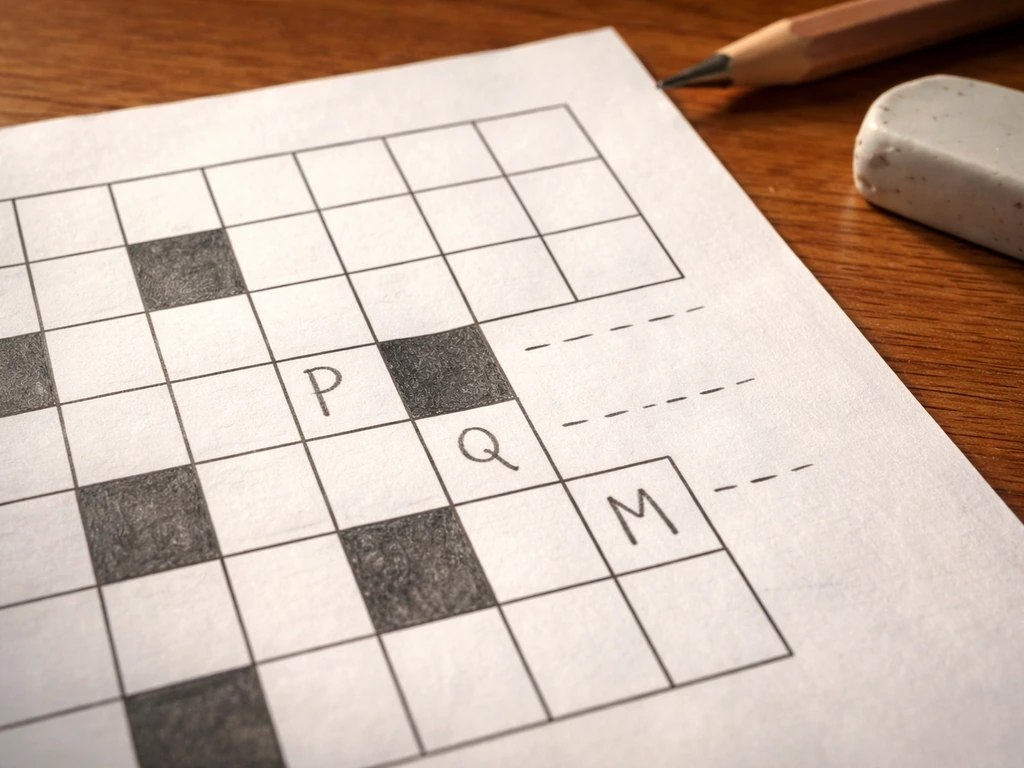
The fastest way to confirm your answer is to check the first letter and last letter from crossing entries. For this clue, your three real candidates start with P, Q, and M respectively. That's a lucky situation: they share no starting letter, so a single confirmed cross at position 1 locks in the answer with certainty. If the first letter is P, you have PEACOCK. If it's Q, you have QUETZAL. If it's M, you have MACAW (and your grid is asking for 5 letters, not 7).
The lookalike trap here is PHEASANT (8 letters). Pheasants do have long, patterned tails and colorful male plumage, and they appear in crossword databases for 'long-tailed bird.' But 'vibrantly colored' is the key qualifier that pushes the answer away from pheasant and toward peacock. Pheasants are attractive birds, but they don't carry the cultural shorthand of 'show-stopping, iridescent, enormous tail' the way peacocks do. If your grid shows 8 letters and your cross letters fit P-H-E-A-S-A-N-T, that's your answer, but only check that path if PEACOCK doesn't work at 7.
One more confirmation tactic: look at other bird clues in the same puzzle. If a nearby clue resolves to a bird known for its diet or for unusual nesting behavior (like the male incubating eggs), that suggests the puzzle has a bird-facts theme, and setters in that mode often use PEACOCK as the showpiece entry. That thematic context makes PEACOCK even more likely as the intended answer here.
Bottom line: fill in PEACOCK for 7 letters, verify with one cross letter at position 1 (P), and you're done. If the grid fights you, try QUETZAL next. Both names come with strong etymological roots tied directly to spectacular tail feathers, which is exactly the memory hook that makes this clue satisfying once you know the answer. For a related puzzle hunt, you can also use the same bird-name logic to solve a “bird has one drink crossword clue.”.
FAQ
My grid has 7 letters but a couple crossing letters conflict, what should I try next?
Check the grid length first, then use the first-letter cross as your tiebreaker. If you have 7 squares, start with PEACOCK, and confirm quickly by verifying that the first letter is P. If the length is 5, MACAW is the only one of the main set that fits, and QUETZAL requires 7.
When would QUETZAL be preferred over PEACOCK for this clue?
Quetzal is the common alternative, but it is less likely unless crossings explicitly support Q and the length is exactly 7. Also be aware that many solvers mix up the tail emphasis here, because quetzal is “long tail feathers” in its name origin, not necessarily the classic “fan tail display” associated with peacock.
Could this clue ever be PHEASANT (or another long-tailed bird)?
PHEASANT is usually an 8-letter lookalike, not a direct competitor for a 7-letter slot. The most common mistake is letting “colored tail” outweigh “vibrantly colored” and the global crossword shorthand for an enormous showy tail, which is PEACOCK. Only consider pheasant if your entry length matches and crossings force it.
In cryptic-style bird clues, does “might admire” ever act as a wordplay instruction?
Yes, the clue structure relies on a characterization style, but “might admire” is still not a wordplay indicator. A frequent error is trying to treat “might” as a containment or abbreviation signal, or “admire” as a synonym to be inserted into a pattern. Here, the bird is defined by the whole phrase, with “might admire” serving as a wry tone setter.
What if I do not have the first-letter cross, how can I confirm quickly?
Look up the “first letter and last letter from crossing entries” rule, then also check whether you get a unique mapping among P, Q, and M. If more than one candidate remains, use a second cross (preferably near the middle) because PEACOCK, QUETZAL, and MACAW have enough distinct letter patterns that one extra crossing usually resolves the ambiguity.
Are there spelling or plural pitfalls with QUETZAL or MACAW in crosswords?
Use spelling verification, especially for QUETZAL. The correct English crossword spelling is Q-U-E-T-Z-A-L, not variants like “quetzale” or “quetzel.” Plurals are quetzals or quetzales, but for this clue you should assume singular unless the grid explicitly demands plural.
Do setters ever use alternate spellings like “quetzale” or a scientific form for this clue?
Crossword clues typically use the standard common English form. For this one, PEACOCK and MACAW have no special variants you will need to switch into, but QUETZAL can be the stumbling point because its non-English origin leads to common misspellings. If the grid lets you try alternatives, always prioritize the standard English grid spelling.
How can nearby bird clues help me decide between PEACOCK and QUETZAL?
If you see surrounding clues that suggest a “bird facts” theme, PEACOCK becomes more likely because it is the most universally recognized “spectacular tail” entry in common crossword usage. However, do not ignore length and crossings, because theme can push you toward the right bird but cannot override a forced letter pattern.
Next Article
Bird Has One Drink Crossword Clue Answer Help
Decode the cryptic clue bird has one drink with wordplay breakdown, bird-name candidates, and filling steps to verify.