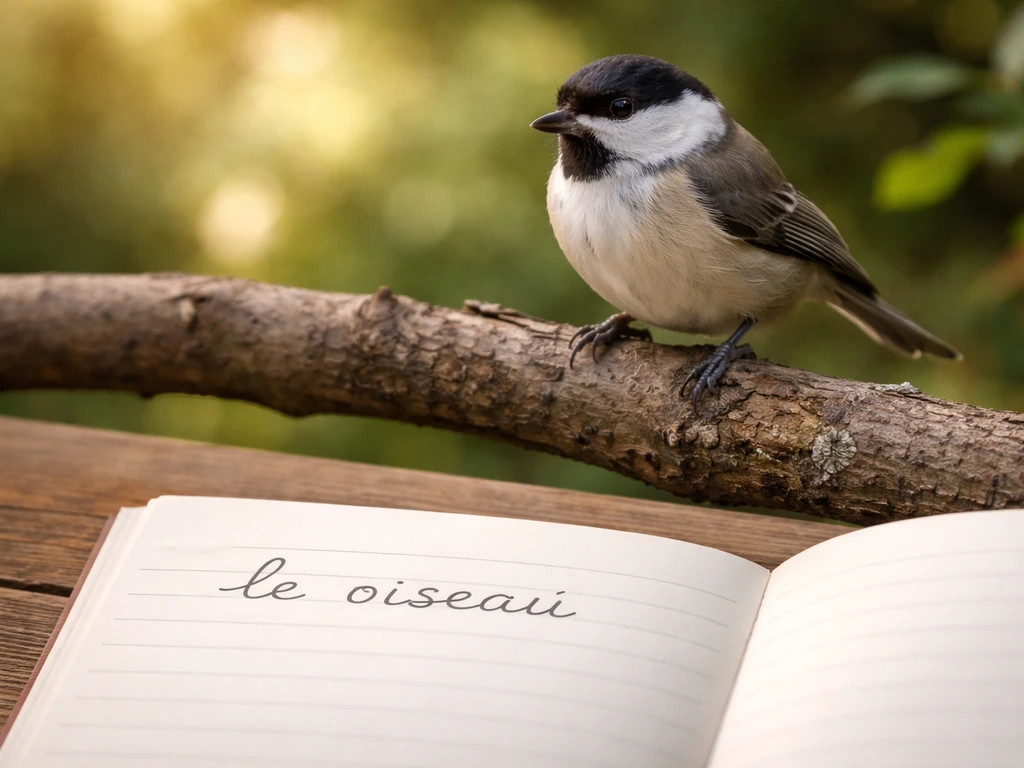
"Bird" in French is "oiseau," and it is masculine. You use "un oiseau" (a bird) and "l'oiseau" or "le oiseau" (the bird, though in practice the vowel triggers elision to "l'oiseau"). The plural is "les oiseaux" (the birds) or "des oiseaux" (some birds). That's the core answer you need, and the rest of this guide helps you apply it correctly and avoid the slip-ups that trip up most learners. This guide focuses on the noun "oiseau" in French, but if you meant a different topic like what bird Duolingo uses or teaches, see what bird is duolingo for the related answer.
Is bird masculine or feminine in French? Gender rules

James Ridgley
5 May 2026
The gender of "oiseau" and what that actually means
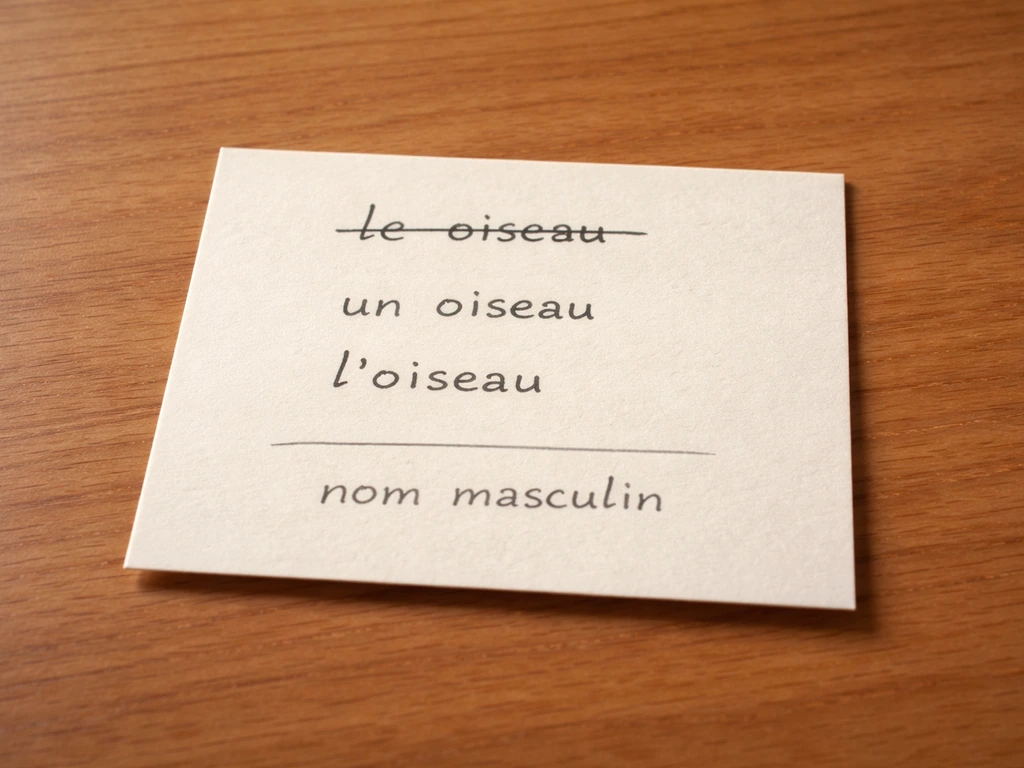
In French, every noun has a grammatical gender, masculine or feminine, and that gender determines which articles and adjectives you pair with it. "Oiseau" is classified as a "nom masculin" (masculine noun) in every major French dictionary, including Larousse and Larousse Junior. That classification is fixed regardless of whether you're talking about a male or female bird in real life. The grammatical gender is simply a property of the word, not a description of the animal's biology. You might also be wondering what gender the Duolingo bird is, since it shows up all over the app.
This matters a lot in practice. If you write "une oiseau" or "la oiseau," a French speaker will immediately flag it as wrong. The correct forms are always masculine: "un oiseau," "l'oiseau," "les oiseaux," "des oiseaux." There are no exceptions for the generic word itself.
Generic "bird" vs "the bird" vs specific bird names
Here's where things get a little more nuanced. "Oiseau" covers the generic concept of "bird" in French, the same way English uses "bird" as a catch-all. But when you start naming specific types of birds or using other bird-related terms, the gender can shift because you're dealing with entirely different nouns.
A good example: "volaille" (poultry or fowl) is feminine, so you'd say "la volaille" or "une volaille." "Oie" (goose) is also feminine: "une oie." But "coq" (rooster) is masculine: "un coq." These aren't exceptions to a rule about birds, they're just separate nouns that happen to refer to birds, each with its own gender. When you look up any specific bird name in French, you need to check that individual word, not assume it follows "oiseau."
One particularly interesting case is "aigle" (eagle). It can be masculine or feminine depending on what you mean: "un aigle" refers to the bird of prey or the male of the species, while "une aigle" refers to the female or to heraldic eagle imagery. This kind of gender split based on meaning is rare, but it shows why checking individual entries is always worth the two seconds it takes.
Articles and real examples with "oiseau"
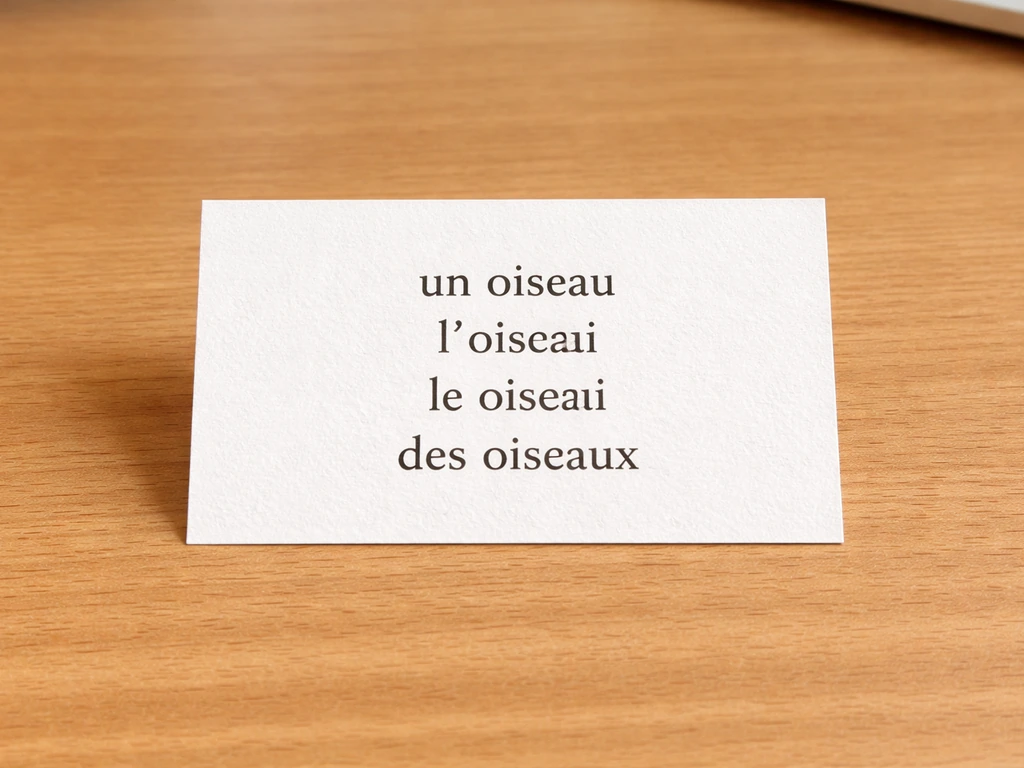
Here's a quick reference table showing how the articles work with "oiseau" across the four article types French learners need to know.
| Context | French | English |
|---|---|---|
| Indefinite singular (a bird) | un oiseau | a bird |
| Definite singular (the bird) | l'oiseau | the bird |
| Indefinite plural (some birds) | des oiseaux | some birds / birds |
| Definite plural (the birds) | les oiseaux | the birds |
Notice that "le oiseau" never actually appears in natural French writing or speech. Because "oiseau" starts with a vowel, the definite article "le" contracts through elision to "l'oiseau." This is standard French phonetics, not a gender issue, but it catches learners off guard because you never see "le" sitting visibly before the word.
In real usage, you'll encounter phrases like "L'oiseau s'est envolé" (The bird flew away) or the idiomatic "un drôle d'oiseau" (a strange character, literally "a funny bird"). Both confirm the masculine article. Adjectives also follow the masculine pattern, so "un bel oiseau" (a beautiful bird) rather than "une belle oiseau."
How to confirm the gender of any French bird term quickly
The most reliable habit you can build is to learn any French noun together with its article from the start. When you encounter a new bird name in French, don't just note the word itself. Note whether the dictionary or word list pairs it with "un/le" (masculine) or "une/la" (feminine). This is the method recommended by French grammar resources and language educators alike, and it beats trying to guess from word endings, which are notoriously inconsistent in French.
If you're using a dictionary, look for the abbreviation "n.m." (nom masculin) or "n.f." (nom féminin) right after the entry word. Larousse, both the adult and junior editions, uses this system consistently. Online tools like Larousse.fr show the gender label immediately on the entry page, so you can check in seconds.
For ornithology specifically, the Commission internationale des noms français des oiseaux (CINFO) publishes standardized French bird names, and their format includes the article with each name, giving you the gender at a glance. If you're working with French bird lists for birdwatching, field guides, or species identification, this is the authoritative source to cross-reference.
- Look up the word in Larousse or a similar authoritative French dictionary and check for "n.m." or "n.f."
- Check whether the entry uses "un/le" or "une/la" in its example phrases
- For standardized bird species names, consult CINFO or Oiseaux.net, which follow international nomenclature and list names with articles
- When in doubt, note the full phrase (article + noun) as a unit and memorize it that way
Common mistakes and how to fix them fast
The most common error English speakers make with "oiseau" is using a feminine article, writing "une oiseau" or "la oiseau." This often happens because learners haven't yet internalized the word's gender, and the English word "bird" has no gender marker to hint at. The fix is simple: always write "un oiseau" or "l'oiseau" and repeat that pairing until it's automatic.
A second common mistake is assuming all bird names in French are masculine because "oiseau" is. As covered above, that's not true. "Oie" (goose) and "volaille" (poultry) are feminine, and there are plenty of others. If you're building a French bird vocabulary for birdwatching or writing about birds, check each species name individually rather than defaulting to masculine.
A subtler mistake is confusing grammatical gender with biological sex. If you want to specify that a bird is biologically male or female in French, you don't change the article on most bird names. Instead, you add "mâle" or "femelle" after the noun: "un moineau mâle" (a male sparrow) or "un moineau femelle" (a female sparrow). The grammatical gender of the noun stays the same either way.
| Mistake | Correct Form | Why It Matters |
|---|---|---|
| une oiseau | un oiseau | "oiseau" is masculine |
| la oiseau | l'oiseau | masculine + vowel elision |
| Assuming all bird terms are masculine | Check each word individually | "oie," "volaille" etc. are feminine |
| Using article to indicate biological sex | Add mâle/femelle after the noun | Grammatical gender ≠ biological sex |
Using French bird name lists safely
If you're working with French bird names in any practical context, whether that's filling in a crossword, labeling a birdwatching life list, naming a pet, or writing about birds in French, the safest approach is to use a source that includes the article alongside the name. That one detail tells you the gender instantly and saves you from having to guess or look it up separately.
Oiseaux.net and resources tied to CINFO follow standardized naming conventions for French bird names worldwide, and the IOC World Bird List provides scientific names that can help you cross-reference when common French names are ambiguous. La CINFO est une commission créée pour établir des noms français normalisés pour les oiseaux, ce qui peut vous aider si vous consultez des listes de noms standardisés. For everyday use, Larousse is your fastest reliable check.
One practical tip: if you're keeping a bird list or vocabulary notebook, always write the article as part of the entry. "Un moineau" (sparrow, masculine) and "une mésange" (tit or chickadee, feminine) look identical without their articles, but the article makes gender impossible to forget. Build this habit early and French bird vocabulary becomes much easier to use correctly in sentences.
If you're curious how gender works for bird words in other languages, the pattern is quite different in Spanish, where the same question of masculine vs. In Spanish, the grammatical gender depends on the specific word used for the bird, so you need to check the term in the dictionary rather than assuming it follows one rule. feminine arises with different answers depending on the word. And if you're interested in how specific birds get their names in French and other languages, that's a much deeper rabbit hole involving etymology, cultural history, and international nomenclature conventions worth exploring on its own.
FAQ
Why do I hear “l’oiseau” instead of “le oiseau,” and does it change the gender?
Use masculine forms: “un oiseau” for indefinite, “l’oiseau” for definite (pronounced with elision), and “des oiseaux” or “les oiseaux” in the plural. You generally cannot correct it by changing the adjective only, the article must match too.
Is “oiseaux” feminine or masculine in French?
In French, “oiseaux” is the plural of “oiseau” and is always masculine with the same article patterns: “les oiseaux” (definite) or “des oiseaux” (some). The spelling changes, but the grammatical gender does not.
Should adjectives be masculine or feminine with “un oiseau”?
Because “oiseau” is masculine by grammar, you must use “un/ l’ ” plus masculine adjectives in the same noun phrase, for example “un bel oiseau” and “l’oiseau rare.” If you use “une belle…,” it will sound wrong.
If I say “bird” generally, can I switch to feminine by changing the meaning to a female bird?
It depends on the noun you choose. If you use the generic word “oiseau,” keep masculine articles. If you switch to another bird-related noun like “oie” or “volaille,” that noun’s own gender takes over.
How do you say “male bird” or “female bird” in French?
To specify sex, add “mâle” or “femelle” after the noun, for example “un moineau mâle” and “un moineau femelle.” You usually do not change the article or the core noun’s grammatical gender just to reflect biological sex.
What happens if I put the noun later in the sentence, can I still make the same gender mistake?
Yes, but by a different mechanism: the word order can hide the error, yet the article/adjective agreement will still be judged. “Je vois l’oiseau” is correct, while “Je vois la oiseau” will still be marked incorrect even if only one part sounds “close.”
Can “une oiseau” ever be correct if I mean a female bird?
For example, “oiseau” is masculine even if you refer to a female bird, so “un oiseau” remains correct. If you’re writing about a female in particular, sex terms like “femelle” are the safer choice than trying to force feminine grammatical gender.
Do I need an article to say “bird” in French, or can I leave it out?
Not for “oiseau” itself. English can use “bird” without an article sometimes, but in French you usually need “un,” “l’,” “les,” or “des” depending on what you mean (generic concept, “the bird,” or “some birds”).
Next Article
Bird is masculine or feminine? Grammar vs biological sex
Find if bird is masculine or feminine in grammar and biology, learn how to check gender and identify bird sex by species