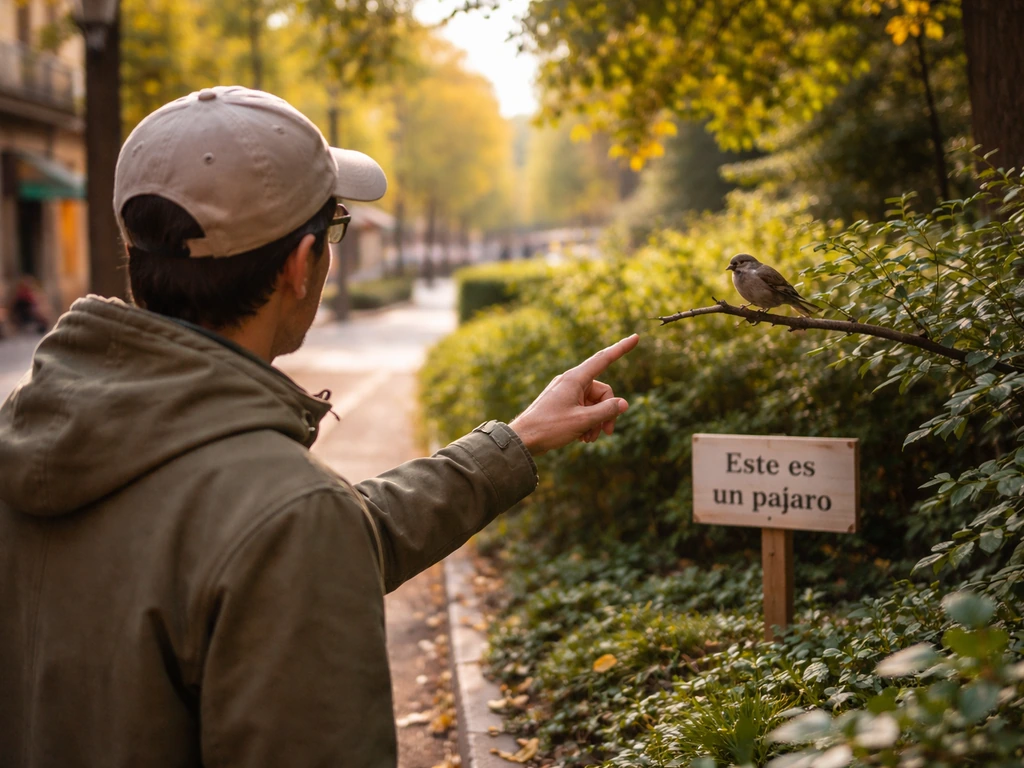
The most natural way to say 'that bird has a small head' in Spanish is 'Ese pájaro tiene una cabeza pequeña.' If you want to sound slightly more formal or use the word for bird that appears more in field guides, swap in 'ave': 'Esa ave tiene una cabeza pequeña.' Both are correct, both are immediately understood, and either one will serve you whether you're describing a bird you're looking at right now or writing a field note.
that bird has a small head in Spanish: translations

James Ridgley
18 May 2026
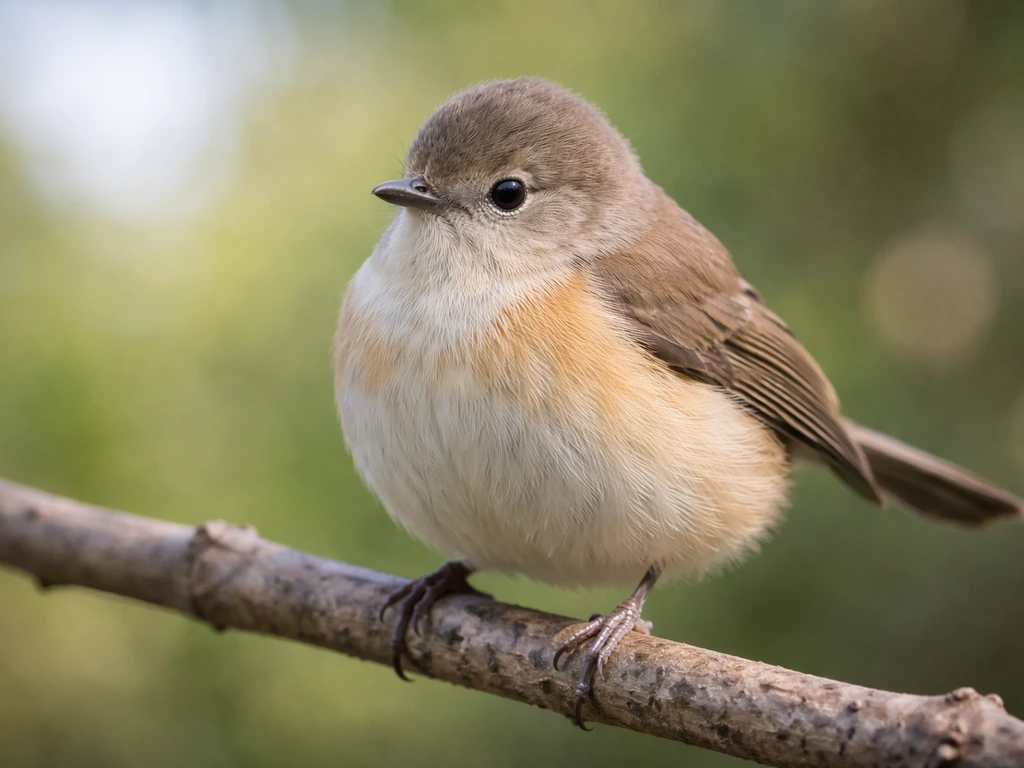
How to translate the phrase naturally
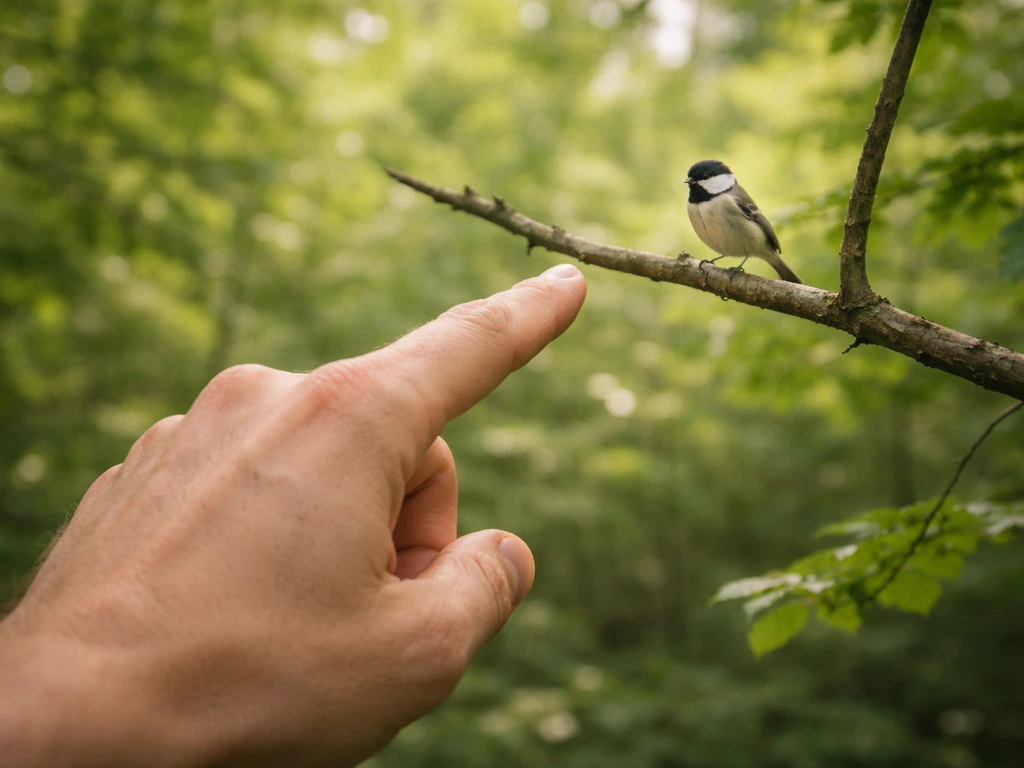
Spanish uses demonstrative adjectives the same way English uses 'this,' 'that,' and 'that over there.' For something at a mid distance (or just something you're pointing to in conversation), 'ese/esa' is your go-to for 'that.' 'Ese pájaro' is 'that bird' (pájaro is masculine, so ese). 'Esa ave' is 'that bird' using the more formal/scientific word for bird (ave is feminine, so esa). The verb 'tener' (to have) gives you 'tiene' in the third-person present, and 'cabeza pequeña' is straightforwardly 'small head.'
| Version | Spanish | Best used when |
|---|---|---|
| Casual, everyday | Ese pájaro tiene una cabeza pequeña. | Talking with someone, describing what you see |
| Formal / field guide style | Esa ave tiene una cabeza pequeña. | Written descriptions, ornithology notes |
| More distant / emphatic | Aquel pájaro tiene una cabeza pequeña. | Referring to a bird farther away or more removed in context |
The 'aquel/aquella' form signals greater distance (like 'that bird way over there') and is more common in peninsular Spanish. In everyday Latin American conversation, 'ese' covers both distances most of the time, so stick with 'ese/esa' unless you want that extra nuance.
Are you describing a feature or trying to name a species?
This is the key question to resolve before you go any further. 'That bird has a small head' can mean two very different things: you might be describing a physical trait you can see right now, or you might be using 'small head' as an identification clue to track down the Spanish name of a specific species. The translation above handles the first case perfectly.
But if you're actually asking 'what bird is known for having a small head, and what is it called in Spanish? But if you're actually asking 'what bird is known for having a small head, and what is it called in Spanish? '} , that's a naming and identification problem, not just a translation problem is the painted bird in english. ', that's a naming and identification problem, not just a translation problem.
To pin down your intent, ask yourself: Do I already know which bird this is and just need to describe it in Spanish? Or am I using 'small head' as a field mark to figure out which species I'm looking at? If it's the second situation, you'll want to identify the species first, then look up its Spanish name. Two quick clarifying questions in Spanish that help: '¿Cómo se llama ese pájaro?
En recursos educativos y preguntas en español sobre aves, aparecen con frecuencia ejemplos de identificación como «¿Cómo se llama…? » para preguntar el nombre del pájaro [¿Cómo se llama ese pájaro? ](https://www. spanishdict.
com/answers/275956/la-palabra-del-dia-pjaro). ' (What is that bird called? ) or '¿De qué especie es? ' (What species is it?
). These are the natural Spanish phrases for asking about a bird's name or classification. If you want a fun mnemonic, you can remember that each bird has a cracker en español.
Birds described as having a small head: Spanish names worth knowing
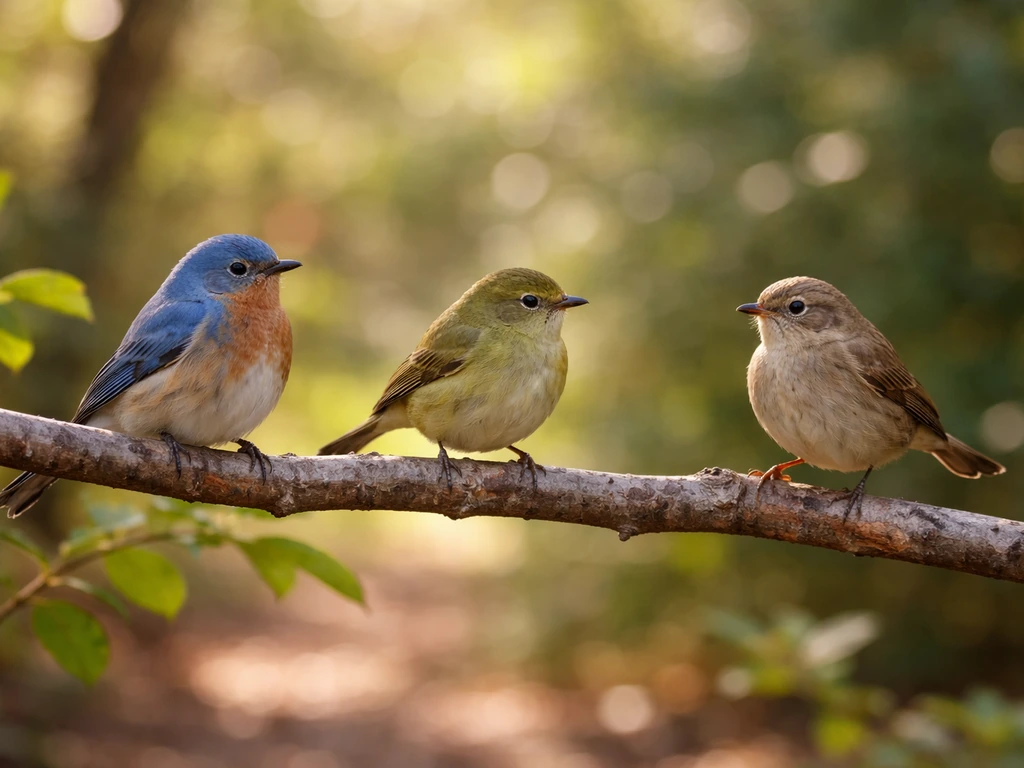
Several real species are explicitly described in Spanish ornithological sources using 'cabeza pequeña' as a morphological feature. If one of these matches the bird you have in mind, you've got your Spanish name right there.
- Herrerillo común (Cyanistes caeruleus) — the Eurasian blue tit. Spanish field descriptions note its 'cabeza bastante pequeña' (fairly small head) relative to its body. Common name used across Spain.
- Hoatzín (Opisthocomus hoazin) — the hoatzin, a striking Amazonian bird. Spanish-language sources describe it explicitly with 'cabeza pequeña,' making it a textbook example. It's also called 'pava hedionda' or 'shansho' regionally.
- Martín pescador (Alcedo atthis) — the common kingfisher. While not always described with that exact phrase, its proportionally small head relative to its massive bill is a standard field mark noted in Spanish descriptions.
- Correlimos (various Calidris sandpipers) — several sandpiper species in field guides are noted for small, rounded heads. 'Correlimos' covers the group; species-level names vary (e.g., correlimos común for the dunlin).
The descriptor itself, 'blank" rel="noopener noreferrer">de cabeza pequeña,' works as an adjective phrase in Spanish field notes, the same way English uses 'small-headed.' So you might write: 'un ave de cabeza pequeña' (a small-headed bird) when you don't yet know the species name. This phrasing appears in field guides and is immediately understood by Spanish-speaking birders.
Pronunciation and spelling: what to watch
The full phrase 'Esa ave tiene una cabeza pequeña' isn't hard to say, but a few sounds trip up English speakers. Here's a quick breakdown:
| Word | Phonetic guide | Common mistake |
|---|---|---|
| esa | EH-sah | Saying 'EE-sah' (like English 'e') |
| ave | AH-beh | Saying 'AY-vee' (English-style) |
| tiene | TYEH-neh | Saying 'tee-EH-neh' (over-separating syllables) |
| cabeza | kah-BEH-sah | Saying 'kah-BAY-zah' (the 'z' sounds like 's' in Latin America) |
| pequeña | peh-KEH-nyah | Forgetting the ñ — it's 'ny' not 'n' |
The tilde on 'pequeña' is non-negotiable in writing. Drop the ñ and you get 'pequena,' which isn't a Spanish word. Same goes for 'hoatzín' (note the accent on the final syllable). If you're typing Spanish bird names, always double-check diacritics: accents change both meaning and pronunciation, and spell-checkers don't always catch bird names.
For the bird names: 'herrerillo' is pronounced eh-rreh-REE-lyo (the double-r is a trill, the ll is a 'y' sound in most dialects). 'Hoatzín' is wah-TSEEN. 'Correlimos' is koh-rreh-LEE-mohs.
How to look up the exact Spanish bird name
Once you've narrowed down the species (or at least have an English name to work from), here's a reliable three-step workflow to get the correct Spanish name:
- Start with Avibase (avibase.bsc-eoc.org). It lets you search by bird name in almost any language and returns the full taxon with common names across dozens of languages, including regional Spanish variants. Search your English name, click the species, then look for 'Spanish' in the common names list. This is the fastest way to get a verified Spanish name tied to a specific taxonomic entry.
- Cross-check with Birds of the World (birdsoftheworld.org). This resource is available in both English and Spanish. Once you have the species, switch the interface to Spanish and you'll see the Spanish common name used in the official regional checklist. It also shows subspecies names, which matter if your bird has a regional Spanish name that differs from the standard.
- Verify spelling and diacritics using a dedicated Spanish dictionary like the Diccionario de la lengua española (dle.rae.es) or Collins Spanish Dictionary. Bird common names aren't always in general dictionaries, but scientific descriptors like 'cabeza pequeña' and adjective forms like 'de cabeza pequeña' are easy to confirm this way.
- If you're using eBird, check its language preferences. eBird manages common names through predefined regional lists, and switching your account language to Spanish will show you the names used by the Spanish-speaking birding community for each species — useful for consistency if you're logging observations.
If you're starting from a physical description (like 'small head') rather than a name, the best move is to use a bird identification app (Merlin is free and excellent) to ID the species first, then run that English name through Avibase to get the Spanish equivalent. If you want help finding the right Spanish name for a specific show-related clue, you can also check Avibase alongside other Better Call Saul themed search results.
Don't try to translate a description directly into a species name, 'small head' narrows things down but still matches dozens of species. This is a bird en español, so once you identify the species, you can find the exact Spanish name that matches it. Each bird has a cracker en español, so you can say it naturally when you want to refer to that phrase in Spanish.
This kind of English-to-Spanish bird name lookup comes up in a lot of contexts on this site, from translating crane bird names to puzzling out phrases like 'this is a bird' in Spanish. The workflow is always the same: confirm the taxon first, then match the name in your target language. Descriptions are clues, not names, and treating them as two separate problems makes the whole process much cleaner.
FAQ
If I want to say “that bird’s head is small” instead of “that bird has a small head,” what’s the most natural option?
Use “Esa ave tiene la cabeza pequeña” if you mean the head as a specific part, or “Esa ave tiene la cabeza de tamaño pequeño” if you want extra clarity. “La cabeza” can sound more natural than repeating “una cabeza” in everyday speech.
Do I need to use “ese” or can I also use “este” for “that bird” in Spanish?
If the bird is near the speaker, use “este” (masculine) or “esta” (feminine): “Este pájaro tiene una cabeza pequeña.” “Ese/esa” is the default for mid distance or “that” you are pointing to rather than something right next to you.
Is “cabeza pequeña” always the right choice, or should I say “cabeza chica” in some places?
“Cabeza pequeña” is universally correct. “Cabeza chica” is used in parts of Latin America in informal contexts, but it can sound different from ornithology-style wording and may not match how birders phrase field notes.
Can I say “That bird has a small head” to describe a baby bird, or could it sound wrong?
It depends on context. “Tiene una cabeza pequeña” is fine, but if you mean it relative to body size, consider “Tiene la cabeza pequeña en proporción al cuerpo” to avoid sounding like it is a fixed anatomical trait.
What if the bird is perched far away and I really mean “that bird over there”?
Use the greater-distance demonstrative “aquel/aquella” in formal or Peninsular Spanish: “Aquel pájaro tiene una cabeza pequeña.” In everyday Latin American conversation, “ese/esa” is still the most common choice even when distance is greater.
How do I phrase it when I’m not sure the gender of “ave” or I want to avoid choosing ese vs esa?
If you use “ave” you must match articles and demonstratives, so choose “esa ave” (feminine). If you want to avoid this, switch to the masculine “pájaro” and say “ese pájaro.”
Is it okay to write “cabeza pequena” without the ñ in casual texting?
In casual texting some people drop diacritics, but it can cause confusion and looks incorrect in written Spanish. For bird names and field notes, always keep the tilde in “pequeña” so you preserve pronunciation and professionalism.
If I’m trying to identify the bird, should I include “small head” as part of my Spanish description search?
Yes, as a description clue, but not as a full species name. The better workflow is to ask for the name first in Spanish, then use the species name. If you must describe first, try “un ave de cabeza pequeña” plus other visible traits (color, beak shape, pattern).
What are good follow-up questions in Spanish if “¿Cómo se llama ese pájaro?” isn’t getting results?
Try classification-focused questions: “¿De qué familia es?” or “¿Es un ave migratoria?” If you have location info, adding “en esta zona” helps, for example “¿De qué especie es en esta zona?”
Can I use “tener” in another tense, like past or future?
Yes. For past description use “Esa ave tenía una cabeza pequeña” (it had). For what you expect to see, “Esa ave tendrá una cabeza pequeña” is possible but can sound speculative. If you mean “it should have,” use “probablemente” for accuracy: “Esa ave probablemente tenga una cabeza pequeña.”
Next Article
This is a bird en español: Cómo decirlo y nombrar aves
Cómo decir this is a bird en español, variantes y mini guía de nombres de aves, pronunciación y etimología.