The koyal bird is called the koel in English, and more specifically the Asian koel (Eudynamys scolopaceus). That is the bird people across India, Pakistan, Sri Lanka, and much of South and Southeast Asia are referring to when they say "koyal" or "koel." It belongs to the cuckoo family (Cuculidae), and its haunting, rising call is one of the most recognizable sounds of the South Asian subcontinent.
What Is the Koyal Bird Called in English? Name, Meaning

James Ridgley
12 May 2026
What "koyal" means and where the name comes from
The word koyal comes from Hindi (कोयल), which itself traces back to the blank" rel="noopener noreferrer">Sanskrit word kokila. Both Merriam-Webster and Collins confirm this etymological line: Sanskrit kokila gave rise to the Hindi koyal, and from there the word was borrowed into English as koel. What is especially interesting is that the name is onomatopoeic at its roots. The bird's distinctive two-note call, often described as a rising "koo-Ooo," is essentially the sound the name was built on. Collins explicitly notes the echoic origin, and Wiktionary calls it onomatopoeic. Collins also traces the name “koel” to an echoic, echo-imitative origin from Hindi kokila blank" rel="noopener noreferrer">Collins explicitly notes the echoic origin. So when you say "koyal," you are, in a sense, imitating the bird itself.
This pattern of a local sound-based name becoming a standardized English loanword is actually common in bird naming. Merriam-Webster treats "koel" as a proper dictionary-entry English word, not just a foreign term, which shows how thoroughly it has been absorbed. The practical takeaway: "koyal" is the South Asian vernacular (predominantly Hindi and related languages), while "koel" is the English spelling you will find in dictionaries, field guides, and birding checklists.
The English name for the koyal bird
The standard English common name is the Asian koel. The U.S. Fish and Wildlife Service, the IOC World Bird List, and most major birding taxonomies all use "Asian Koel" paired with the scientific name Eudynamys scolopaceus. This is the name you want to use when searching field guides, birding apps, or talking to English-speaking birders. If you simply say "koel" without the "Asian" prefix, most people in a South Asian or Southeast Asian context will understand you, but adding "Asian" removes any ambiguity with related species found further east.
Merriam-Webster defines koel as "any of several cuckoos of the genus Eudynamys especially of South Asia and the East Indies," which is a useful reminder that the word in English technically covers the whole genus. In everyday conversation, though, "koyal" or "koel" in India almost always means the Asian koel specifically.
Koyal vs. koel: spelling and pronunciation variants
This is one of the most common points of confusion. Collins lists multiple romanization spellings for the Hindi कोयल: koyal, koyala, koyla, and koyl. None of these are wrong as transliterations from Hindi, but only one spelling is treated as standard in English: koel. That is the form you will find in Merriam-Webster, Collins English Dictionary, Wiktionary, and virtually every birding resource.
Pronunciation is straightforward once you see it written out. "Koel" is pronounced KOH-el (two syllables, stress on the first). In IPA it is roughly /ˈkoʊ.əl/. The Hindi "koyal" is spoken more like KOY-ul, which is why English speakers sometimes carry that spelling over. If you are searching online or using a bird ID app, stick with "koel" or "Asian koel" for the most accurate results. Searches for "koyal bird" will often work too, but the scientific and birding literature will consistently use "koel."
| Form | Language/Context | Notes |
|---|---|---|
| koel | English (standard) | Dictionary-standard spelling; use this in searches and references |
| koyal | Hindi (romanized) | Most common South Asian romanization; understood but informal in English |
| koyala / koyla / koyl | Hindi (variant romanizations) | Less common; listed in Collins; not used in English birding literature |
| kokila | Sanskrit | Ancient root word; still used in classical/literary contexts in South Asia |
Which species does "koyal" actually refer to? (Regional ambiguity explained)
In South Asia (India, Pakistan, Bangladesh, Sri Lanka), "koyal" almost universally refers to the Asian koel, Eudynamys scolopaceus. That is the safe default interpretation. But the genus Eudynamys contains more than one species, and taxonomy has shifted over time, which is why the English name "koel" can technically point to different birds depending on your region and which checklist you are using.
- Asian koel (Eudynamys scolopaceus): The bird of South Asia and much of Southeast Asia. This is almost certainly what someone in India means by "koyal."
- Pacific koel / Eastern koel (Eudynamys orientalis): Found in Australia and the Pacific. Historically lumped with the Asian koel in older treatments, but now recognized as a separate species by most major checklists. If you are in Australia and saying "koel," this is your bird.
- Black-billed koel (Eudynamys melanorhynchus): Found in Indonesia. Sometimes treated as a subspecies of the Asian koel, sometimes as its own species. Relevant if you are in that part of the archipelago.
- Taxonomic variability: Wikipedia's overview of the koel genus notes that some treatments recognize one species, others two, others three, depending on how subspecies boundaries are drawn. This is why a single word like "koyal" can technically map to different scientific names across regions or time periods.
The practical rule: if you are in South Asia, "koyal" means Asian koel. If you are in Australia, the local "koel" is the Pacific koel. In Southeast Asian countries like Singapore, birding lists officially use "Asian Koel" for Eudynamys scolopaceus, so the mapping is consistent with South Asia there too.
How to confirm the exact bird from your location and description
The quickest confirmation method is to anchor the name to a scientific name. "Asian Koel" maps to Eudynamys scolopaceus, full stop. Once you have that scientific name, any field guide, birding app (eBird, Merlin), or taxonomy database will show you exactly what the bird looks like and whether it occurs in your area. That is the approach birding organizations use to cut through vernacular ambiguity.
What to look for in the field
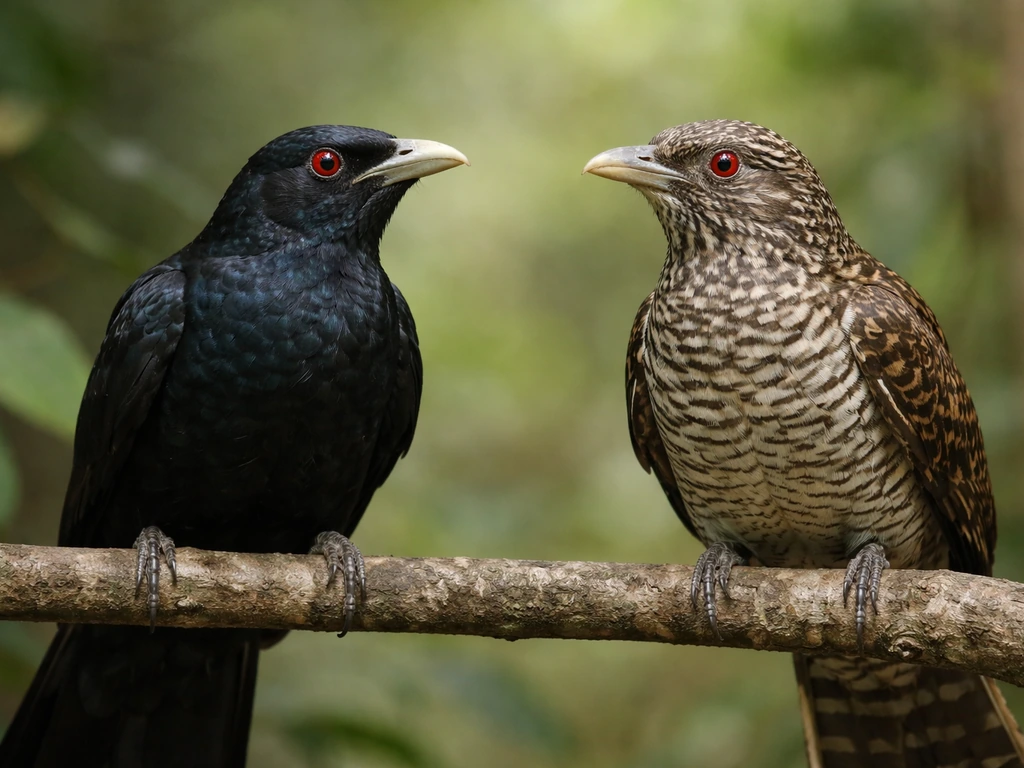
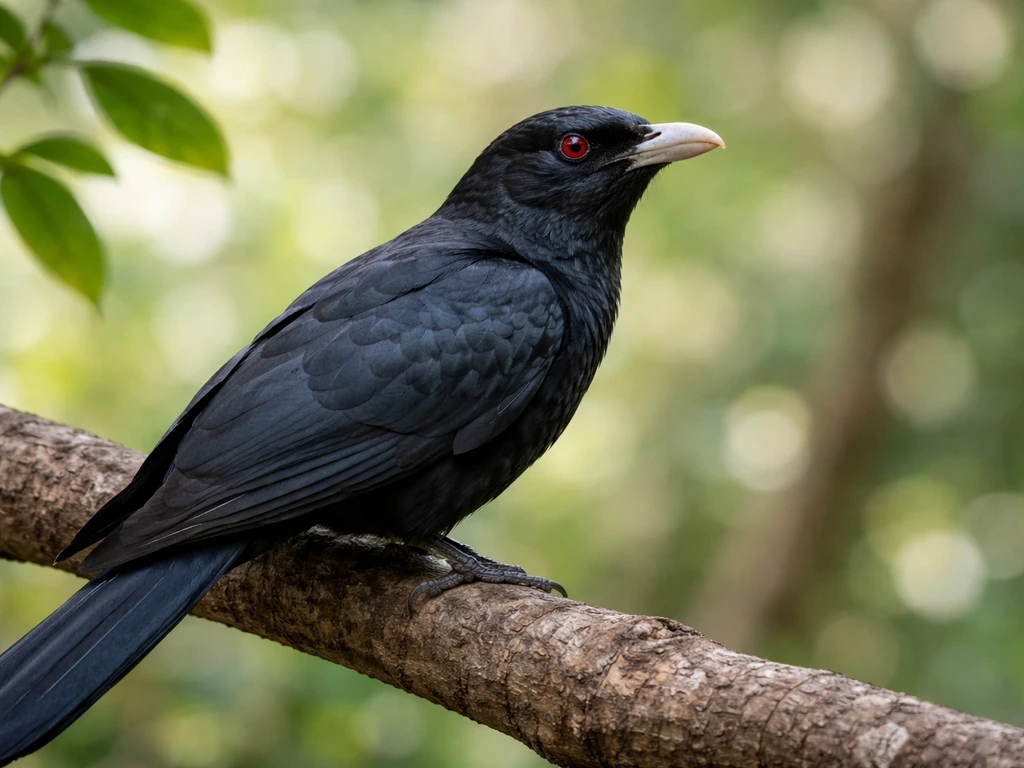
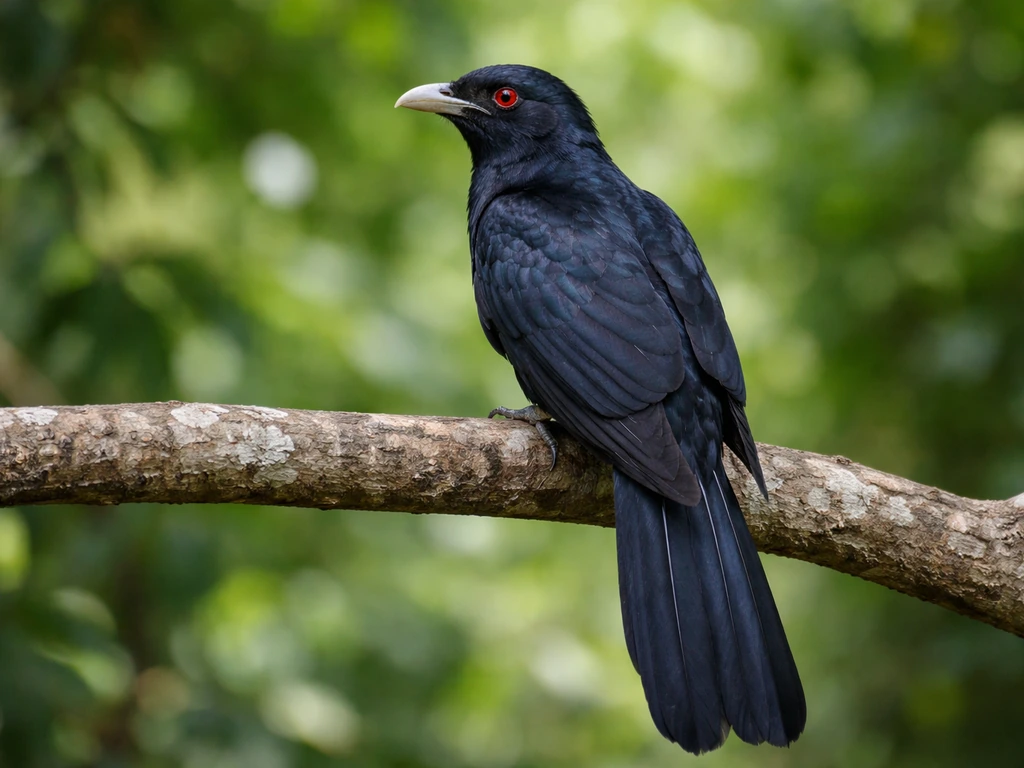
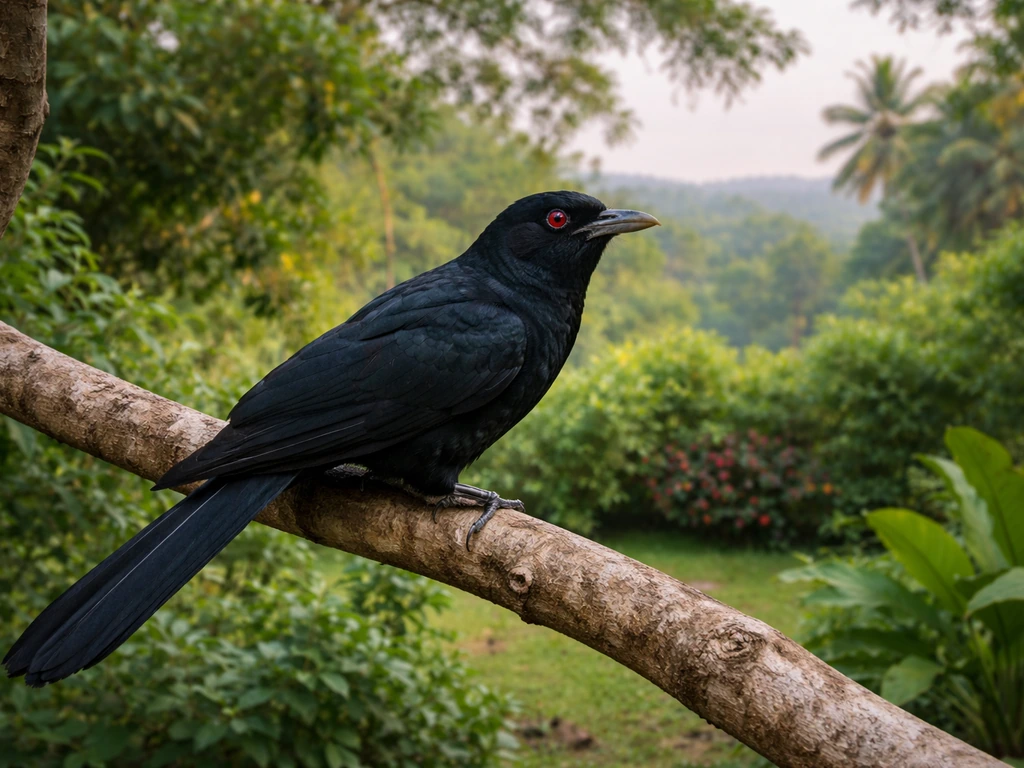
The Asian koel has a striking sexual dimorphism, which makes it relatively easy to sex in the field even if you are a casual observer. The male is glossy blue-black all over, with a distinctive crimson eye. The female looks completely different: she has dark brown upperparts with white and buff streaking and spotting across her body. If you see a plain black bird singing that rising call, that is the male. If you see a streaked brown bird, that is the female of the same species.
The call as a confirmation tool
The male's call is one of the most distinctive in all of South Asian bird life. It is a dissyllabic "koo-Ooo" with emphasis on the second syllable, repeated several times and rising steadily in pitch and volume before stopping abruptly. Once you have heard it, you will not forget it. If the bird you are hearing matches this pattern, you are almost certainly listening to an Asian koel male. The female produces a different call, sometimes described as a rapid "kik-kik-kik" in response to the male during breeding season. The Australian Museum notes that females of different koel species can look similar in plumage, so when species overlap is a concern, call plus location together give you the most reliable confirmation.
Quick confirmation checklist
- Location: Are you in South Asia or Southeast Asia? Default to Asian koel (Eudynamys scolopaceus). In Australia? Default to Pacific koel (Eudynamys orientalis).
- Male plumage: Glossy all-black bird with a red eye confirms male Asian koel.
- Female plumage: Brown with white/buff streaks and spots confirms female Asian koel.
- Call: Rising, repeated "koo-Ooo" call, increasing in pitch and volume, stopping abruptly, confirms the species.
- Cross-check: Enter "Asian koel" or Eudynamys scolopaceus into Merlin Bird ID or eBird to verify range and compare photos.
Spelling and pronunciation tips for searching and identifying in English
When you are searching in English, whether in a field guide, on a birding app, or in a general web search, use "koel" or "Asian koel" rather than "koyal." The dictionary-standard spelling is koel (K-O-E-L), and that is what every English-language ornithological resource will use. Searches for "koyal" will usually get you there too, but you may pick up more noise from non-birding content.
Pronunciation: say it as KOH-el. Two syllables, first syllable rhymes with "go." Do not stress the second syllable. The Hindi "koyal" sounds more like KOY-ul, which is closer to how native speakers would say it, but for English conversation the KOH-el pronunciation is standard and universally understood among birders.
One more thing worth knowing: because "koel" in English is a genus-level common name covering the whole Eudynamys group, you will sometimes see it used without the "Asian" qualifier in older books or general reference texts. For precise communication, especially if you are writing about birds, always say "Asian koel" to specify the South Asian species. This same principle applies to other bird names that translate from local languages into English, much like "garuda" or "ghar" birds that come up in similar translation questions. The local name is a useful starting point, but pairing it with a scientific name or regional qualifier is what gets you to the exact species every time.
FAQ
If “koel” is the English word, is it always the Asian koel?
In English birding contexts, “koel” is usually treated as short for the Asian Koel, but in the strict taxonomic sense it can cover multiple Eudynamys species (the genus). If you are trying to avoid mix-ups, use “Asian koel” (or the scientific name Eudynamys scolopaceus) rather than relying on “koel” alone.
Should I use “koyal” or “koel” when labeling a bird in English?
You may still hear “koyal” in casual conversation, especially in Hindi and related languages, but most English field guides, checklists, and apps will label the bird as “Asian koel.” If you copy the name from an English source, expect “koel” spelling, not “koyal.”
What’s the best way to search for the bird on a birding app or website?
Many birding apps let you search by common name, but search results are usually more reliable when you include a qualifier (for example, “Asian koel”) or search the scientific name Eudynamys scolopaceus. This helps when your location overlaps species ranges or when older books use different common-name conventions.
What if I’m outside South Asia and people still say “koel”?
If you’re in Australia, the “koel” label may refer to different koel species (for example, the Pacific koel) depending on local usage. Your safest confirmation is to anchor the ID to location plus the scientific name provided by the platform you are using.
Are other spellings like “koyala” or “koyla” for the same bird?
Because romanization from Hindi can vary, “koyal,” “koyla,” and similar spellings are usually the same bird in context, but English dictionaries and checklists standardize on “koel.” When you want consistent results, search “koel” or “Asian koel,” then cross-check with the scientific name shown by the source.
What are common mistakes people make when identifying a koel?
“Koel” is the name for the bird commonly associated with the famous call, but many other birds can be misheard in the field. If you are unsure, don’t rely on the name alone, compare the call pattern and look for male-black glossy plumage with the crimson eye versus the female’s streaked brown appearance.
What does it mean if a checklist just says “koel” under Eudynamys?
When you see “Eudynamys” on a checklist, it tells you you’re in the koel group, but it does not guarantee which species you have locally. Use the checklist’s region-specific common name plus the species entry, and if available, confirm with the bird’s reported range and the call during the breeding season.
How should I phrase it in a write-up so readers do not get confused?
If you are writing about the bird for an English-speaking audience, use “Asian koel” on first mention, then you can shorten to “koel” afterward. This avoids ambiguity, especially because some older references and local speakers may use “koel” without the “Asian” qualifier.
Next Article
What Is Kabar Bird Called in English? Find the Name
Learn what the kabar bird is called in English by matching region, habitat, markings, and call to the right species name