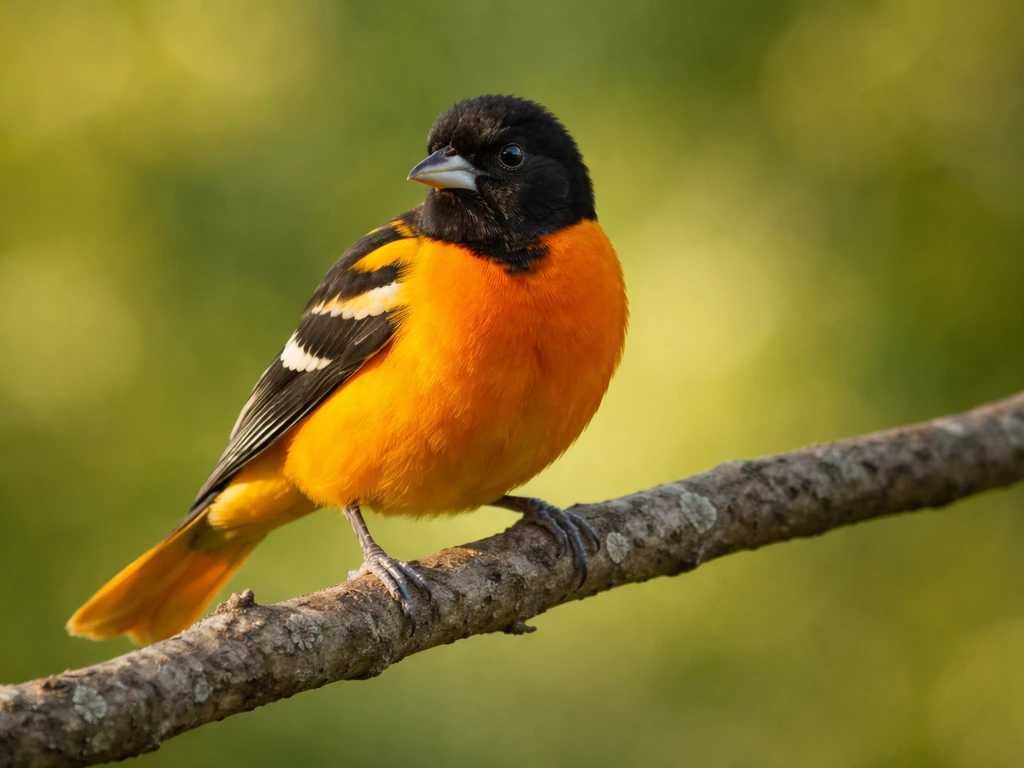
The most common bird names starting with O in English are Owl, Oriole, Osprey, Ostrich, and Oystercatcher. If you spotted an orange-and-black songbird, that's almost certainly an Oriole. A large brown bird diving into water is an Osprey. A bird calling deep hoots at night is an Owl. Those five cover the vast majority of everyday encounters, puzzle clues, and pet-naming searches. If you need something more specific, there are dozens more O-birds below.
Which Bird Name Starts With O: Easy List and Tips

James Ridgley
26 Apr 2026
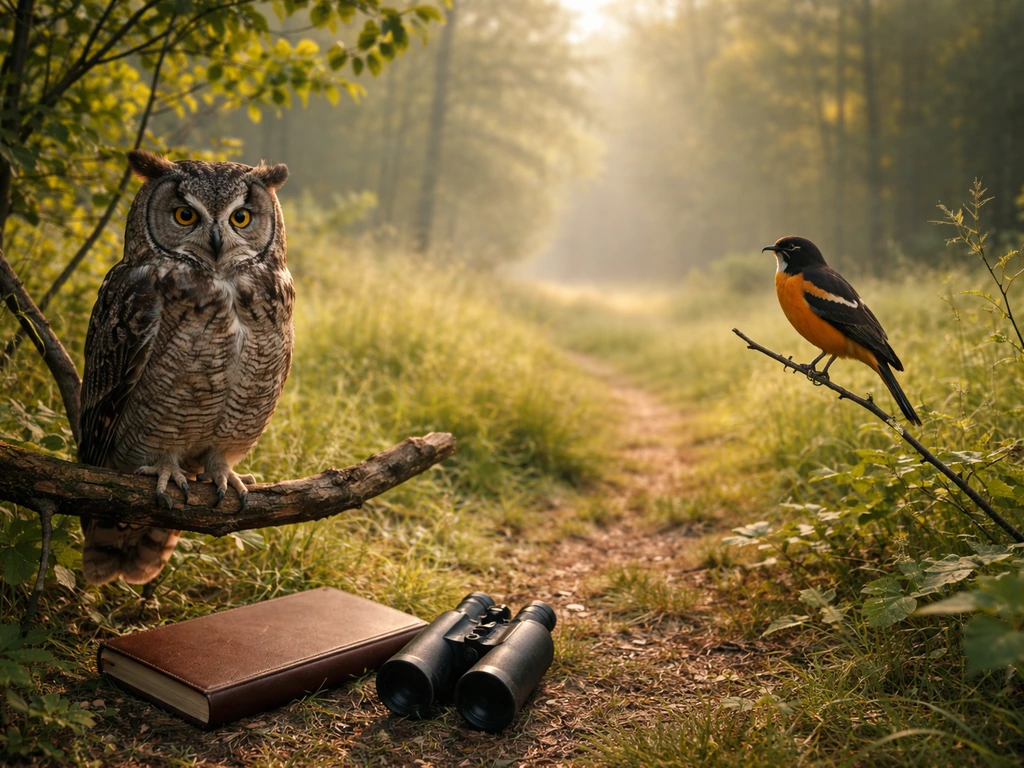
The most common O bird names at a glance
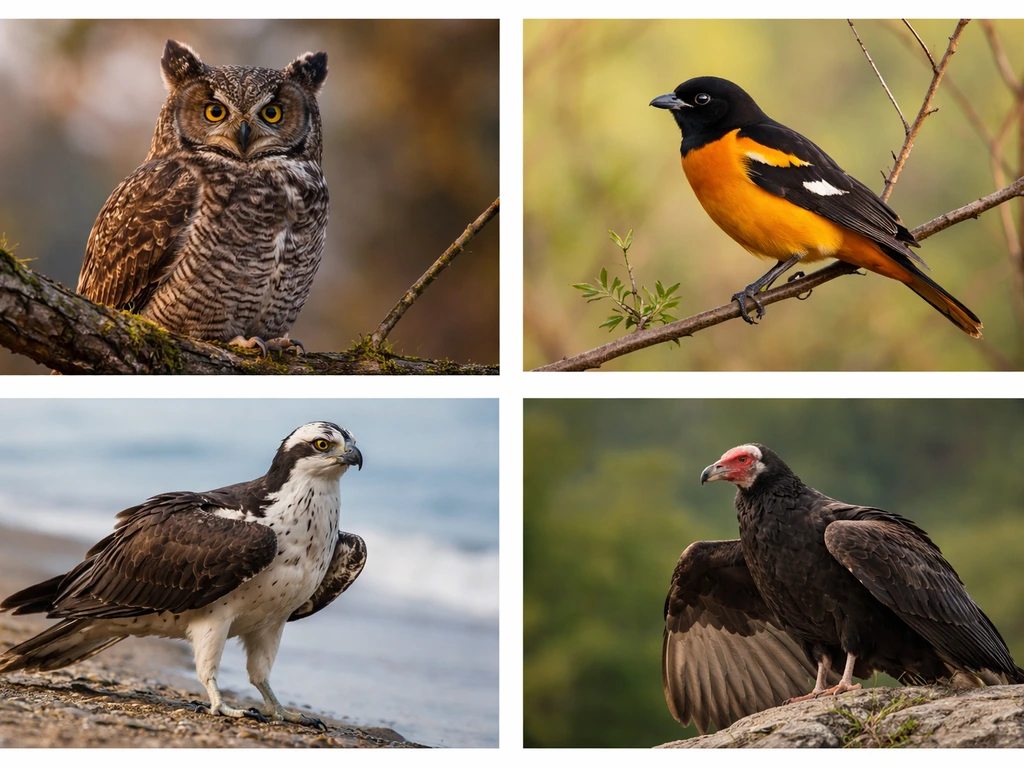
These are the bird names starting with O that you're most likely to encounter in North America, in field guides, on crossword clues, or in everyday conversation.
| Bird Name | Type | Where You'll See It |
|---|---|---|
| Owl | Large group of raptors | Worldwide, most active at night |
| Oriole | Colorful songbird | North America, woodlands and gardens |
| Osprey | Fish-eating raptor | Near lakes, rivers, coasts worldwide |
| Ostrich | Flightless bird | African savannas (also zoos/farms) |
| Oystercatcher | Shorebird | Coastal beaches and rocky shorelines |
| Ouzel | Small songbird | Mountain streams, rocky waterways |
For North American birders specifically, the Owl and Oriole are the two O-names that come up most often. In the UK, the Ouzel (particularly the Ring Ouzel and the Dipper, sometimes called a Water Ouzel) gets a lot of attention too.
A broader list of bird species starting with O
Once you get past the famous five, there are a lot more birds with names beginning in O. Here's a practical rundown grouped loosely by how likely you are to encounter the name.
Well-known species and groups
- Great Horned Owl (large, widespread North American owl, distinctive ear tufts)
- Barn Owl / American Barn Owl (ghostly white face, found on every continent except Antarctica)
- Northern Saw-whet Owl (tiny, forest-dwelling, known for its repetitive tooting call)
- Baltimore Oriole (bright orange-and-black male, beloved spring arrival in eastern North America)
- Audubon's Oriole (yellow-and-black oriole of southern Texas and Mexico)
- Bullock's Oriole (western North American counterpart to the Baltimore Oriole)
- Orchard Oriole (smallest North American oriole, chestnut and black coloring)
- Osprey (large fish hawk, white underparts, distinctive dark wrist patches in flight)
- Ostrich (world's largest bird, reaches up to 9 feet tall, native to Africa)
- Oystercatcher (stocky shorebird with a brilliant orange-red bill, pries open shellfish)
Less common but real O-birds worth knowing
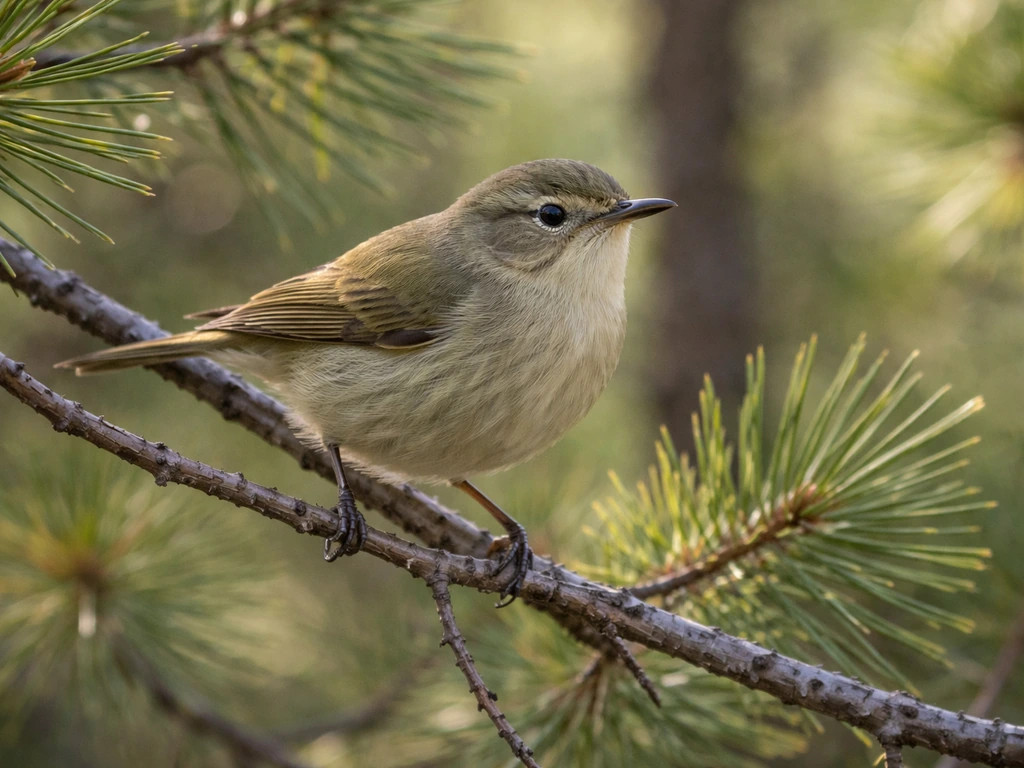
- Olive Warbler (small songbird of pine forests in the American Southwest and Mexico)
- Orange-crowned Warbler (drab olive warbler; the orange crown is almost never visible)
- Olive-sided Flycatcher (stocky flycatcher with a distinctive 'quick-THREE-beers' call)
- Ovenbird (ground-walking warbler, named for its dome-shaped nest that looks like a Dutch oven)
- Ouzel / Ring Ouzel (thrush-like bird of upland areas in Europe)
- Ocellated Turkey (stunning iridescent turkey of Mexico and Central America)
- Orange Weaver (brightly colored African weaver bird)
- Olivaceous Cormorant (now more commonly called Neotropic Cormorant)
- Owlet-nightjar (small nocturnal bird of Australia and New Guinea)
- Oriolus (Old World oriole genus found across Europe, Asia, and Africa)
Spelling and pronunciation for each major O bird name
Getting the spelling right matters especially if you're entering a bird into eBird, writing a crossword answer, or searching a field guide. If you're also trying to figure out how do you spell it for a specific bird, see our spelling help for common bird-name confusion like "sore like a bird.". Here's a practical guide to the names people most often misspell or mispronounce.
| Bird Name | Correct Spelling | Pronunciation Guide | Common Mistake |
|---|---|---|---|
| Owl | owl | OWL (rhymes with 'howl') | No common spelling issues |
| Oriole | oriole | OR-ee-ole | Sometimes written 'oriel' or 'orial' |
| Osprey | osprey | AHS-pray or AHS-pree | Sometimes spelled 'ospray' |
| Ostrich | ostrich | AH-strich | Sometimes spelled 'orstrich' |
| Oystercatcher | oystercatcher | OY-ster-catch-er | Sometimes hyphenated: oyster-catcher |
| Ovenbird | ovenbird | UH-ven-bird | Sometimes two words: 'oven bird' |
| Ouzel | ouzel | OO-zel | Sometimes spelled 'ousel' |
A quick note on 'oriole': Merriam-Webster's headword spells it as a single unhyphenated word, 'oriole,' with stress on the first syllable (OR-ee-ole). It's one of the most-searched bird spellings, probably because the ending '-ole' looks like it should rhyme with 'mole.' It doesn't. The three-syllable pronunciation trips people up regularly. There's a full guide to oriole spelling and pronunciation elsewhere on this site if you want to go deeper.
For 'osprey,' Cambridge Dictionary lists two accepted pronunciations: AHS-pray (more common in American English) and AHS-pree (common in British English). Both are correct, so don't worry if you've been saying either one.
How to figure out which O bird you actually saw
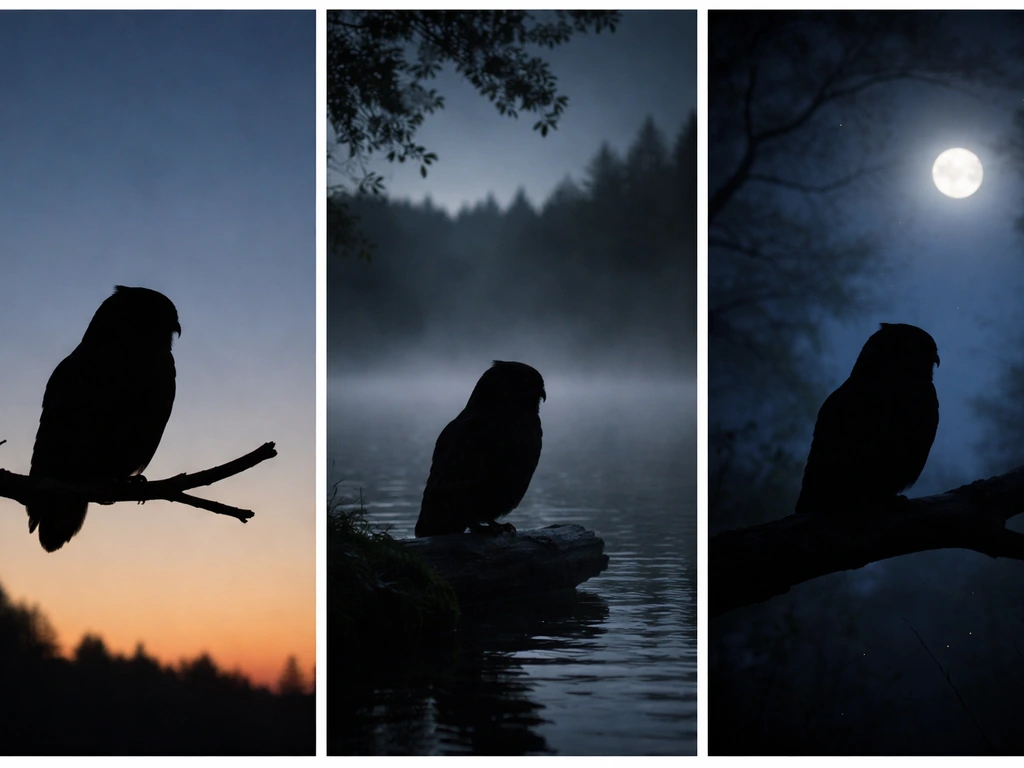
The fastest way to narrow down an O bird is to answer three questions: Was it a raptor (hooked beak, hunting behavior)? Was it near water? And what time of day did you see it? Those three alone will rule out most of the list.
Owls
If you heard it at night and it was hooting, it's almost certainly an owl. The Great Horned Owl is the most widespread large owl in North America and makes deep, stuttering hoots that sound like 'hoo-hoo-hooooo.' It's roughly the size of a bird somewhere between a crow and a Canada goose, with prominent ear tufts and large yellow eyes. The Barn Owl doesn't hoot at all. It screeches and has that distinctive white, heart-shaped face. The Northern Saw-whet Owl is tiny (about the size of a robin) and makes a repetitive, high-pitched tooting whistle over and over at night in forests.
Orioles
If you saw a bright orange and black bird in a tree in spring or summer, especially in the eastern half of North America, it's almost certainly a Baltimore Oriole. The males are vivid orange with black heads and wings. Females are more yellowish-olive. They love fruit and sugar water feeders. If you're in the western US, it may be a Bullock's Oriole (very similar). In South Texas near the Mexican border, Audubon's Oriole is a possibility. That one is yellow-bodied with a solid black head.
Osprey
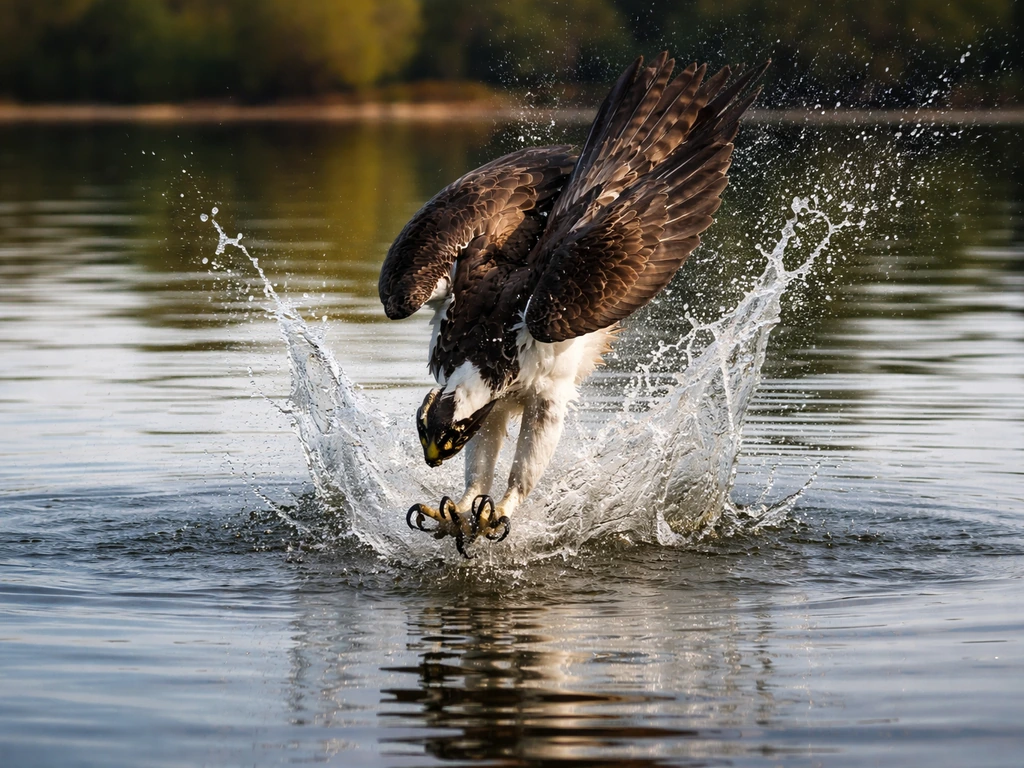
If you saw a large, mostly white bird diving feet-first into water to grab a fish, that's an Osprey. From below in flight, look for the distinctive dark patches at the 'wrists' (the bend in the wing) on an otherwise white underside. Ospreys live near water: lakes, rivers, reservoirs, and coastlines. They build huge stick nests on platforms, poles, and dead trees near water. They're found across North America, Europe, Asia, and Australia.
Ostrich and Oystercatcher
An Ostrich is unmistakable. It's enormous, flightless, and lives in open African savannas. You're likely only seeing one in a zoo, on a farm, or on safari. Oystercatchers are stocky, pigeon-sized shorebirds with a striking long orange-red bill. They're almost always found right at the water's edge on rocky or sandy coasts, using that bill to pry open mussels and clams.
Where these bird names actually come from
Bird names that start with O have some genuinely interesting histories. Here's a quick breakdown of the etymology behind the major ones.
- Oriole: comes from the New Latin 'oriolus,' which came through Old French 'oriol,' ultimately rooted in the Latin 'aureolus' meaning 'golden.' That's a perfect name for birds that are famously bright orange and yellow.
- Osprey: traces back through Middle English and Anglo-French to the Latin 'ossifraga,' which means 'bone-breaker.' That was originally applied to a different large bird (likely the Lammergeier), but the name transferred to the fish hawk over time.
- Ostrich: came into English through Old French and Anglo-French, originating from Latin and Greek roots (Latin 'avis' meaning bird, combined with 'struthio' from Greek 'strouthos,' meaning sparrow or bird). So an ostrich is literally a 'bird-sparrow,' which is entertainingly inadequate for the world's largest bird.
- Owl: is one of the oldest bird names in English, with roots in Old English 'ule' and Germanic origins. It's essentially an imitation of the hooting sound owls make, making it an onomatopoeic name.
- Oystercatcher: a straightforward descriptive name coined in the 18th century. It catches oysters (and other shellfish). Simple, accurate, and very English in its directness.
- Ovenbird: named for its domed ground nest, which early naturalists thought resembled a Dutch oven. If you've ever seen one, the resemblance is real.
How O bird names change across languages and contexts
English common names aren't the only way these birds get labeled, and if you're doing research, searching an app, or just curious about international birding, it helps to know that the same bird often carries a completely different O-name (or no O-name at all) in another language.
The Baltimore Oriole, for example, is called 'Oriole de Baltimore' in French and 'Oriole de Baltimore' is consistent because French borrowed the word oriole directly. But in German, the Old World orioles of the genus Oriolus are called 'Pirole,' which doesn't start with O at all. In Spanish, orioles are often called 'bolseros' (from the pouch-like nests they weave) or 'oropéndolas' for certain tropical relatives.
The Osprey is called 'balbuzard' in French, 'Fischadler' (fish eagle) in German, and 'aguila pescadora' (fishing eagle) in Spanish. None of those start with O. This is a good reminder that O-bird status is entirely dependent on which language you're working in.
Within English itself, common names can also vary. The American Barn Owl has been called the 'ghost owl,' 'monkey-faced owl,' and 'church owl' in different regions. The Osprey has been called the 'fish hawk' and 'sea hawk.' These nicknames matter if you're searching older texts, regional field guides, or nature writing.
Scientific (Latin) names are a separate layer entirely. The Baltimore Oriole's scientific name is Icterus galbula, and the Osprey's is Pandion haliaetus. Neither starts with O. eBird lets you toggle between common names and scientific names in your display preferences, which is useful when you're researching a bird that might go by different common names depending on the source.
Tips for using O bird names in word puzzles and birding apps
If you landed here because of a crossword, a word puzzle, or a nature quiz, here are the practical angles that will actually help you finish it.
For crossword and word puzzles
Crossword constructors overwhelmingly use common English names, not scientific names. So if a clue says 'bird starting with O' with 4 letters, the answer is almost certainly OWL. With 6 letters: ORIOLE. With 6 letters and water context: OSPREY. With 8 letters and a shorebird context: OVENBIRD or a stretch for OUZEL. The letter count is your fastest filter. The Oystercatcher (14 letters) rarely appears outside of themed puzzles.
- 3 letters: OWL
- 6 letters: ORIOLE or OSPREY
- 7 letters: OSTRICH or OVENBIRD (8)
- 5 letters: OUZEL
- 12 letters: OYSTERCATCHER (13)
For birding apps like eBird
When logging birds in eBird Mobile, you can type just the first few letters of a common name and the app filters matching species in real time. Typing 'or' brings up all the orioles in your region. Typing 'os' pulls up Osprey. This is genuinely the fastest way to confirm you're using the officially accepted common name for a species in your area, because eBird follows a standardized taxonomy. If the name you're using doesn't appear, it may be an older common name or a regional nickname that's been superseded.
Common naming pitfalls to avoid
One thing that trips people up: whether a bird 'counts' as an O bird depends entirely on which part of its name you're using. The Great Horned Owl starts with G, not O. The Northern Saw-whet Owl starts with N. If you’re looking for a bird that starts with N, the Northern Saw-whet Owl is a good one to remember. But they're both owls, and if a puzzle or list asks for 'a type of owl starting with O,' there's no clean answer because owl species names typically have a descriptive word first. The word 'Owl' itself starts with O, but individual species names like 'Great Horned' or 'Barn' don't. That distinction matters a lot for puzzle answers and for understanding why different sources give different O-bird lists.
If you're enjoying bird name linguistics, it's worth knowing that some birds are notorious for spelling confusion. The Oriole in particular gets misspelled often enough that there's a whole separate conversation worth having about how to spell it correctly and what the name actually refers to. Similarly, the question of whether an Oriole bird has a specific proper name (versus just the common name 'oriole') comes up more than you'd expect, especially for sports mascot and pet-naming contexts. That oriole mascot name question usually refers to the team bird and its commonly used mascot name what is the oriole bird mascot name. To answer that, yes, the oriole is sometimes discussed as having more specific names depending on which species people mean does the oriole bird have a name.
FAQ
For a species with a longer common name (like “Great Horned Owl”), does it still count as starting with O?
In most cases, you want the exact first English word of the bird’s common name. So “Owl” counts, but “Great Horned Owl” does not, because the species name starts with “Great.” For “Oriole,” “Baltimore Oriole” also counts only if your rule is “starts with O” for the first word, which it does. If you are using a source that lists full common names inconsistently, strip to the first word before checking the letter rule.
Why do some sources list an O-bird for the same species, but others do not?
Yes, for most bird-name searches you should rely on the “common name” shown by your database or field guide, because “O-” status changes if the source uses different common-name variants. For example, “Barn Owl” starts with B even though it is an owl. If your goal is a true “O” list, confirm you are using the common name, not a regional nickname or the scientific name.
How strict do I need to be with spelling when searching an O bird in an app or database?
For eBird-style lookups, spelling accuracy matters less for the first few letters, but it matters for the full name. Typing “or” or “os” is forgiving, yet once you are close, a small difference like “oystercatcher” vs “oyster catcher” can cause the app to miss matches or lead you to the wrong species entry.
What’s the quickest way to tell apart Oriole vs Osprey when the bird is hard to see?
If you are unsure whether you should guess “Oriole” or “Osprey,” use the behavior and setting first. Orange-and-black perching in trees strongly points to an oriole, while hunting or hovering near water, with a diving pattern, points to an osprey. Time of day also helps, owls are the main “night hooter” exception, but for diurnal birds, behavior is more reliable than color alone.
Do all O birds appear the same way on every regional checklist or field guide?
Not always. Some birds have names that begin with “O” in English but are rarely listed under an “O” heading in every guide, because regional checklists can use different common-name standards. If you are solving a list or quiz, match the naming convention of that specific source, and expect that “O-bird” membership can differ between regions.
If the crossword answer doesn’t fit OWL, ORIOLE, OSPREY, what should I check next?
Crosswords are usually based on the most common English common names, so letter count becomes your primary filter. If the clue gives a length that does not fit OWL, ORIOLE, OSPREY, or an obvious shore/sea context, treat it as a sign you might be missing a less-common O bird used by the puzzle setter.
How can I identify an owl more reliably than by the name alone?
If you hear an owl call, start by separating “hooting” from “screeching.” “Hoo-hoo” deep, stuttering calls usually indicate a hooting owl like the Great Horned Owl, while a screech and a very distinctive face pattern often points to Barn Owl. If you can also note habitat (open country vs forest) and the approximate size relative to nearby birds, your guess improves a lot.
What field marks confirm Oystercatcher, beyond the long orange-red bill?
If the bird has an orange-red bill and is at the water’s edge probing for shellfish, it is likely an Oystercatcher. If you only see the bill but not the shore behavior, don’t assume Oystercatcher, because other coastal birds can also have prominent bills. Use location (rocky or sandy coasts) plus feeding behavior (prying open mussels or clams) as the confirmation.
How do I handle bird names starting with O when I’m comparing English with other languages or study materials?
If you need the bird’s name in multiple languages, remember that the “O” pattern is not portable. A bird can start with O in English and start with a completely different letter in another language, and some languages use a different derived common name entirely. For research, switch to the scientific name internally when comparing sources.
Is there a “type of owl starting with O,” or is that usually a trick question?
Use the first word only. “Owl,” “Oriole,” “Osprey,” and “Ostrich” are safe when the source uses those as the first word. The common pitfall is thinking that a bird’s type word defines the initial letter (for instance, assuming “Barn Owl” starts with O). If a quiz says “an owl that starts with O,” there is usually no clean answer because most owl species names have another descriptor first.
Next Article
Does the Oriole Bird Have a Name? Common and Scientific Names
Learn if oriole is a name, which birds it refers to, and the common and scientific names plus spelling and pronunciation